
Measles outbreak: Who is at risk and who is likely to have immunity from the virus?
As the measles epidemic continues in the United States, learn who’s at risk and who’s immune to one of the world’s most contagious viruses.
Just seven months into 2026, the number of measles cases in the United States has exceeded last year’s total, making it the highest number of measles cases recorded in the United States since the highly contagious disease was eliminated from the country nearly 30 years ago, according to new data from the Centers for Disease Control and Prevention.
As of Thursday, July 23, approximately 2,318 measles cases from 35 separate outbreaks have reached 43 states and Washington, D.C., and at least 151 people have been hospitalized since the beginning of 2026, according to the CDC. The majority, 93%, occurred in unvaccinated people, and almost 69% occurred in children under 19 years of age. No deaths were reported.
The number of infections is expected to reach a 30-year high in 2025, with 2,289 cases confirmed throughout the year in 43 states and Washington, DC. Almost 90% of cases were directly linked to 48 known outbreaks, and 93% of infections were transmitted by people who were unvaccinated or whose vaccination status was unknown. The outbreak killed three people, including two children, and was the first child death due to measles in 10 years.
“The number of measles cases reported in the United States over the past 18 months has exceeded the number of measles cases reported in the past 25 years combined,” Dr. Richard Besser, president and CEO of the Robert Wood Johnson Foundation and former acting director of the Centers for Disease Control and Prevention, said in a statement shared with USA TODAY. “Exceeding this threshold is a tragic reminder that measles has made an alarming resurgence in the United States.”
Number of measles cases by state. See map
As of July 23, 2026, 2,318 confirmed measles cases have been reported in the United States. Of those, only 16 were from international travelers. The rest occurred in 43 states and Washington, D.C.
What is measles and how is it transmitted?
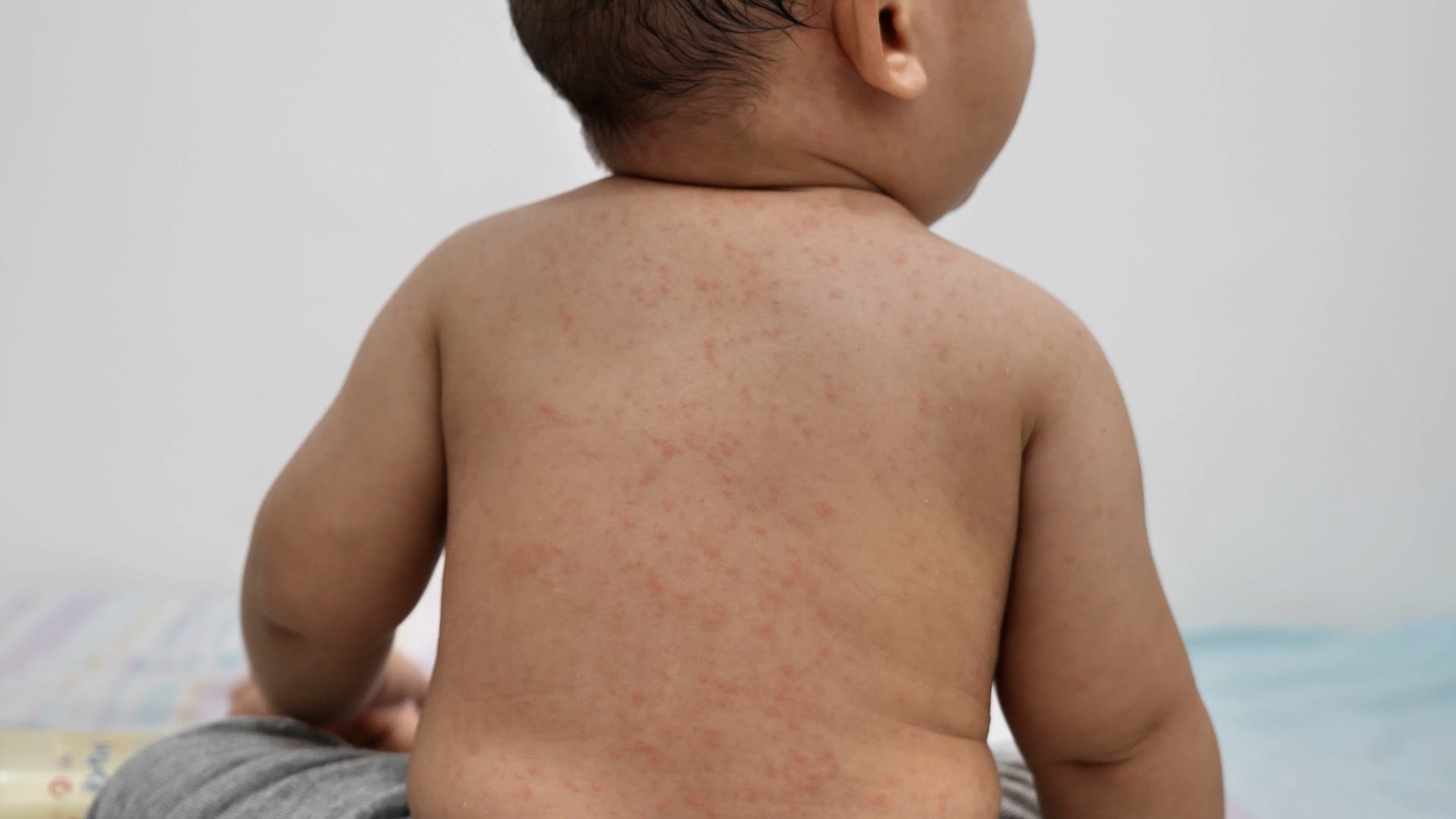
Measles is a highly contagious, vaccine-preventable disease caused by a virus that primarily affects children the most. According to the World Health Organization, it infects the respiratory tract before spreading throughout the body. It is characterized by a high fever, cough, runny nose, watery eyes, and a rash or bumps that appear 7 to 14 days after exposure.
Viruses are among the most contagious infectious diseases. In fact, it is so contagious that 90% of unvaccinated people will become infected. Additionally, 1 in 5 people will be hospitalized, according to the CDC.
The MMR vaccine (measles, mumps, rubella) protects against measles with 97% efficacy and is usually given to children as part of a routine vaccine course, with the first dose between 12 and 15 months of age and the second dose between 4 and 6 years of age.
“Most children who get measles make a full recovery, but not all of them make a full recovery,” Besser said. “Every new case represents a child at high risk of hospitalization, lifelong health complications, and death. And each new case represents a community at risk of further spread.”
Why are the number of measles infections increasing?
MMR vaccination coverage has declined in recent years, resulting in more states not reporting coverage consistent with herd immunity. If more than 95% of people in a community are vaccinated, most people will be protected even if they cannot get the vaccine because those around them are immune and cannot spread the disease.
According to the CDC, vaccination rates among U.S. kindergarteners decreased from 95.2% in the 2019-2020 school year to 92.5% in the 2024-2025 school year, well below the threshold needed for effective herd immunity.
Outbreaks like the one in Texas in 2025 often occur in communities with large populations of unvaccinated people. For example, small, poorly vaccinated Mennonite communities were at the center of some of the largest outbreaks last year.
The decline in vaccinations has also been blamed on a growing anti-vaccination movement, fueled by the confirmation of vaccine skeptic Robert F. Kennedy Jr. as secretary of health. In addition to his anti-vaccination rhetoric, President Kennedy downplayed measles-related childhood deaths and promoted false treatments and prevention methods, such as the use of vitamin A. At the height of the epidemic in 2025, it backed off somewhat from its anti-vaccination message and encouraged measles vaccination.
Plummeting vaccination rates and a subsequent resurgence in cases are putting the United States at risk of losing its measles-free status. The WHO’s definition is that a disease does not continue to spread for at least one year, and reaching elimination status is what the CDC calls a “historic public health achievement.”
The Pan American Health Organization, part of the World Health Organization that tracks infectious diseases in the Americas, is scheduled to review the measles elimination status of the United States and Mexico in November, moving forward from the originally scheduled April date. The organization said in a statement that the U.S. review will be based on the 2025 outbreak. PAHO already lifted Canada’s exclusion status in November for the first time in 30 years.
Contributor: Eduardo Cuevas, USA TODAY


