Home Blog Page 997

Nearly half of Americans live in an area with a failing grade for air pollution, and the problem is only getting worse

0


CNN
 — 

Air pollution levels keep getting worse for more people in the US, according to a new report, and experts say the Trump administration’s proposed deregulation plans will make it even harder for people to get clean air.

Almost half of everyone who lives in the United States breathes unhealthy levels of air pollution, according to the American Lung Association’s annual State of the Air report, released Wednesday.

According to air quality data from 2021 to 2023, about 156 million people – 25 million more than last year’s report – live in an area that the association gives a failing grade for ozone and two measures of fine particulate matter pollution.

The US Environmental Protection Agency defines particulate matter, also called particle pollution or soot, as a mix of solid and liquid droplets that float in the air. It can come in the form of dirt, dust or smoke. Coal- and natural gas-fired power plants create it, as do cars, agriculture, unpaved roads, construction sites and wildfires.

Particle pollution threatens human health because it is so tiny – a fraction of the width of a human hair – and can travel past the body’s usual defenses. When a person breathes these particles in, they can get stuck in the lungs and move into the bloodstream, causing irritation and inflammation.

Exposure to particle pollution is considered a significant factor in premature death around the world, according to the World Health Organization. Exposure can also raise the risk of conditions including certain cancers, stroke, asthma, preterm births, dementia, depression and anxiety.

The new report says that 85 million people in the US live in an area with a failing grade for year-round particle pollution, the second-highest number of people with such exposure since the report was first published in 2000.

The top 10 areas most polluted by year-round particle pollution are:

  • 1. Bakersfield-Delano, CA

  • 2. Visalia, CA

  • 3. Fresno-Hanford-Cocoran, CA

  • 4. Eugene-Springfield, OR

  • 5. Los Angeles-Long Beach, CA

  • 6. Detroit-Warren-Ann Arbor, MI (tied for 6th)

  • 6. San Jose-San Francisco-Oakland, CA (tied for 6th)

  • 8. Houston-Pasadena, TX

  • 9. Cleveland-Akron-Canton, OH

  • 10. Fairbanks-College, AK

Even in the short term, exposure to particle pollution can cause breathing problems or trigger a heart attack.

During the research period, the report says, short-term particle pollution in the US was the highest level it has been in 16 years, with 77.2 million people living in counties with these unhealthy spikes.

The 10 areas most polluted by short-term particle pollution are:

  • 1. Bakersfield-Delano, CA

  • 2.Fairbanks-College, AK

  • 3. Eugene-Springfield, OR (tied for 3rd)

  • 3. Visalia, CA (tied for 3rd)

  • 5. Fresno-Hanford-Corcoran, CA

  • 6. Reno-Carson City-Gardnerville Ranchos, NV-CA

  • 7. Los Angeles-Long Beach, CA

  • 8. Yakima, WA

  • 9. Seattle-Tacoma, WA

  • 10. Sacramento-Roseville, CA

Ozone pollution, also called smog, is the presence of ground-level ozone that forms when chemicals like nitrogen oxides and volatile organics from electric utilities, car exhaust, gasoline vapors, industrial facilities and chemical solvents react to sunlight.

Exposure to ozone pollution can cause asthma attacks and chest pain in the short term. Long-term exposure can also cause decreased lung function and premature death.

The top 10 areas most polluted by ozone are:

  • 1. Los Angeles-Long Beach, CA

  • 2. Visalia, CA

  • 3. Bakersfield-Delano, CA

  • 4. Phoenix-Mesa, AZ

  • 5. Fresno-Hanford-Corcoran, CA

  • 6. Denver-Aurora-Greeley, CO

  • 7. Houston-Pasadena, TX

  • 8. San Diego-Chula Vista-Carlsbad, CA

  • 9. Salt Lake City-Provo-Orem, UT

  • 10. Dallas-Fort Worth, TX

The American Lung Association report notes that people of color are the group most likely to live in neighborhoods with unhealthy air and are more than twice as likely as White people to live a community with a failing grade for two types of particle pollution or ozone pollution.

People who identify as Hispanic are three times more likely as White people to live in an area with three failing grades for air pollution.

Dr. Juanita Mora, a pulmonologist who works in a predominantly Hispanic neighborhood on Chicago’s South Side, said she sees the toll of high air pollution levels nearly every day.

The demolition of a power plant in the area in 2020 spread soot “for miles and miles,” she said. When that combined with normal pollution levels, street vendors, other outdoor workers and a 7-year-old boy all came in wheezing and coughing.

“He was just outside playing in his yard,” said Mora, who is also a volunteer spokesperson for the American Lung Association. “His parents had to rush him to the ER because he said he was having chest tightness and couldn’t stop coughing.

“As a doctor, I feel like we’re failing millions and millions of kids and adults,” she added.

It doesn’t always take a demolished building for air pollution to cause widespread breathing problems.

Katherine Pruitt, national senior director for policy at the American Lung Association and a co-author of the new report, said that a record number of warm days and wildfires during the research period caused “horrible ozone years.”

People didn’t even have to live close to a wildfire to be affected, Pruitt said. Smoke plumes travel, and when they combine with typical pollution in urban areas, “they bump up the ability to produce ozone-forming compounds,” Pruitt said.

In 2023, Canadian wildfires caused problems for Mora’s patients hundreds of miles away in Chicago. “I saw so many kids and adults with asthma exacerbations around that time,” she said.

Dr. Panagis Gallatsatos, a pulmonary and critical care medicine specialist at Johns Hopkins Medicine, said doctors do what they can to help patients breathe better, “but we can only do so much against the air that they breathe.”

Gallatsatos, who is also a volunteer spokesperson for the Lung Association, said it’s been “rather defeating” to read about how many more Americans have been exposed to pollution.

“As a lung doctor, I don’t have any medication that can really offset that,” he said. “For pollution, we rely on good policies and legislation to protect lung health.”

And protective legislation may become harder to find. As part of the “biggest deregulatory action in US history,” the EPA said last month that it will revisit the Biden-era National Ambient Air Quality Standards for Particulate Matter, which govern how much soot can be released into the air.

The Trump administration is also considering looser regulations on power plants, the oil and gas industry, coal plants and other industries and machines that generate air pollution.

“Obviously, we’re worried about what the future portends for all the hard work that we’ve done to put rules and practices into place to control emissions, both for particle pollution and ozone and for greenhouse gases that are affecting the climate,” Pruitt said. “It’s very worrisome.”

If EPA deregulation efforts are successful, Mora said, it will directly hurt her patients who are already breathing polluted air.

“I believe I’m going to be seeing a lot more kids, more families affected by the lack of limits on particle pollution as well as ozone pollution, especially here in the city of Chicago,” she said. “If you can’t breathe, nothing else matters.”



Source link

Wisconsin Supreme Court Election Spells a Win for Abortion Rights

0


This month’s race for an open seat on the Wisconsin Supreme Court is now officially the most expensive judicial election in history, with total spending topping $100 million. The election attracted the attention of donors from across the political spectrum, including the ACLU Voter Education Fund, George Soros, and Americans for Prosperity. Groups affiliated with Elon Musk, the billionaire ally of President Donald Trump, funneled $21 million into the campaign of Brad Schimel, the conservative former attorney general.

Yet his opponent, trial judge Susan Crawford, who was endorsed by the state Democratic Party, won the race by roughly 10 percentage points, maintaining a 4–3 liberal majority on the court.

The race attracted so much attention partly because the court is set to decide two major abortion cases this year. Abortion thus played a central role in the campaign, with Crawford stressing her experience representing Planned Parenthood of Wisconsin and accusing Schimel of not trusting women to make their own health care decisions. Schimel, who maintains that he is against abortion, argued that the issue should be left to voters.

A Constitutional Abortion Right

One of the two key abortion cases facing the court this year hinges on whether the Wisconsin Constitution recognizes a right to abortion. Last year, the Wisconsin Supreme Court agreed to hear a case about an 1849 law that state Republicans interpret to ban virtually all abortions from the moment of fertilization. The law provides that “any person, other than the mother, who intentionally destroys the life of the unborn child” can be convicted of a felony unless the procedure was necessary to save the life of the pregnant person.

In the case, Planned Parenthood v. Urmanski, Planned Parenthood is asking the court to rule — without waiting on a decision from the lower courts — that interpreting the 1849 law as a ban on abortion would violate the state constitution. “The right to life and liberty, including the right to make one’s own decisions about whether or not to give birth and medical decisions related to pregnancy or abortion care from a chosen health care provider,” the organization asserts, “is fundamental.” Planned Parenthood also argues that if it operated as a ban, the 1849 law would violate the constitutional rights of doctors to practice their chosen profession.

Joel Urmanski, the Republican district attorney for Sheboygan County named as a respondent in the case, has said in briefing that the Wisconsin Supreme Court generally interprets the state constitution in the same way that the U.S. Supreme Court interprets equivalent provisions of the federal Constitution. Because the U.S. Supreme Court’s 2022 decision in Dobbs v. Jackson Women’s Health Organization overturned the federal constitutional right to abortion, Urmanski argues that the Wisconsin Constitution similarly lacks abortion protections.

Even if the Wisconsin high court didn’t follow Dobbs, Urmanski argues that the outcome should be the same. He urges the court to discern the “original meaning” of the state constitution and insists that at the time of the state constitution’s ratification, no one thought there was a right to abortion.

Planned Parenthood, by contrast, spotlights decisions from other states recognizing a right to abortion after Dobbs. It further argues that Wisconsin’s tradition regarding abortion is far richer than Urmanski suggests, maintaining that abortion was common and at least somewhat accepted when the state constitution was written.

The parties are also clashing over what bearing the state constitution’s provisions on equal protection have on abortion rights. Planned Parenthood argues that the 1849 law would violate state protections against sex discrimination, while Urmanski stresses that Dobbs rejected an equal protection argument for abortion rights and invites the Wisconsin Supreme Court to do the same.

A Feticide Law?

Ultimately, the Wisconsin Supreme Court may not have to address whether the state constitution protects an abortion right, depending on the outcome of Kaul v. Urmanski, a case argued before the court in November.

Josh Kaul, the state’s Democratic attorney general, concluded that the 1849 law was a feticide law — punishing only those who terminated a pregnancy against a pregnant person’s wishes — not an abortion ban. Fetal homicide statutes aren’t unusual; 38 states currently have some version of such a law. Convinced that the 1849 law fit in the same category, Kaul filed suit to establish that Wisconsin providers can’t be prosecuted for abortions performed with the patient’s consent. Even if the 1849 law did ban abortions, Kaul argued, later Wisconsin restrictions implicitly overrode it, particularly a 2015 law banning abortion at 20 weeks. In 2023, a trial court agreed with Kaul, and Urmanski appealed the decision.

Kaul will turn on what the high court makes of the 1849 law — particularly, how to make sense of it in light of its 1994 ruling in State v. Black. In that case, Glenndale Black violently assaulted his pregnant partner days before her due date and caused her to miscarry. Black was prosecuted under the 1849 law but argued that the law criminalized only “consensual medical abortions,” not feticide. He also claimed that steps taken by the state legislature to comply with Roe v. Wade had implicitly repealed the 1849 law. The court in Black rejected both those arguments, reasoning that the law clearly prohibited feticide and that the court generally didn’t interpret a later statute to repeal an earlier one. Moreover, the court reasoned that it was important to interpret state statutes to effectuate all their goals, when possible. That meant interpreting the 1849 law to prohibit feticide, which would not contradict the intent of later legislation to protect abortion access.

Black will play a central role in the disposition of Kaul. On the one hand, as Urmanski argues, the court has previously rejected the claim that a later law, like the 20-week ban from 2015, implicitly repeals an earlier one. On the other hand, as the assistant attorney general representing Kaul explained during the oral arguments, the court already interpreted the statute as a feticide law in Black. Kaul’s lawyer also argued that there was no way for both laws to stand if the 1849 law was an abortion ban because Wisconsin courts only permit two statutes on the same subject to stand when they address different purposes or have different scopes. If the 1849 law is an abortion ban, then both laws would have the same objective: setting the gestational limit for legal abortion.

At oral argument, the court seemed divided about how to resolve Kaul. But the justices were clearly skeptical of the constitutionality of a ban on abortion at fertilization. It seems probable that one way or another, the court’s four-justice majority will rule in a way that permits legal abortion in Wisconsin. That result seems even likelier in the wake of the recent election solidifying the liberal majority.

The Court’s Reasoning Matters

But how the court reaches this result will matter too. It’s possible that the court will embrace some of Planned Parenthood’s broader constitutional arguments. If the court recognizes the right of physicians to perform abortions, for example, that would make it easier to challenge any new abortion ban in court. Importantly, other state supreme courts are rethinking whether doctors should have standing to sue on their patients’ behalf.

And if the court offers an especially convincing rationale for abortion rights — perhaps one rooted in equality — that might make it harder to undermine or even overturn such a ruling in the future.

Of course, the court could reach a much narrower decision: It might rule that the 1849 law simply isn’t an abortion ban. Such an outcome would obviate the need for the court to consider whether a ban violates the state constitution.

• • •

Whatever happens will not just ensure that abortion remains accessible in Wisconsin. After the demise of federal constitutional abortion rights, state supreme courts have moved to the center of struggles over what their constitutions have to say about abortion. For that reason, we should expect the Wisconsin Supreme Court’s rulings to shape the terms of debate in other states.

Mary Ziegler is the Martin Luther King Jr. Professor of Law at the University of California, Davis School of Law. Her new book, “Personhood: The New Civil War over Reproduction,” comes out this week. 

Suggested Citation: Mary Ziegler, Wisconsin Supreme Court Election Spells a Win for Abortion Rights,  Sᴛᴀᴛᴇ Cᴏᴜʀᴛ Rᴇᴘᴏʀᴛ(Apr. 22, 2025), https://statecourtreport.org/our-work/analysis-opinion/wisconsin-supreme-court-election-spells-win-abortion-rights


Source link

Smelly T-shirt played a key role in catching Valerie, the dog lost for 529 days

0


Brisbane, Australia
CNN
 — 

Lost dogs rarely capture international attention but for several weeks the world has watched and waited for updates on the search for Valerie, a miniature dachshund missing in the Australian wilderness.

Then on Friday night, after 529 days roaming Kangaroo Island, off South Australia, the tiny dog with a pink collar was finally cornered, and the internet erupted with rare joy.

“Valerie has been safely rescued and is fit and well,” Kangala Wildlife Rescue announced on its Facebook group on Friday night to a flurry of likes and shares.

Key to her rescue was a smelly T-shirt worn by her owner in 12-hour shifts that was ripped up and used as a scent trail to attract her to an enclosure, Kangala directors Jared and Lisa Karran said in a video posted to Facebook.

“We were able to rip little strips off of it, and we started the process of just adding more and more bits towards the trap site as we went along,” said Lisa Karran.

Karran wore the owner’s now “tatty” T-shirt while sitting in the cage, and eventually the rogue sausage dog dropped her defenses and approached her rescuers.

“She came up, would sniff us and we’d just go by her cues, until she was completely calm and snuggled up in our laps. It was amazing,” Karran said.

Valerie vanished during a camping holiday with her owners Josh Fishlock and Georgia Gardner, November 2023. When strangers tried to help, she fled into the undergrowth, and her owners eventually gave up and returned home to the mainland.

With no sightings it was assumed Valerie had met her match with a snake or perhaps a giant Rosenberg’s goanna, reptiles up to 1.5 meters long that occupy the island.

Then reports of multiple sightings started to spread. Could it be that Valerie was alive?

A massive search operation swung into action led by volunteers from the Kangala Wildlife Rescue, a non-profit group set up in 2020 following the devastating Australian bushfires.

“We are using surveillance and various trapping and luring methods in the area she was last seen to try and bring her home. This is a tiny dog in a huge area, and we will need help from the public to report any sightings and a lot of luck,” the group announced on Facebook.

When bad weather compromised the 4G cameras they’d set up to monitor her movements, a call went out for a portable Starlink system. “Message Elon on X. I bet he would help,” someone suggested. Thankfully, an offer came from closer to home.

Some suggested using heat-seeking drones to find her, others recommended roast chicken.

Not all followers have been supportive. Some accused the charity of prolonging the search to raise extra money through appeals for donations. A member of the group responded that they were doing their best to find her.

Part of the problem, the charity said, was the island’s vibrant ecosystem.

“One of the reasons this is such a difficult rescue and not as easy as just baiting and setting traps, is due to the fact we are constantly competing with hundreds of wildlife like possums, wallabies, kangaroos, goannas and feral cats. All which are all just after a feed also,” the group posted on Facebook.

Home to around 5,000 people, the island is about 45-minute trip by ferry from the mainland. Tourists go there to see Australian native wildlife, but officials have long had a problem controlling introduced species including feral cats. The island is thick with bush, and there are many places for a small dog to hide.

The Kangala rescuers put out food boxes and a pen was set up with toys from home. A remote-controlled trapping device was procured, and then they waited.

By Friday, Valerie’s adventure was over.

After the gate to the enclosure closed behind her, Valerie looked around for an exit, the rescuers said. After a few anxious moments, she did what any lost dog might do after realizing the game was up.

“She actually went into her crate, the one that was set up to look like the one at home, and she went and had a sleep,” said Jared Karran.

Valerie is now “decompressing,” Karran said, and will be returned to her owners for a more sedate life on the mainland.


Source link

Tesla shares surge 10% after NHTSA adjusts autonomous car regulations

0


play

The Trump administration announcement that it aims to speed deployment of self-driving vehicles by exempting some from certain safety requirements and easing rules requiring reporting of safety incidents sent Tesla TSLA.O shares up nearly 10% on Friday.

CEO Elon Musk, a close adviser to President Donald Trump, has repeatedly pledged to launch commercial robotaxi operations soon. Tesla also faces scrutiny from the National Highway Traffic Safety Administration over its Full-Self Driving software after a fatal crash.

U.S. Transportation Secretary Sean Duffy said on Thursday that the new framework to boost autonomous vehicles would help U.S. automakers compete with Chinese rivals.

The revised rules will allow some autonomous vehicles that do not comply with federal safety standards such as having rearview mirrors to operate on U.S. roads. The rules will also allow carmakers to report less severe crashes monthly, and add a property damage reporting threshold for less severe crashes involving self-driving vehicles.

“This administration understands that we’re in a race with China to out-innovate, and the stakes couldn’t be higher,” Duffy said. “Our new framework will slash red tape.”

Consumer Reports noted that under the new rules, vehicles with advanced driver assistance systems like Tesla Autopilot will not need to report crashes using the system unless it involves a fatality, an injured person requiring hospitalization, a pedestrian being struck, or an air bag deployment.

As part of the revision, the NHTSA said it would expand a program to exempt some self-driving vehicles from safety requirements and streamline the reporting of safety incidents for advanced driver assistance and self-driving systems.

Advocates for Highway and Auto Safety said it was disappointed that the U.S. Department of Transportation “chose to dilute, instead of enhance, the reporting requirements.”

The group also raised concerns about the safety exemptions saying, “without safeguards, safety regulations, transparency and accountability, the success of AV deployment is imperiled at best and could result in deadly consequences at worst.”

The Alliance for Automotive Innovation, a trade group representing nearly all major automakers, praised the USDOT.

The industry has “been hamstrung by government inaction… This announcement shows the administration is also proceeding with a sense of urgency, so we don’t cede AV leadership to China and other countries,” it said.

Automakers have long sought to deploy automated vehicles on U.S. roads that do not comply with federal safety standards. Some of those standards were written with human drivers in mind, like requiring rearview mirrors or brake pedals.

NHTSA is expanding its Automated Vehicle Exemption Program to now include domestically produced vehicles. The program currently allows companies to operate only imported non-compliant automated vehicles on U.S. roads.

In 2022, General Motors GM.N filed a petition with NHTSA seeking permission to deploy up to 2,500 self-driving vehicles annually without human controls such as brake pedals or mirrors. GM withdrew the petition last year after a lengthy government review had not been completed.

GM said in December it would halt funding of its self-driving Cruise robotaxi business after one of its robotaxis seriously injured a pedestrian who had been hit by another vehicle in October 2023, and it had to pay a $500,000 criminal fine to resolve a Justice Department probe into the matter. GM had invested more than $10 billion in Cruise since 2016.

Alphabet’s GOOGL.O self-driving unit Waymo said in October that it had closed a $5.6 billion funding round as it looks to expand its autonomous ride-hailing service. Last month, Waymo said it aimed to launch its fully autonomous ride-hailing service in the U.S. capital city next year.

Reporting by David Shepardson; Editing by Hugh Lawson, Tom Hogue and Bill Berkrot


Source link

‘Death to streamers!’: can a New York video store start a revolution? | Movies

0


They trickle in by twos and threes, spiritual seekers to a temple long thought gone: the video store. Some of these acolytes are sentimental for the days of Blockbuster and famed New York institutions like Kim’s Video. Others are so young that Blu-ray Discs, DVDs and VHS tapes represent novelty, not nostalgia.

Either way they’re here, at a small, freshly painted storefront in Brooklyn, to buy movies that you hold in your hand, store on a shelf and watch whenever you’d like – the powerful but fickle newer gods of Netflix, Hulu and Prime be damned.

Just in time for Easter, the physical video store has risen again. This month, Night Owl Video in Williamsburg became New York City’s first new physical video store in a long time. The store’s provocative slogan is: “Death to streamers! Physical media forever!”

“I’ve lamented for years that this type of place doesn’t exist,” Aaron Hamel, who co-founded Night Owl with his friend Jess Mills, said. “I used to love going to Kim’s [Video] and Videology and all that. I’m still very nostalgic, and I think there’s value to a place where you can browse the shelves for movies.”

Kim’s rental inventory re-opened in 2022 as an attraction in Alamo Drafthouse’s lower Manhattan cinema. Some Barnes and Noble locations in New York also sell Blu-ray Discs and DVDs. To Hamel and Mills’ knowledge, however, Night Owl is the only freestanding video boutique in New York.

Part of the appeal of reviving the video store, Mills said, is the community. She and Hamel met while working at the indie film label Troma.

Photograph: Wenting Gu

“I love seeing someone pick up a title and another customer say, ‘Hey, that’s a really good one,’” she said. “It inspires people to watch something that they might not have. These streaming platforms are feeding you an algorithm of what to watch; they’re not giving you real suggestions. But if you get 20 movie lovers in a room, that knowledge just blossoms.”

That pitch may find a receptive audience in Williamsburg. Night Owl’s location on Grand Street is right next to a board games store and not far from comic book and record shops and other geek meccas.

“That’s so cool!” a young woman said as she entered Night Owl on a recent Thursday afternoon. As she entered, a young man departed without buying anything, but murmured “Good to know, good to know,” to his companion.

Despite its reputation as a city of cinephiles, New York has not been immune to the economic trends that have shuttered video stores across the United States, Britain and other countries. Streaming and video-on-demand services have steadily undermined physical media for years, and last year US sales of physical video discs fell below $1bn for the first time since 2014, according to industry data and reporting by Variety. Increasingly few Americans even own a dedicated DVD/Blu-ray player, though some video-game consoles play film discs.

Yet physical media has had a modest renaissance in recent years. Some movie buffs have found their way back to physical formats such as Blu-ray – the DVD’s higher-definition successor – and 4K Blu-ray, an even higher-definition format considered the “final format” of home theater.

Photograph: Wenting Gu

Physical media is unlikely to ever regain the heights it had in the heyday of VHS and DVD, but enthusiasts hope it may achieve the kind of surprise second life that vinyl records have since the late 2000s. In 2022, more vinyl records were sold than CDs, according to a music industry trade group.

Hamel used to run a record label. “I feel like physical-media movies are where vinyl was maybe 15 or 20 years ago,” he said. Although the landscape is tough, new video stores – or in some cases non-profit video libraries – have opened in recent years in New Orleans, Calgary, Baltimore, and Worcester, Massachusetts, and boutique retailers such as Atomic Movie Store, Orbit DVD, DiabolikDVD and Grindhouse Video seem to have no shortage of online business.

Five or six patrons perused Night Owl’s selection of Blu-rays, 4K Blu-rays, DVDs, VHS tapes, and Laserdiscs as several linked televisions around the store screened Ed Wood, the 1994 Tim Burton picture, from a Laserdisc player. A life-sized Halloween skeleton sat in an armchair near the door.

Night Owl sells new and used movies from cinephilic Blu-ray labels such as Criterion, Radiance, Severin, Vinegar Syndrome, Kino Lorber, 88 Films and Umbrella, as well as film-related books, posters and vinyl soundtracks. Currently, the shop only sells videos, though Hamel and Mills may offer renting in the future.

Buying collectible physical films at retail prices isn’t cheap – most new Blu-rays at Night Owl cost $20 to $40 – but customers seemed willing to entertain physical media’s value proposition. Around 550 people attended Night Owl’s soft launch, Mills estimated: “It just warms my little goth heart.” She and Hamel have had to re-order stock because of brisk sales.

Bailey Blake, 22, Ava Sharahy, 23, and Leah Calixto, 22, came to Night Owl from the Bronx and Washington Heights after hearing about the store on Instagram. The three were recent college graduates who had studied film at Sarah Lawrence.

“I don’t have a lot of physical DVDs or anything like that,” Sharahy said. “This is gonna be my first foray into it. I don’t want to have to pay so much for so many streaming services when I could just own something, you know?”

Leah Calixto, 22, Bailey Blake, 22, and Ava Sharahy, 23, came to Night Owl after hearing about the store on Instagram. Photograph: J Oliver Conroy

Sharahy bought a John Waters film that included an interactive scratch-and-sniff feature. Blake bought the vinyl soundtrack to The Color of Money. Calixto was looking at Blood In Blood Out, a Chicano crime epic she loved from childhood.

Part of the draw of physical media for movie fans, the three friends said, was the difficulty of finding many beloved or important films on streaming.

Mills echoed that argument, and added that streaming platforms have also become more and more expensive, contain intrusive ads, and aggressively promote their own original content rather than curate cinematic “gems”.

Hamel jumped in. “When you’re buying digital you’re not buying the film,” he said. “You’re buying a license to watch the film, which they can revoke at any time. But when you buy something on Blu-ray, you have it forever.”


Source link

Trump and Zelenskyy meet at pope’s funeral in Rome

0


play

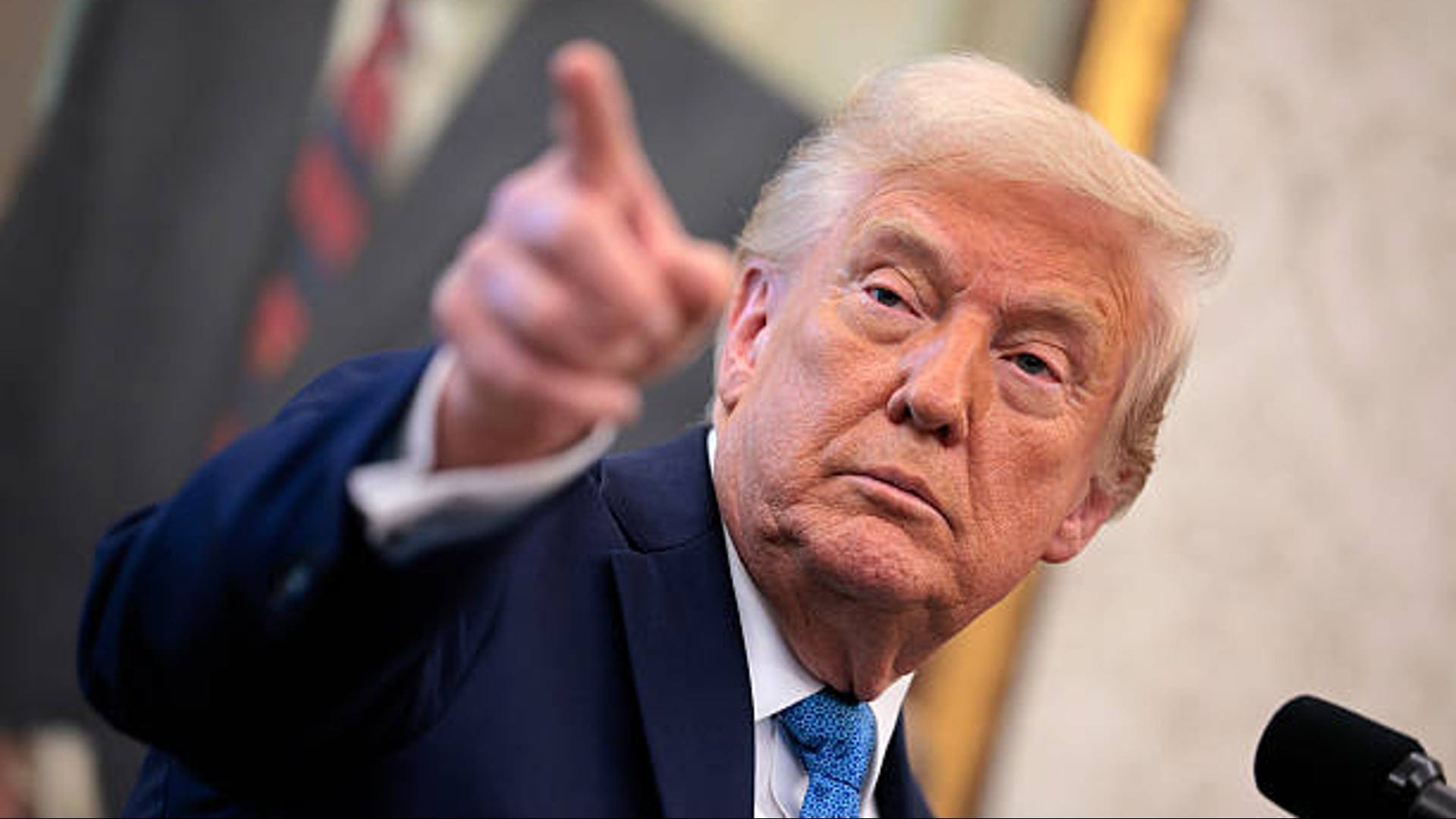
President Donald Trump and Ukrainian President Volodymyr Zelenskyy held what the White House described as a “productive” meeting on the sidelines of Pope Francis’ funeral in Rome.

It was their first in person meeting since they were involved in a fiery exchange at the White House in February, and comes as Trump has pushed for Ukraine to strike a deal with Russia to end the three-year-old war.

White House communications director Steven Cheung said Trump and Zelenskyy “met privately today and had a very productive discussion.” A spokesman for Zelenskyy said the meeting lasted about 15 minutes.

Ukraine said the leaders would meet again later in the day. The White House has not confirmed the meeting.

Trump and Vice President JD Vance have warned Ukraine that Washington could abandon trying to negotiate a Ukraine-Russia peace settlement if there is no progress on a deal soon.

Trump and his aides want Ukraine to accept a U.S. proposal that would effectively grant Russia all the territory it has gained in the war since 2022. The proposal also appears to call for the U.S. to recognize Russia’s claim on Crimea, a region of Ukraine that Russia annexed in 2014. The U.S. plan, which Zelenskyy has publicly rejected, also appears to block Ukraine’s ambition to join the NATO military alliance.

When Trump and Zelenskyy met in the Oval Office in February, the American president berated Ukraine’s leader for not demonstrating enough gratitude for U.S. support in his country’s fight against Russia.

Trump sat in a front-row seat at the pope’s funeral in a packed St. Peter’s Square at the Vatican. He wore a blue suit in a sea of black. His wife, first lady Melania, wore a black dress and black veil.


Source link

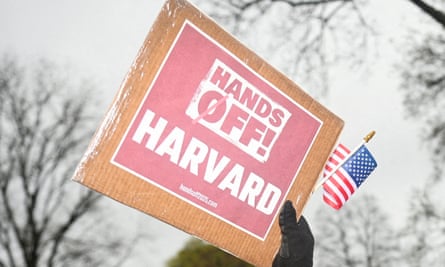
Trump’s class war on Harvard – podcast | Harvard University

0


Harvard University filed a lawsuit against the Trump administration on Monday on the grounds that a recent $2bn (£1.5bn) funding freeze was unlawful. It is the most significant act of resistance taken by a US college in response to Trump’s crackdown on higher education.

Ed Pilkington, chief reporter for Guardian US, explains to Michael Safi that capitulating to Trump’s demands would have severely undermined Harvard’s reputation, and that the administration was targeting it for being a bastion of liberal thought.

As Pilkington describes, at the same time Trump is tapping into a deep seam of resentment towards higher education that has been building in the US as the cost of college attendance rockets and more people see the liberal ideas emerging from universities as irrelevant to their lives.

The pair discuss the way Harvard is trying to appeal to the public by highlighting its contributions to society and whether the ultimate survival of higher education’s autonomy will be determined by the law courts or the court of public opinion.

Support the Guardian today: theguardian.com/todayinfocuspod

A protester against Trump's assault on Harvard
Photograph: Nicholas Pfosi/Reuters


Source link

Rapper and legal teams head back to court

0


play

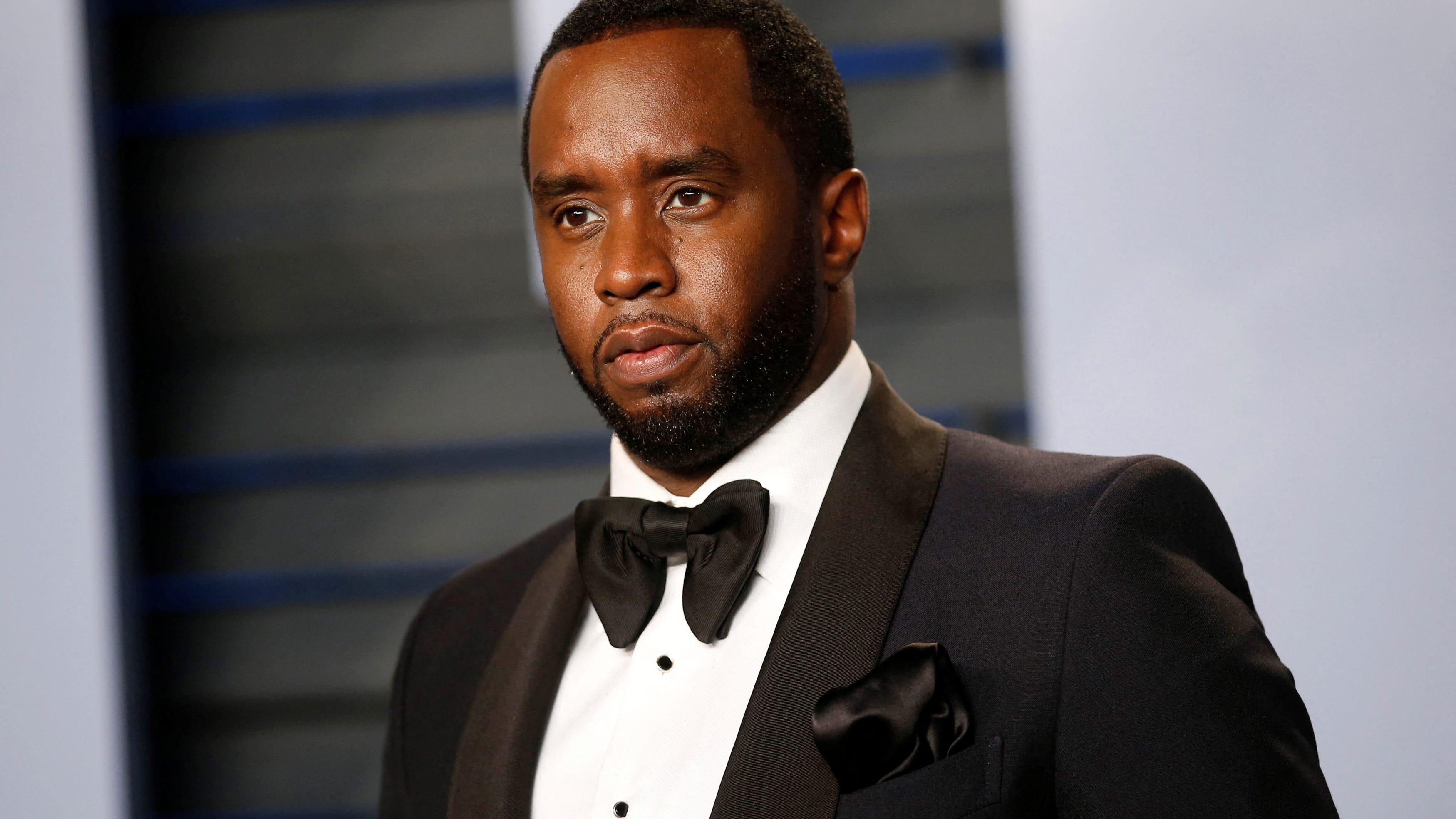
NEW YORK – Sean “Diddy” Combs was back in court April 25 before his federal sex crimes trial begins May 5.

Less than two weeks before the trial kicks off, Combs’ attorneys met with Judge Arun Subramanian at the Daniel Patrick Moynihan United States Courthouse in Manhattan to hash out trial preparations with federal prosecutors. At the hearing, both sides scored wins ahead of one of the most talked-about celebrity trials in recent history.

The pretrial conference came as attorneys for Combs dispute key aspects of the legal proceedings with the U.S. government, such as the identities of Combs’ alleged victims on the witness stand and the scope of expert testimony presented to jurors in the case.

The rulings come before prosecutors and Diddy’s legal team meet again on May 1 as remaining questions from the two camps are expected to be discussed.

Diddy on Trial newsletter: Step inside the courtroom with USA TODAY as Sean ‘Diddy’ Combs faces sex crimes and trafficking charges. Subscribe to the newsletter. 

Combs was arrested in September 2024 at a Manhattan hotel and was subsequently charged with racketeering, sex trafficking and transportation to engage in prostitution. He has pleaded not guilty to all five counts.

The criminal trial emerges as a series of civil lawsuits from dozens of accusers have been aimed at Combs, accusing one of the music industry’s most recognizable figures of a pervasive pattern of sexually and physically abusive behavior. The allegations span decades and include claims of rape, sexual assault and physical violence.

The April 25 pre-conference sets the stage for the much-anticipated trial as Combs faces spending the rest of his life in prison.

A prosecutor said Combs had rejected a plea deal. The attorney did not share terms of the plea offer, but indicated she wants Subramanian to confirm with Combs directly that his lawyers told him about the offer and that he made the decision to turn it down.

Subramanian indicated he will do that direct questioning of Combs at a May 1 hearing.

An exchange between the lawyers Friday offered a window into a possible defense for Combs: He lived the life of a swinger.

The prosecution argued Combs’ lawyers shouldn’t be able to tell jurors that he is being targeted in a vindictive or novel way. 

Combs’ attorney Marc Agnifilo said the defense team needs to be able to say that there is “a lifestyle” that Combs had. “Call it swingers,” Agnifilo said.

Agnifilo suggested portraying Combs’ activities as part of that lifestyle will be relevant to demonstrating to jurors that Combs didn’t have the criminal intent that’s required to be guilty.

Federal prosecutors and Combs’ legal team have sparred in recent weeks about expert witness testimony that will be shown before the jury during the Combs trial.

Prosecutors want to bring forth a witness to discuss a mystery medical procedure to show the “degree of control” and the “horrors this victim incurred” through forced sexual activities they say took place at the hands of Combs.

Subramanian said the witness is allowed to testify, but the judge will decide what prosecutors can ask the witness on the day of their testimony. 

Subramanian determined that psychologist Dawn Hughes, a much-contested witness, is not allowed to discuss coercive control – a form of domestic abuse – but is allowed to discuss coping strategies for victims and why victims stay in relationships with patterns of domestic violence. 

One piece at the center of the trial is security footage video from 2016 that allegedly shows Combs beating, kicking and dragging his ex-girlfriend and “Me & U” singer Casandra “Cassie” Ventura Fine at a now-closed luxury hotel in Los Angeles.

The video surfaced after an exclusive CNN report last May and went viral on social media before Combs later apologized in an Instagram post, saying he was “disgusted” by the behavior.

Combs’ attorneys presented their case for excluding the footage from the hip-hop mogul’s upcoming criminal trial earlier this month, arguing a forensic analyst they’d hired as an expert confirmed none of the videos they were able to obtain “accurately depict the incident.”

At the April 25 hearing, Subramanian denied Combs’ lawyers request to exclude the footage, allowing prosecutors to use it as evidence.

Combs’ team previously cast doubt on the hotel video as evidence of what U.S. attorneys allege was a widespread sex trafficking enterprise spearheaded by the rapper. In November, his team accused prosecutors of presenting an “altered” video of him attacking Ventura to convince a judge he should not remain detained.

The rapper’s lawyers at one point accused government agents of leaking the footage to CNN, but the judge rejected the claim.

Federal prosecutors also seek to show sealed evidence, including video of sexual encounters that feature Combs. The U.S. attorneys want the jury to at least hear videos but not allow the public to see or hear. In court on April 25, prosecutors said the videos are “extremely sensitive.”

Subramanian has said he would decide this week about the scope of expert witness testimony ahead of May 5 jury selection. Expert witnesses would not tell jurors about the facts of the case but would rather draw upon their professional experience and research to testify about concepts that can help them understand the subjects at play. 

Federal prosecutors want to call psychologist Dawn Hughes to testify about how victims of sexual abuse may sometimes remain loyal and committed to their perpetrator and stay in relationships with them due to emotional manipulation or a fear of violence.

Hughes has testified in other high profile sex trafficking cases, including R&B singer R. Kelly’s trial in 2021.

Prosecutors say Hughes’ expertise is necessary to contextualize Combs’ argument that victims willingly participated in “Freak Offs” given that they at times expressed affection for him and chose to stay with him. 

“The defense will then argue that these victim responses are incompatible with the victim being a victim of abuse,” prosecutors wrote in a court filing Wednesday. “Dr. Hughes would testify that it is the dynamics of interpersonal violence that result in such behavior.” 

Combs’ lawyer Alexandra Shapiro said at an April 18 court hearing that the government was improperly seeking to use Hughes’ testimony to bolster the credibility of the alleged victims who are expected to testify against him.

What charges does Diddy face?

Diddy is charged with two counts of sex trafficking, two counts of transportation to engage in prostitution and one count of racketeering.

Racketeering is the participation in an illegal scheme under the Racketeer Influenced and Corrupt Organizations Statute, or RICO, as a way for the U.S. government to prosecute organizations contributing to criminal activity.

Using RICO law, which is typically aimed at targeting multi-person criminal organizations, prosecutors allege that Combs coerced victims, some of whom they say were sex workers, through intimidation and narcotics to participate in “freak offs” — sometimes dayslong sex performances that federal prosecutors claim they have video of.

In March, prosecutors submitted a second superseding indictment (updating the amended indictment from January that added three unnamed women who were allegedly victims of his so-called sex trafficking enterprise), which claims Combs subjected employees to forced labor under inhumane circumstances.

In a third superseding indictment, prosecutors added two additional counts — one count of sex trafficking and one count of transportation to engage in prostitution of “Victim-2” — to the previous three charges against him.

After the judge left the courtroom and reporters began to disband, Combs acknowledged certain people who attended the hearing in the audience benches with small smiles and taps of his fist to his chest. Before exiting through a door on the left, he pumped his fist above his shoulder in a seeming expression of strength to a young man in the audience, who gave Combs a fist pump back.

There was a glaring gender dynamic to Friday’s hearing that could play out in front of the jury when Combs goes to trial in May.

Combs was flanked by three women and two men at his defense table, including his lead attorney, Marc Agnifilo.

The prosecution table, by contrast, didn’t include any men, even though it was large. One by one, six women were introduced at the start of the hearing, beginning with prosecutor Madison Smyser.

That could make for interesting optics at trial, as jurors listen to female attorneys prosecute Combs for allegedly coercing women into sexual behavior.

These days, Combs dons a grizzlier appearance than the groomed look that defined his decadeslong career in music.

Combs arrived for the hearing wearing a two-piece khaki jumpsuit, with a white shirt underneath. Combs’ hair was prominently gray, with black hair mixed in. His narrow beard was also a mixture of black and gray.

Combs greeted the lawyers at his table with smiles, giving the two men handshakes and the three women hugs. He turned back several times to see who was in the audience before the hearing started. He put on black-rimmed glasses for part of the hearing once the judge arrived.The famed musician was largely stoic as lawyers and the judge debated what evidence and testimony can come in at his fast-approaching trial. Occasionally, he would turn to a female lawyer to his right and they would have a quiet exchange.

When does Diddy’s trial start?

Combs’ trial, which will take place in downtown Manhattan, is set to begin with jury selection on May 5. The trial’s start date is the same day as the Met Gala at the Metropolitan Museum of Art in New York, just miles from the courthouse. 

Judge Subramanian previously ruled against Combs’ defense team’s request to delay the start of his federal trial by two months.

Combs, a Met Gala mainstay, regularly attended the exclusive annual gala, benefitting the museum’s Costume Institute. His infamous appearance at the 2015 fête with ex-girlfriend Casandra “Cassie” Ventura Fine, captured in a Vogue interview video clip with the late Vogue creative director André Leon Talley, is notorious among Diddy trial onlookers.

Ventura Fine could testify at Combs’ trial; she kicked off his public legal struggles with a sex trafficking, rape and physical abuse civil lawsuit filed against the hip hop mogul in November 2023 and quickly settled the next day.

CNN exclusively reported last year about a hotel surveillance video, reportedly from March 5, 2016, with clips from multiple camera angles of the rapper beating Cassie. Combs issued a video apology after the footage was released.

Is Diddy still in jail?

Despite repeated attempts at bail, Combs was ordered to remain in custody at the Special Housing Unit in Brooklyn’s Metropolitan Detention Center ahead of trial — a ruling his legal team has challenged in the Second Circuit Court of Appeals. He’s been jailed since his arrest on Sept. 16, 2024. 

The facility is the same facility that holds alleged UnitedHealthcare CEO shooter Luigi Mangione and disgraced FTX founder Sam Bankman-Fried, who praised Diddy in a recent interview with conservative podcaster Tucker Carlson.

“I’ve only seen one piece of him, which is Diddy in prison, and he’s been kind to people in the unit; he’s been kind to me,” Bankman-Fried said. “It’s also a position no one wants to be in.”

Contributing: Luc Cohen, Reuters


Source link

Kobe Bryant’s debut jersey sells for $7 million at auction, a record price for memorabilia tied to the NBA legend

0


CNN
 — 

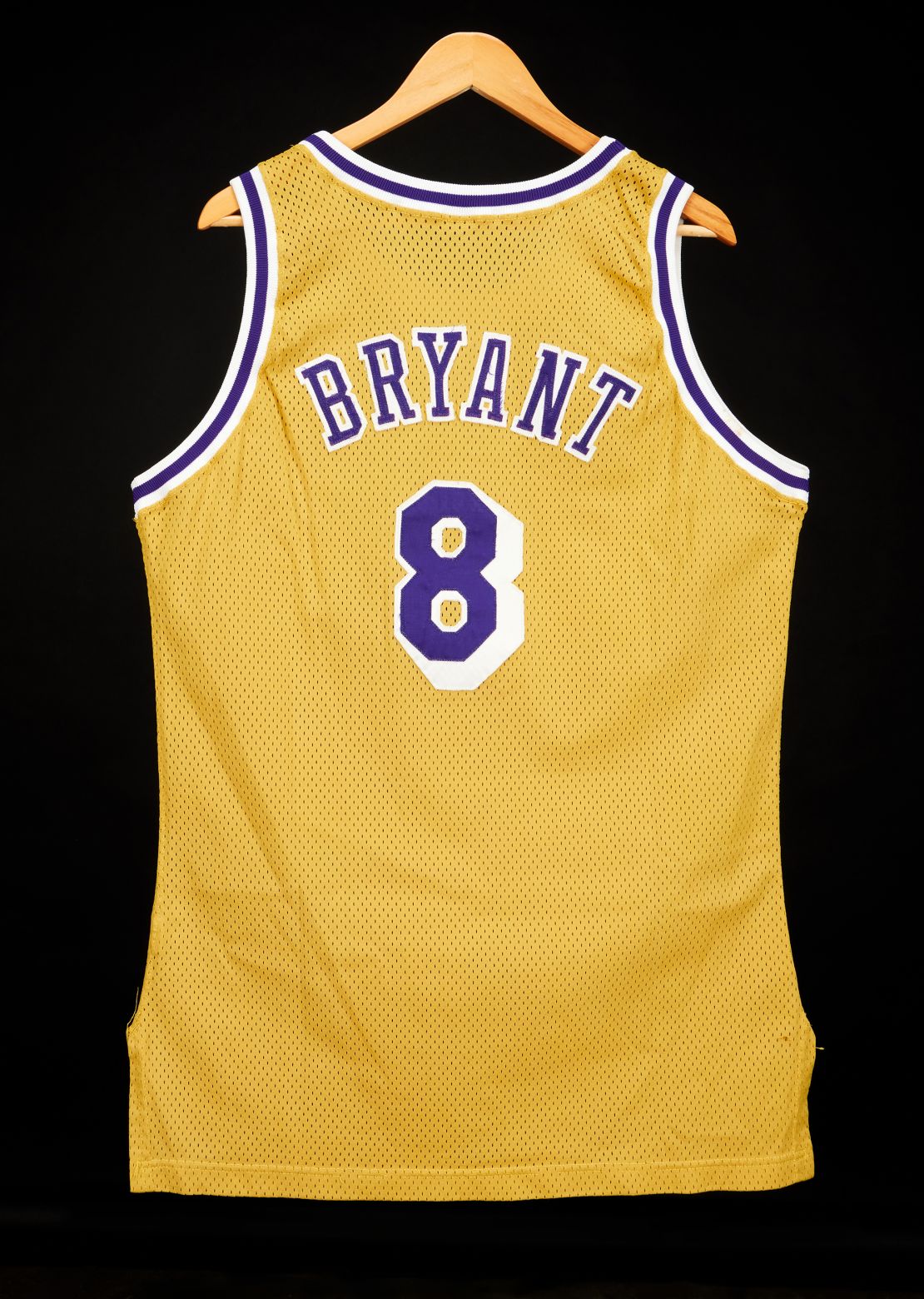
The jersey Kobe Bryant wore in his NBA debut sold for $7 million in auction on Thursday.

Per auction house Sotheby’s, the sale sets a record for any memorabilia tied to the Los Angeles Lakers legend, who died in a helicopter crash in 2020 along with his 13-year-old daughter Gianna and seven others.

The $7 million figure surpasses the previous record of $5.85 million paid for Bryant’s signed, game-worn jersey from the 2007-08 season in which he won his only NBA Most Valuable Player award.

Sotheby’s said that the jersey has been photo-matched to Bryant’s debut season in the NBA in 1996-97.

A then-18-year-old Bryant wore the famous yellow jersey with the No. 8 during his first media day, his preseason debut and his regular season debut on November 3, 1996, as well as in four other games.

According to ESPN, Bryant played six minutes and scored no points on 0-1 shooting in his regular season debut against the Minnesota Timberwolves.

Sotheby’s describes the jersey as a “bridge between the raw potential of a teenage prodigy and the refined greatness that would follow.” The jersey previously sold for $115,242 at auction in 2012.

Sotheby's describe Bryant's rookie jersey as a

Although Bryant averaged just 7.6 points per game in his first NBA season, he would retire as one of the sport’s greatest ever players with five titles to his name.

“Early rookie jerseys represent the genesis of an athlete’s career. For collectors in search of true one-of-one treasures, this is a once-in-a-lifetime opportunity to own iconic pieces of basketball history,” Brahm Wachter, Sotheby’s head of modern collectibles, said in a statement.

“Debut games are something every athlete experiences just once in their career journey, and is a moment where the hype of their pre-professional career finally comes to bear in the big leagues.”

According to Reuters, the jersey is the fourth most expensive game-worn sports jersey behind Babe Ruth’s “called shot” jersey ($24 million), Michael Jordan’s 1998 NBA Finals jersey ($10.1 million), and Diego Maradona’s Argentina shirt from the 1986 World Cup ($9.3 million).

Bryant’s rookie jersey sale eclipsed the jersey from Michael Jordan’s debut season – which was photo-matched to his preseason debut and his second and third preseason appearances – which sold for just over $4 million in March.


Source link

FDA says it will phase out petroleum-based food dyes, authorize four natural color additives

0


CNN
 — 

The US Food and Drug Administration plans to phase out the use of petroleum-based synthetic dyes in the US food supply due to health concerns, Commissioner Dr. Marty Makary announced Tuesday.

“For the last 50 years, American children have increasingly been living in a toxic soup of synthetic chemicals,” Makary said. “Now, there’s no one ingredient that accounts for the child chronic disease epidemic, and let’s be honest, taking petroleum-based food dyes out of the food supply is not a silver bullet that will instantly make America’s children healthy, but it is one important step.”

The dyes can be found in many candies, cereals, beverages and even in some medication. Companies use the dyes to give food and drinks brighter colors and make them more appealing.

Makary emphasized that this effort to eliminate dyes will be done by working with, rather than against, the industry.

“There are a number of tools at our disposal. And so I believe in love, and let’s start in a friendly way and see if we can do this without any statutory or regulatory changes, but we are exploring every tool in the toolbox to make sure this gets done very quickly,” he said. “They want to do it. So why go down a complicated road with Congress when they want to do this? They don’t want to deal with a patchwork of 30 different state plans.”

The Consumer Brands Association, a trade association for the makers of consumer packaged goods, said that ingredients in the US food supply have been “rigorously studied following an objective science and risk-based evaluation process and have been demonstrated to be safe.”

“As we increase the use of alternative ingredients, food and beverage companies will not sacrifice science or the safety of our products,” Melissa Hockstad, the group’s president and CEO, said in a statement.

Which dyes carry risk to human health and at what level is unclear. Historically, research on food dyes has been underfunded, and the FDA hasn’t thoroughly reviewed food dyes for decades experts say. Some studies show that dyes can pass through the human body quickly, but others show that they may accumulate over time.

For decades, research in animals has shown a potential link between artificial food dyes like red No. 3, red No. 40, blue No. 2 and green No. 3 and an increased risk of cancer or tumors. Other research shows that red No. 40 and yellow No. 5 and No. 6 contain or may be contaminated with known carcinogens.

Blue No. 1 and yellow No. 6 may be toxic to some human cells, and as little as 1 milligram of yellow No. 5 may cause irritability, restlessness and sleep disturbances for sensitive children. Some research has also shown connections between artificial food dyes and restlessness, trouble learning and attention problems in some children who are sensitive to some dyes.

In January, under the Biden administration, the FDA announced that it had banned the use of red dye No. 3 in ingested drugs, food and beverages.

On Tuesday, Makary said the agency is requesting that food companies move up the deadline on that ban from the previous 2027-28 deadline. He also said it is establishing a national standard and timeline for the food industry to transition from petroleum-based food dyes to natural alternatives.

The FDA said it is initiating a process to revoke the authorization of synthetic food colorings, including those not in production – specifically citrus red No. 2 and orange B – within the coming weeks.

The FDA is also taking steps to work with industry to eliminate six synthetic dyes – red No. 40, yellow No. 5, yellow No. 6, blue No. 1, blue No. 2 and green No. 3 – by the end of next year.

“The FDA is effectively removing all petroleum-based food dyes from the US food supply,” Makary said. “Today’s announcement fulfills the administration’s promise to use both gold standard science and common sense. For the last 50 years, we have been running one of the largest uncontrolled scientific experiments in the world on our nation’s children without their consent, and today we are removing these petroleum-based chemicals from their food supply.”

The FDA also said it will authorize four new natural color additives in the coming weeks and fast-track the review of natural alternatives to synthetic food dyes such as calcium phosphate, Galdieria extract blue, gardenia blue and butterfly pea flower extract.

The National Confectioners Association said it “looks forward to working with the Trump Administration and Congress on the issue.”

“FDA and regulatory bodies around the world have deemed our products and ingredients safe,” Christopher Gindlesperger, senior vice president for public affairs and communications, said in a statement. “We follow and will continue to follow regulatory guidance from the authorities in this space, because consumer safety is our chief responsibility and priority.”

Consumer Reports, a consumer safety group, said the goal is “laudable” but will take “years to achieve” since it’s relying on the goodwill of the food industry.

“It’s encouraging to see the FDA working towards a ban on synthetic food dyes, but this multistep plan relies on voluntary industry efforts that will simply prolong the amount of time it will take to get dangerous dyes out of our food,” said Brian Ronholm, the group’s director of food policy.

The agency says it will offer some regulatory flexibility to the industry and will partner with the National Institutes of Health to do more research on food additives to determine their effects on children’s health.

More than half of states have legislation in the works or rules in place to restrict food dyes due to a concerns about human health, according to the Environmental Working Group, a nonprofit that advocates for environmental and health policy. The industry has been advocating for a more consistent federal standard, but some consumer groups have been encouraging states to continue creating local bans.

“Consumer Brands has long asked HHS and FDA to reestablish themselves as the country’s leading regulatory authority and we appreciate that the administration has reasserted their leadership in response to the myriad of state activity in the food regulation space,” Hockstad said.

EWG says it has been asking the federal government to take action on the issue for years.

“The Food and Drug Administration has known for decades that synthetic food dyes are linked to health problems, particularly in children, but has failed to act,” Melanie Benesh, the group’s vice president for government affairs, said in an email. “We’re pleased the administration is following the lead of states like California and West Virginia by finally announcing their intent to ban dyes.”

California has long been an outlier in its actions on food dyes and other additives, and in March, West Virginia Gov. Patrick Morrisey signed one of the most sweeping dye ban bills in the country.

US Health and Human Services Secretary Robert F. Kennedy Jr. said Tuesday that removing these synthetic dyes from the food supply is a “no-brainer.”

“Nobody wants to eat petroleum,” he said.

Kennedy praised food companies for working with the Trump administration to remove the dyes. “If they want want to eat petroleum, they ought to add it themselves at home,” he said he’d told his staff. “They shouldn’t be feeding it to the rest of us.”

CNN’s Kristen Rogers and Deidre McPhillips contributed to this report.

Correction: A previous version of this report misstated when the six synthetic dyes will be phased out.


Source link

Lawsuits Allege Unlawful Surveillance of Pregnant Patients

0


Lawsuits in New Jersey and Vermont raise state constitutional questions about surveillance of pregnant patients, illustrating that pregnant people may be subjected to intense scrutiny and surveillance while bringing a pregnancy to term, even in states that protect abortion rights.

Nonconsensual Drug Testing in New Jersey

In September 2024, the New Jersey attorney general filed a lawsuit against hospital network Virtua, alleging that pregnant patients were drug tested without their knowledge and that their (sometimes false) positive results were reported to child protective services, resulting in monthslong investigations of new mothers.

The complaint highlights the stories of two women who tested positive because each had recently eaten poppyseed bagels. Urine tests are commonly given to pregnant patients to check their protein levels. Both women assumed their urine was being taken for that reason, not to be tested for drugs.

In addition to ingestion of poppy seeds, the use of blood pressure drugs like ephedrine and phenylephrine can result in positive urinalysis test results, the Marshall Project reports. Yet prescribed drugs can trigger a report to the state child protection agency; Virtua must report any substance exposure during pregnancy “regardless of the reasons for which infants may experience exposure,” the complaint alleges. Additionally, according to the Marshall Project, doctors and social workers often do not have experience in reading drug test results, which may lead to inaccurate reporting.

There is no national standard for drug testing of pregnant patients, the complaint explains, but the larger medical community does not recommend blanket drug testing. Instead, the American College of Obstetricians and Gynecologists, the American Society of Addiction Medicine, and the World Health Organization recommend verbal screening to assess a patient’s potential exposure to drugs.

Virtua reported the false test results to New Jersey’s child protection agency, the complaint says, which opened investigations into potential child abuse. New parents were subjected to intense scrutiny, including unannounced home visits and interviews, and they lived with fear that their newborns could be taken from them at any moment.

The complaint alleges that Virtua’s universal testing of pregnant patients and regular practice of not obtaining their consent — without comparable policies or practices for anyone else admitted to the hospital — violates New Jersey’s Law Against Discrimination. Hospitals are “places of public accommodation,” the complaint explains, which may not discriminate on the basis of any of the classifications in the law, including sex, pregnancy, and breastfeeding. The complaint also alleges that Virtua’s failure to obtain consent violates the state constitution’s guarantee of the right to privacy and substantive due process.

Within weeks of the attorney general’s lawsuit, Virtua announced that it was no longer performing blanket drug testing of pregnant patients.

Vermont’s List of Pregnant People Deemed Unsuitable for Parenthood

Another lawsuit brought this year by the ACLU of Vermont and Pregnancy Justice illustrates a different kind of surveillance of pregnant people by health care and social services providers. The complaint — filed on behalf of an anonymous plaintiff known as A.V. against the Vermont Department for Children and Families, Copley Hospital, and family services and treatment provider Lund — alleges that after the department received unverified reports about A.V.’s mental health during her pregnancy, it began an investigation into her parental capacity without notifying her.

Over the course of its investigation, the agency received confidential information from Lund and Copley about A.V.’s pregnancy, including her medical records and birth plan, the complaint alleges. According to the complaint, the agency determined that A.V. was not fit to care for the as-yet unborn child, and unbeknownst to A.V., it filed an emergency ex parte order requesting custody while she was in labor. 

After the child was born, A.V. alleges that she was not allowed to touch or hold her baby. The state took immediate custody of the newborn, she says, which was not returned to her until seven months later. No mental health evaluation was ordered or performed, and “no court ever found that [the plaintiff] lacked parental capacity,” she claims.

The complaint further alleges that the state agency “maintains a ‘high-risk pregnancy docket’ or ‘high-risk pregnancy calendar’ to target and track pregnant Vermonters it deems supposedly unsuitable for parenthood.” These determinations are made based on confidential information obtained by the agency from “medical providers and social services organizations,” the complaint says, even when no allegation of child abuse or neglect has been made against the pregnant person.

The complaint alleges that these actions violated A.V.’s state constitutional rights to bodily and medical autonomy and freedom from unreasonable searches and seizures. It further states that the use of a “high-risk pregnancy docket” violates the Vermont Constitution’s right to privacy, reproductive autonomy, due process, and protection against sex discrimination. The complaint further alleges that the defendants’ actions also ran afoul of the state Freedom of Choice Act — which “encompasses the choice of whether, when, and how to give birth” — and the Vermont Fair Housing and Public Accommodations Act by discriminating against A.V. on the basis of her perceived mental impairment. 

The state moved to dismiss the lawsuit last month, asserting that the agency acted within its authority and that A.V.’s state constitutional interests were adequately protected by the statutory procedures the agency followed. With respect to the “pregnancy docket” allegations, the state noted only generally that it “disputes Plaintiff’s characterizations of [the agency’s] practices in these regards” and argued that A.V. lacked standing “because she was never a part of a pregnancy calendar.”

Rights Contraction for Pregnant People in States that Protect Abortion Rights

Voters in Vermont amended the state constitution to enshrine the right to obtain an abortion in 2022. New Jersey protects abortion by statute, and the state supreme court has ruled that the state constitution guarantees the “fundamental right of a woman to control her body and destiny,” even absent explicit abortion protections.

But the interventions described in the lawsuits seemingly violate the tenets of bodily autonomy that undergird the right to abortion. The conduct alleged shows that even in states that protect the choice to end a pregnancy, the same animating principles of bodily autonomy and privacy do not extend to a pregnant person once they decide to carry a pregnancy to term. Indeed, the Vermont agency argues in its motion to dismiss that the “plaintiff does not claim that she ever sought to terminate a pregnancy, so statutory and constitutional provisions prohibiting the State from interfering in such decisions are simply irrelevant here.” Once a person forgoes the option to terminate a pregnancy, the state seems to presume that it is permitted to surveil and interfere with the pregnancy and attendant health care decisions.

Professor Khiara M. Bridges describes a similar dynamic in her book The Poverty of Privacy Rights. The book outlines the intense scrutiny that poor parents, in particular, are subject to during pregnancy because they rely on government assistance. If you need government assistance, the reasoning seems to go, you give up your right to make health decisions and your right to privacy because you have “invited” the care of a state actor.

What’s more, the defendants in both the New Jersey and Vermont cases appear animated by logic reminiscent of fetal personhood: ascribing rights to a fetus in utero, often at the expense of the pregnant person. Fetal personhood laws take many forms. In states like Alabama, Mississippi, Oklahoma, and South Carolina, the definition of child abuse has been expanded to include behavior of the pregnant person during pregnancy. In 2024, the Alabama Supreme Court famously decided that frozen embryos have the same protection as born children under a state wrongful death law.

Bias Against Patients of Color

While the concept of fetal personhood has attracted more extensive attention after the U.S. Supreme Court eliminated the federal right to abortion in Dobbs v. Jackson Women’s Health Organization, the movement dates back to the 1970s — just as the Court recognized the right to abortion in Roe v. Wade. As Dana Sussman of Pregnancy Justice told NPR in the wake of the Alabama Supreme Court decision, fetal personhood “did not gain traction until . . . the late 80s and early 90s . . . when the war on drugs was on a collision course with the war on abortion.”

Any discussion of the war on drugs must include its disastrous effects on communities of color. The war on drugs fueled a national panic about crack cocaine use by pregnant people, resulting in wildly disproportionate levels of state intervention and incarceration of Black parents. In a similar vein, limits on reproductive health care and state surveillance always hit poor and marginalized communities the hardest, to say nothing of the disparate outcomes Black parents face in receiving maternal health care in this country.

Although neither lawsuit mentions racial bias, the reality is that communities of color are over-tested, over-policed, and over-surveilled — and pregnancy is no exception. A study published in JAMA Health Forum in 2023 states, “Black patients, regardless of history of substance use, had a greater probability of receiving a [Urine Toxicology Testing] at delivery compared with White patients and other racial groups.” However, the study went on, “Black patients did not have a higher probability of a positive test result than other racial groups.”

Similarly, Black parents are much more likely than other racial groups to have their children removed by state agencies, as was the case for the Vermont plaintiff. “National estimates suggest that 53% of Black children will experience [child protective services] contact by age 18, as compared to 28% of White children,” one study found. Some scholars have noted that Black families are “disproportionately likely to be involved with [child protective services] because they [are] disproportionately likely to be poor,” and poverty is sometimes confused with neglect. 

• • •

As these two lawsuits illustrate, true reproductive freedom requires more than access to abortion. The rights of pregnant people across the country may be curtailed even in states that seemingly protect reproductive rights, privacy, and bodily autonomy.

Julia R. Livingston is an attorney in private practice.

Suggested Citation: Julia R. Livingston, Pregnancy Surveillance Prevalent Even in States Committed to Protecting Right to Abortion, Sᴛᴀᴛᴇ Cᴏᴜʀᴛ Rᴇᴘᴏʀᴛ(Apr. 23, 2025), https://statecourtreport.org/our-work/analysis-opinion/pregnancy-surveillance-prevalent-even-states-committed-protecting-right


Source link

Three ways tariffs could upend the crypto market in 2025

0


play

Despite the fact that cryptocurrencies play very little role in the ebb and flow of global trade, tariffs have the potential to disrupt them in several profound ways. That’s because the equity, debt and crypto markets are more interconnected than many people might assume.

Already, volatility has spiked and crypto prices are down nearly across the board, due to tariff uncertainty. So, which factors will have the greatest impact on your crypto portfolio in 2025?

Investor sentiment

Let’s start with investor sentiment, because this is one factor that is easy to quantify. Right now, the Crypto Fear & Greed Index sits at 29, indicating that investors are relatively fearful. The index is measured on a scale from 0-100, with 100 being extremely euphoric.

This Fear & Greed Index briefly dipped below 20 in both March and April, due to all the concerns about tariffs. So the good news, if you want to call it that, is that investors seem to be calming down a bit.

But here’s the thing: In the current environment, there is no appetite to buy speculative meme coins or risky altcoins. And that, unfortunately, means that “Altcoin Season” — the time of the year when altcoins go parabolic — may not be coming this year.

Historically, Ethereum (CRYPTO: ETH) has been the cryptocurrency that kicks off the start of Altcoin Season. And guess what? Ethereum is down 53% for the year and 16% during the past 30 days. Without Ethereum, there will be no Altcoin Season.

Instead, investors will be much more likely to move their money into Bitcoin (CRYPTO: BTC), which has often been referred to as digital gold. While it’s still debatable whether Bitcoin can act as a long-term store of value, it does appear to be holding up better through this tariff upheaval than other top cryptocurrencies.

Crypto valuations tied to the macroeconomic outlook

At the same time, investors are rethinking how they value cryptocurrencies. During bullish market cycles, investors focus on variables related to blockchain growth — such as new user increases, gains in blockchain transaction activity, or rapid improvements in technical performance. But during bearish market cycles, focus shifts to fiscal policy, monetary policy and macroeconomic data.

As a result, crypto investors are taking a keen interest in macroeconomic data that might offer clues about inflation and where the economy could be headed. They are especially focused on potential moves by the U.S. Federal Reserve. That’s because interest rate cuts are perceived as being very bullish for crypto.

In the past, this focus on the overall macroeconomic outlook was not so much the case for the crypto market. Crypto was uncorrelated with every major financial asset, and it really didn’t matter what was happening on Wall Street or in Washington, D.C. Until fairly recently, institutional investors played very little role in the crypto market, and politicians paid almost no attention to crypto.

But all that changed in January 2024 with the introduction of spot Bitcoin exchange-traded funds ETFs. Now, the same people who buy tech stocks are buying spot Bitcoin ETFs, and that means they are looking at the same economic numbers. No wonder correlations between tech stocks and cryptos are tightening. For much of 2025, Bitcoin has behaved like a very expensive and volatile tech stock.

Crypto as a strategic asset for sovereign governments

If the trade war intensifies, it’s possible that sovereign governments around the world will start to view crypto as a strategic asset that can help them achieve certain economic goals. After all, they might be forced to take drastic steps if exports dry up, or if economic growth grinds to a halt. And crypto could give them a very unique policy option.

Take, for example, the Strategic Bitcoin Reserve, which the Trump White House outlined in March. The current thinking is that Bitcoin is a strategic asset, similar to gold or oil, that the government should stockpile. In one scenario that has already been proposed by lawmakers, those Bitcoin reserves might one day be used to help pay down the government’s crushing $37 trillion debt load.

Moreover, Treasury Secretary Scott Bessent has made no secret of the fact that stablecoins — the digital dollars of the crypto world — might be used to achieve certain monetary goals. That’s because stablecoins are pegged 1-to-1 to the U.S. dollar, and are backed by cash and cash equivalents, including short-term Treasury bills.

These Treasury holdings create all sorts of new linkages between the bond market and the crypto market. For example, some have suggested that stablecoins have the potential to push down yields on U.S. Treasury debt, thereby reducing the government’s interest costs on its debt.

Which cryptos to buy now

So, putting it all together, the perfect crypto to buy would be one that (1) is viewed as a safe asset and long-term store of value, (2) can outperform tech stocks, and (3) has the tacit support of sovereign governments.

From my perspective, all of that points to Bitcoin being the one crypto you need to buy right now. Although Bitcoin is far from being a slam-dunk investment, there’s no other crypto I’d rather hold if Trump’s tariffs turn into a full-blown trade war.

Dominic Basulto has positions in Bitcoin and Ethereum. The Motley Fool has positions in and recommends Bitcoin and Ethereum. The Motley Fool has a disclosure policy.

The Motley Fool is a USA TODAY content partner offering financial news, analysis and commentary designed to help people take control of their financial lives. Its content is produced independently of USA TODAY.

Should you invest $1,000 in Bitcoin right now?

Offer from the Motley Fool: Before you buy stock in Bitcoin, consider this:

The Motley Fool Stock Advisor analyst team just identified what they believe are the 10 best stocks for investors to buy now… and Bitcoin wasn’t one of them. The 10 stocks that made the cut could produce monster returns in the coming years.

Consider whenNetflixmade this list on December 17, 2004… if you invested $1,000 at the time of our recommendation,you’d have $526,499!* Or when Nvidiamade this list on April 15, 2005… if you invested $1,000 at the time of our recommendation,you’d have $687,684!*

Now, it’s worth notingStock Advisor’s total average return is818% — a market-crushing outperformance compared to156%for the S&P 500. Don’t miss out on the latest top 10 list, available when you joinStock Advisor.

See the 10 stocks »


Source link

Virginia Giuffre, prominent Jeffrey Epstein sex abuse survivor and accuser of Prince Andrew, has died

0


Sydney
CNN
 — 

Virginia Giuffre, a prominent survivor of financier Jeffrey Epstein’s sex crimes, who alleged Britain’s Prince Andrew abused her when she was a teenager, has died by suicide, her family said. She was 41.

“It is with utterly broken hearts that we announce that Virginia passed away last night at her farm in Western Australia,” read a statement from the family.

Police confirmed that emergency services found a woman unresponsive in her home near Perth, Western Australia, on Friday night. She was pronounced dead at the scene after first aid was unsuccessful.

Her death is not being treated as suspicious, police said.

“She lost her life to suicide, after being a lifelong victim of sexual abuse and sex trafficking,” her family said in the statement.

“Virginia was a fierce warrior in the fight against sexual abuse and sex trafficking. She was the light that lifted so many survivors.”

“In the end, the toll of abuse is so heavy that it became unbearable for Virginia to handle its weight.”

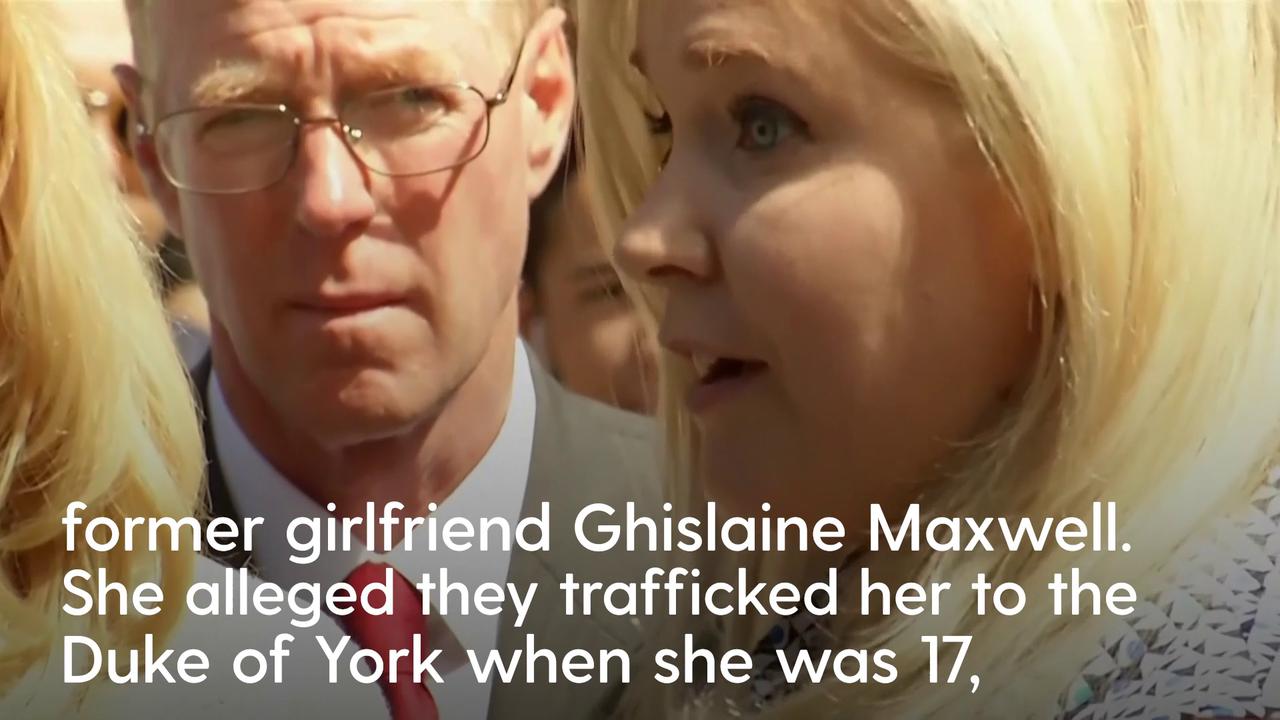
Giuffre, a mother of three, was one of the most vocal accusers of the wealthy and well-connected sex offender Epstein. In 2019, she publicly alleged Epstein trafficked her and forced her to have sex with his friends, including Prince Andrew, when she was 17 years old.

She also claimed the prince was aware she was underage in the US at the time.

Prince Andrew repeatedly denied the claims.

In July 2019, Epstein was indicted on one count of sex trafficking of minors and one count of conspiracy to engage in sex trafficking of minors, to which he pleaded not guilty. One month later, he died by suicide in prison.

He was accused of running a child trafficking ring to provide him with girls as young as 14 for sex and nude massages at his homes in New York City and Florida between 2002 and 2005.

A 2009 settlement agreement, unsealed in 2022, showed that Epstein paid Giuffre $500,000 to drop a case without any admission of liability or fault.

Prior to that, Epstein pleaded guilty in 2008 to state prostitution charges, one involving a 14-year-old girl, and served 13 months in prison under a controversial plea deal.

His ex-girlfriend Ghislaine Maxwell was arrested in 2020 and accused of facilitating Epstein’s abuse scheme. A jury in 2021 convicted her on five federal counts, including sex trafficking a minor and conspiracy. She was sentenced to 20 years in jail a year later.

Giuffre was not one of the four women who testified in the trial that they had been abused.

Help is available if you or someone you know is struggling with suicidal thoughts or mental health matters. In the US, call or text 988, for the Suicide & Crisis Lifeline. Globally, the International Association for Suicide Prevention and Befrienders Worldwide have contact information for crisis centers around the world.


Source link

Stunned resignation and foreboding: a week in Trump’s shadow at IMF | International Monetary Fund (IMF)

0


Kristalina Georgieva’s favourite film, the International Monetary Fund boss told the audience at a packed panel event in Washington on Thursday, is Tom Hanks’s cold war romp Bridge of Spies.

In one of the stranger digressions in a frequently strange week, Georgieva recalled the moment when Hanks’s character, a US lawyer, tells the Soviet spy he has been appointed to defend that he will probably be executed. “You don’t seem alarmed,” Hanks says to him; to which the spy – played by Mark Rylance – replies, “Would it help?”

Georgieva mentioned the vignette to underline the fact that this week’s spring meetings of the IMF and World Bank were not swept up in panic, despite the mayhem emanating from the Trump administration.

Instead, the reaction to the uncertainty of many of the hundreds of policymakers present has been a kind of stunned resignation.

Trump was barely mentioned by name at the scores of public events where policymakers chewed over how to respond to the challenges thrown up by his chaotic tariffs. Georgieva spoke of “major trade policy shifts” that had “spiked uncertainty off the charts”.

Central bankers earnestly discussed how best to portray today’s heightened uncertainty to the public. Perhaps, mused the Bank of England’s deputy governor Clare Lombardelli, they could learn from the way medics communicated during the Covid pandemic.

And the IMF suggested regulators keep a close watch on economic institutions, warning of “further shocks, corrections of asset prices, and tightening of financial conditions”.

Yet as one UK official privately acknowledged, it often felt as though the real action this week was happening not in the IMF – the spiritual home of the “Washington consensus” of free-market neoliberalism – but up the road at the White House, where what remains of that consensus was being torched.

Away from the public eye, policymakers at the IMF speculated about who is up and who is down in the administration, and what that may mean for its direction.

Trump’s apparent softening of his stance earlier this week on sky-high tariffs against China, and insistence he is not about to sack Jay Powell, the chair of the Federal Reserve, stoked hopes that the relatively more moderate Treasury secretary, Scott Bessent, has a stronger influence than the president’s tear-it-all-down trade adviser, Peter Navarro.

It appears unlikely to have been as a result of the IMF’s warning on Tuesday of a “major negative shock” from the tariffs.

IMF managing director Kristalina Georgieva tried to portray a sense of calm at the talks in Washington. Photograph: Shawn Thew/EPA

Instead, many observers pointed to the influence of the mighty bond markets – the agents of Liz Truss’s destruction. Even after markets recovered some ground this week, bond investors still appeared to be demanding an additional risk premium to hold US Treasuries, usually considered the ultimate haven.

With Trump’s administration hoping to drive down Treasury yields – and hence the interest rate on the monster US debt-pile – it is likely to be this, rather than moral suasion from the world’s finance ministers, that sways him in the coming weeks and months.

Indeed, there were signs everywhere in Washington that policymakers are keen to show they accept aspects of the administration’s worldview.

Rachel Reeves, who was to lobby Bessent on tariff exemptions for the UK, told guests at a drinks reception hosted by the British ambassador, Peter Mandelson, that she shared some of Trump’s concerns about persistent trade deficits – if not his approach to resolving them.

“There’s been a feeling in my country, and in America and in many other developed countries, that the system we have today delivers for some but not for all, and jobs have been hollowed out in some sectors of the economy,” the chancellor said. “It does matter where things are made and who makes them, and we can’t be agnostic or naive about that.”

Meanwhile, the IMF and World Bank reined in their rhetoric about how they see their role, even before Bessent himself accused them of “mission creep” in a speech on Wednesday. He claimed the IMF spent too much time on “climate change, gender, and social issues” and that the World Bank expected “blank checks for vapid, buzzword-centric marketing”.

skip past newsletter promotion

Despite his strong words, there was a sigh of relief at both Bretton Woods institutions – based in Washington, with an oversized role for the US – that the Trump administration did not want to quit them altogether. Bessent suggested they had “enduring value” – as long as they don’t overstep their core tasks.

Accordingly, both the World Bank president, Ajay Banga, and Georgieva framed their role in every public utterance as about jobs, growth and stability. One politician attending described Banga admiringly as “an operator”.

A longtime observer of the institutions, Prof Richard Kozul-Wright, of Soas University of London, said the change in emphasis was stark. “I’ve found it quite shocking, how craven they can be: six months ago they were going to save the planet,” he said.

Bessent suggested he wanted to see the IMF acting on some of the White House’s concerns about the global economy – including what it sees as excessive currency depreciation, and a failure by economies including China to stoke sufficient domestic demand: the latter a widely shared diagnosis among experts.

But Kozul-Wright said the Bretton Woods institutions, which have to answer to all their members, were ill-fitted for the task. “They can’t be an overt mouthpiece for the Trump agenda,” he said.

While the US president has been smashing up the global trading system, and rocking the world’s financial architecture in the process, other pillars of the Washington consensus seemed as solid as ever this week.

Georgieva lavished praise on Javier Milei’s government in Argentina, with which the IMF recently agreed a massive $20bn support package, for its drastic public spending cuts and agenda of slashing red tape.

She proudly pinned on a small badge featuring Milei’s trademark chainsaw, handed to her on stage by the country’s minister of deregulation, Federico Sturzenegger, who had just finished a lengthy digression about overzealous US regulation of watermelon exports.

As if to emphasise how fleeting any hopes of calm may be, Trump gave a defiant Time interview as policymakers prepared to leave Washington this weekend, saying he would consider it a “total victory”, if tariffs were still as high as 20% or even 50% in a year’s time.

With his punitive paused “reciprocal” tariffs still hanging over the global economy, IMF delegates will take home with them a sense of foreboding for what lies ahead.


Source link

When is it, how to watch nerd prom

0


The 2025 dinner will not have its traditional headlining comedian as the association removed Amber Ruffin in March following critical comments she made about the Trump administration

play

It is, once again, time for nerd prom.

The White House Correspondents’ Association Dinner is set to take place Saturday in Washington, D.C.

The event raises funds to support the association’s First Amendment scholarships and programs to promote. It also functions as the tentpole event during a weekend that brings together media executives, personalities and celebrities.

The 2025 dinner will not have its traditional headlining comedian as the association removed Amber Ruffin in March. The move came after White House staffers lobbed criticism at comments made by Ruffin that were critical of the Trump administration.

“At this consequential moment for journalism, I want to ensure the focus is not on the politics of division but entirely on awarding our colleagues for their outstanding work and providing scholarship and mentorship to the next generation of journalists,” association President Eugene Daniels wrote in a note to press colleagues in March.

Ruffin responded to the firing in an appearance on “Late Night with Seth Meyers” earlier this month.

“We have a free press so that we can be nice to Republicans at fancy dinners,” Ruffin joked. “I thought when people take away your rights, erase your history and deport your friends, you’re supposed to call it out, but I was wrong.”

Axios reported earlier this month that President Donald Trump will not attend the dinner, a continuation from his first term. White House Press Secretary Karoline Leavitt announced she would not be attending in a March interview on the Sean Spicer Show podcast, saying the association held a “monopoly” over covering the president.

Spicer, Trump’s first press secretary, skipped the 2017 edition of the dinner but attended the 2018 and 2019 dinners after he no longer held the position. His successor, Sarah Huckabee Sanders, attended the 2018 dinner and faced mocking from comedian Michelle Wolf.

Trump ordered a boycott of the dinner from White House officials in 2019, CNN reported at the time.

The dinner comes at a perilous time for the association, having lost control of the White House press pool − the group of reporters who fly on Air Force One and cover the president in tight spaces such as the Oval Office.

Daniels’ leadership and willingness to stand up to the Trump administration in defense of the free press was challenged in a membership meeting following the loss in March − according to media news outlet Status.

Here’s what to know about, and how to watch, the White House Correspondents’ Association Dinner.

When is the White House Correspondents’ Dinner?

The White House Correspondents’ Association Dinner is scheduled to take place on Saturday, April 26.

What time is the White House Correspondents’ Dinner?

The White House Correspondents’ Association Dinner starts at 8 p.m. ET.

Where does the White House Correspondents’ Dinner take place?

The White House Correspondents’ Association Dinner takes place at the Washington Hilton in Washington, D.C.

How to watch and stream the White House Correspondents’ Association Dinner

C-SPAN will carry coverage of the White House Correspondents’ Association Dinner on television and stream the proceedings on its website and app.

The broadcaster will show red carpet arrivals at 6 p.m. ET and the dinner starting at 8 p.m. ET.

This story was updated to fix a typo.


Source link

Teaching union faces legal challenge over new general secretary | Teaching

0


The leadership of the NASUWT teaching union has been thrown into doubt after a legal challenge was issued over its appointment of a new general secretary.

The application for an injunction, filed with the courts on Wednesday, came after a potential candidate was barred from running for the post, denying members the chance to vote in an open election.

Matt Wrack’s appointment by the NASUWT executive has already stirred controversy within the traditionally moderate union because of his leftwing background and lack of experience in education.

On Tuesday, the NASUWT, which is Britain’s second largest teaching union, named Wrack as general secretary, filling a vacancy created by the departure of Patrick Roach.

Wrack, a former leader of the Fire Brigades Union, was selected by the executive as its “preferred candidate” earlier this year, meaning he would automatically get the job unless a challenger received enough branch nominations to trigger an open election among members.

But branches attempting to nominate another candidate, Neil Butler, the NASUWT’s national officer for Wales, were told that rules barred him from receiving nominations because he was not a member of the union.

Butler’s supporters say the union has no such rule and had ignored legal advice that he was unfairly blocked under a convention against union employees being members of that union. Butler has worked for the NASUWT for seven years and before that was a teacher and member for three decades. The application for the injunction was in his name.

A spokesperson for the NASUWT said the union was “not able to comment” on the legal action.

NASUWT members who spoke to the Guardian said their complaints about Wrack’s candidacy had gone unanswered. Wrack, who was the general secretary of the FBU for 20 years until losing a re-election campaign in January, would be the first leader in the NASUWT’s history never to have been a qualified teacher or lecturer.

Daniel Pearn, a teacher and NASUWT member, said ordinary members had been kept in the dark about the appointment process.

“We know that [Matt Wrack] has never been a teacher, and for a teacher-led union that doesn’t sit right with me. I feel that the person who goes to speak for us, and for our working rights, should be a teacher,” Pearn said.

“In the past we’ve had general secretaries who have been in the profession, one way or another, as teachers or lecturers. It feels like a really odd appointment to me.”

Pearn said “the biggest sticking point in the process” was the lack of an open vote among members: “If it got put to a vote and Matt Wrack got voted in, it would be a fair, democratic process. But my problem is that they’ve blocked us from that.”

Wrack’s nomination also caused unease among the estimated 1,000 Jewish teachers within the NASUWT, with some arguing that he was insensitive to allegations of antisemitism within the Labour party during Jeremy Corbyn’s leadership.

The Partnership for Jewish Schools said Wrack’s nomination was “deeply troubling”, adding: “The many Jewish members of the NASUWT are likely to find this appointment particularly challenging. Educational unions must represent the interests of all members without prejudice or bias.”

Wrack’s nomination also raised fears of a merger with the National Education Union. While the NEU’s annual conference passed a motion calling for merger discussions “on or off the record”, the NASUWT’s delegates debated a motion ordering its executive to “reiterate publicly that there is no desire by NASUWT to consider any union amalgamation or merger”.


Source link

Jeffrey Epstein accuser Virginia Giuffre has died, according to family

0


play

Virginia Giuffre, one of Jeffrey Epstein’s accusers, has died, her family said in an April 25 statement.

Giuffre, 41, died near her home in Neergabby, Australia. The cause of death was suicide, her family said in the statement.

“Virginia was a fierce warrior in the fight against sexual abuse and sex trafficking,” her family said. “She was the light that lifted so many survivors. Despite all the adversity she faced in her life, she shone so bright. She will be missed beyond measure.” 

Giuffre, born Virginia Roberts, was among the most outspoken survivors of Epstein’s abuse. She played a critical role in the investigations that eventually led to criminal convictions against the financier and his associate, Ghislaine Maxwell.  

In 2015, Giuffre accused Epstein of paying her when she was 17 years old to have sex with him, Prince Andrew, Harvard lawyer Alan Dershowitz and some of Epstein’s other friends. She alleged that Maxwell lured her into Epstein’s circle. 

She also filed a sex abuse lawsuit against Andrew, in 2021, alleging that she had been trafficked to the British royal family member by Epstein three times around 2001 when she was a teenager. Andrew settled the suit in 2022. He has vehemently denied the allegations.  Giuffre also filed a defamation lawsuit against Maxwell in 2015. The case was settled two years later.

Epstein was charged with sex trafficking in 2019 but died by suicide in federal custody before he was brought to trial. Maxwell was sentenced in 2022 to 20 years in prison.    

Giuffre previously told The Miami Herald that the birth of her daughter in 2010 led her to speak out about the abuse.

“It was when she held her newborn daughter in her arms that Virginia realized she had to fight back against those who had abused her and so many others,” her family said.

In March, Giuffre told followers on Instagram that she had gone into kidney failure and was close to dying after a school bus crashed into her car at roughly 68 mph.

“There are no words that can express the grave loss we feel today with the passing of our sweet Virginia.  She was heroic and will always be remembered for her incredible courage and loving spirit,” her family said in a statement. “In the end, the toll of abuse is so heavy that it became unbearable for Virginia to handle its weight. We know that she is with the angels.” 

Giuffre lived in Australia with her three children. 

If you or someone you know may be struggling with suicidal thoughts, you can call the U.S. National Suicide Prevention Lifeline at 800-273-TALK (8255) any time day or night, or chat online.

Crisis Text Line also provides free, 24/7, confidential support via text message to people in crisis when they dial 741741.


Source link

Oklahoma City Thunder overturn 29-point deficit to take a 3-0 series lead over Grizzlies after Ja Morant leaves game injured

0


CNN
 — 

The Oklahoma City Thunder fought back from a 29-point deficit in the second quarter to earn a 114-108 win over the Memphis Grizzlies in Game 3 and open up a 3-0 lead in their first-round series.

The Grizzlies’ capitulation was sparked by an injury to star guard Ja Morant, who suffered a hard fall after a foul by Oklahoma’s Luguentz Dort as he tried to finish a fast break.

Morant missed both of his free throws before immediately exiting the game with 3:14 remaining in the second and heading to the locker room. The Grizzlies later announced he had suffered a hip contusion.

The No. 2 pick in the 2019 NBA draft was later pictured on crutches when he returned to the Memphis bench.

Grizzlies interim head coach Tuomas Iisalo was unsure of Morant’s status for Game 4 on Saturday and said the guard is “going through further evaluations tomorrow (Friday).”

The Grizzlies extended their lead to 29 points on their next possession after Morant’s departure, but it was only downhill from there.

Oklahoma trailed by 26 points at halftime before going on to produce the biggest second-half comeback in NBA playoff history.

“I just thought out of halftime, we kind of reconnected to who we are,” Thunder head coach Mark Daigneault told reporters. “We were very out of character in the first half.”

Leading MVP candidate Shai Gilgeous-Alexander scored a game-high 31 points for the Thunder to go with four rebounds, eight assists, a steal and a block.

“They built a 29-point lead in a half, so we felt like all we had to do was build our own 29-point lead,” Gilgeous-Alexander said, per AP.

Ja Morant was pictured on crutches after leaving the game.

Jalen Williams, one of the breakout stars of this season, had 26 points, six rebounds, five assists a steal and a block, while Chet Holmgren scored 23 of his 24 points in the second half to help power the Thunder comeback.

“Mark changed the trajectory of the game,” Holmgren said about his coach, per ESPN. “Trusted me in calling a play for me to bomb one at the half after the s***storm I put up in the first half.

“Credit to him for that. Once I saw one go in, I felt good.”

Morant had 15 points and five assists in 15 minutes of action before his injury. In his absence, Scotty Pippin Jr. put up a team-high 28 points for the Grizzlies, while Jaren Jackson Jr. added 22.

Morant endured another injury-plagued regular season and managed to play in just 50 of his team’s 82 games.


Source link

US fertility rate hovers near record low as Trump administration pushes for a baby boom

0


CNN
 — 

Women in the United States are less likely to have babies than ever before, but key figures in the Trump administration seem keen on changing that – even as federal programs focused on reproductive health face significant upheaval.

About 3.6 million babies were born in the US in 2024, according to a new report by the US Centers for Disease Control and Prevention. The fertility rate last year – 54.6 births for every 1,000 women of reproductive age – increased less than 1% from the record low in 2023, hovering well below rates from years earlier.

The US fertility rate has been trending down for decades, with a particularly steep dip after the Great Recession of 2008. An uptick in 2021 spurred theories about a Covid-19 “baby bump,” but the rate quickly returned to its more consistent downward pattern.

Experts say that year-to-year movement in the fertility rate tends to be incremental and that a single year of change – such as this year’s slight increase – does not indicate a shift in the long-term trend.

But the latest provisional data, published Wednesday by the CDC’s National Center for Health Statistics, also shows that births continue to shift to older mothers. The fertility rate was highest among women in their early 30s in 2024, with more than 95 births for every 1,000 women ages 30 to 34.

Meanwhile, teen births and births among women in their early 20s declined to record lows last year, the report shows. There were less than 13 births for every 1,000 teen girls, a 3% drop from 2023. And the birth rate for women ages 20 to 24 – about 56 births for every 1,000 women – was just slightly above the rate for women in their late 30s.

The small increase in births last year – about 27,000 more than in 2023 – was driven by higher birth rates among Asian and Hispanic women, while rates decreased among Black, White and American Indian women.

Experts say there are many reasons why women may be waiting to have kids or not having them all, with decisions shaped by socioeconomic circumstances and people’s broader experiences with reproductive health.

The US is facing a maternal health care crisis, with more than a third of the country in a maternal health care desert and a strikingly high rate of maternal death, especially among Black women. Research also suggests that abortion bans in the US are exacerbating existing health disparities as births increase in high-risk populations and infant mortality rises disproportionately.

Coming amid the fertility slump is a rise in pronatalist rhetoric by some officials surrounding President Trump, but those pushing for a higher birth rate in the US have not laid out a clear plan for how to support women, babies and families.

Elon Musk, who leads the Department of Government Efficiency, has said the low birth rate keeps him up at night.

“Humanity is dying,” he told Fox News last month.

Vice President JD Vance supported anti-abortion activists at a March for Life rally in January, days after being sworn in, and made his goal clear.

“Our society has failed to recognize the obligation that one generation has to another as a core part of living in a society,” he said. “So let me say very simply, I want more babies in the United States of America.”

And Transportation Secretary Sean Duffy sent a memo in March promising more funding to places with higher birth rates.

In 2023, Trump said he wanted “a baby boom” in the US. During the 2024 presidential campaign, he called himself the “father of IVF,” and he signed an executive order in February to develop policy recommendations to expand access to and affordability of in vitro fertilization.

But federal programs focused on reproductive health have taken a heavy hit as Musk’s department leads sweeping changes in the federal government.

Two-thirds of the CDC’s Division of Reproductive Health has been cut, according to a source who was part of the division and requested anonymity because of fear of retaliation. Programs focused on abortion surveillance, contraception guidelines, IVF surveillance, pregnancy risk assessment and more were among those that lost entire teams, with no plans to maintain them.

The US Department of Health and Human Services said Tuesday that maternal and reproductive health programs will continue under the new Administration for a Healthy America but offered no further details.

CNN’s Catherine Shoichet contributed to this report.


Source link

Ohio’s Justice DeWine Attempts to Address Criticisms of Originalism

0


Originalism — a method of constitutional interpretation that focuses on “history and tradition” as a basis for assessing constitutional rights — has become a point of debate in state court judicial philosophy.

Some jurists, like Massachusetts Justice Frank Gaziano, say that originalism “risks perpetuating the discrimination and subordination of the past.” Others, like Wisconsin Supreme Court Justice Rebecca Dallet, point out that “taken to its logical conclusion, it would result in the radical rejection of long-settled constitutional principles” — including “virtually all rights of women and racial minorities.” Still others, like North Carolina Justice Anita Earls, argue that originalist approaches can “paint a distorted picture of a constitution’s historical understanding.” Originalism’s defenders, meanwhile, say it respects “the policy-making role of the legislature” — as Idaho Supreme Court Justice Robyn Brody put it in a decision upholding the constitutionality of the state’s strict abortion ban.

Amid this robust exchange, Justice R. Patrick DeWine of the Ohio Supreme Court advances a unique justification for originalism in state constitutional analysis. His approach, which builds on the distinct features of state judiciaries and constitutions, joins the judicial chorus shouting down state interpretations that follow or “lockstep” with federal ones.

This chorus coincides with the curtailment of federal constitutional rights through recent U.S. Supreme Court opinions, many of which relied on originalist approaches. For example, originalism shaped Dobbs v. Jackson Women’s Health Organization, which declared that the U.S. Constitution does not confer a right to an abortion, and Students for Fair Admissions v. Harvard, which struck down race-conscious admissions policies at Harvard and the University of North Carolina. Five of the current nine justices on the nation’s highest court are self-proclaimed originalists: Samuel Alito, Amy Barrett, Neil Gorsuch, Brett Kavanaugh, and Clarence Thomas. These justices carry the torch of the late Justice Antonin Scalia, among the most prominent originalists in American jurisprudence, who helped usher in a brand of originalism that heavily relies on historical evidence — contemporaneous writings, dictionaries, and legislative history — to determine the original meaning of the text.

The recent dominance of originalism in the Supreme Court has led policymakers, scholars, and practitioners alike to look to state constitutional law to provide broader protections for individual rights. Indeed, there is a growing call to recognize additional rights that voters have legitimately adopted — directly or indirectly — through their state constitutions. Because state constitutions are relatively easy to amend, the rights enshrined within them can provide insight into the values of the people of the state.

Federalism — the American system of government in which certain powers are reserved for the states — shapes originalist interpretations of state constitutions by emphasizing their independent authority while recognizing their historical ties to the U.S. Constitution. Because many state constitutions were drafted in the shadow of federal constitutional principles, originalists often interpret them through a lockstepping approach, aligning state constitutional rights with analogous federal provisions. Indeed, originalism can constrain state courts from expanding protections beyond federal baselines, even when textual differences between the federal and state constitutions exist.

DeWine’s interpretative method, which he outlines in a forthcoming article, embraces originalism while addressing some of these concerns. He outwardly rejects automatic lockstepping — but nonetheless centers historical context and textual analysis as the key interpretive guidelines.

Requiring courts to ground their interpretations in state-specific values as they existed at the time of a provision’s adoption, DeWine says, compels the judiciary to acknowledge and engage with the distinct policy choices and innovations that the state has pursued within its constitutional framework. This approach reinforces the principle that states serve as laboratories of democracy, in which diverse legal and political experiments shape rights and governance. By tethering judicial analysis to historically accepted state norms, courts ensure that constitutional interpretation remains faithful to the unique trajectory of each state’s democratic development and preserves the autonomy of state constitutional law.

Crucially, DeWine’s framework is tailored to the unique features of state constitutions. For example, DeWine leans heavily on voter accountability to support the legitimacy of originalism as a method of state constitutional interpretation in Ohio and other applicable states. The vital link between popular sovereignty and judicial review of state constitutional amendments, according to DeWine, is an elected judiciary. Unlike federal judges, justices of the Ohio Supreme Court are elected, which arguably allows the electorate to influence judicial philosophy. DeWine emphasizes the ability of Ohio voters to replace jurists who misinterpret popular public opinion, something that voters cannot do at the federal level.

DeWine’s framework centers on an understanding of contemporaneous Ohioans, not the intentions and opinions of colonial-era officials who lived in a society far removed from this one. In that sense, this method remedies at least one prominent criticism against the application of originalist interpretation to state constitutions: that originalism prioritizes outdated views, stifling modern governance and its ability to respond to changing demographics and political landscapes.

DeWine’s framework is already embedded in Ohio case law. DeWine’s majority opinion in 2022’s Cincinnati Enquirer v. Bloom advocates for the reexamination of prior state decisions that reflexively lockstepped with federal decisions. The ruling leans on the ways in which the text, purpose, and history of the relevant state constitutional provisions differ from their federal counterparts. And in a concurrence in a case about criminal sentencing, DeWine wrote separately to redirect the analysis to a state constitutional approach and applied his framework to interpret a constitutional provision regarding the finality of a criminal controversy.

The long-term impact that DeWine’s special brand of originalism might have on individual rights in Ohio is still unclear. Should the other justices be swayed by DeWine’s approach, this year’s calendar includes many opportunities for the Ohio Supreme Court to revisit and revise previously accepted interpretations of the state constitution and the individual rights that it protects. The term is expected to bring rulings regarding public records, police reform, and the right to counsel. One case currently before the court asks it to redefine “unreasonable search and seizure” based on an independent examination of Article I, Section 14. The outcome could mark the start of an avalanche of reinterpretations of the Ohio Constitution and ultimately reshape the relationship between the people and state government.

State constitutions can only broaden personal freedoms beyond those at the federal level. But should the court determine that the local understanding of certain terms is narrower than verbiage used by the founders, it could curtail state-level fundamental rights established in previously settled case law.

Ainslee Johnson-Brown is a constitutional law scholar and advocate specializing in judicial interpretation and the evolving role of state courts in protecting democracy.

Suggested Citation: Ainslee Johnson-Brown, Ohio’s Justice DeWine Attempts to Address Criticisms of Originalism, Sᴛᴀᴛᴇ Cᴏᴜʀᴛ Rᴇᴘᴏʀᴛ(Apr. 21, 2025), https://statecourtreport.org/our-work/analysis-opinion/ohios-justice-dewine-attempts-address-criticisms-originalism


Source link