Home Blog Page 524

How Trump approached cryptocurrencies before pardoning Binance CEO

0


Democrats and one Republican argue that a pardon is inappropriate given the business ties between Binance and the Trump family’s crypto interests.

play

WASHINGTON – Five days after President Donald Trump pardoned the founder of Binance, the world’s largest cryptocurrency exchange, the company helped expand Trump’s wealth by promoting a digital coin known as USD1, a cryptocurrency product owned by the Trump family.

“$USD1 deposits have started on @BinanceUS!” the company’s U.S. subsidiary said in an Oct. 28 post about X, referring to Trump-linked cryptocurrency World Liberty Financial.

Binance also advertised that it would accept Trump’s separate World Liberty Financial token on its US-based site. Both USD1 and $WLFI were already available on Binance’s international platform, but not in the United States. Making both tokens more easily available to US investors could expand the pool of potential buyers and increase their value.

Trump and his three sons launched World Liberty Financial in September 2024, along with Trump’s foreign envoy Steve Witkoff and sons Zack and Alex, and the company’s profile and profits soared in November 2024 when Trump was elected and began deregulating the cryptocurrency industry.

A stablecoin like USD1 is a cryptocurrency whose value is pegged to another asset, in this case the US dollar. Trump’s $WLFI token has no inherent value of its own, its value is based on the amount of money his supporters and investors spend on it. Binance’s Oct. 28 announcement stated that trading would begin on Oct. 29 and that USD1 would be officially approved as a “stablecoin pegged to the U.S. dollar, fully backed by regulatory reserves, including U.S. Treasury securities.”

Binance founder and Chinese-born Canadian tech tycoon Qiao Changpeng “CZ” Zhao pleaded guilty to money laundering in 2023, served four months in federal prison, and was pardoned by President Trump on October 23.

Binance doesn’t just host and promote World Liberty Financial: The Wall Street Journal recently reported that when Zhao was seeking pardon earlier this year, Binance asked Abu Dhabi government-backed investment fund MGX to use President Trump’s $1 coin when investing $2 billion in Binance.

By leading the $2 billion deal through World Liberty, a start-up run by members of the Trump family with no experience in cryptocurrencies, the deal effectively increased the family’s demand for cryptocurrencies and generated new revenue from interest on the growing reserves backing it up.

“Opportunity for corruption is not hypothetical, and Mr. Trump is already setting an astonishing example,” Sen. Elizabeth Warren (Mass.), the top Democrat on the Senate Banking Committee, said in a speech on the Senate floor on May 5. He said MGX’s use of President Trump’s $1 stablecoin to finance its $2 billion investment in Binance “essentially gives President Trump a piece of the deal.”

“Persecution by the Biden administration”

Binance has agreed to pay more than $4 billion in 2023 to resolve a years-long investigation by the Department of Justice and U.S. financial regulators. And they agreed to close gaps in financial protocols that prosecutors said allowed criminal and terrorist organizations such as Hamas, Al Qaeda, and the Islamic State to move illicit funds on Binance’s cryptocurrency platform.

“Binance became the world’s largest cryptocurrency exchange in part because of its own crimes, and now the company is paying the largest corporate fine in U.S. history,” said then-Attorney General Merrick Garland.

play

Trump family makes $5 billion from cryptocurrency World Liberty Venture

Trump and his family made about $5 billion from World Liberty Financial’s $WLFI token, raising ethical concerns.

The White House and Trump himself have ignored questions about the ethics of Zhao’s pardon, which allows the crypto mogul to return to the business he helped found in 2017. They argue that Trump is simply adhering to his campaign promise to ease tough Biden-era regulations that were opposed by cryptocurrency industry executives..

At a White House event on October 23, President Trump told reporters that he pardoned Zhao “at the request of a lot of good people,” saying that he was “persecuted by the Biden administration” and that “what he did was not even a crime.”

“The Biden administration’s crypto war is over,” White House press secretary Caroline Levitt added in a statement.

Binance did not immediately respond to a request for comment on Zhao’s pardon and promotion of Trumpcoin days later.

However, X’s post, responding to criticism of the series of events by Sen. Chris Murphy of Connecticut, said: “Dear Senator, we conduct comprehensive due diligence and legal reviews before listing any asset on @BinanceUS, whether it’s a stablecoin, a new ecosystem project, or a meme token.”

According to Binance, both Trumpcoin, USD1 and $WLFI, are already listed on over 20 other major crypto exchanges and are used to buy, sell, store and use cryptocurrencies. “To be clear, this is a business decision on the part of @BinanceUS and nothing more,” the company said. “It is unfortunate that even routine business decisions are now being unfairly politicized by elected officials.”

The White House also denied any quid pro quo.

In an Oct. 30 statement to USA TODAY, Levitt said, “The media’s continued attempts to fabricate a conflict of interest are irresponsible and increase public distrust in what they report. Neither the president nor his family has ever been involved in a conflict of interest and will never be.”

President Trump was initially ‘not a fan’ of cryptocurrencies

At a White House event on October 23, when a reporter asked Trump for answers about why he pardoned Zhao and whether it had anything to do with his family’s crypto investments, Trump retorted: “You don’t know much about crypto. You don’t know anything.”

President Trump has become a cryptocurrency enthusiast since July 2019, when he said he was “not a fan of Bitcoin” and that cryptocurrencies are used to facilitate crime and “are not money.”

Since then, he and his family have made up to $5 billion in paper profits from their holdings in various cryptocurrencies, including a reported $864 million in real cash profits in the first six months of this year alone.

They started their own company and coin. And they have forged relationships with domestic and international industry leaders, garnered investments and donations, and granted access to President Trump. On May 22, Trump dined with 220 investors who had poured a total of $148 million into cryptocurrency ventures, prompting intense criticism about the ethical implications.

By the same month, World Liberty had already raised more than $500 million in another digital token sale.

play

President Trump signs the Genius Act, the first major cryptocurrency law in the US

President Donald Trump signed the Genius Act, creating the United States’ first virtual currency law regulating stablecoins.

The highest bidder for seats at that dinner and another VIP meetup was Justin Sun, a Hong Kong crypto entrepreneur who poured $75 million into World Liberty Financial shortly after its launch. Sun, who had reportedly avoided setting foot on American soil for fear of arrest, faced civil fraud charges under the Biden administration. However, Trump’s Securities and Exchange Commission put the case against him on hold in February.

Another so-called “cryptocurrency buddy” pardoned by President Trump is Ross Ulbricht, who was sentenced to life in prison in 2015 for founding and operating what the U.S. government called “the most sophisticated and large-scale criminal marketplace on the internet.” The transactions used Bitcoin, which helps protect the user’s identity.

“Full-time, 24/7 corruption machine”

Democrats, as well as one Republican, have criticized Zhao’s pardon as particularly inappropriate given Binance’s business ties to the Trump family’s crypto interests.

Former North Carolina Republican Sen. Thom Tillis said he “doesn’t like” the pardon and said it sends a “bad signal.”

“He’s been found guilty. He’s not innocent,” Tillis told reporters on Oct. 23.

Democrats have suggested the pardons could undermine difficult efforts on Capitol Hill to overhaul cryptocurrency regulations, which require bipartisan support.

Democratic Sen. Murphy posted on X that Binance has started promoting President Trump’s $1 cryptocurrency “It’s been a week since President Trump pardoned the owner of Binance (for a shocking series of crimes related to financing terrorists and sex offenders). ”

“The White House is a 24/7, full-time corrupt institution,” Murphy added.

America’s largest cryptocurrency company also pays large amounts of money to Trump

Binance is not the only cryptocurrency company to funnel money to President Trump in hopes of receiving preferential treatment.

Earlier this year, President Trump’s SEC dropped its lawsuit against Coinbase, the largest U.S. cryptocurrency exchange that buys, sells, stores, and uses cryptocurrencies such as Bitcoin and Trump’s $1 USD stablecoin. It happened shortly after the company donated $1 million to President Trump’s inauguration.

Coinbase has also reportedly confirmed that it is one of the many crypto companies funding President Trump’s new $300 million ballroom, which he demolished and built in the East Wing of the White House.

Coinbase is facing another SEC investigation that began under former President Joe Biden and is currently seeking SEC approval to offer blockchain-based stock.

President Trump’s virtual currency venture is a huge success

Since Trump’s election last November, his sons Don Jr. and Eric have embarked on a globe-trotting investment roadshow to drum up more cryptocurrency investment deals, which critics say poses a conflict of interest and a national security threat to the president.

“The Trump brothers’ efforts have been an astonishing success,” Reuters said in its Oct. 28 special report, “Inside the Trump Family’s Global Cryptocurrency Automated Teller Machine.”

The Trump Organization’s revenue for the first half of 2025 jumped 17 times to $864 million from $51 million a year earlier, according to the organization’s calculations. Reuters’ calculations are based on the president’s public disclosures, property records, financial records released in court, and information on cryptocurrency transactions.

“Thanks to the brothers’ foresight, they are not funneling money into the coffers of the Trump family’s businesses,” Kathleen Clark, a law professor at the University of Washington, told Reuters. “Because they want the freedom from legal restraint and impunity that only a president can provide.”

“GMA” is 50! The story behind the show’s success – Exclusive

0


Robin Roberts, George Stephanopoulos and Michael Strahan reflect on the ups and downs of this major milestone.

NEW YORK – The co-anchors of ABC’s “Good Morning America” ​​are ready to throw a party. The show will celebrate its 50th anniversary on November 3rd.

Robin Roberts is proud of the show’s mission, and it’s all summed up in the title. “This is a great name for the show,” the co-anchor says. “We’re trying to say to the people watching, ‘We’re going to find the good, and it’s an honor to do everything we can to make someone’s day.'”

The tone will be to celebrate the show’s anniversary, and fortunately, the anchors and staff have a little bit of party experience. In at least one case, a “flashy” party was held at the apartment.

An unforgettable party took place 13 years ago. Roberts had just taken a break from the show after doctors diagnosed her with myelodysplastic syndrome, a type of cancer. The day after she took leave, Roberts’ mother, Lucilirian Tolliver, died. When Roberts returned to New York to prepare for a bone marrow transplant, her colleagues, including co-anchor George Stephanopoulos, were determined to lift her spirits.

“It was exactly what I needed. All we did was laugh and have a good time,” Roberts, 64, recalls. “I remember George bringing his two little girls. Ali[Wentworth]was out, so George brought the girls. It meant a lot.”

“We learn to trust each other,” Stephanopoulos, 64, says of his relationships with his Good Morning America colleagues, including Michael Strahan, who joined as co-anchor in 2016. “When they need you, if they need you, you’re there. You don’t necessarily have to impose yourself on them. But I think we all know that we’re all there for each other in more or less ways. I can’t tell you how many times I’ve missed it.” (A line in the show) Sometimes Robin or Michael picked it up, and vice versa. ”

Stephanopoulos, who worked in the Clinton administration before starting his journalism career, joined Roberts at the GMA anchor desk in December 2009. The co-anchor revealed that the most memorable moment on the show was when Mr Roberts returned from a bone marrow transplant in 2013.

“That was, for me, the most fun moment ever on the show, because it felt like a family reunion, both in the studio and connecting with the audience,” he says. “And the first time she said ‘Good morning America,’ it was a blast.”

Looking back on the 2013 broadcast, Roberts says, “It was a day where I didn’t know what was going to happen,” while holding back tears. She said that in addition to the live studio audience and colleagues, Roberts’ sisters and doctors welcomed her back. “I was proud to be able to show people, let me be a living example that this too shall pass.”

50-year-old ‘upstart’ celebrates golden jubilee

Robert Thompson, director of Syracuse University’s Briar Center for Television and Popular Culture, was 16 years old when “Good Morning America” ​​aired in 1975. The “Today” show began in 1952.

“I still think of Good Morning America as a young upstart,” Thompson jokes. “When Good Morning America started, the Today show was almost a quarter-century old.” By comparison, GMA was “a challenger, a newcomer to the Today show.”

These days, “GMA” acts more as a champion than a challenger to its competitors. “Good Morning America” ​​finished the 2024-2025 television season as the most-watched morning news program for the 13th consecutive year, averaging more than 2.6 million viewers per day, about 400,000 more than rival NBC, according to Nielsen data reported by AdWeek. The competition for the 25- to 54-year-old demographic that advertisers covet is fierce, with Today winning the latest round. 3rd place goes to CBS.

“Good Morning America” ​​began on November 3, 1975, with actors David Hartman and Nancy Dussault as co-hosts. Dussault was replaced in April 1977 by Sandy Hill, who joined the program from ABC’s Los Angeles station. Hill remained in that position until 1980. Her departure cleared the way for Joanne Landen, then a reporter for ABC’s local New York station, to take her place. By 1986, Lunden was promoted to co-anchor. The following year, Hartman retired and Landen was paired with Charles Gibson.

Thompson calls the period from 1987 to 1997 a “definitive” era for “GMA” because the show spent most of that decade at the top of the ratings. Landen left in 1997, and Gibson followed a year later, returning in 1999 to team with Diane Sawyer. These two will bring further success to the show and have influence throughout the newsroom.

‘GMA’ anchor recalls history-making moments during difficult times

In 2002, Gibson and Sawyer took the helm of Good Morning America, and contributor Robin Roberts was promoted to news anchor. Roberts recalls two pieces of advice Sawyer gave her.

“She told me to always be curious,” Roberts says. “Another thing she said was, ‘Always strive for the stories you’re doing to create an actionable response.'” And I’ve never forgotten that.

“She was never intimidating and always welcoming,” Roberts continues. In 2006, the two became morning television’s first all-female anchor team. “People tell me not to meet my heroes. I’m glad I met her. She was exactly what I thought she was.”

Gibson also left his mark on Stephanopoulos in particular.

“I got some tough love from people like Charlie, Ted Koppel, and Peter Jennings,” the co-anchor recalls of his former colleagues at ABC News. “They were a little skeptical that someone from a political background could be an objective journalist, but they gave me a chance to prove I could do it.”

Strahan also started as an outsider and won a Super Bowl during a 15-season Hall of Fame career with the NFL’s New York Giants. But even as Mr. Strahan sits down with world leaders, Mr. Stephanopoulos fails to convey the tough love he received from his predecessors.

“He’s in the Hall of Fame for a reason,” Stephanopoulos says of Strahan. “He’s a real professional. Michael knows what he’s doing.”

Behind the scenes at the new “Good Morning America” ​​studio

“Good Morning America” ​​recently moved from its towering studio overlooking Times Square to a shinier building farther from downtown Tribeca. Midway through a commercial break, the cameraman repositions for the next block and Strahan, Roberts and Stephanopoulos are talking with reporter Will Reeve (son of the late actor Christopher Reeve) about the show’s viral video segment called “Today’s Play.” This video was taken of a beloved dog who served as an official witness at his owner’s wedding. It spurs a conversation about Reeve’s upcoming wedding. Strahan teases Reeve if it’s okay, insisting that his fiancée, Amanda, have a dog in their wedding party. The former NFL star then turned his attention to Stephanopoulos.

“Now you will do not have Stand up to your wife! ” Strahan joked to Stephanopoulos, telling him he should stand his ground.

“oh, you give myself jokes Stephanopoulos, who has been married to Wentworth for nearly 24 years. The studio erupted in laughter. In true mother hen fashion, Roberts quickly interjected, “Michael!” before things escalated further. The stage manager counted the group’s entrance from the intermission, and Strahan was tasked with introducing the corner.

“If only you could see what happens during commercial breaks around here,” he ad-libbed, his entire desk still covered in stitches. “Back to the topic, today’s play.” Take the heat off your back. ”

Executive producer Simone Swink says the trio’s sense of humor was one of the ways they were able to connect with viewers. She mentioned a recent episode of the YouTube series “Hot Ones” that the anchors recorded together.

“You see the chemistry, the camaraderie, the willingness to hurt each other, but you also see how they support each other,” Swink says. “That’s really important on-air and off-air.”

Strahan experienced that from Roberts before he landed at the “Good Morning America” ​​desk. “Live! ” while co-hosting the event. Along with Kelly Ripa, Strahan attended his first Oscar Awards. Roberts, who was hosting the ABC interview, called out to him on the red carpet.

“She looked at me and said, ‘Are you scared?’ And I said, ‘To the death of me,’ and she said, ‘You belong here. I come from a sports background, too, so trust me, you belong here.'” And those simple words alone helped me in that moment, and many other moments as well. And Robin gave me the confidence that I deserved that red carpet and that I deserved GMA. ”

Strahan also credited Stephanopoulos with helping him grow, saying that sitting with him was like witnessing a “master’s degree in journalism.”

“One of the things I always say to George is, ‘Hey, if I have to do a really tough interview about something, I don’t want to talk to you,’ because George is very candid,” Strahan says. “That’s what I like and what I learned.”

Proposition 50 could change California’s elections and change Trump’s strategy. The map shows you how.

0

To help Republicans maintain control in Washington, President Donald Trump is urging Republican-led states to redraw their congressional district maps to favor Republicans and pick up additional seats ahead of the November 2026 midterm elections.

Currently, Democratic-led states are responding.

On Tuesday, Nov. 4, Californians will vote to decide whether a Democratic-led redistricting plan can move forward. They hope their efforts can eventually offset Texas Republican Gov. Greg Abbott’s own remapping.

New states are also floating the idea of ​​redistricting, but few have concrete, realistic plans. This is because redistricting typically occurs at the beginning of every decade, and some states prohibit mid-decade changes altogether. California and Texas are the states with the most seats by far, giving them more weight in determining who controls the U.S. House of Representatives.

USA TODAY applied voting data from past elections to potentially newly elected districts to simulate the potential impact of these changes and what it would mean for voters across the country. Here’s how we did it and what we learned.

To compare district maps, we used voting data from the 2024 presidential election. In California, this is available by jurisdiction through a statewide database. This data can be further broken down by census blocks, which provide a detailed view of how people voted. These census blocks can be aggregated by both current and proposed maps.

Can’t see the map above? Click here to reload the page.

According to our analysis, California could flip six seats from Republicans to Democrats in the 1st, 3rd, 9th, 13th, 41st, and 48th districts. But that’s not certain. The 13th District will end with a slim +0.5 point lead for Democrats, and the 48th District will see a slightly larger +3.4 point lead for Democrats. The other four seats could end up with healthy margins of at least +10 points.

Here’s a closer look at how the margins (differences in the percentage of people who voted for each party) would change in California’s districts under the proposed map. For example, in California’s 35th Congressional District, former Vice President Kamala Harris won 53% of the vote to Trump’s 43%, giving him a 10-point lead over the Democrat.

There is one thing to note about this data. The precinct data used was the most complete we could find, but data was redacted for precincts with fewer than 10 voters. This removed approximately 0.05% of all eligible voters.

In Texas, districts are overlaid on current and proposed maps to show how elections will play out. Republicans gained three seats through redistricting and could improve their lead by two more seats.

To perform this analysis, we assumed that Californians and Texans would vote as they would in the 2024 presidential election. But if the past is any indication of the future, the 2026 midterm elections could look very different than the general election, unless President Trump or the Democratic presidential nominee is the frontrunner. Another caveat is that presidential results may differ from U.S. House elections. And although it’s not guaranteed, the president’s party is usually punished in midterm elections. Still, an overall analysis reveals how the balance of power may change.

Since 1934, only three presidents have allowed their party to win a House seat in a midterm election. The majority lost office in the first midterm elections in 2018, including Trump, who lost 40 seats to Republicans.

In a year marked by aggressive tariffs, immigration crackdowns and environmental rollbacks, President Trump’s approval rating in a Gallup poll fell during his second term from 47% in January to 41% in October.

Other states are also considering updating their maps (to varying degrees), including Florida, Kansas, Indiana, Maryland, Utah, Illinois and New York, according to Reuters.

Other states with final or advanced plans:

  • Missouri Republican Gov. Mike Kehoe has signed new maps to fill new seats, but he faces lawsuits and a possible statewide vote to defeat them.
  • North Carolina also approved new maps in October to flip one Democratic seat.
  • In Virginia, Democratic lawmakers are working to amend the state’s constitution to change the map in 2026.
  • In Ohio, lawmakers reached an agreement on new maps aimed at flipping two Democratic seats, including one held by Rep. Marcy Kaptur, the longest-serving woman in Toledo state legislative history.

Looking forward, here is the current balance of power in the House of Representatives and the number of seats in each state.

This is a developing story and may be updated.

For a complete breakdown of how we analyzed this data, you can read our methodology on this GitHub page.

Bending Spoons’ acquisition of AOL shows the value of legacy platforms

0

Bending Spoons’ acquisition of legacy platforms like AOL demonstrates the potential value of long-standing digital ecosystems. AOL’s 30 million monthly active users represent a data-rich resource that can be used by an enduring brand and AI-driven services. This statement is only true if the data is properly managed and integrated. Such deals can blend nostalgia and business benefits, but they also introduce new compliance and cybersecurity risks that companies need to address.

Bending Spoons is integrating high-retention consumer technology into its expanding digital portfolio by acquiring AOL from Yahoo. As companies increasingly turn to synthetic data to power AI’s learning corpus, the deal signals another tactic: leveraging established data assets and user bases to accelerate AI personalization, advertising efficiency, and the collection of digital identity information. This shows how old platforms (perhaps even treated as legacy) can become profitable fuel for innovation when combined with cloud-native architectures and machine learning models.

Vending Spoons financed its expansion strategy with a $2.8 billion debt package from major world banks including JP Morgan, BNP Paribas and HSBC. Unlike the dot-com boom-and-bust days, when the focus and interest was purely on software products, there is clearly more confidence among lenders in the long-term monetization of data. The acquisition follows Bending Spoons’ planned acquisition of Vimeo and is expected to close by the end of the year. The two deals, if completed, will position the company as a leading consolidator of Internet assets.

Deployment and operational challenges

Integrating a decades-old infrastructure like AOL presents technical challenges. Data migration from traditional email systems requires careful management to align with current security protocols and compliance requirements. There is also the important issue of retraining staff for AI data management for data, which involves significant buy-in from trusted service users. Therefore, as with any digital acquisition, Bending Spoons’ success will depend on its ability to manage the technical and cultural aspects of the integration. Without strong governance, promising legacy platforms risk compliance liability.

Preparatory activities occur early in the acquisition cycle, including mapping data lineage, performing integration and interoperability audits, and discussing key governance issues. It’s worth noting that many integration pilots are stuck without shared accountability between technology and business functions. It’s easier to want data than to think about how to use it for your business. Especially when the best an acquirer can hope for is a limited sample of what it can get once the ink on the check dries.

Vendor and ecosystem context

Although Bending Spoons operates independently of the major enterprise AI ecosystem, the logic of its acquisition aligns with Microsoft’s integration of LinkedIn data into Azure AI Foundry and IBM’s efforts to reinvigorate legacy data using Watsonx. AOL’s customer base and behavioral data could also hold value with cloud analytics, customer profiling, and identity management frameworks on off-the-shelf platforms such as AWS Bedrock, Azure, and Google Vertex AI.

executive takeout

Legacy platforms are not obsolete, but they are often underutilized and undervalued. The differentiator lies in how organizations integrate historical data into modern AI governance and value delivery. While executives may view the AOL acquisition as a nostalgic play, it’s a much grimmer vision for a pure data asset. Perhaps the next wave of competitive advantage may come not from building new systems, but from reinterpreting old software and information that is sometimes ignored simply because it is not the latest and greatest “stuff.”

(Image source: “Spoon” by felixtsao is licensed under CC BY 2.0.)

Want to learn more about AI and big data from industry leaders? Check out the AI ​​& Big Data Expo in Amsterdam, California, and London. This comprehensive event is part of TechEx and co-located with other major technology events. Click here for more information.

AI News is brought to you by TechForge Media. Learn about other upcoming enterprise technology events and webinars.

Chipotle ‘Bolito’ deal for Halloween 2025 will include online contest

0

Enjoy trick-or-treating at Chipotle and score a Halloween dinner deal.

The fast-casual restaurant chain hosts its annual “Boolito” Halloween celebration, offering holiday deals to members of the Chipotle Rewards loyalty program who visit the restaurant in costume on Friday, Oct. 31.

If you’re in costume, you can get an entree for $6 (main dishes usually cost $11 to $15). While this is a bargain, it’s not as good a deal as the ones in the past. In 2019, you could get an entree for $4, and in 2008, if you dressed up like a burrito, you could get a free burrito.

How to get Chipotle’s 2025 Halloween Sale.

You don’t have to leave your house to partake in Chipotle’s Halloween festivities, but if you dress up in costume and head to a Chipotle restaurant, you’ll save money on your meal.

  • Boorito’s $6 discount starter: On Friday, October 31st, Chipotle Rewards members who visit the restaurant in costume from 3:00 PM local time until closing time (subject to availability) will receive a regular entree for $6. Options include a burrito, burrito bowl, one order of three tacos, a salad, or a quesadilla (only available on the Chipotle app or Chipotle.com). This offer is valid in-person only and is limited to one discounted item per person. Not suitable for delivery or pickup orders. (Not valid on children’s meals, catering orders, or third-party ordering platforms).
  • Borito Costume Contest: Show off your costume on TikTok for a chance to win one of three Chipotle VIP cards worth over $500 (and get 50 free entry codes). To enter, submit a video by November 2nd with the hashtag #BooritoCostumeContest for a chance to win a Chipotle VIP card. “Bolito has long served as a runway for guests to show off their creative outfits, so this year we’re leveraging TikTok to add even more excitement and inspiration,” Chris Brandt, Chipotle’s president and chief brand officer, said in a news release.
  • Build your own Chipotle deal: This deal will last long past Halloween and possibly into the holiday season. Get $10 off your first order of Build-Your-Own Chipotle meals. It comes with all the supplies you need to feed 4 to 6 people. Use code TRYBYOC until December 31st or 500,000 redemptions, whichever comes first.

Mike Snyder is a national trends news reporter for USA TODAY. You can follow him on Threads, Bluesky, and X, and email him at: mike snyder & @mikegsnider.bsky.social & @mikesnider & msnider@usatoday.com

What is everyone talking about? Sign up for our trending newsletter and get the latest news of the day

Photo of President Trump and First Lady Melania Trump handing out candy to trick-or-treaters

0

play

President Donald Trump and first lady Melania Trump looked entranced as they handed out Halloween candy to children at the 2025 White House trick-or-treat event.

Although President Trump and the first lady did not dress up for the spooky holiday, video from the event shows them handing out candy to creatively costumed trick-or-treaters on the South Lawn on Thursday, Oct. 30.

The President and First Lady welcomed children of law enforcement, military and government officials, as well as foster and adoptive families to the annual celebration.

Some trick-or-treaters dressed up as elves, lampshades and even former President Abraham Lincoln, while others dressed up as President Trump and his wife.

Photo of President Trump and First Lady Melania Trump giving candy to trick-or-treaters

This photo shows the president and first lady handing out candy bars and other sweets.

Natalie Neisa Alland is a senior reporter at USA TODAY. Contact her at nalund@usatoday.com and follow her at X @nataliealund

Kash Patel says Michigan thwarts ‘potential terrorist attack’

0

play

Federal agents in Michigan thwarted a potential “terrorist attack” over the Halloween weekend, FBI Director Kash Patel announced on October 31st.

In a post on X, Patel said the FBI had arrested several people “on suspicion of planning a violent attack.” The director did not elaborate on the alleged conspiracy, nor did he provide details on how many people had been arrested or the charges they were facing.

“Through swift action and close collaboration with local partners, a potential terrorist act was stopped before it could escalate,” Patel said in a statement. “Thanks to this FBI vigilance, what could have been a tragic attack was thwarted, and thanks to their dedicated efforts, Michigan will have a safe and happy Halloween.”

Michigan Governor Gretchen Whitmer said she had been briefed on the operation by the FBI. “While the details continue to evolve, we are grateful for the swift action of the FBI and (Michigan State Police) to protect Michiganders,” she told X.

FBI agents were in the metro Detroit suburbs of Dearborn and Inkster, said Jordan Hall, a spokeswoman for the FBI’s Detroit field office. He did not say whether the investigators were involved in the investigation Patel described. He added: “There is no threat to public safety at this time.”

The Dearborn Police Department confirmed that “the FBI conducted an operation in the City of Dearborn early this morning,” but stressed that “there is no threat to the community at this time.”

Patel’s announcement comes months after federal authorities said they had thwarted a potential mass shooting at a Detroit-area military base planned for ISIS. In that case, former Michigan Army National Guardsman Ammar Saeed was charged with attempting to provide material support to a foreign terrorist organization, according to the Department of Justice.

There is no indication that the two alleged plots were related.

Contributor: Frank Witsil, Detroit Free Press

How Lumana is redefining the role of AI in video surveillance

0

Despite all these advances in artificial intelligence, most video security systems still lack context awareness in real-world situations. Most cameras can capture real-time footage, but it’s difficult to interpret. This issue is a growing concern for smart city designers, manufacturers, and schools, who may rely on AI to keep people and property safe.

Lumana, an AI video surveillance company, believes the flaws in these systems are at the root of how they are built. “Traditional video platforms were created decades ago to record footage, not interpret it,” said Jordan Shaw, vice president of marketing at Lumana. “Adding AI on top of outdated infrastructure is like putting a smart chip on a rotary phone. It may work, but it will never be truly intelligent or reliable enough to understand what is being captured or help teams make smarter real-time decisions.”

big impact

When traditional video security systems overlay AI on top of outdated infrastructure, they experience false alarms and performance issues. Missed alerts and detections are more than just technical issues; they are a risk with potentially devastating consequences. Shaw points to a recent incident in which a school surveillance system using an AI add-on for gun detection misidentified an innocuous object as a weapon, causing an unnecessary police response.

“Any mistake, whether it’s a missed event or a false alarm that leads to an inappropriate response, erodes trust,” he said. “It wastes time and money and can traumatize people who have done nothing wrong.”

Errors can also be costly. Each false alarm forces teams to pause their actual work to investigate, a process that can drain millions of dollars from public safety and operating budgets each year.

Building a smarter foundation

Rather than layering AI on top of older video security frameworks, Lumana has rebuilt the infrastructure itself with an all-in-one platform that combines modern video security hardware, software, and proprietary AI. The company’s hybrid cloud design connects any security camera to GPU-powered processors and adaptive AI models running at the edge. This means that the camera is placed as close as possible to where the footage is being captured.

The result, Shou says, is improved performance and more accurate analysis. Each camera becomes a continuous learning device, improving over time to understand movement, behavior, and patterns unique to its environment.

“The problem is that most of today’s video surveillance systems use static, off-the-shelf AI models that are designed to only work in specific environments. AI doesn’t need a perfect lab environment to work,” Shaw explained. “It needs to operate in real-world situations and adapt based on incoming video data, so when customers compare Lumana to existing or other AI systems, the differences and performance gaps become immediately apparent.”

Privacy is also important in the company’s design. All data is encrypted, managed by access controls, and compliant with SOC 2, HIPAA, and NDAA standards. Customers may opt-out of facial or biometric tracking if desired. “We’re about behavior, not identity,” Shaw said.

Actual usage example

Lumana’s systems have been implemented in several industries. One of the most high-profile projects is with JKK Pack, a 24-hour packaging manufacturer that uses security cameras to monitor facility safety and operational efficiency.

Before Lumana, cameras only recorded incidents for later review, resulting in missed events and reactive incident response. After the upgrade, the same hardware will be able to detect unsafe movements, equipment failures, or manufacturing bottlenecks in real time. The company reports that investigations are now 90% faster, alerts are delivered within one second, and response to safety incidents is dramatically improved without replacing a single camera.

In another deployment, a grocery retailer integrated Lumana’s AI into its existing camera network to flag anomalous POS activity, such as repeated empty seats, and correlate those events with visual evidence. The system reduced employee liability and improved accountability by providing examples of policy violations.

Beyond manufacturing, Lumana’s systems are also used in large-scale public events, restaurants, and municipal operations. In urban areas, it is useful for discovering illegal dumping and fires. Quick service chains monitor kitchen safety and food handling.

Widespread promotion of reliable AI video security

Lumana’s work comes at a time when enterprise AI’s top priorities are replacing speed with accuracy and accountability. A recent F5 survey found that only 2% of companies believe they are fully ready to scale AI, with governance and data security cited as key challenges.

This wariness is reflected in the market, with analysts warning that as AI takes over more decision-making, systems need to remain “auditable, transparent and unbiased.”

Lumana’s architecture reflects the demand for accountability, blending performance and control with data governance and cybersecurity in an easy-to-deploy solution that enhances existing security camera infrastructure, helping organizations derive immediate value from AI video.

The next step in machine vision

Shou said Lumana’s next stage of development aims to move from detection and understanding to prediction.

“The next evolution of AI video will be about inference,” he said. “The ability to gain real-time context and provide actionable and impactful insights from collected video data will change the way we think about safety, operations, and awareness.”

Lumana’s goal is not only to teach AI how to see better, but also to help it understand what it sees, so that the people who rely on that video data can make smarter, faster decisions.

Image source: Unsplash

Looking for a truck to survive the zombie apocalypse? See our picks

0


Which truck would you choose to face the undead?

play

  • Major automakers such as Toyota, Ford, and Ram produce high-performance off-road pickup trucks.
  • These trucks are specifically designed to withstand harsh terrain and overcome difficult driving situations.

A zombie apocalypse may sound far-fetched, but 2025’s toughest pickup trucks are so overbuilt that they might be equipped to handle it. So, if the undead came knocking, which truck would you trust to save you alive?

From ample ground clearance to unique off-road capabilities, some trucks are so clever and advanced that you might actually have a chance in the zombie apocalypse.

2025 Toyota Tacoma TRD Pro

Preparing for the end of the world?

Toyota’s Tacoma TRD midsize pickup truck is legendary in this segment for several reasons that make it the perfect choice for a zombie apocalypse. Reliable, rugged and designed for roads less traveled.

Prices for the 2025 Toyota Tacoma TRD Pro start at $64,135. This midsize pickup truck uses a 2.4-liter turbocharged four-cylinder engine and electric motor to produce 326 horsepower and 465 pound-feet of torque. It gets 22 miles per gallon in the city and 24 miles per gallon on the highway.

The Toyota Tacoma TRD Pro comes standard with Multi-Terrain Select, which allows drivers to tune the Tacoma for different terrain types, including mud, dirt, and sand. It also features standard CRAWL control, low-speed off-road cruise control to help drivers navigate difficult terrain. The Tacoma TRD Pro includes 33.0-inch all-terrain tires, TRD-tuned FOX shocks, and an underbody skid plate. With terrain management features, all-terrain tires, and skid plates, the TRD Pro is perfect for nightmarish situations like enduring a zombie apocalypse.

2025 Ford F-150 Raptor

mini monster truck

Ford’s F-150 Raptor is one of the most capable off-road trucks on the market. Priced from $79,005, it’s not for everyone, but the full-size off-road truck can tackle sand, rocks, and more.

The 2025 Ford F-150 Raptor is powered by a 3.5-liter twin-turbocharged V6 engine that produces 450 horsepower and 510 pound-feet of torque. You get 14 miles per gallon in the city and 18 miles per gallon on the highway.

The F-150 Raptor includes heavy-duty skid plates, large 35.0-inch all-terrain tires, and 12.0 inches of ground clearance. It produces plenty of power and has a terrain management system to deal with tricky terrain. Raptor is designed to overcome difficult obstacles and tricky situations.

Rams 2025 1500 RHO

“Equipment for adventure”

Not to be outdone by Ford, Stellantis’ Ram brand also produces full-size off-road pickup trucks that can tango over rugged terrain. The 2025 Ram 1500 RHO is the most capable version of the popular 1500 full-size pickup.

Prices for the Ram 1500 RHO start at $69,995. It is powered by a 3.0-liter twin-turbocharged six-cylinder engine that produces 540 horsepower and a powerful 521 pound-feet of torque. The 1500 RHO gets 14 miles per gallon in the city and 16 miles per gallon on the highway.

Ram’s full-size off-road pickup truck has 11.8 inches of ground clearance. It comes standard with F-150 Raptor-like 35.0-inch all-terrain tires, a whopping nine selectable drive modes, and front and rear tow hooks. A review in automotive magazine The Drive found the 1500 RHO to be smooth on both sand and rocks.

Should a zombie apocalypse occur, your survival will depend on your ability to build vehicles that can overcome extreme terrain and unpredictable conditions. Fortunately, some of the latest 2025 pickup trucks have robust features that can work in your favor.

5 Grocery Hacks to Save Dollars

0

Good morning and Happy Friday! I’m Betty Lynn Fisher for the Friday consumer edition of Daily Money.

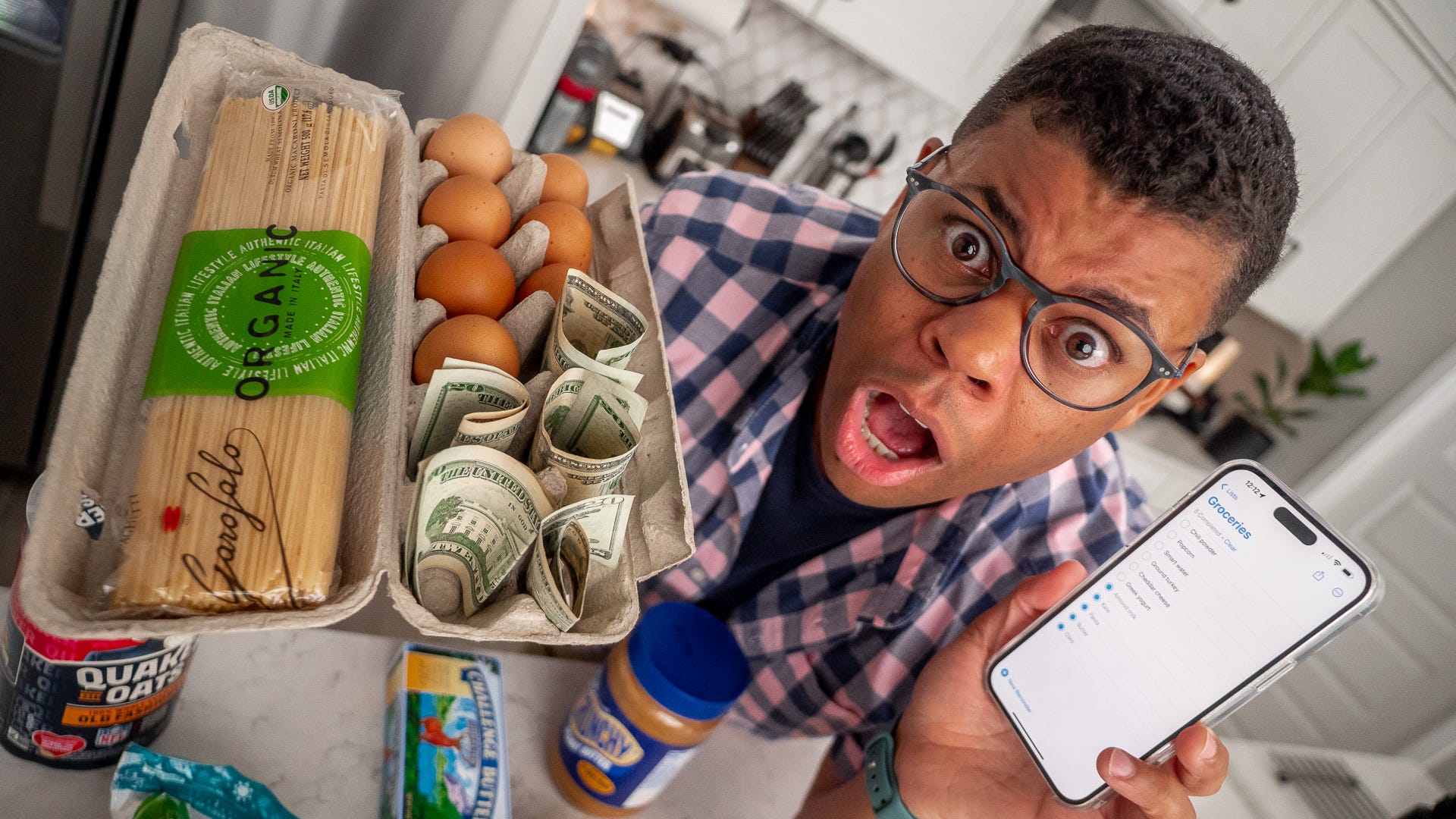
With food prices rising due to inflation and tariffs, we all want to save money on groceries.

We’ve collected five grocery store hacks from savvy shoppers. But here’s what else is going on:

Layoffs don’t necessarily cause financial ruin

Losing your job can be traumatic, but it doesn’t have to be a financial ruin, experts tell my colleague Medora Lee.

Experts say staying calm and taking the necessary steps quickly to protect yourself and your finances will help you survive until you can find another job.

The Affordable Care Act plans for significant price increases.

Registration for Affordable Care Act health insurance begins November 1st.

My colleague Ken Alltucker reports that consumers will be in for a big shock as the subsidies that made plans cheaper for millions of Americans during the pandemic are set to expire.

📰 Consumer stories you can’t miss 📰

Betty Lin-Fisher is a consumer reporter for USA TODAY. please contact her Follow her at blinfisher@USATODAY.com or @blinfisher on X, Facebook and Instagram and @blinfisher.bsky.social on Bluesky.. Sign up for our free The Daily Money newsletter, breaking down complex consumer and financial news. Subscribe here.

Will military expenses be paid on October 31st? Authorities found $5.3 billion.

0

play

The Department of Defense and the Office of Management and Budget (OMB) confirmed to USA TODAY that military personnel will be paid on Oct. 31, despite a lack of funding due to the ongoing government shutdown.

OMB said the agency is withdrawing funds from three different financial accounts to cover $5.3 billion in military spending, including $2.5 billion from a military spending account allocated as part of the Big Beautiful Act.

According to the Department of Defense, the typical payday for active duty military personnel is Friday, October 31st. Payments are typically made twice a month, once in the middle of the month and once at the end of the month.

Despite the lack of funding, military pay was on schedule on October 15 after President Donald Trump ordered the Pentagon to pay service members “spendable balances.”

Most other federal employees are paid on a biweekly schedule, with their next payday set for Nov. 7. With the exception of the military and some Department of Homeland Security employees, other federal employees were not paid during the shutdown. The last partial paycheck on Oct. 10 included hours worked before the shutdown.

Will military personnel receive their paycheck on October 31st?

Yes, service members will receive payments on Oct. 31, OMB confirmed to USA TODAY.

OMB announced that a total of $5.3 billion was being withdrawn from three accounts to pay the military. $2.5 billion from the Big Beautiful Bill Account, $1.4 billion from the Department of Defense Procurement Account, and $1.4 billion from the Research and Development Account.

Axios first reported the news on October 29th.

The Department of Defense also confirmed that military personnel will be paid. The Department of the Army, officially the Pentagon, praised President Trump in a statement while condemning Democrats, along with other agencies in the administration.

“Despite the fact that Democrats are shutting down the government and leaving our bravest men and women without pay, President Trump remains true to his promise to take care of our military,” the statement said.

The announcement came after Vice President J.D. Vance told reporters on Oct. 28 that military personnel would be paid on Oct. 31, according to reports.

What you need to know about promoting payments to military personnel during the government shutdown

Despite being paid on Oct. 31, Treasury Secretary Scott Bessent said on Oct. 26 that if the shutdown continues, active-duty troops will begin working without pay by Nov. 15. USA TODAY has contacted the Treasury Department for more information.

In early October, the Trump administration announced it had received $130 million in checks from private donors to cover the salaries of active-duty military personnel. The check does not appear to have been raised for the Oct. 31 payroll, and it is unclear how it will be used.

Some lawmakers are calling for military pay to be preserved during the shutdown. A group of Republican senators led by Ron Johnson of Wisconsin introduced a bill known as the Shutdown Fairness Act on October 15th. The bill would guarantee paychecks for military personnel and other essential workers who remain on duty during the shutdown. However, this bill was rejected in a Senate vote on October 23rd.

Will the military receive back pay once the government shutdown ends?

Under the Public Employees Fair Treatment Act of 2019, passed during the last government shutdown, federal employees who were furloughed while federal funding expired are entitled to back pay for time logged during the government shutdown.

This means that all federal employees, including military personnel, will receive retroactive pay after the shutdown ends for hours worked that were not paid during the shutdown.

According to the Office of Personnel Management, essential employees who are still working during the closure period should continue to record their hours according to special instructions from their institution’s payroll provider.

Melina Khan is USA TODAY’s national trends reporter. Contact her at melina.khan@usatoday.com.

Oakland Museum, home to New York City, targeted by robbers looking for valuable loot

0


Thieves steal valuables from a wide range of targets, including the wealthy and famous, as well as museums and high-end retailers.

play

In early October, police said a group of robbers, including two people dressed as construction workers, stole millions of dollars worth of jewelry and loot before fleeing in broad daylight.

But these criminals weren’t robbing the Louvre in Paris. The brazen theft occurred at a residence in New York City.

The day before the New York theft, police said someone from across the country broke into an off-site storage facility at the Oakland Museum in California and stole more than 1,000 items, including jewelry, laptops, Native American baskets and other historical artifacts.

Two recent thefts in the United States highlight how attractive high-value targets have become for criminals, who have recently targeted not just the rich and famous, but also museums and high-end retailers.

Robert Wittman, a former FBI agent who founded the bureau’s international art crimes team, said valuables of all kinds, from fine art to handbags to watches to baseball cards to rare cheeses and wine, are attractive targets for thieves because their value has increased significantly over time.

“What I’m seeing today is that high-value assets are frequently stolen, and the reason for that is because of their value…The inflation of value creates interest in the criminal community,” Whitman said.

Skilled crew stole millions of dollars worth of treasure

Just hours after the infamous Louvre robbery, 2,000 silver and gold coins worth more than $100,000 were stolen from another French museum. At least four other French museums have been robbed in the past two months, according to media reports.

Whitman and other art crime experts said such museum thefts, targeting jewelry and gold objects that can be easily disassembled and sold, are on the rise. Museums are notoriously difficult to secure and are therefore often vulnerable, but they are not the only targets.

In June, federal authorities charged seven men with stealing $100 million worth of diamonds, Rolex watches and emeralds from a Brink semi-truck in Southern California. The incident has been called “the largest jewelry heist in U.S. history.”

The Jewelry Security Alliance, a nonprofit industry group, found that while the number of robberies, robberies, and other thefts targeting the U.S. jewelry industry decreased in 2024, the severity of losses caused by sophisticated thieves was so great that losses increased to an estimated total of $142.5 million.

Highly organized teams are also believed to be behind a series of recent robberies targeting high-profile athletes, including NFL stars Joe Burrow, Patrick Mahomes and Travis Kelce. In February, seven men were charged with stealing more than $2 million in cash and luxury goods from players’ homes.

The FBI warned that the perpetrators were part of a sophisticated group that conducted extensive technical and physical surveillance before infiltrating.

“These preparation tactics allow thieves to carry out robberies in a short amount of time. Organized thieves bypass alarm systems, use Wi-Fi jammers to block Wi-Fi connections, disable devices, cover surveillance cameras, and obscure their identities,” the FBI said.

Contributor: Jon Hoefling, USA TODAY; Reuters

Dodgers vs. Blue Jays Predicted World Series Game 6 Picks

0

play

The Toronto Blue Jays are one win away from winning their first World Series since 1993 and could shut out the Los Angeles Dodgers in Game 6 of the Fall Classic on Friday night.

The powerful Dodgers struggled throughout this series, giving up just three runs in disappointing losses in Games 4 and 5 held at Dodger Stadium. Yoshinobu Yamamoto took the mound for the Dodgers and delivered a historic Game 2 performance to save his team’s season.

Kevin Guzman will start for the Blue Jays, and if the Dodgers win tonight, Game 7 is scheduled for Saturday.

How USA TODAY Sports’ MLB writers and editors view the outcome of Game 6:

Bob Nightengale: Blue Jays 5, Dodgers 2

There’s no stopping the Jays now. They treat opposing starters as if they were wearing a Colorado Rockies uniform. After this night, they will be celebrating the arrival of hockey season.

Gabe Lux: Blue Jays 4, Dodgers 2

This series exposed a person who can almost become a prisoner of the moment. And Yoshinobu Yamamoto will give the Dodgers a great chance to prevent elimination. However, in Games 3-5 in Los Angeles, the Blue Jays defeated the Dodgers 8-1 from the seventh to the ninth innings. Yamamoto will not pitch a complete game this time. And the Dodgers’ bullpen hasn’t improved.

Steve Gardner: Dodgers 3, Blue Jays 2 (10)

The pitching battle should be great, especially now that the bullpen has had time to reset. It will be difficult to produce a lot of runs, so let’s hope for a long ball from Shohei Ohtani’s bat late in the inning.

Jesse Yomtov: Dodgers 7, Blue Jays 3

The Dodgers will be able to hit a few home runs and play again the next day, leading to their first seven-game World Series since 2019.

How to survive financially after being laid off

0

play

Layoffs are widespread, increasing the likelihood that you or someone you know will lose your job.

Amazon and UPS have recently announced tens of thousands of layoffs, and some economists predict more to come. Major companies have started cutting jobs after the pandemic, after holding on to staff due to concerns about labor shortages. Now, as the economy slows, costs rise and artificial intelligence (AI) makes companies more efficient, companies are cutting back on perceived fattening.

Experts say losing your job can be traumatic, but it doesn’t have to be a financial ruin. Experts say staying calm and taking the necessary steps quickly to protect yourself and your finances will help you survive until you can find another job.

“Suddenly losing half of our household income…was terrifying,” Chris Sherman, a laid-off product manager, wrote on his blog. “My wife and I live in Seattle, and with two kids and two mortgages, our monthly expenses are high. Fortunately, we started our life together with very little income, so we were able to develop good financial habits early on. We were able to weather this transition without major financial damage.”

How do you survive a layoff?

Here are some tips from experts.

  • Examine the pink slip. Employers cannot require you to sign a resignation document before you are allowed to resign, nor can they withhold your pay for not signing it. Therefore, you can take the time to review the terms and possibly negotiate items such as retirement benefits, health insurance, stock options, and referral services to help you find another job. All workers have protections, and employees age 40 and older have additional protections under the Older Workers Benefits Protection Act (OWBPA). To release a company from age discrimination claims, it must give older workers at least 21 days to consider offers and seven days to revoke individual termination signatures, among other provisions. In the case of collective redundancy, employees must be given 45 days to consider a severance agreement.
  • get a recommendation. Ask a manager or someone at the company you had a good relationship with for a reference letter or if they can be a reference in the future. Be sure to exchange contact information before departure.
  • plan your health insurance. Businesses with 20 or more employees typically offer continuation coverage under the Consolidated Omnibus Budget Reconciliation Act (COBRA), which covers you and your family for up to 18 months. But COBRA isn’t cheap, and you may need to pay full premiums, up to 102% of the plan cost, according to the Centers for Medicare and Medicaid Services. If possible, it may be cheaper to transfer to your spouse’s workplace health insurance. You can also check out Affordable Care Act plans on the Health Insurance Marketplace.
  • Check your finances.
    • Apply for unemployment insurance (UI) benefits now. Requirements vary by state, with some states requiring a one-week waiting period before being eligible for payments. Check out the Department of Labor’s website, Unemployment Benefits Finder | Visit CareerOneStop to learn how to apply for UI in your state.
    • See if there are any sources of income readily available. This includes emergency funds and loans from friends and family. According to a 2023 Quicken survey of 865 adults, one in three people who have not been laid off have given, gifted or lent money to someone who has been adversely affected by a layoff or the current economic climate. Their generosity begins with their families. Because people are most likely to donate to siblings (81%), their spouses (79%), their children (76%), and parents (75%).
    • Cut back on expenses you can live without, at least temporarily, such as takeout meals, subscription services, and memberships.
    • Don’t forget your 401(k)“If you’re fired, neither you nor your employer will contribute to your 401(k),” says Samuel Everts, a financial advisor at retirement planning firm Dugan Brown. “Consider taking ownership of your retirement savings by moving your 401(k) funds into a Roth IRA.” In some cases, you can leave your 401(k) with your company, but “you can’t make contributions and you’ll still be subject to management fees.” Cash out only as a last resort, he said.
  • Update your resume. Add new skills and experience at the top, using language that targets the specific role you’re considering for your next job. Online AI tools like Wisedoc resume builder can help. Don’t forget about your LinkedIn profile, cover letter template, and portfolio. Consider expanding your skills by taking free and inexpensive upskilling courses, such as Google’s Career Certificate.
  • Apply for a job. Start with the company you want to work for and the job you are qualified for. Tap into hidden job markets by reaching out directly to recruiters and decision makers to share what you can offer their company.
  • Please consult an expert. If you still feel overwhelmed, consider talking to a professional for resume, financial, and emotional support. Empower Work, a national nonprofit organization in the United States, connects individuals facing work-related challenges with trained peer counselors who provide free, confidential, text-based support.

bonus chips

Once you get a job, be sure to revisit your 401(k), advisors say.

“Consider transferring your 401(k),” Everts said. “Consolidating your 401(k) investments into one plan makes it easier to track performance. You may also be able to reach your financial goals faster by taking advantage of your new employer’s retirement plan.”

Medora Lee is USA TODAY’s money, markets and personal finance reporter. Please contact us at mjlee@usatoday.com. Subscribe to our free Daily Money newsletter for personal finance tips and business news every Monday through Friday morning.

Death toll rises to 50 in Caribbean

0

play

Communities across the northern Caribbean are reeling from the effects of Hurricane Melissa, which hit the region Friday as one of the strongest Atlantic storms on record, leaving a trail of devastation.

The hurricane brought torrential rain and damaging winds, leaving hundreds of thousands without power, destroying homes and littering fields with debris. Rescue and recovery efforts were underway but continued to be hampered by widespread power outages and road closures.

After making its closest approach around 2 a.m. ET on Friday morning, Melissa sped away from Bermuda as a Category 1 storm with hurricane-force wind gusts, reaching about 150 miles north-northwest of land, the National Hurricane Center said. By 5 a.m., Melissa was retreating northeast at 41 mph with winds of 90 mph.

In Jamaica, local authorities said crews and residents were working on relief efforts. Desmond McKenzie, the country’s Minister for Local Government and Community Development, previously said more than 170 communities in six parishes were moderately or severely affected by the storm.

Jamaica’s Minister of Education, Skills, Youth and Information, Dana Dixon, said on Thursday: “The whole of Jamaica is truly shattered by what has happened, but we remain resilient.” “We’re going to get there…We’re going to go to all Jamaicans and give them support.”

Heavy rains caused severe damage in Cuba and Haiti. Flooding and landslides have left more than 200 communities stranded and without communication, said Francisco Pichon, the United Nations’ resident coordinator in Cuba. The hurricane caused devastating flooding in Haiti, damaging homes and forcing thousands of people to seek emergency shelters.

Officials in the region said they expected the death toll to rise further as they continued to confirm reported deaths and search for missing people. By Thursday night, at least 50 people had died from the storm.

Authorities in Haiti, which was not directly hit by the hurricane but suffered daily rain, said on Thursday that at least 30 people had been killed in the storm and another 20 were missing. In the coastal town of Petit Goave, about 60 miles west of the capital, a river burst its banks and flooding killed at least 23 people, including 10 children.

In Jamaica, the country’s information minister told Reuters on Thursday that at least 19 people had been killed in the storm. Local officials previously said a helicopter was deployed to recover the bodies and authorities were continuing search and rescue operations.

At least two deaths were reported in the Dominican Republic, one of whom died before the storm made landfall, the Pan American Health Organization said. Before landfall, authorities reported the storm killed three people in Jamaica and three people in Haiti.

Hurricane Melissa is expected to weaken to a tropical storm before passing south of Newfoundland’s Avalon Peninsula on Friday night, the Hurricane Center said. It is also expected to reach about 930 kilometers from Nantucket Island, Massachusetts, by late Friday.

Swells generated by the storm will affect the northeastern U.S. coast and Atlantic Canada and continue into the weekend, bringing life-threatening rip currents and wave conditions, forecasters said.

Melissa would pose a “significant risk to life, property and business operations” in Newfoundland, AccuWeather reported.

Humanitarian organizations are mobilizing to provide immediate relief and prepare for long-term post-storm recovery.

Donations and other forms of support can be made to organizations such as American Friends of Jamaica, American Red Cross, Americares, CARE, Global Giving, and the Salvation Army. See the complete list here.

Jamaican authorities have also launched a Support Jamaica website (https://supportjamaica.gov.jm/) where donations can be made. The government also warned that there were “nefarious individuals” collecting funds on behalf of the government, but that only sites ending in .gov.jm were official government sites.

Contributors: N’dea Yancey-Bragg and Samantha Neely, USA TODAY. Reuters

Here are 5 grocery hacks to save money

0

play

How to save money on groceries

Save money on groceries with these budget-friendly tips.

Problem solved, USA TODAY

With food prices on the rise, due in part to inflation and tariffs, many shoppers are looking for ways to stretch their budgets.

The monthly percentage change in food prices at grocery stores was the largest since October 2022, when prices rose 0.6% from July to August, according to the U.S. Bureau of Labor Statistics. It rose another 0.3% in September.

We asked shoppers for some grocery store hacks to save money on your budget. Here’s what they shared:

Reverse meal planning flips the script

Kara Bradford, 45, of Addison, Vermont, uses a reverse eating plan. The idea is to stock up on items when they’re on sale and plan your week’s meals and shopping list around what you have on hand. Ideally, she said, you won’t need to buy too many things at the store for your meals that week.

Bradford, who writes a lifestyle blog, said reverse meal plans “take a little time to get started” but can save you money once you stock up.

Bradford said she sets a budget, buys what she needs for the week, and uses the rest of the money to stock up on sale items for future meals.

“Most people just shop around and buy whatever comes to mind, which costs a lot of money, or they plan a menu and then go to the grocery store and buy all the items, pay list price, and then either throw away the items they don’t use if they’re perishable, or forget about them and don’t use them,” she says. This is also a waste of money. ”

Save money with online overstock sites

Kristen Overbay, 44, of Indianapolis, is trying to avoid processed foods with her family of four, including two teenagers.

But buying organic food can be expensive, she says, especially if you’re trying to save money on groceries.

Overbey is shopping online. This leverages both local pickup to avoid buying “extras” you don’t need, and websites like Martie.com that offer discounts on overstock items.

Overbey recently stocked up on organic chocolate bars and sparkling water to save money while shopping on overstock sites.

“Many of their products are much cheaper than what you can buy on Amazon or in brick-and-mortar stores,” she said.

Save money on produce, meat and seafood when you shop at Asian grocery stores

Imani Smith heads to a grocery store that specializes in Asian foods to save money on fresh produce, meat, and seafood.

Smith, 29, of Dallas, Texas, said she didn’t really know what she could find at Asian food markets until she went there about three years ago.

“When I looked at the prices of meat and produce, not only was the quality good, but the prices were vastly different compared to my local grocery store,” said Smith, who shares lifestyle tips on TikTok.

Smith, who makes a lot of juices, said the market has a wider variety of produce than what is available at traditional grocery stores and can also carry fruit.

Single shoppers can save money when they shop with neighbors

Smith, who is single, sometimes saves money by combining shopping with neighbors.

“We mostly spend money together, go grocery shopping together, and one of us takes turns preparing meals,” she said. “When I was shopping alone, I sometimes ended up spending too much money and wasting food, so it helps to buy in bulk as a group.”

Smith said she was able to save money by buying meat and paper products like toilet paper and paper towels in bulk.

Shopping discounts/manager price reductions work

Becky Schott, 29, of Chattanooga, Tenn., found savings by looking for discounted items from grocery store managers. She says the products are often still in good condition, but may be nearing their expiry date or have some scratches or discoloration on the packaging or product, but are still good.

Schott, who shares her grocery-saving tips on a video blog called VloggswithBecks, budgets $120 for two weeks worth of groceries for herself and her husband.

“The really great thing about all of this is that you can use it right away or freeze it,” she said.

Schott said she has the best luck getting discounts in the early afternoon Mondays through Wednesdays, but that managers usually ask employees when items are discounted.

Shotz also said that in some cases, the coach may not receive points deductions. For example, if the discount is still over budget, she passes.

Betty Lin-Fisher is a consumer reporter for USA TODAY. Contact her at blinfisher@USATODAY.com or follow her at @blinfisher on X, Facebook and Instagram and @blinfisher.bsky.social on Bluesky.. Sign up for our free The Daily Money newsletter, breaking down complex consumer and financial news. Subscribe here.

Congress is under pressure as the government shutdown reaches its first month. live updates

0


The senators are out of office over the weekend as the government shutdown enters its 31st day and millions of low-income Americans worry about whether they will be able to afford food in the coming days.

play

WASHINGTON – The government shutdown has been in effect for a month, and its effects are growing more severe by the day, but the lights are still not likely to turn on by the end of the week.

Lawmakers are not expected to vote on the bill until next week, making the government shutdown likely to be the longest in U.S. history.

Lawmakers have been at a stalemate over spending in recent weeks. There have been signs in recent days that rank-and-file lawmakers may be moving closer to a compromise, but the details of a potential withdrawal remain unclear.

But what is becoming more apparent is the severe pain the shutdown is inflicting on millions of Americans, including families worried about losing food aid.

“Donald Trump is using hunger as a weapon,” said Senate Minority Leader Chuck Schumer (D-N.Y.).

Flight disruptions have also worsened, with even senators having trouble leaving the capital on Thursday amid ground stops at local airports. The same day, Vice President J.D. Vance said concerns were rife among a group of airline industry leaders he convened at the White House.

“Everyone here is very concerned that there will be further delays and further stress on the people who are actually keeping the aviation system running,” he said. “Please stop this madness and open the government.”

Key moments in the health care subsidy fight

Democrats have been pushing for an extension of health insurance subsidies to be included in the government reopening bill. The cost of not doing so could soon hit many Americans.

General enrollment for all Affordable Care Act health plans begins Saturday, November 1st.

KFF’s analysis estimates that monthly health insurance premiums for the 24 million people enrolled in ACA plans would more than double on average to $1,904 in 2026 if subsidies were allowed to expire at the end of the year.

-Zack Anderson

The Senate is not scheduled to vote Friday on the temporary funding bill to restart the government that the House has already passed.

The House has not held a vote since the shutdown began. Members of the chamber have been given a 48-hour notice to return.

Vice President J.D. Vance and Transportation Secretary Sean Duffy warned that the situation at airports could become “disastrous” if the government shutdown continues ahead of Thanksgiving, which typically sees a surge in travellers.

About 64,000 Transportation Security Administration employees and 13,000 air traffic controllers, considered “essential” workers, are working without pay during the shutdown.

– Joey Garrison

If you have Medicare or Medicaid, you should still be able to see a doctor.

The agency added that the Centers for Medicare and Medicaid Services continues to operate during the closure and will have Medicaid funding available through the end of this year.

However, as the shutdown drags on, other issues may surface.

Experts have warned that doctors, hospitals and other health care providers could face delays in Medicare and Medicaid payments depending on how long the shutdown lasts.

– rebecca morin

Mayors across the country are asking U.S. Secretary of Agriculture Brooke Rollins to prevent interruptions to the Supplemental Nutrition Assistance Program, which provides food to 42 million low-income people and is scheduled to run out of funding on November 1.

“Destroying SNAP means America’s children will go hungry,” said Quinton Lucas, the mayor of Kansas City, Missouri. “Families will miss out on meals, food stocks will reach breaking point, and local communities will bear the burden of Washington’s paralysis. Once again, we will fail the American people.”

Minneapolis Mayor Jacob Frey said 60,000 residents rely on SNAP benefits to “put food on the table and make ends meet.”

“Cutting or limiting this critical support doesn’t just harm individuals, it harms entire communities,” Frey said.

The U.S. Conference of Mayors asked Rollins in an Oct. 23 letter to prevent the funding from expiring.

“The anticipated disruption to SNAP would not only increase poverty, but also undermine the city’s continued efforts to promote food security, improve public health, and support the local economy,” wrote Tom Cochran, executive director of the conference, and Matt Turk, mayor of Allentown, Pennsylvania.

– Bert Jansen

Burlington will open 18 new stores in November. Look where.

0

play

Burlington plans to open 18 stores in 13 U.S. states and Puerto Rico in November as part of its continued expansion to more than 1,000 stores.

Burlington Stores CEO Michael O’Sullivan said in a statement to USA TODAY in October that the store’s opening will feature the company’s new layout.

“We’re excited to continue growing Burlington’s presence across the country and in Puerto Rico. Our newly updated store fleet offers our customers an improved shopping experience and great deals every day,” said O’Sullivan.

Barrington said the new stores will feature a “smaller, more efficient design” and most of the remaining stores will be converted by the end of 2026.

Here’s what you need to know about the new Burlington store, including its location.

Where will Burlington open a new store?

Burlington has 18 stores listed on its “Grand Openings” page, scheduled to open in October and November.

  • 1070 W Avenue K, Lancaster, CA – November 1st
  • 4847 Coconut Creek Pkwy., Coconut Creek, FL – November 1st
  • 2554 N Narragansett Ave., Chicago, IL – November 1st
  • 1959 E Joppa Rd., Parkville, MD – November 7th
  • 151 VFW Parkway Ste 50, Revere, MA – November 1st
  • 2089 Old Hudson Rd., St. Paul, MN – November 1st
  • 1901 Silverada Blvd., Reno, NV – November 1st
  • 9500 Montgomery Blvd NE, Ste A, Albuquerque, NM – November 1st
  • 11 McKenna Rd., Arden, NC – November 1st
  • 3300 Lehigh St., Allentown, PA – November 1st
  • Los Colobos II Carretera 3 KM 14.1, Carolina, Puerto Rico – November 1st
  • 1 State Road 31, Juncos, Puerto Rico – November 1st
  • 975 Eugenio María de Hostos Avenue Ste 114, Mayaguez, Puerto Rico – November 1st
  • 6880 Garners Ferry Rd., Columbia, SC – November 1st
  • 5702 Nolensville Pk., Nashville, TN – November 14th
  • 5781 SW Green Oaks Blvd., Arlington, TX – November 1st
  • 1601 E Price Rd., Brownsville, Texas – November 1st
  • 125 Highway 332 W, Lake Jackson, Texas – November 1st

Fernando Cervantes Jr. is a trending news reporter for USA TODAY. Contact us at fernando.cervantes@gannett.com and follow us at X @fern_cerv_.

Americans’ health insurance premiums soar as subsidies expire

0

play

Brittany Rush’s mother and sister, both health care workers, convinced her to get health insurance.

When the Boise resident looked at her options on Idaho’s Affordable Care Act Marketplace, she was surprised by how little she was paying in premiums. She chose the mid-level Silver plan for $4 per month in 2024 and renewed the plan in 2025 for less than $33 per month.

To maintain the plan until 2026, Rush requires you to pay more than $400 per month.

Because Congress has not extended pandemic-era subsidies that make ACA plans cheaper for millions of Americans, many consumers will find out a nasty shock in their 2026 ACA insurance options when applications open on November 1st. Congressional Democrats have refused to approve a federal spending bill that does not extend the aid, sparking a month-long federal government shutdown.

Idaho residents who started enrolling on Oct. 15 are already struggling with rising premiums.

Unable to pay more than $400 a month in premiums, Rush contacted an insurance broker and found an ACA plan that cost about $124 a month. This is still too expensive for Rush, who juggles her cleaning business with daily living expenses.

“So my plan right now is to be uninsured by the end of the year, and starting in 2026, I won’t be able to get health insurance,” said the 38-year-old Boise resident. She added that next year she will likely be paying cash for doctor’s visits.

She is one of the thousands of Idaho residents who state officials expect to discontinue their ACA coverage. A similar scenario is expected to play out across the country, with more than 4 million people expected to lose insurance as pandemic-era subsidies expire, according to Congressional budget forecasters.

Insurance premiums increase by 75% for Idaho consumers

When the state opened enrollment on Oct. 15, insurance coverage officials there responded to a surge in phone calls and online chats. The state automatically renewed insurance plans for 2026 and notified consumers by email and regular mail of how much they expected to pay in premiums next year. Consumers have until December 15, 2026 to change or cancel their plan before coverage begins on January 1, 2026.

Approximately 115,000 Idaho residents are enrolled in ACA health insurance plans, and an additional 20,000 are enrolled in dental insurance plans.

Pat Kelly, executive director of Your Health Idaho, a state website where people can sign up for ACA plans, said state officials expect 25,000 Idahoans to cancel their health insurance because federal aid expires and they will end up paying higher co-payments for their insurance plans. Next year, the average price of an ACA insurance plan in Idaho is scheduled to increase by about 10%. But without the enhanced tax credit, consumers would pay 75% more in premiums, or about $100 a month, Kelly said.

And Maria Rogers, an insurance broker in Idaho, said she expects insurance premiums to rise higher in many states than in Idaho.

“It’s causing great anxiety across the country,” Rogers said.

Unless Congress reaches an agreement, insurance subsidies would return to the levels they were in the Affordable Care Act. This was the 2010 health care law signed by President Barack Obama that limited cost-saving tax credits to people with incomes up to four times the federal poverty level. Congress has temporarily approved additional, more generous subsidies during the coronavirus pandemic to help more Americans afford health insurance. The United States has declared the COVID-19 public health emergency to end in 2023, and enhanced ACA subsidies are scheduled to expire at the end of 2025.

People who earn more than four times the federal poverty level will have to pay the full cost of their ACA plans as pandemic-era subsidies are ending. Additionally, while low-income Americans are eligible for Obama-era subsidies, they are not eligible for coronavirus-era subsidies that drastically reduced out-of-pocket costs.

People with incomes above four times the federal poverty level ($62,600 for an individual and $128,600 for a family of four) must pay the full monthly premium to maintain ACA coverage.

A family of four in Idaho with an annual income of $130,000 would see their health insurance premiums rise by about $17,000 a year for a mid-level “Silver” plan, a “pretty significant impact,” Kelly said.

Kelly said the state’s ACA enrollment has jumped 84% since 2022, thanks in large part to pandemic subsidies and assistance to consumers.

“The overall uninsured rate in Idaho has decreased significantly, and enhanced tax credits were a big part of that,” Kelly said.

Living without health insurance is not an option

Kathy Newcombe of McCall, Idaho, and her husband are among those not eligible for the grant. The retired couple, whose income is more than four times the federal poverty level, would lose the $656 monthly tax credit that made insurance more affordable.

Their monthly premium will rise from $1,457 to $1,625 and must be paid in full. Combined with higher monthly premiums and the loss of enhanced subsidies, this means the amount you have to pay more than doubles.

Newcombe, 63, had employer-sponsored health insurance for decades until it ended in July. She and her husband, Bill, enrolled in an Affordable Care Act plan as a stopgap until they became eligible for Medicare, the federal health care program for adults 65 and older.

Living without health insurance is not an option. Newcombe has type 1 diabetes and uses an insulin pump and other expensive consumables. The Medtronic insulin pump she uses costs more than $10,000, but she expects it to last until she becomes eligible for Medicare.

You will also need insulin, a continuous glucose monitor, an insulin pump reservoir, and an infusion set. She pays about $2,500 every three months for these items. They chose a bronze-level ACA plan with a $7,500 deductible. This is the amount that must be paid before most coverage begins.

“Your (insurance) premiums will increase by 103%, but you’ll still be spending $2,500 every three months just to continue insulin pump therapy,” Newcombe said.

Newcombe said she and her husband will be able to cope with the increased expenses, but she worries about people who can’t afford the higher premiums on top of their living expenses. As a member of the Diabetes Advocacy Coalition, she is especially concerned about the millions of Americans who need insulin.

Approximately 2 million Americans with type 1 diabetes take medications to regulate blood sugar levels because their bodies do not produce insulin. Millions more people with type 2 diabetes take insulin as the disease progresses.

Insulin-dependent patients who limit their medication due to cost may face costly and life-threatening health complications.

“I can say that Congress knows and is aware of it, but it doesn’t put it into practice every day,” Newcombe said.

Oz: Corona-era subsidies were temporary

Millions of Americans with ACA health insurance are learning about the soaring premiums experienced by residents like Rush and Newcomb.

The federal marketplace healthcare.gov posted pricing and other details about the 2026 plan on Oct. 29, ahead of the start of applications on Saturday.

The cost of health insurance sold in the Affordable Care Act market is expected to rise by an average of 26% next year, according to KFF, a health policy nonprofit.

The amount most consumers will pay will rise further. Of the approximately 24 million Americans enrolled in ACA plans, approximately 22 million receive subsidies to help cover costs. According to KFF, average out-of-pocket costs will more than double as consumers lose access to enhanced coronavirus-era subsidies.

General inflation was such a hot topic in the 2024 presidential election that it’s “surprising that we can’t come to an agreement sooner to prevent premium increases of this magnitude,” said Anthony Wright, executive director of the advocacy group Families USA. “This is much higher than the price of eggs and other daily necessities.”

Dr. Mehmet Oz, administrator of the Centers for Medicare and Medicaid Services, which oversees the ACA market, defended the decision not to extend the pandemic-era subsidies.

His agency distributed a fact sheet saying that next year most consumers will be able to access ACA coverage that costs less than $50 a month.

Oz said at a press conference Wednesday that “hair-pulling and scratching (and) mud-throwing” does not address the big issues facing American health consumers. He said he hopes the Trump administration will reopen the government to bring in experts who can “come up with a more comprehensive way to address the larger and more costly challenges facing the United States.”

He added that the coronavirus-era subsidies are “a temporary measure to help us get through the coronavirus. And I think everyone agrees that coronavirus is behind us. So the coronavirus-era subsidies should also be passed.”

Email consumer health reporter Ken Alltucker at alltuck@usatoday.com..

LSU Ad Scott Woodward resigns after criticism of governor

0

play

Days after LSU fired football coach Brian Kelly, athletic director Scott Woodward is leaving the university following disparaging comments from the Louisiana governor.

The school announced his departure in a release Thursday. Associate Athletic Director Verge Ausberry will serve as interim athletic director and lead the search for Kelly’s replacement.

“We would like to thank Mr. Scott for his service as athletic director over the past six years,” LSU Board of Supervisors Chairman Scott Ballard said in a statement. “He has had a lot of success at LSU, and we wish him the best in his future endeavors. Our focus now is to move the athletic department forward and put LSU in the best position to reach its full potential.”

The decision followed remarks from Louisiana Governor Jeff Landry, who criticized Woodward’s decision-making. Woodward was the one who hired Kelly in 2021, but LSU owed Kelly about $54 million after a rather disappointing tenure that ended with the coach being fired on Oct. 26. Both parties are currently considering the exact acquisition method.

Landry told reporters that Woodward will not be part of LSU’s search for its next coach because of the large-scale acquisition. He also noted that Woodward hired Jimbo Fisher during his time at Texas A&M, resulting in a $77 million buyout when he was fired in 2023 (though Woodward was not responsible for that number; current Ohio State AD Ross Bjork is writing Fisher’s contract extension).

“I can tell you right now, Scott Woodward hasn’t chosen the next head coach. Hell, I’m going to let Donald Trump choose before I decide,” Landry said. “The Board of Supervisors is going to form a committee and go find us a coach.”

Landry reportedly played a role in LSU’s firing of Kelly and is credited with appointing nine of the 18 supervisory board members who will lead the search for a new coach.

Woodward, a Baton Rouge, Louisiana native and LSU graduate, has been the Tigers’ athletic director since 2019. During his tenure, he hired women’s basketball coach Kim Mulkey and baseball coach Jay Johnson, both of whom won national championships at LSU.

Before arriving at LSU, Woodward served as athletic director at Texas A&M from 2016-2019 and at Washington from 2008-2016.