Home Blog Page 493

Bad Bunny’s 2025 Latin Grammy Awards speech touched on patriotism and love

0


This is the first time the reggaeton star, who is set to headline the 2026 Super Bowl halftime show, has won in this category at the Latin Grammys.

For the first time in his career, Bad Bunny won the Latin Grammy Award for Album of the Year.

After “DeBÍ TiRAR MáS FOToS” lost record of the year to Spanish singer-songwriter Alejandro Sanz’s song “Palmeras en el Jardín,” Bad Bunny’s album of the same name took home the night’s top prize. (He won Record of the Year in 2024 for “Monaco.”)

Nominated for a total of 12 awards at the 26th Latin Grammy Awards held on Thursday, November 13th, the 31-year-old global superstar swept the other four categories: Best Urban Music Performance, Best Urban Song, Best Urban Music Album and Best Reggaeton Performance.

In his final acceptance speech of the night, Bad Bunny thanked God, but “first and foremost, my mother for giving birth to me.” He continued, “Mom and Dad, I love you. I love my brothers and I love music. I love music. I love what I do. I love being around passionate people and doing what I enjoy the most.”

Bad Bunny wins album of the year award for first time at Latin Grammy Awards

This is the first time the reggaeton star, who is set to headline the 2026 Apple Music Super Bowl LX Halftime Show, has won in this category.

Bad Bunny was last nominated for Album of the Year at the 2022 Latin Grammy Awards for “Un Verano Sin Ti,” but lost to Spanish singer Rosalía for “Motomami.”

In 2021, “El Último Tour Del Mundo” was nominated in the same category. At the 2020 awards ceremony, his collaborations with Colombian reggaeton artist J Balvin, OASIS and YHLQMDLG, were both nominated for Album of the Year. Until then, Bad Bunny had not yet appeared on the Latin Grammy nomination list.

Now, Bad Bunny’s sixth studio album peaked at No. 1 on the Billboard 200 chart for four weeks after its release in January, and will be nominated for six Grammy Awards at the 2026 ceremony.

“DeBÍ TiRAR MáS FOToS” also spawned a 30-day concert residency in Puerto Rico, “No Me Quiero Ir de Aqui,” which has been nominated for Album of the Year, Song of the Year, Record of the Year, Best Global Music Performance, Best Album Cover, and Best Urban Music Album.

Bad Bunny shouts out collaborators in Latin Grammy Awards speech

“Thank you to everyone who worked on this album. There are so many of you, and you are all dear to my heart,” he continued in his speech. The album pays homage to Bad Bunny’s Boricua roots and finds the singer incorporating traditional genres like plena, salsa, and jivaro into his signature Latin urbano sound.

“I’m grateful for all the collaborations, because I don’t think this album would be the same without the contribution of each artist who put their soul and emotion into this project,” he said, thanking Los Sobrinos, Los Planeros de la Cresta, Tiny, Chewie and Omar Coates.

Bad Bunny talks about “patriotism” in speech

Bad Bunny said earlier in the night that he rarely practices his speeches before award ceremonies, but there’s no denying that he knows how to give a speech.

“Love me as much as you can,” he said in his speech, adding that he wanted to dedicate his Album of the Year award to “all the children and young people of Latin America, especially the people of Puerto Rico.” Straight to the camera, he said, “Never stop dreaming and be yourself. It doesn’t matter where you come from. Don’t forget where you came from and where you’re going.”

“There are ways to show patriotism and protect our land. We chose music,” he concluded.

Bad Bunny will headline the next Super Bowl halftime show

Thursday’s Latin Grammy win only adds to his reputation before he is widely introduced to English-speaking America and international audiences as halftime performer at February’s Super Bowl, a choice that has angered some American traditionalists, including President Donald Trump, who has never heard his music.

He is also likely to be the first artist to perform entirely or largely in Spanish. In 2020, he was a guest at the halftime show headlined by Jennifer Lopez and Shakira.

The fast-growing Latin music sector will generate a record $1.4 billion in 2024, account for 8.1% of total U.S. music revenue, and is shaping culture faster than any other genre, the Recording Industry Association of America said.

The “Tití Me Preguntó” artist will begin her 24-date Debi Tilar Mas Fotos World Tour on November 21st in Santo Domingo, Dominican Republic. Ahead of the Latin Grammy Awards on Thursday, November 13, it was announced that Hennessy has partnered with Bad Bunny as a global presenting sponsor for their upcoming world tour.

“This collaboration celebrates creativity, culture, and the global Latinx community, and Hennessy will create an immersive fan experience throughout the tour, including signature cocktails inspired by Bad Bunny himself,” the new release reads.

The tour includes visits to Colombia, Mexico, Brazil, Australia, Japan, Spain and the United Kingdom.

Contributed by: Reuters

More and more Americans are living within their paychecks. Let me explain why.

0

play

More American households are living paycheck to paycheck, according to a new study.

The Bank of America Research Institute examined internal data and found that by 2025, nearly a quarter of all households are estimated to be living paycheck to paycheck. This is up from 23.5% in 2024.

According to the Bank of America Research Institute, a household is living paycheck to paycheck if its necessities expenses (child care, housing, gas, credit card payments, car payments, groceries, etc.) exceed 95% of its income in a quarter.

But Joe Wadford, an economist at the Bank of America Research Institute, said there was a slight silver lining. The overall number of households living paycheck to paycheck is increasing, but the pace of growth is nearly three times slower than in 2024. Wadford told USA TODAY that the growth rate was 0.3% in 2025 and 0.9% in 2024.

Millennials and Gen Xers live paycheck to paycheck.

Wadford said the slowing growth in households living paycheck-to-paycheck may be due to the number of low-income households, particularly millennials and Gen Xers, living paycheck-to-paycheck. The report also found that the number of high- and middle-income households living paycheck to paycheck has barely increased.

“It’s really about wages,” Wadford said. “Since the start of the year, wages for low-income households have continued to fall…while inflation remains high.”

In 2025, 29% of low-income households will be living paycheck to paycheck, up from 28.6% in 2023 and 27.1% in 2023.

Where you live may make a difference

There are also regional differences in how households live based on their salary.

In the Northeast, including New Jersey, New York, and Pennsylvania, the percentage of households living paycheck to paycheck increased. The Midwest, including Illinois, Indiana, Michigan, and Ohio, also saw increases compared to 2024.. Meanwhile, the share of people living in the South, which includes Florida, Georgia, Maryland, North Carolina, South Carolina, Virginia and West Virginia, decreased. The number of households living paycheck to paycheck also declined in the West, including Arizona, Colorado, Idaho, Montana, Nevada, New Mexico, Utah and Wyoming.

Wadford said inflation data shows the South and West have some of the lowest inflation rates in the country. This may explain why it is likely to ease some of the financial burden on consumers in these regions, he said.

However, the report said inflation has started accelerating since last year, “and therefore, in our view, these cost increases could reinstate or increase economic pressure on consumers in these regions after only a brief respite.”

Salary runs out quickly

The speed at which consumers spend their paychecks is also rapid. The average American spends more than a third of their paycheck within the first 12 hours of receiving a paycheck, according to new data from EarnIn’s Talker Research.

In a study of 2,000 Americans divided evenly by generation, Millennials spent even faster, spending an average of 40% of their paycheck within the first few hours of receiving a paycheck.

The average American surveyed said that about 48% of their paycheck was spent within 48 hours.

Most of the initial spending went to essentials, with more than half (52%) of respondents saying they were covering groceries and necessities. 48% said they paid their bills within the week, and 42% said they took care of other major obligations like housing and credit cards.

And it’s not low-income or middle-income wage earners who are living beyond their paychecks. As USA TODAY previously reported, the Harris poll described three-quarters of people with six-figure incomes as living paycheck to paycheck and having to use credit cards because they ran out of cash.

Betty Lin-Fisher is a consumer reporter for USA TODAY. Contact her at blinfisher@USATODAY.com or follow her at @blinfisher on X, Facebook and Instagram and @blinfisher.bsky.social on Bluesky.. Sign up for our free The Daily Money newsletter, breaking down complex consumer and financial news. Subscribe here.

The East Wing was “light”, the West Wing was a “knife out”: Reminiscences of former aides

0

play

I have many memories.

The east wing has housed the offices of the first lady and her staff since 1977. This space also served as the entrance for White House tours and special events.

The sudden and complete demolition of the east wing on October 20 to make way for a $300 million ballroom envisioned by President Donald Trump surprised many., It has raised concerns from critics, preservationists and several former residents.

Former first lady, secretary of state, and future presidential candidate Hillary Clinton responded on October 21, when images of the demolition site began circulating. She expressed outrage that outstanding national structures remained destroyed.

Clinton posted a photo of the demolished facade on X, pointing out: “This isn’t his house. It’s your house. And he’s destroying it.”

Former first lady Michelle Obama also didn’t hold back about the demolition in a Nov. 6 interview with Vanity Fair, saying, “When we talk about the East Tower, it’s the center of construction.” “And denigrating it and destroying it and pretending it doesn’t matter is a reflection of how you think about that role.”

USA TODAY spoke to several people who worked in the East Building in various capacities across multiple administrations to share their memories of the now-vanished historic space and what it means to them.

The East Wing “smelled nice” and had a different energy.

Ashley Etienne, who served as a senior adviser in the administrations of Presidents Barack Obama and Joe Biden, said the East Wing had a “different energy” than the West Wing, which houses the Oval Office and presidential staff offices.

“The East Wing was a bright space. It smelled great and was warm,” Etienne said. “The West Wing is very intense. You know, the knife-outs, the sharp elbows.”

Her fondest memories include walking across the White House complex from her office in the Eisenhower Executive Office Building through the West and East Wings to the Commerce Department child care center across the street to pick up her daughter.

“I remember working there late into the night and having to go through the East Wing to pick up my daughter and take her back to the White House,” she said.

For Etienne, the east wing represented the House of Peoples.

“That was the feel and atmosphere of the space,” she said. “Whenever I wanted to escape the madness of the West Wing, I always went to the East Wing.”

After bulldozers destroyed the entire East Building in October, President Trump told reporters on Oct. 22 that he consulted with architects and was told that “to do it properly,” the existing building would need to be demolished.

He also gave his thoughts on the east wing, saying, “It was never thought of as something big. It was a very small building.”

Etienne said she was “insulted” by the suggestion.

“That’s by design and I don’t think he appreciates it,” she said. “The White House is modest in design because it is the people’s home.”

History of various renovations

The White House has undergone many structural changes since it was built in 1792.

In 1805, President Thomas Jefferson added two colonnades, or covered walkways, extending east and west from the White House. According to the White House Historical Association, they were designed to “blend into the gentle slope on which the White House was built so that they would be hidden from view when standing in front of the White House.”

The eastern sidewalk, originally called East Terrace, fell into disrepair and was demolished by President Andrew Jackson in 1866, said Leslie B. Jones, former White House Historical Society director of historical resources and programming.

President Theodore Roosevelt began construction of the east and west wings in 1902. But it wasn’t until three-quarters of a century later, in 1977, that the first lady made the space her own. Rosalynn Carter established a new tradition with her office in the East Wing.

The wing was expanded during World War II, with President Franklin D. Roosevelt adding a second floor and underground bomb shelter in 1942.

“But it was created as a mirror image of The West Wing,” Jones said. “We could easily have added another story to the west wing, but we wanted to maintain the symmetry and balance of the design.”

The National Trust for Preservation expressed concern that the 90,000-square-foot new construction would “overwhelm the 55,000-square-foot White House itself.”

Trump, a second-generation real estate businessman, considers himself a “key designer” and has sought to bring his expertise to bear in the White House and beyond. He adorned the Oval Office with gold and added a “Presidential Walk of Fame” displaying portraits of himself and his predecessors along the South Colonnade. He paved the Rose Garden lawn and redecorated Lincoln’s bathroom with marble and gold accents.s.

birthday party and cat willow

Michael LaRosa, former first lady Jill Biden’s communications director, said she is sad that her former office no longer exists, but believes the original family was “given an opportunity” to leave their personal mark on the 18-acre property.

“All of our presidents and their families reside in the White House on a short-term basis,” LaRosa said. “But they all play a role in updating, modernizing, beautifying, and even adding to your home, just as so many people have done throughout history.”

LaRosa’s favorite spot in the East Wing was her desk in the office next to Jill Biden’s.

“We had large windows facing the south lawn and had great views of the Washington Monument, landscaping and Marine One coming and going,” he said.

He also enjoyed keeping tabs on the Biden family cat, Willow, who had free rein in a series of public offices.

“I would throw the cat’s ball down the long hallway upstairs, and the cat would chase it, jump on it, and sometimes bring it into its mouth like a dog fetching a Frisbee,” LaRosa said.

Among LaRosa’s cherished memories are the team party on the roof of the East Portico and the farewell party Biden threw for him in September 2022 at the Jacqueline Kennedy Gardens, just down the street from the Portico. The colonnade and its gardens now belong to the history of the White House.

Jill Biden’s office renovated

For Mark D. Sykes, a Los Angeles-based designer known for his “All-American” style, being invited to help the Bidens renovate and refresh the first lady’s office was a career highlight.

Sykes worked on the project for about a year and a half before completing the new decor with soft blue, ivory and cream accents in 2023. There was also a Kimball & Bean jardiniere box containing a topiary tree, a custom lamp by Christopher Spitzmiller, and artwork created by the Bidens’ grandchildren.

His best memory of the East Wing was the redesign’s “grand reveal” day, when White House staff, the White House Historical Society and several others gathered to witness it.

Biden brought fresh flowers from her home in Delaware, and with the help of the White House florist, she and her staff created small floral arrangements using freshly cut flowers.

“She came to an area we were new to with a basket of little bouquets of flowers. Literally the first thing she did was hand out the bouquets and thank everyone,” Sykes said.

A few minutes later, her husband came over to check out the new dig site.

Sykes says knowing that he was one of the last designers working in the East Wing makes the experience even more meaningful and moving.

An important place to do “good work”

Anita McBride, who served as first lady Laura Bush’s chief of staff, described the wing as “an important and purposeful place.”

“Obviously the people who worked there were sad to see it go down,” she says. “But the facts of the story that happened there and the history of the work remain the same.”

“We worked closely with each other. We worked on all kinds of projects, planned trips around the country, planned trips around the world, and have great memories of planning White House visits for heads of state,” she said. “A lot of good work happened in those offices.”

McBride said people who worked elsewhere in the White House “always envied those of us who worked in the East Wing, because it’s such a beautiful place to work in the White House.”

“I could see the White House through the door and I could see the gardens,” said McBride, now director of the First Ladies Initiative at American University. “You can see the portraits of former first ladies on the wall. It was special. It was beautiful.”

I saw an elderly black man walk by during the Obama era.

Disha Dyer said she was heartbroken by the loss of East Wing.

She served as the White House social secretary during the Obama administration, and her private office was said to be near Michelle Obama’s office.

“It’s not only devastating on a personal level, it’s devastating on a historical level,” she said. “It’s very sad to see a piece of history go by so easily. The way I see it, this is just a type of everything we’re living through right now.”

Her job as Social Secretary was to coordinate with the Presidential Residence Team, the White House, and the First Lady’s Office to ensure that White House-sponsored events ran smoothly. Everything was under her purview, including helping with meals in the kitchen, creating invitations with calligraphers, creating the flow of the event, coordinating with performers, directing, and lighting.

Her fondest memories are of children and elderly visitors coming to the White House and being able to see their faces and reactions.

“It’s mostly older black people coming through the doors of the White House, somehow knowing that there’s a black family there, and just feeling like they’ve never seen anything like that.”

Dyer’s favorite place in the East Wing was the Family Theater.

“A lot of movie screenings, events and conferences were held there,” she said. “Sometimes you could sit in the back and watch movies with the president and the first lady. So it was kind of fun.”

Melania Trump: “I loved my tiny little office”

While Melania Trump may have been resistant at first, the first lady quickly came up with the idea, the president said in a recent interview on Fox News’ “The Ingraham Angle.”

“She loved her tiny little office,” he says. “But you know what? She’s very smart. If you ask her now[about change]she’ll say, ‘That’s great.'”

Before demolition began, the first lady’s office was moved to the first floor of the White House, now occupied by the Vermeil Room, Library, and China Room. These rooms were previously included on White House tours, but are now closed to the public. Other offices in the East Wing, including the White House Calligraphy Office and the White House Military Office, were moved to the Eisenhower Building adjacent to the West Wing.

Historic records digitized thanks to Jackie Kennedy

After all, memories are not the only thing that remains in the East Wing. Thanks to one of our first ladies, we also have a digitized historical record.

The White House Historical Society was founded in 1961 by former First Lady Jackie Kennedy to document and share the history of the White House and preserve the furnishings, art, and decorations used by presidents, their families, and staff.

“We are supporting the preservation of the East Wing’s history through a comprehensive digital scanning project and photography to create a historical record,” the association said in an Oct. 22 letter following the announcement that demolition had begun to make way for the ballroom construction project.

“The east wing and gardens have been photographed in detail for the benefit of our country, and the historical artifacts of the east wing have been preserved and preserved,” the statement said.

Swapna Venugopal Ramaswamy is USA TODAY’s White House correspondent. You can follow her at X @SwapnaVenugopal.

Jeffrey Epstein’s emails show he’s an advisor to the rich and famous

0


Financial and political information?Of course. But Bold Face Names wanted more from the disgraced sex offender and former Trump friend.

play

WASHINGTON – Emails arrived day and night from the world’s rich and powerful people. They all sought advice from disgraced financier and convicted sex offender Jeffrey Epstein, especially after their former friend Donald Trump became president.

That’s certainly political advice. And, of course, to take advantage of Epstein’s much-touted — albeit opaque — financial acumen.

But that wasn’t the only bold name Epstein was asked for, and that wasn’t the only thing he gave in response, according to a USA TODAY review of bombshell revelations contained in more than 20,000 pages of Epstein’s emails released by the House Oversight Committee on Nov. 12.

Epstein died in a Manhattan jail in April 2019 while awaiting trial on sex trafficking charges.

“Who’s going to do your colonoscopy?” asked friend and author Michael Wolff on May 30, 2017, after Epstein canceled a breakfast meeting in Manhattan because he was undergoing surgery. At the time, Wolff was writing a book about President Trump’s 2016 campaign and rise to the White House.

On May 8, 2017, Jonathan Farkas, a department store heir and husband of President Trump’s ambassador to Malta, asked Epstein what he thought about a woman he was dating who was not his wife.

“Please note that she cannot be trusted in ALLL,” Epstein said in one of his typically cryptic, typo-filled, short-sighted responses.

“Two-timer?” asked Farkas?

“It’s worse,” Epstein said.

“Jeffrey, please help me. She’s a prostitute,” Farkas asked.

Epstein’s response: “Alcohol, drugs, unstable, terrible liar. Be careful.”

As a side note to the conversation, Farkas said his wife, Summers, was “appointed by Trump” to a White House committee “because she bundled it,” likely referring to raising money for Trump’s campaign.

“Being irritated shows compassion, and not whining shows strength.”

Mr. Epstein regularly joked with Lawrence Summers (whom he called Larry), a former president of Harvard University and secretary of the Treasury under President Bill Clinton. One of their favorite topics was Trump and his transition from real estate mogul to candidate to president.

“How plausible is the idea that Trump is a real cocaine user?” Summers asked Epstein on October 2, 2016.

“Zero!” Epstein replied. “Would you like to have dinner with the Rothschilds in New York? Thursday, Woody?”

The identity of Rothschild or any of the Rothschild bankers was never revealed. The Woody was almost the same Woody mentioned elsewhere in the email. Woody Johnson, billionaire businessman, prominent Trump campaign fundraiser, and owner of the New York Jets. (Mr. Trump appointed Johnson as ambassador to the UK during his first term.)

But Ms. Summers also sought relationship advice from Mr. Epstein. Epstein was arrested in 2006 on charges of sex trafficking with underage girls and was back in the news thanks to the Miami Herald’s shocking investigative series. So was the surprisingly lenient 2008 plea deal Epstein made with a prosecutor named Alex Acosta, who was a member of the Trump administration as labor secretary at the time he sent the emails.

In a March 16, 2019 email, Summers complained that an unidentified woman he was dating had feelings for another man.

“I said, ‘What are you doing?’ She said, ‘I’m busy.’ I said that I’m very shy,” Summers wrote to Epstein, saying the woman had thrown away her weekend plans in favor of “guy number three.”

“I said, okay, call me when you feel like it. It didn’t sound very nice,” Summers added. “Even though we are friends without benefits, we don’t want to participate in gift-giving contests.”

Epstein responded a few minutes later with a letter praising Summers’ response.

“She is smart. She will make people pay for their past mistakes,” Epstein wrote. “I’m going to ignore Dad and go out with the biker guys. You responded well. Being irritated shows you care. Whining shows strength.”

When Summers emailed another woman the previous November to say he was going on radio silence, Epstein replied, “She’s already starting to look needy 🙂 Nice.”

(The period at the end of Epstein’s quote at the end of the sentence was added by USA TODAY. Epstein wasted no time in ending most sentences with a period.)

“Thank you a million times, Jeffrey.”

Why all of these bigwigs, mostly men but also women, assumed that Mr. Epstein would give them insight into what was in their minds was revealed virtually never.

Epstein had no college degree. His first job was as a mathematics and physics teacher at Manhattan’s elite Dalton School.

Despite his unconventional start, with no transparent or easily explained path to wealth, Epstein emerged as a globetrotting fixer, spending his time between luxury homes, private jets, and Caribbean islands. His financial empire was opaque and appears to have been built primarily on connections, secrecy, and perceived influence.

Often, they went back and forth on the day’s headlines, especially when it came to Trump. In some cases, they implied or outright asked for money.

“Larry said that you and a friend would like to contribute to my project (Hallelujah, and thank you a million times, Jeffrey) and that I should… write a proposal asking for 500,000,” Summers’ wife Lisa New wrote in an Oct. 27, 2014 email.

New, a professor of American literature at Harvard University, wanted to do “post-production and distribution of the entire historical period of American poetry” from 1914 to 1945, including three television episodes of the PBS series “Poetry in America.”

Mr. New also gave Mr. Epstein literary advice.

On November 25, 2018, she recommended Vladimir Nabokov’s “Lolita,” about a married academic in his 30s and his sexual obsession with a 12-year-old girl.

And in light of Epstein’s legal problems, she said without a trace of irony: my antonia by (Willa) Cather, next time you take a long trip on a plane. ”

“The prose is excellent, and the book has a similar theme to ‘Lolita,’ in that, if you think about it, it’s a story about a man whose entire life is forever marked by the impressions of a young girl,” she wrote.

After Epstein’s legal troubles became public, his private plane, which transported VIPs and young girls to his private islands and other strongholds, was nicknamed the “Lolita Express.”

“Trump is really stupid.”

Kathryn Lemmler, the Obama administration’s White House counsel who famously brought down energy giant Enron as the Justice Department’s star prosecutor, often spoke with Epstein about Trump.

“Trump is really stupid,” Ruemmler wrote in a July 21, 2017 email. In another, she said he was “so disgusting.”

In an email to Ruemmler, Epstein downplayed Trump’s wealth, saying, “Donald doesn’t actually own much. He just lends his name.”

In another document, Epstein wrote to Ruemmler, “I know how dirty Donald is.” This was in response to one of many news articles the two shared, an August 2018 New York Times column about President Trump’s “high crimes and misdemeanors.”

Epstein also liked to introduce various friends and acquaintances to each other as part of a relentless campaign to cultivate relationships with the rich, powerful, and simply famous.

It was in this spirit that Epstein introduced Wolf to one of his former defense attorneys, Kenneth Starr, and asked him to help with the investigation. Mr. Starr was an independent attorney who led the exhaustive “Whitewater” investigation into Bill and Hillary Clinton in the 1990s.

“Thank you Mr. Jeffrey and I am happy to be in your orbit. I look forward to our conversation,” Mr. Starr wrote to Mr. Wolf in an email he shared with Mr. Epstein.

“A chance to step forward”

Many of those who contacted Epstein hoped to profit from their conversations, but some, like Wolf, offered to help the disgraced investor in return.

Wolf emailed Epstein on Oct. 29, 2016, just before Election Day, saying, “I have an opportunity this week to come forward and talk about Mr. Trump in a way that will garner your great sympathy and end him.” “Interested?”

There is no indication in the email that Epstein responded or complied with Wolff’s request.

transparent notebook:

Michael Wolff was a freelance USA TODAY contributor from 2012 to early 2017. USA TODAY had no knowledge of his relationship with Jeffrey Epstein or any of his activities beyond his publication submissions. We value integrity and transparency in order to uphold our editorial standards and maintain the trust of our readers.

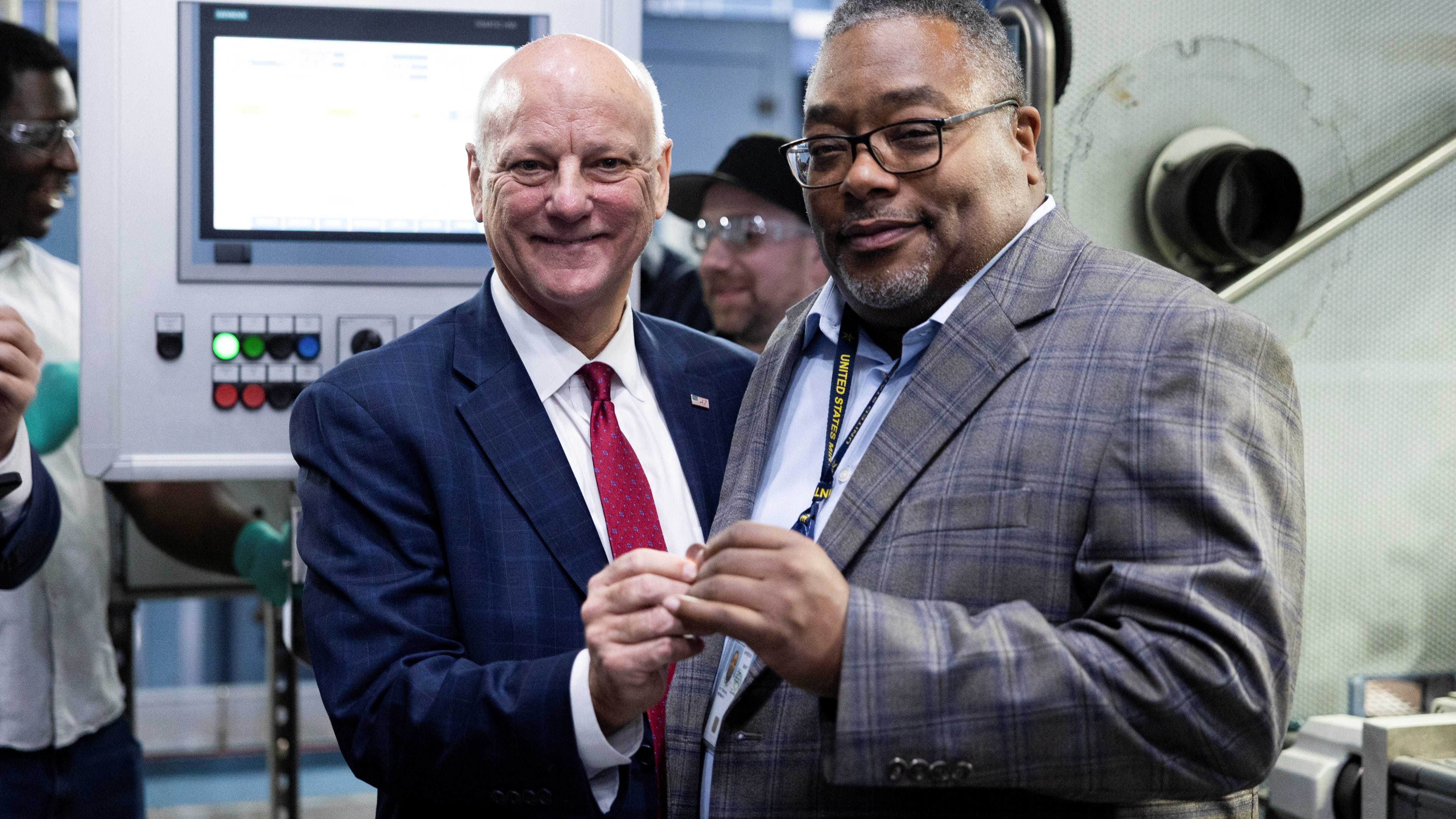
The last penny has been minted. Will the legends about coins also disappear?

0


Could the future be a world where your thoughts cost more than a nickel?

play

Most Americans now know that the Mint will never make another penny. Some companies began reporting coin shortages even before the last penny was stamped.

What other possible effects of Penny’s death? The colorful colloquialism that uses the word “penny” may not make you a penny in the near future.

Phrases and clichés that have been coined recently about pennies are not worth a penny or two, such as “A penny to one’s thoughts,” “Worth a penny,” “It costs a good penny,” “A penny saved is a penny earned,” and “If you pick up a penny, you’ll be lucky all day long.”

Will these words disappear? Could the future be a world where your thoughts cost more than a nickel? Will another coin appear as a fortune when picked up from the ground?

In some ways, the adage “A penny saved is a penny earned” has already lost its meaning. That’s because the U.S. Mint told the Treasury Department in its annual report that each penny costs 3.69 cents to produce. This suggests that the government is making money by not saving a penny.

Still, when it comes to language, “many of today’s languages ​​can have short half-lives, so it’s hard to predict what will happen,” says Philip Duncan, an assistant professor in the Department of Linguistics at the University of Kansas.

Idioms expressing thoughts about penny phrases

According to John Ayto’s From the Horse’s Mouth: Oxford Dictionary of English Idioms, phrases such as “worth a penny” are idioms, defined as “phrases that behave like words.”

According to Dictionary.com, the idioms Ait mentioned, such as “raking someone over the coals,” which is an exaggerated way of saying someone was severely reprimanded, originate from medieval torture. The site also notes that the word “kick the bucket,” which means to die, likely originated from a method of killing pigs 300 years ago.

Duncan said idioms “can be very durable and stick around for a long time, even if the item isn’t that common.” Examples he gives are “having an ax to grind” and “keeping your nose to the grindstone.” Thankfully, both exist, although very few people have access to an actual ax or grindstone.

The last penny may have been made in the United States, but with an estimated 300 billion pennies in circulation, each penny remains legal tender. So the language surrounding pennies isn’t going anywhere anytime soon either.

“Words and phrases related to the iconic penny will continue to circulate for some time to come,” Colin McIntosh, editor-in-chief of Cambridge Dictionaries, told USA TODAY.

“As long as the penny continues to exist, we will continue to say that things are ‘worth a penny’ and that accountants ‘penny pinch’, and we will continue to use the phrase ‘not a penny’ to mean ‘no money at all,'” Mackintosh said. “But as the penny has less and less impact on people’s lives, becoming more symbolic than real, these phrases will slowly start to feel outdated.”

McIntosh said the penny was already falling in some phrases “thanks to the loss of value in the penny.” “For example, we don’t have ‘penny candy’ anymore.”

Duncan points out that other penny-related idioms have already disappeared, such as “consider/consider one’s penny (good) silver,” which means someone considers themselves or their opinions to be more valuable than others, and “a penny on the forehead/face,” which is used to remind people that they can’t carry material possessions.

Pennyphrases could be a substitute for cash and are ‘disgusting’ for America’s youth

For young Americans, some idioms related to pennies already have no meaning. When Duncan discussed penny idioms with his children and his daughter’s eighth-grade friends, some of them didn’t know some proverbs related to pennies, such as “my two cents,” “pinch a penny,” and “a penny for what you think.”

While many viewers of the film adaptations of Stephen King’s “It” (2017’s “It” and 2019’s “It Chapter 2”) and HBO’s new prequel series “IT: Welcome to Derry” may not know the name of the character Pennywise the Clown, Duncan said the name comes from the old-fashioned phrase “Pennywise and the Pound Fool.”

What’s unclear, Duncan said, is whether young people are simply less familiar with these phrases because they’re used less often, or whether other factors are at play, such as young people spending less on cash than older people. He was referring to a Nov. 6 Harris poll that found more than half (53%) of Gen Zers (ages 13 to 28) say they only use physical cash as a last resort, and nearly a third (29%) describe cash users as “out of touch” or “tired.”

Meanwhile, while many high schoolers are getting “broccoli perms,” ​​younger students are “still having fun” with the slang meme “6-7” and “41” — numbers that have become viral phrases after being referenced in rap songs, Duncan said.

The numbers have remained fairly constant for most older students, he said, and “for many, these are current trends that will probably disappear quickly.” “Can you imagine if these became idiomatic phrases?”

Gen Z and Gen Alpha prefer to invest their “two cents”

Betsy Sneller, an assistant professor of linguistics at Michigan State University, said there are other signs that young people already have a large collection of penny phrases. She is the project lead for MI Diary, an oral history collection program launched during the COVID-19 pandemic. It currently includes audio diaries from more than 2,000 people in Michigan, ranging in age from 3 to over 80 years old.

Sneller searched the collection and discovered that the youngest person to use penny-related idioms was 36 years old. However, the phrase “my two cents” is on the rise and is used by Gen Z and Gen Alpha (those born between 2010 and 2024).

“I have no idea whether phrases like ‘penny-pincher’ will eventually go away, but that’s where I want to put my money,” Sneller said. “Now people would never say, ‘That person is a few shillings short of the pound,’ because ‘shilling’ is not a word we use. So if you call someone a penny pincher in 50 or 100 years, people might think, ‘What are you talking about?’

Is a penny worth it in the long run?

But some penny phrases may stand the test of time, says Matthew Gordon, a professor in the English department at the University of Missouri-Columbia.

“Expressions where ‘penny’ is used more loosely to refer to money, such as ‘worth a penny’ and ‘cost a good penny’, are likely to persist,” said Gordon, who is also director of the university’s linguistics program. “So you don’t remember the last time you actually used a penny to pay for something, or even had a penny in your pocket. And these phrases don’t seem to have diminished in value in an increasingly cashless society.”

An example of a currency that has remained in conversation beyond its actual use is the monetary unit “bit,” which is equivalent to 12.5 cents. The word remains part of proverbs such as “two-bit criminal,” Gordon said amid cheers of “two bits, four bits, six bits, a dollar.”

Penny’s idiom can persist “even if the speaker doesn’t realize what it was originally referring to,” he says. “When we talk about ‘breaking the ice’, do people think of opening sea routes? Every email program has a ‘cc’ option, but when was the last time you kept a literal carbon copy of a message?”

The bottom line is, you may never know which penny phrases have staying power and which ones get dropped. “So even if there are days when Penny’s idiom is sane (another idiom, by the way!), it may be difficult to pinpoint why,” Duncan says.

He said, “Penny phrases can still be used and have social capital, even if the actual penny isn’t.”

Contributor: Greta Cross

Mike Snyder is a national trends news reporter for USA TODAY. You can follow him on Threads, Bluesky, and X, and email him at: mike snyder & @mikegsnider.bsky.social & @mikesnider & msnider@usatoday.com

What is everyone talking about? Sign up for our trending newsletter and get the latest news of the day

They are fighting hunger. The government shutdown has left them reeling.

0


Rising hunger will continue long after the federal government reopens. “You can’t magically go back to a previous time and everything will feel normal.”

play

The Missoula Food Bank and Community Center in Montana will double its grocery orders in the first two weeks of November and spend “far more than” this month’s budget to keep up with the influx of requests, executive director Amy Allison said.

Six other food banks across the country told USA TODAY similar stories. It has cut significant holes in its budget over the past six weeks as it tries to meet demands caused by the federal government shutdown. At the same time, layoffs and price increases were occurring, and the number of people seeking help was already increasing.

And now they’re pleading with all the donors already on their list to donate what they can for the rest of the year.

“The impact is going to be huge, and I don’t think we even fully understand it yet,” Allison said.

Food banks said they expect the effects of the shutdown to last for months, even if the federal government reopens Thursday night.

Payments will soon resume to tens of millions of federal food assistance recipients and paychecks to hundreds of thousands of federal workers. But Linda Nagiotto, president and chief operating officer of Feeding America, which provides millions of food meals to organizations across the country, said those people have depleted the savings they had built up during the 43-day shutdown.

She said it will be a long time before people feel financially secure enough to stop using food banks..

“The government may have reopened, but the effects are not like a light switch. We can’t magically go back to before and everything will feel normal,” she said. “For those whose lives have been severely disrupted, it will take time for their neighbors to be able to equalize their finances while more paychecks are coming.”

“There is no proof at this time.”

When the Department of Agriculture announced in late October that the “well ran dry” and Supplemental Nutrition Assistance Program (SNAP) benefits would run out in November, it marked the first time in the program’s more than 60-year history that federal food security had not been achieved.

Cindy Kirkhart, CEO of Facing Hunger Food Bank in Huntington, West Virginia, said the termination of SNAP benefits shocked people who believed the government would provide a safety net.

“The only certainty people had for a long time was that no matter what else happened, we would be able to receive SNAP benefits and be able to support our families. There is no certainty now. I don’t have that,” she said. “When you shake people up, it takes them a long time to recover.”

She plans to act as if the benefits never arrived until they actually arrive on her EBT card (the debit card facsimile used by SNAP recipients). Her food bank typically distributes 1 million pounds of food a month. This amount was distributed in the first week of November alone.

She said the only reason the food bank was able to survive was because the governor sent money and the National Guard sent aid.

Some may be wary of the next funding deadline set by Congress in less than three months.

The Reopen Government Act would provide some funding to the federal government for almost a full year and would also provide funding to the Department of Agriculture through September 2026.

Therefore, SNAP benefits would be protected from possible budget lapses for at least one year. But tens of thousands of federal workers could be furloughed or put back to work without pay if the government shuts down again amid a surge in layoffs across the country.

“If I was someone who had been exposed to all of that, I would have had a lot of disbelief at this point,” said Gail Carlson, president and CEO of the Montana Food Bank Network.

Carlson said people have had to juggle paying mortgages, utilities and other bills for more than a month, and it will take time to feel settled again.

“People still need to eat, so they will continue to rely on food pantries until things stabilize,” she says.

In a typical week, her food bank distributes about 350,000 pounds of food. During the shutdown, there were days when we distributed that amount.

Carlson expects high demand to continue at least through the end of the year. “Maybe we’ll see some decline in January. We’ll have to see how that goes,” she said.

Growing food insecurity

Jilly Stevens of City Harvest in New York City said food banks and pantries were already in huge demand before the closures, as inflation has increased food prices and the overall cost of living has increased.

In 2019, City Harvest food pantries received 25 million visits, she said. By 2024, the number will nearly double to 47 million

“Now this is layered on top of that. It’s an incredible setback,” she said of the closure.

On average, about 14% of U.S. households reported food insecurity from January to October, up from 12.5% ​​in 2024, according to the latest data from Purdue’s Center for Food Demand Analysis and Sustainability. The overall rate has declined since the height of the pandemic in 2022, when an average of 15.4% of households were food insecure.

Purdue University researchers define food insecurity as the inability of some members of a household to obtain a balanced diet and may have to skip meals or eat less for financial reasons.

Purdue’s study is one of the few remaining national responses to food insecurity after the U.S. Department of Agriculture discontinued its annual Household Food Security Survey, which it had conducted since 2001, in September. The USDA said in September that the investigation was “redundant, expensive, politicized and irrelevant.”

Food banks and pantries were also dealing with more than $1 billion in federal funding cuts and moratoriums made by the Department of Agriculture in the spring as part of Elon Musk’s Government Efficiency Department’s government cuts.

The USDA has suspended half of its funding, or $500 million, for the Emergency Food Assistance Program, a nutrition program that buys food from American farmers for emergency food providers. Some of the funds were later restored.

When that funding was cut, the Missoula food bank lost 40 percent of what it was supposed to receive that year, or about 91,000 pounds of food. Allison said it cost about $200,000 to replace that much food. Other food banks provided similar numbers.

USDA also discontinued the Local Food Purchase Assistance Program, which helps food banks buy fresh produce directly from local farmers. This year, it will provide approximately $500 million in funding to food banks.

“We were struggling with food, but when you reduce food and increase demand, it’s just a recipe for failure,” said Kirkhart, from West Virginia. “Even with the pandemic, there has been nothing like what we have experienced since the first half of October.”

“A challenge yet to be tried”

Feeding America’s Nagiotto said changes to the SNAP program enacted this summer under the Republican tax and spending bill will pose “untested challenges” to the charitable food system.

When the new work requirements go into effect in early November, the Congressional Budget Office estimates there will be 2.4 million fewer people participating in SNAP.

For the first time in the program’s history, starting in 2028, states with payment error rates above 6% will be required to contribute to SNAP benefits. The error rate in 2024 was approximately 11% nationally.

“As these changes roll out, we know that more people will lose their SNAP benefits and will have to rely more heavily on the charitable food system. So we’re very concerned about that,” Najot said. “People across the country will lose the benefits that have kept food on the table and face uncertainty once again.”

community support

Minnesota Attorney General Keith Ellison said the nation’s loose network of food banks and pantries is no substitute for federal food assistance. He and more than 20 other states have sued the Trump administration for full SNAP benefits for November.

“SNAP is a way for Americans to help feed other Americans, food shelves, and other people who are doing great work, and they can’t close this gap on their own,” he said.

Allison said community support gave the Missoula Food Bank a buffer to get through the holiday season. Still, she worries about whether she will make it in time for the fiscal year end in June.

She said the Missoula community needs to continue to participate and financially support the food bank through fresh produce, including dairy and protein, in the coming months.

“I think food banks in general, and certainly for ourselves, need to continue to see people in our communities involved as much as possible,” she said.

Sarah D. Wire, USA TODAY’s senior national political correspondent, can be reached at swire@usatoday.com.

What is a “K-shaped economy”? Do we belong to one?

0

play

Imagine the letter K.

On the right side, you can see that the top diagonal section is pointing upwards and the bottom section is falling to the ground. Now, if you replace high-income Americans on the top diagonal with a diagonal that moves away from the top and low-income people on the bottom diagonal, you can see why comparing our economy to the shape of a “K” resonates with so many people.

“The K-shaped phenomenon not only helps explain why so many Americans feel like they’re falling behind, but it’s also a reminder that economic policy has real-life consequences, and a warning that the disparity between the fortunes of wealthier people and the rest of the population is not healthy,” said Diane Swonk, chief economist at KPMG US.

The Gini coefficient is a technical analysis of the disparity between the rich and the poor.

“Inequality, as measured by the Gini coefficient, is at the second highest level in history,” Swonk said. “It’s at a level that’s more corruptive than growth-enhancing.”

But even more worryingly, there are real-life examples everywhere of the widening gap between wealthy and low-income Americans.

“Customers are feeling pretty stressed about the economy,” Ron Sargent, chief executive officer of the grocery company Kroger, said on an earnings call in September. “Low- and moderate-income households are really looking for deals. They’re using coupons more. They’re traveling less, but more often. And they’re buying more private label products. They’re also eating out less. If you look at higher-income households, they’re also worried about the economy and food prices, but they’re still spending.”

On Oct. 29, Chipotle CEO Scott Boatright told stock analysts that consumers of all income levels cut back on spending earlier this year as consumer confidence declined. “Since then, that gap has widened, with low-to-moderate income guests using them even less,” he said.

It may seem like a no-brainer that people with more disposable income would go out and spend more, but the U.S. economy hasn’t traditionally worked that way. In fact, while wealthy Americans have traditionally been more likely to save than spend, low-income consumers are more likely to spend a larger percentage of their paychecks or unexpected expenses like stimulus checks or tax refunds, Swonk noted.

A recent analysis by Jack Ablin, chief investment strategist at Cresset Capital, highlights this phenomenon. “Low-income households allocate a higher proportion of their income to spending on essentials such as housing (32.9% of spending), transportation (17%), and food (12.9%), making these households more vulnerable to increases in the prices of essentials,” he wrote.

About 87% of households with incomes above $100,000 own stocks, Ablin added, compared to just 28% of households with incomes below $50,000.

That’s a concern for many analysts.

“The U.S. economy remains resilient, supported by three thin pillars of growth: wealthy consumers, an AI-driven investment surge, and rising asset prices,” Gregory Daco, chief economist at EY Parthenon, said in a recent research note. “These interconnected supports are both a boon and a vulnerability, and can fuel both virtuous and vicious cycles. We expect momentum to weaken into 2026 as tougher tariffs and immigration policies continue to weigh on employment and demand, and inflation accelerates again.

Mr. Swonk also expects inflation to accelerate again as businesses begin to pass more tariff costs on to consumers and immigration crackdowns create a shortage of often low-wage and therefore cheap labor.

“Inflation is the reason why the economy may look good on paper when you add it up, but it doesn’t feel good to many people,” she says. “That’s what happens when people spend less. That’s another factor that exacerbates inequality.”

That means that depending on what happens to the U.S. economy, November’s vote, in which affordability concerns determined many elections, could look like a foreshadowing of what’s to come.

“Social history suggests that extreme inequality leads to populist political backlash and policy uncertainty, which disrupts markets,” Ablin wrote.

Bravo’s Dr. Heavenly wins TV fight. Will she be able to win a bid for Congress?

0


Cosmetic dentist Dr. Heavenly Kimes smiles through the shades on Bravo’s “Medicine and Marriage,” the medical industry’s answer to “The Real Housewives of Atlanta.” Will she win a seat in Congress?

Cosmetic dentist Dr. Heavenly Kimes has been smiling and shadowing Bravo’s “Medicine and Marriage,” the health care industry’s answer to “The Real Housewives of Atlanta,” for more than a decade.

TV host and “Housewives” mogul Andy Cohen once asked Kimes about castmate Toya Bush-Harris, “So why did you say she wasn’t the brightest of the group?” Kimes answered frankly, “Because she’s different.”

Kimes, 54, is currently running in a crowded Democratic primary to unseat 80-year-old incumbent U.S. Rep. David Scott in Georgia’s 13th Congressional District, and hopes her honesty on the reality show will translate into real results at the polls next May 19.

“People are still tired of politics,” Kimes told USA TODAY. “They need someone in their office who is authentic, trustworthy and empathetic – someone who, once they sit down, doesn’t want to leave.” USA TODAY has reached out to Scott’s office for comment.

“I grew up in a room with no windows. You saw it on TV, right?” Kimes cited health care and the economy as reasons for running. “I’ve been on both sides of the coin and have actually eaten free lunches.”

The battle to replace Mr. Scott, who has faced longstanding concerns about his health and age, has become a special made-for-TV moment as some in both parties call for generational change. The incumbent has filed for re-election in the majority-Black district, and 10 other Democratic candidates have announced candidacy for the safe blue seat, according to Federal Election Commission data.

The dental diva, best known as “Dr. Heavenly,” enters the race with perhaps more name recognition than any other candidate, boasting 1.5 million social media followers who have been following “Medicine” for more than a decade.

Reality TV games and “marriage”

In April 2014, Kimes joined the cast of Season 2 of Medicine. The show pairs up fellow doctors, including her best friend and obstetrician-gynecologist Dr. Jackie Walters, with the doctor’s wife, like Frenemy’s Bush Harris.

Kimes quickly proves that she’s no angel as a newcomer, grinning as she engages in do-it-yourself battles with her fellow cast members. Kimsu’s vitriol and sweet tooth for chaos made her a controversial fan favorite of Medicine. “I think Heavenly has a natural ability to start the drama, lean into the drama, and still find a way out of the mess and talk the way out of it,” Gibson Johns, pop culture commentator and host of the podcast “Gabbing with Give,” told USA TODAY.

“Medicine” focuses a little more on family than the group dynamics of “The Real Housewives of Atlanta,” once a standout in a series known for its heated table flips and unruly brawls, but both center on the lives of wealthy black women living in the subway.

While raising her husband, Dr. Damon Kimes, and their three children, Damon Jr., Zachary, and Alaura, Kimes opened an upscale dental practice in Duluth, Georgia, called Smiles by Dr. Heavenly. Considered by its devoted fans to be an underrated part of Bravo’s programming, “Medicine” remains one of the network’s longest-running shows.

Season 12 of the series will premiere on November 30th, which is unusual for a cable TV show. In the next season of her life, Kimes hopes to accomplish a feat rare for a reality TV star. Kimes told Pastor Jamal Bryant, the ex-husband of “Real Housewives of Potomac” star Gisele Bryant, on a Sept. 4 podcast that she didn’t know there was a “medical” contract restriction that would prevent her from running for public office.

Kimes originally announced his intention to seek a seat in the Georgia House of Representatives in a July 7 feature in People magazine. He then abandoned the state-level race in September to run for the U.S. House of Representatives following the passage of President Donald Trump’s controversial tax and spending bill. “We realized that our legislators weren’t saying anything and that a lot of people needed help,” Kimes said.

“I’m not interested in politics, as usual, but I understand what’s going on,” Kimes said in an interview. “This is the best country we’ve got. I mean, if other countries can get free health care, free college, free child care, why can’t we?”

Rep. David Scott faces concerns over attendance and voting

Last year, his congressional colleagues ousted Scott from his post as the top Democrat on the House Agriculture Committee. Despite breaking barriers as the first black chairman, he lost his powerful position on the commission.

Mr. Scott has been a member of Congress since 2003. Georgia Rep. Jasmine Clark, Kimes’ primary opponent, reprimanded Scott in recent weeks after a CBS News Atlanta report revealed that the congresswoman had not voted since voting absentee last May.

“He missed the game, so we lost that ranking member,” Clark, 42, told CBS Atlanta. “Unfortunately, his not voting feels like part of that trend.” CBS and Fox 5 Atlanta say the missed votes include last year’s presidential race between President Trump and then-Vice President Kamala Harris.

Another primary challenger, Everton Blair, a former Gwinnett County Schools Superintendent, told USA TODAY that the breadth of the field shows how dissatisfied people are with Scott. Mr Blair, 33, said in a statement: “It is telling that so many candidates have followed suit and entered this race since we launched it.” “People are clearly fed up with Congressman David Scott’s lack of leadership and are ready to make changes.”

He also set his sights on Kimsu. Prime Minister Blair added: “People are tired of the ridicule of our government.” “I respect everyone’s interest in public service, but voters deserve a leader with policy experience and proven credibility.”

Kimes pushed back against criticism of his lack of political experience. “I built a business from scratch, so I know what the red tape is like in a small business,” she said.

“I think what people need most, whether it’s a reality show or something like that, is someone who has influence and a voice, and I just happen to have both, right?” Kims continued.

Reality TV stars have struggled in recent years with political campaigns

Usually, stars like Kimes face hardships during political campaigns.

“American Idol” runner-up Clay Aiken and Olympic decathlete turned “Kardashian Family” star Caitlyn Jenner both tried and failed to capitalize on their fame through elections. The most obvious exception, of course, is President Trump’s star appearance on NBC’s “The Apprentice” and its accompanying celebrity edition before entering the White House.

In recent years, C-SPAN cameras that capture the hustle and bustle of Congress and public hearings have become capable of delivering Bravo-worthy footage. Last May, after Rep. Marjorie Taylor Greene (R-Ga.) criticized Rep. Jasmine Crockett (D-Texas) for her false eyelashes, Crockett made headlines when she referred to MAGA followers as “beach-blonde, bad-bodied butch-bodies.” Mr. Kimes said he was “able to go head-to-head” with Ms. Greene, but would work with Republicans on policy issues.

Sociologist Daniel Lindemann, author of True Story: What Reality TV Says About Us, believes politics and reality TV are more similar than many people realize. Both involve people performing in front of an audience, presenting themselves as “real.”

“In politics, we may be more likely to vote for candidates we ‘like’ based on their track record,” Lindemann says. “For example, there’s a metaphor for wanting a politician you can have a beer with.”

Will this be Dr. Heavenly’s last Bravocon?

Now back in his hometown of Georgia, Kimes has remained in the race like he’s been on “medicine” all these years. “This season has been very difficult for me,” she says. Kimes revealed that her eldest son Damon Jr.’s arrest will unfold on the show.

Kimes was demoted from the main cast and had less air time this season, but was allowed to film while running, although some believe Bravo did so due to Congressional expectations. Johns said it’s “unprecedented” for a Bravo star to take the stand during a show. “The fact that she gave up her full-time role on the show to run for Congress should tell you all you need to know about how serious she is about this,” Johns said.

Kimes counts co-star “Dr. Jackie” Walters as a major supporter. “She brings energy, fresh thinking, and a true dedication to the families and communities she serves,” Walters said in a Nov. 13 statement to USA TODAY, adding, “I would like to congratulate Congressman David Scott on his many years of service.”

Brave celebs like Kims, Walters, and the “Medicine” ensemble will be heading to Bravocon in Las Vegas from Nov. 14 to 16 to greet guests, pose for photos, and shade panels. The three-day extravaganza is the Super Bowl for people who love watching “Vanderpump Rules.”

This may be Kims’ last big Bravo success. “I don’t know what will happen in the future,” she said. “All I know now is that this country needs me.”

Who knows if Kims will be boarding a plane to Las Vegas next November? Georgia’s 13th Congressional District may choose Kimes as its next representative.

‘Now You See Me’ Cast Reveals ‘Supernatural’ David Blaine Dinner

0

play

NEW YORK — Rosamund Pike praised the sights and scenes while filming “Now You See Me: Now You Don’t” in Budapest and Abu Dhabi. However, the actress points out that there is one major difference on set from her past projects.

“The cast members were practicing card tricks,” Pike, 46, recalled to USA TODAY. “Everyone’s saying, ‘Do you want to see the trick?'”

The third installment of the “Now You See Me” magician-driven thriller series (in theaters now) is full of magic tricks. The original Four Horsemen (Jesse Eisenberg, Isla Fisher, Woody Harrelson, Dave Franco) team up with a group of new Horsemen (Justice Smith, Dominic Sessa, Ariana Greenblatt) to stop a villain (Pike) from selling the world’s largest diamond to an evil entity.

“I like to bring my big bad guy energy to the screen,” Pike says with a laugh, which he calls his “BVE.”

“It’s more fun to watch someone who is pretentious and self-absorbed and put themselves on a bit of a pedestal fall off that pedestal than it is to see someone who is just playing it safe,” she says.

For Eisenberg, filming wasn’t always safe. The actor took part in a fight scene in a room that rotates upside down. Everything in the room was stuffed with Styrofoam, except for one bookshelf where Eisenberg filmed most of the parts.

“You can see my fingers are still a little crooked,” Eisenberg, 42, says, raising his right hand and pointing his middle finger. Eisenberg believed he had broken a bone and wore a cast for the remainder of the production. “It was really fun up until that moment.”

Fisher was not injured. However, the actress pointed to another scene in which she is trapped inside a glass box that rapidly fills with sand and then water. Fisher said the scene took a week to film.

“Initially, people were asked to leave the tank to go to the bathroom,” Fisher, 49, said. “But later on I felt like people stopped asking, so I started worrying that some people were urinating in the water.”

I won’t give away any spoilers, but Fisher had good reason to be concerned. Of all the horsemen confined in glass boxes, she spent the most time underwater.

play

“Now You See Me: Now You Don’t”: Watch the final trailer here

Watch the final trailer for Now You See Me: Now You Don’t, the third installment in the magician-centric thriller series.

‘Now You See Me’ cast gets a magical assist from David Blaine

Harrelson showed up to the interview with a deck of cards. He has a neat trick of asking his co-star Morgan Freeman what hand he’d like to be dealt in a poker game. Except for the royal flush, Freeman chooses three aces. Harrelson, who has been shuffling this deck of cards the entire time, begins handing out the actors exactly what he asked for.

The surprise didn’t materialize. At the end of the interview, a familiar voice can be heard off-camera asking Harrelson to shuffle his cards so he can better see the trick. He is voiced by famous illusionist David Blaine.

“We couldn’t show that the cards were shuffled,” Blaine explains. “So it might look like (Freeman) said Ace, and it was set up.”

play

‘Now You See Me’ popcorn bucket contains magical illusions

A new popcorn bucket has been released as part of the third installment of the Now You See Me movie series.

Blaine continued to explain in detail what he had witnessed.

“What I saw was, right to God, (Freeman) said he had three aces,” he continued. “(Harrelson) wasn’t ready for that. Woody was shuffling his deck and pulled out three aces. This is unbelievable. He actually pulled an ace out of the deck and touched it. What he did was a high level of magic.”

Harrelson and Blaine are friends, and the magician joined the cast for dinner that night in New York. The next day, those in attendance were excited about what had happened.

“He ate a glass of wine,” Smith, 30, reveals. “And we took a photo, and he somehow changed the photo on his phone without even touching it.”

Ms. Greenblatt also recalled that Mr. Blaine changed the writing on the pen from “Sharpie” to 5 of Hearts, the card she had chosen.

All three of the new Horsemen said they appreciated magic in a new way after filming Now You See Me 3. But that doesn’t change how shocked they were by Blaine’s actions at dinner.

“What[Blaine]does is real magic,” Smith says. “It’s like real supernatural magic. Like, he’s a wizard.”

Billie Eilish slams Elon Musk as ‘pathetic’ as he approaches $1 trillion

0

play

Billie Eilish doesn’t have kind words for Tesla founder Elon Musk.

The pop musician, who blasted the billionaire in a speech at last month’s WSJ Innovators Awards, is slamming the Tesla CEO after shareholders approved a deal that could make him the world’s first trillionaire.

On Thursday, Nov. 13, the “Birds of a Feather” singer shared an Instagram post by the My Voice, My Choice initiative detailing what Musk could do if he reached millionaire status.

The post suggests that Musk is dedicating his wealth to philanthropy, including spending $40 billion a year to fight world hunger, $10 billion a year to vaccinate 140 million newborns over the next 100 years, and $53.2 billion to rebuild Gaza.

After sharing multiple slides, Eilish wrote a short remark on her Instagram Story on Thursday, Nov. 13, that included the words “pathetic” and “coward” and three expletives.

USA TODAY has reached out to Tesla for comment.

Is Elon Musk already a millionaire?

Musk is not a millionaire, but he could become one after Tesla shareholders agreed on Nov. 6 to give the company trillions of dollars worth of stock if the company meets financial and operational goals over the next 10 years.

If successful, the company would have a market capitalization of $8.5 trillion, according to Reuters, and Musk would own a quarter of the shares. Among its goals were increasing paid subscriptions to its self-driving software to 10 million and selling 1 million human-like robots.

“What we’re embarking on is not just a new chapter in Tesla’s future, it’s a whole new book,” Musk told shareholders.

The South African, who is already the world’s richest person, said he would use his availability and focus during negotiations and prioritize other companies such as SpaceX and Neutralink if the deal falls through, Reuters reported.

Is Elon Musk a philanthropist?

Musk has donated money to charities in the past, most notably signing the Musk Bill Gates Giving Pledge in 2012. This is a pledge in which the world’s richest people agree to donate at least 50% of their wealth to charity.

In 2001, he and his brother Kimbal Musk founded the private charity The Musk Foundation, which has donated more than $450 million in total over the past three years.

The organization has faced increased scrutiny since The New York Times reported that it failed to contribute the required 5% threshold for the 2023 tax year and the previous two tax years. The company fell short of the $421 million amount needed to avoid penalties with the Internal Revenue Service.

He has previously expressed skepticism about philanthropy, adding that his for-profit businesses have a huge impact on the world at large. Last year, he told the New York Times that he had “done more for the environment than anyone else on the planet.”

Contributed by: Reuters

President Trump said Bill Clinton was on Epstein’s island. The email says otherwise.

0

play

  • Former President Bill Clinton has been linked to Jeffrey Epstein, but Epstein claimed in an email that Clinton never visited his private island.
  • Clinton has admitted to being on Epstein’s plane, but denies visiting the island where sex trafficking is said to have taken place.
  • President Donald Trump has also denied ever visiting Epstein’s island, but has called for an investigation into Democrats who may have visited.

Former President Bill Clinton has long been one of the high-profile figures fueling curiosity about Jeffrey Epstein’s criminal case file.

“The American people want to know what happened on Epstein Island…We know Bill Clinton went to Epstein Island multiple times,” House Oversight Committee Chairman James Comer (R-Ky.) told Newsmax in August. Epstein owned a small private island in the U.S. Virgin Islands, where he allegedly sex-trafficked young girls. “We just want to ask him what he saw when he was there and who was involved.”

President Donald Trump also alluded to Clinton’s visit to the island in a Nov. 14 post on Truth Social, saying that Larry Summers, Reid Hoffman, JPMorgan, Chase and Clinton “spent most of their lives on Mr. Epstein and his ‘island,'” and said he would ask the Justice Department to investigate Democrats connected to the late financier and sex offender.

But Mr. Epstein said in an email, part of thousands of documents released by the commission on Nov. 12, that Mr. Clinton had never been to the island.

“Mr. Clinton was never there, never,” Epstein wrote.

Here’s what you need to know:

Clinton flew on Epstein’s plane.

In 2019, when Epstein was indicted in New York on sex trafficking charges, Clinton admitted to flying on Epstein’s planes multiple times in the early 2000s, but denied ever visiting the island he owned.

Virginia Giuffre, the late Epstein defendant, said she saw Clinton there but never saw her do anything illegal.

In a January 2015 email to author Michael Wolff, in which Mr. Epstein denied Mr. Clinton visited the island, he said another person (whose name has been redacted) had falsely claimed to have seen Mr. Clinton on the island.

“The[redacted]narrator has completely made up most of it,” he wrote, arguing that it overrules other claims.

USA TODAY reached out to Clinton’s representatives for this story.

Where is Epstein’s island? What happened there?

The island owned by Epstein was in the U.S. Virgin Islands.

Epstein also owned real estate in New York and Palm Beach, Florida, where U.S. federal prosecutors said sex trafficking took place.

In January 2020, prosecutors in the U.S. Virgin Islands filed a lawsuit against Epstein’s estate, alleging that a criminal enterprise involving the sexual abuse of young girls was carried out on his property.

“Epstein owned and arranged private planes, helicopters, boats, and automobiles to transport his victims to, from, and within the Virgin Islands, and provided funds to pay for these young women and underage girls,” the complaint states.

Many of the girls forced to participate in his scheme were between the ages of 12 and 17, and local authorities last observed any related incidents in 2018, according to the complaint.

Epstein’s web of companies, which prosecutors have dubbed “Epstein Enterprises,” “deceptively lured underage girls and women into sex trafficking rings with promises of money and jobs, career opportunities, and educational assistance.”

The complaint states one of the 15-year-old girls tried to swim away.

The foundation settled a lawsuit with the U.S. Virgin Islands for $105 million in December 2022.

Has Trump been to Epstein’s island?

President Trump previously denied visiting late sex offender Jeffrey Epstein’s private island, calling it one of his “very good moments.”

As the controversy continues to plague his administration for weeks, President Trump traveled to Scotland on July 28 to answer questions from reporters.

“I never had the opportunity to go to his island, and I turned him down, but a lot of people in Palm Beach were invited to his island,” Trump said. “It was one of those great moments where I said no. I didn’t want to go to his island.”

What do Epstein’s emails say about Trump?

The House Oversight Committee released thousands of pages of documents from Epstein’s estate on November 12th. House Democrats began the day by pointing to emails from Epstein that claimed Trump “knew the girls” and that Trump spent hours with one of his victims.

The release comes as Congress reconvenes to reopen the government and a bipartisan effort to force a vote on releasing the Epstein files has gathered enough signatures.

“These emails prove nothing except that President Trump did nothing wrong,” White House Press Secretary Caroline Levitt said at a press conference on November 12. Trump also claimed on Truth Social, as he had previously, that the controversy was a hoax.

“Democrats are going to bring back the Jeffrey Epstein hoax because they’ll do anything they can to deflect from how bad they did with the government shutdown and so many other topics,” Trump said. “Only very bad or stupid Republicans would fall into that trap.”

(Michael Wolff was a freelance USA TODAY contributor from 2012 to early 2017. USA TODAY had no knowledge of his relationship with Jeffrey Epstein or any of his activities beyond his contributions to our publications. We value integrity and transparency in order to uphold our editorial standards and maintain the trust of our readers.)

Contributed by Holly Baltz, Francesca Chambers, USA TODAY Network

Kinsey Crowley is a Trump Connect reporter for the USA TODAY Network. Please contact KCrowley@usatodayco.com. follow her X (Twitter), blue sky and TikTok.

Mega Millions winning numbers for November 14th drawing: $980 million jackpot

0

play

The Mega Millions jackpot rose to $980 million for the Friday, November 14th drawing because no one matched all the winning numbers in the Tuesday, November 11th drawing.

If someone matches all six numbers, they have the option to pay $452.2 million in one-time cash.

There were four Mega Millions winners this year. The most recent winner was from Virginia, who won a $348 million jackpot on June 27th. Before that, on April 18th, an Ohio player won a $112 million jackpot. On March 25th, a lucky ticket holder from Illinois took home $344 million, and earlier this year, on January 17th, another winner from Arizona took home $113 million.

The winning numbers for the Friday, November 14, 2025 Mega Millions drawing are:

Mega Millions winning numbers for 11/14/25

Winning numbers for Friday, November 14th: 1-8-11-12-57 And the gold mega ball: 7

The lottery winning numbers sponsors are: Jackpocket, USA TODAY Network’s official digital lottery delivery company.

Has anyone won at Mega Millions?

Mega Millions winners will be posted here as soon as they are announced by lottery officials.

To view a list of past winners, go to Visit the Mega Millions website.

How to play Mega Millions

To play Mega Millions, you must purchase a ticket. This can be done at a variety of locations, including local convenience stores, gas stations, and grocery stores. In some states, you can purchase Mega Millions tickets online.

Once you have your ticket, you have to choose six numbers. Five of them are white balls numbered 1-70. The golden mega ball ranges from 1 to 24.

If you’re feeling particularly unlucky or don’t want to go through the hassle of picking, you can request a “quick pick” or “easy pick.” When you use these options, your computer randomly generates numbers.

Mega Millions tickets have built-in multipliers that increase your non-jackpot prize by 2, 3, 4, 5, or 10 times. Previously, players had to pay an extra dollar to add a “Megaplier”.

Where can I buy lottery tickets?

Tickets can be purchased directly at gas stations, convenience stores, and grocery stores. Some airport terminals may also sell lottery tickets.

You can also order tickets online Jackpocket, USA TODAY Network’s official digital lottery delivery companythe following states and territories of the United States: Arizona, Arkansas, Colorado, Idaho, Maine, Massachusetts, Minnesota, Montana, Nebraska, New Hampshire, New Jersey, New York, Oregon, Puerto Rico, Washington DC, and West Virginia. The Jackpocket app allows you to choose your lottery games and numbers, place your order, check your tickets, and claim your winnings, all using your phone or home computer.

Jackpocket is the official digital lottery carrier of USA TODAY Network. Gannett may earn revenue from viewer referrals to the Jackpocket Service. Must be 18 years or older, 21 years or older in Arizona, 19 years or older in Nebraska. Not affiliated with any state lottery. Gambling problem? Call 1-877-8-HOPE-NY or text HOPENY (467369) (NY). 1-800-327-5050 (MA); 1-877-MYLIMIT (OR); 1-800-981-0023 (PR); 1-800-GAMBLER (ALL OTHERS). visit jackpocket.com/tos Over the entire period.

This story has been updated with new information.

Fernando Cervantes Jr. is a trending news reporter for USA TODAY. Contact us at fernando.cervantes@gannett.com and follow us at X @fern_cerv_.

Donald Trump withdraws support for Marjorie Taylor Greene

0


“All ‘weird’ Marjorie does is complain, complain, complain!” Trump wrote on social media, announcing he was rescinding his endorsement.

play

President Donald Trump has withdrawn his support for longtime ally Rep. Marjorie Taylor Greene, saying he will support “the right person” to run against her in the primary.

Greene, a Georgia Republican, has recently criticized President Trump for focusing too much on foreign policy and for calling for an end to the H-1B visa program after Trump defended it.

Greene also supports a measure to release all government records related to Jeffrey Epstein, the disgraced financier who committed suicide in prison while awaiting trial on sex trafficking charges. President Trump has criticized the effort.

“All ‘weird’ Marjorie does is complain, complain, complain!” Trump wrote on social media on Nov. 14, announcing he was rescinding his endorsement.

Greene responded on social media by sharing text messages she had sent about Epstein, some of which were apparently addressed to Trump, writing, “Apparently this pushed him over the edge.”

“He’s going after me really hard trying to put on a show to scare all the other Republicans ahead of next week’s vote to release the Epstein file,” Greene said, adding, “It’s really amazing how hard he’s fighting to keep the Epstein file from being released.”

Greene said that although she is one of Trump’s most ardent supporters, “I do not worship or serve Donald Trump.”

Greene gained attention during the government shutdown for criticizing House Republican leadership and voicing the same concerns Democrats have raised about health care costs.

On November 10, she shifted her criticism to President Trump, writing that X “really wants non-stop meetings at WH about domestic policy, not foreign policy or foreign leaders.” Greene was referring to President Trump’s invitation to Syrian President Ahmed al-Shalah to the White House.

As Mr. Trump focuses on foreign policy, including recent trips to Asia and the Middle East, Democrats have focused on concerns about the cost of living, which helped the party win the election earlier this month.

On November 14, President Trump defended his foreign policy moves and blasted Greene for comments aboard Air Force One during a trip to Florida. He then posted a social media message about the possibility of a major challenge.

“I understand that great conservative people are considering a primary for Marjorie in Georgia and that they are tired of her and her antics. If the right person runs, they will have my full and unwavering support,” Trump wrote.

Contributor: Joey Garrison

Costco sued for allegedly falsely promoting Kirkland Tequila

0

play

Costco is being sued for allegedly falsely advertising Kirkland Tequila as being made with 100% Blue Weber agave.

According to a proposed class action lawsuit filed Oct. 31 in the Southern District of Florida, nuclear magnetic resonance testing confirmed that the tequila contained too much sugar to be considered tequila.

Specifically, the federal lawsuit states that tequila “contains significant amounts of ethanol not derived from the agave plant and was therefore adulterated with ethanol other than that derived from the Blue Weber agave plant.”

USA TODAY reached out to Costco for comment on Nov. 14, but did not receive a response.

What does this lawsuit mean for consumers?

Shoppers typically pay a premium price for spirits designated as 100% Blue Weber agave. Without it, shoppers might have chosen a different product or paid less.

“If Plaintiffs and others similarly situated had known the truth about the ingredients in the products, they would not have purchased the products or would have purchased them at a lower price,” the complaint states.

What does the law say?

Mexican law requires tequila to be made from at least 51% blue agave, but tequila made with 100% blue agave is considered high quality. The lawsuit alleges that Costco is violating both Mexican and U.S. laws because the tequila contains ethanol from other sources. Ethanol is a type of alcohol produced by fermentation of plant sugars and is the central chemical process used to make most alcoholic beverages.

Patrón said tequila can only be legally produced in Mexico due to its designation of origin, which ensures that the spirit is made from the blue agave plant and produced in designated regions across the country.

“This legal protection protects the authenticity and quality of Mexico’s spirit by preventing other countries and regions from producing and selling their own versions of tequila,” the premium tequila brand said.

Costco sells three types of tequila: Blanco, Reposado, and Añejo. A search by USA TODAY on Nov. 14 found that tequila is still available for purchase on Costco’s website.

What does the lawsuit against Costco seek?

The proposed class action lawsuit accuses the company of negligence, negligent misrepresentation, unjust enrichment, and violations of Florida’s Deceptive and Unfair Trade Practices Act, which prohibits conduct that deceives or takes advantage of consumers.

The complaint also states that bottles of agave spirits, including tequila and mezcal, violate Federal Alcohol Administration (FAA) law if they do not provide accurate information in interstate commerce. According to the Bureau of Alcohol and Tobacco Tax and Trade, the FAA law “provides for the regulation of those engaged in the alcoholic beverage industry and the protection of consumers,” including ensuring the integrity of the industry.

Attorneys for plaintiff Ariel Grazerale of Florida are seeking a jury trial and certification of the proposed class.

Michelle Del Rey is a trending news reporter for USA TODAY. Please contact mdelrey@usatoday.com.

Indiana Senate won’t meet for redistricting, blocking President Trump’s push for Indiana

0

play

(This article has been updated with new information.)

The Indiana Senate will not convene for redistricting in December, blocking President Donald Trump’s efforts to redraw the state’s congressional maps.

Senate Republicans don’t yet have the votes to pass the redistricting bill sought by Gov. Mike Braun, so they simply won’t try, Senate President pro tempore Roderick Bray announced on Nov. 14.

“In recent months, Senate Republicans have given very serious and thoughtful consideration to the idea of ​​redrawing the state’s congressional maps,” he said. “Today, I am announcing that we do not have enough votes to advance that idea and that the Senate will not reconvene in December.”

State lawmakers had convened in the first two weeks of December to consider redistricting, with plans to incorporate it into the 2026 regular session. Without the participation of the Senate, the Indiana General Assembly cannot pass such a bill.

In response to the news, the Trump campaign began calling some Indiana lawmakers and inviting them to meet with the president in the Oval Office at an unspecified date. Sen. Aaron Freeman (R-Indianapolis) said he’s going to answer those calls.

“As Aaron Freeman says in his book, if the president of the United States invites someone to the Oval Office, I’m going to go,” he said. He said he hasn’t looked at the map, so he hasn’t made a decision on the land readjustment yet.

Brown expressed regret over Senate Republicans’ decision in a statement on November 14th.

“I called for Congress to convene to ensure that the voice of Hoosiers in Washington, D.C., is not diluted by Democratic gerrymandering,” he said. “Our state senators need to do the right thing and show up to vote for fair maps. Hoosiers have a right to know where their elected representatives stand on important issues.”

It is unusual for lawmakers not to heed the governor’s call to convene a special session. Freeman said he believes that is wrong and plans to attend Dec. 1 regardless.

Despite the tradition of redistricting immediately following the decennial census, President Trump is running a redistricting campaign to strengthen the Republican majority in Congress ahead of the 2026 midterm elections. Indiana’s current congressional map gives Republicans seven seats and Democrats two. The request from the White House was to draw new maps favoring Republicans in all nine districts.

Indiana’s supermajority Republican legislature rejecting Trump’s push is unusual, given his success in at least three states with small Republican majorities: Texas, Missouri and North Carolina. However, efforts have stalled in some other states, including Kansas and Nebraska.

Indiana’s House Republican caucus was already on board, and assuming all Democrats voted no, Senate Republicans needed 25 “yes” votes to make redistricting a reality. There are 40 Republican senators.

The vote-counting process was largely private, with only some Republican senators speaking publicly. According to an IndyStar tally, 13 senators expressed support, eight said they opposed, eight were undecided and 11 said nothing. Three of the opposition senators announced their positions last week.

In recent months, there has been a sustained pressure campaign, mainly from outsiders. Vice President J.D. Vance visited the Indiana Statehouse twice and had personal conversations. Voters in some Senate districts received phone calls and text messages from little-known 501c4 organizations. Club for Growth, a Washington, D.C.-based advocacy group, bought television ads in the Indianapolis market this week. A new group called Fairmaps Indiana, featuring former Trump campaign veterans, has also launched a voter assistance campaign.

U.S. Rep. Andre Carson, whose 7th Congressional District would have been divided, credited the decision to Indiana’s traditional independence.

“Prayer, people and partnership make a difference. Hoosiers do things differently. We value collaboration, not division,” he said in a statement. “We value independent thinking and not being dictated to by Washington. I want to thank Senator Bray and all of the Republican and Democratic members of the Indiana General Assembly for upholding Hoosier values. This is a victory for all of us.” It is unclear whether the Indiana House of Representatives will convene on Dec. 1. House Speaker Todd Huston did not immediately respond to a request for comment. Organization Day, the ceremonial beginning of the 2026 Congress, will take place on November 18th.

Contact IndyStar statehouse reporter Kayla Dwyer at kdwyer@indystar.com or follow her at@kayla_dwyer17.

From skydiving Pikachu to Mega Charizard, grow with your Pokémon

0

It was August 27, 1998. Alyssa Buecker waits in line for Pokémon to be released in the U.S. with her mom and dad in Topeka, Kansas. She received a letter from Nintendo inviting her to a celebration at the Topeka Air Industrial Park, and as a budding anime fan and lifelong gamer, she was thrilled with excitement. The mayor changed the city’s name to Topekachu, Kansas, for the day, and 10 bright yellow Volkswagen Beetles with cartoon ears and tails lined up, ready to begin a national tour.

A skydiver in a yellow Pikachu costume descended from the air over the airfield, along with hundreds of stuffed animals with tiny parachutes attached. Alyssa watched as children and adults alike ran across the grass, desperately trying to snatch their coveted toys. Little did she know that she was witnessing the beginning of something much more than that exciting day.

It was official. Pokemon has landed in America.

It has already caused a sensation in Japan, Pokémon was a multimedia success. Pokémon Red, Green, and Blue for the Nintendo Game Boy sold more than 10 million units, millions of trading cards were in circulation, and the Pokémon anime became one of the most-watched children’s television shows in Japan. This series was more than just children’s entertainment, it was a cultural and entertainment juggernaut that was going to go global.

Pokémon Red and Blue was released in the United States on September 28, 1998. The game allowed players to collect, train, and battle Pokémon, and even linked their Game Boy with friends to exchange captured Pokémon. Everyone wanted to complete the original 151 collection.

I was young at the time, However, it was impossible to avoid the Pokémon’s reach. This anime aired on WB before school and featured key battles, characters, and locations from the Game Boy games. This created excitement for the American release of the Pokémon Trading Card Game, which was released in January 1999. The card became a phenomenon in itself. Within that year, children were showing off their collections on the school bus, negotiating during lunch, and competing in card battles during recess.

At the time, I was such a fan of Japanese anime that I would rent VHS tapes from Hollywood Video and watch them on Toonami, but I was already alienating myself by talking about it nonstop. My friends were annoyed and fed up with my obsession. It wasn’t a “cool” thing to like anime. And I quickly learned that my love for anime would only separate me from my friends over time.

But Pokemon was different. It was nerdy, but so be it. Connecting. The game’s design encourages playing with friends, finding common ground, and creating a community beyond school cliques. And the sheer scale of its marketing meant that every 90s kid had to recognize it at first sight. Nerds were still the geekiest about it, but even popular girls were collecting cards by the end of the year. Like we all experienced with so many other ’90s trends like Pogs, Beanie Babies, and Lisa Frank stickers, they’re not meant to be played with, they’re just meant to be owned and cherished.

Inspired by insect collecting, Creator of Pokemon featuring different abilities, rarities, environments, sizes, and temperaments. Plus, they were cute. It’s really cute. Part of Pokémon’s appeal was the collection itself. Filling your Pokédex or binder gives you a sense of accomplishment and accomplishment. There’s a thrill of discovery with every new card or sighting, and when you come across a rare Pokémon, you’ll soon have bragging rights on the playground. The game featured 151 original Pokémon, and “Gotta Catch ‘Em All” wasn’t just a marketing slogan, it was a mission chanted in cafeterias across the country.

Following the format of other highly successful trading card games such as Magic: The Gathering, Pokemon cards were released in starter decks and randomized booster packs, and could be found lining the aisles of Toys R Us, game stores, and even gas stations. Every child knew the thrill of tearing open a card. I was hoping that the glitter inside might be a rare holographic card. Children who weren’t even teenagers had already learned the art of negotiation, making deals based on rarity, popularity, or pure love for their favorite Pokémon.

It didn’t stop when we all became adults. Pokemon card collecting continued and expanded for nearly 30 years, eventually maturing into a full-fledged collector’s market. By 2025, rare cards will be trading for staggering amounts of money. Once the crown jewel of the ’90s playground, the first-edition holographic Charizard is now fetching tens of thousands of dollars at auction, and at least one unused, graded copy has sold for more than $1 million. Companies like PSA and Beckett grade and package cards like fine art, and collectors track cards’ listings, condition, and market value like Wall Street traders. Hobbies are no longer just nostalgia. It’s about scarcity, fame, and a lot of money.

This demand market did not emerge overnight. The rise of internet unboxing videos and Twitch streams spurred a frenzy that evolved over time. Influencers and YouTubers drew rare cards on livestreams, turning it into a shared spectacle and helping reignite the boom. Stores couldn’t keep the packs on the shelves. At one point, Target and Walmart temporarily suspended in-store sales due to uncontrollable crowds. The number of scalpers increased, and the market expanded. They may track shipping trucks, swoop in and buy the entire shipment, then list the packs at a huge markup. For longtime fans, Mania feels like the ’90s again, only this time, the entire internet is paying attention.

Looking back, Pokémon was never just a kids game or TV show. It is always a big thing, an experience shared across generations and cultures. Each game release is bigger and sells better than the last. Now that the series has expanded to mobile phones with Pokémon GO and Pokémon TCG Pocket, the collection no longer requires a shoebox under the bed. Your collection is in your pocket and always accessible. The medium may have changed and expanded over time, but the thrill has remained the same.

Because at the end of the day, whether you’re standing in Topekachu, Kansas in 1998 or opening a booster pack with your kids in 2025, the call is the same as ever. I have to catch them all.

The Starbucks union said it expects the strike to extend beyond Nov. 13.

0


Despite the strike, Starbucks executives announced on November 14 that the company held “the strongest Reusable Red Cup Day in company history.”

play

More than 1,000 Starbucks employees took part in a nationwide strike dubbed the Red Cup Rebellion on Thursday, Nov. 13, but the union representing baristas says the fight is far from over.

Starbucks Workers United said in a Nov. 14 news release that Thursday’s protests, which included participants in more than 40 U.S. cities demanding better wages and benefits, could expand and escalate into “the largest and longest strike in corporate history if Starbucks continues to ignore its demands.”

The union, which represents employees at about 550 of the coffeehouse chain’s estimated 10,000 stores in the United States, highlighted the impact of the Nov. 13 strike on Starbucks operations.

“By mid-afternoon, the majority of the 65 Starbucks union stores on strike (unfair labor practice) had been forced to close due to staffing shortages,” the union said. “On Thursday afternoon, as employees picketed and baristas, allies, and elected officials rallied in 17 cities, customers were greeted with a sign in the window that read, ‘We are temporarily closed.'”

The strike occurred on “Red Cup Day,” when Starbucks hands out free reusable red cups to customers who order a drink. This day is often one of a company’s busiest days of the year.

In a statement emailed to USA TODAY on Nov. 14, Starbucks spokesperson Jaycee Anderson said the impact on the company’s operations on Thursday was minimal and, in fact, sales for the day were higher than expected.

“Despite Workers United’s efforts to cause disruption, more than 99% of our coffeehouses remain open, and our partners (employees) delivered the strongest Reusable Red Cup Day in company history, launching last Thursday’s holiday season with the company’s biggest sales day ever,” the statement said. “We are anticipating a bright holiday season and look forward to welcoming our customers to one of our 17,000 locations nationwide while enjoying their favorite holiday drinks.”

CEO says Starbucks held “the strongest reusable red cup day in company history”

Starbucks Chairman and CEO Brian Nicol did not mention the strike in a Nov. 14 blog post, but said the company had “the strongest Reusable Red Cup Day in company history.”

“This shows what is possible if we continue to focus on our customers and set up our Green Apron partners to deliver a great experience in every coffeehouse,” he said.

In his post, Nicol also said Starbucks coffeehouses are “fully staffed” and “supported by passionate leaders.”

“Partners worked as a team, had fun and connected with customers,” he added. “Orders were placed with care and served on time, and our coffee house was warm and welcoming and full of joy.”

“I want Starbucks to succeed. My livelihood depends on it.”

For Dati Sportore, a barista from Pittsburgh, this strike isn’t a game. It’s a fight for her livelihood.

“I want Starbucks to succeed. My livelihood depends on it. I know that for Starbucks to succeed, we have to prioritize, including the people like me who make the coffee, open the stores, and keep the customers coming back. We take pride in the work we do, but we’re tired of being treated like we’re disposable,” Sportore said in a Nov. 14 release.

Sportore acknowledged that he and his union members were putting their jobs and financial security at risk, adding that he hoped to “win the contract and resolve the legal issues” with Starbucks “with clear eyes.”

Before the protest, Anderson told USA TODAY on Nov. 12 that the company was disappointed that the union chose to strike rather than negotiate.

“When they’re ready to come back, we’re ready to talk,” she said.

Elected officials express support for Starbucks union during strike

Some elected officials, including New York Mayor-elect Zoran Mamdani, decided to show support for the union during a strike on Thursday, November 13th.

“Starbucks employees across the country are on an unfair labor practice strike and fighting for a fair contract,” Mamdani wrote in the X post. “I will not buy a Starbucks while workers are on strike, and I ask you to join us. Together, we can send a powerful message: ‘No contract, no coffee.'”

New York Rep. Alexandra Ocasio-Cortez, Seattle Mayor-elect Katie Wilson and several other Democratic politicians have expressed support for the union’s efforts.

“Baristas are the heart and soul of this company, and they deserve better than empty promises and union-busting…This is your home and my home. Seattle is making some changes right now, and I urge you to do the right thing,” Wilson said in a news release.

Sen. Patty Murray, D-Wash., home state of Starbucks, also pinned a letter to Nicol on Nov. 12, urging the company to return to the bargaining table with unions.

“We believe it is long past time for a deal, and we urge everyone to come to the table now. We look forward to a serious deal that provides fair wages and working conditions for the more than 12,000 unionized Starbucks employees across the country,” Murray wrote.

President Trump responds to Epstein’s email saying he knew about the girls

0


President Trump also said he was not considering pardoning Epstein’s colleague Ghislaine Maxwell, who is in prison on sex trafficking-related charges.

play

President Donald Trump said he knows “nothing” about recent comments made by Jeffrey Epstein, the disgraced financier who committed suicide after facing sex trafficking charges.

Newly released emails say Trump “knew about the girls.”

On November 14, when asked by reporters aboard Air Force One what he meant by Epstein’s comments, President Trump replied, “I don’t know anything about it.”

President Trump also said he would not consider pardoning Ghislaine Maxwell, an associate of Epstein’s who was convicted of five sex trafficking-related crimes and sentenced to 20 years in prison.

“I’m not going to deny it, I’m not going to deny it. I don’t even think about it,” Trump said.

House Democrats this week released emails showing Mr. Epstein discussing Mr. Trump, including one in which Mr. Trump said he “spent many hours at his home” with the victim. The email reignited the controversy surrounding the Epstein scandal that dogged President Trump during his second term in office.

The Trump administration’s decision not to release any more documents related to Epstein has sparked a backlash and a push by Congress to obtain the records. A petition seeking to release all documents relating to Epstein received enough signatures this week to force a vote on the issue in the House of Commons.

“I don’t think it’s a good idea to talk about[Epstein]because it takes away from the topic of the tone of the Republican Party,” Trump said in response to a question about reports that he encouraged Republican lawmakers to withdraw their signatures on the petition.

“They want to waste the people’s time, and some stupid Republicans like that,” Trump added.

Epstein’s 2019 federal indictment alleges that he “sexually exploited and abused dozens of underage girls in his homes” in Manhattan, Palm Beach and other locations. According to the indictment, Epstein paid some of his victims to recruit more underage girls. He could have received up to 45 years in prison when he committed suicide.

President Trump this week called on the Justice Department and FBI to investigate Democrats associated with Epstein, including former President Bill Clinton, in response to the release of the emails. Attorney General Pam Bondi said she was opening an investigation.

President Trump said of the investigation request, “I am the highest law enforcement officer in this country.” “I don’t want to use it, but I’m the chief law enforcement officer in this country and I’m authorized to do it.”

Contributor: Francesca Chambers, USA TODAY

Selena Quintanilla’s Netflix doc records mother’s first interview

0


“There was a moment in your interview that almost brought me to my knees,” says Isabel Castro, director of “Selena and Los Dinos.”

Previous scripted projects that sought to tell Selena Quintanilla’s story (a 1997 feature film starring Jennifer Lopez and a two-season Netflix series) were peppered with what the late singer’s sister Suzette called “Hollywood glitter.”

This time, she says, is different.

Netflix’s new documentary “Selena and Los Dinos” (available November 17th) provides an intimate look at the “Queen of Tejano Music” through interviews with those closest to her and never-before-seen home video footage.

“This documentary is completely different because it’s raw footage. We’re talking about what life was like back then and what’s going on now, what life is like and that it’s real,” says Suzette, who is producing the film with her brother Abraham “AB” Quintanilla III.

“So, nothing could be more real than having my mom and dad, my brother, her husband (guitarist Chris Perez), my bandmates, and me participate in telling our story,” she added.

Selena Quintanilla-Pérez remembers making her first appearance at the age of six in Mexican director Isabel Castro’s Selena y Los Dinos, and from then on appearing mostly for relatives, with AB strumming the bass guitar and Suzette playing the drums. Their father, Abraham, the band’s manager, envisioned his children as “Mexican Jacksons,” AB said in the documentary..

Formed in 1981 by the patriarch, Selena y Los Dinos was a huge success, and Selena’s star continued to shine after she signed with EMI Latin in 1989. The “Amor Prohibido” singer won his first Grammy Award in 1994 for Best Album by a Mexican-American, and his second gold-plated gramophone received a posthumous Lifetime Achievement Award in 2021.

Selena was shot and killed by former fan club president Yolanda Saldívar in 1995 at the age of 23. In March, exactly 30 years since her death, Selena’s universal appeal and classic hits like “Como La Flor” and “Dreaming of You” earned her the No. 3 spot on Billboard’s ranking of the 50 Greatest Female Latin Pop Artists of All Time.

New Netflix doc reveals first interview with Selena Quintanilla’s ‘very shy’ mother

The upcoming documentary records the first interview with Selena and Suzette’s “very shy” mother, Marcela Quintanilla. “My mother doesn’t seem to want to appear on camera because she hasn’t gotten over her sister’s death yet,” Suzette said.

Marcela, 81, was hesitant, but ultimately agreed to participate at her daughter’s request.

“I told her I really feel like now is the time to have the conversation[and]get you involved, because you’re part of it,” Suzette said. “You’re our mom. You’ve always been there for us. You were in a lot of the footage because we all travel together. So she just looked at me. She said, ‘Okay, I’ll do it.'”

‘Selena and Los Dinos’ director thoroughly investigates ‘hundreds of hours of footage’

“There was a moment in your interview that almost brought me to my knees,” says Castro, director of the Netflix doc “Selena y Los Dinos.”

“It was very difficult to stay calm during the interview,” the filmmaker added. When Abraham learned that Selena and Perez were dating, he got into an argument with Perez, now 56, which resulted in him leaving the band.

In the documentary, Perez reads a letter from Selena, expressing how much she loved and missed him during the time they were apart. “After he read it, it felt like the air was sucked out of the room, and we were all kind of stunned,” Castro recalled.

Castro said he conducted interviews with Selena’s inner circle and combed through “hundreds of hours of footage” to assemble the pieces of the documentary’s puzzle.

“Selena and Los Dinos” premiered at Sundance earlier this year and was later released to local audiences at SXSW in March.

The director watched home movies, performances, and interviews with Selena and her family. She prioritized homemade videos because they were “a window into the life of the Quintanilla family that few people have ever seen.”

Castro is known for her work in the 2014 documentary Crossing Over: A Story of Immigration and Identity, about three trans women who immigrated to the United States from Mexico. In 2022, she worked on “Mija,” released on Disney+, about two daughters of undocumented immigrants as they pursue careers in the music industry.

Suzette recalls the moment she went ‘back’ to when her sister Serena was alive

The moments shared on the band’s tour bus, affectionately known as Big Bertha, are among the most meaningful to Suzette.

She remembers being stretched out in a sleeping bag on a “ridiculously hot” bus with no air conditioning. “Moments like that are the moments that kind of take you back,” Suzette says. “When I see that, I’m moved.”

“That’s a special moment for me. Even though we were just eating McDonald’s and hanging out on an empty bus, the time we spent together was the most meaningful to me,” she recalls.

Suzette says the film gives her a sense of happiness and pride in reaching audiences around the world, old and new.

“This brings joy to my heart. If my sister were here, she would feel the same way,” she says. “Because in every interview she talks about how proud she is of her heritage and who she is and where we come from.”

Walgreens removes 6 days of paid vacation for hourly workers

0

Pharmacy giant Walgreens will no longer give most of its employees paid time off for Thanksgiving, Christmas and other major holidays, shortly after being acquired by a private equity firm for $10 billion.

The pharmacy chain is eliminating six days of paid vacation for hourly store employees and notified them of the change in early October, Bloomberg first reported. The move comes about a month after the company was acquired by Sycamore Partners.

Walgreens, which has struggled in recent years, announced plans to close about 1,200 unprofitable stores across the United States in 2024 as part of a strategy to offset declining profits due to low drug reimbursement rates and weak retail sales.

After acquiring Sycamore, the company cut costs by reducing paid time off and laying off about 80 employees in October, mostly from its communications team, according to Crain’s Chicago Business.

Full-time employees at Walgreens were paid even if they didn’t work holidays such as Thanksgiving, Christmas, New Year’s Day, Memorial Day, Independence Day and Labor Day, as long as they met requirements such as working six months, according to documents obtained by Bloomberg.

But now employees must work on holidays to earn pay and are eligible for additional holiday pay. Neither Walgreens nor Sycamore Partners immediately responded to USA TODAY’s requests for comment.

Fernando Cervantes Jr. is a trending news reporter for USA TODAY. Contact us at fernando.cervantes@gannett.com and follow us at X @fern_cerv_.