Home Blog Page 290

ACIP Committee to discuss lingering coronavirus and vaccine damage at next meeting

0

play

The U.S. CDC’s Vaccine Advisory Committee will discuss and potentially vote on recommendations on issues such as COVID-19 vaccine injury and prolonged COVID-19 infection at meetings scheduled for March 18 and 19, according to a Federal Register notice.

The notice was posted on February 25th.

The Advisory Committee on Immunization Practices’ recommendations have historically been used to guide U.S. health insurance coverage, state policies regarding vaccines required in schools, and how doctors advise parents and patients.

The commission was reconstituted last year after U.S. Secretary of Health Robert F. Kennedy Jr., a vaccine skeptic, fired all 17 members.

President Kennedy is calling for fundamental changes to the nation’s vaccination policy, including ending widespread recommendations for six childhood vaccinations and cutting funding for mRNA-based vaccine research.

The committee previously voted to repeal widespread recommendations for COVID-19 vaccines. When they last met in December, they voted to remove the recommendation to vaccinate all newborns in the United States with the hepatitis B vaccine.

Several medical groups are suing to challenge policies adopted under the Kennedy administration, saying they have lowered vaccination rates.

Earlier this month, major U.S. medical groups asked a federal judge to block the administration from implementing new guidelines that would reduce the number of vaccines routinely recommended for children and to bar President Kennedy’s handpicked Vaccine Advisory Committee from convening its next meeting.

Google issued a 100-year bond. Here’s how the market reacted:

0


Alphabet Inc.’s Century Bonds, which mature in 2126, attracted heavy demand from pension funds and hedge funds.

play

Google’s parent company Alphabet made headlines in February when it issued a 100-year bond.

Yes, it’s a bond with a repayment date 100 years from now.

Given that most of us won’t live long enough to see our investments repaid, it’s hard to imagine many investors lining up to buy Century Bonds.

“When these bonds expire, you and I won’t be here,” said Jason Moser, senior investment analyst at The Motley Fool.

However, Alphabet has telegraphed to the investment community that it expects to issue 100-year bonds in 2126. And so did the institutional investors, pension funds, and hedge funds that bought it.

The tech giant attracted bids worth nearly 10 times the bond price, totaling about $1.4 billion, according to Bloomberg. The 100-year bond was part of a massive offering that raised nearly $32 billion in 24 hours.

Armchair American investors couldn’t buy Google’s Century Bonds even if they wanted to. These were issued in the UK with a minimum face value of GBP 100,000 and were accompanied by a prospectus prohibiting sale to retail investors.

Alphabet is borrowing money to fuel its massive AI investment, despite having more than $400 billion in annual revenue. In February, the company announced that it plans to spend more than $175 billion in AI capital investment in 2026.

Here’s why Alphabet sells 100-year bonds

For Alphabet Inc., which has a market capitalization of $3.8 trillion, issuing $1 billion in bonds is like small change. But analysts say Century Bonds have symbolic value.

“I think Google is saying, ‘We can issue a 100-year bond,’ and not every company can do that,” said Lawrence Gillum, chief fixed income strategist at LPL Financial.

The bond of the century speaks to Alphabet’s confidence in a rapidly changing technology industry that has seen the downfall of many powerful companies, from Xerox to BlackBerry to Motorola.

“They’re making a statement and saying, ‘Hey, listen, we’re going to be here 100 years from now,'” Moser said. “As a Google shareholder myself, I find this a confidence booster.”

Of course, even if you muster up the courage to issue a 100-year bond, there is no guarantee that you will still be alive 100 years from now.

Century bonds are rare among American companies, but even rarer in the high-tech industry. According to Reuters, the last 100-year bond in the tech industry was issued by Motorola in 1997. Motorola, a pioneer in cell phones and pagers, fell into obscurity with the rise of smartphones.

Motorola is still in business and continues to pay interest to 100-year bondholders. But its decline poses a warning.

IBM issued a 100-year bond in 1996. Over the next few years, the computer giant lost market share and eventually exited the PC business.

These century bondholders are doing better than other bondholders.

Since 1990, U.S. publicly traded companies have issued at least 38 Century Bonds. “Only 17 of those companies are still standing,” said Caleb Silver, editor-in-chief of Investopedia.

Why would anyone buy 100-year bonds?

Why would insurance companies and pension funds buy 100-year bonds? Why do we do that?

One reason for this is that Century Bond yields tend to be unusually high. According to Reuters, the interest rate on Alphabet’s 100-year bond is 6.125%. This compares favorably with current yields on 10-, 20-, and 30-year U.S. Treasury bonds, which range from 4% to 5%.

“A lot of companies have been issuing 100-year bonds over the last 40 years, and investors want them because the yields are so high,” Silver said.

Hedge funds and pension funds buy 100-year bonds to provide a stable long-term income stream to balance long-term debt already on their books.

“The demand is there,” Silver said. “It sounds unusual, but it’s actually not that rare.”

It would be great if Alphabet still existed as a company in 2126. But Century Bondholders aren’t necessarily expecting that.

“If you’re a pension fund or an insurance company, you can be pretty confident that Alphabet will be around 10 years from now, and that’s good enough,” said John Canavan, principal analyst at Oxford Economics.

Analysts said that if bondholders become concerned about Alphabet’s future, they could find buyers on the secondary market, perhaps at a discount.

“Someone will still buy it,” Canavan said. “I’m not going to leave empty-handed.”

In the worst-case scenario, if Alphabet were to fail, 100-year bond holders would likely get at least some of their money back in bankruptcy court, Gillum said.

“There will be some protection, but it’s likely you won’t get 100 cents on the dollar,” he said.

What we’ll see in the final version of President Trump’s new ballroom

0

President Donald Trump has sent the final plans for the White House’s new ballroom – “A great, big, beautiful gift to the United States of America!” Trump told the Federal Commission on February 13, bringing his signature project one step closer to reality.

The ballroom, one of the most controversial projects in the nation’s history, is part of the 90,000-square-foot New East Wing addition to the White House.

At its scale, the wing will be approximately 5,000 square feet smaller than the Executive Mansion and West Wing combined. The ballroom itself is estimated to be approximately 22,000 square feet.

President Trump announced the Ballroom Project in July 2025. Changes since then include:

  • Construction cost estimates tripled from $200 million to $400 million.
  • Added 350 seats.
  • The east wing was demolished.
  • The project’s lead architect was removed and later added by President Trump to the federal commission that will review the ballroom plans for approval.

Here’s a look at what the new East Wing project will look like and what’s happened so far.

How big is the new banquet hall?

Slide the bar on the image to confirm the change

If you can’t see the graphic, click here to reload the page.

This before and after slider shows what the East Building site looked like before it was demolished to make room for the new addition. The building will house a banquet hall, offices for the first lady and her staff, and a movie theater.

Ballroom Cost and Seating Change Timeline

  • February 5, 2025: President Trump has proposed that the Biden administration build a new ballroom for the White House, which he said would cost about $100 million. “I offered to do it,” he said. “And I never got a response.”
  • July 9th: President Trump will later appoint three panelists to the 12-member National Capital Planning Commission, one of two federal bodies that will review banquet plans.
  • July 31st: The White House announced that construction on the 650-seat ballroom will begin in September. The cost is listed at $200 million. McCreary Architects will be the lead designer.
  • September 19th: President Trump has said the banquet hall will cost $250 million.
  • October 15th: President Trump said the banquet hall can seat up to 999 people.
  • October 20th: Demolition of the east building begins.
  • October 21st: President Trump has said the banquet hall will cost $300 million.
  • October 23rd: Demolition of the east building has been completed.
  • October 28th: President Trump has fired six sitting members of the American Board of Fine Arts, the second of two federal bodies reviewing the ballroom project.
  • December 4th: Shalom Baranes Associates has been appointed ballroom designer, replacing architect James McCreary, who originally worked on the project.
  • December 12th: The nonprofit National Trust for Historic Preservation filed suit in the U.S. District Court for the District of Columbia, seeking an injunction to halt construction. No verdict has been rendered.
  • December 17th: President Trump has said the banquet hall will cost $400 million.
  • January 8, 2026: The “East Building Modernization Project” is announced at a briefing session of the National Capital Planning Commission.
  • January 16th: Multiple news sources reported that President Trump has appointed new members of the American Board of Fine Arts. One of them is architect James McCreary. This appointment provides a quorum for the committee, which may meet to consider banquet plans.
  • February 10th: At Truth Social, President Trump said the banquet hall is “on budget and ahead of schedule.”
  • February 13th: President Trump sent the final plan to the National Capital Planning Commission.
  • February 19th: The Fine Arts Commission, a seven-member commission all appointed by President Trump in January, approved the ballroom plan on a 6-0 vote. Mr. McCreary abstained from voting.
  • March 5th: The National Capital Planning Commission will consider banquet hall plans.

Who pays for the ballroom?

The White House has not released an official list of donors to the Ballroom, but on October 23, 2025, it released a list of donors to news organizations. Here’s the list as reported by PBS, The Hill and NBC News:

How does the ballroom seating capacity compare?

What planning organization has a say in the banquet hall?

What is the status of the Ballroom lawsuit?

The National Trust for Historic Preservation filed a lawsuit in December against President Trump and several federal agencies, seeking to halt construction of the banquet hall. The nonprofit group argued that Trump should have gotten approval from Congress before demolishing the East Tower.

Trump’s lawyers said the president did not need approval from lawmakers because the project was funded by private donations and not with taxpayer dollars.

A verdict is expected to be handed down this month.

Contributed by Swapna Venugopal Ramaswamy, Bart James

SOURCE USA TODAY NETWORK REPORTS AND INVESTIGATIONS. Reuters; worldarchitects.com; whitehouse.org;architectmagazine.com;commonedge.org

State law gives litigants additional tools to combat originalism

0

Originalism is becoming a mainstay of constitutional interpretation in federal courts, reshaping doctrine from gun control to reproductive rights. But state courts are not required to go down that path. Indeed, features of judicial federalism, state constitutions, and state court practice provide state judges with the option of developing different interpretive courses.

A recently released litigator’s guide states: fight against originalism — My co-authors and I discuss various ways that lawyers can leverage these unique features of state courts to challenge the originalist claims they face in litigation. Sampling continues.

Asserting the constitutional independence of the states

One of the most powerful tools available to state courts is the rebuttal of lockstepping with federal precedent. Based on the principle of judicial federalism, the U.S. Constitution sets floors, not ceilings, for individual rights, and state constitutions may provide additional or broader protections. And state courts are not required to follow federal courts’ interpretive approaches, such as originalism, when interpreting similar state constitutional provisions.

Arguments against lockstepping may resonate with state judges because they speak directly to the importance of the judiciary’s role in preserving state constitutional history, state-specific precedent, and local constitutional traditions.

In practice, such an argument proceeds in two steps. First, litigants will ask the court to depart from federal precedent based on existing secession rules. These rules may explicitly permit courts to consider policy concerns and practical consequences that an originalist analysis would normally reject. Second, litigants will argue for a non-original approach based on state law to account for the fact that even if they refuse to align, courts still must choose how to interpret state constitutions.

Many states have formal or informal principles governing when courts should depart from federal constitutional interpretation. Additionally, some countries have long practiced state-specific constitutional interpretation, even in the absence of explicit exit rules. More recently, some have questioned previous decisions that led to unfair lockstepping. Taken together, these traditions provide fertile ground for the argument that federal originalism should not determine state constitutional outcomes.

Even in the absence of direct and precise precedent, litigants may invoke state-specific constitutional history or cultural commitments. For example, a Hawaii Supreme Court justice recently cited the state’s “spirit of aloha” to justify a departure from a U.S. Supreme Court ruling. New York State Rifle & Pistol Association v. Bruenviolated national firearm regulations.

Finally, many state constitutions and amendments are relatively new, which can undermine the lockstepping argument. Many state constitutions are much newer than the federal constitution, and many provisions have no meaningful equivalent in the federal constitution. New provisions are also added periodically through amendments. As the justices are well aware, linking these provisions to jurisprudence developed around centuries-old federal codes can be analytically inconsistent.

Constitutional interpretation of supremacy and nation-first principle

Some states are doctrinally committed to state constitutional supremacy, requiring courts to determine state constitutional claims before addressing federal claims. These supremacy rules often come with the promise that state constitutional issues will be decided primarily on the basis of state precedent, relying only on federal precedent to the extent the court finds it persuasive. These principles strengthen the basis for state courts to interpret the Constitution independently of the federal Constitution. And courts are more likely to analyze the text, history, and values ​​of state constitutions from their own perspective, rather than following the federal’s own unique analysis. In dominant jurisdictions, litigants can combine state-first arguments with anti-lockstepping principles to encourage courts to adopt a non-originalist approach.

Originalism is not the default for state constitutions.

In theory, even if a court rejects lockstepping, litigants could still face the argument that originalism should prevail as the default method of interpretation because, for example, lockstepping was used in one or more prior cases.

Litigants can respond by showing that originalism is not the established and universal way of interpreting the Constitution in their state. Some justices, such as Justice Rebecca Durrett of the Wisconsin Supreme Court, have even pointed out that “the choice of an earlier court to interpret something like textualism does not constrain later courts from using the same methodology.”

A nation-specific critique of originalism as a method

fight against originalism It details a number of criticisms of originalism as a method. Some are available only in state court or in state constitutional claims.

For example, proponents of originalism often argue that judges lack democratic accountability and must be severely constrained, and that originalism provides that constraint. However, 38 states use elections as part of their system for selecting high court judges. Most also impose reappointment requirements, and all state supreme courts except Rhode Island impose some form of term limits or retirement age. This liability structure complicates the need for state courts to assert drug originality.

Similarly, the relative ease of amending state constitutions reduces the appeal of originalism. When the public disagrees with a state court’s interpretation of the constitution, amendments are often a viable option. This reduces the need for strict constraints on judicial interpretation.

Finally, originalist evidence is often tenuous or unreliable in state contexts. The historical record may be tenuous, incomplete, or non-existent regarding important provisions, making originalism not only normatively contestable but practically unworkable.

Taken together, these doctrinal and institutional characteristics make state courts an important and often more hospitable venue for challenging originalist claims.

If you would like to learn more about all the strategies available to address originalism in litigation across the country, be sure to visit the following websites: fight against originalism.

Chihiro Isozaki is a consultant in the Democracy Program at the Brennan Center for Justice.

Recommended reading: Chihiro Isozaki State law gives litigants additional tools to combat originalismSᴛᴀᴛᴇ Cᴏᴜʀᴛ Rᴇᴘᴏʀᴛ (February 24, 2026), https://statecourtreport.org/our-work/analysis-opinion/state-law-gives-litigators-extra-tools-counter-originalism

What kind of refund will I receive if I cancel my spring break trip to Mexico?

0


In the wake of the violence in Puerto Vallarta, travelers are wondering about refunds, insurance coverage and whether to continue with their Mexico plans.

play

  • Civil unrest in Puerto Vallarta has tourists worried about future trips to Mexico.
  • Standard travel insurance typically does not cover cancellations due to civil unrest.
  • Travelers are only eligible for a refund if they purchase certain “cancel for any reason” coverage.

With spring break just around the corner, travelers are considering whether to cancel future trips to Mexico after recent civil unrest in the tourist capital of Puerto Vallarta.

Nemesio Rubén Oseguera Cervantes, also known as El Mencho and head of the Jalisco Nueva Generación cartel, was killed during a military operation on February 22nd. His death prompted cartel members to take to the streets, torching cars and looting stores, prompting a shelter-in-place advisory issued by the U.S. State Department that was later lifted.

Authorities quickly reassured people of their safety. Within days, residents, tourists and even Mexico’s President Claudia Sheinbaum Pardo insisted that “things are calm” and “business as usual” in Mexico.

Disturbed by what they’ve seen in the media, travelers who had planned trips to Mexico are also considering canceling or postponing trips to popular destinations far from where the incidents occurred, such as Cancun and Mexico City.

Chrissy Valdez, senior director of operations at travel insurance platform SquareMath, said the company has seen a “spike in concerns” among its customers, with the number of inquiries related to Mexico travel in particular soaring sixfold.

“For the most part, what people have to remember is that Mexico is a big country and this problem is only occurring in certain regions,” Valdez said. “In fact, historically, travelers who encounter emergencies while traveling abroad are more likely to encounter medical emergencies than security incidents. Therefore, there are still certain benefits to having travel insurance, especially when it comes to medical emergencies and travel delays.”

The big question is, if you cancel your trip, will you get your money back? Here’s what travelers need to know about their rights.

What refund obligations do I have if I cancel my trip to Mexico due to safety concerns?

You don’t owe that much, if anything.

It depends on what the accommodation and airline are currently offering. Some airlines, such as American Airlines, were offering immediate, fee-free flight changes and cancellations. Department of Transportation rules state that travelers are only entitled to a full refund from the airline if their flight is canceled or significantly delayed, they choose not to fly and refuse any other compensation.

“One thing consumers should remember is that only airline tickets are eligible for refunds,” Valdez said. “It does not cover accommodations such as resorts, hotels, or any tours or excursions you are planning.” You should check with your accommodation or travel company.

If I have travel insurance and cancel my trip to Mexico, can I get a refund?

perhaps. Most travel insurance policies exclude events related to social anxiety, so they won’t be of much help in this case, but you should call your travel insurance company to find out what your coverage is.

“Standard travel insurance does not include coverage for military action or acts of war,” Valdez said. Basic travel insurance will only reimburse you if your flight is canceled due to an “unforeseen emergency” such as hospitalization or death.

It is also important to know when you purchased your travel insurance.

“A lot of people think that travel insurance covers everything, but when something like this is widely publicized or becomes a government advisory, it’s now a known or foreseeable event,” she said. “This means that some policies that don’t offer trip cancellation will be discontinued once the incident is known. However, if you purchased your policy before the violence erupted, you may still be covered.” This is another reason to check with your provider to see if they accept your reason for canceling your trip.

But if you’ve also purchased cancellation for any reason (CFAR) or interruption for any reason (IFAR) coverage, you’re in luck. With CRAR, you can get up to 75% of the trip price refunded if you cancel 24 to 48 hours before the trip starts. She said the reason could be anything from feeling unsafe to “going to the salon and not liking the way your hair turned out, or not wanting to be seen in public.”

IFAR is a little different. This allows people who have just arrived on a trip and decide to end it early to get some money back. Adding either CFAR or IFAR to your coverage plan typically costs just over 8% of your total travel cost, or 9% for both. Standard insurance has an operating ratio of just under 6%.

Should you buy travel insurance now for your upcoming spring break trip to Mexico?

Unless you have a CFAR or IFAR, it won’t help if you want to cancel due to safety concerns. Because this is now a known event.

“Standard trip cancellation insurance will likely not cover you due to exclusions, but you will still be covered for travel delays, medical emergencies, and anything else that may occur,” Valdez said.

Will travel insurance help me postpone my trip?

While you won’t necessarily get your hotel or flight money back, many travel insurance companies will allow you to change the date of your policy within a certain period of time. It’s up to the airline, travel agent, and hotel to rebook your trip without a fee.

AI, Epstein, Clinton, Mexico, ICE, Lisa Rinna, Jesse Jackson, Baseball: Daily Briefing

0

Welcome to the daily briefing. This morning’s breaking news is:

nicole farato Here’s the news you need to know on Friday, including the threat AI poses to our jobs and former President Bill Clinton’s expected testimony about his relationship with Jeffrey Epstein. Also: Baseball is back!

Mass layoffs fuel fears of AI Armageddon

Citrini Research’s doomsday report warns that artificial intelligence tools could lead to a spike in unemployment. The study worried investors, imagining what would happen if AI continues to upend white-collar jobs. The researchers called the report “a scenario, not a prediction,” but the study gained attention Thursday after Square and Cash app operator Block announced it would cut nearly half its workforce (more than 4,000 people) as it restructures its business with AI.

Meanwhile, younger job seekers are struggling as entry-level hires are increasingly asked to review AI-generated output, make decisions, and manage risk. These responsibilities have traditionally required years of direct experience;

More news you need to know right now

memory

Chicago honors Jesse Jackson

In Chicago, people lined up to pay their respects to civil rights icon Jesse Jackson, who is resting at the Rainbow Push Coalition building. Jackson’s memorial services will continue across the United States for two weeks.

sports

It’s finally time for spring training!

Spring training fans gather under sunny Arizona and Florida skies to watch Major League Baseball exhibition games before the regular season begins. MLB’s 30 teams, evenly split between Arizona (Cactus League) and Florida (Grapefruit League), are preparing for the new season, with players fighting for jobs ahead of a grueling 162-team campaign that each team hopes will end in late October. Get your tickets.

before you go

Have feedback about the daily briefing? Email Nicole at NFallert@usatoday.com.

Mexican cartel timeshare scam targets Americans

0

play

In recent years, travelers looking online for vacations in the Puerto Vallarta area may have come across Covai Gardens, a 22-room resort with a private beach and four pools facing the Pacific Ocean.

But federal authorities allege that the Mexican seaside destination was part of a fraudulent timeshare network benefiting the Jalisco Nueva Generación cartel. Nueva Heneración leader Nemesio Rubén Osequera Cervantes, better known as El Mencho, was shot and killed near Guadalajara on February 22 as part of a Mexican military operation.

In addition to Kovai Gardens, the U.S. Treasury Department’s Office of Foreign Assets Control has imposed sanctions against five Mexican nationals and 17 Mexican companies connected to the network. Officials say the network often targets vulnerable older Americans.

Many of the sanctioned individuals and entities are based in or near Puerto Vallarta, according to a Treasury Department news release announcing the sanctions. Puerto Vallarta is a popular tourist destination that serves as a strategic base for violent cartels, which the U.S. State Department last year designated as a foreign terrorist organization for its role in international drug trafficking.

Those sanctioned include resort founder Carlos Humberto Rivera Miramontes and his network of 13 companies, as well as several call center workers who allegedly helped carry out the timeshare fraud, according to the announcement.

According to the Office of Foreign Assets Control, the sanctions mean that Covey Gardens assets owned by Americans are effectively frozen. U.S. owners of Covey Gardens properties are required to report their interests to authorities and are prohibited from engaging in transactions involving these properties, while U.S. persons in general are further prohibited from renting or purchasing resort properties while the sanctions are in effect.

Violations are subject to civil and, in some cases, criminal penalties.

USA Today’s calls to the resort have been repeatedly hung up, and the resort’s website shows reservations are not available until January 2028, the furthest future date on the reservation calendar. This resort is also unavailable on travel sites that continue to appear.

Federal officials said the sanctions show that the cartel’s illicit revenue streams extend beyond drug trafficking and generate revenue for the organization through activities such as timeshare fraud and fuel theft.

“Terrorist drug cartels like CJNG consistently sacrifice Americans for profit,” Treasury Secretary Scott Bessent said in a statement.

For decades, Mexican cartels have targeted American victims out of hundreds of millions of dollars in timeshare scams through call centers staffed by English-speaking telemarketers, Treasury officials said. Increased efforts by U.S. authorities have resulted in an increase in awareness and reporting of suspicious activity by U.S. financial institutions.

The CJNG cartel took control of a timeshare fraud scheme in the Puerto Vallarta area around 2012. The Ministry of Finance stated: They commit frauds that sometimes span years, leaving their victims with “financial and emotional devastation.”

According to the bureau, timeshare owners were exposed to various scams from the moment they signed their contracts.

The alleged scam took place at Covay Gardens, northwest of Puerto Vallarta in the Mexican state of Nayarit. The agency said robocalls lured prospective buyers to presentations that included deceptive sales tactics, while systematically overcharging their credit cards. The customer database was shared with boiler room operations that carried out timeshare resale, rerental, or investment fraud, and victims were required to pay upfront fees and taxes, which were never paid, before receiving the funds that were supposedly due, the agency said.

According to the Treasury Department, re-victimization schemes often took the form of fraudsters posing as lawyers who paid an advance fee to help victims recover lost funds, or pretended to be government officials demanding fines for engaging in suspicious transactions.

“This vertically integrated timeshare fraud model allows CJNG to efficiently and repeatedly victimize Covey Gardens timeshare owners, who are often American citizens,” the Treasury Department said.

Approximately 6,000 Americans reported losing nearly $300 million from 2019 to 2023 due to timeshare fraud in Mexico, according to a release from the Treasury Department. The report said the majority of fraud goes unreported due to victim embarrassment or other reasons, and losses are likely to be underestimated.

In 2024, USA Today reported that cartels had taken over much of the timeshare market in Cancun, in addition to Puerto Vallarta.

Authorities said CJNG’s timeshare fraud operations in Nayarit state are controlled by operatives on behalf of the cartel’s regional commander, Audias Flores Silva. The State Department is offering $5 million for information leading to his arrest and conviction.

The cartel controls the states of Colima and Michoacán, as well as much of Guadalajara and the suburbs of Jalisco, rivaling the notorious Sinaloa cartel run by Joaquín “El Chapo” Guzmán, who is serving a life sentence.

Reporter Greta Cross contributed to this article.

US allows embassy staff to leave Israel due to potential conflict with Iran

0

play

JERUSALEM, Feb 27 (Reuters) – The United States will allow non-emergency government employees and family members to leave Israel due to security risks, the U.S. Embassy in Jerusalem said on Friday, amid growing concerns about the risk of military conflict with Iran.

The embassy did not elaborate on the security risks that could lead to an “authorized departure,” in which affected staff could decide whether to leave. This does not extend to the departure orders issued this week for some employees of the U.S. embassy in Beirut.

The United States has built the largest military deployment in the Middle East as it negotiates with Iran over the Islamic Republic’s nuclear program. The latest round of talks concluded on Thursday, but there were no signs of a breakthrough.

Iran has threatened to attack any US military bases in the region, and if the situation escalates it could involve Israel. Both enemies fought a 12-day war in June.

As tensions between the United States and Iran escalate, several countries have begun withdrawing dependents of diplomats and non-essential personnel from some parts of the Middle East and advising their citizens to avoid traveling to Iran.

(Reporting by Tara Ramadan and Rami Ayyub; Editing by Sharon Singleton)

If AI is doing entry-level jobs, who will be the next manager?

0

play

Just a few years ago, junior finance employees were expected to master Excel, learn about the company, and analyze data for specific requests.

Today, AI can handle much of that work, and new employees are increasingly asked to review AI-generated output, make decisions, and manage risk, responsibilities that traditionally required years of direct experience, said Peter Watkins, CFA Institute senior director of university programs.

“When you were an apprentice doing something 200 years ago, you had to work with other people for about two or three years,” Watkins said. “We seem to forget that it takes a period of time for people to really be effective at the next stage of their career.”

While some companies are just beginning to embrace AI, early adopters are more aggressive. According to NVDIA’s State of AI in Financial Services: 2026 Trends report, 73% of respondents in leadership roles say AI is important to their company’s future success, and 89% of those surveyed say the technology has increased revenue and reduced annual costs.

“There’s often a lot of pressure on CEOs to follow the crowd, for example when it comes to downsizing, but unfortunately the stock market tends to reward that on average because Wall Street interprets that, whether that’s true or not, as being able to do more with less,” said Eric Stettler, chief economist at talent market Toptal. “If your competitors are doing it, you need to show Wall Street and the board that yes, you’re doing it too.”

But Stettler, the management consultant, cautions these business leaders to remember to plan for the future and train the next generation of leaders.

“While cutting back on entry-level hiring and talent development during this transition period may look better on paper or in an Excel sheet, this is a transition period,” Stettler said. “You have a responsibility to develop your organization’s talent of tomorrow. AI is no excuse for putting it off. You need to play the long game.”

Will AI take away entry-level jobs?

Young job seekers are having a hard time getting their foot in the door. According to research from Cengage Group, 76% of employers report hiring fewer or the same number of entry-level positions in 2025, up from 69% in 2024. A study by the Federal Reserve Bank of New York found that 42% of recent college graduates are “underemployed,” the highest level since 2020. This means they usually have jobs that don’t require a college degree.

As companies grapple with economic uncertainty, AI is not the only factor contributing to the talent shortage environment. Among companies surveyed by Cengage Group, 46% said changes driven by AI and emerging technologies are contributing to a decline in entry-level hiring. About half said the current economic situation and tight labor market were to blame.

“Companies may not be hiring as much talent as they were a few years ago, but that’s as much a question of economics as it is AI,” Watkins said. “If companies are looking to reduce resources, AI starts to be a solution, but in a different economic climate, they will probably leverage AI more from an innovation and growth perspective.”

Still, a 2023 Goldman Sachs report estimates that approximately 300 million full-time jobs could be exposed to automation due to AI. A World Economic Forum report last year said AI was likely to disrupt as many roles as it created, leaving white-collar, entry-level jobs particularly vulnerable.

There is a potential “cost to pay” when companies fail to plan for the future.

Neil Costa, founder and CEO of recruitment and marketing agency HireClix, said that if companies are going to replace, rather than rebuild, entry-level jobs, they must remember that AI still lacks human experience, judgment, and diversity.

“There’s a big misconception among companies that think they can just throw it over a wall and into a machine,” Costa said. “While you may be benefiting now by saving money on the human element of running your business and your employees, I think you will pay a high price later.”

Mr Watkins said there was growing concern that some companies were moving towards a “diamond-shaped career structure”. In other words, there are few employees in the lower tiers, many employees in the middle tiers, and almost no employees in the upper tiers.

“Obviously, that’s not sustainable. We’re always going to need a pyramid,” he said, adding that research analysts will always be needed or else “no one else will be able to understand what the AI ​​tools are doing.”

What companies miss when they don’t have entry-level talent

Stettler said companies should view today’s situation as an opportunity to develop a new generation that will bring creativity and innovation to the organization for decades to come, even if the junior employees end up in other jobs.

“They will remember what they learned here and become future customers, future partners and future investors,” Stettler said. “What I’m talking about is a serious, analytical, quantitative method. This isn’t about making you feel better.”

Costa added that companies should consider that young people tend to learn new technology faster than people who have been working for decades. He said that trait is likely to lead to increased productivity and increased profits over time.

“It would be almost remiss to abandon young talent who are finding ways to incorporate this amazing productivity tool into their daily lives,” Costa says. “Why transfer that talent away? Why avoid some of the labor costs now and just get a short-term benefit without thinking about the benefits it could generate in sales?”

What skills are companies looking for?

Watkins said new graduates used to join a company to learn the ropes, but now they are expected to innovate immediately after being hired.

He added that today’s strong candidates either have specific experience with new technologies to fill internal knowledge gaps, or are adaptable individuals with strong interpersonal skills, business acumen, and a broad background. Ideally both. Applicants no longer stand out just because they can code. They may have a deep understanding of AI.

“What we have to remember is that the generation coming into the workforce is digital natives, but they are not AI natives,” Watkins said. “They tend to say, ‘Yes, we can use AI.’ But they’re also looking for companies that offer training and on-the-job time to learn about AI.”

Costa said applicants should expect to have an answer ready when asked for examples of when a company has used AI constructively for young people who know little about the technology.

“Companies are looking for people who can bridge the gap between AI and other areas of the business,” Stetler said. “If you’re a designer or a financial professional, they want you to be professionally fluent enough in AI so they can then move in another direction.”

The evolving corporate ladder

There seem to be two paths for young workers.

First: Escaping automation and pursuing jobs that require people to come to the office and perform physical tasks cannot currently be replaced by AI. The most in-demand jobs in 2025 seem to fall into this category. Those positions included nurses, caregivers, social workers, warehouse workers and installation technicians, according to a report by Monster.com, an online job search platform.

Monster career expert Vicki Salemi said what all these careers have in common is that they require human judgment, trust and relationship building. It also cannot be fully automated or offshored.

“Perhaps these roles on the front lines don’t appeal to them, or maybe they don’t have the qualifications right now to pursue them at full throttle, but they can keep this list in mind for resiliency as they consider other jobs,” Salemi said.

Second: Secure an internship that leads to or apply for and network with the entry-level roles that AI is reshaping.

Stetler said those who follow the second path must remember that humans are still superior to AI in terms of creativity and judgment. Judgments are based on experience, so young job seekers need to focus on their creativity.

“The difference between today’s entry-level jobs and when I started is that now you’re thinking at a systems level from day one,” Stettler says.

Contact Rachel Barber at rbarber@usatoday.com and follow her at X @rachelbarber_

Thor Metals reviews including service, rates and pricing details

0

Founded in 2023, Thor Metals is a precious metals dealer and gold IRA provider based in El Segundo, California. The company may suit cost-conscious investors who prefer high-profile bullion over hard-to-value collector coins.

Fees, pricing, and quality of service can vary from dealer to dealer, so it’s important to know how a company operates before investing. In this review, we’ll explain how Thor Metals works, its fees, what customers are saying, and how it compares to other dealers.

Overview of Tall Metal

Thor Metals is a dealer and not a storage company or storage facility. That means the company sells metals and helps facilitate gold IRAs, but it doesn’t manage retirement accounts or store metals. Instead, we work with a third-party custodian for account management and an IRS-approved custodian for custody.

In the broader precious metals market, Thor Metals is positioning itself as a low-cost alternative to more established dealers. The company primarily serves retirement investors who want to diversify their portfolios with tangible precious metals. Rather than ordering through online checkout, each customer works with a dedicated professional.

SOMETAL PRODUCTS AND SERVICES

Thor Metals sells gold, silver, and platinum in bars and coins. Buyers who want to keep the metal on hand can have it shipped to them. If purchased for a retirement account, it must meet IRS metal purity requirements (99.5% gold, 99.9% silver, 99.95% platinum) and be stored in an approved vault.

The company also helps customers open gold IRAs. We handle rollovers, metal selections, and storage adjustments from existing retirement accounts. Unlike some of our competitors, Thor Metals does not charge a setup fee for new IRA accounts.

How the Thor Metals Process Works

First, Thor Metals asks customers to fill out an online application that covers the basics.

  • formal official name
  • date of birth
  • address
  • Email address and phone number
  • Planned investment amount
  • Beneficiary information

Then, your representative will guide you through the rest of the process.

Thor Metals Fees and Pricing Considerations

All precious metals dealers charge a premium over the spot price, which is the metal’s current market price. This premium includes minting, shipping, dealer’s share, etc. Thor Metals does not publish prices online, but founder Brandon Thor said markups for popular coins and bars generally range from 1% to 3% spot.

If you choose the IRA route, know that custodians and custodians charge fees in addition to the fees charged by dealers. Thor Metals covers IRA setup and storage for the first two years on eligible accounts. Beyond that, plan on incurring storage costs of about $100 per year.

Hint: Between dealer premiums, storage fees, and storage costs, the true value of a precious metals investment is not always clear. Before you commit, obtain a written itemized breakdown detailing all-in pricing, repurchase terms, and fees that begin after the introductory period.

Thor Metals Reputation and Customer Experience

Despite being a new company, Thor Metals has built a strong reputation. Better Business Bureau (BBB) ​​accreditation and A rating. It has an “Excellent” rating on Trustpilot with an average of 4.8 stars.

Customers tend to praise staff for being knowledgeable and patient, with many noting that they focus on education rather than pushy sales. We occasionally see complaints about delivery times for large orders, but such feedback is rare.

Advantages and disadvantages of tall metal

Here’s what you need to weigh before using Thor Metals:

Strong Points

  • No setup fees for new IRA accounts
  • Guaranteed storage for the first two years on investments of $100,000 or more
  • Competitive pricing with no hidden fees

Cons

  • limited track record
  • Flat fee structure may not make economic sense for small accounts
  • No live pricing

Thor Metals vs. Competitors

Most gold dealers operate similarly, selling physical metal and helping you set up a precious metals IRA. The differences between the two lie in pricing, minimum investment amounts, buyback policies, and holding levels offered along the way.

Here’s how Thor Metals compares to two other gold dealers.

conclusion

Thor Metals is a prominent company in the precious metals and gold IRA space. However, no matter which company you choose, returns are not guaranteed and fees may vary. The safest way to buy gold (or any precious metal) is to compare quotes from several dealers and consult a reputable financial advisor before making a purchase.

Frequently asked questions about So Metals

Is Thor Metals an authorized precious metals dealer?

yes. Thor Metals is an authorized precious metals dealer that is BBB accredited and highly rated on Trustpilot.

Does Thor Metals offer a Gold IRA?

yes. Thor Metals offers Gold IRAs and guides customers through rollovers, metal selection, and storage in an IRS-certified facility.

How does Thor Metals make money?

Thor Metals makes money by charging a premium above market price for each sale of precious metals. However, compared to some of its competitors, it takes a high-volume, low-margin approach.

Warren Sapp partes ways with University of Colorado coach Deion Sanders

0

play

  • Pro Football Hall of Famer Warren Sapp has resigned from his coaching position at the University of Colorado.
  • Sapp served on head coach Deion Sanders’ staff for two seasons, most recently as pass rush coordinator.
  • Sapp’s departure is one of several recent changes to the Buffaloes’ defensive coaching staff.

Pro Football Hall of Famer Warren Sapp has been removed from the University of Colorado coaching staff under head coach Deion Sanders after two seasons in Boulder as a low-profile junior assistant coach.

Sapp, 53, never served as a full-time coach before joining Sanders’ staff in 2024, first as a graduate assistant coach and then as pass rush coordinator. But he said he loves his new role. It’s unclear why he took his mohawk out of town.

“Warren Sapp has resigned from the CU football coaching staff to pursue other opportunities,” the Colorado State Athletic Department said in a statement on February 26. “CU Athletics would like to thank Warren for his contributions to our football program and dedication to our student-athletes over the past two seasons.”

Sapp is one of several coaching staff members to leave the Buffaloes’ defense recently, including defensive line coach Domata Peko, who left to join the staff of the NFL’s Pittsburgh Steelers. Defensive coordinator Robert Livingston also left to join the staff of the NFL’s Denver Broncos, and the hole was filled by Chris Marve, who was already on staff as the team’s new linebackers coach.

The Buffs led the Big 12 Conference in quarterback sacks in 2024 with 39, but fell back to just 13 in 2025, tied for 14.th out of the league’s 16 teams.

Sapp took an entry-level coaching job at the University of Colorado, earning $150,000 in his first year and $156,000 in his second year. His past history has raised concerns among Colorado domestic violence victim advocacy groups, as he is scheduled to be hired by the University of Colorado in 2024. However, Colorado later released a statement saying that athletic director Rick George “met privately with Mr. Warren and clearly outlined the department’s standards and expectations, which Mr. Warren acknowledged and agreed to.”

Last year, the University of Colorado had three Pro Football Hall of Famers on its staff, including Sanders, Sapp and Marshall Faulk. However, Faulk also left to take the head coaching job at Louisiana Southern, so there is now only one (Sanders).

Colorado State opens its spring practice season on March 2nd and will hold 15 practices through April 11th. This will be the fourth spring season in Boulder under coach Sanders, whose team finished 3-9 last year in 2025 after going 9-4 in 2024, 4-8 in 2023.

Follow reporter Brent Schrotenboer @Schrotenboer. Email: bschrotenboer@usatoday.com

More than 4,000 people have lost their jobs due to AI. Is your job next?

0

play

A doomsday scenario released this week by a small research firm warned that artificial intelligence tools could lead to a spike in unemployment.

Citorini Research’s report was widely circulated on social media and spooked investors, imagining what would happen if AI continued to upend white-collar jobs, from wealthy professionals who missed mortgage payments to being forced to look for work as Uber drivers.

Researchers called the report “a scenario, not a prediction,” and analysts pushed back. However, the study got a boost on Thursday, February 26, when Square and Cash App operator Block announced they would cut nearly half of their workforce (more than 4,000) as they restructured their businesses with AI.

The mass layoffs are a sign that rapidly developing technology is displacing workers in parts of the economy, likely adding to fears that AI will take away even more American jobs.

In a post on He predicted that other companies would follow suit, reaping further productivity gains from AI tools.

“I don’t think we’re quick to realize this. I think most companies are late,” Dorsey told investors on Block’s earnings call. “I think within the next year, the vast majority of companies will come to the same conclusion and make similar structural changes.”

Not everyone was convinced that AI was the culprit.

Ben Carlson, director of institutional wealth management at Ritholtz Wealth Management, wrote about X: “Block laying off so many employees could be a sign that AI is going to disrupt everything.” “Or maybe stocks are down 80% from their highs and overemployment makes AI a convenient excuse.”

Will AI eliminate more American jobs?

Block is not the first company to blame AI for layoffs.

Pinterest, CrowdStrike, and Chegg are among the companies blaming advances in AI for layoffs. Salesforce cut about 4,000 customer support roles last year. Ford CEO Jim Farley said last summer that AI “will literally replace half of all white-collar workers in America.”

This trend has attracted the attention of policymakers.

Federal Reserve Chairman Jerome Powell said in October that “a significant number of companies have announced that they’re not going to be hiring as much or are actually cutting jobs, and a lot of them are talking about AI.” “It doesn’t really show up in the initial claims data yet. Now, it’s not surprising that it doesn’t show up. It takes a while for it to show up.”

It’s difficult to predict how much work may be on the line.

In a September survey highlighted by the New York Fed, 1% of service companies reported firing employees because of AI in the past six months, down from 10% last year. However, 13% of these companies said they expected job cuts to occur within the next six months.

Looking ahead, the Fed’s research found that “the use of AI is expected to result in an increase in layoffs and reductions in employment plans.”

Clinton’s testimony on Epstein highlights that the Democratic Party has changed

0


A sign of the times: About 30 current Democratic members of Congress were on Capitol Hill when Bill Clinton was president. Roughly a dozen sitting senators served in the Senate alongside Hillary.

play

WASHINGTON – In late February 2016, Hillary Clinton won an overwhelming victory in the South Carolina Democratic presidential primary. It was a clear signal that the former first lady and secretary of state had the upper hand within her party to win the historic nomination that many expected would make her the first female president.

Ten years later, that same week, she faced a very different reality.

Sitting inside a performing arts center in Chappaqua, New York, the woman, until recently the party’s undisputed standard-bearer, was coerced by party insiders in part to answer questions about her relationship with her husband, a deceased sex trafficker.

As a group of young Congressional Democrats stood outside the building ahead of her deposition regarding Jeffrey Epstein, they emphasized how they wanted to send a message of political neutrality, even though there was no evidence that she even knew the disgraced investor.

“From day one, we have said we want to talk to anyone who has information about Jeffrey Epstein,” said Rep. Robert Garcia (D-Calif.), the top Democrat on the House Oversight Committee. “We talk to anybody, whether they’re Democrats or Republicans. We talk about how much wealth they have, how powerful their positions are. We want to talk to anybody. We’re glad to be here.”

Hillary Clinton and her husband, former President Bill Clinton, have agreed to take part in private depositions on February 26 and 27 regarding the Oversight Committee’s Epstein investigation. Their testimony came after several Democrats on the committee voted in January to move forward with consideration of contempt of Congress charges against the former first couple. For weeks, a significant number of Democrats appeared prepared to censure the pair in a broad vote in the House.

Even Sen. Tim Kaine (D-Va.), Hillary Clinton’s running mate in the 2016 presidential election, did not explicitly defend her as his House colleagues focused their political attention on her.

“I have a big enough job here,” Cain told USA TODAY at the time. “I have no involvement whatsoever in what the House does. They’re going to do what they’re going to do, and I don’t get stressed about it.”

Photos of Bill Clinton, the 42nd president from 1993 to 2001, with or near Epstein and unidentified women have been prominently circulated since the Justice Department was required to comply with the Epstein File Transparency Act. Bill Clinton has repeatedly denied knowledge of Epstein’s alleged crimes or any wrongdoing related to them. He is scheduled to testify before the committee on Friday, February 27th.

In her testimony the day before, Hillary said she had never even had contact with Epstein.

“I have no recollection of meeting Mr. Epstein,” she said in her opening statement. “I have never been on his plane or visited his island, home or office. I have nothing to add to this.”

The deposition emphasized that the balance of power in Congress has changed since the Clintons were in the White House. There were only about 30 sitting Democrats in the Capitol at the time (compared to about 12 sitting senators serving alongside Hillary).

Even with the lack of strong support for the Clintons in Washington, most Democrats still want to criticize the Trump-Epstein relationship above all else. And many feel that the continued focus on longtime rivals is a coordinated effort to distract from what they claim is a “cover-up” of allegations against the president in the Epstein files.

“There is no indication whatsoever that Secretary Clinton had any knowledge of Epstein’s crimes,” Rep. James Walkinshaw (D-Va.) said before his first deposition. “My concern is that we are here today as part of a political exercise, part of a long-term fever dream by Republicans to lock up Secretary Clinton.”

Zachary Schermele is a Congressional reporter for USA TODAY. You can email us at zschermele@usatoday.com. Follow him on X at @ZachSchermele and on Bluesky at @zachschermele.bsky.social..

McDonald’s to offer Drake OVO menu exclusively in Canada

0

play

  • McDonald’s and rapper Drake have collaborated on a new meal available exclusively in Canada.
  • After-meal options include McDouble or Junior Chicken, Poutine, and Night Sprite.
  • This follows McDonald’s pattern of testing new products in international markets first.

Following plans to give away caviar on Valentine’s Day and expand the Big Arch Burger across the United States, McDonald’s and rapper, singer, and actor Drake are collaborating on a new midnight snack. But the problem for Drizzy fans in the US is that the meal is only available in Canada, according to media reports.

This strategy is nothing new for McDonald’s. The fast food giant regularly tests new products in international markets before bringing them to the United States. An example is the Grinch Meal, which debuted in Canada and some European markets during the 2024 Christmas season before launching in the U.S. in 2025.

McDonald’s Happy Meals often offer different toys in overseas markets than in the United States, drawing ire from some American fans.

So what’s in the Drake x McDonald’s meal? Here’s what you need to know:

Drake OVO x What’s included in McDonald’s after-meal?

Drake’s OVO label and McDonald’s have teamed up on Aftermeal, a late-night option that includes:

According to Mandatory.com via Yahoo, a poster promoting the meal featuring OVO’s owl logo was spotted in Toronto. And the meal comes with an OVO branded cup.

Who is Canadian rapper, singer, and actor Drake?

According to his IMDb profile, Drake (real name Aubrey Drake Graham, 39) was born in Toronto to Dennis Graham, a musician from Memphis, Tennessee, and Sandy (Sher) Graham, a Canadian educator. He rose to fame in the Canadian teen drama Degrassi: The Next Generation (2001) and began his music career in 2006.

According to Billboard, Drake has 13 No. 1 hits and 81 Top 10 hits as a singer and rapper. He has also won multiple Grammy Awards, including Best Rap Album for 2013’s “Take Care” and Best Rap Song for 2017’s “Hotline Bling” and 2019’s “God’s Plan.”

What is Drake’s OVO brand?

According to the website, Drake co-founded Canadian independent record label OVO Sound (short for October’s Very Own) with Noah “40” Shebib and Oliver El Khatib. OVO also offers clothing and accessories for men and women.

Tampa Airport jokes about banning travelers from wearing pajamas

0


A satirical post from Tampa International Airport has reignited the travel fashion debate over pajamas and “respectful attire.”

play

Flying can be tiring, but it doesn’t seem as tiring as seeing passengers in pajamas, at least according to one airport.

“We’ve seen enough. It’s time to ban pajamas at Tampa International Airport,” TPA wrote on Feb. 26 on X, boasting about previously banning Crocs and calling daytime pajama-wearing a “crisis.”

The post was a joke, the airport told USA TODAY: “At Tampa International Airport, we regularly share hilarious and satirical social media content as part of our ongoing efforts to engage with our followers. Today’s post about the pajama ‘ban’ was another playful nod to the travel-day fashion discussion. We encourage our passengers to travel comfortably and appreciate our loyal followers who enjoy our online humor.”

Traveler attire has been a hot topic since the Department for Transport launched its new “Golden Age of Travel” campaign last fall.

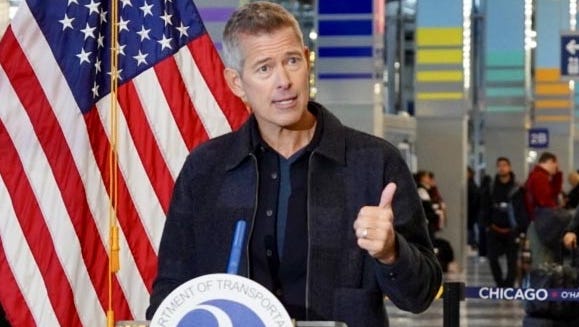
The DOT lists “respectful attire,” among other suggestions. In a video shared by CNN, Transportation Secretary Sean Duffy elaborated: “I would encourage people to dress a little better. That might encourage us to behave a little better. Let’s not come to the airport wearing slippers or pajamas.”

Why you need to save even if you don’t retire

0


It works in theory, but becomes more troublesome in practice.

play

These days, it can be difficult to save enough to live a comfortable retirement. Expenses continue to rise, and some seniors are having to build up their savings over 30 years or more. That’s a tall order, especially if you struggle to make regular contributions to your retirement accounts.

With all of this in mind, you may decide to give up on retirement altogether. In theory this could solve the problem, but in practice it’s more difficult than expected.

Why it’s hard to never retire

Although they may truly want to work for the rest of their lives, many people are forced to retire unexpectedly. For example, you may develop a serious illness that prevents you from working or requires you to care for a family member who is no longer able to care for you.

Changing jobs may make it difficult to continue employment. Some older people find it more difficult to find employment elsewhere after losing their job. If you have a physically demanding job, you may find it too difficult to maintain as you get older.

However, this does not mean that pivoting is not possible. Perhaps you can move to a less physically demanding job or find a remote job that allows you to stay home to care for a sick family member. It’s hard to know if this is an option for you.

Save what you can anyway

You may not have any plans to retire, but it’s worth setting aside some money in a tax-advantaged account as a safety net in case you are forced to retire. If you no longer need the funds, you can always pass them on to your heirs.

If you’re eligible, applying for a 401(k) match is a good place to start. This is basically free money and can help you reach your savings goals much faster than trying alone.

More than that, set aside as much money as you can. Ideally, you would be able to save a certain amount each month or pay period, but this may not be feasible for everyone. If you can’t contribute regularly, please do what you can. Maybe it’s saving money on your tax refund each year or putting $20 aside every few pay periods.

Your small donation may not seem like much now, but it can grow into thousands or tens of thousands of dollars, especially if you invest over several decades. They may just be a lifesaver if something unexpected happens.

The Motley Fool has a disclosure policy.

The Motley Fool is a USA TODAY content partner providing financial news, analysis and commentary designed to help people take control of their financial lives. Its content is produced independently of USA TODAY.

The $23,760 Social Security bonus that most retirees completely overlook

Offers from the Motley Fool: If you’re like most Americans, you’re several years (or more) behind on your retirement savings. But there are some lesser known ones “Secrets of Social Security” It may help ensure that you increase your retirement income.

One Easy Trick Could Pay You Up to $23,760…Every year! By learning how to make the most of your Social Security benefits, we think you can retire confidently with the peace of mind we all desire. participate stock advisor To learn more about these strategies,

View “Social Security Secrets” »

South Fulton Police intervene in TI and 50 Cent’s virus fight

0

Rap icons 50 Cent and T.I. are engaged in an online feud, and now the police are getting involved.

According to multiple reports, including Billboard and Complex, the hip-hop giants have been going back and forth on social media after ongoing discussions about the possibility of the two rappers participating in a Verzuz battle.

The ordeal escalated into personal attacks on his family and dissing of his songs.

The South Fulton Police Department, based in metro Atlanta, claimed in a humorous Facebook post earlier this week that it has been receiving calls from people about public altercations.

“We are fully aware that TI and 50 Cent are currently having a verbal disagreement over lyrical proportions,” the agency said. “After conducting a preliminary linguistic analysis of Mr. Harris’ extensive vocabulary, we have determined that this matter is outside the scope of our investigation.”

They also tagged the New York City Police Department in the post and said, “Let’s all just get along this time.” 50 Cent is specifically from Queens, New York, and TI is from Atlanta.

USA TODAY reached out to the South Fulton Police Department on Feb. 26 for more information, but did not immediately receive a response.

TI says of 50 Cent: ‘I don’t respect him’

According to Complex and Billboard, TI and 50 Cent have a history of beef, but their feud reignited in early February. TI appeared on Shannon Sharpe and Chad Ochocinco’s Nightcap podcast to discuss the idea of ​​having a one-shot with 50 Cent at Verzuz, something he’s been calling for for years.

“But he doesn’t want to smoke,” the Southern host said. “He’s ducking smoke. It’s cool.”

As Billboard reported, shortly after, the two exchanged words in an Instagram post, calling each other “rats” (a slang term for a police cooperator or informant). In another recent interview on the “Million Dollarz Worth of Game” podcast, TI expressed that he has changed his mind about battling the “In da Club” rapper.

“I don’t want to be on stage with him,” he told hosts Jilly Da Kid and Wallo. “I don’t respect him.”

TI releases some diss records

Things got better when 50 Cent responded and shared a photo of T.I.’s wife, X-Scape singer Tiny, on Instagram, as well as other now-deleted posts directed at the Georgia rapper’s family.

According to Complex, the move prompted a reaction from T.I.’s son King Harris, who began taking explosive jabs at 50 Cent’s late mother, Sabrina Jackson.

Since then, TI has released several diss tracks, one titled “War” and another titled “Right One,” XXL reported.

In an X post on Wednesday, February 25, TI shared a third song, believed to be “What a Bully,” along with a cover photo of 50 Cent while he lost weight for the 2011 sports film “All Things Fall Apart.”

“I don’t make memes, I make music!!!!,” the caption read. “IDGA (expletive) what you deleted…you keep posting = that’s a problem!!!!”

50 Cent has not responded via diss track to TI, but as of Thursday, February 26th, he has posted about his recent ventures in television and film.

Taylor Eardley is a news reporter for USA TODAY. Contact us at tardrey@usatodayco.com.

Amazon’s path to e-commerce supremacy

0


The e-commerce giant’s history tells several important stories.

play

For many people, it’s hard to imagine what the world was like before Amazon. (NASDAQ:AMZN). People under 40 almost take for granted that they can get anything they want with the click of a mouse. And what’s especially interesting is how Amazon came to emerge as the biggest winner of the e-commerce revolution. Especially since the original goal was much more modest.

Amazon has many lessons to teach investors about what makes a successful business. Therefore, I voyager portfolio. There’s no better place to start than at the beginning. In the first article of a three-part series about Amazon, we have a chance to turn back the clock and see how Amazon became the giant company it is today.

Writing a book about e-commerce

Amazon founder Jeff Bezos founded the company today known as Amazon in 1994. After about a year of preparation, Bezos launched the Amazon.com website, selling books from a garage in the Seattle-area city of Bellevue and handling shipping across the United States and internationally.

But what Mr. Bezos quickly realized was that there was nothing special about books as products sold through e-commerce. In fact, Amazon’s interface was largely independent of the type of inventory a seller wanted to offer. This allowed Amazon to expand its product offerings over time, adding music to physical media in 1998. And in a significant move, Amazon opened its platform to third-party sellers in 2000, allowing websites to dramatically expand their reach and monetize the infrastructure they set up. That will be a recurring theme in other areas of the company’s business.

Surviving the technological collapse

In the early 2000s, the overhyped internet sector went into decline and was infamously shot down by a stupid dot-com concept that had no realistic chance of long-term survival. But Amazon weathered the tough times, made a strategic plan, and has successfully executed on it ever since.

Important events for Amazon’s overall business include:

  • Launched in 2005, Amazon Prime is a subscription-based service that was initially limited to unlimited shipping on a two-day schedule. Over time, Amazon used Prime to introduce new features such as its Prime Video streaming service.
  • In 2006, the Amazon Web Services cloud computing business was established to provide external clients with the same resources that Amazon developed internally for its own purposes.
  • Released in 2007, the Kindle mobile device was the first of many consumer electronics products that Amazon introduced over its history.
  • Amazon’s efforts to incorporate brick-and-mortar elements into its e-commerce operations culminated in its acquisition of grocery chain Whole Foods Market in 2017, which provided a new way for e-commerce companies to address some of their distribution challenges.

Amazon currently dominates e-commerce, but its cloud computing business is taking on a life of its own. The company’s e-commerce division is responsible for most of Amazon’s revenue. However, Amazon Web Services is much more profitable, despite having much lower sales. This has made Amazon both a consumer goods company and a technology company.

Amazon’s long road to prosperity

Perhaps the most interesting part of Amazon’s journey is how Amazon’s stock sparked intense debate among investors. As you’ll see in the second installment of this three-part series on Amazon, the company hasn’t been profitable for a long time, but once it did, its growth potential became very clear.

Dan Caplinger holds a position at Amazon. The Motley Fool has a position in and recommends Amazon. The Motley Fool has a disclosure policy.

The Motley Fool is a USA TODAY content partner providing financial news, analysis and commentary designed to help people take control of their financial lives. Its content is produced independently of USA TODAY.

Should you buy Amazon stock now?

Offers from the Motley Fool: Before buying stocks on Amazon, consider the following:

of Motley Fool Stock Advisor Our analyst team has identified what they believe Best 10 stocks For investors to buy now…and Amazon wasn’t among them. These 10 stocks have the potential to generate impressive returns over the next few years.

when to think about it Netflix This list was created on December 17, 2004…if you invested $1,000 at the time of recommendation. you have $445,995!* or when Nvidia This list was created on April 15, 2005…if you invested $1,000 at the time of recommendation. you have $1,198,823!*

Now, the important thing to note is that stock advisor Total average return is 927% — compared to the S&P 500’s 194%, a market-beating outperformance. Don’t miss our latest Top 10 list. stock advisorjoin an investing community built by retail investors, for retail investors.

See 10 stocks »

*Stock Advisor will return on February 26, 2026.

How anti-Semitic remarks cast a shadow on SF Mayor Lurie’s economic plans

0

play

“This story has been updated to add new information.”

A moment that was supposed to focus on San Francisco Mayor Daniel Lurie’s goal of promoting policies that support the city’s economic recovery and housing development was overshadowed by the woman’s anti-Semitic comments.

On Feb. 25, Lurie and other local leaders were promoting the mayor’s new housing proposal that would cut the city’s concession tax in half in hopes of attracting new housing developers to the city. A group of demonstrators were present during the event and chanted “Tax the rich” to oppose the proposal.

However, the mayor said things quickly changed after a woman started chanting anti-Semitic remarks about “taxing Jews.”

Immediately after the event, Lurie took to social media to condemn the anti-Semitic comments he and other local leaders heard on February 25th.

“This was an event I hosted with Director Mahmoud, labor leaders, and dozens of workers to announce plans to create more jobs for workers and more housing for San Francisco residents,” Lurie posted on X.

“Suggesting that Jews are wealthy is a well-worn cliché, and targeting our community at an event focused on creating economic opportunities for San Franciscans is clearly anti-Semitic. I will never accept hate directed toward the Jewish community or any community in the city. Those are not San Francisco values. We are better than that.”

At the time, it was unclear whether the woman was a member of the San Francisco branch of the Democratic Socialist Party of America or a group of protesters opposed to the proposal. But shortly after the event, the DSA San Francisco group posted on Instagram that the woman was a non-member and joined from the crowd.

DSA San Francisco chapter treasurer Matthew Pancia told the San Francisco Chronicle that the woman, who has not yet been identified, appeared to have walked into the crowd of protesters less than five minutes before leaving the area.

“DSA members and other protesters asked her to stop, but she refused,” the post reads. “We want to be clear that any hatred she harbors is not shared by DSA members and we categorically reject anti-Semitism.”

But by that point, momentum had already begun to take shape, with major online voices weighing in on the mayor’s post, including politicians like California Governor Gavin Newsom and Congressman Eric Swalwell, and commentators like CNN’s chief political analyst David Axelrod and Twitch streamer Hasan Piker.

“I stand with Mayor Lurie against the anti-Semitic hatred that occurred in San Francisco today. We must all call it out, denounce it, and do more to rid our communities of it from its roots to its ugly trunk,” Swalwell said on the X show.

Although the mayor’s post did not name any of the groups protesting at the event, people online and the San Francisco Building and Construction Trades Council criticized the DSA San Francisco chapter for their comments during the event.

“Anti-Semitism has no place in our labor movement and has no place in San Francisco,” Rudy Gonzalez, executive director and treasurer of the San Francisco Building and Construction Trades Council, said in a statement.Edited after the event. “Disagreement over policy should be handled through debate and democratic engagement. Bigotry will not advance any cause.”

But then, on February 25, more information about the incident and the woman’s non-existent relationship with DSA’s San Francisco branch came to light, prompting Gonzalez to amend his criticisms and statements about the group.

“I am a spokesperson for our affiliates, and I take seriously any enthusiasm or criticism for including DSA in this statement,” Gonzalez said in a social media post. “I’ve been an organizer for a little bit, and it’s not uncommon to hear boos and hisses and the like when someone says something we don’t agree with. Obviously, people know how to boo or shout chants at politicians they don’t like. Why wouldn’t they do that to some vile person who has nothing to do with them?”

As of February 26th, the case is still ongoing. News outlets such as the Times of Israel and the Jerusalem Post have reported on this, sparking criticism and questions across social and international media..

On Thursday, Lurie released a statement about the incident to the San Francisco Chronicle and posted an initial statement on X.

“I heard a group of people yelling, ‘Tax the rich,’ and that cry became, ‘Tax the Jews,’ and if that chant doesn’t represent that group of people, I’m glad to hear that,” Lurie told the San Francisco Chronicle.

“I will not condone hate directed at the Jewish community or any community in our city. I am encouraged by so many San Franciscans coming forward and saying it is unacceptable and does not represent our city.”

Noe Padilla is a Northern California reporter for USA Today. To contact him, npadilla@usatodayco.comX Follow him at @1NoePadilla or Bluesky @noepadilla.bsky.social.. Sign up for the TODAY Californian newsletter or follow TODAY Californian on Facebook.

Massive farm fire in Ohio kills 6,000 pigs: fire officials

0

play

A fire caused by high winds at an Ohio pig farm facility caused “catastrophic” damage and killed thousands of pigs, fire officials said, marking a new and devastating barn inferno that has contributed to the deaths of millions of animals in recent years.

The massive fire broke out on Wednesday, February 25, at Fine Oak Farm in Union Township, Madison County, west of Ohio’s capital Columbus, according to the Central Township Joint Fire District. Firefighters were called to the barn fire just before 12pm local time.

The incident was later upgraded to a commercial fire after Chief Brian Bennington observed a “large plume of smoke that could be seen from a distance” and requested additional resources. Multiple local fire departments and several other emergency agencies were called to the scene.

“What our crew encountered upon arrival was an extremely difficult and heartbreaking event,” Bennington said in a Feb. 26 statement.

The fire chief explained that the facility was a large farm complex used for pig farming, consisting of five large agricultural buildings, four of which housed approximately 7,500 pigs. When crews arrived on scene, they found two of the barns engulfed in flames, Bennington said.

Bennington said crews faced high wind conditions, which significantly affected firefighting efforts. The fire destroyed three barns and killed about 6,000 pigs.

Firefighters rescued a barn and about 1,500 pigs, the fire chief added. No injuries were reported as a result of the incident.

Bennington highlighted the support of the farming community throughout Madison and Clark counties, as several farmers responded with water trucks. “Ohio’s rural farming communities are tight-knit and really step up when their own farming communities are in need,” he says.

The incident remains under investigation and the Ohio State Fire Marshal’s Office will determine the cause and origin of the fire. Bennington said arson is not suspected at this time and there is no ongoing threat to the public.

“Rapidly changing fire behavior”

Thick smoke from the fire was visible for miles, and Bennington said the first units to arrive encountered a situation where the fire was coming from the other side of the pig farm facility.

The fire chief noted that this incident required extensive water shuttle operations due to limited rural water supplies in the area. Crews deployed multiple handlines and used aerial equipment to try to extinguish the fire, but “were faced with extremely difficult conditions throughout the incident,” Bennington said.

Bennington said sustained winds of about 20 mph and gusts up to 35 mph accelerated the fire’s spread. He added that strong winds had made it “extremely difficult” to contain the fire and caused “rapid changes in fire behavior” across the agricultural estate.

The fire chief said the fire was brought under control after about four to five hours by firefighters from four different counties.

“Unfortunately, the fire caused devastating damage to our business. A significant portion of our agricultural structures were destroyed,” Bennington said in a Feb. 25 statement.

Latest major fire affecting hog farms in Ohio

The incident at Fine Oak Farms is the latest large-scale fire to cause significant damage to Ohio hog farms in recent years.

In August 2024, about 1,100 pigs were killed in the village of Versailles, about 80 miles northwest of Dayton, Ohio, according to data from the nonprofit Animal Welfare Institute. In March 2022, about 2,000 pigs died in a barn fire at the Kenneth Scholl pig farm in Brown Township, just west of Columbus.

Before the Fine Oak Farms fire, the Animal Welfare Institute reported that 162 sheep, horses, cows, chickens and other animals had died in other barn fires in Ohio this year.

Hundreds of thousands of animals die in barn fires every year

Hundreds of thousands of animals are killed in barn fires across the country each year, according to data from the Animal Welfare Institute. The organization says more than 9 million livestock have died in barn fires since 2013.

As of February 26, the Animal Welfare Institute reported that 118,738 livestock have died in barn fires in the United States this year, including the incident at Fine Oak Farms. In separate incidents in North Carolina and Georgia in January and another in Missouri earlier this month, most of the livestock killed were chickens.

“Most of the fatal barn fires occurred in colder states, particularly the upper Midwest and Northeast, with the highest number of barn fires occurring in New York, Wisconsin, Pennsylvania, Ohio, and Illinois,” the organization said. “The degree of cold experienced by the state appears to be a greater factor in the prevalence of barn fires than the intensity of the state’s livestock agricultural production.”

More than 2.53 million livestock died in barn fires from 2022 to 2024, the Animal Welfare Institute announced in its latest report on livestock deaths from barn fires in 2025. The Animal Welfare Association said the high death toll was “mainly” due to fires in large-scale operations housing anywhere from a few thousand animals to more than a million animals.

According to the Animal Welfare Research Institute, the majority (98% or more) of deaths from these incidents during this period involved domestic birds such as chickens and turkeys. But in 2023, a massive fire at a dairy farm in West Texas became the deadliest livestock fire in the state’s history, and the deadliest cattle fire in the United States in at least a decade.

A fire at the Southfork Dairy Farm near Dimmit, Texas, killed 18,000 cows. At the time, Dimmit’s former mayor, Roger Malone, called the incident “mind-boggling.”

“I don’t think anything like this has ever happened around here before. It’s a real tragedy,” Malone said.

Contributor: Rick Jervis, USA TODAY. Shahid Meighan, Columbus Detachment