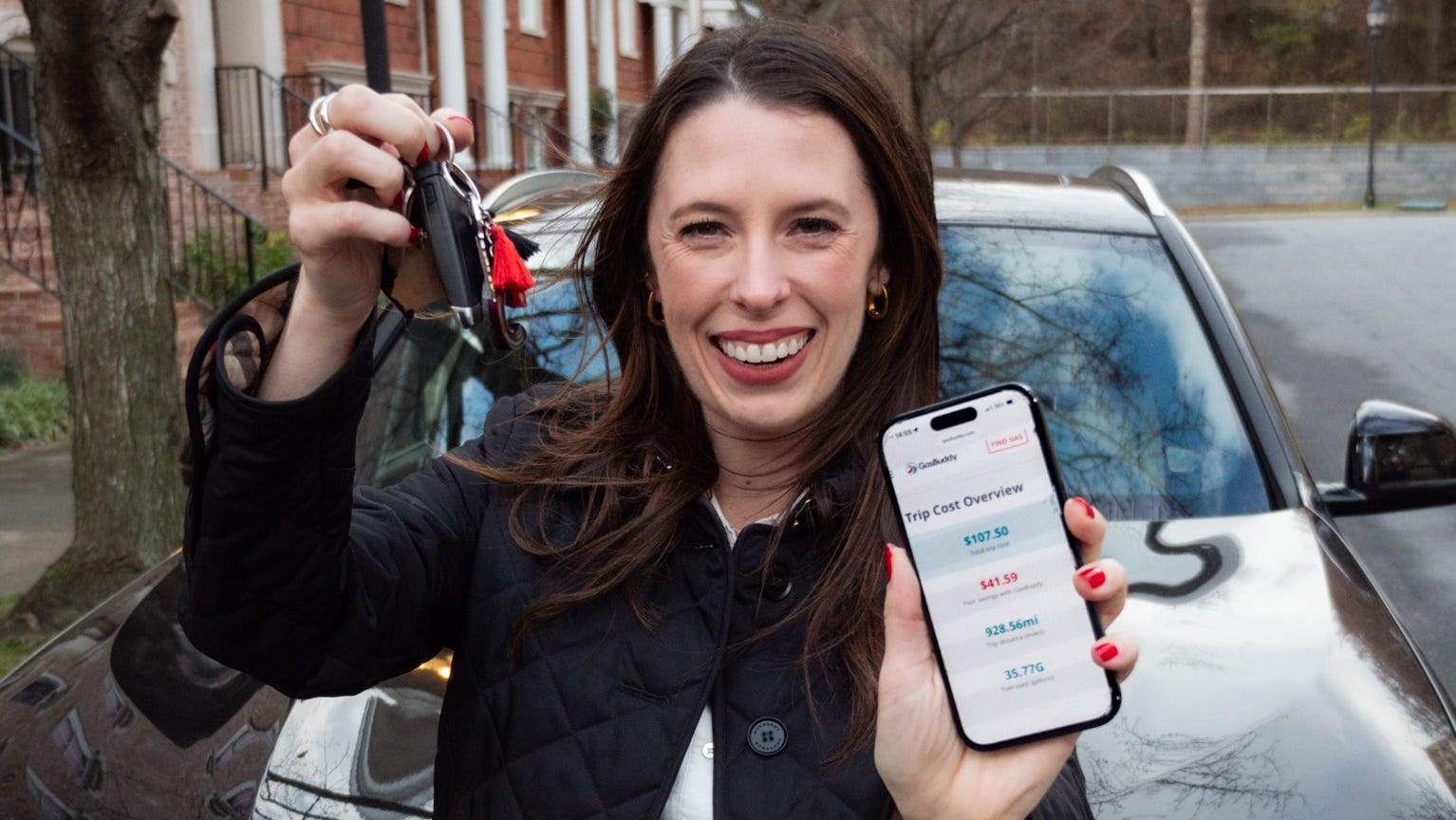

Gas cost calculator for your next road trip
Use our gas cost calculator to get an idea of how much your road trip will cost.
problem solved
Rising vehicle and insurance prices are making car ownership a luxury and more difficult for more Americans, a new study finds.
Nearly four in 10 Americans surveyed by Lending Tree, or 39%, said a car is a luxury they can’t afford. And more car owners say they are paying too much, the survey says.
People cite rising fixed costs, especially loan payments and insurance, as the main reason why owning a car has become so expensive and difficult to obtain. Loan payments average $7,275 per year, insurance averages $2,277, gas costs $2,105, and maintenance costs $1,184.
Insurance costs have jumped 37.5% since 2021, outpacing income growth (23.9%) and other auto expenses, according to Lending Tree.
Consumers are carrying too much car-related debt
A long-standing rule of thumb is that your monthly car payment shouldn’t exceed 10% of your monthly income, and your total auto expenses shouldn’t exceed 20% of your income, says Matt Schultz, chief consumer finance analyst at Lending Tree. But he said many people exceed the 20% threshold just on car payments, and that’s a problem.
“The costs of owning a car continue to rise faster than income,” Schultz told USA TODAY, adding that insurance premiums are also growing faster than income. “When you add these rising costs to higher mortgage payments and everyday financial pressures, many households have little margin for error.”
According to Lending Tree, most Americans who take advantage of auto loans spend 15% of their income on car-related expenses, which equates to $12,841 per year on a median household income of $85,759. According to the U.S. Department of Transportation, this is consistent with the criteria experts use to define transportation cost burden.
According to Lending Tree’s analysis, car loan holders in Louisiana were the most likely to spend 23.2% of their median household income of $64,199, or $14,894, on car costs. Mississippi followed at 21.5%, and New Mexico rounded out the top three at 19.8%.
At the other end of the list, car loan holders in Massachusetts spend the least amount of their income on car expenses at 10.6%, followed by New Hampshire (10.9%) and the District of Columbia (11.4%).
Despite affordability challenges, the majority or 61% of survey respondents said they personally own or lease a car. This number was higher for baby boomers (78%) but dropped to 39% for consumers with incomes below $30,000.
Among car buyers, 21% said they had delayed their purchase, and that number rose to 27% for Gen Z. Additionally, 16% said they chose a car that was cheaper than they originally wanted, and 13% said they kept their original car longer than planned. Another 12% chose not to buy a new car at all.
Some shoppers are signing up for long-term car loans of up to seven years to make monthly payments more affordable, but that can come with risks, Schulz said.
“Long-term loans often end up paying significantly more interest over time, potentially leaving the borrower in debt for many years longer than expected,” he said. “You’re also more likely to end up with a loan upside down, which means you owe more than the car is worth. This can create a real financial burden if your car is scrapped, requires major repairs, or your financial situation changes unexpectedly.”
And current high gas prices are adding to the strain on already financially stressed consumers, Schulz said.
“Rising gas prices create new, unavoidable costs that many people just can’t cut, especially in areas where people still need to drive,” he said.
Betty Lin-Fisher is a consumer reporter for USA TODAY. Contact her at blinfisher@USATODAY.com or follow her at @blinfisher on X, Facebook and Instagram and @blinfisher.bsky.social on Bluesky.. Sign up for our free The Daily Money newsletter, breaking down complex consumer and financial news. Subscribe here.


