Home Blog Page 937

Shedeur Sanders won’t let NFL draft slide hurt chances with Browns

0


Count me in the crowd who suspect that Sanders’ plunge in the draft was hardly about football.

play

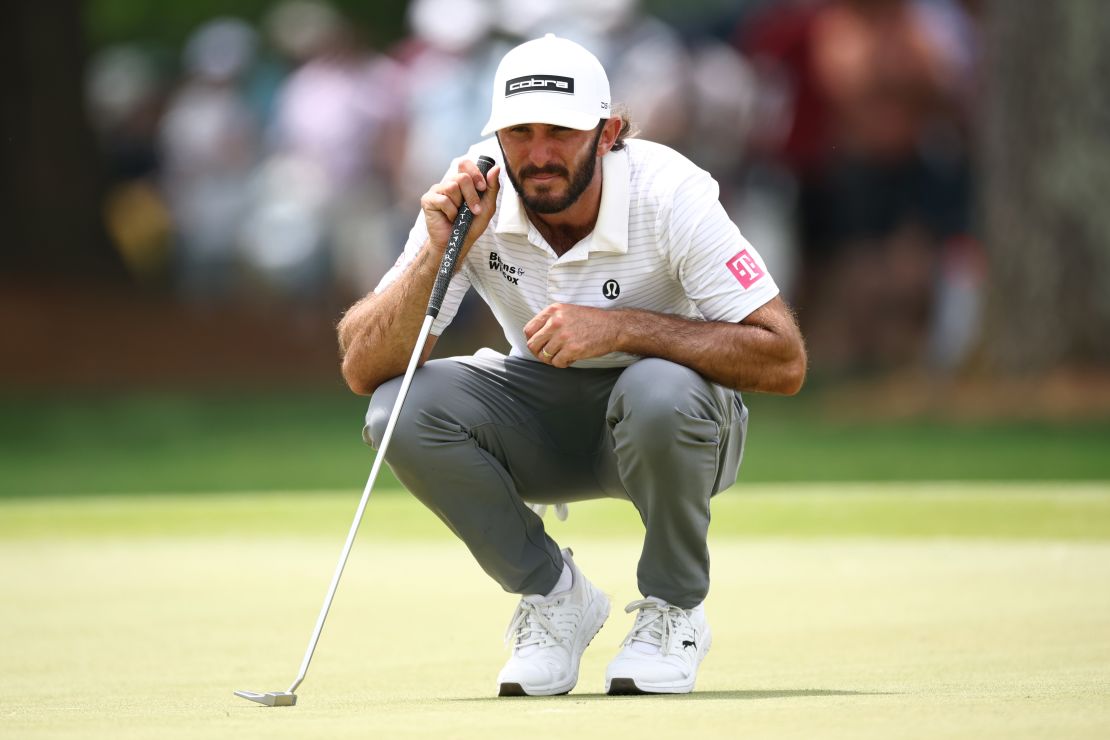
When the slide was over, after he received the real call that he was finally selected in the NFL draft on Day 3, Shedeur Sanders took a plunge.

How fitting.

Sanders – chosen by the Cleveland Browns with the sixth pick of the fifth round on Saturday, 144th overall – dove into the swimming pool at his famous father’s house after experiencing the most dramatic plunge in NFL draft history.

And it was all joy.

“I’m extremely grateful for the opportunity, throughout everything,” the former Colorado quarterback said during a conference call with the Cleveland media. “I don’t ever focus on the negative or even think about the negative, because the positive happened so fast.”

So there. Sanders, pegged as a likely first-round pick when the draft began on Thursday night, took the high road in assessing the ebb and flow of his draft experience. If he is bitter about tumbling so far in the draft – and igniting so much debate to dominate the coverage of the event, as quarterbacks including Jaxson Dart, Tyler Shough and Jalen Milroe were picked ahead of him – he certainly didn’t put out that vibe.

Instead, he exhibited a glimpse of just how equipped he may be to handle adversity, with more likely coming as he tries to make it in the NFL.

“Nothing really affected me the last couple of days,” Sanders insisted. “It’s just understanding faith and that God really has me.”

Even the shameful prank phone call that he received during the draft, from some kid pretending to be New Orleans Saints GM Mickey Loomis with word that he was on the verge of being selected, seemed to roll off Sanders.

“Of course, I felt like it was a childish act,” he said. “Everybody does childish things, here and there.”

On Thursday night, when his draft night party fizzled, Sanders told supporters that being bypassed in the first round should not have happened under any circumstance. Yet as the draft unfolded and one team after another passed on him multiple times, the son of Hall of Famer Deion Sanders apparently refused to wallow in any sort of self-pity.

That’s healthy. There’s no reason to expend much energy on breaking down his draft slide. Not now. Now it’s a matter of focusing on what he can control – like being prepared to absorb coach Kevin Stefanski’s offense – while others debate exactly why so many teams in a quarterback-needy league wanted no parts of a highly-productive quarterback who last season passed for more than 4,000 yards and 37 touchdowns, while leading the NCAA with a 74% completion rate.

Sanders was the sixth quarterback drafted – and second one chosen by the Browns, who picked Dillon Gabriel from Oregon with a third-round pick.

Count me in the crowd who suspect that Sanders’ plunge in the draft was hardly about football. Not when reports that knocked Sanders was “arrogant” intensified for weeks, and rumblings about subpar interviews with NFL teams snowballed.

Of course, the decisions that each team makes in these cases – the New York Giants, who traded back into the first round to draft Dart from Ole Miss with the 25th pick, were reportedly split on their bottom-line assessment of Sanders – is their prerogative.

In time, there will be fodder for more debate about whether the same decision-makers who banked on since-discarded quarterback Daniel Jones got it right this time or blew it again. We’ll see.

Still, the “arrogant” narrative was particularly sensitive as it raised legitimate questions – especially on social media – about culture and race. Baker Mayfield, who has sparkled in his revival with the Tampa Bay Buccaneers, wasn’t too “arrogant” that it prevented the Browns from choosing him No. 1 overall in 2018 – four years after Cleveland took Johnny Manziel, another white quarterback cast as high-strung with the 22nd pick overall.

Of course, it’s only conjecture to say that teams passed on Sanders because he rolls with gaudy jewelry, and even checked his designer watch during TD celebrations in the midst of games. No, Sanders doesn’t have any off-the-field conduct issues that NFL teams so often overlook or justify when it comes to certain talents, Black or white.

I’m not buying the theory that Shedeur’s slide was somehow part of a collective effort to send a message to Deion. And in a league with increasing media exposure, and with Hard Knocks shows part of the landscape with cameras behind the scenes, the theory that Sanders would generate too much attention as a backup quarterback doesn’t wash, either.

It was interesting, though, to take stock of what Browns GM Andrew Berry said about passing on Sanders, after Day 2 of the draft.

“Fit comes into play,” Berry said.

The next day, Berry drafted Sanders – although by the looks of the video from the Browns war room, the GM’s body language projected as the least-enthused in the room.

Nonetheless, Sanders is no ordinary fifth-round rookie as he lands with a franchise that has struggled for decades to secure its long-term answer at quarterback. He’ll join a quarterback room led by aging vet Joe Flacco and including former Pittsburgh Steelers first-rounder Kenny Pickett along with Gabriel. At least that’s a shot, and a decent opportunity to ultimately compete for the job. The picture doesn’t include DeShaun Watson, who is rehabbing from a torn Achilles tendon on top of the alleged sexual assault scandal that derailed his career.

Said Berry: “You have to come in and work and you have to come in and compete. That’s the message. Nothing’s given. It really doesn’t matter where you are picked, it’s what you do from that point forward. Because that’s the reality for all the guys we selected this weekend.”

It’s not how you start. The NFL has enough prime examples of that theme. Tom Brady was a sixth-round pick who became the GOAT with seven Super Bowl rings. Kurt Warner is a Hall of Famer who wasn’t drafted. Dak Prescott was a fourth-round pick. Two-time NFL MVP Lamar Jackson was the fifth quarterback drafted in his class, when some thought he’d be better off switching positions.

Now Sanders can get on with this NFL journey.

“What fuels me is my purpose in life and understanding the route we’re going to take,” he said.

Still, there should be no shortage of motivation in proving some teams wrong.

“There’ll be this huge chip on his shoulder,” Denver Broncos coach Sean Payton predicted after Sanders wasn’t picked on the first two days. Payton, whose first-round rookie last year, Bo Nix, was also the sixth quarterback drafted, first saw Sanders play in junior high school in the Dallas area and has followed him since.

“Beware,” Payton added, “because this guy is going to play in this league.”

Sanders has long promoted the “legendary” theme as part of his personal brand. Well, it would be just that if he ultimately rises from this point to achieve NFL greatness.

It’s no wonder that one of Sanders’ new teammates, Browns cornerback Denzel Ward, tweeted this encouraging message to the rookie, shortly after the pick came down: “Time to Be Legendary! Let’s do it!”

After all, there’s more to be written with this script.

Follow Jarrett Bell on social media: @JarrettBell


Source link

Mr. Irrelevant: The best things come to those who wait. Here’s why being Mr. Irrelevant in the NFL draft is priceless.

0


CNN
 — 

If you’re not first, the saying goes, you’re last. But in the case of the annual NFL draft, finishing dead last is by no means a bad thing at all.

In fact, being selected as the very last guy on Saturday night provides access to a unique club and the most unlikely football fraternity, just as long as you don’t mind a seemingly demeaning title: Mr. Irrelevant. In 2025, that title goes to Kobee Minor, selected by the New England Patriots.

Anyone who’s been drafted by an NFL team will tell you that it’s both an exhilarating and nerve-shredding experience; sitting anxiously by the phone, waiting for it to ring and hoping that you won’t be completely overlooked. When wide receiver Ryan Hoag was drafted in 2003, the lunchroom at his liberal arts school in Minnesota was turned into a party scene. His cell phone was connected to the loudspeakers and hundreds of friends and family were in attendance.

“They made a real big deal about it,” he recalled to CNN, “which was really fun until we’re six hours in and my name hasn’t been called, and now I feel awful.”

In the buildup to the draft, Hoag had seen his name featured on ESPN as one of the players to watch, but as Saturday wore on, he began to lose hope. Hoag says he’d given up 15 picks before the end of the final round, but then the phone rang, and the Oakland Raiders coach Bill Callahan was on the line.

“He said, ‘Would you like to be Mr. Irrelevant?’ And the whole place just went nuts,” he recalled. “It was like your team had just won the Super Bowl. Everybody just jumped up and screamed. My visceral response was to hang up the phone and celebrate with all my people.”

Ryan Hoag, Mr. Irrelevant in 2003, carries the ball during a preseason game in 2005. He never played a game in the regular season.

At some point in the mayhem, Hoag’s friend and teammate drew attention to the fact that the number of his selection, 262 out of 262, came with additional benefits.

“He’s like, ‘dude! I think Mr. Irrelevant wins a million dollars and a trip to Hawaii!,’” Hoag said,

That wasn’t quite true, but he was about to embark on the trip of a lifetime.

Hoag said that he didn’t know much about Mr. Irrelevant, but he’d at least heard of it. In 1992, when Michigan’s guard and center Matt Elliott was drafted as the 336th pick, he had no idea.

“This was truly the last years before the internet,” he joked to CNN. “I think it was (Washington) coach Joe Gibbs who told me, ‘Some people from California are going to call you, it’s called Irrelevant Week. It’s gonna be fun. Just understand that it’s gonna be fun!’”

Historically, most players who’d been picked last didn’t have much of a career in the NFL, in fact many never even played a game. So, in 1976, the late Paul Salata decided that he wanted to give them something to smile about. He had been a 10th round pick as a receiver in 1951, scoring four NFL touchdowns in a fleeting professional career. But his greatest contribution to the league began when he invited the 487th pick Kelvin Kirk to Newport Beach in California.

“Mr Irrelevant” and “Irrelevant week” had been born; it’s since become one of the most endearing concepts in sports.

Former NFL player Paul Salata, right, announces the last pick of the 2013 draft. Salata created the Mr. Irrelevant Award. He died in 2021.

“With the exception of maybe the first round,” Hoag posited, “I don’t know that anybody in their right mind would be drafted anywhere other than Mr. Irrelevant. My mom still jokes about it to this day, it was this out of body experience for our family, we were treated like royalty for the entire week.”

The event is now run by Salata’s daughter, who told CNN that planning for the week begins from backstage as soon as the draft is over. Irrelevant Week takes place in Newport Beach, California, featuring a parade in honor of the draftee, a “roast and toast” dinner and a golf tournament. The festivities are tailored to each athlete, and they are encouraged to submit a wish list.

“Many players have never seen the ocean before,” Melanie Salata-Fitch told CNN. “The player usually wants a surfing lesson, so we have famous surfers teach him while a party is happening on the beach.”

There are VIP trips to Disneyland and the Playboy Mansion, players have met celebrities like Will Farrell and Jimmy Kimmel and driven the cars of their dreams. As a single man, Hoag appeared on “The Bachelorette” reality TV show.

Ryan Hoag appeared on the reality TV show

“I just remember sitting up there on one of those big lifeguard chairs on the beach,” quipped the 2009 Mr. Irrelevant Ryan Succop to CNN, “all these people are celebrating you and bringing you gifts and I’m kind of sitting there going, ‘Man, what in the world am I doing?’”

At the end of the week, the players leave Newport Beach with more than just fond memories. Stuffed into their luggage is the Lowsman Trophy, a tongue in cheek reference to the Heisman Trophy given to the best NCAA player every season; the player depicted is fumbling the ball.

“Most people would think it’s the hollow plastic that you get at a sporting goods store,” explained Hoag. “Nah, this thing’s bronze. It’s 10 pounds. This is the real deal my friend, it’s hilarious. I love it!”

Kicker Ryan Succop, Mr. Irrelevant in 2009, announces the final pick in 2019. He won a Super Bowl with the Tampa Bay Buccaneers.

Every Mr. Irrelevant is encouraged to show some humility and to lean into the spirit of the event, but the dubious honor doesn’t necessarily signify the end of their professional dreams.

The 1994 draftee Marty Moore played alongside Tom Brady in his first Super Bowl victory in 2002. Kicker Succop played alongside Brady in his final Super Bowl triumph for the Tampa Bay Buccaneers in 2021, whilst the 262nd pick in 2022, Brock Purdy, played in the Super Bowl for the 49ers just two years later.

Youngsters in the school yard might have an idea of what it’s like to be picked last – it can be humiliating. But the Mr. Irrelevants say there is no shame, because they are selected ahead of potentially a hundred other college players who aren’t selected at all. Just a few hundred players are drafted every year.

“You’re more likely to be struck by lightning than drafted in the NFL,” said Hoag. “That’s pretty special.”

“I didn’t really care how I got my start,” said Succop, who knew that as a kicker who’d be a late round pick at best. “It does not matter how or where you get your start, what matters is the way you prepare, and when your opportunity comes, are you ready? Use this opportunity, don’t take the irrelevant title as a negative.”

San Francisco quarterback Brock Purdy might be one of the highest-profile Mr. Irrelevants.

Succop says that whenever he played, he always knew if there was a Mr. Irrelevant on the opposing team and they’d be sure to connect before or after the game. Many still attend the events in Newport Beach and have formed lifelong friendships, and they are always rooting for each other. Matt Elliott says he only cares about two picks in every draft these days, the first and the last. Asked to put a value on the experience and benefits of being Mr. Irrelevant, he said it was priceless.

What started out as a gentle tease half a century ago has turned into something uniquely wonderful.

Crediting the founder Paul Salata, Hoag said, “He was just like, let’s celebrate somebody, and do something nice for somebody, for no reason. Especially in this day and age of dog eat dog, when everything’s politicized and negative, you need more of people wanting to lift up others for no other reason. It’s nice to have a breath of fresh air.”

“This is the one thing that will never happen to you again and it’s only happened to 49 people in the world, so live it up.”

CORRECTION: This story has been updated to note the correct spelling of Melanie Salata-Fitch’s name.


Source link

Pope Francis used WhatsApp to stay connected to torture survivor of Argentina’s ‘Dirty War’

0


Buenos Aires, Argentina
CNN
 — 

Ana María Careaga was just 16 when she was kidnapped, stolen by the regime then running Argentina. To her mother, Esther Ballestrino de Careaga, it was as if she had vanished.

It was an event that would change not just the lives of both the women and the daughter Ana María was carrying, but the future of Argentina. And it was something a priest named Jorge Bergoglio would never forget.

It was 1977 and Argentina was under the grip of a military dictatorship following a coup the year before. Those who opposed the regime were abducted, tortured, and killed – victims of what would become known as the “Dirty War.”

There was no notification or public record of the detentions, and families had no idea what had happened to their loved ones.

By the time Ana María was seized, her brother-in-law had already disappeared. Soldiers took her to the clandestine detention center known as El Atlético, where she was tortured – even after she told her captors she was three months pregnant.

Although the extrajudicial kidnappings were becoming increasingly common, families did not speak of them — until mothers took a stand.

On April 30, 1977, a dozen or so women, each the mother of a missing child, gathered in Plaza de Mayo, the grand square in front of the Casa Rosada presidential palace in Buenos Aires. They were ordered to disperse, but instead linked arms and continued to walk slowly around the square.

Each Sunday, more women would come to join in, soon to include Esther who became one of the leaders of Las Madres de Playa de Mayo (the Mothers of Playa de Mayo.)

Members of the Mothers of Plaza de Mayo protest in Buenos Aires, Argentina, on November 21, 1977. Each had at least one child
Mothers of the Plaza de Mayo hold a banner as they walk in front of the Casa Rosada in 1980.
The protesters hold pictures of their loved ones. Thousands upon thousands of people were killed or disappeared.

Esther knew Bergoglio long before he had even joined the priesthood. She had been his boss while he was a high schooler working a technical internship at a laboratory.

“He says she taught him the culture of work,” Ana María told CNN on Thursday, standing in Buenos Aires’ ornate Santa Cruz Catholic Church. “He says she sent him to get some tests done and he brought back the results very quickly.” She questioned him on his speedy work, and he revealed that the tests were coming out the same, so he merely copied them out. “She told him, ‘You have to do it right,’ and sent him to do it again,” Ana María said. It’s an account Bergoglio confirmed after he became Pope Francis, and the two stayed in touch as he joined the priesthood and rose to become a leader of Argentina’s Jesuit community.

While Ana María was detained — always chained and blindfolded, she said — her mother and other members of the movement met in a back room at the Santa Cruz Church in downtown Buenos Aires.

Ana María turned 17 while still in captivity, and she was released on September 30, 1977, by then seven months pregnant.

Within days of a medical check arranged by her mother, she left for Sweden, where she was granted asylum.

“That was the last time we saw each other,” Ana María said. “We wrote letters to each other, and in one letter she tells me that when I was kidnapped, she was like an automaton, thinking about (me) the whole time. She left in the morning and came back at night, out all day with the mothers searching, searching, searching.”

Even when her daughter was safe, Esther kept campaigning for those who had become known as the “disappeared.”

“When she returned to the plaza after I was released, the mothers asked her, ‘What are you doing here if you’ve already recovered your daughter?’” Ana María told CNN. “And she said, ‘I’m going to continue until they all appear, because all the disappeared are my children.’”

To Ana María, and perhaps to the priest who’d befriended her mother, it was a reflection that “the struggle wasn’t just individual, but a collective one.”

Ana María Careaga walks through the Santa Cruz Church where her mother met with members of the Mothers of Plaza de Mayo.

Months after her daughter’s release, in December 1977, Esther and others met as usual at Santa Cruz when they were betrayed. Stepping out of the church, she and others were abducted.

“They had been taken to … a clandestine center for torture and extermination, and then they were thrown alive from the ‘death flights,’ which was the final solution they (the regime) boasted of having found to get rid of the bodies,” Ana María said. The “death flights” where prisoners were killed by being tossed from a plane over land or sea is now a documented horror of the Dirty War.

Many bodies were never recovered, but days after she disappeared, the remains of Esther washed up on land.

“What the Mothers say is that the sea did not want to be an accomplice and returned the bodies,” Ana María said.

Esther’s remains were unidentified though and buried in a mass grave.

Ana María did not know of her mother’s disappearance until she called to tell her of the birth of her granddaughter, the baby carried while she was detained.

“She was born on December 11, and we called on December 11, 1977, to say that she had been born, and that’s when we found out that my mom had been kidnapped three days earlier,” she said. “My mom didn’t know that she had been born safely.”

As Archbishop of Buenos Aires, Bergoglio testified about Esther during a 2010 trial related to Dirty War atrocities. In an excerpt posted on YouTube by journalist Uki Goñi, he said he had known her for more than 20 years.

“It caused me great pain,” Bergoglio said of learning of her abduction. “I tried to get in touch with relatives, I wasn’t able to. They were mostly … in hiding.”

He said he had tried to speak to people who could help but had not approached the authorities. His actions or lack thereof during the Dirty War hung around him as unanswered questions, even as the Vatican dismissed allegations against him.

“I did what I could,” he told the trial. “I remember her as a great woman.”

Decades later, long after the fall of the military regime in 1983, the remains from the oceanside mass grave were identified, and found to include Esther.

Families petitioned Bergoglio to allow them to be buried not in a cemetery, but outside the Church of Santa Cruz — the last place they had walked free.

Santa Cruz Church in Buenos Aires, where Esther Ballestrino de Careaga was abducted, and where she was laid to rest.

“He said it was an honor,” Ana María told us. “He remembered his friend Esther and said it was an honor and authorized it so we could, as the faithful of this church say, sow them in the last free land that their feet trod.”

To commemorate her mother and all the others who challenged the regime, April 30 is now recognized as the founding of the Mothers of the Plaza de Mayo.

The Vatican publicized a message then Pope Francis sent to Ana Marìa in 2018 to play on a radio show she hosts. “I very much remember your mother,” he said then. “She worked hard, she was a fighter and together with her many women who fought for justice, both because they had lost their children or simply because mothers who, seeing the drama of so many missing children, came together to fight for this as well.”

Standing just off the main altar inside Santa Cruz Church, Ana María calmly pulled out her replacement phone — her original had been recently stolen. Fortunately, her WhatsApp messages had been backed up, preserving the Pope’s words, and her memories.

She still has that recording on her phone. In it, the Pope tells her: “I’m glad you follow these footsteps of your mother and that you broadcast it to others in your radio show. So today, in a special way, I pray for mothers, I pray for you, I pray for your mother Esther, and I pray for all the men and women of good will who wish to carry forward a project of justice and fraternity among all. May God bless you all.”

The Mothers of Plaza de Mayo and their campaign are now commemorated inside Santa Cruz Church.

Esther Ballestrino de Careaga never met her granddaughter. But Pope Francis did, spending about an hour with her last year when she visited Rome, her mother said, proudly showing a video of the two together. “He knew the whole story because my mom told him everything they had done to me, the torture, everything,” Ana María said.

As another April 30 anniversary approaches, Ana María has only memories now of her mother and the Pope.

Of her mother, she said: “I have a very vivid memory of a very loving, hard-working, and committed person. I feel she left me with many values, and she’s present in our history because disappearance generates that — disappearance is the permanent presence of an absence.”

She carries a directive from the Pope as well.

“When my daughter went to see him last year, he told her that we had to continue bearing witness,” she said. “We, right now in Argentina, are going through a very difficult time, and I say … we need to remember again.”

“Everything that happened, the 30,000 disappeared, and how the Mothers created a civilizing pact in this country, a social contract of ‘never again.’ And that’s why it’s so important to preserve memory, which was also what the Pope said: that memory had to be preserved.”


Source link

From tile to toilets, tariffs will make home renovation costs soar.

0


The impact of President Donald Trump’s tariffs will soon make fixing up your home cost a lot more.

play

Americans accustomed to rising prices on all kinds of consumer goods are about to experience sticker shock in a corner of the economy that’s boomed over the past few years.

From marble quarried in Italy to washing machines built and assembled all over the world, the products and materials that furnish and model our homes are global – and about to get a lot more expensive, if they are even available as the impact of tariffs kick in.

After several years of blockbuster growth in the remodeling and design business, the White House’s erratic rollout of tariffs aimed at reshaping global trade is already taking a toll. The industry has already swallowed price increases and made supply-chain shifts where possible, professionals say, and higher prices will now hit consumers, likely slowing growth in a part of the economy that’s made up of lots of small, even mom-and-pop, businesses.

“Over the past three weeks, I’ve had three projects say, ‘Hey, we’re going to pause on things,’” said Kevin Twitty, a Portland, Oregon-based designer who works all over the country. “It’s not necessarily just because of tariffs. It’s all the other things that the tariffs are affecting, like people’s stock portfolios, their potential raises at work, their bonuses that they might be paid out throughout the year.”

Like many design professionals who spoke with USA TODAY, Twitty has been hearing from suppliers of everything from vanities to tile that they are raising prices, cancelling shipments, or still trying to make decisions. As of now, he reckons the cost of a renovation or remodel is likely to increase about 25%.

Case Architects & Remodelers, a design firm based in the Washington, DC metro area, has estimated that tariffs will add to the cost of projects by low single-digit percentages, said its executive vice president, Bill Millholland. But that does not include the cost of appliances, which could add significantly to the overall expense.

Home decor products are global

Like many other industries, the design and remodeling landscape is made up of products that defy easy categorization.

“Every aspect of home decor has something related to their product coming internationally.  You know, it’s a global economy, really,” said Barbara Karpf, founder and president of DecoratorsBest, one of the largest online suppliers of products like textiles and wallpaper traditionally only available to tradespeople.

Now, even products made domestically by American companies are having to raise prices because their input materials may be imported, Karpf said.

Another example: roofers may be relatively insulated from new tariffs, said Andrew Prchal, president and co-founder of Gunner, a national roofing, siding and window company. The majority of American roofs are made of asphalt shingles, which are manufactured domestically. But the fasteners used in most projects are made in China, and those prices have risen nearly 70% in anticipation of tariffs, Prchal said.

Supply chains have already made moves

Design and remodeling professionals who spoke with USA TODAY said that there’s very little low-hanging fruit left when it comes to shifting their supply chains.

“We were affected big time when COVID was around and that caused a very similar issue where things were just not in stock,” said Michael Alladawi, co-founder and CEO of Revive Real Estate. “We kind of made a conscious effort to source things that are more locally available.”

Revive works with a network of contractors across several states to help homeowners figure out the most strategic upgrades and renovations to make as they get ready to list their homes for sale.  

This time around, the company is trying to proactively stockpile things like cabinetry, appliances, and other supplies, Alladawi said, to “have a little bit of a runway” that smooths out the cost increases, but that will only go so far.

Karpf, of DecoratorsBest, notes that the entire industry started transitioning away from China under the first Trump administration.

“Last year, I spoke with various vendors to see what they were doing. Everybody just said, well, you know, very little comes from China,” Karpf said. “Now we have different supply chains and different places where we actually purchase the finished goods as well. So the companies were prepared for these things. They weren’t prepared for tariffs on our trading partners and our allies.”

How will consumers adapt?

Because of the ongoing uncertainty around which countries will face which levies and how that will trickle through the industry, it’s far too early to guess how consumer patterns and choices will be impacted.

Need-to-have items, like roofs, will be more insulated than nice-to-have upgrades, Prchal thinks.

In a similar vein, consumers may become more strategic, said Nick Nichols, the Chicago-based owner of two businesses, Imparfait Design Studio and KitchenLab Interiors. Households might be more willing to do a particular project, say a high-ROI upgrade like a bathroom, than a whole-house remodel, he thinks.

Also unclear: whether more Americans will want to go the do-it-yourself route. In response to a USA TODAY request for an interview, a Home Depot spokesperson emailed, “As this situation is evolving, we are monitoring developments closely. Over half of our products are sourced in the U.S. We are our customers’ advocate for value and will continue to work closely with our suppliers to navigate this environment.”

Suren Gopalakrishnan, a design supply-chain veteran, sees some upsides. He thinks consumers will become more thoughtful with their purchases, and an era of increasingly cheap and disposable home goods might be replaced with higher-quality, longer-lasting ones.

Gopalakrishnan co-founded MakersPalm, which helps brands and designers, especially artisanal ones, develop products and supply chains, after many years managing such processes for Anthropologie. He sees the coming years as a “re-set” period.

“Every change is hard. But you know, I still think it’ll be fine,” he said. He points to the initial panicked period of the COVID-19 lockdowns, when everyone thought the worst, only to discover that Americans stuck at home wanted nothing more than to upgrade their spaces – and had the savings to do it.

Businesses crave certainty

One thing is very clear: businesses across the industry really want tariffs to stop being a moving target. Alladawi of Revive Real Estate says some of the price increases he’s seen so far are simply knee-jerk reactions made out of fear.

“Our contractor network is scared,” he said. “Even when the prices haven’t gone up yet, in some instances they know they will and they’re scared they’re gonna get caught in the middle. And so they’re kind of being proactive and I understand that.”

We have 10 employees across both companies and we just want to be able to plan so that we can continue to hire,” Nichols said. “Small business is the biggest driver of  employment in this country and as a small business owner, what we’d like to know is what’s going to happen this year and next year, and have a stable political climate.”

Perhaps the only certainty in this uneasy time? “The dirty little secret of remodeling is that prices never go down,” Millholland said. “I can promise you, after this is all over, it’s not like everybody’s going to say, oh, we’re past it now. Our prices are going down 20%. That’s not going to happen, or at least never has in my career, and I’ve been doing this for 35 years.”


Source link

Hope as US universities find ‘backbone’ against Trump’s assault on education | US universities

0


Americans anxious about their country’s slide into authoritarianism found some solace in the past week over what appears to be growing pushback by American universities against Donald Trump’s assault on higher education.

After a barrage of orders, demands and the freezing of billions in federal funds for research had elicited a mostly demure response from university leaders, some are starting to mount a more muscular defense of academic freedom. A statement denouncing the Trump administration’s “unprecedented government overreach and political interference” was signed by more than 400 university presidents, and the list is growing. Another, signed by more than 100 former university heads, called for a coalition of local leaders, students, labor unions and communities, across party affiliation, to “work against authoritarianism”.

And Harvard became the first university to sue the administration over its threats to cut $9bn in federal funding should it not comply with a set of extreme demands to combat alleged antisemitism, demands that university president Alan Garber labeled “unlawful, and beyond the government’s authority”. The legal action followed several others brought by higher education associations and organisations representing faculty, including one by the American Association of University Professors challenging the administration’s revocation of student visas and detention of several international students, which 86 universities joined with amicus briefs.

But Trump was not cowed, continuing his weeks-long assault on universities he has accused of being “dominated by Marxist maniacs and lunatics”. Delivering on campaign threats, he issued a fresh set of executive actions on Wednesday targeting campus diversity initiatives and seeking to overhaul the accreditation system that has long served as quality check on higher education. And despite reports that the White House had made overtures to Harvard to restart talks about its demands – overtures the school has rejected – his tone suggested otherwise in a Truth Social rant in which he called the Ivy League school “a threat to Democracy” and “an Anti-Semitic, Far Left Institution, as are numerous others, with students being accepted from all over the World that want to rip our Country apart”.

But even as universities reposition themselves as defenders of free and independent inquiry, many are stepping up their measures to suppress pro-Palestinian discourse, issuing a flurry of warnings and punishments meant to avert a repeat of the mass protest encampments that sprung up across US campuses a year ago.

A protest against far-right Israeli minister Itamar Ben-Gvir at Yale. Photograph: Michelle McLoughlin/Reuters

Those measures, against protests and criticism of Israel in classrooms and other university settings, echo some of the demands made by the administration of various universities. While the government has gone much further – requiring, for example, the removal of entire academic departments from faculty control and “auditing” student and faculty’s viewpoints – universities have taken other measures slammed by faculty, students and free expression experts as draconian repression of legitimate political speech.

This week, Yale University revoked the recognition of a student group that on Tuesday pitched tents on campus to protest a talk by Israel’s far-right security minister Itamar Ben-Gvir, while Columbia University, which has largely capitulated to the Trump administration’s demands, issued a warning to students planning to reestablish protest encampments it banned after last year’s protests.

At Tulane University in New Orleans, seven students are facing disciplinary action over their participation at an off-campus pro-Palestinian protest (the university maintains the protest was organised by a student group it had banned). At Columbia, two Palestinian student activists have been charged with “discriminatory harassment” over what the university believes is their role in publishing an op-ed in the university paper, and two Instagram posts, calling for restrictions on the admission of former Israeli soldiers to the university.

At Indiana University, a professor of Germanic studies became the first scholar to come under investigation under a new state law mandating “intellectual diversity” after a student accused him of pro-Palestinian speech in the classroom. And in Michigan, the FBI and local authorities raided the homes of several pro-Palestinian students on Wednesday, confiscating electronics and briefly detaining two students, as part of a state investigation into a string of alleged vandalism incidents, including at the home of the University of Michigan’s regent. While the university did not appear to be directly involved in the operation, student activists there noted that the raids followed its “repeated targeting of pro-Palestine activists” through “firings, disciplinary measures, and criminal prosecution”.

“In order to give any meaning to free speech, academic freedom, equal rights, and the pursuit of truth and justice, universities have to make drastic changes to their conduct over the last year and a half,” said Tori Porell, an attorney at Palestine Legal, which has represented many students facing universities’ disciplinary action and in the last year received more than 2,000 requests for legal support. “That very conduct has put them and their students and faculty in danger. If universities are serious about standing up to Trump and putting their words into action, they will provide meaningful protection for their students, faculty, and staff.”

A campus demonstration in Ann Arbor, Michigan. Photograph: Jeff Kowalsky/AFP/Getty Images

So far, the Trump administration has shown no signs it intends to slow down its attack on universities – with the education department warning 60 institutions that they are under investigation over alleged antisemitism. But Harvard’s lawsuit, and the first efforts at a unified response, set the stage for what is likely to become a protracted battle.

“I think now that we’ve seen Harvard stand up and push back against the unwarranted government intrusion, that we’ll see more of this moving forward,” said Lynn Pasquerella, the president of the American Association of Colleges and Universities, which has been coordinating university presidents’ collective response to the administration’s actions.

Advocates for academic freedom who had previously criticised universities for a weak response to the administration’s “bullying” welcomed Harvard’s suit but called on schools to use the opportunity to show a more consistent defense of free speech and academic freedom.

“This legal challenge is a necessary defense of institutional autonomy and the first amendment,” said Tyler Coward, the lead counsel for government affairs at the Foundation for Individual Rights and Expression (Fire), noting that the group had long been critical of Harvard’s “commitment” to freedom of expression, for instance after the university adopted a controversial definition of antisemitism that Fire warned would “chill” campus speech.

“We hope this moment marks a turning point – away from a model of civil rights enforcement that enables government overreach and toward one that protects free speech, academic freedom, and due process.”

But while students, faculty and advocates across the country expressed measured hope that some university leaders were starting to grow a “backbone”, they noted it was students and faculty who were leading the charge and mounting the pressure that forced university leaders to act.

“The workers and the unions, faculty, students, staff are leading and developing the fight in how to respond to the Trump administration, and we’re sort of dragging the universities along with us, slowly,” said Todd Wolfson, the president of the AAUP, which has led faculty organising efforts on many campuses and filed four separate lawsuits against the administration over its attacks on universities.

Wolfson noted that faculty continues to be critical of how universities are handling campus affairs, including pro-Palestinian speech, as well as their engagement with the Trump administration.

“But nonetheless, the attacks on the university right now are not being initiated by the administrations of those universities, they’re being initiated by the federal government,” he said. “And so we must band together, where it’s possible, with our administrations to fight back.”


Source link

Hollywood-backed Wrexham is now just one division below the Premier League after securing yet another promotion

0


CNN
 — 

Wrexham’s Hollywood script just keeps getting better as the club has now earned yet another promotion, meaning it will sit just one division below the Premier League next season.

The Welsh team, which has garnered a global fanbase after celebrity owners Ryan Reynolds and Rob McElhenney bought the club in 2021, secured a second-placed finish in League One on Saturday after defeating Charlton Athletic 3-0 and Wycombe losing to Leyton Orient 1-0 earlier in the day.

It means Wrexham will play in the Championship – the second tier – next season, requiring just one more promotion to join some of the world’s biggest clubs in the Premier League.

There were jubilant scenes at the historic Racecourse Ground as McElhenney, Reynolds and Reynolds’ wife Blake Lively all watched on.

It’s a far cry from the club’s position when its Hollywood owners became involved more than four years ago. Back then, Wrexham was struggling in the lower echelons of the soccer system and lacked any sense of direction.

But since the injection of hope in the town, and money in the team, Wrexham has secured three consecutive promotions and has rocketed up the leagues.

Every nail-biting and euphoric moment of its journey has been documented by the FX docuseries “Welcome to Wrexham,” which has seen the Welsh club become increasingly popular, particularly in the US.

Wrexham co-owners Ryan Reynolds and Rob McElhenney celebrate another team promotion.

Wrexham still has one more league match to play this season but cannot be caught by those teams below. However, the Welsh side cannot win the league because Birmingham, backed by former NFL star Tom Brady, has already claimed the title and will join Wrexham in the Championship next season.

The test now for Wrexham will be to challenge clubs with a similarly powerful financial backing. The Championship is considered one of the most entertaining leagues in the world, with all the teams hoping to earn that lucrative promotion to the promised land of the Premier League.


Source link

Trump promised Day 1 economic boom. Americans are still waiting.

0


Nearing Trump’s 100th day in office, economy isn’t getting better for most, with tariffs, stock market convulsions and high grocery bills.

play

From near the bottom rung of the economic ladder, certified nursing assistant Traci Dixon looks a long way up to the White House, occupied by billionaire President Donald Trump.

For more than 20 years, the Independence, Missouri, woman has struggled to pay her bills, feed her family and make sure the kids get to school. She’s seen Democratic and Republican presidents come and go, celebrated and suffered from the ups-and-downs of the nation’s economy, and kept her wife by her side as they’ve raised kids and grandkids.

But despite Trump’s promises of a rapid economic turnaround, life has never felt tougher than right now, she said.

“I felt this year was going to be a dramatic change for all the better,” said Dixon, 37, who was working a long shift on Election Day and didn’t vote in last year’s presidential election. “But there’s all this darkness that’s already here and it’s only April.”

Nearly 100 days after Trump took the oath of office for a second time, consumer and business sentiment is spasming from widespread federal job cuts, a ping-ponging stock market and president’s on-again, off-again tariffs.

Leading economists are predicting the U.S. could enter a recession, and millions of Americans are struggling with the continuing high cost of gas and groceries while getting buried beneath a growing mountain of credit card bills and car payments.

Business leaders are desperate for a few weeks of consistent policy, farmers have seen their federal food funding contracts dry up, and nonprofits across the country are laying off staff as the White House slashes spending.

Trump’s tariffs in particular have injected broad uncertainty into the economy, with some businesses already passing those additional costs to consumers, who have been rushing to buy big-ticket items in anticipation of higher prices, according to JPMorgan analysts.

Delivering on campaign promises

As he first battled incumbent President Joe Biden and then Vice President Kamala Harris, Trump promised big changes to the nation’s economy, and he’s delivering on some of them.

Pushed by tariff threats, some large companies, including Apple, Johnson & Johnson and Abbott Labs have announced they’re investing hundreds of billions of dollars in new factories to produce cars, computer chips and pharmaceuticals.

The stock market has bounced around under Trump ‒ it’s down about 9% since he took office, and wiping billions from the 401Ks and retirement accounts of people across the political spectrum. But many of the president’s supporters remain committed.

On Cape Cod in Massachusetts, two-time Trump voter James McMorrow, 22, said he appreciates that gas prices have eased ‒ it now costs him $60 instead of $90 to fill up his vintage BMW sedan. Before the election, McMorrow worked a construction job 40 hours a week, then tied on an apron as a restaurant server.

Now, he said, he’s got a better construction job paying 50% more than he was earning previously, allowing him to quit the $18-an-hour serving job.

“I wouldn’t say everything he’s doing is moving in the right direction, but it seems to be going well overall,” he said. “I feel like with Harris, nothing would have changed, and it would have gotten worse because nothing would have changed.”

McMorrow said he’s been saddened to watch immigration agents detaining and deporting Brazilian immigrants who make up a significant portion of the Cape’s workforce. The Portuguese fishing heritage of the area has long drawn Brazilians to fish or work construction, and McMorrow said he considered many of them friends.

“There a lot of good people getting deported, which I’m not a fan of,” he said. “I wish there was a better way to weed out the bad ones and Trump is just doing everyone. Unfortunately, I really do think it’s worth it.”

‘I will immediately bring prices down’

Trump specifically promised to end inflation on Day 1, cut energy bills in half within 12 to 18 months through expanded oil drilling, and bring down food costs right away.

“When I win, I will immediately bring prices down,” Trump said during the campaign.

In interviews with hundreds of voters across the country last year, USA TODAY reporters overwhelmingly found that those who supported Trump believed he would be best for the economy. They said they trusted his policies would lead to higher wages, lower prices and more affordable housing.

Unlike McMorrow, Dixon said she’s not yet seeing much relief.

She’s particularly sensitive to gas prices ‒ her family rents a double-wide trailer 15 miles from where she works, and said she sometimes calls in sick when a tank of gas for her 2013 Nissan Pathfinder costs too much to make it worth the drive. Her family’s old apartment was much smaller but closer to work.

“Living nowadays is just hard,” Dixon said. “I feel like 20 years ago things were still a struggle, but it was easier.”

Inflation slowed slightly in March ‒ rising 2.4% compared to 2.8% in February ‒ which means prices in general fell 0.1%, driven largely by a 10% drop in gas prices, according to the Bureau of Labor Statistics. Travel costs, including airplane tickets also dropped, in part because Americans dialed back their vacation plans, according to the Bureau of Labor Statistics.

During the campaign, Trump specifically promised to drive gas prices below $2 per gallon. AAA reports that the national gas price average in mid-April was $3.22, up from $3.08 in March but down from $3.61 a year ago. The recent high was about $4.75 per gallon in summer 2022, driven up by Americans hitting post-pandemic roads.

The uncertainty is having an impact on Trump’s popularity: Most Americans now express little or no confidence in how Trump is handling the economy, a new Pew Research Center survey shows.

Trump’s poll numbers sinking

Last November, Americans, by a margin of 59% to 40%, said they were very or somewhat confident about Trump’s ability to make good decisions about economic policy. In the new poll, that assessment has flipped. Now, 54% say they have little or no confidence in his handling of the economy, while 45% are confident.

During their respective campaigns, Democrats Biden and Harris often discussed measures they had taken to shore up the American economy, which fared better after the COVID-19 pandemic than other large nations.

Trump meanwhile keyed into the emotions of Americans who saw the prices of eggs, gas, food and car insurance skyrocketing. Trump assured them he could fix things ‒ fast.

Instead, financial experts say Trump may be discovering an important fact about the presidency: It’s hard to bring prices down and frighteningly easy to tank the stock market.

In the weeks after stocks plummeted following Trump’s “Liberation Day” announcement on tariffs, Federal Reserve chairman Jerome Powell began warning Trump’s approach will lead to higher costs, higher inflation and rising unemployment. The stock market has slid when Trump has attacked Powell, and risen when he’s backed off threats to try fire him.

Trump has urged Americans to keep the faith: “BE COOL! Everything is going to work out well. The USA will be bigger and better than ever before!” he said in an April 9 social media post.

‘Medicine’ is causing pain now

Nationally, leading Republican lawmakers say they’re confident the president’s plans will ultimately unleash a new era of American prosperity driven by low taxes and limited government, even if it means short-term pain. 

They said it will inevitably take more than 100 days to reverse the decades of hollowing-out of American manufacturing of everything from generic drugs to ships.

While Biden often prioritized policies that provided targeted assistance to low-income Americans, building the economy from the bottom up, voters endorsed Trump’s plan to shrink the size of government. He’s promised to remove taxes on tips, overtime and Social Security, and continue tax cuts that primarily benefited the wealthy, passed during his first term.

Trump argues his tariff policy will generate vast wealth for the country, allowing tax rates to drop even further.

“We are doing really well on our TARIFF POLICY. Very exciting for America, and the World!!! It is moving along quickly,” Trump wrote on Truth Social earlier in April.

But data suggests the “medicine” Trump’s administering is causing Americans pain now.

The Yale Budget Lab predicts the average household will pay an additional $3,800 this year due to Trump’s tariffs, particularly those impacting food and clothing.

Shaking up the stock market, driving up the price of cars and houses, and failing to quickly lower grocery costs adds to the damage in a country where the collective household debt now runs more than $18 trillion.

At the United Way, requests for help have been growing since the COVID-19 pandemic, when the government handed out billions in dollars of stimulus cash to taxpayers. Last year, the national nonprofit’s 211 call service received more than 16.8 million requests for assistance, with housing, food and utilities topping the list.

Call volume for this year may be on pace to be even higher. United Way officials noted that they serve anyone who calls ‒ and that both natural disasters and personal crises affect people of all political persuasions.

“It is a lifeline into what is happening within communities at very granular levels,” said United Way CEO Angela Williams said of the 211 call volume. “We tend to overlook the emotional drain and mental health impact and trauma that not having money for food or to pay bills has on people. People are too proud to ask for help.”

Dixon, the Missouri nursing assistant, was one of those who did ask. Although she and her wife both work fulltime, the three-bedroom, two-bathroom trailer they rented farther away from work in 2022 costs $750 a month more than their previous two-bedroom apartment, where they crammed in six people for two years.

She counts herself lucky that the kids get two meals a day when school is in session.

“Even though the cost of living is going up, my paycheck isn’t going up. I’m working as hard as I ever have been working but…” she said, her voice trailing off. “We’re blessed to have the jobs that we have, but a lot of places don’t give raises.”

‘Times are tough out there.’

Nationally, Americans are increasingly pulling money from home equity lines of credit, slapping down credit cards or turning to buy now, pay later services. Credit card delinquencies are hitting levels not seen in more than a decade, the New York Federal Reserve reported, and overall credit card balances have risen more than 7% in a year.

“Times are tough out there. Times are really hard,” said Aaron Washington, 50, of Chicago.

Washington lost his family’s California home to foreclosure about two years ago when prices rose and the family’s income shrank. He moved into his car, battling addiction as he traveled the country looking for a job he could hold down.

Washington said he bounced around the country for about two years before nearly ending his life in front of a train in Chicago. 

An intervention team got him stabilized and then helped him find a residential drug-treatment center. He’s now living in bridge housing but got hurt recently while working. As he‘s aged, he said, his body couldn’t handle the industrial packaging jobs that once paid the bills.

He said he worries government cuts will harm the nonprofit and health care services that helped him, but he’s also skeptical that government has all the solutions. He said that thanks to the grace of God and his own hard work getting sober, he’s pulling himself together.

But he’s not optimistic about the future as he edges closer to the typical retirement age.

“To me, the economy feels like a dark dangerous alley, walking down with all of the little money you have in the world, hoping you don’t get clubbed over the head,” he said. “If you are at the bottom, it’s a lot harder to punch up right now. I can’t imagine making it to middle class in the next 10 years.”


Source link

Tyra Banks, Selma Blair, more celebs at Fashion LA Awards 2025

0


play

BEVERLY HILLS, California − After strutting the red carpet, giving smize after smize for the cameras, “America’s Next Top Model” legend Tyra Banks gave a lesson on how to embody icon energy.

Banks, now 51, began modeling at only 15. Throughout her decadeslong career, Banks has opened the doors for many young Black models and changed the modeling industry with her hit modeling competition show “ANTM,” which celebrates its 10th anniversary this December.

The former Victoria’s Secret Angel turned entrepreneur was honored April 25 at The Daily Front Row’s 9th annual Fashion Los Angeles Awards with the Fashion Icon Award, further cementing her trailblazer status.

But she “never thought I would receive something like this, I mean it,” Banks said onstage, accepting the award from the equally iconic Beverly Johnson, the first Black model to appear on the cover of American Vogue (Banks was the first Black American woman to be featured on the covers of GQ).

Onstage, though, Banks didn’t wax poetic about her career and milestones (Johnson did that for her), but rather − in true “ANTM” judge fashion − she took the mic to inspire and empower the audience to see their potential and their icon status.

“Think about Pharrell, right, Pharrell went from beats to Louis Vuitton; or Rihanna, she went from music to makeup to mama magic; or Zendaya, she went from Disney darling to fashion darling,” Banks said.

“And being an icon does not mean adieu, it means that the world is about to see more of you.”

Before Banks took the stage at the top of the evening, Banks switched into mom mode and kept her son York Banks Asla, 9, company before taking her seat in the front row. When his mom’s name was called, York’s face brightened as he excitedly clapped for the supermodel.

Another family moment of the night came when fellow Victoria’s Secret Angel, Adriana Lima, stepped on the red carpet with her husband, Andre Lemmers, and their children. Lima was awarded the Fashion Comeback of the Year by her close friend and UFC champion, Amanda Nunes.

Lima, who announced her retirement from Victoria’s Secret in 2018, recently made a comeback in last year’s Victoria’s Secret Fashion Show − as did Banks.

Before the star-studded night kicked off, glasses of DAOU Wine and Casamigos tequila were flowing through the Beverly Hills Hotel’s dreamy garden, as Banks, Lima, pop star Chappell Roan, “Emily in Paris” actress Ashley Park, Selma Blair and fashion legend Betsey Johnson walked the red carpet.

More from inside the Fashion LA Awards:

Hailey Bieber gives Justin Bieber a shoutout during speech

Unsurprisingly, Rhode founder Hailey Bieber didn’t make her way down the red carpet, but she still showed up to accept the Beauty Innovator trophy from celebrity hairstylist Jen Atkin.

Justin Bieber was not in attendance, but the 28-year-old still thanked him for “supporting this dream of mine from the beginning and for always cheering me on.”

Most recently, Hailey Bieber opened up about suffering from a pair of ovarian cysts in an April 21 post on Instagram. Her health revelation came eight months after Bieber welcomed her first child, a son named Jack.

Selma Blair says designer Betsey Johnson’s clothes make ‘you feel like the main character’

Selma Blair, who revealed in 2018 that she was diagnosed with multiple sclerosis, looked strong and in good spirits at the Fashion LA Awards. In a red carpet interview with People magazine, Blair shared she was “truly in remission” and “doing amazingly well.”

The “Legally Blonde” star attended the awards ceremony to present Betsey Johnson with the Lifetime Achievement Award. In introducing the designer, Blair called Johnson a beacon of “rebellion and self-expression.”

“Betsey was my icon as a child,” Blair said. “Of course, we love Chanel or Cacharel, but Betsey for young people was our couture.”

“No one, and I mean no one, can make getting dressed feel like a party the way Betsey can,” Blair, who donned archival Betsey Johnson on the carpet, continued. “She’s dressed punks, princesses, misfits, Chappell Roan, prom queens and always making it clear that fashion isn’t about fitting in, it’s about standing out, about being seen.”

Lizzo sings ‘happy birthday,’ Chappell Roan gets emotional and Demi Moore joins in via video call at Fashion LA Awards

Throughout the night, more singers, actors and other A-listers honored the makeup artists, stylists and hair magicians who make Hollywood magic happen ahead of their major milestones.

Lizzo presented the Makeup Artist of the Year award to Alexx Mayo, the principal on her glam team and the beauty guru behind some of Mariah Carey’s best. She also took the time to lead a surprise “Happy birthday” sing-along for the beauty professional on his 39th trip around the sun.

“Pink Pony Club” singer Chappell Roan made her Fashion LA Awards debut onstage while presenting Music Stylist of the Year to 26-year-old Genesis Webb. Roan began her speech reflecting on her role in the fashion industry, saying, “I thought that fashion (was) very exclusive, and I felt I could never be a part of that. I didn’t even know what Urban Outfitters was, or whatever, so to know that (Genesis) comes from Oklahoma, I was like, ‘Oh, she gets it.'”

Webb and Roan have collaborated on some of the pop star’s best looks as of late. Onstage, her stylist − already visibly emotional over Roan’s heartfelt speech − said she was “so grateful for Chapell for taking a chance on me.”

Dapper duo Wayman + Micah were introduced by Oscar winner Da’Vine Joy Randolph and awarded the Men’s Stylist of the Year trophy (the pair has also dressed Coleman Domingo); Dimitris Giannetos, who’s worked with Kourtney Kardashian and Lindsay Lohan, was named Hairstylist of the Year from Dixie D’Amelio; and Ashley Park presented the Style Curator of the Year to Brad Goreski.

Goreski, who has also styled Kaley Cuoco and Rashida Jones, has most recently worked his magic with Oscar nominee and “The Substance” star Demi Moore.

Moore couldn’t be there in person to support her “co-creator” and “personal fashion icon,” but she was there in spirit − and via video − to celebrate her longtime friend.

“As faith would have it, we’re on two different coasts,” Moore, who was in New York City for the Time100 gala, said in a video message.

“But my heart is with you always, as I truly feel it is with me.”


Source link

After a surprisingly long wait, Colorado QB Shedeur Sanders selected by Cleveland Browns in 5th round

0


CNN
 — 

And on the third and final day of the NFL draft, University of Colorado quarterback Shedeur Sanders was selected by the Cleveland Browns with the 144th overall pick in the fifth round Saturday.

It was a surprisingly long wait for the 2024 Big 12 Offensive Player of the Year. Sanders was widely expected to be picked early on with several teams in need of a quarterback.

After hearing his named finally called, Sanders celebrated on the Twitch social media platform and called his draft slide “perfect timing.”

“Our belief in God, that’s all we care about. We know these decisions, things happen, sometimes it’s adversity,” the 23-year-old said. “You just got to remain positive, stay happy at all times and know God got you. … So I wasn’t really panicking because I understood it’s about perfect timing.”

Browns general manager Andrew Berry told reporters he didn’t expect Sanders to be available in the fifth round but said the team believes in adding compettion for every position.

“Obviously, Shedeur has kind of grown up in the spotlight, but our expectation is for him to come in here and work and compete. Nothing’s been promised, nothing will be given. I hesitate to characterize (the pick) as a blockbuster. That’s not necessarily how we thought of the transaction, but we are excited to work with him.”

Despite not getting picked on Thursday or Friday, Sanders did remain positive, saying “Thank you GOD for EVERYTHING,” in a post on X Friday night.

“Given the nature of the weekend for him – relative to let’s say external expectation versus what happened – you know we did tell him that it really doesn’t matter where you’re picked, it’s what you do from that point forward,” Berry added.

“In terms of his reaction, I’d just say it was probably a mixture of like gratitude, relief and determination, that would probably be the best way to characterize it. But he’s certainly ready to go.”

Five quarterbacks were selected before Sanders.

On Thursday, the Tennessee Titans selected University of Miami’s Cam Ward with the No. 1 overall pick and the New York Giants chose Jaxson Dart (25th overall) from Ole Miss in the first round.

Friday saw three quarterbacks picked – Louisville’s Tyler Shough (40th overall) to the New Orleans Saints in the second round while Alabama’s Jalen Milroe (92nd overall) and Oregon’s Dillon Gabriel (94th overall), Sanders’ teammate, found new homes with the Seattle Seahawks and Browns respectively in the third round.

“I think every player when they come into the draft, knows what number they were picked or if they were unpicked, and you can use that for motivation,” Browns head coach Kevin Stefanski said. “First round pick, seventh round pick, undrafted, once you’re here and you’re on our football team, you’re a part of this culture, you’re a part of this family, and we’re just gonna keep our head down and get to work.”

Sanders, the former four-star recruit coming out of high school has only been coached by his father, Pro Football Hall of Famer Deion Sanders, during his four-year collegiate career that started at Jackson State University in 2021.

After two seasons with the Tigers, Sanders followed his father to Boulder, Colorado, to play at Colorado ahead of the 2023 season along with JSU teammate Travis Hunter, who was drafted second overall by the Jacksonville Jaguars on Thursday.

Sanders was prolific in his two seasons under center for the Buffaloes, leading them to a 9-4 record last year while throwing for 4,134 yards, 37 touchdowns and 10 interceptions. He finished eighth in the 2024 Heisman Trophy voting.


Source link

How Pope Francis united a once-skeptical Church with climate action

0


CNN
 — 

When Jorge Mario Bergoglio was elected to lead the Catholic church in 2013, he chose the papal name Francis, after the 13th-century figure St. Francis of Assisi, known as the patron saint of ecologists and champion of the poor.

It was a befitting choice. Pope Francis was the fiercest climate and environment advocate in the church’s history.

The pope spoke often about the importance of environmental stewardship in a way none of his predecessors had, connecting climate change to social inequities, going so far as to blame industry, world leaders and “irresponsible” Western lifestyles for the worsening crisis.

In his landmark 2015 encyclical “Laudato Si’” on the “care for our common home,” Pope Francis was able to dissolve some of the long-standing tensions between the Catholic church and ecological science, eliminating room for climate denial in the church and bringing the Vatican into the world of international climate action.

In the encyclical, a kind of letter addressing the world’s more than 1 billion Catholics, the pontiff argued that Catholic values were aligned with climate change action. He drew points from the Bible, including the first book of Genesis, which outlines the creation of the Earth and how humans are tasked with keeping it safe and clean.

He argued that God gave humans the Earth to cultivate and protect, not to conquer and destroy, underscoring how the planet had suffered from human activities since it began rapidly burning fossil fuels to industrialize. “Never have we hurt and mistreated our common home as we have in the last 200 years,” he wrote.

The pope touched on a series of woes wreaking havoc on the planet: polluted air, water poverty, toxic waste, industrial pollution, rising sea levels and extreme weather.

A nun reads Pope Francis' new encyclical titled 'Laudato si' at the Vatican June 18, 2015.

“The Earth, our home, is beginning to look more and more like an immense pile of filth,” he wrote, using frank language. “In many parts of the planet, the elderly lament that once beautiful landscapes are now covered with rubbish.”

The timing was crucial and intentional. Pope Francis pushed the Vatican to publish the encyclical early, so that it would play into the UN COP21 climate summit in Paris later that year. The pope was seen as highly influential in the landmark agreement eventually reached.

Although popes in the past had addressed issues like environmental destruction, Alberto Pallecchi, head of faith and sustainability at the non-profit World Resources Institute, told CNN that Pope Francis’ attention to climate change and the environment was “unprecedented for a pontiff,” with “its significance and reach unparalleled to any faith leader.”

“He has consistently put his moral authority on the line, pushing governments, the private sector, and rallying the global environmental faith-based movement,” Pallecchi said, in an interview conducted before Francis’ death.

He put “climate change firmly on the Catholic Church agenda,” he added.

In 2022, Vatican City, which is also a country, became party to the UN’s international climate framework, which presides over annual climate summits. And in the lead up to the COP28 climate talks in Dubai in 2023, the pope published an Apostolic exhortation, calling for binding action on climate.

The 12-page document was the pope’s strongest statement following the encyclical. In it, he blasted the greed and selfishness of the wealthy who consume the most, while emphasizing that the poor were the first victims of the climate crisis.

“The reality is that a low, richer percentage of the planet contaminates more than the poorest 50% of the total world population, and that per capita emissions for the richer countries are much greater than those of the poorest ones,” he wrote.

Other initiatives the pope pursued included publishing the Vatican’s first pledge to slash carbon emissions, and a plan to green the Vatican’s car fleet.

Many observers say the pope’s ability to link poverty and the climate crisis over the course of his papacy reflected the time he spent in the slums of Buenos Aires, Argentina, where he was surrounded by hardship.

In 2018, the pope made his first visit to the Amazon in Peru, where he called on industry to end its destruction of the vast biome, saying that indigenous people there had “never been so threatened in their territories.”

“We have to break with the historical paradigm that views Amazonia as an inexhaustible source of supplies for other countries without concern for its inhabitants,” he said.

Pope Francis delivers a speech during a meeting with representatives of indigenous communities of the Amazon basin from Peru, Brazil and Bolivia, in the Peruvian city of Puerto Maldonado, on January 19, 2018.

Despite the pope’s climate credentials, there are limits to what he was able to achieve. His advice for Catholic institutions around the world to divest from fossil fuels was taken by some, but many have resisted.

Pallecchi, for instance, said more could be done around the greening of physical and financial assets that contribute to a warming climate, including places of worship and schools, pension funds and endowments.

He also said the Catholic church could strongly influence “extractive projects that violate the rights of local communities and destroy ecosystems.”

Nonetheless, observers say the pope’s passion and influence on climate action will live on.

“Part of his legacy is that he’s ignited a movement of people around the globe, who now embrace care for creation as part of their faith,” Christina Leaño, associate director of the global Laudato Si’ Movement, told CNN.

“So even if he’s gone, we know that this will continue to live — that he’s created this new space and language for us as Christians to continue beyond his physical presence.”


Source link

Supreme Court debating when students with disabilities can sue schools

0


The case is a being closely watched by disability rights groups who say the courts have created a “nearly insurmountable barrier” for help sought by schoolchildren and their families.

play

  • A student with a rare form of epilepsy said her school failed to accommodate her need for different instructional hours.
  • The student won her case under the Individuals with Disabilities Education Act but was blocked from suing for damages under two other federal laws.
  • School officials across the country and advocates for students with disabilities are closely following what standard the Supreme Court will set for such suits.

WASHINGTON − When a Minnesota family took their fight for fair treatment for their disabled daughter to the Supreme Court, they hoped the justices would make it easier for them to hold their school district accountable.  

Many lower courts use a tougher standard for discrimination suits related to education than for other allegations pursued through the Americans with Disabilities Act.  Gina and Aaron Tharpe want the Supreme Court stop that.

But the district is defending itself in a way that threatens to raise the bar for all victims of disability discrimination, they say.

Lawyers for the Tharpes told the court the Osseo Area School District is pursuing “a sweeping argument threatening to eviscerate protections for every American who endures disability discrimination – and quite possibly other kinds of discrimination too.”

“No court has ever embraced anything close to the District’s new rule,” they wrote.

The school district’s attorneys say the standard for all claims should be whether there was intentional discrimination.

Otherwise, any negligent or even good-faith failure to give a student with special needs an appropriate education could expose public schools to “potentially crushing liability,” they told the Supreme Court.

The justices on April 28 will hear that argument.

Closely watched by disability rights groups

The case is a being closely watched by disability rights groups who say the courts have created a “nearly insurmountable barrier” for help sought by schoolchildren and their families.

But school officials across the country worry that making lawsuits for damages easier to win will create a more adversarial relationship between parents and schools in the difficult negotiations needed to balance a student’s needs with a school’s limited resources.

Litigation will also shrink those resources, lawyers for a national association of school superintendents and other educational groups told the Supreme Court in urging the justices to “proceed with caution.”

Morning seizures prevented a typical school schedule

The dispute started when the Tharpes moved in 2015 to a Twins City suburb from Tennessee where they said Ava’s needs had been accommodated.

Ava has severe cognitive impairment and a rare form of epilepsy. Her seizures are so frequent in the morning that she can’t attend school before noon. Ava’s Tennessee school shifted her school day so it started in the afternoon and ended with evening instruction at home.

But the Tharpes say her Minnesota school refused to provide the same adjustment. As a result, she received only 4.25 hours of instruction a day, about two-thirds of what non-disabled students received.

And as Ava prepared to enter middle school, that time was going to shrink further.

The Tharpes then went to court.

Ava wins IDEA claim but blocked from other suits

An administrative law judge said the school district’s top concern hadn’t been Ava’s needs but a desire to keep employees from having to work past the traditional end of the school day. The district was required to provide more instruction under the Individuals with Disabilities Education Act.

But while a federal judge backed that decision, the judge said the Tharpes couldn’t also use the Americans with Disabilities Act of 1990 and Section 504 of the Rehabilitation Act of 1973 to seek compensatory damages and an injunction to permanently set the hours of instruction.

 The St. Louis-based 8th U.S. Circuit Court of Appeals likewise said their hands were tied because of a 1982 decision from that circuit – Monahan v. Nebraska − that said school officials need to have acted with “bad faith or gross misjudgment” for suits involving educational services for children with disabilities.

The Tharpes “may have established a genuine dispute about whether the district was negligent or even deliberately indifferent, but under Monahan, that’s just not enough,” the appeals court said.

`Hundreds’ of other court cases have applied tougher standard

Hundreds of district court decisions across the country have been litigated under that standard, with most of them ending in a loss for the families, according to Tharpes’ attorneys.

Those courts are unfairly using a tougher standard than “deliberate indifference,” which is the bar for damages in disability discrimination cases outside the school setting, their attorneys argue.

That position is backed by the Justice Department.

School says it made good-faith effort to help Ava

Attorneys for the school district counter that the ADA and the Rehabilitation Act prohibit only intentional discrimination, which is not what happened here. They also say they did not show “deliberate indifference.”

Although the school declined to provide after-school support at Ava’s home, officials said they offered other measures to accommodate her needs while “effectively utilizing scarce resources shared among all students, including others with disabilities.”

Like many of the nation’s 19,000 school districts, they argue, Osseo Area Schools regularly face budget shortfalls and don’t have enough staff.

Sometimes a district’s best efforts won’t be enough, but Congress didn’t intend to expose public schools to monetary damages and federal court oversight when good-faith efforts fail to satisfy everyone, they told the Supreme Court.

Advocates say more help is needed for students with disabilities

But advocates for children with disabilities say the remedies available under the IDEA aren’t always enough.

For example, a deaf student who did not graduate from high school until his mid-twenties in part because his school assigned him a classroom aide who did not know sign language should be able to sue for diminished future job opportunities and wages, they argue.

A Michigan family should be able to recover lost wages and medical expenses because their son’s mental health deteriorated after his school failed to assist him with his schoolwork following a month-long, illness-related absence, they said.

“Without these remedies,” they told the court, “school children subjected to discrimination would be left without full redress for the harms inflicted on them.”


Source link

Trump’s first 100 days bring 100 things that have changed (so far)

0


From the momentous to the less so, there have been plenty of changes across America in Donald Trump’s first 100 days in office.

play

100 days of Trump: 3 key changes impacting people across America

100 days after returning to power, Donald Trump is charging ahead with tariffs, an immigration crackdown and federal cuts, including dismantling DEI.

WASHINGTON – From the structure of the global economy to the use of plastic straws, Donald Trump’s second term has already overseen a whirlwind of change.

Not since Franklin Roosevelt has a new president driven so many shifts, so fast. Actually, Trump may have FDR beat on the signature first-100-days marker, even though his predecessor was inaugurated with a Great Depression to tackle.

It takes most presidents months or even years to make a difference in the daily lives of Americans, not to mention those who live around the world. But this time, Trump’s unprecedented use of executive powers has already slashed the federal workforce, banned diversity programs, dismantled USAID, divided opposition Democrats over how to respond and prompted longstanding U.S. allies to calculate how to navigate a new global reality.

He even seems to have had an effect on the most popular baby names.

Here’s a look at 100 things that have changed during Trump’s first 100 days − the momentous and the less so.

1 – The Dow Jones industrial average has been on a rollercoaster. It plunged with the announcement of tariffs, spiked with news of a 90-day delay, and rose and fell with headlines of an escalating global trade war. The markets faced their worst slide since the coronavirus pandemic and the bond market went into an historic panic.

2 – The number of migrant crossings at the U.S. southern border plummeted since the end of the Biden administration to about 8,450 in February 2025, Trump’s first full month in office, the lowest level in at least 25 years. In December 2024, President Joe Biden’s last full month in office, Immigration and Customs Enforcement had reported 47,000 apprehensions, more than five times more.

3 – Robert F. Kennedy Jr., who gained prominence as a vaccine skeptic, took over the federal health agenda. He banned some artificial food dyes and promised a report by September explaining the rise in autism cases.

4 – The number of deportations by ICE dropped a bit despite Trump administration efforts to step up the pace. More than 12,000 were deported in February 2024, during Biden’s administration, to about 11,000 in February 2025, during Trump’s administration.

5 – Eggs are more expensive. The average cost of a dozen large eggs, which became a symbol of inflation during the 2024 presidential campaign, continued to rise amid a bird-flu crisis, to $6.23 in March, though wholesale prices had begun to drop.

6 – Relations with Canada soured as Trump imposed tariffs and suggested making it the 51st state. The debate over the U.S. president became a major factor in Canada’s elections on April 28.

7 – The Gulf of Mexico was renamed the Gulf of America – at least in official federal government publications.

8 – DEI programs, designed to address the nation’s history of racism, were scrapped across federal government agencies and the military. The Trump administration also targeted the Diversity, Equity and Inclusion programs at private law firms, public universities and other institutions that receive federal funding or rely on federal approvals. T

9 – Republican victories leave Republicans nervous. Randy Fine and Jimmy Patronis were sworn in as new Republican U.S. House members, holding on to GOP seats in special elections in Florida – but by margins slashed in half since last November’s election that Democrats chalked up to Trump’s early controversies as president.

10 – Evidence of that nervousness: Trump backed away from elevating the star of the GOP’s attack on college antisemitism because he was worried Republicans couldn’t hold on to her House seat. New York Rep. Elise Stefanik was nominated as UN ambassador on Jan. 20 and then un-nominated in March.

11 – The Black Lives Matter Plaza, a two-block stretch in downtown Washington, D.C., pointed to the White House, was dismantled and repainted, a capitulation by the city government to Trump. It was created as an emblem of defiance to him during his first term amid protests over the death of George Floyd.

12 – Susan Crawford won a swing seat on the Wisconsin Supreme Court, with potential repercussions on everything from abortion rights to legislative redistricting in the battleground state. Billionaire Elon Musk spent $25 million on behalf of her opponent, making it the nation’s most expensive judicial race ever. It was a boost for Democrats after November’s losses.

13 – The White House overhauled the press pool, the small group of journalists that tracks the president in small spaces and during travel. First the Associated Press, then Reuters and Bloomberg lost their permanent standing in the pool. “New media” outlets, including some with MAGA sentiments, were added to the rotation.

14 – Chinese imports −from toys and clothes to furniture and sports equipment − were slapped with an escalating series of tariffs that reached 145%. China responded by imposing a 125% tariff on U.S. goods – a trade war between the world’s two biggest economies.

15 – The penguins and seals that are the sole inhabitants of the remote Heard and McDonald islands in Antarctica were hit with 10% tariffs on any goods they might be thinking about exporting to the United States.

16 – The nation’s top military official, Joint Chiefs Chairman Gen. Charles Q. Brown Jr., was dismissed and replaced by retired Air Force Lieutenant General Gen. Dan “Razin” Caine.

17 – Two girls died of measles in Texas, the first deaths from the highly contagious virus in the United States in a decade. Neither child had been vaccinated. Across the U.S., two dozen states reported a total of more than 800 cases of measles.

18 – Trump’s average job approval rating during his first three months in office was a bit higher than it was during his first term, 45% compared with 41% in the Gallup Poll. He trailed every other post-World War II president at this point in their terms by double digits.

19 – Views of the Democratic Party sank to record lows, with a favorability rating of 27% in an NBC poll.

20 – In the same survey, 39% of registered voters had a favorable view of the Republican Party.

21 – New Jersey Sen. Cory Booker won props for stamina with a no-bathroom-breaks speech on the Senate floor that stretched past 25 hours, beating the record set by South Carolina Sen. Strom Thurmond. Booker was blasting Trump’s policies; Thurmond had been filibustering the Civil Rights Act of 1957.

22 – Tens of thousands of federal workers were fired. Tens of thousands more took buyout offers.

23 – Elon Musk, the world’s richest person, designed and led the Department of Governmental Efficiency, which cut a swath through federal agencies. DOGE ordered the firing of tens of thousands of federal workers and gained access to closely-held data systems with information on millions of citizens.

24 – Vivek Ramaswamy, the Republican billionaire who was initially Musk’s partner on DOGE, decided to run for governor of Ohio in 2026.

25 – Tesla profits plummeted 71% in the first quarter of 2025 amid a backlash to the brand and Musk, its CEO. Auto tariffs played a role, too. Musk said he would be spending more time at Tesla, less time with DOGE.

26 – Birthright citizenship, guaranteed in the Constitution’s 14th Amendment, was ordered ended by executive order. The issue is headed to the U.S. Supreme Court.

27 – Hundreds of alleged members of the violent Tren de Aragua and MS-13 gangs were deported to El Salvador’s notorious maximum-security prison.

28 – The case of Kilmar Abrego Garcia became a flashpoint in the debate over whether the administration’s immigration crackdown needed to follow due process rules. He was deported from Maryland to the Salvadoran prison in what U.S. officials acknowledged was an administrative error. The Supreme Court told the administration to facilitate his return. The issue remains in the courts.

29 – British Prime Minister Keir Starmer delivered an invitation from King Charles III to Trump for an unprecedented second state visit to the United Kingdom. The president accepted on the spot.

30 – Vice President JD Vance and second lady Usha Vance went to Greenland to test the waters on Trump’s proposal to take it over. The waters were, well, icy. Trump was undeterred, and United Airlines announced it would become the only U.S. carrier with service to Greenland − starting on June 14, the president’s 79thbirthday.

31 – Washington Capitals player Alex Ovechkin broke Wayne Gretzky’s long-standing record for most goals scored in the National Hockey League. Russian President Vladimir Putin, Ovi’s longtime friend, was among those congratulating the Russian player.  

32 – Trump is no longer a federal defendant. Indictments on charges of trying to overturn the 2020 election and of mishandling sensitive documents were dismissed at the request of his administration’s Justice Department. Special counsel Jack Smith said in his final report that there was enough evidence to convict Trump.

33 – The U.S. House of Representatives agreed to allow members who were new parents to use “vote pairing” to ease the burden of traveling to Washington with newborns. Speaker Mike Johnson had opposed a bipartisan proposal to allow them to vote remotely.

34 – Attorney General Pam Bondi directed federal prosecutors to seek the death penalty for Luigi Mangione, accused of killing UnitedHealthcare CEO Brian Thompson. The Biden administration had imposed a moratorium on federal capital punishment to study how executions were conducted.

35 – Columbia agreed to dramatic concessions after the Trump administration threatened to cancel $400 million in federal funding amid complaints about antisemitism. The university said it would tighten rules on protests and appoint a senior vice provost to oversee the Middle Eastern studies department.

36 – Harvard refused Trump’s demands. The administration said it would freeze more than $2 billion in federal funding, and the president said the school should lose its tax-exempt status. Harvard then sued the Trump administration, accusing it of threatening the school’s academic independence.

37 – Paul, Weiss, Rifkind, Wharton & Garrison LLP was the first of several elite law firms to cut a deal to avoid threatened penalties from Trump. In all, the firms have agreed to provide about $1 billion worth of free legal work for projects the firm and Trump support.

38 – Perkins Coie, which represented Hillary Clinton’s 2016 presidential campaign, refused Trump’s demands, as did Jenner & Block and WilmerHale. Their lawsuits are in the courts.

39 – Environmental regulations on coal production were loosened, part of Trump’s priority to increase U.S. energy production. “Drill, baby, drill” was a signature promise at his campaign rallies.

40 – Logging was allowed on more than half of national forests, and federal lands in Nevada and New Mexico were opened to the mining of rare minerals, reversing prohibitions Biden put in place during the final weeks of his administration.

41 – A vast Pacific Ocean reserve, 750 miles west of Hawaii, was opened to commercial fishing. President George W. Bush had established the reserve, home to coral atolls and endangered sea turtles, and President Barack Obama expanded it to nearly 500,000 square miles.

42 – The U.S. and Iran opened negotiations in Oman over Tehran’s nuclear program, the first direct talks in a decade.

43 – Economic forecasters increased the odds of a recession in the wake of Trump’s trade war. A survey of economists in March raised the probability of a global recession this year to 47%, up from 25% in February.

44 – Consumer confidence plunged, to 50.8% in April from 71.7% in January.

45 – The dollar weakened, falling to a three-month low in April amid economic uncertainty.

46 – Americans are less dissatisfied with the direction of the country than when Trump took office. In January, those polled by Gallup were dissatisfied by 77%-20%, almost 4-1. In March, they were dissatisfied by 62%-37%, less than 2-1.

47 – Most staffers were fired and most contracts cancelled at the U.S. Agency for International Development. The foreign-aid agency was officially moved to the State Department.

48 – The Education Department was largely dismantled, with about half of its staff fired.

49 – Ceasefire efforts in Gaza stalled as Israel carved out a broad “security zone,” displacing hundreds of thousands of Palestinians.

50 – The head of NATO credited Trump’s demands for spurring a “staggering increase” in defense spending by European countries.

51 – Nvidia announced it planned to build AI servers worth as much as $500 billion in the U.S. over the next four years, seen as a victory for Trump’s tariffs in moving manufacturing into the United States.

52 – The Swiss drugmaker Novartis announced plans to build pharmaceutical manufacturing plants in the U.S., one of the goals of Trump’s tariff regime.

53 – China suspended exports of rare earth minerals and magnets, material that is crucial to build cars, planes, robots, missiles and semiconductors. The move was a response to Trump’s tariffs.

54 – Federal restrictions on just how much water can flow from shower heads were loosened by presidential executive order, addressing a longstanding Trump pet peeve.

55 – Rep. Darrell Issa, a California Republican who is vice chair of the House Foreign Affairs Committee, nominated Trump for the Nobel Peace Prize for his work in the Middle East. The winner is usually announced in October.

56 – Utah became the first state to ban fluoride in public drinking water, a measure opposed by many dentists and medical organizations but praised by Health and Human Services Secretary Robert F. Kennedy Jr. and others who question its safety.

57 – Preorders for the hotly awaited release of the Switch 2, Nintendo’s new video game console planned for April 9, were delayed for two weeks or so after Trump unveiled tariffs, including on Vietnam, where it is made. The company announced that the price would remain at $499.99 but that accessories would “experience price adjustments.”

58 – Amazon added reruns of “The Apprentice,” the reality-TV show starring Donald Trump, to its Prime Video streaming service. It ran from 2004 to 2017.

59 – A website called thebump.com reported that the most popular baby name in 2025 was Kai − which happens to be the name of Trump’s oldest grandchild.

60 – The number of tornadoes in the U.S. surged to nearly double the historical average, AccuWeather reported. More than 470 had been reported by early April, killing more than 30 people and causing billions of dollars in damage and economic loss.

61 – The number of foreign travelers arriving in the U.S. dropped in the first three months of 2025 by about 4.4%, compared with the last three months of 2024. In a March year-over-year comparison, the National Travel and Tourism Office calculated the drop doubled to almost 10%.

62 – Comedian Amber Ruffin was canceled as the entertainer for the White House Correspondents Association dinner in April as the journalism organization’s leaders said it was reimagining the annual event in Washington, D.C.

63 – Comedian Amber Ruffin was then booked to be the entertainer for the PEN America gala in New York City in May.

64 – Trump became the first sitting president to attend the Super Bowl. The Philadelphia Eagles defeated the Kansas City Chiefs 40-22 in the Superdome in New Orleans.

65 – Trump became the first sitting president to make more than one trip to the Daytona 500. He had also attended the NASCAR race in his first term. President George W. Bush had attended once while in office.

66 – Trump attended the NCAA wrestling championships in Philadelphia. He had attended the championships in Tulsa in 2023, when he was out of office.

67 – Trump attended Ultimate Fighting Championship events in New York and in Miami. During his first term, he became the first sitting president to attend a UFC fight.

68 – Democratic governors sought to find areas of agreement with Trump, a contrast to his first term. During an Oval Office meeting to discuss Great Lakes protection and other state issues, Trump called Gov. Gretchen Whitmer of Michigan “a very good person.” He had previously referred to her as “that woman from Michigan.”

69 – Democratic governors stepped up confrontations with Trump, including several who are considering 2028 president bids. Gov. Tim Walz of Minnesota, the Democratic vice-presidential nominee in 2024, called on party leaders to “do something, dammit!” Even Whitmer looked less than enthusiastic about being embraced in the Oval Office, at one point holding file folders up to hide her face from news photographers.

70 – Trump showed reporters the mock-up for a laminated “gold card,” a special visa that would allow immigrants to buy legal status in the U.S. for $5 million each. The card showed Trump’s face, the Statue of Liberty, a bald eagle and the words “The Trump Card.”

71 – Presidential golf is back. Trump spent at least 24 days on the golf course between Inauguration Day and April 19. Trump played three rounds of golf the weekend after announcing big reciprocal tariffs on a host of nations, claiming a club championship as financial markets plummeted. ThenPresident Joe Biden golfed once during his first 100 days in office.

72 – The Saudi-backed LIV Golf league held its first domestic event of the year at Trump National Doral Golf Club in Miami. The president dined with LIV golfers, and his family members attended the tournament. Saudi Arabia, a key U.S. ally in the Middle East, is keen to influence U.S. foreign policy in the region. Trump is keen to host professional golfers at his clubs, having been snubbed by the PGA Tour in the past.

73 – Palm Beach again ranks among world capitals as a major power center. Since returning to the presidency, Trump regularly departs the White House on Friday to spend the weekend at Mar-a-Lago, his private club in South Florida. Trump hiked the club membership fee last year to $1 million.

74 – Transgender student athletes are banned from playing women’s sports. Trump signed an executive order in the White House surrounded by little girls in sports jerseys.

75 – Smoot-Hawley is a thing again. The 1930 tariff act, which is name-checked in a famous scene from the 1986 movie “Ferris Bueller’s Day Off”, is being mentioned as part of the political debate around Trump’s tariffs. Kentucky GOP Sen. Rand Paul is warning that Smoot-Hawley, blamed for worsening the Great Depression, led to a GOP political massacre that kept the party out of power for six decades.

76 – Crypto is king! Trump signed an executive order to promote cryptocurrencies, staging an event with crypto leaders in the White House. The president even has his own crypto business. But Bitcoin, the most popular cryptocurrency, lost 14% of it’s value between Inauguration Day and April 21.

77 – Gold prices rose above $3,300 an ounce for the first time as investors looked for safe havens amid turmoil in the stock markets.

78 – Trump’s business interests are expanding. The president launched a meme coin, a type of cryptocurrency, shortly before taking office and its value soared. It has since sunk in value, but still has a market capitalization of $1.6 billion.

79 – Trump’s face could be on Mount Rushmore and a proposed new $250 bill. Both of those ideas were proposed by GOP lawmakers in legislation filed in the House this year.

80 -Fort Bragg, which had been renamed Fort Liberty during the Biden administration, was re-renamed Fort Bragg. The original Fort Bragg honored a Confederate general; Defense Secretary Pete Hegseth said the new Fort Bragg honored a World War II hero. He was barred by law from naming it for someone who had served in the Confederacy.

81 – Move NASA to Ohio? HUD to Houston? State and local officials had until April 14 to vie to relocate federal agencies away from Washington and across the country. Decisions are pending.

82 – The federal government is consolidating massive personal records about individual Americans which had been held separately at the Social Security administration, the Treasury Department and elsewhere. Trump signed an executive order to take the step, proposed by Musk and DOGE, despite concerns about privacy and security.

83 – Trump fired the board of the John F. Kennedy Center for the Performing Arts in Washington, D.C., and named himself as chairman. The new leadership announced the exterior lighting of the building would permanently feature red, white and blue. The Broadway hit “Hamilton” canceled its upcoming performance. “I never liked ‘Hamilton’ very much,” the president said.

84 – States were told they could no longer use Medicaid funding to pay for gender-affirming care for minors.

85 – The U.S. Naval Academy’s library was purged of books that officials said violated the Trump administration’s ban on DEI, among them “I Know Why the Caged Bird Sings” by Maya Angelou. Left on the shelves was “Mein Kampf” by Adolf Hitler.

86 – Paper straws? Out. Plastic straws? Back. Biden last year had ordered the federal government to phase out the purchase of single-use plastics, such as straws, by 2035. Within weeks of his inauguration, Trump ordered the federal government to stop buying paper straws.

87 – Federal prosecutions for violating the Foreign Corrupt Practices Act are on hold. Trump signed an executive order arguing that bribery prosecutions hurt U.S. companies trying to compete overseas. Among those convicted was Paul Manafort, Trump’s campaign chair in 2016. Trump pardoned him in the final days of his first term.

88 – Funding for the Voice of America was slashed. Trump accused it of being a voice of “radical propaganda.” His attempt to fire its workers is in the courts.

89 – TikTok has avoided the chopping block − that is, the congressionally mandated deadline for the popular app to be separated from its Chinese owner or be banned in the USA. Trump is trying to strike a deal, though that effort has become entangled in the trade war.

90 – The Consumer Financial Protection Bureau ceased operations in February on order from its acting director, Russell Vought. The bureau, a top cause of Massachusetts Democratic Sen. Elizabeth Warren, was created in the wake of the Great Recession to help fight financial fraud. Now it’s one of the federal agencies being dismantled by DOGE, but a federal judge ordered the Trump administration to halt efforts to shutter the CFPB.

91 – Governing by tweet is back. Except now it’s governing by Truth, as Trump takes to his social media platform, Truth Social, to announce all manner of administration actions. His big 90-day pause on reciprocal tariffs? Announced first on Truth Social.

92 – The presidential press conference is reborn. Trump took questions from the media while signing executive orders on his first day back in office. He hasn’t stopped talking since. Trump’s media availabilities have been constant, and are coming in all forms, including during Oval Office events, while meeting with world leaders, on Air Force One and in actual press conferences. It’s a big contrast with Biden, who was tightly scripted and had limited media availability.

93 – American diplomacy looks a lot different. Just ask Ukrainian President Volodymyr Zelenskyy. Trump berated Zelenskyy in the Oval Office and later told him to leave the White House, a shocking moment in the annals of U.S. foreign relations.

94 – Bilateral negotiations between Ukraine and Russia may loom. The conflict wasn’t settled in a day, as Trump had promised during the campaign, but the administration has pushed for progress or threatened to “move on.”

95 – Dozens of court cases have been filed to block administration actions at least temporarily, according to a Lawfare tracker. That is a record use of the court system as a recourse by states, unions, activist groups and individuals.

96 – Vermont Independent Sen. Bernie Sanders became the most prominent politician ever to speak onstage at Coachella and, at 83, probably the oldest. He and New York Democratic Rep. Alexandria Ocasio Cortez drew big crowds across the country with their “fighting oligarchy” tour.

97 – Former Democratic presidents Bill Clinton, Barack Obama and Joe Biden spoke out against Trump, at odds with a general tradition. Biden, who had largely disappeared from public view after Trump’s inauguration, delivered a speech in Chicago on April 15, accusing his successor of “taking a hatchet” to the Social Security administration.

98 – For 132 years, presidents who won two terms served them back-to-back. With Trump’s inauguration, he dislodged Grover Cleveland’s solo standing as the only president to win a term, lose an election, then win another term. “It’s kind of weird, and it’s kind of fun,” said Cleveland’s grandson, George Cleveland, of Tamworth, N.H.

99 − An addition to the White House grounds: 100-foot flag poles to display the American flag that Trump announced he would have installed on the North Lawn and the South Lawn.

100 – Trump suggested he might run for a third term, despite the Constitution’s 14th Amendment barring it. His company is selling “Trump 2028” hats for $50. He has encouraged the speculation and declined to endorse Vice President JD Vance as his successor. But does he mean it?


Source link

The Pope Francis I knew: Reflections from CNN’s Vatican correspondent

0


CNN
 — 

Pope Francis had a great sense of humor. When I met him once at the back of the papal plane, I cracked a joke with him that was a little bit close to the line. Luckily, he roared with laughter and told me “Sei cattivo!” (“You’re naughty!”). Every day, he used to say, he prayed the words of St. Thomas More: “Lord, give me a sense of humor.”

Francis took what he did seriously. But he never took himself too seriously.

One thing that struck me about him was his intuition and pastoral instincts. Whatever the situation, he always seemed to find the right words to say. When I met him with my family one time, my youngest child was crying.

“Whenever they see a man in white, they think I’m a doctor and about to give them some medicine!” he joked.

His ability to read people was also vital in his leadership. When he met bishops, he would get them into a circle and ask which one wanted to start speaking. It allowed him to understand the dynamics of a group, which helped him make appointments and decisions in the future.

Francis liked to make himself accessible. He would say his door was always open – but that same door also had a sign on it that read “no whining.”

There was never a dull moment covering his pontificate. As pope, he gave more media interviews than anyone else, but he never had a spokesperson or media advisers. Predicting his next move was notoriously difficult, and when it came to appointing new cardinals, no one knew in advance who he’d be choosing or when. New cardinals would talk about their phones blowing up in the middle of a Mass as people tried to contact them to tell them the news.

Francis wasn’t naïve, however. He was a politically savvy pope, very decisive and often stubborn. He wanted to stay true to himself and not become scripted. My enduring memory is of a very human pope who was full of surprises. He leaves big shoes to fill.


Source link

New movies on Netflix, Amazon, Peacock, Max, Hulu to stream now

0


play

Love movies? Live for TV? USA TODAY’s Watch Party newsletter has all the best recommendations, delivered right to your inbox. Sign up now and be one of the cool kids.

They say April showers bring May flowers, but the main deluge this month seems to be facial hair on dudes in streaming movies.

Tom Hardy and Jude Law are rocking great ‘staches in a couple of action movies. Ralph Fiennes’ beard is definitely epic as Odysseus. And Christopher Abbott turns into a werewolf, so he’s furry to the max. All these guys, and some high-profile women, star in a new crop of flicks now available on your favorite streaming service, from Netflix and Max to Prime Video and Hulu. There are theatrical releases finally coming home, like the Nicole Kidman erotic thriller “Babygirl,” but also original fare such as Viola Davis’ presidential action movie “G20.”

Here are 10 notable new movies you can stream right now:

‘Babygirl’

Nicole Kidman stars in the erotic thriller as a powerful CEO who gets signed up for her company’s mentorship program. She at first spurns the sexual advances of her younger intern (Harris Dickinson), but they wind up in a full-on affair, in which she takes on a submissive role in a tryst that puts her personal and professional lives in jeopardy.

Where to watch: Max

‘Companion’

The sci-fi horror film features “Yellowjackets” breakout Sophie Thatcher as a high-tech AI companion who goes on a weekend getaway with her jerky boyfriend (Jack Quaid). When she figures out she’s a robot and not a human, she revolts in bloody fashion, tweaking her settings (including boosting her intelligence from 40% to 100%) and finding new agency in the wild satire.

Where to watch: Max

‘G20’

There’s major “Die Hard” vibes with this action thriller starring Viola Davis as a president literally under fire when she attends a global summit in South Africa. An Australian ex-special forces soldier (Antony Starr) leads a terrorist takeover of the event to destabilize the world’s economy, but POTUS – who’s also an Army veteran – singlehandedly takes on the bad guys to save family members and world leaders alike.

Where to watch: Prime Video

‘Havoc’

“The Raid” filmmaker Gareth Evans immerses Tom Hardy in blistering gunfights and Hong Kong-style martial-arts action in this delightfully chaotic and seriously bloody crime thriller. When a nightclub shooting sparks a gang war, a dirty cop (Hardy) works to find the son of a corrupt politician (Forest Whitaker) and keep him safe while pursued by rival underworld factions and his fellow officers.

Where to watch: Netflix

‘Last Breath’

The true-life survival thriller stars Woody Harrelson and Simu Liu as deep-sea divers working to replace a pipe on an oil rig manifold 300 feet below sea level. An emergency on their ship sends them scrambling, and when their crewmate (Finn Cole) gets trapped on the seabed with only five minutes of oxygen in his tank, the two divers have to get creative – and fast – to save him.

Where to watch: Peacock

‘The Order’

Based on a true story, the excellent white-knuckle crime thriller casts Jude Law as a weary FBI agent who partners with a young Oregon cop (Tye Sheridan) when a series of terrorist attacks hint at the involvement of a neo-Nazi group with nefarious plans. Law exudes dogged intensity and Nicholas Hoult is superb as the charismatic white supremacist leader in a gripping action drama.

Where to watch: Hulu

‘The Return’

Don’t look now, but Homer’s having a moment. Christopher Nolan is doing a big-budget version of “The Odyssey,” and this “Game of Thrones”-y action melodrama also pulls from the epic poem. Ten years after his Trojan horse gambit, Odysseus (Ralph Fiennes) washes up on Ithaca and has to get his mind right – and his warrior groove back – for battle as well as a rousing reunion with wife Queen Penelope (Juliette Binoche).

Where to watch: Paramount+

‘The Room Next Door’

In acclaimed Spanish director Pedro Almodóvar’s first English-language feature film, Ingrid (Julianne Moore) is a successful author who learns that her former colleague and friend Martha (Tilda Swinton) has terminal cancer. Martha tells her pal she has bought euthanasia pills and wants Ingrid to go on a trip and assist in her suicide, and Ingrid navigates moral and personal questions about the situation.

Where to watch: Netflix

‘Wolf Man’

In this new take on the classic Universal Monsters character, Christopher Abbott plays a devoted dad who receives notice that his long-missing father is now considered dead. He plans a family trip to his remote childhood home to fix the relationship with his wife (Julia Garner), and on the way, he almost hits a strange creature in the road, and it bites him. He struggles to keep his loved ones safe from the thing while also turning into something dangerous himself.

Where to watch: Peacock

‘Y2K’

We all were spared from Y2K causing too much trouble. But what if it actually sparked the robopocalypse? That’s the conceit of this silly sci-fi teen comedy. Jaeden Martell plays a shy kid who attends a party on New Year’s Eve 2000 to chat up his crush (Rachel Zegler) but finds himself fighting for his life – and teaming with Fred Durst, of all people – when murderous machines try to take over mankind.

Where to watch: Max


Source link

‘Number of people killed’ after car drives into crowd at Vancouver Filipino festival

0


CNN
 — 

Fatalities have been confirmed after a car plowed into a crowd at a street festival celebrating Filipino heritage in Vancouver on Saturday night, according to officials in the Canadian city.

“A number of people have been killed and multiple others are injured after a driver drove into a crowd at a street festival,” the Vancouver Police Department wrote in a statement on X.

The driver of the vehicle is in custody, according to police.

Vancouver’s mayor offered condolences in a statement.

“I am shocked and deeply saddened by the horrific incident at today’s Lapu Lapu Day event,” Ken Sim wrote on X.

“Our thoughts are with all those affected and with Vancouver’s Filipino community during this incredibly difficult time.”

Sim said he would provide more information on the incident.

This is a developing story and will be updated.


Source link

Ranking all 32 teams’ 2025 classes best to worst

0


play

Now complete, the 2025 NFL draft will go down as one of the league’s more memorable ones – though it’s destined to mostly be remembered for Colorado QB Shedeur Sanders’ free fall to the fifth round, which made Aaron Rodgers’ infamous wait 20 years before seem like a mere glitch.

The Sanders saga aside, this draft also produced the drama, head-scratching decisions and OMG moments inherent to the annual “Player Selection Meeting.” And speaking of any draft’s endemic components, it’s now time to prematurely grade its results … about three years before that’s a remotely fair exercise. But we eat from microwaves far more routinely than slow cookers, right?

One note about the report card methodology: As I grade each team, the goal is to pull back for a big-picture look at its performance holistically rather than judging from a narrow perspective that doesn’t include trades and other considerations that more accurately frame the decisions.

With that in mind, here are your ridiculously hasty 2025 NFL draft grades, with team classes ranked from best to worst:

A team that had to get a transfusion of offensive talent – regardless of circumstances, but especially to give QB Drake Maye a fighting chance in his second NFL season – wisely spent its first four picks on that side of the ball. First-round OT Will Campbell, second-round RB TreVeyon Henderson, third-round WR Kyle Williams and third-round C Jared Wilson will likely not only play significant snaps as rookies – even if they’re not all necessarily starters – but could all have exceptional impacts. Henderson’s could be the most noticeable given his ability to thrive on every down – though the large chunks he rips off as a runner and the protection he provides on passing downs should most benefit Maye.

They might have gotten the draft’s best player in OLB Abdul Carter, who could be a reasonable facsimile of fellow Penn Stater Micah Parsons … even if Carter doesn’t understand he’s not worthy of wearing GOAT OLB Lawrence Taylor’s No. 56. But to get back into the first round for QB Jaxson Dart, essentially at the cost of two third-rounders and with no reason to play him prematurely with Russell Wilson and Jameis Winston round, might be the move that truly gets this franchise back on course … while keeping HC Brian Daboll and GM Joe Schoen in their posts. All that aside, good odds that bulldozing fourth-round RB Cam Skattebo winds up as the favorite pick of Big Blue’s starved fans.

No. 6 overall pick Ashton Jeanty was one of this draft’s few apparent blue-chippers and should instantly catalyze what was the league’s worst ground game in 2024. Aside from being inspirational, second-rounder Jack Bech might immediately emerge as new QB Geno Smith’s top wide receiver. Third-rounders Darien Porter, a corner, and Charles Grant, an offensive tackle, could wind up as high-quality starters at mid-range draft cost. Seemingly nice debut by rookie GM John Spytek.

Notable that they hired a defensive-minded coach – and one of the best corners in franchise history – in Aaron Glenn only to opt for an offensive-centric draft, and one that seemed modeled on the Lions blueprint Glenn saw work so well as their defensive coordinator. First-round RT Armand Membou and second-round TE Mason Taylor, son of former Jets OLB Jason Taylor, should either provide immediate help to new QB Justin Fields … or whomever replaces him in a year or two. Third-round CB Azareye’h Thomas will be tested opposite Sauce Gardner but represents good value. Fourth-round WR Arian Smith is pure speed, which could open the field for Mason and WR Garrett Wilson. Glenn and rookie GM Darren Mougey nicely drove the fairway on their first tee shot.

Let’s call this a progress report grade – at least until they officially have Rodgers in the building (though worth noting that HC Mike Tomlin didn’t seem too worried about it during an NFL Network interview Saturday). But assuming Rodgers ultimately arrives, he should walk into a locker room that’s more talented than the version that qualified for the playoffs last season. First-round DL Derrick Harmon could be the next Cam Heyward, even as he plays alongside the perennial All-Pro in the short run. Fourth-round OLB Jack Sawyer should juice a pass rush that already had plenty of it beyond T.J. Watt and Alex Highsmith. But the real delta here could be third-round RB Kaleb Johnson, perhaps a substantial upgrade from departed Najee Harris and who ought to really thrive if a heavily resourced offensive line fully jells in 2025. And getting Ohio State QB Will Howard in Round 6 at least indicates something of a developmental plan for a team that’s spun its wheels behind center since Ben Roethlisberger retired.

It might not have been exactly what the fan base was hoping for – Jeanty – but owner Jerry Jones and his front office generally do a pretty solid job this time of year. Aside from being a bully on the field, first-round G Tyler Booker not only fills a need but could provide fresh leadership in the locker room in time. Second-round DE Donovan Ezeiruaku and third-round CB Shavon Revel Jr. were certainly worthy of being taken a round earlier than they were. Fifth-round RB Jaydon Blue brings sub-4.4 speed if not the background to suggest he can shoulder the load on the ground. Receiving depth behind WR CeeDee Lamb still looms as a significant question.

EVP/GM Howie Roseman isn’t satisfied unless he’s made a few trades, added blockers … and reeled in a University of Georgia defender. Check, check and check, ex-Bulldogs LB Smael Mondon Jr. arriving in Round 5. Nearer the top, it’s also very Roseman to get a sublime talent such as multi-dimensional LB Jihaad Campbell, who could fill multiple needs in Philly once his shoulder is sound, at the end of Round 1. Same goes for second-round S Andrew Mukuba. Sixth-round QB Kyle McCord could blossom into a quality backup in time. And, yes, Roseman added three O-linemen.

Nice to see them break their 23-year streak of not taking a wideout in Round 1, especially considering what Matthew Golden can bring to this offense in terms of game-changing speed and clutch plays. GM Brian Gutekunst stuck with the TLC theme for the offense, adding OT Anthony Belton in the second round and a nice toy in the third with plus-sized WR Savion Williams (6-4, 220) – the classic “find a way to get the ball into his hands” guy.

Already set up nicely in 2026 with extra picks in Rounds 2, 3 and 4 – two courtesy of the Laremy Tunsil trade to Washington – GM Nick Caserio did a nice job working the board this year, too. And the focus was helping QB C.J. Stroud after a slight sophomore slump largely beyond his control. Moving forward, he’ll operate behind a promising blocker – second-rounder Aireontae Ersery – on a new-look line and will be throwing to talented former Iowa State WRs Jayden Higgins (Round 2) and Jaylin Noel (Round 3), who round out a receiver group that was wiped out at times in 2024.

All NFL news on and off the field. Sign up for USA TODAY’s 4th and Monday newsletter.

Mid-rounders like CB Caleb Ransaw, OL Wyatt Milum and RB Bhayshul Tuten all have nice upside, lightning fast and powerful Tuten in particular. But rookie GM James Gladstone’s first draft will be completely defined by the bold move to trade up three spots for WR/CB Travis Hunter with the second overall pick – a gambit that also cost the Jags their second-rounder and a first in 2026. Yet Hunter just might be the generational prospect worth the price – especially if he can become a security blanket for QB Trevor Lawrence while Brian Thomas Jr. hits the home runs. And maybe Hunter provides situational reps at corner.

They got a “joker” … on defense. DB Jahdae Barron might turn out to be a steal with the 20th pick and could elevate an already formidable D to the elite tier. Second-round RB RJ Harvey will give the ground game needed horsepower, though it remains to be seen who primarily shares the load since he wouldn’t seem well suited at his size (5-8, 205) to take 20 touches a game in the NFL. Third-round WR Pat Bryant has a chance to chip in early.

GM John Schneider and HC Mike Macdonald sure have been busy transforming the roster during a frenetic offseason. That continued in a draft that should be a boon to the present and possibly the longer-range future. First-round OL Grey Zabel addresses a clear and present need at guard. Second-round S Nick Emmanwori, whom Schneider moved up for, could be the next coming of Kam Chancellor. Second-round TE Elijah Arroyo will also have a chance to be a significant presence in a new-look passing attack. But the obvious wild card is third-round QB Jalen Milroe, a tantalizing prospect whom the Seahawks should have the luxury of developing on a reasonable timeline … especially if new QB1 Sam Darnold retains his newly found Pro Bowl form.

This haul will rise or fall depending on the success, or lack thereof, realized by No. 1 overall pick Cam Ward. And while there’s not a ton of doubt the Titans got this year’s best quarterback – and filled a glaring need in doing so – what’s less clear is how good Ward actually is. After pulling out of the 2024 draft – when he likely would have been no better than the sixth quarterback selected – he truly blossomed at the University of Miami. Whether that success and his alpha personality translate to Nashville is TBD, but rookie GM Mike Borgonzi was confident enough in Ward to resist the significant trade overtures he received. As for the rest of Borgonzi’s first crop? Meh?

After watching their defense and blocking collapse in Super Bowl 59, HC Andy Reid and GM Brett Veach targeted fortifications – first-round LT Josh Simmons the most intriguing, particularly if he’s available ahead of schedule coming off the torn patellar tendon he suffered last October. Reid expressed confidence in Simmons’ progress, so the Chiefs might have committed quite the heist. Second-round DT Omarr Norman-Lott, third-round DE Ashton Gillotte and third-round CB Nohl Williams could all provide valuable reps immediately, the latter potentially allowing All-Pro Trent McDuffie to revert to slot duties.

There’s a reason underrated GM Mickey Loomis has been on the job for a quarter century. Good chance he just about perfectly married value to need with his first three selections, who might all be starters in 2025: First-round OT Kelvin Banks Jr., second-round QB Tyler Shough and third-round DL Vernon Broughton. Third-round S Jonas Sanker and fourth-round LB Danny Stutsman could find themselves in prominent roles – and making an impact – soon enough.

From a football perspective, they got two standouts in the first two rounds with S Malaki Starks and OLB Mike Green, respectively – each addressing what are among the few needs for one of the league’s powerhouses, Starks likely to start from Day 1. Green led FBS with 17 sacks in 2024 and could make an immediate splash, too. Still, as much as GM Eric DeCosta defended Green’s selection, it’s a pretty bad organizational look. The Ravens have significant issues here currently with K Justin Tucker (who they are apparently in the process of replacing with sixth-rounder Tyler Loop) and in their past – yet chose a guy with multiple sexual assault allegations in his past (Green has denied both). Baltimore is a more talented football team today than it was a week ago, but at what cost?

First-round TE Tyler Warren fell into their lap at No. 14 – and could be ideal for a team that ought to be running the ball while providing help to its muddled quarterback situation … which has a new ingredient in sixth-rounder Riley Leonard, most recently of Notre Dame. Second-round DE JT Tuimoloau arrives at the intersection of value and need.

It’s gotten to a point where GM Brad Holmes and HC Dan Campbell are almost above reproach as it pertains to their roster-building acumen. Did DT Tyleik Williams seem like a bit of a reach at the end of Round 1? Maybe … but you tell Holmes and Campbell they’re wrong. Second-round G Tate Ratledge seems made to order for this culture while patching a hole.

GM Jason Licht is another guy – one who doesn’t seem to get deserved credit – who does a heckuva job in the draft-and-develop space. A bit surprising the Bucs went with a wideout – Emeka Egbuka – in Round 1, but he’s among this draft’s safest players … and Mike Evans isn’t getting any younger (though Egbuka’s game more closely resembles Chris Godwin’s). The team needed reinforcements at corner, and second-rounder Benjamin Morrison and third-rounder Jacob Parrish should check that box nicely. Might have been nice to see NT Vita Vea get some help on the D-line, though.

Not especially sexy, but second-round TE Terrance Ferguson, third-round OLB Josaiah Stewart and fourth-round RB Jarquez Hunter should all be able to claim instant roles on a team that could be the biggest threat to the Eagles in the NFC next season. But the big win was GM Les Snead obtaining the Falcons’ first-rounder in 2026, which he might need for QB Matthew Stafford’s successor.

They’re not afraid, that’s for sure – and the decision to take QB Michael Penix Jr. at No. 8 a year ago has aged well despite all the handwringing at the time. This year, GM Terry Fontenot snagged OLB Jalon Walker at No. 15, potentially one of this draft’s best selections – particularly given the Falcons’ years-long inability to rush the quarterback. Yet dealing back up to No. 26 for OLB James Pearce – generally nothing wrong with doubling down – will likely render as the tipping point. Pearce’s talent is undeniable, so there was a reason he was still available at that juncture. Also, Fontenot mortgaged that 2026 first-rounder to get him – quite a risk since this team doesn’t exactly appear ready to win the Super Bowl given it still hasn’t managed to win the NFC South since 2016. Safeties Xavier Watts (Round 3) and Billy Bowman Jr. (Round 4) will add juice to a secondary that shed Justin Simmons.

This defense badly needed attention, so credit GM John Lynch for earmarking his first five picks on it. First-round DE Mykel Williams and second-round DT Alfred Collins could help Nick Bosa get back to being the dominant player he should be. Third-round LB Nick Martin ought to flourish alongside All-Pro Fred Warner.

It was a lighter class in part because veteran CB Marshon Lattimore came at the price of a third- and fourth-rounder at last year’s trade deadline, a transaction that has yet to bear sufficient fruit. Still, GM Adam Peters did a nice job while picking OT Josh Conerly Jr. in the first round and CB Trey Amos in the second. Fourth-round WR Jaylin Lane could capably take over for departed Dyami Brown as the deep threat.

A team that seems oh-so-close to its first Super Bowl win didn’t seem to come out of this draft with that player or two who seem capable of putting it over the top. We’ll see how the trade up for DT T.J. Sanders in the second round plays out, but going heavy on defense – including Round 1 CB Maxwell Hairston and Round 3 DE Landon Jackson – seems sensible given how the AFC East champs faltered on that side of the ball down the stretch in 2024.

GM Ryan Poles, who’s known for his aggressive maneuvers, continues to build out the support system for second-year QB Caleb Williams. But did Poles hit the optimal notes? Time will tell if first-round TE Colston Loveland was the correct choice over Warren. Poles also stood pat at No. 39 and wound up with WR Luther Burden III, who loosely compares to Deebo Samuel, but Chicago missed out on what appeared to be this draft’s top running back prospects. Poles did wind up with three stabs in Round 2, and DT Shemar Turner might have been the best of the trio (OT Ozzy Trapilo being the other).

Could be an especially wide variance of outcomes with their first two picks, first-round DT Walter Nolen and CB Will Johnson – the latter’s knee likely to determine if he was a steal or a player with diminishing returns. Third-rounder Jordan Burch joins a D-line that may be morphing from weakness to strength.

Nothing wrong with amassing quality depth. But what if it’s overly redundant? First-round RB Omarion Hampton might not need long to displace fellow banger Najee Harris, but would a back like Henderson have provided a better change-of-pace option? Second-round WR Tre Harris is a nice player but not the deep threat this passing game seemingly needs. Outside corner and tight end remain open questions.

From a macro perspective, they resourced their draft properly by investing heavily in the defense and offensive line – this team’s major issues in 2024 giving up too many points and its ongoing penchant for getting QB Joe Burrow sacked three times a week. But first-round DE Shemar Stewart is your classic boom-or-bust prospect – how often does that work out in Cincinnati? – and going for a pair of linebackers afterward seemed a bit … odd. The best thing that arguably “happened” was retaining 2024 Defensive Player of the Year runner-up Trey Hendrickson on the roster, though it’s past time to address his woefully underfunded contract.

They might have overspent on WR Tetairoa McMillan at No. 8. And they might have struck gold on OLB Nic Scourton at No. 51. Fourth-round RB Trevor Etienne is a nice player, though it’s worth wondering if GM Dan Morgan should have attacked other parts of the roster given the presence of recently extended RB Chuba Hubbard and newly signed Rico Dowdle in the backfield.

Previous deals left them with one pick in the top 100, though taking G Donovan Jackson was prudent with QB J.J. McCarthy coming back from his knee injury … even if Jackson is a Buckeye protecting a Wolverine. Otherwise, a team that spent freely in free agency seemed largely relegated to targeting depth.

They absolutely needed to get tougher in the trenches – on both sides of the ball. So from that standpoint, spending their only picks ahead of the fifth round on DT Kenneth Grant (Round 1) and G Jonah Savaiinaea (Round 2) made sense. Conversely, were they both slight reaches relative to their draft position or even the best available options at their respective positions? The team’s spotty track record, especially on the O-line, makes one wonder.

Think this assessment is a copout? Fine. But there’s no legitimate way to know what to make of this until the bigger picture comes into focus – at least a year from now. It’s tough to even know where to begin.

But let’s start with Thursday, when the Browns stunningly vacated the No. 2 spot and opportunity to take Hunter, the 2024 Heisman Trophy winner quite possibly a generational prospect – not to mention one who seemingly would have fit well onto this roster and was glowingly praised by GM Andrew Berry the week before the draft. But Berry punched out and wound up with DT Mason Graham (No. 5 pick) and battering ram RB Quinshon Judkins (No. 36 pick) as part of the compensation – both very good football players and doubtless Week 1 starters. Second-round LB Carson Schwesinger should also be instantly productive, while electric fourth-round RB Dylan Sampson could be a fantastic foil to Judkins, who paired so well with Henderson at Ohio State.

But what to make of the quarterback situation, which was the scintillating tandem of Joe Flacco and Kenny Pickett a week ago? By obtaining Jacksonville’s 2026 first-rounder, the Browns seemed well positioned to draft a passer next year, which is expected to have far better options as it pertains to the slingers likely inbound from NIL land. Taking former college star Dillon Gabriel, most recently of Oregon, in Round 3 added intrigue to the mix – which, sure, fine.

But by taking Sanders in the fifth round, the quarterback situation is now as muddled as ever (and this is a team that’s been paying Deshaun Watson a fully guaranteed $230 million to be horrible), the body language of Berry and HC Kevin Stefanski after taking Sanders leading many to wonder if owner Jimmy Haslam had mandated the pick. Put such speculation aside, and Berry and Stefanski tried to downplay it afterward. Stefanski is a two-time Coach of the Year who’s gotten a ton out of this roster – when Watson isn’t on the field, and he won’t be in 2025 after multiple Achilles surgeries. Yet the worse the Browns are next season – and, just maybe, the worse Sanders is (and after all the NFL has already put him through) – the better the shot Cleveland will have to get a 2026 rookie quarterback who could quite reasonably be clearly better than anyone currently on this depth chart.

So, yeah … get back to me in a year.


Source link

Trump and Zelensky hold war talks inside St. Peter’s Basilica ahead of pope’s funeral

0


CNN
 — 

US President Donald Trump questioned whether Russian leader Vladimir Putin wants a peace deal, shortly after meeting with his Ukrainian counterpart Volodymyr Zelensky in the heart of the Vatican minutes before the start of the funeral of Pope Francis on Saturday.

Saturday marked the first face-to-face encounter between Trump and Zelensky since a disastrous White House meeting in February, when the president and other US officials publicly berated Zelensky for being insufficiently grateful for US support and briefly suspended arms shipments and intelligence sharing.

The White House has since mounted an increasingly urgent push to strike a peace deal in Ukraine.

Photographs released by the Ukrainian presidency showed the two leaders huddled in close discussion without aides in the ornate surroundings of St. Peter’s Basilica.

Zelensky thanked Trump for the “good meeting” in a post on social media.

“We discussed a lot one on one. Hoping for results on everything we covered,” Zelensky wrote. “Protecting lives of our people. Full and unconditional ceasefire. Reliable and lasting peace that will prevent another war from breaking out. Very symbolic meeting that has potential to become historic, if we achieve joint results.”

A White House spokesman accompanying Trump said that the two leaders “met privately today and had a very productive discussion.” Officials from both Zelensky’s camp and Trump’s said the meeting lasted for about 15 minutes, and the leaders agreed to continue talks.

In a Truth Social post sent as he returned from Rome after the meeting, Trump raised the prospect of applying new sanctions on Russia after its assault on Kyiv last week, questioning whether Putin is interested in peace.

“There was no reason for Putin to be shooting missiles into civilian areas, cities and towns, over the last few days,” Trump wrote. “It makes me think that maybe he doesn’t want to stop the war, he’s just tapping me along, and has to be dealt with differently, through ‘Banking’ or ‘Secondary Sanctions?’ Too many people are dying!!!”

French President Emmanuel Macron and British Prime Minister Keir Starmer huddle with Trump and Zelensky in St. Peter's Basilica on Saturday ahead of the funeral.

The meeting occurred just outside the Baptistry Chapel, which is inside St. Peter’s Basilica near its entrance, and the talk hadn’t been telegraphed in advance.

Ahead of the US president’s brief visit to Rome, officials had downplayed the prospect he would meet with Zelensky or any other world leaders, pointing to the truncated time frame for the trip and its solemn purpose of memorializing the late pope.

Trump had originally selected Saudi Arabia for his first stop abroad of his new term and will visit there next month. But when Francis died those plans changed, and instead Trump made his first foreign stop in Europe, a continent he’s railed against frequently.

The seating chart and crush of fellow leaders made brief interactions possible, including with leaders Trump had seemingly been avoiding since taking office. He engaged briefly with European Commission President Ursula von der Leyen, with whom he hadn’t spoken at all since returning to office amid trade and defense disputes with the European Union.

The seating protocol — arranged alphabetically by country name in French — dictated Trump’s position alongside the Estonian and Finnish leaders, with whom he interacted briefly.

In other cases, Trump exchanged pleasantries with other leaders who have been working on parallel efforts to help resolve the Ukraine war. He shook hands with French President Emmanuel Macron during the funeral mass’s sign of the peace (Ukraine’s Foreign Minister also posted a photo of Macron and Zelensky meeting Saturday).

The US has been applying more pressure on Ukraine after threatening last week it could walk away from the talks “within days” if it becomes clear a deal cannot be reached.

Trump said Friday that Russia and Ukraine are “very close to a deal” that would end the conflict, which Russia launched in 2014 and escalated with its full-scale invasion of its neighbor in 2022.

The president’s special envoy Steve Witkoff met with Putin for three hours on Friday, according to Russian presidential aide Yuri Ushakov, who said the talks were “constructive and very useful.”

Before leaving Kyiv for Rome on Friday, Zelensky suggested a number of compromises with the goal of advancing peace talks.

“In the coming days, very significant meetings may take place — meetings that should bring us closer to silence for Ukraine,” he said.

“We are ready for dialogue, I emphasize again, in any format with anyone,” he said, but “only after a real signal that Russia is ready to end the war. Such a signal is a complete and unconditional ceasefire.”

Kyiv and Moscow have not met directly since the early weeks of Moscow’s February 2022 invasion of its smaller neighbor. Any direct talks would likely require further discussion and add delay to the diplomacy the Trump administration has hoped will yield results in a matter of days.

Accepting that Ukraine would not join NATO in the foreseeable future, Zelensky said: “I think we have to be pragmatic. We have to understand what security guarantees Ukraine needs.”

Zelensky said those guarantees might include a military contingent from Europe and what he called a “backstop” from the United States.

“For us, the backstop does not necessarily have to be boots on the ground in Ukraine,” Zelensky said, but could include cyber defense “and above all Patriot air defense systems.”

On Thursday, Kyiv was hit by the largest wave of Russian missile strikes since July last year. Twelve people were killed.

Zelensky also spoke Friday of what he called “constructive” proposals drawn up in London this week between Ukrainian and European officials.

A copy of those proposals was obtained by Reuters. Titled “Ukraine Deal Framework,” it proposes a full and unconditional ceasefire in the sky, on land and at sea, as Ukraine has previously agreed to.

Monitoring of the ceasefire would be led by the US and supported by third countries, according to the draft obtained by Reuters. CNN has confirmed its contents.

The draft proposed Ukraine would receive “robust security guarantees including from the US … while there is no consensus among Allies on NATO membership.” Those would be similar to those in NATO’s Article 5, under which all members are obliged to assist an attacked nation.

One part of the draft that is likely to be opposed by Moscow says that “the guarantor states will be an ad hoc group of European countries and willing non-European countries.” There would be “no restrictions on the presence, weapons and operations of friendly foreign forces on the territory of Ukraine,” nor on the size of the Ukrainian military.

The draft says negotiations on territory would begin after the ceasefire comes into effect, and their starting point would be the current frontlines. But it adds that Ukraine would regain control of the Zaporizhzhia nuclear power plant, which has been occupied by Russian forces since March 2022.

On the proposed minerals agreement between the US and Ukraine, which would give the US access to billions of dollars-worth of rare metals, the draft says Ukraine will be fully compensated financially, including through Russian assets that will remain frozen until Russia compensates damage to Ukraine.

Moscow is also likely to oppose that.

The draft obtained by Reuters does not specifically mention Crimea. Witkoff’s plan proposed the US recognize Crimea as part of Russia, but did not suggest that Ukraine also had to. Recognizing Russian control of Crimea, which Moscow illegally annexed in 2014, would cross a major red line for Ukraine and its European allies, and would be in breach of established international law.

Zelensky rejected the idea, saying there was “nothing to talk about” as such a recognition would be against Ukraine’s constitution. He told reporters Friday: “I agree with President Trump that Ukraine does not have enough weapons to regain control of the Crimean peninsula by force of arms. But the world has sanctions opportunities, other economic pressure.”

CNN reported this week that Trump was getting frustrated with the stalling talks and has privately told advisers that mediating a deal has been more difficult than he anticipated.

Saturday’s talks came as Putin announced that Russia has regained control of Kursk, the border region where Ukraine launched a surprise offensive last year.

“The Kyiv regime’s adventure has completely failed,” Putin said, congratulating the Russian forces that he said defeated the Ukrainian military in the region.

But the General Staff of Ukraine’s Armed Forces said in a Telegram post that Putin’s claim was “not true.”

“The defensive operation of the Ukrainian Defense Forces in the designated areas in Kursk region continues. The operational situation is difficult, but our units continue to hold their positions and perform their assigned tasks,” the Telegram post said.

CNN is unable to independently verify battlefield reports.


Source link

Who was Mr. Irrelevant 2025? Kobee Minor is final pick of NFL draft

0


play

The NFL draft is finally in the books.

And with that, came one of the NFL’s draft’s most looked forward to traditions of recent years on Saturday at Lambeau Field in Green Bay, Wisconsin: Mr. Irrelevant.

The New England Patriots gave the title and honor to Memphis cornerback Kobee Minor with the No. 257 overall pick of the seventh round in the 2025 NFL Draft on Saturday.

In recent years, the nickname Mr. Irrelevant has garnered perhaps more attention and hype after 2022 Mr. Irrelevant Brock Purdy led the San Francisco 49ers to the Super Bowl in just his second season in 2023. It is also a nickname that adds another “underdog” to the NFL sphere, a type of player that NFL fans are accustomed to falling in love with.

Here’s what you need to know about who is Mr. Irrelevant from the 2025 NFL Draft and more:

Who was Mr. Irrelevant 2025 from NFL draft?

Mr. Irrelevant 2025 is none other than Minor, who was taken by the Patriots with the final pick of the NFL draft.

Minor spent the first three years of his college career at Texas Tech before transferring to Indiana in 2023. He then transferred to Memphis in 2024, appearing in 11 games and registering 38 tackles, according to his player bio. He also had seven tackles for loss, two sacks, six passes defensed and two forced fumbles.

Noted by the Detroit Free Press, part of the USA TODAY Network, Minor will now head to Newport Beach, California for a week-long trip where he will pay a visit to Disneyland, play in a golf tournament, be the subject of a roast and be presented with the Lowsman Trophy, which is modeled after the Heisman Trophy, but features a player fumbling the ball.

Mr. Irrelevant NFL draft history

As previously reported by USA TODAY, the nickname Mr. Irrelevant was first introduced to the NFL draft by former USC receiver and NFL draftee Paul Salata when he gave it to Kelvin Kirk in the 1976 NFL Draft when the Pittsburgh Steelers took the Dayton wide receiver with the last pick of the draft.

It has now since become one of the more looked forward to parts of the NFL draft

Here’s a look at every Mr. Irrelevant since the inception of the nickname in 1976:

  • 1976, Pick 487: Kelvin Kirk, WR, Pittsburgh Steelers, Dayton
  • 1977, Pick 335: Jim Kelleher, RB, Minnesota Vikings, Colorado
  • 1978, Pick 334: Lee Washburn, G, Dallas Cowboys, Montana State
  • 1979, Pick 330: Mike Almond, WR, Pittsburgh Steelers, Northwestern State
  • 1980, Pick 333: Tyrone McGriff, G, Pittsburgh Steelers, FAMU
  • 1981, Pick 331: Phil Nelson, TE, Oakland Raiders, Delaware
  • 1982, Pick 334: Tim Washington, DB, San Francisco 49ers, Fresno State
  • 1983, Pick 335: John Tuggle, RB, New York Giants, California
  • 1984, Pick 336: Randy Essington, QB, Los Angeles Raiders, Colorado
  • 1985, Pick 336: Donald Chumley, DT, San Francisco 49ers, Georgia
  • 1986, Pick 333: Mike Travis, DB, San Diego Chargers, Georgia Tech
  • 1987, Pick 335: Norman Jefferson, DB, Green Bay Packers, LSU
  • 1988, Pick 333: Jeff Beathard, WR, Los Angeles Rams, Southern Oregon
  • 1989, Pick 335: Everett Ross, WR, Minnesota Vikings, Ohio State
  • 1990, Pick 331: Demetrius Davis, TE, Los Angeles Raiders, Nevada
  • 1991, Pick 334: Larry Wanke, QB, New York Giants, John Carroll
  • 1992, Pick 336: Matt Elliott, C, Washington, Michigan
  • 1993, Pick 224: Daron Alcorn, K, Tampa Bay Buccaneers, Akron
  • 1994, Pick 222: Marty Moore, LB, New England Patriots, Kentucky
  • 1995, Pick 249: Michael Reed, DB, Carolina Panthers, Boston College
  • 1996, Pick 254: Sam Manuel, LB, San Francisco Giants, New Mexico State
  • 1997, Pick 240: Ronnie, McAda, QB, Green Bay Packers, Army
  • 1998, Pick 241: Cam Quayle, TE, Baltimore Ravens, Weber State
  • 1999, Pick 253: Jim Finn, FB, Chicago Bears, Pennsylvania
  • 2000, Pick 254: Michael Green, DB, Chicago Bears, Northwestern State
  • 2001, Pick 246: Tevita Ofahengaue, TE, Arizona Cardinals, BYU
  • 2002, Pick 261: Ahmad Miller, DT, Houston Texans, UNLV
  • 2003, Pick 262: Ryan Hoag, WR, Oakland Raiders, Gustavus Adolphus
  • 2004, Pick 255: Andre Sommersell, LB, Oakland Raiders, Colorado State
  • 2005, Pick 255: Andy Stokes, TE, New England Patriots, William Penn
  • 2006, Pick 255: Kelvin McMahan, Oakland Raiders, Maine
  • 2007, Pick 255: Ramzee Robinson, DB, Detroit Lions, Alabama
  • 2008, Pick 252: David Vobora, OLB, St. Louis Rams, Idaho
  • 2009, Pick 256: Ryan Succop, K, Kansas City Chiefs, South Carolina
  • 2010, Pick 255: Tim Toone, WR, Detroit Lions, Weber State
  • 2011, Pick 254: Cheta Ozougwu, DE, Houston Texans, Rice
  • 2012, Pick 253: Chandler Harnish, QB, Indianapolis Colts, Northern Illinois
  • 2013, Pick 254: Justice Cunningham, TE, Indianapolis Colts, South Carolina
  • 2014, Pick 256: Lonnie Ballentine, S, Houston Texans, Memphis
  • 2015, Pick 256: Gerald Christian, TE, Arizona Cardinals, Louisville
  • 2016, Pick 253: Kalan Reed, DB, Tennessee Titans, Southern Miss
  • 2017, Pick 253: Chad Kelly, QB, Denver Broncos, Ole Miss
  • 2018, Pick 256: Trey Quinn, WR, Washington, SMU
  • 2019, Pick 254: Caleb Wilson, TE, Arizona Cardinals, UCLA
  • 2020, Pick 255: Tae Crowder, LB, New York Giants, Georgia
  • 2021, Pick 259: Grant Stuart, LB, Tampa Bay Buccaneers, Houston
  • 2022, Pick 262: Brock Purdy, QB, San Francisco 49ers, Iowa State
  • 2023, Pick 259: Desjuan Johnson, DE, Los Angeles Rams, Toledo
  • 2024, Pick 257: Jaylen Key, DB, New York Jets, Alabama
  • 2025, Pick 257: Kobee Minor, DB, New England Patriots, Memphis


Source link

See who attended, what happened

0


President Donald Trump was not expected to attend the event. He has not been to the dinner since 2015, and never attended during his presidency.

play

From “The White Lotus” to “Breaking Bad,” a handful of actors, entertainers and other notable figures turned up for the White House Correspondents’ Dinner, an event that President Donald Trump and his administration opted to skip.

The annual dinner, which raises funds to support the “journalists working to cover the president, events and programs,” is taking place in Washington, D.C., at the Washington Hilton. The event is known as an inside-the-Beltway opportunity to poke fun at U.S. presidents and bring celebrities, media executives and various personalities together.

Trump, who has not attended the dinner since 2015, was not expected to be at the event this time, since he did not attend it during his initial presidency. White House Press Secretary Karoline Leavitt said previously that she also would not attend the dinner.

Unlike previous dinners, a comedian will not be headlining the event. The White House Correspondents’ Association removed Amber Ruffin, after she’d been scheduled to appear, in March. The decision came after White House staffers criticized comments made by Ruffin that were critical of the Trump administration. Colin Jost, a “Saturday Night Live” standout known for being the host of the sketch comedy show’s “Weekend Update” segment, headlined the 2024 affair.

“At this consequential moment for journalism, I want to ensure the focus is not on the politics of division but entirely on awarding our colleagues for their outstanding work and providing scholarship and mentorship to the next generation of journalists,” association President Eugene Daniels wrote in a note to press colleagues in March.

Here is what is happening at the 2025 White House Correspondents’ Dinner.

Jason Isaacs, Dean Norris and other celebs walk the red carpet

The red carpet at the White House Correspondents’ Dinner featured various celebrities and other known names, including Jason Isaacs, who starred on Season 3 of “The White Lotus,” Dean Norris, Walter White’s DEA agent/brother-in-law from “Breaking Bad,” and Tim Daly, who played J.T. Dolan on “The Sopranos.”

Lynda Carter, known for her portrayal of Wonder Woman in the 1970s TV series of the same name, actress Alex Borstein, from “The Marvelous Mrs. Maisel” and “Family Guy,” and “Shark Tank” TV show personality, Kevin O’Leary, also appeared at the event.

This is a developing story. Check back for updates.


Source link

More than 170,000 bottles of Martinelli’s Apple Juice recalled

0


In humans, acute symptoms from consuming the toxic substance include nausea, gastrointestinal disturbances and vomiting, the World Health Organization said.

play

More than 7,000 cases (over 170,000 bottles) of apple juice were voluntarily recalled by S Martinelli & Company over concerns of patulin contamination, a toxic substance produced by certain molds.

The Watsonville, California-headquartered company announced the recall on March 18, citing “potential contamination with patulin,” according to the U.S. Food and Drug Administration. The recall impacts 7,234 cases of apple juice, which contained four of its signature 10-ounce glass bottles per pack, with six packs per case, bringing the recall to 173,616 bottles. 

The recall is listed as Class II, meaning the use of or exposure to the product “may cause temporary or medically reversible adverse health consequences.”

USA TODAY contacted S Martinelli & Company on April 26 but has not received a response.

What is patulin?

According to the World Health Organization, patulin is a poisonous substance often found in rotting apples and apple products.

For humans, the acute symptoms from consuming patulin include nausea, gastrointestinal disturbances and vomiting, the specialized agency said. The pasteurization process cannot remove patulin from the affected product, the FDA says.

Where was the apple juice distributed?

The FDA said the impacted cases of apple juice were distributed in 28 U.S. states: Alabama, Arizona, Arkansas, California, Connecticut, Delaware, Florida, Georgia, Illinois, Indiana, Iowa, Kansas, Kentucky, Louisiana, Michigan, Mississippi, Missouri, New Hampshire, New Jersey, New York, North Carolina, Ohio, Pennsylvania, South Carolina, Texas, Utah, Virginia and Wisconsin.  

The affected apple juice was sold by stores in 10-ounce “bulbous/round glass bottle(s)” with a “white metal screw top lid,” per the FDA’s enforcement report. The recalled bottles had a “best by” date of Dec. 5, 2026, and a UPC number reading “0 41244 04102 2.”


Source link