Home Blog Page 311

What we’re watching for in the 2026 election

0

you are reading state court report Biweekly newsletter. Subscribe to get it in your inbox.

this week, state court report has launched the Election 2026 Hub, which regularly covers judicial elections, voting measures, and state election litigation. Our purpose is to help readers understand the broader legal landscape, including the relationship between state and federal election laws, at a time when the president is asserting unprecedented powers.

Some of the issues we are looking at are:

Last week, President Trump announced his intention to “nationalize” elections. one of state court report‘s most-read article explains why such efforts would be unconstitutional. State and local governments, rather than the president, are primarily responsible for setting election rules and administering elections, including registering voters, managing polling places, and counting votes. Congress has the power to set national standards for elections, but the president does not have the power to rewrite those laws or change state laws governing how elections are conducted.

Among other power claims, the Trump administration is demanding that states turn over voter registration lists and other election-related records. The Justice Department has sued 24 states and Washington, D.C., in federal court for failing to comply. Federal courts in California, Michigan and Oregon have already rejected the administration’s claims. These types of legal disputes are fought primarily in federal courts, but they address fundamental questions about state power in the federal system and raise the chilling prospect that the federal government will threaten free and fair elections.

State courts are also poised to play a major role in election-related litigation this year. In both 2022 and 2024, the majority of election cases were heard in state courts. These lawsuits, some of which raised constitutional challenges, involved litigation over election rules and processes, voter eligibility, and vote-counting operations.

One issue we will be watching closely is how state courts will handle post-election litigation. Last year’s most high-profile election lawsuit was a dispute over North Carolina Supreme Court Justice Alison Riggs’ narrow victory in the 2024 election. Ultimately, a federal court blocked a North Carolina high court ruling siding with Riggs’ opponents that invalidated some votes cast under the rules set at the time of the election. The U.S. Constitution prohibits states from changing election rules after the fact, a fundamental principle that binds both state and federal courts, the federal judge explained.

The recent mid-decade redistricting battles have also led to new state lawsuits to be decided this year, which could affect the U.S. House maps for this year’s midterm elections. For example, the Missouri Supreme Court is scheduled to hear arguments in March over whether the Legislature violated the state constitution when it enacted mid-decade congressional maps. Missouri’s trial court is also considering an argument that the new map should be blocked until voters have a chance to weigh in through a referendum. Meanwhile, in Virginia, a trial court blocked the Legislature’s proposed constitutional amendment to redraw the state’s legislative map, ruling that the process violated the state constitution. This decision is being appealed.

Lawsuits in other states could lead to further redistricting. In New York, a trial court ruled in January that one of the state’s congressional districts was inconsistent with a 2014 state constitutional amendment that prohibited racial vote dilution. The trial court’s order to redraw the map is currently pending appeal.

State courts could also hear disputes related to voting measures, such as citizen initiatives seeking to change the state constitution or pass new state laws. We just published a new commentary detailing the important role state courts play in the 25 states that have some form of direct democracy, from determining whether proposed bills meet signature requirements to evaluating ballot language to enforcing passed initiatives.

We’ll also look at state constitutional amendments scheduled to be voted on this year. Some of it is citizen-initiated, and some of it is proposed by state legislatures. These include at least two amendments related to abortion rights, one that would codify abortion rights in Nevada and one that would repeal the abortion rights amendment in Missouri.

Another proposed amendment in Kansas would be of particular interest to those who follow state courts. Kansas voters will decide in August whether to change the way judges are selected. The amendment would replace judicial elections with the state’s existing merit selection system, in which the governor appoints judges who are vetted by the Judicial Nominating Commission.

as state court report As our readers are well aware, state courts play a powerful role in shaping the election landscape in the United States, among other roles. Another big topic we’ll be looking at this year is the elections that will determine who will be judges on many of these courts. A total of 32 states will hold elections for 65 Supreme Court seats in 2026. state court report Founding editor Douglas Keith provides previews of key races to watch, including Montana, North Carolina, Michigan, Wisconsin, Washington, and more. As Keith points out, these elections take place “at a time of new intensity in state judicial politics,” with multimillion-dollar campaigns, attack ads, and heightened attention from both powerful interest groups and the broader public.

state court report is here year-round to track, explain, and provide context for these and other election developments.

Alicia Bannon is the editor-in-chief state court report. She is also the director of justice programs at the Brennan Center for Justice.

Recommended quote: Alicia Bannon What we’re watching for in the 2026 electionSᴛᴀᴛᴇ Cᴏᴜʀᴛ Rᴇᴘᴏʀᴛ (February 12, 2026), https://statecourtreport.org/our-work/analysis-opinion/what-were-watching-2026-elections

How did Jesse Jackson die? What we know so far about the cause of death

0

play

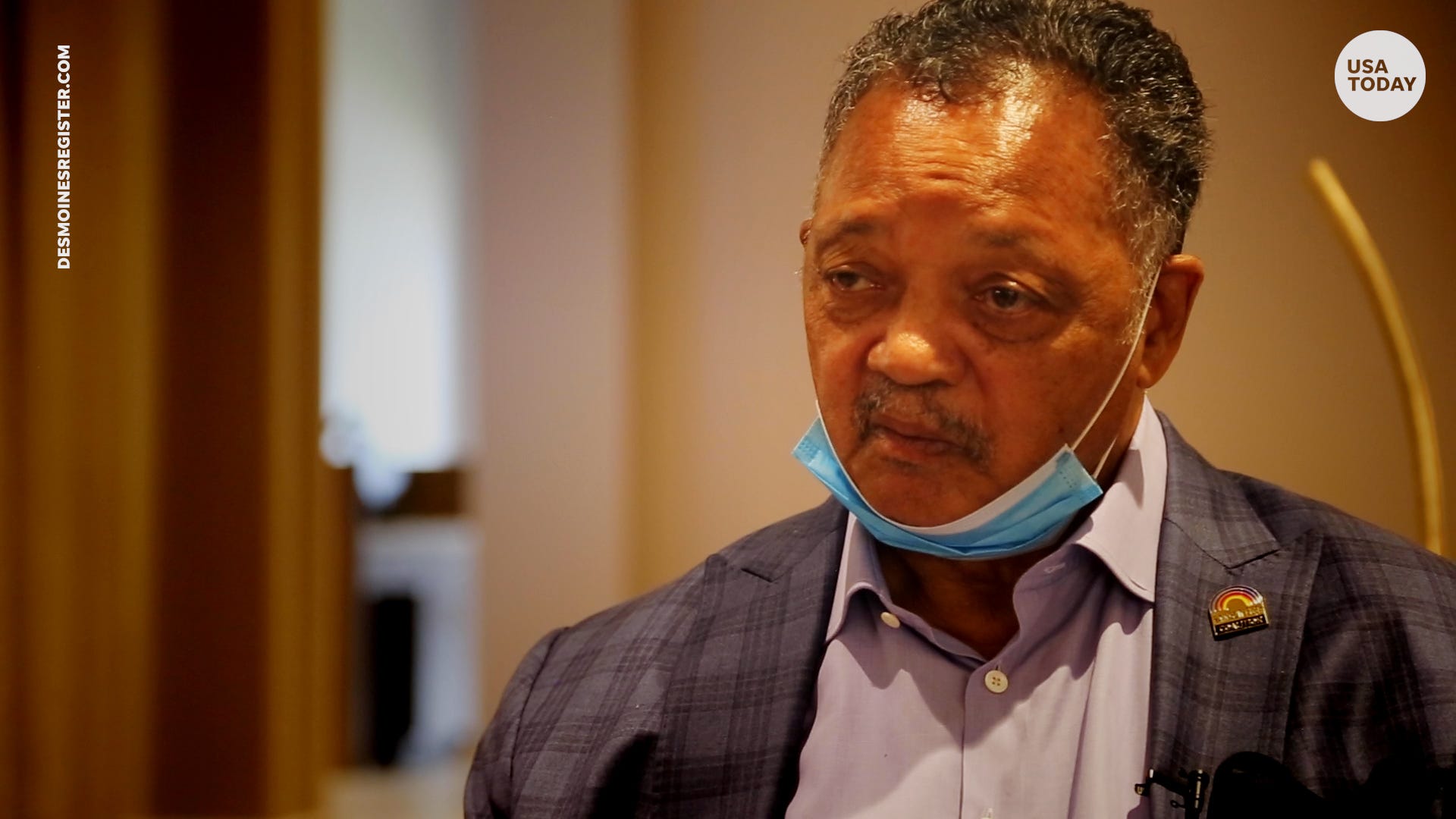
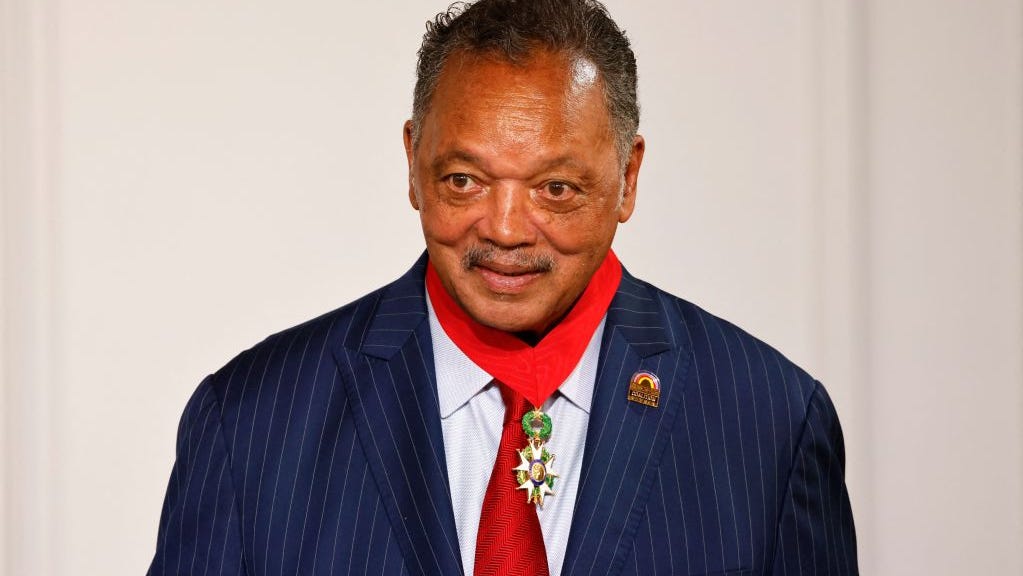
Civil rights icon Reverend Jesse Jackson died on February 17 at the age of 84 after living with a progressive neurological disease for more than a decade.

The group he founded, the Rainbow/Push Coalition, announced that he died “peacefully” that morning surrounded by his family.

“Our father was a servant leader, not only to our family, but to the oppressed, the voiceless, and the overlooked around the world,” Jackson’s family said in a statement shared by the organization.

Jackson’s family has not released a cause of death, but he had been diagnosed with a rare neurological disorder known as progressive supranuclear palsy, which is similar to Parkinson’s disease. He was admitted to the hospital for observation in November, but was later discharged.

Here’s what we know about his condition:

What is progressive supranuclear palsy?

Progressive supranuclear palsy, also known as Steele-Richardson-Olszewski syndrome, is a rare neurological disease that affects walking, balance, eye movements, and swallowing, according to the Mayo Clinic. Common symptoms include loss of balance, which can lead to falls, and an inability to aim or focus the eyes.

Mr. Jackson was initially thought to have Parkinson’s disease, but his diagnosis of PSP was later confirmed by the Rainbow/PUSH Coalition in 2025. PSP can be confused with Parkinson’s disease because it shares some similar symptoms.

According to the Mayo Clinic, symptoms of PSP, which can also sometimes appear in Parkinson’s disease or dementia, include:

  • Stiffness, especially in the neck, and awkward movements
  • Falls, especially backwards
  • Speech that is slow and slurred (can cause choking)
  • dysphagia
  • light sensitivity
  • sleep disorders
  • Loss of interest in pleasurable activities, depression or anxiety
  • Acting impulsively or laughing or crying for no reason
  • Difficulty reasoning, problem solving, and decision making
  • Stiffness of facial muscles giving a surprised or frightened expression
  • dizziness

According to the Mayo Clinic, pneumonia caused by aspiration is the most common cause of death in patients with progressive supranuclear palsy.

What causes progressive supranuclear palsy?

According to the National Institute of Neurological Disorders and Stroke, the exact cause of PSP is unknown. According to NINDS, the condition is thought to be caused by “damage to nerve cells in areas of the brain that control thought and body movement.” The progressive damage occurs primarily in the brainstem, where deposits of a protein called tau can spread throughout the brain and cause cell death.

According to NINDS, the cause is unknown and occurs randomly. In most cases, there is no known genetic link. There is no cure, but there are treatments that can help manage some symptoms.

PSP usually begins to develop in people’s mid to late 60s, which is later than when Parkinson’s disease begins.

“The disease usually worsens rapidly, and most people with PSP develop severe disability within three to five years of symptom onset,” NINDS said on its website.

When was Jesse Jackson diagnosed?

Jackson originally announced in 2017 that she had been suffering from Parkinson’s disease for several years and that her father also had the disease.

“Now, late in life, at age 76, I find it increasingly difficult to perform everyday tasks and find it more difficult to move around,” he said in 2017.

In 2025, the Rainbow/Push Alliance announced that the diagnosis name had been changed to PSP.

Mr. Jackson was hospitalized in November.

Jackson was admitted to the hospital in November 2025 for PSP observation and was later discharged. His condition remained stable during his stay.

According to Reuters, he also received treatment at Howard University in November 2021 after falling and hitting his head.

Contributor: Melina Khan

How former NBC executive Imani Ellis founded CultureCon

0

Imani Ellis wore a cream sweater as she delivered a sermon to her more than 260,000 Instagram followers.

The founder of the must-attend festival CultureCon told fans that she recently spoke to a friend about her goals for 2026, but her friend simply said, “I just want to cherish the gifts that God has given me.”

A joint post between her company and personal account garnered 26,000 likes, more than 700 comments and 400,000 views.

The daughter of two pastors who grew up splitting her time between Florida, Alabama, and Atlanta, she became a cultural leader as a young CEO with a unique approach to rest.

“Just because I’m a leader doesn’t mean I don’t have anxiety,” Ellis told USA TODAY, adding, “As I embark on this brand, I want to make sure that my own demographic is included in the brand.”

Over the past decade, Ellis has evolved from a plucky NBCUniversal PR executive to a full-fledged founder who has found his calling. While Americans sought spaces for deeper community during that time, CultureCon, which now bills itself as the world’s largest creator networking event, grew from a gathering of 21 people in Ellis’ apartment to a destination that attracts 12,000 attendees each year.

Imani Ellis: “I never imagined it would turn out like this”

CultureCon first blossomed in Ellis’ room in 2017, when community was not yet a buzzword. As a full-time spokesperson for one of the world’s most famous brands, Ellis maintained a busy social life and a fulfilling career, but something was missing.

She invited 10 friends to her apartment for tacos one night. There was one rule. The idea was that everyone would invite someone who could vouch for themselves. “I’m a woman, I live alone, and I just try to keep it cute,” Ellis told USA TODAY.

That first night, the group of strangers began with one question: “What do you do? It’s not a job.” Ellis, a Vanderbilt University graduate, said the room was “confused,” but afterward, guests came to understand the unknown.

“Complete strangers were telling me, ‘I’m trying to find the courage to tell my mom this happened,'” she said, calling the first event “very healing.” Some of the guests ended the Q&A night at Ellis’ apartment, and they asked their own questions. Will she repeat this meeting every month?

My apartment got crowded at night, so I moved to a coworking space. And so many people flocked to those events that Ellis developed the idea for a conference. “Never in a million years could I have imagined what it would be like,” Ellis said.

Andy Cohen: ‘Couldn’t be more proud’ of CultureCon founder’s growth

The first Culture Con was held in October of the same year in New York’s Meatpacking District, and the keynote speech included a fireside conversation with legendary film director Spike Lee. Mr. Ellis’ team developed the Spike Lee Room, which treasures the two-time Oscar winner’s iconic career. She stayed up until 3 a.m., painted gold letters in Lee’s room in the apartment, and came up with various clues.

Mr. Ellis described a moment he will never forget when Mr. Lee walked into the room that bears his name. “We took him to Spike Lee’s room, and yeah, he melted down,” Ellis said.

The second conference featured Charlamagne Tha God, Colman Domingo, and John Legend. The third edition included Tracee Ellis Ross, Elaine Welteroth, Keki Palmer, and Regina King. Michael B. Jordan, Naomi Campbell, Regina Hall, and Billy Porter attended the fourth annual Culture Con of 2021, which was held in the country due to the pandemic. Later versions featured appearances from Top Gun: Maverick star Jay Ellis, Wicked star Cynthia Erivo, and former first lady Michelle Obama.

Single-day general admission tickets are $145, weekend passes are $249, and weekend VIP passes are $409. Student tickets are $89. CultureCon offers free scholarship tickets to students with financial need and partners with universities to provide free admission.

The CultureCon ecosystem includes Marquee Festival, its storytelling and content agency CultureCon Studios, its education pipeline platform CultureCon on Campus, and its foundation launching this fall. As CultureCon grew, Ellis continued working at NBC and was promoted to vice president of communications. But in 2023, more than a decade after joining the network as a page at NBC, Ellis left the company to focus on CultureCon.

Famous Bravo star Andy Cohen celebrated his 10-year tenure as a guest bartender on the late-night Bravo show “Watch What Happens Live.” At the Bravo Clubhouse, 30 Rock’s studio, which is littered with merchandise and memorabilia from the Real Housewives world, organizers wished Ellis well.

He later reiterated these sentiments in a statement. “I’ve watched Imani grow from a junior publicist to a leader, builder and influencer in the cultural world, and I couldn’t be more proud,” Cohen told USA TODAY last month. “She has been a great guide for me both personally and professionally. Watching her career explode makes me so proud. I’ve known her forever!”

Porsha Williams, one of the most influential Housewives in history, which lasted 11 seasons, agreed. “Imani’s vision is unique yet impactful because it touches so many people and makes everyone feel like CultureCon has something for them,” she said in a statement.

“I’m not trying to create a CEO facade.”

CultureCon has grown into a cultural phenomenon. The conference will return to Brooklyn’s Digital Greenhouse for the sixth time during its October 2025 run, with festival attendance increasing by 2,000 from the previous year.

“We can only move forward and grow as much as the community wants us to,” Ellis said. “If 12,000 people don’t come to CultureCon, it’s not the biggest conference for creatives.” Multihyphenate Jennifer Hudson, actor Jesse Williams, actress Kerry Washington and “Abbott Elementary” star Sheryl Lee Ralph were among the biggest names at last year’s jamboree, where A-lists rubbed elbows with the general public.

Hosted by Chase Ink, the festival also includes numerous other corporate partners including HBO Max, BET, Uber, National Football League, NBCUniversal, New Balance, Nike, Pinterest, Sprite, Spotify, ESPN, and more. The biggest request from Ellis’ creator community is to turn the three-day event into a full week-long festival.

To someday reach that goal, Ellis has begun reevaluating hustle culture in recent months, prioritizing rejuvenation over the long-held stereotype that corporate CEOs are always struggling. She currently splits her time between her hectic life in New York and her life back in Atlanta.

“That’s why I keep pushing this seasonality. I’m not going to create a façade of a CEO who’s never rested,” Ellis said.

She has been traveling to Cabo and Barbados in recent months in an effort to rebuild. Next October, nine years after that night in her living room, Ellis will show the world how far she can grow.

Shoppers say China’s BYD and EVs are in higher demand in Canada than in the U.S.

0

play

  • A recent poll shows that while a majority of Canadians are willing to buy an electric car made in China, most Americans are not.
  • Canada has signed a new trade agreement that will allow up to 49,000 Chinese-made EVs to enter the market with a 6.1% tariff.
  • Chinese electric car maker BYD does not sell electric vehicles in the United States due to high tariffs and restrictive federal regulations.

Recent polls show that a majority of Canadians are willing to buy an electric car made in China, but Americans remain far more skeptical of Chinese-made cars.

Fifty-three per cent of Canadians say knowing that an EV is made in China does not affect their car-buying decision, according to a new poll conducted by Nanos Research Group for Bloomberg News. 1,009 Canadians participated in the survey.

The numbers are in sharp contrast to a Jan. 12 poll conducted by EVs for All America, an advocacy group that works with automakers to push U.S. and state legislatures to adopt EV-friendly policies. It found that 54% of 600 potential U.S. EV buyers said they had a negative opinion of Chinese car brands.

The findings come after China and Canada announced a recent agreement allowing thousands of Chinese-made EVs to be imported into North America. Under the agreement, Canada will allow up to 49,000 Chinese-made electric vehicles into its market at a so-called “most-favoured nation” tariff rate of 6.1%.

Canadian Prime Minister Mark Carney’s office said in a statement that the amount of Chinese-made EVs allowed for sale in Canada “represents the full year (2023-2024) prior to the recent trade dispute regarding these imports, and represents less than 3% of the market for new cars sold in Canada.”

According to multiple media reports, Chinese EV maker BYD, currently the world’s top electric vehicle manufacturer, wants to sell 1.3 million EVs outside China, Li Yunfei, general manager of BYD’s brand and public relations department, said at a recent press conference in Shanghai.

What do BYD’s international sales plans mean for U.S. EV buyers?

BYD’s electric vehicles are not sold in the U.S. due to factors such as high tariffs and federal regulations regarding connected car technology and vehicle safety standards.

BYD currently sells commercial vehicles in the U.S., but the CEO of the company’s U.S. subsidiary said in an interview that he believes the U.S. market is “too restrictive.”

The Trump administration has imposed 100% tariffs on all Chinese imports, including cars, making it financially prohibitive for BYD to sell cars in the US.

Can US drivers buy BYD EVs in Canada?

Federal laws regarding imported cars would also make it difficult for U.S. drivers to buy and drive cars in Canada or Mexico and bring them into the country. The rule requires vehicles to go through a lengthy customs process to prove compliance with existing federal motor vehicle safety laws.

Persons importing non-conforming foreign vehicles must also pay a deposit and comply with other Department of Transportation terms and conditions.

How many cars did BYD sell in 2025?

According to the company’s December sales report, BYD sold 4,602,436 passenger cars and commercial vehicles in 2025.

Sales included 2,256,714 battery electric vehicles, 2,288,709 plug-in hybrid vehicles, and 57,013 commercial vehicles.

What does the Trump administration say about that?

The Trump administration criticized Canadian officials for striking a trade deal with China.

“If you think Governor Carney is trying to turn Canada into a ‘port of call’ for China to send goods and products to the United States, you are sorely mistaken,” President Trump said in a post on Truth Social on January 24.

“China will devour Canada alive and completely, including the destruction of its business, social fabric and way of life in general,” Trump wrote.

U.S. Secretary of Transportation Sean Duffy also appeared at the Washington Auto Show on January 22 and said he thought Canadian officials would regret the deal that allowed Chinese EVs to enter the market.

“The world is going to be consumed by China, and China is going to dominate all manufacturing, and we can’t allow that to happen,” Duffy said. “I want to keep these vehicles developed, manufactured and the American spirit here in our country.”

Alisa Liu’s return to Olympic figure skating is golden, true to herself

0

play

MILAN — Alisa Liu is not your typical figure skater.

She does not fit the typical personality known for being full of royal qualities that reflect the grace and elegance displayed on the ice. You’ll notice the halo in her hair, the piercing in her upper frenulum and her youthful spirit.

Remember how Mia Thermopolis from The Princess Diaries brought her unique style and shook up the status quo. “It’s unusual,” 1988 Olympic gold medalist Brian Boitano said on USA TODAY’s “Milan Magic” podcast. A true alternative skater who overturns common sense.

Frankly, she doesn’t even know why she is the way she is.

“I don’t know what’s happening to me,” Liu said. “After I die, they’re going to have to actually dissect my brain to understand me.”

A unique person and a unique skater.

The 2026 Winter Olympics won’t be Liu’s first Olympics, but it will definitely be the first one where she does it her way. In order to find his true self, Liu needed to step away from the sport itself. She did, and when she decided she wanted to skate again, she brought a new edge to this run that made it fun.

It’s fun, she’s better than ever, and she can do all that and more, including being able to break the 20-year record for American women not to win an Olympic medal.

It was just a few months after the 2022 Winter Olympics that Liu decided she wanted to take a break from figure skating. Under the guidance of his father, he continued to study hard from an early age, and this happened when he was 16 years old.

“She became really unhappy,” said her father, Arthur Liu. “She avoided the ice rink at all costs. She’s traumatized. She’s just traumatized. She suffers from PTSD and stayed away from the ice rink.”

A full year passed without skating again, and Liu thought it was over. Then, in January 2024, a ski trip to Lake Tahoe, California changed everything.

It wasn’t figure skating, but the adrenaline and cold rush of skiing reminded her of the sport. With something unlocked, Liu wanted to put on the skates, but this time it was on her terms.

That meant deciding when and how to train. Choose the music to go with her skating and the outfit she will wear. Mr. Liu was not going to let anyone tell him how to do this. That vacation really opened her eyes to what drove her away from it, and skating couldn’t have been more of a competition-driven ambition. Instead, it’s about being an artist.

“I learned that I really just want to make art, and I want to look at other people’s art and appreciate art honestly,” Liu told USA TODAY Sports. “I learned what I like and what I don’t like.”

While all is well and she’s skating dandy again, how can Liu reach anything close to her level? This is someone who became a U.S. champion at age 13 and an Olympian at age 16.

This perplexed figure skaters, including 1976 Olympic champion Dorothy Hamill, who thought the dismissal had gone on too long.

“In figure skating, if you take two weeks off, I can’t do anything,” she said on the Milan Magic podcast. “There was no way I could take two weeks off.”

As it turned out, there were no problems. Liu’s first tournament was the 2024 Budapest Trophy, which he won. She finished second at the 2025 U.S. Championships and made a fiery declaration that she would win the World Championships in March, a year after announcing her return.

Since then, the elite level of skating has persisted, winning the 2025 Grand Prix Final and finishing second at the 2026 U.S. Championships. It was no surprise that she was selected for Milan Cortina’s squad and it was an incredible comeback.

Leaving was “one of the best decisions I ever made,” but coming back was also “a really good decision.”

Alisa Liu’s unique personality

His on-ice success shines as brightly as Liu himself. It takes less than two minutes to realize how unique she is.

Liu is the definition of an extrovert. She is all about having fun and participating in endless activities. You may look at her and wonder how she has so much energy and always stays positive. While skating is the center of her world, she loves being outside of it. She’s showing off that she’s more than just a skater.

And when she talks, be prepared to laugh. We’ll never know her answer to the question. It’s honest, but it might be the first thing that pops into her head, and it can derail the conversation. As Ysabeau Levitt said at the U.S. Nationals, Liu “keeps himself on his toes.”

As strange as it may sound, this has brought new energy to the U.S. women’s team. There is no animosity between Liu, Levit, and Amber Glenn. She sees all skaters as artists and actively supports them, regardless of their status.

There is no doubt that Team USA’s “Blade Angels” are actively rooting for each other and hope to not only break a 20-year drought, but also achieve their dream of becoming the first Americans to win a podium.

Even though Ryu doesn’t receive a medal, she takes it calmly. Yes, she was part of the team event that won a gold medal, but she didn’t care at all that she didn’t win a medal in the women’s singles. In fact, she’s okay with dying at the end.

You can’t embarrass a girl who thinks mistakes are fun.

“Let’s say I’m at the Olympics and I fail a jump. I fail a few jumps or something and it’s completely bad. I don’t get a medal and I come in last place,” she said. “It doesn’t seem like it’s that bad. I think it’s still okay.”

There’s really no scenario where the Olympics won’t be a great time for Liu. With pressure mounting on U.S. figure skaters, she feels she has nothing to lose. Regardless of the result, her career will only go up from Milan Cortina.

This isn’t about being the best in the world or winning everything. It’s about doing what you love and not letting anything stop you from doing it.

“I really enjoy my time. I really value my training. That’s kind of why I came back. I love training every day and always putting my energy into something,” Liu said. “There’s not much to dislike about my skating career this time around.”

True, she is no stranger to the Winter Olympic stage, but she is practically a newcomer to the ice. At that time, Liu was a child, but now he is more than just an adult.

She has grown into a very fun, sharp and graceful skater. But most of all, she’s unapologetically herself and ready to show off her one-of-a-kind style fused with a carefree, goofy nature.

It’s an unusual recipe, but it’s sure to be a golden trip to Milano-Cortina.

USA TODAY sports reporter Josh Peter contributed to this report.

Long-term portfolio management

0


Markets can be volatile, but these technology leaders are likely to see it through.

With so much market volatility lately, it’s no surprise that many investors are reconsidering which stocks to invest in and which ones will stand the test of time.

While there are certainly no guarantees, three companies that are in prime position to benefit from their technology leadership positions are Nvidia, Alphab.etc.Taiwan Semiconductor. Here’s why each is worth buying now and holding in your portfolio for years to come.

1. Nvidia isn’t going anywhere

Many are trying to determine whether we are now in an artificial intelligence bubble and whether acquiring Nvidia, a leading designer of artificial intelligence (AI) processors, is still a smart idea.

There’s nothing wrong with not jumping on trends at the end of a cycle, but it may be a mistake to ignore Nvidia stock due to such concerns. That’s because technology companies continue to increase spending on AI data center infrastructure, which will prompt more purchases of Nvidia’s processors.

Consider that Alphabet recently announced it would double its capital spending this year to up to $185 billion, and Meta also said its capital spending would jump to up to $135 billion, nearly doubling. Just days after these announcements, Amazon announced that it would increase its spending this year by up to $200 billion. All of these companies cite the need to build out more data center infrastructure and AI computing power.

If all of this isn’t convincing enough to buy Nvidia stock, consider that its current price-to-earnings ratio is around 47, which is only slightly higher than the average P/E in the Tech industry of around 43.

2. Lots of alphabets left in the tank

Alphabet’s first clear success with AI was its Gemini chatbot, which currently has 750 million monthly active users, a 67% increase from just nine months ago. And the company recently signed a new partnership with Apple that will make Gemini the artificial intelligence model underlying the next version of Siri.

According to the company, this collaboration could be worth billions of dollars to Alphabet over the next few years. financial timesstructured as a cloud computing transaction. These sales will add to Alphabet’s already impressive Google Cloud sales, which rose 48% to $17.7 billion in the fourth quarter.

And, as mentioned earlier, Alphabet is doubling its capital spending this year, which should help the company maintain its presence in the rapidly changing AI market. Additionally, Alphabet stock trades at a P/E ratio of just 30 times, making the stock relatively affordable for investors right now.

3. Taiwan Semiconductor will benefit no matter who wins in the AI ​​field

Taiwan Semiconductor Circuit (TSMC) is one of the world’s leading semiconductor manufacturing companies with a 70% market share. The company makes some of the industry’s most advanced chips, has higher yields than Samsung and Intel, and is often a strong choice for tech giants in need of AI processors.

If you really want a company with a long-term competitive advantage, consider that TSMC’s organic growth from major technology trends could last for decades, according to Morningstar research.

TSMC is already benefiting from the surge in need for AI processors, with 2025 sales expected to rise 30% to $122.4 billion and diluted earnings to rise 47% to $10.65 per American Depositary Receipt. TSMC’s management is confident in the company’s path forward and has set a goal of increasing sales by 30% this year. And like the other two AI stocks on this list, TSMC’s stock price is high, with a P/E ratio of just 34.

Chris Neiger has a position at Apple. The Motley Fool has positions in and recommends Alphabet, Amazon, Apple, Intel, Meta Platforms, Nvidia, and Taiwan Semiconductor Manufacturing. The Motley Fool has a disclosure policy.

The Motley Fool is a USA TODAY content partner providing financial news, analysis and commentary designed to help people take control of their financial lives. Its content is produced independently of USA TODAY.

Should you buy Nvidia stock now?

Offers from The Motley Fool: Before buying Nvidia stock, consider the following:

of Motley Fool Stock Advisor Our analyst team has identified what they believe Best 10 stocks What investors can buy right now…and Nvidia wasn’t among them. These 10 stocks have the potential to generate impressive returns over the next few years.

when to think about it Netflix This list was created on December 17, 2004…if you invested $1,000 at the time of recommendation. you have $414,554!* or when Nvidia This list was created on April 15, 2005…if you invested $1,000 at the time of recommendation. you have $1,120,663!*

Now, the point to note is that stock advisor Total average return is 884% — compared to the S&P 500’s 193%, a market-beating outperformance. Don’t miss our latest Top 10 list. stock advisorjoin an investing community built by retail investors, for retail investors.

See 10 stocks »

*Stock Advisor will return on February 15, 2026.

Jesse Jackson dies, Iran, hockey shooting, Robert Duvall, Lunar New Year, DHS shutdown, Olympics: Daily Briefing

0

US Curling Upset | Medals | Olympian Salaries

morning! Welcome to the daily briefing. This morning’s breaking news is:

nicole farato Here’s the news you need to know on Tuesday, from Jesse Jackson’s exploits to the deadly shooting at a youth hockey game. Additionally, flying during a DHS closure.

A prominent icon of the civil rights movement dies

Civil rights leader Reverend Jesse Jackson has died at the age of 84 after a long battle with progressive supranuclear palsy, a progressive neuromuscular disease similar to Parkinson’s disease. He was a Presidential Medal of Freedom recipient, presidential candidate, and one of the world’s most famous black activists.

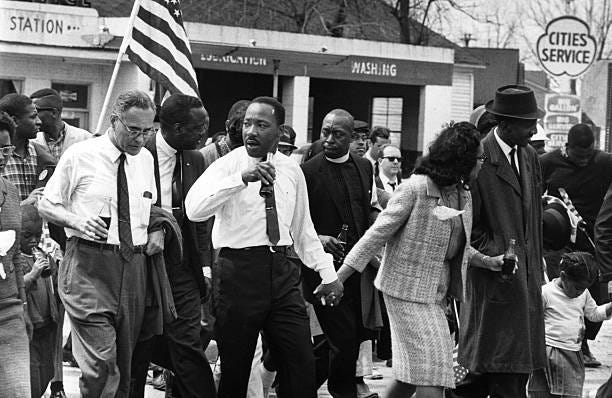
Born in Greenville, South Carolina in 1941, Mr. Jackson’s rise to fame began after he and seven other men were arrested in 1960 for protesting racial discrimination at the town’s public library. He then joined Martin Luther King Jr.’s burgeoning civil rights movement and was only a few feet away when King was assassinated in 1968.

He continued to negotiate the release of global hostages and criticized corporations for their lack of diversity and failure to support voting rights. Jackson founded what would become the Rainbow/Push Coalition and ran for president as a Democrat in 1984 and 1988, energizing and registering millions of black voters.

Jackson was known for his “I Am Somebody” chant, which inspired generations of activists.

More news you need to know right now

  • Latest information on US-Iran nuclear negotiations: Iranian Supreme Leader Ayatollah Ali Khamenei said on Tuesday that US President Donald Trump would not succeed in overthrowing the Islamic Republic, state media reported, days after US President Donald Trump said a change of government was “the best thing that could happen.”
  • Sports world speaks out after hockey shooting. Two people were killed and three others were injured in a shooting during a youth hockey game in Pawtucket, Rhode Island, on Monday. The New England Patriots were one of the teams in the sports world to react to the shooting.
  • Hollywood pays tribute. Stars are mourning Robert Duvall, the Academy Award-winning actor known for Hollywood classics such as “The Godfather” and “Apocalypse Now.” He was 95 years old.

Lunar New Year 2026

Welcome to the year of the fire horse

Festivals to mark the beginning of the Lunar New Year began across the country on Tuesday. Celebrations will be held to celebrate the Year of the Horse, specifically the Year of the Fire Horse, which symbolizes “energy, freedom and positive momentum,” according to the Asia Society of Texas.

trip

TSA works without pay

The Department of Homeland Security remains closed Tuesday due to political deadlock in Congress over immigration enforcement. Importantly, DHS includes the Transportation Security Administration, and airport security personnel currently work without pay. This situation is likely to affect many travelers and TSA employees indefinitely.

before going

Have feedback about the daily briefing? Email Nicole at NFallert@usatoday.com.

Gisele Perico’s memoir talks about French rape trial

0

play

This story describes events that may be disturbing to some readers.

Almost a year after the gang rape trial that captured the world’s attention and galvanized the feminist movement in France, Gisele Pericot is poised to return to the public eye with the release of her deeply vulnerable memoir.

In “Anthem to Life: Shame Must Turn,” 73-year-old Gisele Pericot describes her years-long ordeal in seeking justice in French courts after discovering that her then-husband Dominique Pericotte had repeatedly drugged her and raped her by bringing dozens of strangers into their home.

The deliberate and violent nature of the crime and the range of perpetrators involved shocked the country in 2021 when the case first became public in the wake of France’s #MeToo movement, #BalanceTonPorc (loosely translated as “Expose the pig”), and amid a reckoning over attitudes towards incest and child abuse. Gisele Perico’s decision to open her trial to the public in 2024, rather than remaining anonymous as allowed in sexual abuse cases under French law, has brought attention to Gisele, now a 73-year-old retiree, and turned her into a global feminist icon.

She details this journey in a nearly 250-page book, including her harrowing discovery of her ex-husband’s years of deception and abuse. It was written in parallel with Ghostwriter Translated into English by Judith Perignon, Natasha Lehrer and Ruth Diver and published by Penguin Press. The book will be on shelves on Tuesday, February 17th. The book’s subtitle, “Shame Must Change Sides,” was a slogan used by many of Gisele Perico’s supporters and during demonstrations before and after the trial, arguing for changes in how the justice system defines sexual violence and sexual consent. This was also a cry for Gisele Perico, who remembered these words when she decided to open the trial to the public.

“Everyone needs to see the faces of 51 rapists,” she wrote. “They are the ones who should hang their heads in shame, not me.”

A “kind and attentive” husband

Gisele Perico’s story begins in 2020 with a phone call from local police. This phone call would change her life and that of her family forever. Her husband, Dominique Pericotte, now 73, had been arrested for photographing a woman upskirt at a grocery store. When investigators seized his computers, phones and other devices, they discovered about 300 photos and videos documenting Gisele Perico’s abuse at the hands of dozens of men.

She did not hesitate to share the brutal details of what her assailants had done to her mentally and physically. Or, she did not hesitate to talk about the years of internal struggle she endured trying to understand how her life partner of 50 years had been subjected to such unspeakable betrayal and sexual violence. In that sense, much of the book reads less like a memoir and more like a psychological horror story in which her impressions of a life and marriage, which she had thought were “quiet” and “happy” for years, are painfully suddenly unraveled.

During her first interview with police in 2020, an official asked her to describe her husband’s personality.

“He’s kind and attentive,” she recalls saying. “He’s a nice guy. That’s why we’re still together.”

Gisele Perico admits in her book that she plans to spend the rest of her life “confused” over memories of her life with her ex-husband and abuser, and hopes to “recover some good memories.” But she writes that she refuses to be overwhelmed by hatred or to be seen as a victim.

Her interrogations are often deeply introspective. The book is interspersed with chapters that tell of her childhood and family tragedies: how she met Dominique, her financial struggles and troubled marriage, and her career working for a French electricity company.

It’s all told from the perspective of a woman trying to make sense of her life in the face of devastation, grasping for signs that can sometimes only be found in hindsight. The beer turned green – possibly due to a chemical reaction with the drugs Dominque Perico had slipped into her drinks and food to render her unconscious during the rape. My new pants have stains on them for an unknown reason. Most worryingly, after years of severe health problems and memory loss, she was convinced she would die from a brain tumor like her mother.

The men who raped her, ranging in age from 26 to 74, became known as “Mr. Everyman” during the trial. One was a firefighter, another was a soldier, and the third was a nurse. Some had spouses and families. The trial of Dominic Perico and others concluded in December 2024, with all 51 defendants found guilty. Although Dominic Perico himself confessed to his crimes, many other convicted rapists denied their actions even in the face of video evidence.

Gisele Perico wrote about this experience: When the video of her rape was played in court, she said she took solace in looking at photos on her phone of her grandchildren, the ocean and the landscape around the house she once shared with her husband in Provence. And during breaks in the proceedings, a group of defendants talked loudly, high-fived, and mingled over beers at a cafe across the street, all “confident they had done nothing wrong,” she wrote.

From a “quiet” life to a global feminist symbol

Pericot was an unexpected feminist hero, who, by her own account, was aware of the feminist movement that developed in her life but considered herself “excluded” from it. She now embraces her newfound mantle as a symbol of the current feminist wave.

“And in my 70s, I am a martyr, a symbol of a new wave of feminists about which I know almost nothing,” she writes. “I won’t run away this time.”

Pericot also spends much of her time writing about the effects of her ex-husband’s abuse on her family, particularly the couple’s three adult children who are grappling with the revelation of their father’s crimes and the effects of his abuse on their mother. His relationship with his daughter, Caroline Darian, was particularly strained, as she felt her mother was not supportive enough of her concerns that she was being abused by her father. Among the large amount of materials seized by the police during the investigation, it was discovered that Dominic Perico took photos of his daughter while she was sleeping and secretly filmed herself naked.

But despite all the monsters revealed in Pericot’s story, her unwavering courage and optimism that she will endure serve as a buoyancy, drawing readers back with a sense of hope for her own future when her retellings of her abusers’ atrocities become too much to bear time and time again. She also tells how she found love again in the run-up to her trial, and how it helped her rediscover her joie de vivre (the book’s title in its original French).

If you or someone you know has experienced sexual violence, RAINN’s National Sexual Assault Hotline provides free, confidential, 24/7 support in English and Spanish to survivors and their loved ones: 800.656.HOPE (4673) Hotline.RAINN.org and in spanish RAINN.org/es.

Kathryn Palmer is USA TODAY’s political reporter. She can be reached at the following address: kapalmer@usatoday.com And to X@Kathryn Purml. Sign up for her daily politics newsletter here.

Why would employers want employees back in the office?

0

Johnny C. Taylor Jr. answers workplace questions every week on USA TODAY. Taylor is president and CEO of SHRM, the world’s largest human resources professional organization, and author of Reset: A Leader’s Guide to Work in an Age of Upheaval.

Have a question? Please submit here.

Question: I’m doing great in a remote environment, but my boss keeps pushing me to come back to the office. I’m having a hard time understanding this push since he doesn’t point out any performance issues. What’s the point of coming to work in person when you can do a great job from home? – Nureem

Answer: There’s a truth that many employees don’t want to hear. Doing a good job from home doesn’t automatically subvert your employer’s expectations about where that work will be done.

In other words, this is not a performance issue for you. It’s about alignment.

Employers have the right and responsibility to decide how work is done. This includes whether the role is in-person, remote, or hybrid. Those decisions are not made to single you out. These are driven by leadership philosophy, long-term business strategy, collaboration needs, talent development, and how leaders believe their culture is built and maintained.

And yes, culture really does matter. Employees don’t just create jobs; They grow, learn, and build trust through collaboration. Proximity also makes certain things easier, such as informal coaching, real-time problem solving, relationship building, and visibility into how decisions are made. For many organizations, especially those focused on developing future leaders, these benefits are not optional but strategically important.

That doesn’t mean remote work doesn’t have a place or value. Depending on the role, it can work very well. And certain people are more focused, more productive, and more engaged at home. Results matter, and when delivering results, it’s natural to ask why location matters so much.

But here’s the important difference. Employers do not manage individuals in isolation. They manage the system. Leaders worry about consistency, fairness, and unintended consequences. For example, dividing your employees into two classes: those you see every day and those you don’t. Even when performance is strong, visibility still plays a key role in collaboration, development, and progress. It’s nothing personal. It’s an organizational reality.

So what should I do?

First, let’s be clear. Ask your manager what will encourage them to come back. Are you talking about collaboration? Team cohesion? Leadership development? Even if you don’t like the answer, it’s important to understand the “why.”

Second, be honest with yourself. If working remotely is simply a personal preference, you may need to determine whether that preference outweighs the benefits of remaining with your current employer. If remote work is essential to your best work or your life circumstances, you should intentionally seek out roles that are intentionally fully remote, rather than exceptionally remote.

Let me just say this: culture is not something that can be negotiated on an individual basis. The employer establishes it. Employees choose whether it works for them or not.

Success today is less about forcing change on organizations and more about finding the right organization. Sometimes that means adapting. And sometimes that means moving on. Either way, clarity always beats confusion.

The views and opinions expressed in this column are those of the author and do not necessarily reflect those of USA TODAY.

Jesse Jackson dies at age 84. 5 key moments in his career in the civil rights movement

0

play

The Rev. Jesse Jackson, who died on February 17 at the age of 84, was a tireless activist, tireless orator, talented diplomat, and influential politician who transformed politics and diversified the Democratic Party during his two White House campaigns.

Known for his ability to weave unity across lines of race, class, gender, and religion, his legacy is a tapestry of efforts to advance civil and human rights, peace, equality, and economic and social justice.

Here are five key moments in Jackson’s career.

Jackson’s evolution as an activist

As a freshman at the University of Illinois, Jackson was one of eight young black high school and college students arrested during a sit-in at a white-only library in his hometown of Greenville, South Carolina, in the summer of 1960. The so-called Greenville Eight protests would spur library desegregation two months later.

After transferring to North Carolina A&T State University, Jackson became a student leader in the institution’s desegregation efforts in Greensboro, and then began studying at the University of Chicago’s seminary.

Bloody Sunday would change Jackson’s life and career. The March 1965 incident in Selma, Alabama, in which peaceful marchers were attacked by state troopers with tear gas and clubs, ultimately led to the passage of the Voting Rights Act of 1965. It also led Jackson to leave Chicago, join the Selma effort, and join the Southern Christian Leadership Conference, a civil rights organization founded by the Rev. Martin Luther King Jr.

The following year, King appointed Jackson director of the Chicago chapter of Operation Breadbasket, the economic arm of the conference, which fought for greater black representation in the corporate workforce.

Jackson’s activities are on a national level

In 1971, Jackson left the Southern Christian Leadership Conference to start Operation PUSH, People United to Save Humanity (“save” was later changed to “serve”), which was dedicated to black self-help, youth development, and economic opportunity.

The group used persuasion, boycotts, and all-night prayer vigils to successfully win concessions from white-owned businesses and businesses to hire a more diverse workforce.

In 1984, Jackson entered politics and founded the National Rainbow Coalition, a Washington, D.C.-based social justice organization that promotes equal rights for blacks, women, and gays. Among its key efforts was to advocate for ethnic minorities affected by President Ronald Reagan’s efforts to cut domestic spending, particularly efforts targeting inner cities.

The two organizations merged in 1996 to become the Rainbow/PUSH Coalition, which continues to fight for civil rights and economic and academic opportunity in the United States and around the world. Jackson’s group helped bring many causes into the mainstream, including national health care, peace talks between Israelis and Palestinians, and acceptance of the LGBTQ community.

Jackson will step down as leader of the coalition government in 2023.

Two groundbreaking presidential bids.

A year after leading the voter registration effort that helped Harold Washington win election as Chicago’s first black mayor, Jackson sought the Democratic presidential nomination. He was the second black candidate to run for president at the national level, after Shirley Chisholm in 1972. Although he finished third in the primary vote, he became the first black politician to win a state primary for a major party, and his grassroots campaign helped revitalize the Democratic Party by encouraging hundreds of thousands of people to register to vote.

In 1988, Jackson ran for president again, doubling his vote share in the 1984 primary on a progressive, unifying platform that served as an antidote to what many saw as the racist policies of the Reagan administration.

Journalist David Masciotra said Jackson’s campaign helped diversify the Democratic Party and usher in a new wave of black leaders across the country. Among them is Douglas Wilder of Virginia, who in 1990 became the first black governor since Reconstruction. David Dinkins was elected New York City’s first black mayor in 1989. In the same year, Norm Rice was elected Seattle’s first black mayor.

world diplomat

In the late 1970s, Jackson began traveling abroad to help resolve global conflicts and draw attention to global causes, denouncing apartheid in South Africa and advocating for the establishment of a Palestinian state.

In 1984, Jackson negotiated the release of Navy Lt. Robert Goodman, who was captured in Syria. That same year, he secured the release of Cuban prisoners of war who were in Cuba.

In 1997, President Bill Clinton appointed Jackson as special envoy to Africa, where he met with leaders such as South Africa’s Nelson Mandela, Kenya’s Daniel T. arap Moi, and Zambia’s Frederick Chiluba.

Jackson mediated the release of American soldiers held in Kosovo in 1999. The following year, he helped arrange the release of four British journalists held in Liberia.

Health problems began to slow Jackson’s work down.

In August 2000, Clinton awarded Jackson the Presidential Medal of Freedom, the highest civilian honor.

But even as Mr. Jackson continued to push for justice, equality, voting rights, and an end to poverty, growing health problems began to take their toll.

In 2017, he issued a letter announcing that he had been diagnosed with Parkinson’s disease four years ago, and said that his father had also been affected by Parkinson’s disease.

“I find it increasingly difficult to perform everyday tasks and find it increasingly difficult to get around,” he wrote. “For a while, I resisted taking time off from work to see a doctor. But as the daily physical struggle intensified, I could no longer ignore the symptoms.”

Jackson received treatment in November 2021 after falling and hitting his head at Howard University.

In April 2025, doctors updated Jackson’s original diagnosis to progressive supranuclear palsy, according to the Cleveland Clinic. This is a rare chronic neurodegenerative disease known as PSP, whose early symptoms are often mistaken for Parkinson’s disease.

He said the experience of being arrested as a young college student gave him a certain adrenaline rush.

“We finally have the courage to stand up and fight back,” he told The Greenville News, part of the USA TODAY Network. As the civil rights movement spread across the northern United States, “we became soldiers in a domestic war.”

Despite renewed attacks on civil rights in recent years, he remained optimistic.

“As a group of Americans, white, black, and brown, we will press forward, even though we are facing some truly vile cold winds.”

He said he wants to be remembered as someone who cared deeply about people and racial reconciliation.

“I think people who have learned to live apart now have to learn to live together,” he says. “…I want to be remembered as a soldier in the fight to make America better and the world safer.”

Elana Myers Taylor and Kylie Humphries win bobsled, thank you to all the moms

0

CORTINA D’AMPEZZO, Italy — Elana Meyers Taylor’s sons are too young to understand that their mother is an Olympic champion. Kylie Armbruster Humphries’ son just wanted to play in the snow around the medal podium where his mother was standing.

But any woman who has ever tried to balance motherhood with a career, who has given her all and still felt like it’s not enough, knows this. And Myers-Taylor and Armbruster-Humphries hope you can see a little bit of yourself in the two women on the Olympic podium.

“I want you to know that just because you become a mother, you don’t have to stop living your dreams,” Meyers-Taylor said. She won the monobob on Monday, Feb. 16, finishing ahead of Germany’s Laura Nolte and Armbruster Humphries, finally winning the Olympic gold medal she has sought for years.

Standards for women are impossible. When you add family into the mix in any way, it becomes exponentially more difficult. In a society where women consider climbing a hill before being eligible to run for president, add in age and it might be the equivalent of climbing the mountain where the Milan-Cortina bobsled track is located.

Myers Taylor and Armbruster Humphries felt it. I’ve felt it all.

Two nights ago, Armbruster-Humphries was away for the first time since her son was born, and it broke her heart. She knew she needed rest. After all, she is participating in the Olympics. Still, you can’t rest with a toddler who is still awake during the night.

Still, it didn’t get any easier.

“My husband is here, my parents are here, my in-laws are here, so I knew he was in really good hands,” Armbruster Humphries said. “So for me, it’s probably more about compartmentalizing than anything else. Mom guilt is a thing, and it was there, but I realized that I needed to do that in order to do my best.”

Myers Taylor and Armbruster Humphries are the first to admit that they are not doing it alone. Both have supportive husbands, and as former bobsledders, they understand how difficult it is. They have supportive families.

The United States Olympic and Paralympic Committee provides financial and other resources to athletes who are mothers, something many women can’t say.

But no one can silence the voices in your head that every working mother has. No one else can weigh competing options and decide what sacrifices are acceptable. No one else can tell them it’s okay for their priorities to change or give them permission to prioritize themselves.

“This medal is also for all the mothers who didn’t necessarily get to achieve their dreams, but whose children are now their dreams,” Myers-Taylor said. “Because those people kept me grounded. Those people kept me going. And those people reached out to me when things got tough and encouraged me to keep going.”

And as they stood atop the medal podium, Myers-Taylor and Armbruster-Humphries, watching over their young sons, they hoped to provide similar encouragement to other mothers.

It doesn’t matter if they’re chasing an Olympic medal or just trying to get through the day. These two badass women understand and empathize with their hardships because they too have faced them.

“I hope this work inspires others to go out and chase their dreams, whatever they may be,” Armbruster Humphries said. “I grew up around sports, but when you have kids and you turn 40, everything goes downhill. And Elana and I are going to prove that’s not true.

“It may look different than it did when I was 20 years old, but it doesn’t mean I can’t stand on top of the podium. It doesn’t mean I can’t get on the podium and achieve my dreams.”

This juggling act is not easy. But for everyone who does, the Olympic medals that hung around the necks of Myers Taylor and Armbruster Humphries are yours, too.

Follow USA TODAY sports columnist Nancy Armour on social media @nrarmour.

Is travel becoming an unaffordable luxury for the average American?

0


Inflation, surcharges and record hotel prices are forcing many travelers to completely rethink their vacations.

play

  • Travel costs have increased 23% since 2019, making travel too expensive for many Americans.
  • Travelers are facing higher base prices and more surcharges on items such as checked baggage.
  • Many in the travel industry charge more for fewer services and amenities.

Are travel costs too high?

For people like Tim Pryant, the answer is yes. This summer, he plans to avoid travel completely. Because it costs too much money.

“I can’t believe what they’re charging,” said Mr. Pryant, an architect from Austin, Texas.

He is particularly angry about the rising prices of food at the airport. “I’m in an expense account, and still “It’s difficult to get food at these prices,” he said.

check out Elliot Confidentialthe newsletter the travel industry doesn’t want you to read. Each issue is packed with the latest news, deep insights, and unique strategies to help you become a better traveler. But don’t tell anyone!

Travel costs have increased 23% since 2019, according to the U.S. Travel Association’s Travel Price Index. Affordability affects everyone, but it is especially problematic for young people. According to a poll from EF Go Ahead Tours, 72% of Gen Z and Millennials agree that travel is too expensive. What are the possible culprits? Inflation and other non-travel expenses are making it increasingly difficult to pay for vacations.

“From flights and hotels to everyday accessories, almost every part of travel involves surprising prices and price fluctuations,” said Trafalgar’s deputy chief executive officer Melissa DaSilva. “Many travelers are waiting longer to book, looking for the lowest fares and looking to increase price certainty in advance.”

How much does the trip cost?

You can illustrate the rising cost of travel by showing a series of graphs of airfares, hotel prices, and gas prices. One of the most dramatic is the increase in average hotel rates in the U.S., from $103 per night in 2020 to $162 per night in 2025, an increase of about 58%.

But there’s a bigger picture. It’s not just the base fare and gas price, it’s a combination of your destination, your travel preferences, and the surcharges offered by the travel industry upon arrival.

And recently, the number of extras has increased.

Dave Zurich, a project manager in Tucson, Ariz., said if his children didn’t live on the other side of the country, he wouldn’t travel at all.

“Airlines have removed every vestige of comfort,” he complained. “Before, checked baggage and seat selection were part of the ticket, but now you have to pay extra. At least you’re not being charged for toilet use…yet.”

In other words, the base price only tells part of the story. This, coupled with additional fees that most people don’t talk about, makes travel less affordable.

So what’s the answer to the question, how much does it cost to travel? For many Americans, it’s too expensive.

The travel industry may be losing touch with its customers

I’m always on the go so I have a chance to see this from a different perspective. Indeed, I end up paying a tremendous price that others pay. Like Pryant, I am outraged by the price of food at airports, both in the United States and beyond. I recently spent over $30 on two sandwiches in Bangkok. Come!

But I also have the opportunity to talk to airline executives, hotel owners, and vacation rental managers to get their input. And they’re honestly baffled that people aren’t willing to pay hundreds of dollars a night for their product. They seem to forget that inflation eats up much of their customers’ disposable income.

These industry leaders have reduced their products to what they once were. Where airline tickets once included carry-on baggage, checked baggage, seat assignments, and meals, they are now a stripped-down version of what they used to be. Seats are shrunk and everything costs extra, even carry-on luggage. Some hotels I’ve recently visited don’t change towels or sheets, don’t clean rooms every day, and have removed amenities like soap and lotion. And they are charging much more than they used to (see graph).

I think a large part of the travel industry has lost touch with its customers. They charge more for less and don’t understand the economic realities facing their customers.

Is it still affordable to travel?

Fortunately, there are still ways to travel without spending a fortune.

  • Buy in bulk. This is the idea behind companies like EF Go Ahead Tours, aimed at young people, and Trafalgar, a tour operator with a more mature customer base. You can save money by purchasing flights, hotel rooms, and meals as part of a package.
  • Choose a company that will accommodate you. For example, airlines such as Turkish Airlines, Qatar Airways, and Emirates often include checked baggage in their economy class fares. They’ve also come to appreciate that brands like Holiday Inn and Hilton Garden Inn offer high-quality products at fair prices.
  • When others zigzag. If you’re thinking about traveling during the upcoming spring break and summer travel season, here’s my advice. Please don’t do that. This is the season when travelers have plenty of room in their wallets. The industry knows you are over the barrel and will try to extract the best price and provide the lowest level of service. Instead, travel during the shoulder seasons and choose your destination carefully.

It’s unfortunate that something like this happens. Travel used to be a reward, an opportunity to relax, reconnect, and explore. But for some Americans, it has become an unaffordable luxury. The only question is when will people reach a breaking point where they refuse to go anywhere?

I think we may be closer to it than anyone thinks.

christopher elliott I’m an author, consumer advocate, and journalist. he founded Elliot Advocacy, A non-profit organization that helps solve consumer problems. he publishes Elliot Confidentialtravel newsletter, Elliott Reporta news site about customer service. If you need help with a consumer issue, you can: Contact him here Or email chris@elliott.org.

Jesse Jackson passed away after a long illness. The civil rights icon was 84.

0


In a decades-long effort, Jesse Jackson sided with MLK, advocated for voting rights, shamed corporations, and negotiated with world leaders.

play

The Reverend Jesse Jackson, a prominent icon of the civil rights movement who fought alongside Martin Luther King Jr., negotiated the release of hostages worldwide, and shamed corporations for their lack of diversity and support for voting rights, has died. He was 84 years old.

Jackson was hospitalized on Nov. 12 after a long battle with progressive supranuclear palsy, a progressive neuromuscular disease with symptoms similar to Parkinson’s disease. He was a recipient of the Presidential Medal of Freedom, a Democratic presidential candidate, and one of the most famous black activists in the world.

“It is with deep sadness that we announce the passing of Reverend Jesse Lewis Jackson Sr., a civil rights leader and founder of the Rainbow Push Coalition,” the group said in a statement on Instagram. “He passed away peacefully on Tuesday morning surrounded by his family.”

Even though his illness weakened his voice and his steps, he continued to advocate for civil rights and was arrested twice in 2021 for opposing the Senate filibuster rules. That same year, he and his wife, Jacqueline, were admitted to a Chicago hospital with complications from COVID-19.

“His longevity is part of the story,” said Rashad Robinson, former president of Color of Change, an online justice organization with 7 million members. “This is a guy who had a lot of opportunities to do other things, and this is what he chose to do with his life.”

Jackson’s death comes amid a growing tide of white nationalism and voting access issues, and follows the loss of other civil rights icons, including former Congressman John Lewis, who died in 2020.

Creating civil rights icons

Born in Greenville, North Carolina, Jackson began to rise to fame after he and seven other men, then 18, were arrested in 1960 for protesting racial discrimination at the town’s public library. He then joined King during the burgeoning civil rights movement and was only a few feet away when King was assassinated in 1968.

Jackson founded what eventually became the Rainbow/Push Coalition and ran for president as a Democrat in 1984 and 1988, energizing and registering millions of black voters.

“As we continue our fight for human rights, we must remember that God will see us through, even in the middle of the night,” Jackson said in 2017 when she announced her diagnosis of the neuromuscular disease.

Jackson traveled to Minneapolis in 2021 to support protesters awaiting sentencing in the trial of former police officer Derek Chauvin, who was convicted days later of killing George Floyd, a black man. While there, he also attended a service for Daunte Wright, a black man who was shot and killed by a police officer during a protest against police brutality in a nearby suburb. In a subdued voice, Mr. Jackson reminded the young activists leading the protest march that their cause was just.

Born in the fall of 1941 to a teenage mother and a married neighbor, Jackson was adopted by the man his mother married and considered them his father. He attended a segregated high school, played football in college, and dropped out a few credits short of a master’s degree in divinity in 1966 to join the civil rights movement full-time.

By 1965, he marched with King and others from Selma to Montgomery to demand black voting rights, and by 1967 he was in charge of running King’s Southern Christian Leadership Conference in Chicago, King’s home city.

Under the Jackson administration, SCLC’s Operation Breadbasket used boycotts and public attention to pressure companies to hire more black workers. After being ordained as a minister in 1968, Jackson eventually earned a divinity degree.

In 1983, shortly before announcing his presidential bid, Jackson traveled to Syria to negotiate the release of an American pilot shot down over Lebanon, and the following summer, after meeting with former dictator Fidel Castro, he negotiated the release of 22 Americans and 26 political prisoners from Cuba.

His success energized his presidential campaign, but he lost the primary to Walter Mondale, who lost to Ronald Reagan. Jackson ran for president again in 1988 and did well, but ultimately lost to Mike Dukakis and ultimately to George H.W. Bush.

After his second defeat, Jackson shelved his political aspirations but continued to strive for civil rights and justice.

In 1990, Jackson opposed the pending invasion of Iraq, negotiating the release of hundreds of people whom Iraqi dictator Saddam Hussein had threatened to use as human shields, and in 1999 won the release of three U.S. prisoners of war during the Kosovo war.

“There would have been no Barack Obama. There would have been no Bill Clinton.”

Robinson, former president of Color of Change, remembers hearing and seeing his family make their first political donation after hearing Jackson’s presidential campaign speech.

“I didn’t understand everything he said, but I understood what he meant,” said Robinson, who later wrote a college thesis on Jackson’s campaign. “He was truly a model of what was possible. People in politics today wouldn’t be where they are because of Jesse Jackson. Without Jesse Jackson, there would be no Barack Obama. And there would be no Bill Clinton.”

In 2000, Mr. Clinton awarded Mr. Jackson the Presidential Medal of Freedom for his decades of work to make the world a better place.

“It’s hard to imagine how we would have gotten to this point without Jesse Lewis Jackson’s creativity, keen intellect, loving heart, and unrelenting passion,” Clinton said.

Trahern Crews, who helped found the Minnesota chapter of Black Lives Matter, said he grew up with Jackson’s recitation of “I Am Somebody” ringing in his ears. Jackson often led the crowd in call-and-answer chants that included variations of “I may be poor…but I’m…someone. I may be young…but I’m…someone.”

“This allowed future generations to stand up and follow in his footsteps, declare that Black Lives Matter, and recognize our humanity,” Cruz said. “Going back and watching videos of Reverend Jesse Jackson marching for housing rights, voting rights, fighting to end housing discrimination, and chanting ‘I am someone’ inspired today’s activists to stand up and fight 400 years of racist policies in America.”

US surfer Kurt Van Dyke found dead in Costa Rica

0

California surfing legend Kurt Van Dyke has been found dead in an apparent home invasion in a town on the Caribbean coast of Costa Rica, CNN and the Associated Press report.

The incident was reported at around 10:50 a.m. local time on Saturday, February 14, when authorities responded to reports of a man found dead in a room in the city of Talamanca, CNN reported, citing Costa Rica’s Judicial Investigation Department. Police later arrived at the scene and confirmed the death.

Van Dyke’s body had strangulation marks and stab wounds, and an autopsy is currently underway, according to the Associated Press. Citing law enforcement, the news agency reported that two men armed with at least one gun threatened Van Dyke and a woman and stole items from the home and an apparent vehicle.

A woman who was with Van Dyke suffered minor injuries, CNN reported. This incident is still under investigation.

USA TODAY has reached out to Costa Rica’s Judicial Investigation Agency for comment.

Who is Kurt Van Dyke?

Van Dyke, 66, from Santa Cruz, California, was part of a prominent surfing family. He later became a longtime resident of Costa Rica, where he owned the Hotel Puerto Viejo in Puerto Viejo de Talamanca, a coastal town known for its Salsa Brava surf break, according to the Tico Times and CRHoy.

His father, Gene Van Dyke, was a surfing pioneer in Northern California in the 1950s, according to SURFER and the Santa Cruz Sentinel. In 2021, the Mercury News described Kurt Van Dyke’s father as “a frayed thread of Bay Area surf culture.”

Kurt Van Dyke’s mother, Betty Van Dyke, is also well known in the surfing community and was part of a pioneering group of female surfers in Santa Cruz in the 1950s and 1960s, according to the Santa Cruz Sentinel. She was also a fifth-generation California farmer who operated the Van Dyke Ranch in Gilroy until her death in 2021.

CRHoy reported that Kurt Van Dyke traveled to Costa Rica in the 1980s and was known as “The King” among the local surfing community. He was a well-respected figure in the surfing community, and his dorm-style hostel drew visitors from all over the world for decades, according to the Tico Times and San Francisco Chronicle.

Death shocks Costa Rican surfing community and locals

According to the Tico Times, Kurt Van Dyke’s death shocked local residents in the area. Roger Sams, president of the Southern Caribbean Chamber of Tourism, told La Nación that the death could affect the image of the region, but noted that the incident appeared to be isolated and unrelated to tourists.

“This news is very unfortunate. Any human loss is unfortunate. It’s true that we would not wish that on anyone,” Sams said. “We have had many very peaceful times and we have a police delegation in Playa Negra, the most modern state in the country. We are working together on security issues. This shocks and hurts us because the Caribbean has been very peaceful.”

Kurt Van Dyke’s brother confirmed the death to NBC Bay Area and the Chronicle. According to the Chronicle, his brother said Kurt Van Dyke “loved the ocean, his farm, his animals and his family.”

“He was a very compassionate person and would help anyone,” his younger brother Peter told the Chronicle. “Kurt never hurt anyone, and was always there whenever you needed him.”

Following news of his death, members of the surfing community shared tributes to Kurt Van Dyke on social media. Longtime friend Garth Seagrave posted a photo on Facebook of a young Kurt Van Dyke riding waves.

“My brother lost his life not far from this location,” Seagrave said in the post. “This is how I will always remember him doing what he loved, rest in peace my brother.”

Bob Pearson, a famous Santa Cruz surfer, told the Santa Cruz Sentinel that he grew up surfing with Kurt Van Dyke in the 1960s and 1970s. The newspaper said Mr Pearson described himself as a “good person” who came from a “hardcore” surfing family.

“He was a class act,” Pearson told the newspaper. “The person I wanted to spend time with was someone who had a passion for surfing and a passion for life.”

Contributor: Charles Ventura, USA TODAY

Black-owned restaurants played an important role in the civil rights movement

0

play

In 1947, African-American brothers James and Robert Paschall started a witty luncheonette in Atlanta’s Castleberry Hill neighborhood, and fried chicken rose to fame as the house’s favorite specialty. Within 15 years, Pascal’s Restaurant & Coffee Shop had become not only a beloved community eatery but also a supporting role in the civil rights movement.

In the years before the Civil Rights Act of 1964 was passed, this soul food restaurant was more than just sustenance. Pascal’s, not far from Martin Luther King Jr.’s Southern Christian Leadership Conference offices, was home to civil rights figures such as King, John Lewis and Julian Bond, and a refuge for Atlanta parents waiting to be reunited with students arrested during lunch counter sit-ins.

As the civil rights movement gained momentum in the 1950s and early 1960s, Pascal’s and other black-owned restaurants played a vital role throughout the South, using food as a common thread to provide affirmation, safety, and even financial support. Like black churches and black-owned salons and barbershops, they provided gathering spaces free from the scrutiny and disdain that community members often faced in other neighborhoods.

“These restaurants threw themselves into this movement because they had the autonomy to decide what was going on under their roof,” said Bobby J. Smith, associate professor of African American studies at the University of Illinois at Urbana-Champaign. “They were able to welcome everyone, especially those who didn’t have the opportunity to participate in other restaurant spaces.”

As a restaurant, it served as a cover for revolutionary activities, he said.

“From the outside, it looked like people were just coming together to eat gumbo and pork chops,” said Smith, author of “Food Power Politics: The Food Story of the Mississippi Civil Rights Movement.” “But inside, they were planning one of the most important social movements in American history: a secret network of public spaces hidden in plain sight.”

That’s why such restaurants were so important from a strategic standpoint, said Marcia Chatelain, a professor of Africana studies at the University of Pennsylvania in Philadelphia and author of “Franchising: The Golden Arches of Black America.”

“During segregation, there were few places where African Americans could eat without fear of being mistreated or harmed by other diners,” she says.

It wasn’t just the restaurant. People like Georgia Gilmore of Montgomery also embraced food as a weapon in the fight against discrimination. Gilmore, a former cook, lost his job at a white-owned restaurant after testifying in support of the 1956 Montgomery bus boycott, but started a catering business that helped feed and raise money for civil rights activists in Alabama.

“She used food as a way to support her cause,” Smith said.

Meanwhile, across town, there was a steady line of people waiting for barbecued ribs and chicken at Brenda’s Barbecue Pit, and a takeout stand in Montgomery was similarly able to lend financial support to ongoing efforts.

“Brenda’s was very dynamic and very involved in the movement,” said Georgette Norman, former director of the Montgomery Rosa Parks Museum at Troy University. “Food was one way to raise money. Everybody has to eat. These days people ask you to send me a check. But back then, people cooked, people bought, people ate. Brenda’s was a part of that.”

Robert and James Pascal passed away in 1997 and 2008, respectively, but their descendants continued to run the restaurant, which reopened in 2022 in the more modern Castleberry Hill neighborhood. Its walls ooze history in the form of pasted photos of King and others who were once patrons.

Pascal’s and Brenda’s were central to the civil rights movement and are some of the few institutions that have stood the test of time. Here are some other facilities that are still open.

Dookie Chase, New Orleans

The first time Rafael Cashmere Jr. tried to go to Dookie Chase, he waited in line for two hours but couldn’t get in. It was 1959, and Cashmere had just graduated from high school in New Orleans. Dookie Chase, in the city’s Treme neighborhood, was one of the few fine dining restaurants where blacks were welcome.

“There was another high school graduation the same night,” he said.

Cashmere, who retired in 2007 after 37 years as a history professor at the University of New Orleans, recalled how a year later, as a member of the city’s youth council, he accompanied a lunch group that included high-level NAACP officials when he finally entered the famous restaurant.

Dookie Chase’s étouffée, stuffed shrimp, and jambalaya drew a steady crowd, eventually including civil rights activists such as Thurgood Marshall, A.P. Turow, and Ernest “Dutch” Morial. In the 1960s, Dr. King met with Freedom Riders in a private dining room on the second floor to plan and strategize as the movement heated up.

Cashmere was one of the young activists who took part in the rally there.

“(Chef) Leah (Chase) will serve us herself,” he said. “There weren’t many places where black and white activists could come together.”

In 1941, jazz trumpeter Edgar “Dookie” Chase Jr. took over his father’s late-night po’ boy sandwich stand, and soon his wife, Leah, began introducing Creole dishes to the menu. When the couple transformed the place into a sit-down restaurant with linen tablecloths, Leah Chase became chef in 1952 and eventually earned the acclaim as the “Queen of Creole Cuisine.”

Notable black music artists such as Duke Ellington, Sarah Vaughan, and Cab Calloway, unable to patronize other establishments, stopped by after Dookie Chase’s performance.

“Dookie Chase was an upscale restaurant and one of the first black-owned restaurants of its kind in the United States,” said Smith, of the University of Illinois. “Leah Chase had worked in places like that in New Orleans and wanted to give Black people a space where they could experience a different level of dining that was rooted in their cultural food culture. She wanted them to know that they mattered.”

For civil rights activists, the upstairs room became a place to eat and recharge, “a space where people could gather and organize or just catch their breath,” Smith said. “The Situation Room has become, so to speak, a space where we can have conversations over a meal about what we need to do to change the trajectory of our nation.”

Four Way Grill (Memphis)

In the summer of 2022, California chef Jeff Davis traveled to Tennessee with his mother, visiting friends and civil rights landmarks in Nashville and Memphis, while enjoying innovative lunches at what is now simply called Four Way.

At the time, Davis was preparing to reimagine and open Badel, the soul food restaurant he owns in Oakland, California, and wanted to see what other restaurants were doing.

Four Way, a modest stone building minutes from the Stax Museum of American Soul Music in Memphis’ Soulsville neighborhood, was on his list. His expectations were low as he had been disappointed in most places he had visited, but this experience surprised him.

“It’s pretty powerful to be there, given the atmosphere of history that the place has,” Davis said. “The food was phenomenal, really vibrant, delicious and comforting.”

Eileen and Clint Cleaves opened what was then Four Way Grill in 1946. This Southern culinary mecca drew a concentrated clientele, with Stax musicians sometimes entering through the back door to avoid attention. During the civil rights movement, activist leaders such as Dr. King, Jesse Jackson, and Al Sharpton discussed strategy over meals of fried chicken and vegetables.

Davis said she actually got emotional with her mother while enjoying a four-way lunch that opened a vault of memories: fried chicken, braised neck bones, lima beans, macaroni and cheese, and cornbread.

“Some of the dishes tasted similar to what we had when we were young, at home or in the homes of deceased family members,” he says. “In that sense, it was nutritious.”

Davis said that experience influenced the menu at Badel.

“The simplicity of it really stuck with me,” he said. “We’re a little fancier, but some of the dishes there are things I remember from when I was a kid. Going to Four-Way has given me real confidence to say: We’re going to make steamed cabbage, and we’re going to make it straight up. We don’t need any garnishes. All we need is the best cabbage we can find. Having that homey element is really special.”

Big Apple Inn (Jackson)

During the 1950s and early 1960s, Farish Street was the heart of Jackson, Mississippi’s black community, a thriving center of entertainment and economic activity that defied the pressures of racial segregation.

“It was one of the only places black people could go out and socialize,” said Smith, of the University of Illinois. “There’s a level of racism that people know and see in New Orleans, but you can feel it in Mississippi as well.”

It was on Farish Street that Juan “Big John” Mora, a Mexico City native who arrived in Jackson after hopping trains across the United States in search of work, opened a tamale stand connected to a brick-and-mortar restaurant called the Big Apple Inn in 1939.

By 1952, the Big Apple Inn had moved to a two-story building across the street, and Mora’s tamales were gaining attention, along with smoked sausage and pig ear sandwiches. Civil rights activist Medgar Evers, who had an office on the second floor, began holding rallies in a restaurant downstairs.

The fact that the Big Apple was owned by Maura and his black wife provided activists with a rare level of protection.

“Many of these independent business owners were not necessarily immune to economic retaliation, but the families that ran the restaurants were typically better off financially and able to take more political risks,” said Chatelain of the University of Pennsylvania. “Maybe they were more mobile-friendly because they were the bosses of their own businesses.”

The Big Apple is now run by Maura’s great-grandson, Geno Lee, and its menu has changed little since then, with patrons still stopping by for “smoke” and “ears,” and tamales made according to Maura’s own recipes, but now with turkey instead of beef.

Davis, the Oakland chef, said restaurant owners who have hosted or enabled civil rights efforts “have been very brave to make their spaces their home. There’s a bit of a revolutionary spirit in entrepreneurship, and that’s compounded by their willingness to take risks.”

He said such restaurants help nurture the soul because everyone needs to eat.

“Restaurants are places where people gather,” Davis said. “Everyone is fulfilled and happy. When you’re talking about difficult things, it’s good to be comforted alongside that.”

USA TODAY Network reporter Todd A. Price contributed to this article.

We mourn the death of Robert Duvall – Viola Davis, Adam Sandler and other stars

0

play

For Viola Davis, Robert Duvall was a guru in every sense of the word.

Davis, who co-starred with the Oscar-winning actor in 2018’s Widows, paid tribute to Duvall on social media after his death on Sunday, February 15. Duvall, who was 95, died “peacefully” at his home in Middleburg, Virginia, a representative for the actor confirmed to USA TODAY on Monday.

“It was an honor to work with you on ‘Widows’ and I was in awe,” Davis wrote in the thread.

In a stage, television and film acting career that spanned seven decades, Duvall played a wide range of unforgettable men, from mafia lawyer Tom Hagen in Francis Ford Coppola’s 1972 film The Godfather to surfing and napalm-loving Lt. Col. Bill Kilgore in Coppola’s 1979 Vietnam War epic Apocalypse Now.

“I have always been in awe of your towering portrayal of a man who is quiet yet dominant in his humanity,” Davis continued. “You were a giant…an icon….Greatness never dies. It remains…as a gift. Rest in peace, Master. Your name will be spoken…May the flight of angels sing your repose ❤️❤️❤️”

Here’s what other stars are saying about Duvall’s life and legacy.

adam sandler

Actor and comedian Adam Sandler called Duvall “one of the greatest actors I’ve ever met” in an Instagram post.

“Funny as hell and strong as hell. … A great person to talk to and laugh with,” Sandler wrote. “We loved him very much. We all did. There are so many legendary movies. Please watch them as much as you can. My condolences go out to his wife Luciana and all his family and friends.”

michael keaton

Michael Keaton, whose other co-star and longtime friend Catherine O’Hara passed away in January, wrote in an emotional Instagram post: “Another friend has passed away.”

Keaton, who co-starred with Duvall in the 1994 film “The Paper,” wrote, “(I) co-starred with (Robert) and (we) became friends.” “(We) spent a wonderful afternoon on the porch talking horses. He was the epitome of greatness as an actor. Rest in Peace.”

walton goggins

Walton Goggins, who starred in Duvall’s 1997 film The Apostle, paid tribute to Duvall’s guidance in a lengthy Instagram post.

“The light of heaven has just lost its luster, and to me it certainly has,” Goggins wrote alongside a nostalgic photo from the making of The Apostle. “Bobby Duvall, the greatest storyteller of all time, has left us. He was my friend. He was my mentor.”

“The privilege of working with this man and getting to know this man remains the most important experience of my life,” continued Goggins, who was 24 at the time. “He was my North Star, my hero. He knew it. He gave me permission and the privilege of never having to leave his side while we worked…”

Goggins added that he and Duvall “maintained a deep friendship for many years afterwards,” even though they “didn’t have to.”

“He influenced a lot of people…but this is my story,” Goggins concluded. “I love you, Bobby. Thank you for changing my life.”

Tributes to Stephen King, Mario Lopez, and even Robert Duvall

“‘I love the smell of napalm in the morning!'” author Stephen King wrote in X, quoting Duvall’s iconic line from Apocalypse Now. “Rest in peace, Robert Duvall.”

“Another day. Another symbolic and irreplaceable loss,” Josh Gad wrote in the thread. “Duvall was simply one of the greatest to do just that. From the Godfather movies to Apocalypse Now, from The Apostle to A Tale of Alabama, he defined cinema not just in movies, but throughout the ages. Rest In Peace.”

“Rest in peace to the great Robert Duvall,” Mario Lopez wrote in X magazine, along with a photo of the two of them. “I had the honor of working with him on the movie ‘Colors’ a long time ago…”

“Being a character actor who can steal every scene in the greatest movies ever made, while remaining a leading man who can carry movies big and small is no small feat in Hollywood,” Netflix CEO Ted Sarandos wrote on Instagram. “Robert Duvall was that kind of actor, that kind of star.”

“Today we lost one of our greatest players,” Sarandos concluded. “Thankfully, we will always have Tom Hagen, Lt. Col. Bill Kilgore, Bull Meacham, Mac Sledge and all the great characters he immortalized for us.”

Contributed by Brian Alexander and Anna Kaufman, USA TODAY

Yemeni coffeehouses are spread all over America. Here’s why:

0

play

In some ways, Arwa is like most other coffeehouses, serving drip coffee, lattes, and cappuccinos at four locations in metro Dallas. But the latte’s froth might feature the shop’s iconic camel image.

Arwa’s drinks menu includes drinks more common in the Middle Eastern country of Yemen. Also known as Mufawal, it is a coffee brewed with plenty of spices and evaporated or condensed milk. And kishl is a tea-like, low-caffeine drink infused with coffee cherry shells, cinnamon, and ginger. Juban, on the other hand, is somewhere in between, making use of both skins and beans, and is named after a popular Yemeni region, said co-owner Faris Almatrahi.

“What sets Yemen apart is the use of spices that are injected into the coffee during the brewing process,” Almatllahi said. Spices include cinnamon and ginger, as well as cardamom and cloves.

Yemeni coffeehouses are proliferating across the United States, from Dallas and Detroit to New York and North Carolina’s Research Triangle. Early last year, Bon Appetit estimated there were about 30 different companies in the United States, some with dozens of locations.

In addition to showcasing coffee beans from Yemen, the world’s first recorded coffee roasting and brewing country, coffeehouses such as Arwa Mocha & Co., Kawar House, and Mokhana serve as both cultural enhancers and propagators, reflecting the social nature of coffee drinking in Middle Eastern culture.

“In Yemeni culture, you usually enjoy coffee with two or three other people,” said Hatem Aleydalos, co-founder of Kamaria Yemeni Coffee, which has 42 stores in 15 U.S. states. “We’re not used to taking coffee to go. Please take your time and chat.”

Many Muslims avoid alcohol, and for non-drinkers and those looking for a family-friendly social setting, cafes are hospitable hangouts and late-night alternatives to nightclubs.

“People who used to go to hookah cafes are now bringing their families to our coffee shop,” Aleydalos said. “They’re starting to gravitate towards us.”

Yemeni Coffeehouse was born in 2017 in the Detroit suburb of Dearborn, which has a large Arab-American population, but some argue that its growing presence and success is more widespread, and that it is due to the natural fruity flavors of its high-quality mountainside terrace cultivation and generations of sun-drying practices without industrial mechanization.

“It’s definitely a different taste than what many American consumers are used to,” said Nathan Leen, assistant professor of philosophy and religious studies at North Carolina State University in Raleigh.

Nancy Stockdale, an associate professor of Middle Eastern history at the University of North Texas in Denton, northwest of Dallas, said she was struck by the demographic diversity of Yemeni coffeehouses. The lively crowd at a recent visit to Harrah’s Coffee House near Louisville included parents and children, political organizers and a post-game soccer team, he said.

“I was really surprised at how many people were not from a Middle Eastern background,” she said. “I thought this was really becoming mainstream.”

Arwa opened its first Texas location in 2018 in Richardson, a suburb north of Dallas. It takes its name from the 12 stores that have ruled over the years.th– Queen of the century from Yemen’s Haraz region, known for its coffee.

The family-owned business, which has 10 stores in four states and 24 more in development, often features live camels at grand openings. Arwa’s interiors evoke family traditions in many ways, from earth tones and mosque-inspired archways to abstract dragon blood trees and lamps resembling hats worn by female Yemeni farmers.

The design also makes you feel nostalgic. Yemen is facing the social and economic effects of an ongoing but sporadic civil war between the Houthi rebels and the central government, making it difficult for al-Matrahi and his family to visit their homeland.

“We couldn’t travel to Yemen, so we brought Yemen with us,” Almatllahi said.

Origin of Yemeni coffee

Yemenis have been immigrating to the United States since mid-1919, butth Stockdale said they didn’t arrive in large numbers until the 1960s and 1970s, along with other Middle Eastern immigrants who moved to the Detroit area to work in the auto and steel industries.

As those industries began to decline, many moved south to America’s Sunbelt, she said. More recently, political instability and civil war in Yemen have prompted further resettlement in New York, California, Texas, Illinois, Virginia, and elsewhere.

The 2020 Census estimates there are approximately 91,300 Yemenis in the United States.

Aleydalos was 8 years old when his family immigrated to the United States from Yemen, where they grew corn and watermelons. They settled in Dearborn, where Aleidaros’ grandfather worked for Chrysler.

As an adult, Aleydaroo started a wholesale business, importing spices from India and coffee from Yemen. “I just stocked what my parents liked,” he said. In 2019, he traveled to Yemen to scrutinize delivery delays that were hampering a Michigan roaster’s ability to meet customers’ coffee demands.

“It was a big learning curve,” he said. “There are too many intermediaries. I wanted a direct source.”

Along the way, Aleydalos also realized Yemen’s pioneering role in coffee history. When he opened his first coffeehouse in Commerce, Michigan in 2021, he named it Kamaria. It’s a nod to the stained glass windows common in Yemeni homes, which soften the moonlight. For him, the name symbolized his own enlightenment.

“They’re still growing coffee the way they did 100 years ago,” says Aleydalos. He rents a rooftop on a mountainside in the Haraz region to dry the coffee berries in the sun before processing them in the United States. “It takes 45 days. That’s how we extract the flavor from the skin,” he said.

Most of Yemen’s coffee is grown in remote, mountainous areas, so production is isolated from the war that has roiled the country, but the conflict has affected some ports or made them difficult to access, Alwa’s al-Matrahi said.

“It’s not that distribution has stopped; it’s just become more difficult to distribute,” he said. “We’re lucky that we can still source beans.”

Although the coffee tree originated in Ethiopia, scholars believe that the beans inside the cherry were roasted and brewed much later. A history of coffee by Cemal Kafadar, professor of Turkish studies at Harvard University, cites 16.th-According to centuries-old Ottoman reports, Sufi monks in Yemen used kawha (meaning coffee in Arabic) “to help wake up during spiritual practices.”

Then, as enterprising bean merchants began creating sites for social coffee consumption, “coffeehouses spread like wildfire across the empire,” Kafadar writes.

Coffee was grown and traded throughout the Islamic world, flourishing in places such as Cairo, Tunis, and Istanbul. Ali Asghar Alibi, an assistant professor of art history at the University of Texas at Dallas (Richardson), said Yemen’s Mokha port became a major center of coffee activity.

“Coffeehouses and coffee culture are in many ways a product of Islamic societies,” Alibay said.

Alibi’s expertise includes 17 Indian Ocean trade routes.th and 18th He said that every time he meets colleagues and students at Arwa University in Richardson, he thinks about its deeply embedded history over the centuries. He usually orders an adeni, a spiced black tea with evaporated or condensed milk, similar to a chai latte.

“I like anything with cardamom,” he said. “I’m South Asian. I’m used to drinking tea with spices.”

“Where there is no drive-thru”

Today’s stylish and stylized Yemeni coffeehouses look far removed from those 17 coffeehouses.th– Centuries of roots, but they point to centuries of traditions that have defined the social life of communities in the Middle East, North Africa, and West Asia.

Although it has been modernized, North Carolina’s Leen said its authenticity and exoticism are part of its appeal to the larger community.

“The rise of Yemeni coffeehouses fits into the existing growth pattern of independent businesses catering to a crowd increasingly seeking authentic and intimate experiences,” he said.

Sourcing beans from Yemen also aligns with those values, Leen said, creating a perceived sense of solidarity between producers and consumers. This appeals to consumers who are “conscientious about sourcing, ethical farming, labor, supporting small businesses, and supporting communities that have been marginalized and disenfranchised in many ways,” he said.

By intentionally providing social spaces where Middle Eastern immigrants, Muslims and others can interact with the wider community, these coffeehouses are finding buyers in a post-pandemic world hungry for human interaction and tired of the isolating crowds of corporate cafes.

“We’re bringing back the tradition of the coffee shop as a place where, for example, there’s no drive-through, because what’s important is meeting strangers, neighbors and co-workers and savoring the time together,” Leen said.

Given the rise in Islamophobia in the United States in recent years, cafes have become a source of safety for some. The Council on American-Islamic Relations announced last year that anti-Muslim incidents nationwide will reach a record high in 2024 and that the political rise of New York City Mayor Zoran Mamdani has fueled conspiracy theories suggesting a widespread “Muslim takeover” aimed at instilling Islamic law across the country.

In June, President Donald Trump’s travel ban blocking the entry of foreign nationals from 12 countries, mostly Muslims and African countries, was criticized by CAIR Executive Director Nihad Awad as “overbroad, unnecessary, and ideologically motivated,” while the president has targeted Minnesota’s Somali community with derogatory comments and recently tightened immigration enforcement.

“Under the current administration, there appears to be a conscious attempt to demonize Muslim and immigrant communities,” said Alibi, of the University of Texas at Dallas. “It feels like a complete inversion of what’s actually going on in these coffeehouses. It’s not just Yemeni demographics. Coffeehouses are popular among all ethnicities. To me, that’s what I understood America to be. People are proud of their culture and heritage.”

In some cases, coffeehouses may prove to be completely unwelcome by the community. Arwa’s Almatrahi recalled a December 2025 grand opening event outside Arwa’s newest Texas store in Murphy, a rapidly growing suburban community northeast of Dallas.

There were also camels, balloons, and a ribbon cutting. But a pair of hecklers disrupted the proceedings, forcing organizers to hold the remainder of the event inside the new cafe, he said.

Nevertheless, Almatrahi said the event was a success.

“The experience we provided broke down the stigma,” he said.

Are tax relief companies a scam? Red flags and how to avoid them

0

Choosing tax relief options can feel overwhelming, especially if you’re dealing with bank collections, wage garnishments, or tax liens. Although legal tax relief services exist, some companies target vulnerable taxpayers with promises that are too good to be true.

A reputable tax relief company can help you understand your options, communicate with the IRS, and possibly reduce the amount you owe. Recognizing reliable providers and knowing how to avoid scams can help you protect your finances and make more confident decisions about resolving your tax debts.

Tax reduction company structure

“Legal tax relief services begin with a discussion of the facts of the case, a detailed analysis of the debt, and a plan for available solutions,” says Stephen Weisberg, a tax attorney with W Tax Group, a Michigan tax relief firm. “From there, they negotiate a resolution with the IRS, respond to notices, and protect taxpayers from collection.”

Tax relief companies do not find loopholes or create opportunities to reduce your tax liability. Instead, it does the heavy lifting for you by helping you navigate the options the IRS already offers taxpayers through their tax codes. These options typically include:

  • Setting up a payment plan: A tax relief specialist can help you defer paying taxes or create payment plans to spread your tax liability over time. Keep in mind that payment plans are some of the most common tax relief options and are often available whether or not you hire a tax relief professional.
  • Reduced penalties: A professional may be able to help you negotiate a reduction or denial of penalties related to late payment of taxes. It is possible to negotiate a reduction in interest for late payments, but this is not common.
  • Reach agreement through compromise: In some cases, an offer in compromise is available to reduce the amount you pay to the IRS. Tax relief companies can also help negotiate these agreements if paying taxes puts you in financial difficulty.
  • Review your past tax returns to make sure you haven’t missed any deductions or deductions. In some cases, an expert can identify missed deductions or tax credits when amending a previous return, potentially reducing your taxable income or reducing the amount owed.
  • To exchange a returned item: If you don’t file your taxes, the IRS will file them for you, but it won’t include any credits or deductions. A tax relief specialist can retroactively file your taxes instead of filing, often reducing the amount owed to the IRS.
  • Legal representative: In some cases, a tax relief specialist may represent you if you need to file a case with the IRS.

Are tax relief companies legal?

Some tax relief companies can help reduce your liability to the IRS. Unfortunately, some people use misleading advertising and make unsubstantiated claims about how much tax relief they can claim to gain business without providing any additional value.

Some tax relief companies are legal, but they don’t get special treatment from the IRS or access to exclusive programs. Instead, legitimate providers can make the resolution process easier and less stressful by helping taxpayers understand their options, prepare documents, and communicate with the IRS.

Common tax relief scam warning signs

Emotions often run high when the IRS notifies you of a debt. That’s why it’s especially important to be aware of the red flags when using one of the many tax relief companies out there. Here are some warning signs to look out for to protect yourself from scams.

  • guarantee: Ultimately, the IRS determines whether you qualify for any type of tax relief. Any company that suggests otherwise may be trying to scam you.
  • Companies that pre-qualify taxpayers: Pre-qualification is often a tactic to win business. “(Legitimate) companies always start with a detailed review of a taxpayer’s finances and typically request a copy of the taxpayer’s transcripts,” says Gene Bott, a certified public accountant and partner at Tax Hive, a Utah-based full-service tax preparation firm. “They’re trying to understand the details of what’s going on so they can decide on the appropriate response.”
  • A promise that sounds too good to be true: Also be wary of companies that suggest they have high support for cuts. “Settlements are often paid out in much greater proportions than ‘pennies on the dollar,’ typically something like $0.50 on the dollar,” said Christopher Jarvis, registered agent and president of Lone Wolf Financial Services, a Georgia tax services firm. “The approval rate for offers in compromise is approximately 21%, so it is rare for a settlement to be reached for less than that amount, no matter the amount.”
  • High upfront fees with no clear service: A company that charges a high upfront fee without explaining what work will be done can be a red flag.
  • High pressure sales strategy: A company that uses high-pressure sales tactics, such as pressuring you to close a contract within a certain period of time, may be dishonest.
  • Claims about “new IRS programs” that don’t exist: The tax relief options available have been written into the tax code for years. Reports of “new IRS programs” are a major red flag designed to pressure you into signing a contract.
  • Companies advised to stop contacting the IRS: The IRS is not your enemy. Companies that portray the IRS that way or suggest that they ignore IRS notices almost certainly have ulterior motives.

How to check tax exempt companies

In addition to avoiding the red flags listed above, there are a few other important things to keep in mind when identifying a trustworthy tax relief company.

  • Check the company’s BBB rating. Start by visiting the Better Business Bureau (BBB) ​​website and searching for the company you’re considering. A negative BBB rating isn’t automatically a red flag, but a pattern of similar customer complaints is.
  • Look for company complaints elsewhere. See also other complaint sites. You can often find customer ratings and complete company reviews to help you find a reliable provider.
  • Make sure the company employs licensed professionals. When interviewing companies, “expect to provide evidence of your status as a tax professional, such as an EA or CPA license, and to ask for details about how you work with the IRS,” says Bott, a certified public accountant.
  • Please read the contract carefully. Read your contract or agreement carefully to determine the services you will receive and the expected timeline for resolution. Be wary of guarantees or promises that seem too definitive or too good to be true.
  • Compare business claims and IRS programs. Finally, ask what options the company plans to consider and make sure that any programs or tax relief options the company mentions are verifiable on the IRS website.

Direct access to IRS tax relief options

It is important to note that all tax relief options available to tax relief companies are also directly available to you, the taxpayer. These include:

  • installment agreement
  • Compromised Offer (formerly known as the IRS Fresh Start Initiative)
  • reduction of fines
  • deductions and credits
  • Alternatives for returns and exchanges

However, working with a tax relief company can save you time and energy and can help you find deductions, credits, and even relief options that you might have trouble finding on your own. However, it is important to note that the only difference is the professional’s ability to navigate the tax laws and present your case when negotiating offers in compromise or utilizing other options.

When it makes sense to work with a tax relief company

If you have the time, energy, and patience to consider tax laws and tax relief options, you can save money by doing the work yourself, especially with free services like the IRS Taxpayer Advocate Service. However, if any of the following apply to you, it may make sense to hire a tax relief professional.

  • The tax debt you owe is large.
  • The IRS has already collected your account. This means you have been notified of a bank levy or wage garnishment.
  • I have years of unfiled returns that need to be amended.
  • You are facing financial hardship and would benefit from the best possible representation for relief.
  • You don’t have time to dedicate to finding the best course of action for your situation.

conclusion

While some tax relief companies are legitimate, others use misleading claims to take advantage of vulnerable taxpayers. Knowing how to differentiate between the two and finding a trusted professional to help you handle your tax debt is critical, especially as companies with bad reputations prey on emotional taxpayers who are in a dangerous position.

Remember, the IRS tax relief eligibility rules will determine the outcome of your case. So be wary of claims that overpromise. Before hiring, be sure to search online for company complaints and reviews, read the contract carefully, and don’t be afraid to ask questions about strategies and options.

Start by exploring our interactive map of tax relief providers to compare companies and find support near you.

Frequently asked questions about tax relief company fraud

Are tax relief companies legal?

While some tax relief companies are completely legal, there are also unreputable providers out there who are just trying to extort your money. Reputable companies make reliable claims even if they don’t promise results, thoroughly assess your situation before signing a contract, and clearly state the strategies they will employ to put you at ease.

Can a tax relief company really reduce my tax debt?

A tax relief company may reduce your tax liability, but eligibility for programs and options is determined by IRS guidelines, not company benefits. Tax debt is most commonly reduced if paying it in full would make it financially difficult, or if you are already in bankruptcy. Otherwise, payment plans, payment deferrals, or adjustments to past tax returns are likely.

Do I need to pay in advance for tax relief services?

Some legitimate tax relief companies may require you to pay the entire amount upfront, while others may only require a portion of the fee. It depends on what services the professional provides, and it also depends on your particular tax and financial situation. Upfront fees aren’t a red flag, but read your contract carefully to understand exactly what you’re getting for your money.

Can I negotiate with the IRS myself?

Yes, all negotiation options and tax debt relief options available to tax relief professionals are also available to you, the taxpayer. This ultimately means that you do not need professional help to receive relief. However, their services can be beneficial, as professionals can speed up the process, help you navigate tax laws, and help you build your case during negotiations.

Construction of President Trump’s White House ballroom will soon reach two critical moments.

0

play

A federal judge is expected to rule this month on whether construction on President Donald Trump’s $400 million White House ballroom can continue after historic preservation groups challenged the project in court.

The ruling could be announced just before the federal government’s central planning agency, the National Capital Planning Commission, plans to vote on the project. The 12-member commission, the majority of whom are allies appointed by President Trump, will hold a hearing on March 5.

But the story does not end with the judge’s verdict.

“I know there will be an appeal. No matter who wins, the other side will appeal,” U.S. District Judge Richard J. Leon said last month. “So this case will definitely end up in the D.C. Circuit, and probably all the way to the Supreme Court. Who knows?”

At issue is a lawsuit filed in December by the National Trust for Historic Preservation against President Trump and several federal agencies, seeking to halt construction of the 90,000-square-foot ballroom. The nonprofit group argued that Trump should have sought Congressional approval before demolishing the East Tower.

The Trump campaign countered in court that the president did not need approval from lawmakers because the project was funded by private donations and not with taxpayer dollars.

President Trump’s project has undergone various changes in funding, seating capacity and cost since the White House first announced plans in July. Prices jumped from $200 million to $400 million, and the banquet hall could now accommodate 1,000 people.

What is the court considering?

Judge Leon, who was appointed by President George W. Bush, said the case involves many “novel” issues. He is considering whether the president has the authority to demolish the east wing and build a banquet hall using an intentionally complicated private financing arrangement while circumventing Congressional approval.

At last month’s hearing, Leung also said he wants the Trump administration to clearly state what the “line” is between what is and is not allowed when it comes to construction and demolition of the White House complex going forward.

“If the plan was to bulldoze the entire White House and build something completely different in its place, I think that would be ‘changes and improvements’ beyond what the president authorized,” defense attorney Jacob Ross said.

“I hope so,” Leon responded, but also noted that the administration had “stretched this language quite a bit.”

Mr. Ross also described Executive Mansion as a “core site.” He said Congress declared the site by statute in 1961 to be “of significant preservation importance.”

Questions swirl over Ballroom’s financing

The nonprofit organization The Trust for the National Mall is managing the $400 million endowment for the project.

Donors include U.S. companies that do business with the U.S. government, including Palantir, Lockheed Martin and Meta, according to a list provided by the White House.

In response to a January letter from Sens. Elizabeth Warren (D-Mass.), Richard Blumenthal (D-Conn.), Ron Wyden (D-Ore.), Chris Van Hollen (D-Md.) and Ed Markey (D-Mass.), the National Mall Trust said it would receive “2% to 2.5%” of each donation it receives.

In a separate statement, the lawmakers said that for the $400 million in donations to the Ballroom, the trust “will collect between $8 million and $10 million from its fundraising role for President Trump’s Ballroom.” The Trust has sponsored more than $100 million in restoration projects with the National Park Service since 2007.

“These new details add to the growing concern that Donald Trump’s gilded banquet hall has become a vector for corruption,” Warren said. “We now know that the trust is raking in millions of dollars in Trump social event fundraising, and the trust’s board of directors, made up of business leaders who could benefit from preferential treatment from Trump, specifically agreed to take on this.”

Underground bunkers and national security concerns

The judge could base his decision on several other factors, including the existence of the bunker, which the Trump administration has argued is a national security issue.

Since the 1940s, an underground bomb shelter has been constructed in the East Tower to protect the president’s safety amid concerns about air attack during World War II. The center, known as the Presidential Emergency Operations Center (PEOC), is intended to serve as the president’s command center in the event of a situation.

It was demolished in October to make way for the ballroom. Lawyers for the administration argue that halting construction midway through would pose security concerns for the president.

In a Jan. 25 post on Truth Social, President Trump said the lawsuit filed by the National Trust for Historic Preservation has exposed “top secret facts” about the involvement of the U.S. military and Secret Service in several aspects of the project, including its design.

Lawyers for the preservation group argued that there was nothing wrong with rebuilding “the bunkers and other national security elements.” However, they opposed using this as an excuse to continue construction of the banquet hall without approval.

“I would respectfully suggest that perhaps they should have considered that before demolishing it in the first place,” said Thaddeus Heuer, a lawyer for the preservation group.

Public hearing on ballroom project

The National Capital Planning Commission is scheduled to vote on the project on March 5. A virtual public hearing will also be held on the same day, with comments available on a first-come, first-served basis.

Carol Quillen, president and CEO of the National Trust, said President Trump’s project would “dwarf the White House itself” at 55,000 square feet with 90,000 square feet of new construction, adding that “[the addition]also has the potential to permanently disrupt the White House’s carefully balanced classical design, with its two small, low east and west wings.”

Initial site excavation and other construction work for the ballroom is already underway, and President Trump hopes to have it completed by the end of his second term in January 2029. He said he hopes future presidential inaugurations will be held at the banquet hall.

The NCPC said details of the testimony schedule would be shared soon, given the expected “large public participation.”

A court filing last month indicated registration would begin on February 12, but registration has not yet begun.

On February 13, NCPC also posted new renderings of the east wing submitted by architect Shalom Baranes. Renderings showed that the impressive new east wing would be approximately one city block long, longer than the west wing, almost completely obscuring the view of the Treasury building from the south lawn.

Swapna Venugopal Ramaswamy is USA TODAY’s White House correspondent. You can follow her at X @SwapnaVenugopal.

Trader Joe’s announces new store location. Is there one near you?

0

play

Trader Joe’s plans to open eight new stores across the U.S., adding several more to its “coming soon” list.

The California-based grocer currently operates in 42 states, with no stores in Alaska, Hawaii, Montana, North Dakota, South Dakota, Wyoming, Mississippi or West Virginia.

Trader Joe’s last week announced six new stores planned for Arizona, Florida, Georgia, Louisiana, Kansas and Washington. These additions build on two locations in Louisiana and Texas that were previously revealed in July 2025.

A Trader Joe’s spokesperson told Nexstar, “We hope to open more new neighborhood stores each year and are actively exploring hundreds of neighborhoods across the country.”

Here’s what you need to know about Trader Joe’s new stores.

Where is the new Trader Joe’s store?

The latest Trader Joe’s stores announced are:

  • 8700 Shawnee Mission Parkway, Merriam, KS
  • 3377 US Hwy. 190, Mandeville, Louisiana
  • 2428 Napoleon Avenue, New Orleans, LA
  • 8111 S Dixie Hwy., West Palm Beach, Florida
  • 2150 E Broadway Blvd., Tucson, Arizona
  • 14035 NE Woodinville Duvall Rd., Woodinville, Washington
  • 1000 Medley Blvd., Johns Creek, GA
  • 8101 Eldorado Pkwy., McKinney, Texas

Fernando Cervantes Jr. is a trending news reporter for USA TODAY. Contact us at fernando.cervantes@usatodayco.com and follow us at X @fern_cerv_.