Home Blog Page 191

Click here for April Fool’s Day free food and drink giveaways and deals. See list

0

play

If you’re feeling a little hungry at the beginning of April, especially when many restaurant chains are offering limited April Fool’s Day deals, don’t be foolish and buy a full-price feast.

Wednesday, April 1st is the infamous April Fool’s Day. Whether it’s hiding a whoopee cushion under your seat, putting toothpaste in your Oreos instead of cream, or whatever creative tricks people are planning, everyone will try to trick you.

Even popular brands are getting in on the fun, trying to trick people into thinking they’re launching weird products or holding new events just in time for April 1st.

But if you’re tired of pranks and ready for a snack, we’ve got you covered with April Fools’ Day giveaways and deals from around the country.

dunkin

Dunkin’ announced that it will give away 1 million 1 cup of coffee for free on April 1, according to an online news release. To receive the offer, you must be a Rewards member and enter the code StillNotAJoke in the app. Get a complimentary hot or iced coffee in small, medium, or large sizes.

Once added, the code is valid for 7 days. You also don’t get cold brew or extra hot coffee with this deal. Limited to one item per person.

Last year on April Fool’s Day, Dunkin’ gave away 1 million free cups of hot or iced coffee to Rewards members.

BJ’s Restaurant & Brewhouse

No joke, BJ’s Restaurant & Brewhouse is offering Sweet Heat Pepperoni Pizookies for dine-in orders starting April 1st only. This sweet and savory treat is a combination of the restaurant chain Pizookie and deep-dish pizza.

The Sweet Heat Pepperoni Pizookie is made with a chocolate chunk pizookie base, two scoops of vanilla bean ice cream, pepperoni, and a drizzle of Mike’s Hot Honey. Pizookie is $4.01.

checkers & rallies

Checkers & Rally’s will be offering Big Buford Burgers for $3 on April 1 and 2, according to a news release. The Big Buford is made with two beef hamburger patties, two slices of American cheese, iceberg lettuce, tomato, red onion, dill pickles, ketchup, mustard, and mayonnaise all on a toasted bun.

hooters

April Fool’s Day is a big holiday for Hooters, as it is also the chain’s anniversary. (Hooters was founded on April 1, 1983.) This year, Hooters will offer 10 wings for $4 on April 1, according to a news release. The restaurant chain’s official Instagram account states that it is only offering dine-in service.

shipley donuts

According to a news release and a post on its official Facebook page, Shipley Donuts will be offering free four-packs of kolaches to its loyalty members on April 1st.

krispy kreme

Although it’s not particularly an April Fool’s candy, Krispy Kreme is releasing a new donut just in time for the “holiday.” To commemorate NASA’s Artemis II launch plan, Krispy Kreme will be selling Artemis II donuts until April 2, according to a news release.

The Original Glazed Donut is dipped in blue vanilla icing and sprinkled with Oreo Crunch and white nonpareils. The donut is finished with a dollop of Cookies & Cream-flavored buttercream and a red chevron reminiscent of the NASA logo.

Artemis II donuts are available for purchase in-store and for pickup and delivery through the Krispy Kreme website and mobile app.

Qdoba

To coincide with the next full moon on April 1, Qdoba will reward its members with a free signature 3-cheese queso chip or queso diablo chip with the purchase of an entree, according to a news release. Orders must be placed on Qdoba’s website or mobile app.

Starting April 1st, free queso will be available on the following full moon days: May 1st, May 31st, June 29th, July 29th, August 28th, September 26th, October 26th, November 24th, and December 23rd.

Other April Fools’ Day Food Sales

  • marco’s pizza: Use code “GOTCHA” to receive a Pepperoni Magnifico Pizza for $12.99
  • cheesecake factory: Customers can receive a free cheesecake when they download the new Cheesecake Factory Rewards app and log into their account. The app is available on the App Store and Google Play.
  • Bad Daddy’s Burger Bar: The chain will be offering select beers for $4, wine by the glass for $6, Bad Ass margaritas for $20 and mix-and-match beer buckets for $20 on April 1 from 3 to 6 p.m. local time. This sale is available from 4:00 PM to 6:00 PM, South Carolina Eastern Time.
  • taco john’s: On April 1, each guest can order crispy tacos at the restaurant for $1 all day long. Customers can take advantage of discounts in-store, at the drive-thru, and at kiosks. This offer can be redeemed once per guest and is limited to three (3) $1 tacos per order.
  • Denny’s: The restaurant chain is offering free delivery on purchases of $5 or more, not including tax or tip, from April 1 to April 2.

Greta Cross is USA TODAY’s national trends reporter. Story ideas? Email her at gcross@usatoday.com.

Julia Gomez is USA TODAY’s trends reporter, covering popular toys, scientific research, natural disasters, holidays, and trending news. Connect with her on LinkedIn ×Instagram, TikTok: @juliamariegz or email jgomez@gannett.com..

Results of the Arkansas Secretary of State runoff election. Who won the Republican race?

0

play

The Arkansas runoff election was a head-on battle between Republicans.

Kim Hammer won the Republican nomination for the state’s top election in a heated runoff election on Tuesday, March 31, according to the Associated Press and NBC News. Mr. Hamer will now run in the November election for the top position in the state government, which is responsible for running smooth and fair elections. This position has received particular attention given President Donald Trump’s focus on election administration in light of the midterm elections in the fall.

Here’s what you need to know about the runoff elections and what the Republican battles mean for Trump’s policies.

Why was there a runoff election?

In the Republican primary for Secretary of State held on March 3, no candidate received more than 50% of the votes, so the election proceeded to a runoff. Mr. Norris received 34.3% of the vote and Mr. Hammer received 33.5%, according to the Associated Press and Decision Desk Headquarters.

The rematch on March 31 was a close one, with Mr. Hammer receiving 50.6% of the vote and Mr. Norris receiving 49.4%, according to the Associated Press and NBC News.

Hammer will now face Democrat Kelly Grapp and Libertarian Michael Packo in the November election. The winner will replace incumbent Cole Jester, who was removed from the race because he was appointed by Arkansas Governor Sarah Huckabee Sanders. State law says people appointed to elected office cannot run for office themselves.

Paper ballots and “salty words”

In the days leading up to the runoff, Mr. Hammer and Mr. Norris tried to show voters how they intended to assess Mr. Trump’s mission in the election. The president has been pushing to eliminate mail-in voting and targeted voting technology in recent weeks as part of a broader review of election operations across the country to combat what he sees as threats to election security.

State Sen. Hamer, from Benton, aligned himself with the established Republican Party in Arkansas through the support of prominent state officials, including Sens. Tom Cotton and Sanders, the Arkansas Democrat-Gazette reported. Mr. Hammer’s campaign website outlines his approach to fighting “weak election protections and outside influences” surrounding previous state ballot measures on abortion and marijuana legalization.

Norris, on the other hand, is positioning himself as an alternative to the political establishment. A military veteran, he is the 1st District representative on the Arkansas Republican State Committee. He is endorsed by MyPillow CEO Mike Lindell. Norris supports paper ballots rather than voting machines, according to his campaign website.

Norris has been in the spotlight in recent weeks after social media posts containing profanity against the U.S. senator resurfaced, according to the Democrat-Gazette. He told the outlet that he used “salty language” but said he did not remember the content of the post.

Both candidates are currently being reviewed by the Arkansas Ethics Commission for transparency and disclosure related to campaign finance, according to the Democratic Gazette.

A litmus test for Trump?

Elections are held at the state level, with the Secretary of State ensuring fair and secure administration. However, President Donald Trump has increasingly advocated federal control over election practices, most recently signing an executive order on March 31 that placed federal control over mail-in voting.

Hammer supports Trump’s election policies, and his campaign website states, “As Secretary of State, I will work to enforce election laws passed by Congress and executive orders issued by Governor Sanders and President Trump.” Mr. Hammer also enacted state-level laws that would allow for hand-counting of ballots.

Mr. Hamer is likely to lead in the Republican-dominated state. Arkansas hasn’t elected a Democratic secretary of state since Charlie Daniels, who served from 2003 to 2011, according to state records.

Why it’s actually important to know the reasons for your flight’s delay

0


New transparency tools aim to help travelers understand the disruption and reduce frustration during delays and cancellations.

play

  • American Airlines will now provide customers with detailed instructions about flight delays and cancellations.
  • This information is available through the airline’s app, website, and email notifications.
  • Knowing the cause of the delay will help passengers understand whether they are entitled to compensation.

Cruising Altitude is a weekly column about air travel. Have a suggestion for a future topic? Fill out the form or email us at the address at the bottom of this page.

American Airlines is telling you why your flight was delayed.

The company started rolling out enhanced delay and cancellation notices last month, which, as I told Heather Gerboden, the company’s chief customer officer, is a smart move.

There’s nothing more frustrating for a traveler than having a flight delayed but not knowing why or how long the delay will last.

With the latest app update, American Airlines now provides customers with more detailed explanations behind any delays or cancellations. Although it doesn’t solve the underlying problem, Gulboden said he hopes it will give passengers more peace of mind when things are not going well.

“We can all relate. Traveling stress is at its peak when your flight is delayed or cancelled, so understanding what’s going on can help alleviate stress,” she told me.

United Airlines began providing customers with similar explanations for delays and cancellations in 2018, and we were surprised that other airlines didn’t follow suit sooner.

Here’s what you need to know about American Airlines’ latest updates and how to find this type of information if you fly with another airline that doesn’t offer this type of information easily.

American Airlines app update

The update began rolling out on American’s app, website and email notifications on March 16th, and the enhanced cancellation and delay explanations became available on all flights across the airline this week, March 30th.

“It sounds very simple, but there are over 1,800 different explanations for what delays a flight,” Gerboden said. “I want to communicate in a way that customers can understand.”

Common causes of delays and cancellations include weather, maintenance issues, and air traffic control programs.

“I don’t think anyone gets upset about having too much information on a plane, especially when things don’t go as planned,” Gerboden said. “Ultimately, we want our customers to know that we are as transparent as possible with them and strive to create the calmest environment possible.”

Why this matters to travelers

Knowing the cause of the delay will help you understand what you are entitled to.

If the airline is responsible for the schedule change, such as due to maintenance or staffing issues, passengers typically receive hotel and meal vouchers depending on the length of the delay. This does not apply in cases where the airline is not responsible for the disruption, such as in the case of weather.

William J. McGee, senior fellow for aviation and travel at the American Economic Liberties Project, told me that airlines sometimes try to gloss over such explanations, especially when internal communication on the issue is unclear, and he’s optimistic that technology can help.

“One of the biggest causes of frustration for passengers is A) not being told anything and B) feeling cheated,” McGee said. “If these apps can help with that, that’s a good thing.”

Lack of communication from airlines during disruptions is a major complaint from customers across airlines, and anything companies can do to alleviate it will help resolve those complaints.

“What passengers are really upset about is not being told anything. That’s the worst thing,” McGee said. “I really need someone to tell me why this is happening.”

He added that he has seen firsthand how poor communication from airlines can lead to incidents of aviation violence. When passengers are stuck at the gate for hours with no information about what’s going on, everyone is stressed out and disgruntled passengers can become abusive.

“Anything that can lower the thermostat is a good thing,” McGee said.

Where else can you find this kind of information?

Even if you don’t fly with an airline like United or American that offers this information in their apps, there are a few places you can check to get a full picture of the causes behind flight disruptions.

One of the first places I always check is the Federal Aviation Administration website, which lists the status of the National Airspace System. There you will find information about the status of the airport where the delay is occurring.

Other places to check are FlightAware or FlightRadar24 to track planes arriving for your flight.

You can also check the airport’s website directly for more information on the situation affecting your area.

Apps like Flighty are also great tools for frequent travelers, but most of their tracking features are behind a paywall, so they may not be worth it for those who fly only a few times a year.

But in general, I think it’s best for companies to be transparent and proactive. I hope more airlines follow United and American Airlines when it comes to explaining delays.

Zach Wichter is a travel reporter and writes the Cruising Altitude column for USA TODAY. He is based in New York and can be reached at zwichter@usatoday.com.

Rising gasoline prices are hitting commuters hard. It may get worse.

0

play

Stephen Bolton, who sells Mercedes and drives his own cars for a living, says his biggest worry these days is the loss of household finances.

It used to cost the 38-year-old father of three about $70 to fill up his S-Class sedan on the 11-mile, 25-minute commute from his home in Warren, Michigan, to a Mercedes-Benz dealership in Bloomfield Hills. Now it’s closer to $120.

Bolton said he has had to tighten his belt because gas prices have dropped by $10 a day. He only orders lunch once or twice a week and takes money out of his 401(k) to pay his bills.

He’s also reevaluating his driving habits. The discussion is about replacing his Mercedes S-Class with a hybrid or electric car and enrolling his son in a kindergarten closer to home to avoid the additional 10 miles of driving.

“I hope it doesn’t go to $10 a gallon,” he said. “I hope that gas prices will return after the war.”

Fewer than seven out of 10 Americans who drive to work experience pump pain.

The average commuter spends 63 hours a year stuck in traffic. And as rising housing costs drive commuters away from city centers, these rush-hour jams will only get longer.

But since the Iran war has restricted oil supply routes, distance is not the only issue. It’s money.

The national average for regular gasoline has topped a multi-year high of $4 a gallon, and inflation-weary commuters are struggling to absorb the energy shock, according to AAA.

The average daily cost of commuting by car, which includes maintenance, tolls and parking, rose 11% to $17.17 per day, according to new numbers provided to USA TODAY by consulting firm Gartner.

If gas prices reach $5 a gallon, commuters who drive to work will pay $18.75 a day, or $2,719 a year, a 21% increase from prewar levels, said Caroline Walsh, managing vice president of human resources at Gartner.

“People are feeling it more and more.”

The national average for gasoline has already increased by more than $1 since February 28, the largest monthly increase recorded by GasBuddy. With no clear end to the Iran war in sight, Gasbuddy analyst Patrick de Haan predicts gas volumes will continue to rise.

Gas remains cheaper than it was during the last few geopolitical crises, and energy accounts for a smaller share of people’s spending. But transportation remains the second-largest household expense after housing, accounting for an average of 17% of spending, according to the Bureau of Labor Statistics. Together, housing and transportation costs account for just over half of the average family’s expenses.

De Haan said Americans have already spent nearly $8 billion on gasoline in the past month. Morning Consult’s Gas Price Surprise Index, which measures the net share of consumers who experienced higher-than-expected prices at the time of purchase, rose to 29.3 in March, the highest level since April 2024.

Commuters say they are rethinking their routines and combining errands to reduce the distance they drive as their mileage increases rapidly. They’re also cutting back on discretionary purchases and rethinking summer travel plans to compensate for soaring prices at the pump.

Mark Jeffries, 57, who rides his bike or bus to his nine-mile round-trip commute to work as a Cincinnati City Councilman, says he’s hearing about rising gas prices from his constituents, especially seniors on fixed incomes who are already seeing rising utility bills and other expenses.

“People are starting to feel it more and more and we’re hearing about it,” he said.

Gasoline prices put pressure on household budgets

Forecasters predict that even if a deal to end the Iran war is reached soon, oil prices will remain high for several months. Other products such as food are also likely to rise in price.

Fears about rising gas prices have already taken a toll on consumer sentiment, which fell to a three-month low in March as Americans expressed concern about the economy, according to a monthly survey from the University of Michigan.

“Gasoline prices are so conspicuous that it’s fundamentally unsettling to drive past a sign every day reminding you that prices are going up,” Tom Barkin, president of the Richmond, Virginia, Federal Reserve Bank, said in a recent speech. “Higher oil prices not only hurt consumer confidence, but also affect the prices of other products such as air travel, cargo and shipping. These price increases can crowd out spending in other areas.”

Rising gas prices are having the greatest impact on those on the tightest budgets, including college students, according to Oracle, the University of South Florida’s student newspaper.

Tyler Dunham, a 22-year-old computer science major, told USA TODAY he had no choice but to walk the 40-mile, hour-long journey from his home in Spring Hill to the university’s main campus in Tampa five times a week.

Dunham is paying for his internship as a software engineer, including the $130 a week it currently costs to fill up the tank of his Hyundai Sante Fe twice a week.

The extra charges of $20 to $40 a pop put a strain on his lifestyle. Door dashing has decreased, and going out has decreased.

“It adds up,” Dunham said. “It’s like paying off your student loans in full.”

It’s a tough time to make a living by driving.

The situation is even worse for people who drive for a living.

Some employers reimburse employees for the use of their cars, and the Internal Revenue Service sets standard mileage rates each year. However, that money is not growing that much now.

Gig workers at ride-hailing and food delivery platforms are receiving temporary incentives such as fuel discounts from companies like Uber and DoorDash.

Irvin Hansen, a 66-year-old Uber driver from Pleasanton, Calif., said that’s not much consolation for drivers who have to pay for gas, maintenance and insurance. If those costs rise, Hansen said, it could take a big hit to revenue.

These days, you’ll pay $5.62 per gallon to pick up a ride in San Francisco, up from $3.89 six weeks ago. To make matters worse, his Honda Accord Hybrid had been broken until recently, so he rented a Kia Sport, which cost him $50 a day in gas alone.

“It was tough,” Hansen said.

Commuters should consider cycling or carpooling

Gartner’s Walsh recommends that employers offer one-time subsidies or bonuses to commuters who are feeling the pinch to cover increased costs and ease financial stress.

Some organizations are temporarily allowing employees to work from home one or two days a week. Mr. Walsh also recommended more flexible work schedules to help employees avoid gas-guzzling traffic jams during peak commute times.

For those with options, more people are considering walking, biking, carpooling, or taking the bus or train for a change of pace.

Boris Kagalitsky, 42, a financial advisor from Cleveland, switched gears a few years ago and hasn’t looked back.

His pedals have been his go-to commuter ever since gas prices soared during the Obama administration. From spring to fall, I bike to work when the weather permits, to save money, cut down on carbon emissions, and sneak in some aerobic exercise.

“I’m doing this primarily for health reasons, but obviously with gas prices being what they are, that’s an added motivation,” Kagaritsky said.

Why travelers are furious with rental car companies right now

0


Travelers say unexpected fees, long lines and poor service are turning everyday rentals into travel nightmares.

play

  • Travelers are experiencing “rental car rage” due to long wait times, dirty vehicles, and aggressive upsell strategies.
  • In retaliation, customers are making multiple reservations that they have no intention of keeping.
  • In response, rental companies are implementing stricter cleaning standards, increased security deposits, and increased monitoring.

Mercy Shack’n is angry.

She recently waited two and a half hours at Los Angeles International Airport just to speak with a rental car agent. After completing the paperwork, she inspected three cars that were “far from dirty” before finding one suitable to drive.

One time only? no.

A few weeks later, when I tried to rent a sedan in Washington Dulles, I waited 45 minutes for a car in the category I reserved. The agent’s attitude was “take it or leave it.”

“Both experiences left me feeling undervalued as a customer,” she said.

Mr. Shachne, a marketing executive from Hollywood, Fla., was understandably upset. And she has friends.

A new kind of travel outrage is erupting on counters everywhere. That’s the wrath of rental cars. This is the result of several unfortunate rental car issues, including hidden fees, cleaning fees that would make a hotel manager blush, and service that feels more hostile than friendly.

And the drivers aren’t just angry. They are becoming even.

Why are travelers angry about rental cars?

Why is the rental car craze so prevalent right now? Three words: frustration, deception, and helplessness.

Thomas Plante, a psychology professor at Santa Clara University, offers the “frustration-aggression hypothesis” to explain what’s going on.

“Anger usually appears as a response to frustration or stress,” he says. “Travel is becoming increasingly stressful in many ways. We seem to be receiving fewer and fewer services in exchange for more and more money and effort. This is the perfect recipe for frustration and stress that can lead to aggression.”

Triggers are everywhere.

  • Aggressive upselling. Travel agency owner Daniel Oppliger encountered an agent in Phoenix who began a “10-minute rant about insurance” despite repeated refusals to purchase from him. “I said if she brought up insurance again, I would go elsewhere,” he said. She did – and he left.
  • Bait-and-switch pricing. “There’s nothing more infuriating than an ad from a rental car company showing you the total price, only to find out that’s the total price before all the junk fees and taxes,” said Mark Beals, a retired mortgage banker in Millcreek, Washington.
  • Unjust claim for damages. Some car rental companies use AI to scan every inch of your rental car and charge you for even the smallest damages. “There’s no set process for mutually determining what constitutes pre-tenant damage,” said Sam Toles, a media consultant in Fort Lauderdale, Florida. “So I spend 20 minutes photographing the car and taking pictures of each part in case I get it back and it’s damaged from previous scratches.”

You don’t have to suffer from all three to be furious with your rental car company.

How to know if you’re angry at a rental car

One sign that you’re angry is making car rental reservations that you don’t feel angry about.

Rental car companies usually allow you to cancel reservations without penalty. If you are angry, it will hurt them. Making multiple reservations strains inventory and costs money. ah!

In fact, if you get into an argument with a rental car employee after you return your car, it could be a sign that the rental company is furious.

Deborah Cohan, a sociologist who studies anger, said staff at rental counters are reporting a “noticeable increase in hostile interactions” with customers in heated arguments over fuel policies, cleaning fees and mysterious charges.

“There is many It’s a feeling of anger,” said Allen Baibekov, CEO of rental car booking platform Economy Bookings.

Rental car companies are also fighting back.

Anger goes both ways. Rental companies are fighting back with weapons of their own.

  • More stringent cleaning standards. “With increased cleaning standards, sand, pet hair, shiny objects, or vaping odors can result in significant cleaning charges,” Baibekov explains.
  • A large deposit. In some locations, deposits are tiered by vehicle class, typically between $300 and $1,000.
  • More surveillance technology. Tila Lee, a design consultant in Calgary, recently discovered a tracking device in her rental property. When she asked the representative, he was puzzled. “I wasn’t being followed, but I was aware of it,” she said.

If companies start losing money due to the rental car boom, experts predict they will create new fees to make up for lost revenue. This is a pattern that repeats all the time in the travel industry. But you can stop it.

How to break the rental car anger cycle

Please don’t get angry. That doesn’t help. Start by reading the contract. This is a contract between you and the rental car company.

“The arrangement with the rental car company is contractual,” explains attorney Danny Caron, who represents victims in consumer fraud cases. “If a company does not follow through on its responsibilities, it may be subject to individual or class action claims for breach of contract, unless the rental agreement includes a mandatory arbitration clause.”

It also helps to know your rights in advance.

For example, no matter what the rental car salesman claims, you are not obligated to purchase the rental car company’s expensive insurance. “There is a common misconception that travelers must have car insurance provided by the rental car company or use their personal car insurance for rental cars,” said Daniel Durazo, director of external communications at Allianz Partners USA. (In fact, travel insurance companies like Allianz sell stand-alone policies that cover rental cars, and they’re significantly cheaper than insurance sold by rental car companies.)

You can also rent from a company known for treating their customers with respect. Several drivers I interviewed for this article said they prefer to rent through a good rental company like Avis or Enterprise. It’s a little more expensive, but I don’t play games on it and it doesn’t irritate me.

Finally, take a deep breath. Psychologist Plante says scheduling a little extra time can give you a little breathing room. And it may reduce stress that leads to anger.

Future path of intensification of rental cars

The car rental craze will continue until the car rental industry addresses its biggest problem: treating customers like suckers instead of people.

Louis Ducret, founder of digital insurance platform Eprezto, said the best way forward is full transparency.

“Show your customers upfront exactly what they’re paying for and what they’re getting,” he said. “Take the guesswork out of it.”

Until that happens, we may be stuck in this cycle of mutual conflict. Customers will continue to fight back with dirty returns, unused reservations, hostile reviews, and more. Companies will respond with stricter policies and higher fees. And the rest of us will continue to take photos of rental cars like crime scene investigators.

christopher elliott I’m an author, consumer advocate, and journalist. he founded Elliot Advocacy, A non-profit organization that helps solve consumer problems. he publishes Elliot Confidentialtravel newsletter, Elliott Reporta news site about customer service. If you need help with a consumer issue, you can: Contact him here Or email chris@elliott.org.

It reminded me of Einstein Brothers cream cheese. Check Which Flavor

0

play

A popular cream cheese flavor sold by Einstein Bros. Bagels in four states is being recalled after authorities say the product was mislabeled and could cause life-threatening allergic reactions.

According to a recall notice posted on the U.S. Food and Drug Administration’s website, the recall affects a case of Einstein Bros. Bagels Honey Almond Cream Cheese Spread, which officials say was incorrectly labeled as plain cream cheese when it actually contained almonds.

The FDA says people with almond sensitivities may have a severe allergic reaction if they consume the spread.

“Subsequent investigation indicated that there was a limited packaging stage issue, which was corrected. Investigation confirmed that the issue was unique to this product,” the FDA said.

What should I do if I have recalled cream cheese?

Officials said the affected products were sold in 6-ounce plastic cups labeled “plain” with the lid labeled “honey almond.” The recalled products were distributed to Einstein Bros. Bagel stores in Colorado, Utah, New Mexico and Wyoming with a “best by” date of July 21st.

The FDA says customers with recalled cream cheese in their homes should return it to Einstein Bros. Bagels for a full refund.

Fernando Cervantes Jr. is a trending news reporter for USA TODAY. Contact us at fernando.cervantes@usatodayco.com and follow us at X @fern_cerv_.

Megan Thee Stallion becomes ill and hospitalized after performing on Broadway

0

play

Megan Thee Stallion was hospitalized on Tuesday, March 31st after feeling unwell during a performance of the Broadway show Moulin Rouge! The Musical, in which she was starring.

The “His” rapper started feeling “very sick” during a show at Manhattan’s Al Hirschfeld Theater, her publicist Didier Moret confirmed to USA TODAY. She was immediately taken to a local hospital to have her symptoms evaluated.

“We will share additional updates as more information becomes available,” Moret said in a statement.

The Grammy Award-winning musician made his Broadway debut as Zidler in the classic musical on March 24th.

She told USA TODAY earlier this month that starring in a Broadway production was something she had wanted to do since her late mother, Holly Thomas, put her in plays when she was young.

“So, love ‘Moulin Rouge!'” I feel like my mom watched this for me because I knew she loved theater. I feel like she showed me that. So I’m really looking forward to doing this and I’m going to give it my all,” she said.

she continued. “I think I remember my mom a lot now. As I grow older, I keep thinking, ‘Damn, that’s Holly (expletive),’ or ‘Damn, that’s what my mom would have done or said.'” So I think just like I follow my mom, my little self just follows me. ”

Megan Thee Stallion is the first woman to play the difficult role of Zidler in New York, joining drag queen Bob, Tituss Burgess, Boy George, Wayne Brady, and Danny Burstein, who won a Tony Award for Best Actor in a Musical for his performance.

Zidler, a hip-hop favorite, performs about a third of the two-and-a-half hour musical on stage, performing highly choreographed numbers such as “So Exciting!” ” and “Chandelier,” and serves as the show’s de facto narrator and host. She incorporates some of her signature catchphrases into the musical’s opening and closes the show with a medley of hits like “WAP” and “Savage.”

The gore of “Moulin Rouge”! According to the Broadway League, box office sales soared in the first week after Megan Thee Stallion joined the production, with eight performances to 100% capacity, grossing $1.6 million and ticket prices reaching a record high of $599.

She is currently scheduled to appear in “Moulin Rouge”! The 10-time Tony Award-winning musical will run through May 17, before ending its seven-year run on Broadway on July 26.

Contributor: Meghan L. Hall, USA TODAY

Sam’s Club increased annual membership fees in May. See increase.

0

play

Sam’s Club, owned by Walmart, will raise membership prices in May as it prepares to expand its footprint across the U.S. this year.

In an emailed statement to USA TODAY, Sam’s Club announced it will increase annual membership fees starting May 1. Southern Living said the price increase was communicated to Sam’s Club members via email.

“We have adjusted our membership prices to support what our members love,” Sam’s Club told USA TODAY.

The membership price increase comes as Sam’s Club plans to open six new stores in the United States this year. USA TODAY previously reported that new stores will open in Tennessee, California and Texas.

Here’s what you need to know about membership price increases:

How much does a Sam’s Club membership cost now?

Sam’s Club says the price increase will affect both Club and Club Plus members.

Club membership costs will range from $50 to $60 per year, and Plus membership costs from $110 to $120 per year. Plus members can also earn up to $750 in Sam’s Cash per year.

Previously, the annual cash back limit for Plus Rewards members was $500.

Fernando Cervantes Jr. is a trending news reporter for USA TODAY. Contact us at fernando.cervantes@usatodayco.com and follow us at X @fern_cerv_.

The death of “NCIS” brought great heartbreak to television fans. These six people are still shocking.

0

play

“NCIS” spoiler alert! For the few who don’t know who died in the March 24th episode, we’ll explain below.

The “NCIS” Verse was unexpectedly caught up in a TV tragedy when director Leon Vance (Rocky Carroll) was shot and killed on March 24’s 500th episode, “All Good Things.”

Vance, a boxing enthusiast, is shocked by his own death, but his beloved colleague, the young Donald “Ducky” Mallard (Adam Campbell), comes from heaven to reassure Vance and send him into the light. Carroll, who continues to direct episodes of NCIS, was also stunned when he learned his character’s fate after season 18.

But over the course of 23 seasons on CBS, “NCIS” has had its share of heartbreaking deaths.

“There was always an element of not knowing what was going to happen on this show,” said Sean Murray, who survived as Special Agent Timothy McGee from Season 1. “The world of NCIS is still dangerous and the stakes are still very high.”

Here are six deaths on the NCIS TV show that have become even more heartbreaking over time.

Special Agent Caitlin Todd’s shocking Season 2 death sets the tone for ‘NCIS’

The death of Special Agent Caitlin “Kate” Todd (Sasha Alexander) in the 2005 Season 2 finale set the tone for the early days of “NCIS.” In the final seconds of the finale, Ali Haswari (Rudolph Martin) shoots Todd dead. This is the most shocking moment in the series for decades.

“This is a show where Sasha Alexander, the female lead for two seasons, gets shot and dies in close-up in the final episode,” Murray says. “This was before Game of Thrones started, and people were used to seeing clues disappear.”

It was Alexander’s decision to leave NCIS, where she starred for seven seasons as Coroner Maura Isles on TNT’s crime drama Rizzoli & Isles, and will be joining CBS’ FBI in 2019.

Gibbs’ mentor Mike Franks dies in season 8

Former NIS leader Mike Franks (Muse Watson) was the beloved mentor of Leroy Jethro Gibbs (Mark Harmon). Franks, who was called out of retirement in Mexico in season 3, had called Gibbs, a living NCIS legend, “Proby” since their training days. But in Season 8’s “Swan Song,” Franks gets stabbed in the rain while trying to catch the infamous Port-to-Port Killer (Kerr Smith). Even after his death, Franks appeared in Gibbs’ imagination, offering him wise advice.

It gets even more exciting in 2026: Young Franks (Kyle Schmidt) calls Gibbs (Austin Stowell) “Proby” as the origin story of their relationship is told on Tuesday’s “NCIS: Origins.”

Season 10 double tragedy leaves Jackie Vance (Paula Newsome) and Ziva’s father (Michael Nouri) dead

Season 10 featured a stunning double tragedy: the shooting deaths of Director Vance’s wife Jackie (Paula Newsome) and Mossad Director Eli David (Michael Nouri), the father (and last living family member) of Special Agent Ziva David (Cote de Pablo). An unknown assailant shot the Vance family during a Shabbat meal, then killed himself with a cyanide cigarette. Ziva cried as she hugged her deceased father. Jackie is seriously injured and dies after surgery. To add insult to injury, Gibbs and his NCIS crew are suspected of being involved in a deadly conspiracy. Leon never fully recovers from his wife’s death.

It gets even more exciting in 2026: When Leon entered heaven in the final episode of season 23, it was his wife Jackie who was the first to welcome Leon into the light.

Gibbs’ ex-wife Diane Sterling dies in season 12

Gibbs’ second wife (and first ex-wife) Diane Starling (Melinda McGraw) moved on and was briefly married to DHS Special Agent Victor Starling (Tom Gallop) and FBI Special Agent Tobias Fornell (Joe Spano), with whom they had a daughter. Starling, a recurring IRS criminal investigator, was visiting Gibbs at a crime scene in season 12’s “Check,” when Gibbs was assassinated by a sniper. Grief-stricken, Fornel later ends up taking revenge on Sterling by defeating terrorist Sergei Mishnev (Alex Beardov).

It gets even more exciting in 2026: In “NCIS: Origins,” young Diane Gibbs (Kathleen Kenney) is in love with her young husband (Stowell).

NCIS Director Jennifer Shepherd (Lauren Holly) dies in season 5

Director Jennifer Shepherd (Lauren Holly), the first female boss on NCIS, has had frequent arguments with Gibbs (Harmon) since she was introduced in Season 3. But no one expected Shepard to die in a closed-door mission or in a shootout at a diner in the Season 5 finale, “Judgment Day (Part II).” Shepard uses the last of her strength to kill the last hitman, then succumbs to her injuries. Looking at the crime scene at the diner, Deputy Director Vance says Shepard put up a bad fight.

It gets even more exciting in 2026: Vance’s death shows that NCIS can be deadly even for directors living in offices.

Dear Ducky died in season 21

David McCallum, the Scottish actor beloved for his role as the eccentric Chief Medical Examiner Dr. Donald “Ducky” Mallard on NCIS, died in September 2023 at the age of 90. In February 2024, Ducky was honored in a memorial program co-written with Brian Dietzen, who played Ducky’s protégé Dr. Jimmy Palmer for 20 years. Jimmy enters the leader’s house and finds Ducky dead, sleeping peacefully. Special Agent Tony DiNozzo (Michael Weatherly) also returns for the memorial service.

It gets even more exciting in 2026: Ducky, played by Campbell in NCIS: Origins, is still lonely and still there for his NCIS friends from over there.

Raising Cane opens two new and four renovated stores in April

0

play

Raising Cane’s enters April with expansion in mind, as the Louisiana-based chicken chain prepares to open two new stores and reopen four restaurants.

The company confirmed the opening and reopening to USA TODAY on March 30, the same month it opened its 1,000th restaurant.

In a statement, Raising Canes said it was using the spring to show off its “intentional growth across the country.”

Here’s what’s happening at Raising Cane’s.

Two new Raising Cane stores will open in April 2026

Raising Cane’s says the two new additions to its fleet are in Virginia and Tennessee.

The opening in Norfolk, Virginia, marks the company’s second location in the coastal city. The first is a food court vendor at the Navy Exchange (NEX) in Norfolk.

The Memphis, Tenn., location will be the company’s second restaurant, following the Germantown Parkway location.

Renovations are also being completed at Raising Cane stores in Ohio, Alabama and Louisiana.

See below for details on opening and reopening.

Alabama

  • 3200 Airport Blvd., Mobile – Renovated restaurant reopens April 6

louisiana

  • 2516 Kaliste Saloom Road, Lafayette – Restaurant reopened April 27th

ohio

  • 1944 Stringtown Road, Grove City – Renovated restaurant reopens April 6
  • 2550 Hilliard-Rome Road, Hilliard – Renovated restaurant reopens April 13

tennessee

  • 7750 Winchester Road, Memphis – New restaurant opens April 13th

virginia

  • 1580 Monticello Ave., Norfolk – New restaurant opens April 13

Saleen Martin is a reporter on USA TODAY’s Trends team. She is from Norfolk, Virginia (757). Email sdmartin@usatoday.com.

Donald Trump signs executive order targeting mail-in voting

0


President Trump has suggested for months that the federal government could nationalize the voting process, sparking bipartisan backlash.

play

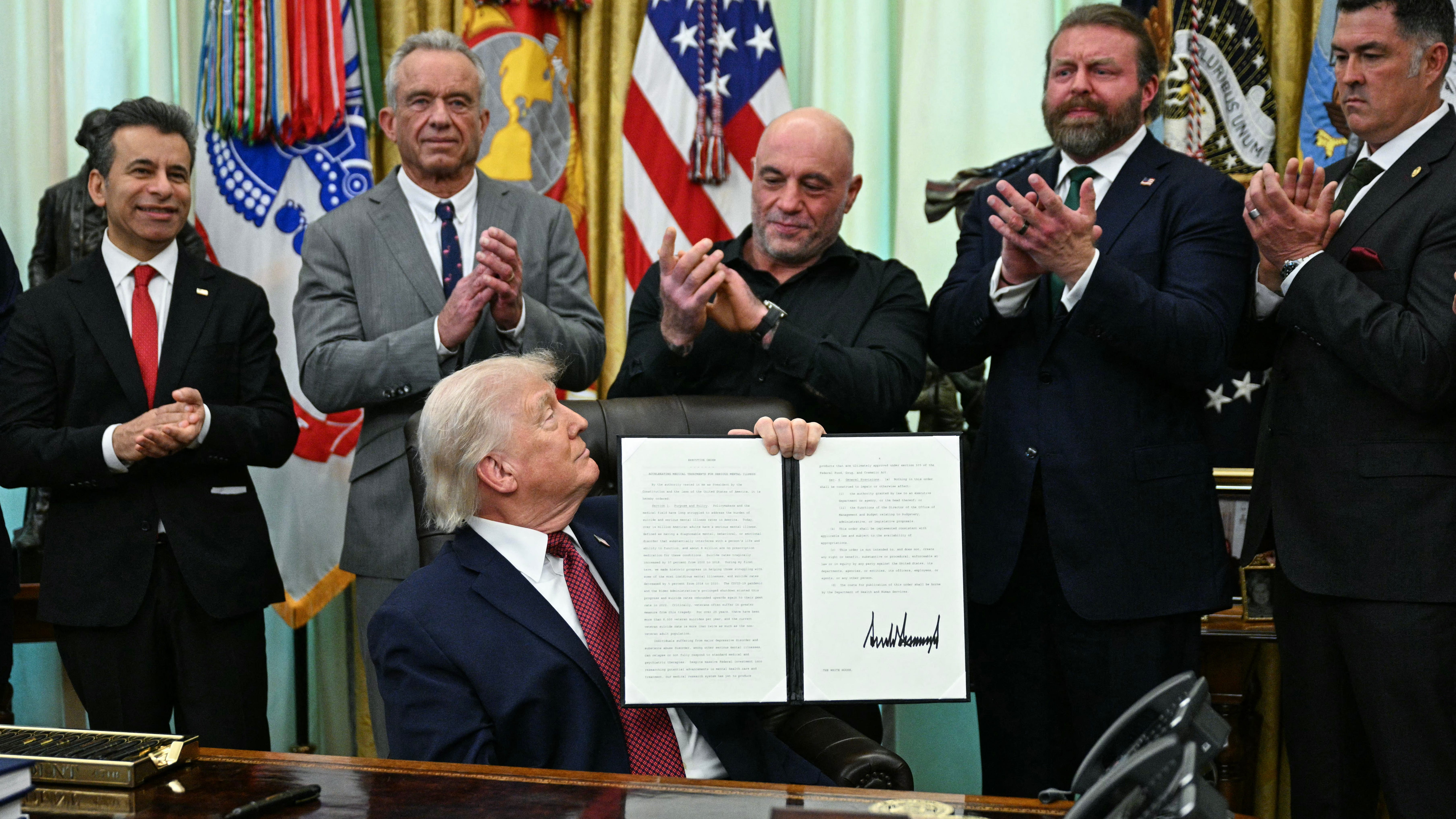
President Donald Trump has moved toward federal control of voter rolls and mail-in voting, issuing an executive order cracking down on the voting method he frequently criticized despite using it to vote himself this year.

The move escalates the president’s efforts to place new restrictions on voting ahead of the 2026 midterm elections, where control of Congress is at stake. The act was quickly condemned by Democrats and voting rights groups for interfering with state election administration and making it harder for people to vote.

President Trump’s order requires the Department of Homeland Security, in conjunction with the Social Security Administration, to create a list of U.S. citizens of voting age who are residents of each state and send it to each state’s voting authorities at least 60 days before the election.

The order directed the U.S. Postal Service to oversee mail-in voting, establish “uniform standards” for ballots, and develop rules to prevent unauthorized individuals from submitting ballots. The Postal Service would provide each state with a list of voters who are “registered” with the Postal Service.

White House Chief of Staff Will Schaaf said the Postal Service will “ensure that ballots are sent to people who are eligible to vote and that returned ballots are properly returned only by eligible voters.”

President Trump has suggested for months that the federal government could nationalize the voting process, sparking a bipartisan backlash and alarming critics concerned about the integrity of future elections.

Under the Constitution, each state has authority over the “time, place, and manner” of federal elections. State and local governments administer voting, but the Constitution gives Congress the power to “make or alter” election rules.

President Trump’s efforts to assert executive authority over elections are likely to be challenged in court.

NAACP leader: ‘His order is not only unconstitutional, it’s unconscionable’

“If President Trump signs an unconstitutional executive order that seizes the vote, we will sue. I don’t bluff and usually win,” Marc Elias, a leading election lawyer who supports Democrats, said on social media.

The president signed the order during a White House event in the Oval Office on March 31, claiming it would “help the election tremendously” and believing it to be “absolutely foolproof.”

Voting rights groups quickly opposed the order.

NAACP President Derrick Johnson said in a statement: “It’s shocking…that the president is restricting mail-in voting.” “He’s still a hypocrite. His orders are not only unconstitutional, they’re unconscionable.”

President Trump is focused on improving voting laws in the run-up to November’s midterm elections, urging Congress to pass the SAVE America Act, which would require proof of citizenship to vote. The bill has stalled after strong opposition from critics.

President Trump has falsely claimed that the 2020 election he lost to former President Joe Biden was stolen and has regularly targeted mail-in voting for widespread fraud, saying on March 31 that “mail-in voting fraud is legendary.”

Nevada Secretary of State Cisco Aguilar, president of the Democratic Association of State Employees, which oversees elections, said President Trump was trying to change voting rules “out of fear that he might lose.”

“No matter what the president says now, he knows that our election system is safe, secure and reliable, as he voted by mail himself last week,” Aguilar said, adding that Trump is trying to “bully states to make it harder for people to vote.”

Florida, a state that President Trump won by 13 points in 2024, is one of the states that widely uses mail-in voting. The president voted by mail in Florida’s March 24 special election.

Mega Millions winning numbers for March 31 drawing: $80 million jackpot

0

play

The Mega Millions jackpot has risen ahead of the drawing on Tuesday, March 31st, reaching $80 million with a cash value of $35.6 million.

If someone is lucky enough to win the jackpot, they have two options. Take home one-time cash or get paid instantly, then receive an annual check each 5% larger than the previous year.

The most recent Mega Millions winner dates back to March 17, when an Ohio player took home a $60 million jackpot. The ticket was sold in Van Wert, Ohio, about 160 miles northwest of Columbus, Ohio Lottery said.

Winners who have not come forward to claim their prize must do so within 180 days.

Here’s what you need to know about Tuesday’s Mega Millions drawing.

What are the winning Mega Millions numbers for March 31, 2026?

Here are the winning numbers for Tuesday’s Mega Millions lottery. 18, 35, 45, 60 and 65. mega ball is 17.

When is the next Mega Millions drawing?

The next Mega Millions drawing is scheduled for Friday, April 3rd at 11:00 PM ET.

Top 10 Mega Millions Jackpots

  • August 8, 2023, $1.602 billion in Florida.
  • $1.537 billion in South Carolina on October 23, 2018
  • January 1, 2023, $1.348 billion in Maine
  • July 29, 2022, $1.337 billion in Illinois
  • December 27, 2024, $1.269 billion in California
  • $1.128 billion in New Jersey on March 26, 2024
  • January 22, 2021, $1.05 billion in Michigan
  • $983 million in Georgia on November 14, 2025
  • $810 million in Texas on September 10, 2024
  • March 30, 2012, $656 million in Illinois, Kansas, and Maryland

What is Mega Millions?

Mega Millions is a lottery that is played in 45 states, the District of Columbia, and the U.S. Virgin Islands.

Each ticket costs $5, and players can choose six numbers from two different number pools: five different numbers from 1 to 70 (white balls) and one number from 1 to 24 (gold mega ball), or choose Easy Pick/Quick Pick.

If you match all six winning numbers in the drawing, you win the jackpot. If there are multiple jackpot winners, the jackpot prize will be shared.

How to play Mega Millions

To play Mega Millions, you must purchase a ticket. This can be done at several locations, including local convenience stores, gas stations, and grocery stores. In some states, you can purchase Mega Millions tickets online.

Once you have your ticket, you have to choose six numbers. Five of them are white balls numbered 1-70. The golden mega ball ranges from 1 to 24.

If you’re feeling particularly unlucky or don’t want to go through the hassle of picking, you can request a “quick pick” or “easy pick.” When you use these options, your computer randomly generates numbers.

Mega Millions tickets have built-in multipliers that increase your non-jackpot prize by 2, 3, 4, 5, or 10 times. Previously, players had to pay an extra dollar to add a “Megaplier”.

Fernando Cervantes Jr. is a trending news reporter for USA TODAY. Contact us at fernando.cervantes@usatodayco.com and follow us at X @fern_cerv_.

Cuba offers roadmap to US as President Trump pushes for regime change

0


“So the United States wants to be involved in Cuba’s economic transformation? Let’s do that,” Cuba’s top diplomat told USA TODAY.

play

  • Cuba’s top diplomat in the United States has outlined a path toward closer ties with the Trump administration.
  • Secretary of State Marco Rubio is leading high-level talks in response to the U.S. oil blockade.
  • Cuba is open to economic cooperation, but officials insist they will not compromise on national sovereignty.

WASHINGTON – As U.S. officials push for regime change in Cuba, a senior Cuban official in an exclusive interview with USA TODAY laid out a roadmap for stronger ties between the two former Cold War adversaries, saying it could pave the way for business deals and improved relations.

Cuba’s top diplomat, Lianis Torres Rivera, gave no details about the ongoing talks between Washington and Havana, stressing that Cuba retains its sovereignty. But she told USA TODAY that the island nation is willing to cooperate with the Trump administration on a myriad of issues and have the U.S. participate in Cuba’s economic reform.

“There is a wide variety of issues that we can discuss with the United States, and I am confident that it will be in the interests of the United States and Cuba’s national interests,” Torres Rivera said. “So does the United States want to be involved in Cuba’s economic transformation? Let’s do that.”

He said other measures that could improve relations between the two countries include:

  • Relaxing regulations based on the U.S. embargo on Cuba and prohibiting Cuba from purchasing products made with at least 10% American parts.
  • President Trump waived Title III of the Helms-Burton Act, making it easier for the U.S. to do business in Cuba without asking Congress to repeal the blanket ban.
  • Remove Cuba from the State Department’s list of state sponsors of terrorism. (An action taken by former Presidents Barack Obama and Joe Biden that President Trump rescinded during both terms.)

Torres Rivera’s comments provided the first glimpse of what Cuba wants in an economy-focused deal between Washington and Havana, which is the subject of close negotiations.

The high-level talks, led by Secretary of State Marco Rubio, began in earnest after the United States imposed an oil blockade on Cuba two months ago. Rubio met with the grandson of former Cuban leader Raul Castro in February. Cuban President Miguel Diaz-Canel confirmed that the first talks with the United States took place on March 13.

Over the past few weeks, President Trump has hinted at a belligerent occupation of Cuba, saying “Cuba is next” and referring to “friendly” and not-so-friendly occupations of Cuba.

Comments by Torres Rivera and other Cuban officials point to the Cuban government’s desire to reform the economy and expand business ties with the United States.

In an interview with Al Jazeera on March 29, Cuba’s Undersecretary of Foreign Affairs Josefina Vidal hinted at the possibility of an economic agreement with the United States, but reiterated that Cuba would not concede its sovereignty.

“We are ready, willing and open to put negotiations with the United States on the table,” she said. “The possibilities for Cuba and the United States to work together are endless… Opportunities are open to Cuba.”

Rubio told reporters on March 27 that Cuba “will never be able to develop economically” unless it breaks away from communism. “Giving people economic and political freedom is important, but they are closely related and they unite,” he said.

Torres Rivera said he wants President Trump to take executive action to ease certain sanctions against Cuba, including the U.S. embargo enacted in 1962 as a means of isolating the communist island. The embargo was enacted into law in 1996 by the Helms-Burton Act.

She also proposed bringing together scientists and law enforcement officials from both countries to collaborate on new efforts in everything from Alzheimer’s drugs to fighting drug trafficking.

“President Trump has an opportunity to build an equal relationship in the relationship with Cuba, the relationship between Cuba and the United States, which could benefit both countries,” Torres Rivera said. “He could do it.”

Trump administration officials declined to comment directly on Torres Rivera’s remarks, other than to say the administration sounds desperate.

What remains unclear is what concessions or changes Cuban officials are willing to make in exchange for easing restrictions. Torres Rivera and other Cuban officials have repeatedly said they have no intention of relinquishing their right to govern as they choose.

A senior State Department official told USA TODAY that the U.S. wants the Cuban regime to reach an agreement with U.S. support that would allow the Cuban people to be free and prosperous. As part of any deal, the administration would have to make significant changes, including allowing businesses to be privatized and allowing Cubans to become economically self-sufficient, officials said.

Changes in US sanctions against Cuba have historically been difficult political maneuvers. Over 60 years, 12 U.S. presidents, from John F. Kennedy to President Trump, have grappled with varying degrees of success in navigating the longest series of sanctions in U.S. foreign policy history: embargoes. Cuba estimates that the sanctions have cost it more than $170 billion in revenue since President Kennedy imposed them in 1962.

Most countries, including several of the United States’ major allies, formally encourage the United States to end the embargo through support for annual United Nations resolutions.

In October, the United Nations General Assembly voted 165-7 (with 12 abstentions) to adopt a non-binding resolution calling on the United States to end the embargo, marking the 33rd consecutive year that a similar resolution has been passed.

Torres Rivera cited the United Nations resolution as evidence that the United States is on the wrong side of the issue.

“Americans are welcome in Cuba. American businesses are welcome in Cuba. Cuban-American investment and trade is also welcome in Cuba,” she said. “Our country could have had a much different standard of living for the Cuban people…if we could have achieved all of this.”

Lifting the full embargo would require a vote in Congress, but Mr. Trump could lift many of the sanctions through an executive order or executive action, such as removing Cuba from the State Department’s terrorist list, said Robert Muse, a Washington-based lawyer who specializes in U.S. law related to Cuba.

For example, on February 25, the Trump administration began allowing U.S. petroleum products, including diesel, to be sold directly to Cuba’s private sector.

“There is no limit to what he can do,” Muse said, including easing travel restrictions to the island and allowing direct interaction with Cuban businesses. “Any president can leave the embargo on Cuba in place like Swiss cheese. It’s full of holes and no cheese.”

Richard Feinberg, a professor at the University of California, San Diego and author of “Open for Business: Building the New Cuban Economy,” said Cuba needs to pass significant economic reforms, such as allowing international investors to directly hire Cuban workers or privatize government-owned entities such as hotels, before the Trump administration considers easing the embargo.

He said Cuba’s reforms must go hand in hand with the easing of the U.S. embargo.

“Who would invest in an island under sanctions?” Feinberg said. “Serious reforms on the island must proceed in parallel with a full-scale lifting of sanctions.”

Another important step Cuba could take, he said, would be to resolve outstanding claims from individuals and businesses who claim their property was confiscated by the Cuban government in the 1960s. The U.S. government estimates that Cuba owes nearly $2 billion to about 6,000 companies for nationalized real estate, but some independent estimates put the figure significantly higher.

In February, the U.S. Supreme Court heard arguments in two cases in which U.S. companies sought compensation for confiscated property.

“It’s going to show good faith and it’s going to show, ‘Okay, we’re serious,'” Feinberg said.

Francesca Chambers is USA TODAY’s White House correspondent, covering foreign policy and presidential elections. You can follow her at X @fran_chambers.

Rick Jarvis is a national correspondent for USA TODAY’s investigative team based in Austin, Texas. Follow Jarvis on X: @MrRJervis.

President Trump says he plans to attend Supreme Court hearing on birthright citizenship

0


President Trump’s daily schedule calls for him to arrive in court for oral argument at 10 a.m. on April 1. He told reporters he was likely to attend the hearing.

play

President Donald Trump is planning an unprecedented Supreme Court appearance as justices consider whether his administration can limit birthright citizenship. Out of respect for the Constitution’s separation of powers, the sitting president did not attend the Supreme Court arguments.

President Trump’s daily schedule calls for him to be in court for oral argument at 10 a.m. on April 1. He told reporters during an Oval Office event on March 31 that he would likely attend the hearing.

“I’m going,” Trump said, adding, “I think so. I believe it, because I’ve been hearing this argument for a long time.”

President Trump had previously said he was considering attending a Supreme Court hearing on his tariffs, but ultimately did not participate. At the time, critics such as Sen. Richard Blumenthal, D-Conn., said the possibility was an attempt to intimidate the court, which President Trump has often criticized in harsh terms when ruling against him. On March 25, President Trump said he was “sickened” and “bad for the country” after two judges he appointed overturned his trademark tariffs.

If the president pulls this off, he will make history.

On his first day in office last year, Trump signed an executive order that would deny automatic citizenship to babies born in the United States unless at least one parent is a citizen or legal permanent resident. The move is a dramatic reinterpretation of the Fourteenth Amendment, which states that “all persons born or naturalized in the United States, and subject to the jurisdiction thereof, are citizens of the United States and of the state in which they reside.” This order was quickly challenged in court.

The Fourteenth Amendment has long been interpreted to grant citizenship to nearly everyone born in the United States, except for children of diplomats and invading troops. Native Americans were also excluded from birthright citizenship until the 1924 law.

President Trump criticized birthright citizenship on March 31, saying, “This is the craziest thing I’ve ever seen.” “I have been treated badly by members of the legal community for many years.”

It could be a busy day for Trump. He is also scheduled to address the nation on the Iran war on April 1 at 9 p.m.

Contributions: Maureen Groppe, Bert Jansen

Kay Ivey hospitalized after ‘minor’ medical procedure

0

play

MONTGOMERY, Alabama — Alabama Gov. Kay Ivey was hospitalized after undergoing a “minor procedure” to remove fluid that was compressing her lungs, the governor’s office announced Tuesday, March 31.

Gina Maiola, Ivey’s communications director, said the 81-year-old Republican had been feeling discomfort in the left side of his body for the past three weeks. After observing the pain and recently feeling slightly short of breath, Ivy decided to see her GP again on March 31st.

Maiola said she was then referred to a surgeon at Baptist Medical Center South in Montgomery, Alabama’s capital, who determined that fluid was compressing Ivey’s lungs.

“Although this was not an emergency, Governor Ivey wanted to complete the process as quickly as possible so that we could quickly return to 100% status by the end of the (Legislature) regular session in 2026,” Maiola said in a statement. “This afternoon, the Governor successfully underwent a simple procedure to remove her bodily fluids at Baptist South. Out of an abundance of caution, she will be monitored at Baptist South in the coming days.”

Lawmakers are in the final day of the state’s regular session.

Mr. Ivey, a cancer survivor, is currently serving his second full term. In September 2019, the governor announced that he had been diagnosed with Stage I lung cancer after doctors discovered a “small, isolated malignant tumor.”

About three weeks later, Ivey finished radiation treatment and said she expects to make a full recovery. In January 2020, Ivey’s doctors said Governor’s follow-up images showed “no concerning features and an excellent response to treatment.”

“She will continue regular surveillance imaging tests, but Governor Ivey believes she will be cured,” Dr. Alex Whitley of Central Alabama Radiation Oncology said in a statement at the time.

Contact Montgomery Advertiser reporter Marty Roney. mroney@gannett.com. please support his work Subscribe to Montgomery Advertiser.

Oracle is reported to be repeatedly cutting staff as it promotes AI.

0

play

Software giant Oracle has cut an unspecified number of jobs as it seeks to cut costs and continue growing its artificial intelligence business, according to former employees and multiple reports.

A number of former employees posted on LinkedIn on Tuesday, March 31st, that Oracle had fired them. It’s unclear how many employees were affected, but CNBC reported, citing people familiar with the move, that the number of layoffs at the company is in the thousands.

Those who posted about their layoffs held jobs in software engineering and cybersecurity. Elsewhere on Reddit, in a group called the Oracle Employees Group, there was discussion last week about job cuts in Canada, India, and the United States.

Oracle declined to comment to USA TODAY. As of March 31, the company had not filed any recent Worker Adjustment and Retraining Notification (WARN) Act notices. This is a legally required warning that employers with 100 or more employees must give 60 calendar days’ advance notice of planned closures or mass layoffs.

Why would Oracle want to fire employees?

Multiple online commenters said employees were notified via email. Fast Company reported that the emails began arriving in employees’ inboxes around 6 a.m. local time.

“After careful consideration of Oracle’s current business needs, we have made the decision to eliminate your role as part of broader organizational changes,” a copy of the email obtained by Business Insider said. “As a result, today is the last day of work,” Morningstar analyst Luke Yang told USA TODAY.The layoffs could account for about 30,000 jobs, or about 18% of Oracle’s total workforce.

Yang said the headcount reductions “should improve Oracle’s operational efficiency and significantly increase revenue per headcount,” comparable to competitors such as Microsoft.

“The main area affected will most likely be software engineering, as AI-based coding tools (Codex, Claude Code) have dramatically increased the efficiency of software engineers,” Yang said. “These layoffs are global. It appears some engineers in India are also affected. We do not believe the layoffs will impact our Oracle Cloud Infrastructure growth plans.”

Oracle was planning to cut thousands of jobs. Bloomberg March 5, Save money, Offset AI data center expansion.

In January, President Donald Trump, along with Oracle Executive Chairman Larry Ellison, Open AI CEO Sam Altman, and SoftBank CEO Masayoshi Son, announced the Stargate project to strengthen the United States’ introduction of AI at the White House. Ellison said the project’s first data center is currently under construction in Texas.

Oracle’s cash flow is expected to trend negative over the next few years due to data center spending, which is expected to be recouped in 2023, according to data compiled by Bloomberg.Last month, Oracle announced it would raise up to $50 billion this year through a combination of debt and stock sales.

Contributor: Swapna Venugopal Ramaswamy, USA TODAY. Reuters. Mike Snyder is USA TODAY’s national trending news reporter. You can follow him on Threads, Bluesky, and X, and email him at: mike snyder & @mikegsnider.bsky.social & @mikesnider & msnider@usatoday.com.

Gwen Stefani’s ex-husband Gavin Rossdale talks about co-parenting relationship

0


The Bush singer and No Doubt frontwoman split in 2015 after 13 years of marriage.

play

More than a decade after their split, Gavin Rossdale and Gwen Stefani seem to have found a new normal.

Rossdale, who was married to the No Doubt frontwoman from 2002 to 2015, opened up about the former couple’s co-parenting relationship in an interview with Fox News Digital published on Monday, March 30.

The Bush singer has three sons with Stefani, Kingston, 19, Zuma, 17, and Apollo, 12.

“You know, this is a two-lane highway,” Rossdale, 60, told the publication. “But they don’t seem to merge, and that’s fine.”

Stefani filed for divorce from Rossdale in August 2015, citing irreconcilable differences as the reason for their breakup. Both parties sought joint custody of the child.

“I was dying. I was panicking and literally dying, as anyone would,” Stefani told USA TODAY about the 2016 divorce. The singer also opened up about the emotional burden of her custody arrangement with Rossdale.

“I see my kids half the time now,” Stephanie said at the time. “It’s shocking to me. At the same time, I’m back to who I was…I know that things will continue to unfold and evolve, and I believe that everything will get better and better.”

Rossdale reflected on the evolution of his co-parenting relationship with Stefani, telling Fox News Digital that he and the Grammy-winning singer have each carved out their own paths.

Stephanie “is probably doing her best and I’m probably doing my best,” Rossdale said. “My kids are growing up and I’m proudly supporting this system, and that’s OK.”

Since their divorce, both Stephanie and Rossdale have moved on to other relationships. Stefani married country music superstar Blake Shelton in 2021, and Rossdale is currently dating Albanian singer Shoana X.

In a 2024 interview with People magazine, Stefani talked about how her divorce and subsequent marriage to Shelton changed her perspective on family.

“(I) grew up with a perfect example of parental love. They met, fell in love, and gave birth to us when they were 15 years old. They made us feel like we were everything they were,” Stephanie said. “And when you have a family, it’s the other way around and it falls apart. I didn’t know what to do, how to protect my kids. And I’m still working on that.”

Contributors: Maria Puente, Cara Kelly, Elysa Gardner, USA TODAY

UC Santa Cruz study fuels debate over California’s $20 fast food wage

0

play

A new UC Santa Cruz research report is raising new questions about the impact of California’s $20 minimum wage on fast food workers, prompting a sharp rebuttal from Gov. Gavin Newsom’s office.

The study, released late last year, suggests that the landmark wage increase could have unintended consequences across the state’s fast-food industry, including shorter work hours, higher menu prices and increased pressure on franchise owners to cut costs and automate jobs.

“Based on what we found, we think this bill is a classic example of ‘no good deed goes unpunished,'” Stephen Owen, an economics lecturer at the University of California, Santa Cruz, who conducted the study, said in a March 18 news release. “There are unintended consequences and ramifications, and I think there is no question that, overall, the results are not as good as policymakers had hoped.”

State officials strongly dispute these findings. “The ‘analysis’ is based on several interviews on a Santa Cruz street. It has not been peer-reviewed and its claims are completely false,” said Tara Gallegos, a spokeswoman for the governor’s office. “The facts are clear: Higher wages strengthen the economy and lift workers out of poverty.”

At the center of the debate is AB 1228, a comprehensive labor law that went into effect statewide in April 2024, requiring major fast food chains to pay their employees at least $20 an hour, well above California’s general minimum wage. When Newsom signed the bill in 2023, he said it would help workers keep up with the state’s high cost of living while improving conditions across the industry. “Today, we are one step closer to fairer wages, safer and healthier working conditions, and better training by giving hard-working fast food workers a strong voice and a seat at the table,” Newsom said at the time.

Here’s what you need to know about the study.

What did AB 1228 do?

AB 1228, enacted in September 2023, increases the minimum wage for fast food workers at national chains to $20 an hour, above the state minimum wage of $16.90 an hour.

The bill also established the Fast Food Council, which would set future wage increases (up to 3.5% per year) and labor standards for workers through 2029.

The nine-member national body is made up of workers, industry representatives and government officials.

researcher methodology

To assess the impact of California’s $20 minimum wage policy on fast food workers, researchers used primary and secondary data.

In primary data collection, the researchers used insights gained from face-to-face interviews with business owners and managers along Mission Street in Santa Cruz. Interviews included both franchisee and independent managers.

The researchers also assessed secondary data from publicly available economic and policy sources, such as economic reports and policy briefs related to the law. Labor market data. Historical data on past minimum wage increases in the state.

According to the researchers, “While Santa Cruz served as the primary location for in-person interviews and observations, the patterns identified will be evaluated against statewide policies that apply to fast food employers across California.”

Research shows that jobs are in high demand but few are available

Researchers at the university said one of the effects of increasing the fast food minimum wage was to create demand for such roles, which are now considered “significantly more desirable”.

Owen’s team analyzed data on the number of monthly job applications for Burger King’s franchise group in 2023, 2024 and early 2025 and found “a dramatic increase in the number of applicants.”

“August 2024 had one of the largest spikes, with a 400% increase compared to the same month in 2023,” the researchers said.

But at the same time, rising wages are increasing interest in fast-food jobs, while rising corporate labor costs are reducing demand for workers, the report found.

For example, from October 2023 to October 2024, one Burger King store reported a more than 21% reduction in employee shift work, the researchers found.

“Although some facilities have partially restored operating hours by 2025, working hour levels remain reduced from levels measured in 2023,” the researchers said.

At the same time, the study found that workers at 18 McDonald’s restaurants in the Central Valley worked “nearly 12% fewer hours over the 12-month period from April 2023 to March 2025, equivalent to the loss of 62 full-time jobs over the course of one year.”

Mr Owen said this was not an unexpected effect according to economic theory.

“What happens to labor demand if we raise the minimum wage is really a moot question. Rather, it’s a question of whether it’s good or bad for society,” Owen said in the release.

Researchers say the law’s impact on fast food workers has so far been “mixed.”

The researchers say that although hourly wages for most people are now higher, many people are working fewer hours, limiting their ability to improve their overall income.

According to researchers, fewer hours worked means fewer employees are eligible for benefits.

“Furthermore, many franchises have eliminated overtime, which was previously an important means for long-term employees to increase their income,” the researchers said.

One potential positive effect of the wage increase is that the attrition rate has decreased from 150%-300% to approximately 150%-200%.

Higher wages lead to higher costs for businesses and consumers, research says

Researchers say franchise owners are raising menu prices in response to rising labor costs.

“The new minimum wage for fast-food workers is expected to increase companies’ labor costs by about 25% and, unless companies make other changes, increase overall operating costs by about 9%,” Owen said, according to university researchers.

According to the study, since September 2023, franchise fast food restaurants have increased menu prices by approximately 8% to 12%.

The increase is likely the result of a combination of factors, including higher labor costs, other inflationary factors, and supply chain dynamics, the report said.

“These price increases will disproportionately impact low-income consumers, as fast food is often considered an ‘inferior good,'” the researchers said.

Despite the price increase, companies could still face an impact on their bottom line.

For example, one Burger King franchise owner in Northern California told researchers in Santa Cruz that he plans to close 10% of his worst-performing stores over the next two years to cushion the impact of lower profit potential.

“Companies can absorb some of the increased costs, but the question is for how long,” Owen said in the release. “I would argue that it’s probably going to be closed down in the future.”

Researchers have found that many fast food franchises are turning to workforce automation as a cost-cutting measure to avoid future store closures.

As an example, the university researchers noted that Burger King, McDonald’s, and Taco Bell have all invested in automated kiosks that take orders and payments.

“Some companies were also experimenting with AI voice ordering systems and automated dishwashing,” the researchers said, adding that ordering via mobile apps is also a growing trend.

Researchers say these trends will ultimately lead to significant job losses in the sector.

“The competitiveness of the fast food industry has always depended on increasing sophistication and efficiency, and the industry is ripe for automation,” Owen said in the release. “Is what we’re seeing a natural, organic adoption of these technologies in fast food? I certainly think there’s an element of that, but I would argue that it was accelerated by the wage pressures that were introduced.”

Researchers’ thoughts on future national-level policy makers

Owen said one of the key conclusions from his research is that “increasing the minimum wage may not be the best policy tool for state-level policymakers to achieve their desired goals.”

More support for the Golden State’s working poor is needed, but raising wages for the lowest-paying jobs could create “perverse incentives” for people to enter and stay in these industries.

“When we see a huge increase in applications for fast food jobs, if you’re running a state, that’s probably not the area you really want people to work in,” Owen said in the release.

Mr Owen said raising the minimum wage for a particular sector would have the effect of prioritizing that industry.

“So if you’re going to do that, it might make more sense to target higher value-add industries, like healthcare or manufacturing,” Owen says.

Even if the policy is aimed at large companies, minimum wage increases like this could have a ripple effect on small and medium-sized enterprises.

For example, the researchers said that while the minimum wage for fast food restaurants only applies to franchisees, some independent restaurants still feel “squeezed out.”

The researchers spoke with restaurant owners in Santa Cruz and found they felt pressured to raise wages and menu prices to compete for employees, and were concerned about long-term sustainability.

“Policies that can have unintended consequences, such as closing businesses or reducing the size of job opportunities, actually risk exacerbating economic inequality,” the university researchers said.

Instead, the researchers said, policymakers could look to alternative approaches, such as “improving social safety nets, changing the Earned Income Tax Credit, or significantly reducing business regulations, which could help people in need more directly while avoiding these potential pitfalls.”

U.S. Forest Service moves headquarters from Washington, DC to Utah

0

play

  • The U.S. Forest Service is moving its headquarters from Washington, D.C., to Salt Lake City.
  • Officials say the move will bring leadership closer to the Western region the agency administers and improve its mission.
  • The reorganization also plans to relocate approximately 260 positions to Utah and create 15 state directorships.
  • The Sierra Club expressed skepticism about the move and questioned whether it would lead to more effective land management.

The U.S. Forest Service is moving its headquarters to Salt Lake City, a move the USDA says is a “fundamental reorganization” of the agency.

The USDA announced March 31 that the move from the agency’s current location in Washington, D.C., to Utah’s capital city is part of a broader strategy to bring the Forest Service closer to western states, which make up the majority of the country’s 193 million-acre forest system.

Agriculture Secretary Brooke Rollins said in a statement that the move will improve the Forest Service’s mission of managing forests, save taxpayers money and facilitate staff recruitment.

“Establishing a western headquarters in Salt Lake City and streamlining the way the Forest Service is organized will put chiefs and operational leaders closer to the landscapes we manage and the people who depend on them,” Rollins said.

“This includes supporting timber producers across the country, including the Southeast, by prioritizing regional offices and promoting policies that increase timber production and lower costs for consumers,” Rollins added.

The Forest Service’s move comes after the Bureau of Land Management’s headquarters moved to Grand Junction, Colorado in 2019 during President Donald Trump’s first term, resulting in the majority of its employees leaving the Forest Service and leaving only the BLM back in Washington. BLM manages public lands in several Western states and conducts activities such as oil and gas and agricultural leasing.

Forest Service jobs also face relocation

Approximately 260 headquarters jobs will be relocated to Utah, while 130 will remain in Washington, the Forest Service said. Additional steps in the restructuring are expected to take place over the next year, including the formal elimination of local bureau and station office structures and a complete transition to a state-based model.

Utah Governor Spencer Cox praised the Forest Service’s move and thanked Mr. Trump, Mr. Rollins, Department of Agriculture Deputy Secretary Stephen Baden, and Forest Service Secretary Tom Schultz.

“This is a huge win for Utah and the West. With nearly 90% of the Forest Service’s lands west of the Mississippi River, moving the U.S. Forest Service’s headquarters to Salt Lake City will bring leadership closer to the lands, communities, and challenges they manage,” the Republican governor said in a March 31 post to X. “It also means hundreds of jobs coming to Utah and better and faster decision-making on the ground for those who depend on our public lands, from ranchers and timber producers to families who work and recreate on them.” ”

As part of its reorganization, the Forest Service announced it will create 15 state secretaries to oversee its operations, according to the Department of Agriculture. Each state office would include a small leadership support team responsible for functions such as legislative affairs, communications, and intergovernmental coordination.

“This approach is intended to simplify the chain of command, strengthen local coordination, and give field leaders more ability to respond to conditions on the ground,” the USDA said.

The Forest Service will also begin moving to a “state-based organizational model” to bring authority closer to the field, a goal the administration has emphasized since the beginning of the second Trump administration, according to the USDA.

In addition, an “operational service center” will be established in Albuquerque, New Mexico. Athens, Georgia. Fort Collins, Colorado. Madison, Wisconsin. Missoula, Montana. and Placerville, California. USDA said additional service center locations may be added as the transition progresses.

The Forest Service said survey operations would also be integrated as the Forest Service had previously stated. Research facilities currently located in multiple regions will be placed under the jurisdiction of a central research organization based in Fort Collins, the agency said.

The Forest Service announced that the move to Salt Lake City will be completed by summer 2027.

Sierra Club questions eradication at Forest Service headquarters

A major environmental group is questioning the Forest Service’s pending relocation.

The Sierra Club, the nation’s oldest conservation group, said in a March 31 statement that it was skeptical of the USDA’s move.

“The Forest Service should be organized in a way that allows for effective management of public lands and that allows for active public involvement. This administration has routinely pursued the exact opposite: watering down the conservation and public land management workforce,” said Alex Craven, forest campaigns manager at the Sierra Club. “Despite our continued advocacy for ‘common sense’ management, it is not at all clear whether this reorganization will bring us any closer to that.”

Why a recession is becoming more likely and how to prepare if it comes

0

play

As rising gas prices hit consumers’ wallets, Americans already looking for cheaper fuel may soon face an even bigger challenge: preparing for a potential recession.

A Moody’s Analytics model shows inflation expectations and the probability of a recession rose in March due to a surge in oil prices stemming from the Iran war. Mark Zandi, the company’s chief economist, said in a note that even before the war began, the company’s model had increased the probability of the U.S. going into recession over the next 12 months to an “uncomfortably high” 49%, essentially a coin toss.

Other companies are less likely to fall into a recession. Oxford Economics puts the probability at 30%, but Matthew Martin, senior U.S. economist at Oxford Economics, said if oil prices remained above $140 a barrel, there would be enough pressure on economic growth to push the economy to 1 barrel.

Brent crude, the world oil benchmark, hit $117 per barrel on March 31st.

“I don’t think anyone, certainly the U.S. economy, is going to win if the war is prolonged,” Martin told USA TODAY. “The longer you use it, the more likely something is to break.”

What would it take for the United States to fall into recession?

Martin said the prolonged Iran war, now in its fifth week and nearing the end of the Trump administration’s original four-to-six week schedule, will have the biggest impact on whether the U.S. enters a recession this year.

Martin still expects the dispute to be resolved within the next month or two, but said if oil prices remain high for an extended period of time, consumers who need to drive will have to bear the higher gas prices and therefore cut spending in other areas. Oil is part of nearly every supply chain, so continued high costs could ultimately drive up prices for nearly everything and cause consumers to cut back on spending even more, he added.

“There are some companies that aren’t seeing as much demand right now, and there’s probably more uncertainty as well, so overall employment rates could fall further,” Martin said. “As unemployment rises, demand is expected to fall further as people lose income, which could lead to a chain reaction of destruction.”

He added that a prolonged conflict would likely cause stock prices to fall, potentially pulling back even high-income earners who have been the main drivers of consumer spending.

“If the economy withdraws, middle- and low-income households will also be affected by higher prices. It’s going to be a bit of a storm that the economy may not be able to weather,” Martin said. “It will eventually cause a recession.”

What can Americans do to prepare for a recession?

Miklos Ringbauer, a certified public accountant in Los Angeles, advises his clients to build up an emergency fund. The conventional wisdom is to save three to six months worth of expenses. During a recession, it often takes time to find a new job, so Ringbauer suggests saving for a year.

He advises people who don’t have savings and may have to rely on credit cards to take the time to review the interest rates on their cards. You’ll have to pay the money back anyway, but a 0 percent introductory interest rate for one year is better than a card that charges 20 percent interest from day one. Remember to read the fine print.

Although we can’t control gas prices, some Americans are finding ways to lower their gas prices. Turn the pages of their book, brave the long lines at Costco or Sam’s Club, and download the GasBuddy mobile app to track prices and take advantage of our fuel rewards program.

Ringbauer said each decision should depend on individual circumstances.

“As long as there’s a trade that works for you and it fits your forecast, by all means do it today, because as we’ve seen over the last few years, everything will be more expensive tomorrow,” he said, adding that sometimes it makes sense to wait. “For example, if there is a recession, more people will lose their jobs in the process. There will be more foreclosures. Then you might be able to buy properties that are in foreclosure.”

Who decides when the United States enters a recession?

The call was made by eight economists who serve on the Business Cycle Dating Committee at the National Bureau of Economic Research (NBER), a nonprofit research organization independent of the federal government.

They are appointed by NBER President James Poterba, who has held the position since 2008, after consultation with the committee chair and the nonprofit’s board of directors.

The commission has maintained a timeline of U.S. business cycles since its creation in 1978. In the absence of an alternative timeline compiled or published by the U.S. government, the commission became the go-to source for officially identifying recessions.

First of all, what is the definition of recession?

The NBER defines a recession as “a significant decline in economic activity that spreads throughout the economy and lasts for more than a few months.” According to the NBER, three separate criteria must be met to some extent to officially identify a recession: depth, breadth, and duration.

The committee considers several factors in making its decision, including inflation-adjusted income excluding government benefits, salaried employment, consumer spending, industrial production, and gross domestic product.

“Most, but not all, recessions identified in our procedures consist of two or more consecutive quarters of decline in real GDP,” the NBER explains on its website.

How quickly does the NBER determine that the U.S. is in recession?

The most recent and shortest recession in modern history was during the COVID-19 pandemic, which lasted from February to April 2020.

The NBER identified a recession in June of that year, several months after it began. It took another year for the NBER to announce in July 2021 that the recession ended in April 2020.

The NBER says other recessions have taken between four and 21 months to determine. There are no set timing rules. The NBER says the committee will wait until it can confirm with confidence.

“Most people don’t realize they’re in a recession while it’s going on,” said Dean Rylkin, chief executive of Cardiff, a small business lender. “It doesn’t feel like a switch has been flipped; it manifests itself unevenly, through layoffs in certain industries, tight credit, slowing activity, etc. By the time it’s officially called, it’s often already obvious in hindsight.”

Contact Rachel Barber at rbarber@usatoday.com and follow her at X @rachelbarber_