Descendants Forum aims to uplift Black stories as President Donald Trump seeks to change the way history is told.
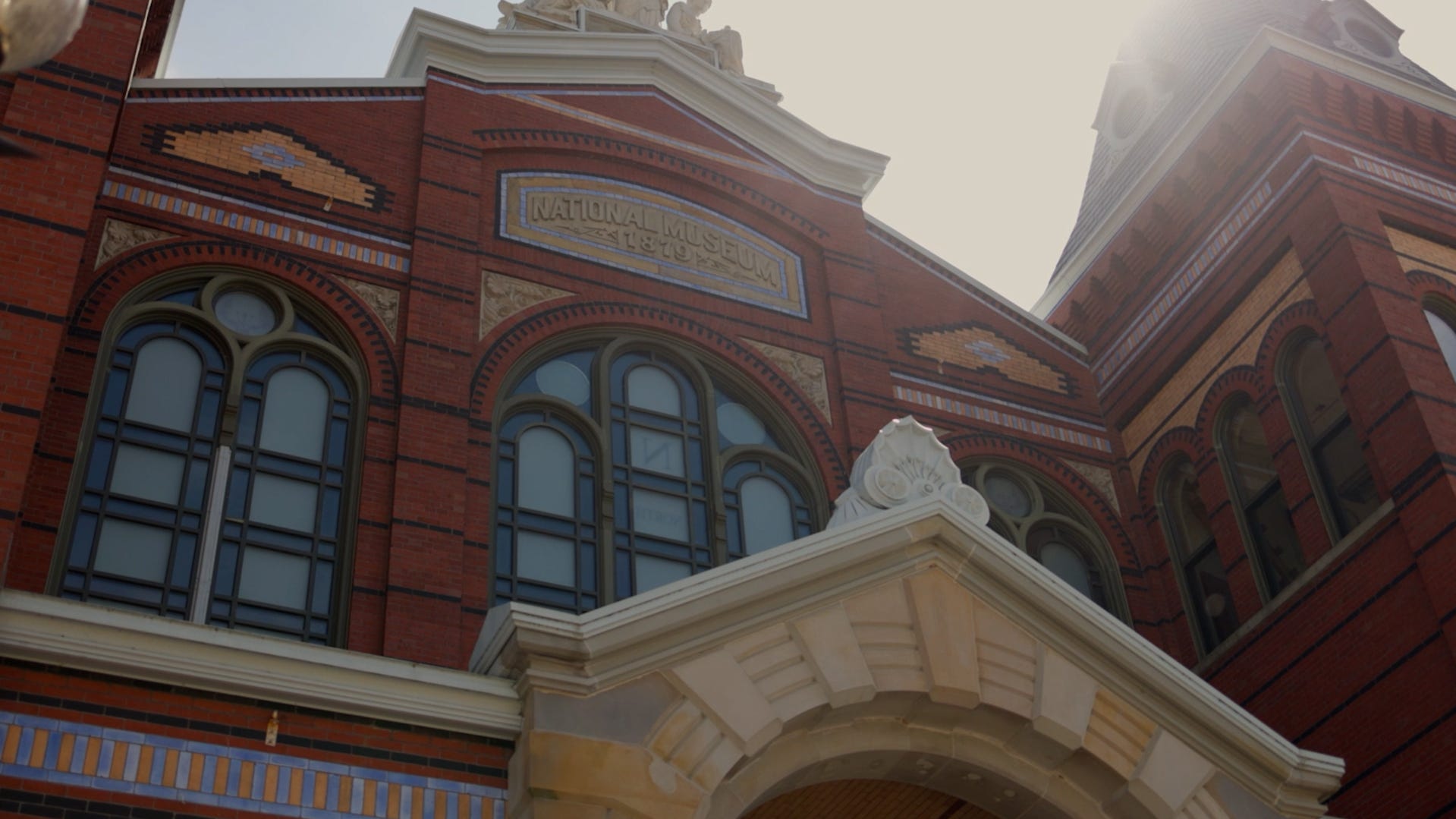

Trump administration reviews Smithsonian museums for partisan content
The Trump administration has ordered the Smithsonian Institution to bring its exhibits in line with American exceptionalism.
When Egypt Lloyd learned that she was a direct descendant of Tony Vassall, Cuban, and Darby Vassall (people enslaved by Harvard University’s patrons more than two centuries ago), it gave her a sense of purpose.
She founded the Slave Heritage History Coalition to help other descendants uncover their family history. Earlier this year, the coalition joined more than 20 other organizations to create the Descendants Forum to share research, advocate for historic preservation, and coordinate communities formed by enslavement.
As President Donald Trump calls for an overhaul of depictions of slavery in museums and public spaces, forum members say their mission to stop the erasure of Black history and shine a light on overlooked stories takes on new importance.
For Lloyd and other descendants, the debate over how slavery is portrayed is not just a debate about how to tell this country’s history. They talk about their family history. Accurately telling their history keeps them connected to their ancestors and country.
“People can talk about their history without any restrictions, but when it comes to slavery, they want to limit it,” Lloyd said. “This coalition is unafraid of the White House and other organizations seeking to strip away the history of enslavement.”
In a July 4 report coinciding with the nation’s 250th anniversary, the White House accused the Smithsonian Institution’s National Museum of American History of engaging in “extreme political activity” and criticized what it considered an exhibit about the Founding Fathers that overemphasized slavery.
The administration is pushing for a proactive retelling of the country’s history that celebrates “American exceptionalism.” President Trump argued that discussing tragic periods in history, including the treatment of slaves and Native Americans, undermines the story of the accomplishments of the Founding Fathers and paints the United States as racist and oppressive.
“There was an unmistakable attempt to change this extraordinary character, to break the American spirit from us, to take us away from our history, to make it impossible for us to even answer the question of what it means to be an American,” President Trump said in a July 3 speech at Mount Rushmore.
In January, the Trump administration directed the National Park Service to replace a panel on George Washington’s role as a slave owner in the executive mansion in Philadelphia with a new panel that critics criticized as disrespecting history.
“We all need to sit down at that table and have an educational conversation as a family about what really happened,” Lloyd said. “Because the American table, the family table, is a rainbow of people.”
Members see forums as “big gumbo”
This forum was founded by the Clotilda Descendants Association, the ancestors of those who came on the last known American slave ships, and Kinfolkology, a digital archive of the names of enslaved African American ancestors.
They timed their formation to coincide with the country’s 550th anniversary, aiming to “complicate the narrative of celebration centered around the 250th anniversary.”th” said Jenny Williams, founding executive director of Kinfolkology.
“To put it mildly, there was a sense that something was missing from the general story of the founding,” Williams says. “When they were removing items at the presidential mansion in Philadelphia, it energized us.”
Williams and the organizations at the forum see this as a kind of “founding moment.” Hundreds of descendant-led organizations have existed across the country for decades, but this is the first effort aimed at uniting them under a deliberative body, or “parliament.”
“We aim to bridge the gap for people who don’t know their history. We want to preserve and protect it,” said Chanel Blackwell, a member of the Clotilda Descendants Association. Her group was named after the last ship that brought enslaved Africans to the United States.
A wealthy businessman chartered the Clotilda in 1860, more than 50 years after Congress banned the international slave trade. Less than a decade later, after the Civil War ended, Clotilda’s survivors formed a community in Mobile, Alabama called Africatown.
The ship was deliberately set on fire and sank. But after a long search, researchers discovered the vessel in the Mobile River near Africatown in 2018. It is believed to be the most intact slave shipwreck ever discovered.
Blackwell said the discovery of the ship has given a new identity to her and the descendants of the 110 African men, women and children who were transported on the ship.
“I may not have experienced the same biological trauma of not knowing who my ancestors are, not knowing my full story,” she said.
Hosting the Descendants Forum is a way to help other Black Americans uncover their family history, she said.
History Before Us documentary maker Frederick Murphy has traveled the country telling the untold stories of black Americans.. He said he found threads of common ancestry through many communities. But before the forum was established, there were few ways for genealogy research groups to connect with each other.
He said that by bringing organizations together through the forum, small community-driven projects from Mississippi to New York have the opportunity to uncover a larger story about the Black experience in America over the past two and a half centuries.
“I hope it’s a huge healing circle. I hope it’s a place for families to gather. I hope it’s a relative discovery,” he said. “I hope this conglomerate turns into a big gumbo.”
Organizations aim to present “receipts”
Joseph McGill Jr., who grew up in South Carolina in the 1970s, said his school history books told him his ancestors were “happy to be enslaved” and that their owners were “benevolent people.”
Years later, when he began doing research as a park ranger at Fort Sumter National Monument, he realized those stories were not accurate. In 2010, McGill founded the Slave Housing Project. He did this to draw attention to the conditions of slave quarters and advocate for their preservation.
Many of these buildings, often built with cheap materials, existed throughout the United States in the 1800s but have since been destroyed or demolished.
As a Civil War reenactor, McGill understood how stepping into real-life structures could help people engage more deeply with history. In its early days, conveying its mission to historic sites across the South was no easy task.
“It was me calling these places, pleading my case, bowing my head, holding hands, dragging my feet, trying to explain to them what I was about,” McGill said. “Now it’s quite the opposite. They call me.”
He spent more than 250 nights sleeping in former slave cabins in 25 states, including the residences of past presidents, including George Washington’s Mount Vernon, Thomas Jefferson’s Monticello, James Madison’s Montpelier, and Andrew Jackson’s Hermitage.
“None of them were called plantations, at least not by their names, but they were plantations,” McGill said. “That’s the problem. That’s the part of history that we as Americans choose to accept. It’s a history that continues to put these people on a pedestal and address the atrocities they committed.”
McGill said people who visit historic sites are often interested in large houses and mansions. He believes the project has helped inspire more people to see, restore and protect slave dwellings.
“This is the most tangible connection to that period in our history,” McGill said.
The Slave Housing Project participated in the forum earlier this year. The forum is made up of a total of 30 organizations. McGill hopes to build enough momentum so that the history he’s been working to uncover continues to attract attention.
“From where I was left in 1979, we can learn what the real story of our enslaved ancestors was,” he said. “I just received the receipt.”
Carissa Wadick covers America’s 250th anniversary on USA TODAY. She can be reached at kwaddick@usatoday.com.


