The high court effectively invalidated Louisiana’s black-majority congressional district, restricting a landmark civil rights law passed to protect the voting rights of racial minorities.
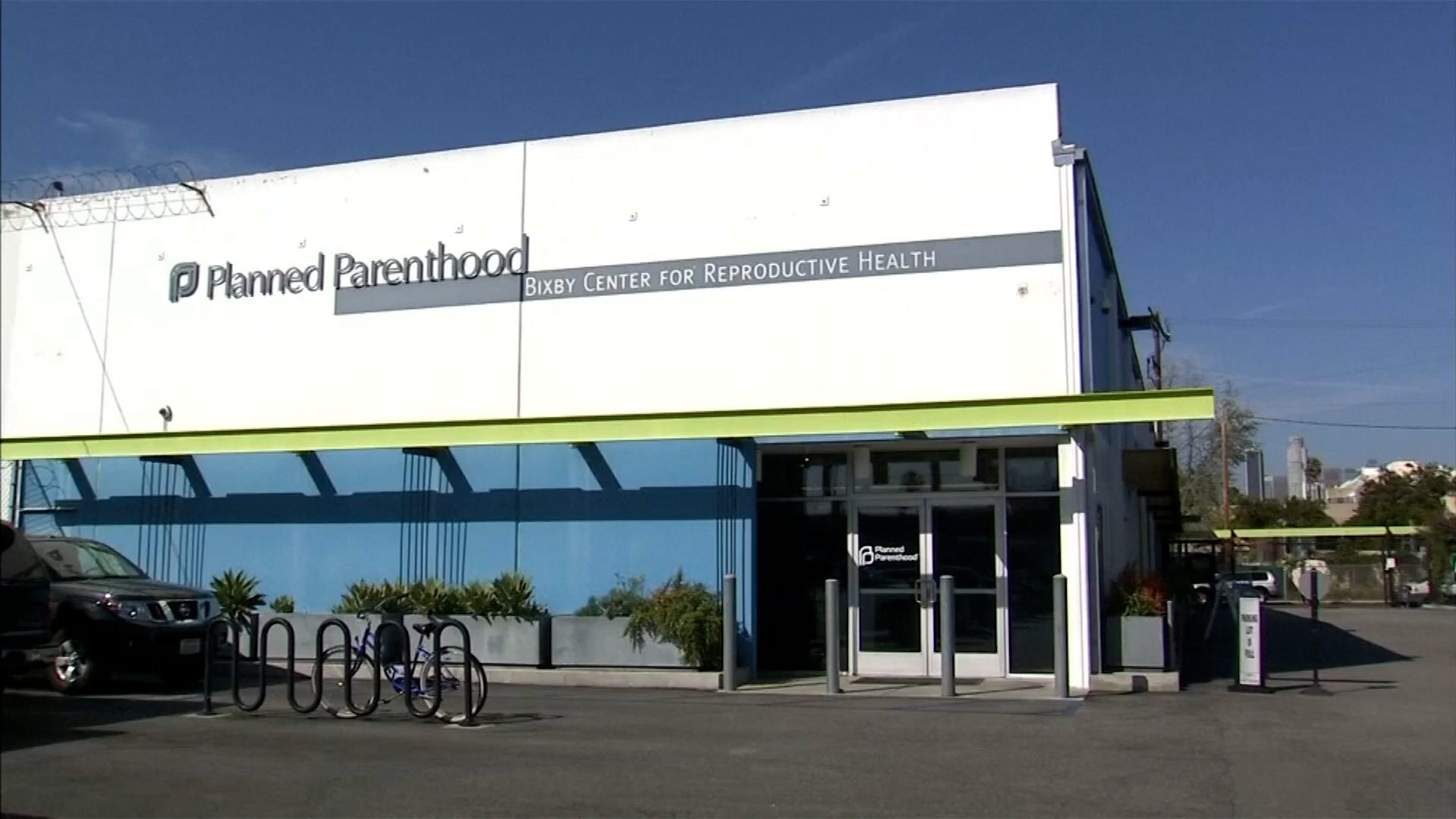

Supreme Court agrees that South Carolina can defund Planned Parenthood programs
In a 6-3 decision, the Supreme Court said Medicaid patients cannot sue over their right to choose their own doctors.
WASHINGTON – The Supreme Court on April 29 threw out Louisiana’s congressional map designed to protect Black residents’ voting rights, in a ruling that undermined a landmark civil rights law.
The ideologically divided court sided 6-3 with the Trump administration and non-Black voters who challenged the map as relying too much on race to classify voters. And the court did so just three years after upholding the 1965 Voting Rights Act’s vote dilution protections for racial minorities.
Justice Samuel Alito, writing for the conservative majority, said the map was an “unconstitutional gerrymander” that violated the constitutional rights of non-Black voters who challenged it.
The court’s three liberal justices dissented. Justice Elena Kagan said the impact of the majority’s decision is “likely to be far-reaching and significant” and that the protections of civil rights law are “obsolete”.
The decision could ultimately reduce the number of Black and Hispanic members of Congress, making it more likely that Republicans, who currently have a thin majority, will win more seats in the U.S. House of Representatives. States are now free to change voting district boundaries at all levels of government.
But the ruling, one of the most anticipated rulings this term, may not have arrived in time to make a big difference in this year’s midterm elections. It is possible that some states may attempt to redraw their congressional maps, but they will likely face both practical and legal challenges.
The Voting Rights Act had already been weakened.
Section 2 of the Voting Rights Act seeks to prevent Congressional mapmakers from reducing the voting power of racial minorities by crowding them into one district or spreading them across so many districts that they have no influence.
These protections became even more important after the court struck down another part of the law in 2013, one that was used to police states with a history of discrimination.
It will be easier for Republicans to draw maps that favor their party, especially in the South, where voters’ races closely align with party preferences.
Alito wrote that the Voting Rights Act “requires evidence that strongly infers intentional discrimination.”
In her dissent, Ms. Kagan wrote that proving intentional discrimination is extremely difficult.
That means, under the majority’s “new view” of law, states can systematically weaken the voting rights of minority citizens “without legal repercussions,” she said.
Year-long battle over Louisiana map
The racially and politically charged case grew out of a years-long battle over Louisiana’s congressional map.
After the 2020 census, the state Legislature created a map that included only one of the six majority-black districts, even though black people make up about one-third of the state’s population.
When a group of black voters filed a lawsuit, a lower court said the map likely violated the Voting Rights Act. The law was a landmark bill of the civil rights movement, passed after Alabama state troopers attacked peaceful marchers on what became known as “Bloody Sunday.”
But when the Republican-controlled Legislature creates a second majority black district in 2024, a group calling itself non-black voters went to court in a separate lawsuit, arguing that “racial quotas” would deprive the state of Republican seats in the narrowly contested Congress.
The Supreme Court will consider the issue in early 2025. However, rather than handing down a ruling, the justices took the unusual step of requesting a second oral argument that more directly jeopardizes the future of protected area reorganization. They asked whether states could create congressional districts consistent with the Voting Rights Act without violating the anti-discrimination clauses of the 14th and 15th Amendments, amendments passed to protect the rights of former slaves after the Civil War.
Louisiana initially defended the map, but in October instead argued that the Voting Rights Act’s redistricting protections were “unenforceable and unconstitutional.”
The Justice Department under President Donald Trump similarly argued that it had become too easy for courts to strike down maps as discriminatory against Black Americans without fully considering whether race-neutral factors, such as incumbency protections or partisan advantage, played a role.
“The way Article 2 is interpreted…is far from being perhaps intentionally discriminatory and, in fact, is a coercive gerrymandering that would declare it unconstitutional,” Justice Department attorney Hashim Muppan said during oral argument.
NAACP calls Voting Rights Act important
Lawyers representing black voters in Louisiana countered that civil rights laws have played an important role in diversifying the state’s leadership and giving minority voters an equal opportunity to participate in the process.
The fact that Louisiana has never elected a statewide black candidate shows that racism continues to play a large role in the state’s elections, said Janai Nelson, president of the NAACP Legal Defense Fund, during oral argument.
Democratic voting rights groups warned that Republicans could pick up 19 additional seats if the courts strike down vote dilution protections.
But Louisiana Attorney General J. Benjamin Aguinaga said that without creating majority-minority districts, Republicans risk turning safe districts for incumbents into competitive ones, suggesting there are reasons beyond the Voting Rights Act that could prompt Congress to avoid spreading racial minorities across multiple districts.


