To bring the case to trial, state prosecutors may need to prove that federal immunity does not apply.
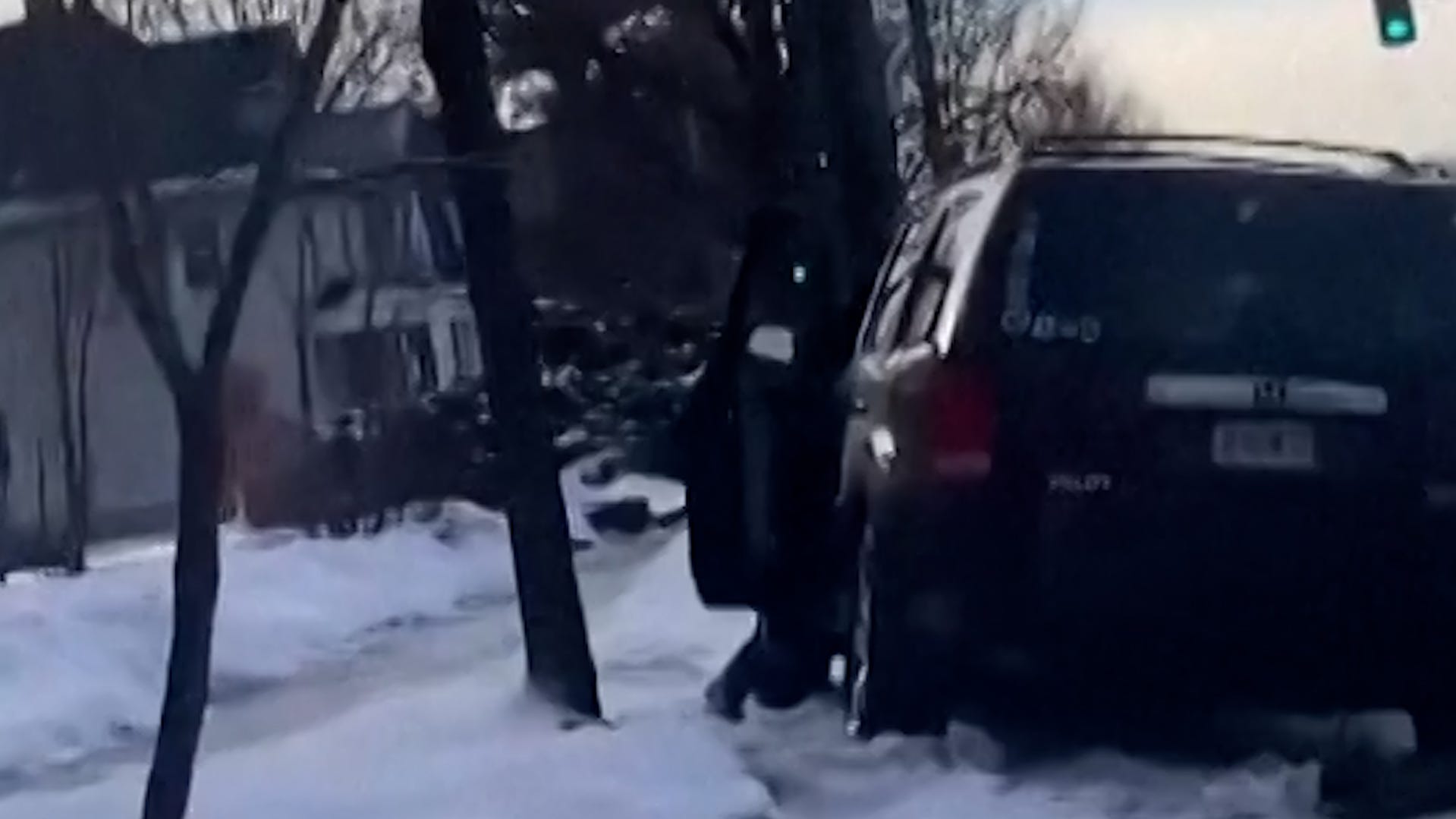

Watch the moment ICE agents shoot and kill a woman in Minnesota
A witness captured the moment an ICE agent fatally shot a woman in Minneapolis after President Trump ramped up immigration enforcement in the area.
Many people in Minnesota and across the country were outraged by the killing of Renee Nicole Good by a federal immigration agent near Minneapolis and called for the agent to be charged. Mayor Jacob Frey, who oversees the Minneapolis Police Department, said the Trump administration’s decision to label the shooting as self-defense was a “mistake.”
But even if Minnesota prosecutors conclude that the shooting was a crime, can federal Immigration and Customs Enforcement agents be prosecuted for their actions in the line of duty? No. According to Vice President J.D. Vance, the agent had “absolute immunity” from criminal charges.
The reality is not so simple. Indeed, Minnesota prosecutors may be able to bring charges against the federal immigration agent who shot and killed a Minneapolis woman, but that path would come with special challenges.
State authorities announced on January 9 that they were collecting evidence related to Good’s January 7 death and may consider filing charges. The move comes after President Donald Trump and other White House officials suggested the shooting was justified, and state officials announced the FBI was withdrawing from a joint investigation.
The U.S. Department of Justice has not announced whether it will file charges, but the hasty statements from White House officials opposing charges make federal prosecution seem highly unlikely, especially at a time when the lines between the Justice Department and the White House are becoming increasingly blurred.
“If the president, the vice president, and the secretary of Homeland Security all say this was self-defense, there’s no chance that Pam Bondi and the Department of Justice will pursue a federal prosecution,” former federal prosecutor Neema Rahmani told USA TODAY.
At a news conference on January 9, Minnesota Attorney General Keith Ellison and Mary Moriarty, the top prosecutor in Hennepin County in Minneapolis, said they had not yet made a charging decision in Goode’s death and would wait until the evidence was evaluated.
Ellison led the state prosecution of Minneapolis police officer Derek Chauvin, who was convicted in 2021 of killing George Floyd, a Black man who was arrested during an arrest. Moriarty was elected in 2022 on the platform of holding police accountable.
Rahmani said he was not surprised by the decision to charge.
“I think they will ultimately choose to prosecute,” Rahmani said. He added that “Attorney General Ellison’s office has been pretty active in these types of cases since the days of George Floyd.”
Federal agents shot and killed two people and injured two people during a traffic stop in Portland, Oregon, on January 8, amid heightened tensions over the Minneapolis death. As in the Minnesota incident, federal authorities said the driver “turned the vehicle into a weapon,” and local authorities called for an investigation. In that case, similar questions about potential state costs may arise.
Here’s why Minnesota authorities may face difficulties while pursuing state charges.
Hurdles to indictment of federal agents in Minnesota
One challenge for Minnesota authorities in filing charges is that they likely have to prosecute cases outside their home state. There is a federal law that allows employees of federal agencies to have their cases transferred to federal court when they are charged with actions they committed in the course of their official duties.
That’s a significant disadvantage for state prosecutors, said Mark Bedrow, a New York City criminal defense attorney and former Manhattan prosecutor. He noted that in federal court, state prosecutors will be dealing with different potential jurors, different judges and different legal processes.
“This is a road game, not with home court advantage,” Bedreau said.
Additionally, because state prosecutors will be prosecuting federal agents, they will likely have to meet special legal standards to bring the case to trial. In these types of cases, defendants often argue that they cannot be prosecuted because of the Constitution’s supremacy clause, which gives federal law priority over state law.
Federal courts have sometimes blocked states from prosecuting under this provision out of concern that state authorities are using their prosecutorial powers to thwart the legitimate exercise of federal power, said Blaina Godard, staff attorney at the State Democracy Research Initiative at the University of Wisconsin Law School.
Godard wrote in the law publication Lawfare that federal courts have repeatedly blocked state prosecutions even when federal employees were reasonably carrying out legitimate federal duties. However, outside of these circumstances, courts have allowed prosecutions to proceed.
“In many cases, federal employees may ultimately walk away with immunity, but that is not always the case,” Godard wrote.
Another potential challenge, Godard said, is that courts have disagreed about the precise contours of this type of immunity for federal employees, leaving the law in this area somewhat shaky. The U.S. Supreme Court has not considered this type of immunity in more than a century.
Murder and manslaughter charges may apply.
Even if state authorities decide charges are warranted, Rahmani said they are unlikely to file first-degree murder charges. The crime usually requires planning.
He said state authorities could consider manslaughter or a lesser charge of murder, which carries a maximum penalty of 10 to 40 years in prison. For example, in Minnesota, a person can be found guilty of second-degree manslaughter, which involves unreasonably endangering the life of another person, and second-degree murder, which involves intentionally killing someone without premeditation.
“To really give the jury a choice, there could be multiple charges and not just one,” Rahmani said.
“Being a prosecutor is a tough job.”
If the ICE officer is ultimately indicted, he will likely claim he shot Good in self-defense, a former prosecutor told USA TODAY.
Minnesota law allows officers to use deadly force if they reasonably believe they can protect themselves or others from serious bodily harm.
In this case, the agent may claim that Good appears to be pointing his SUV at him. Trump officials highlighted video footage taken from the front of the SUV and said it showed movement in the direction of the investigators. Advocates for good point to footage from the rear of the vehicle circling as if to outrun the agents and flee.
Multiple public videos show both Good’s steering and the movement of the SUV’s tires, with Good driving to the right and forward at the same time, and the agent standing on the front left side of the vehicle. Then you hear three short sounds that appear to be bullets being fired. There are two sounds: once of the agent pointing the gun at the left side of the windshield, and then twice of the agent pointing the gun at the side window as the car drives away.
Protests have been growing across the country, many saying the video shows the shootings were unreasonable and protesting what they see as ICE’s aggressive actions more generally, including against American citizens such as Goode.
“They’re already trying to interpret this as an act of self-defense,” Minneapolis Mayor Jacob Frey said at a Jan. 7 news conference. “I saw the video myself, and I want to say it directly to you: That’s a bull.”
But Bederow said that while the case is emotional, there is still much to be learned regarding witness interviews and video analysis that could reveal important legal questions, such as whether ICE officers were reasonable to believe they were in danger.
“Lawyers who do this job for a living and have experience in self-defense and vindication cases realize there’s a lot more nuance to this case than saying, ‘She didn’t mow down the guy, he shot her,'” Bedrow said.
If he is indicted, investigators may argue that he was operating in a hot environment. Seconds before the shooting, Good’s wife filmed each other outside the SUV, and Good asked if they were going to attack him seconds before the shooting. And one might argue that there was no room to analyze the direction of the SUV’s movement in frame-by-frame slow-motion video.
“Despite the fact that there was very disturbing footage and a woman lost her life, it’s going to be a very tough job for the prosecution,” he said.


