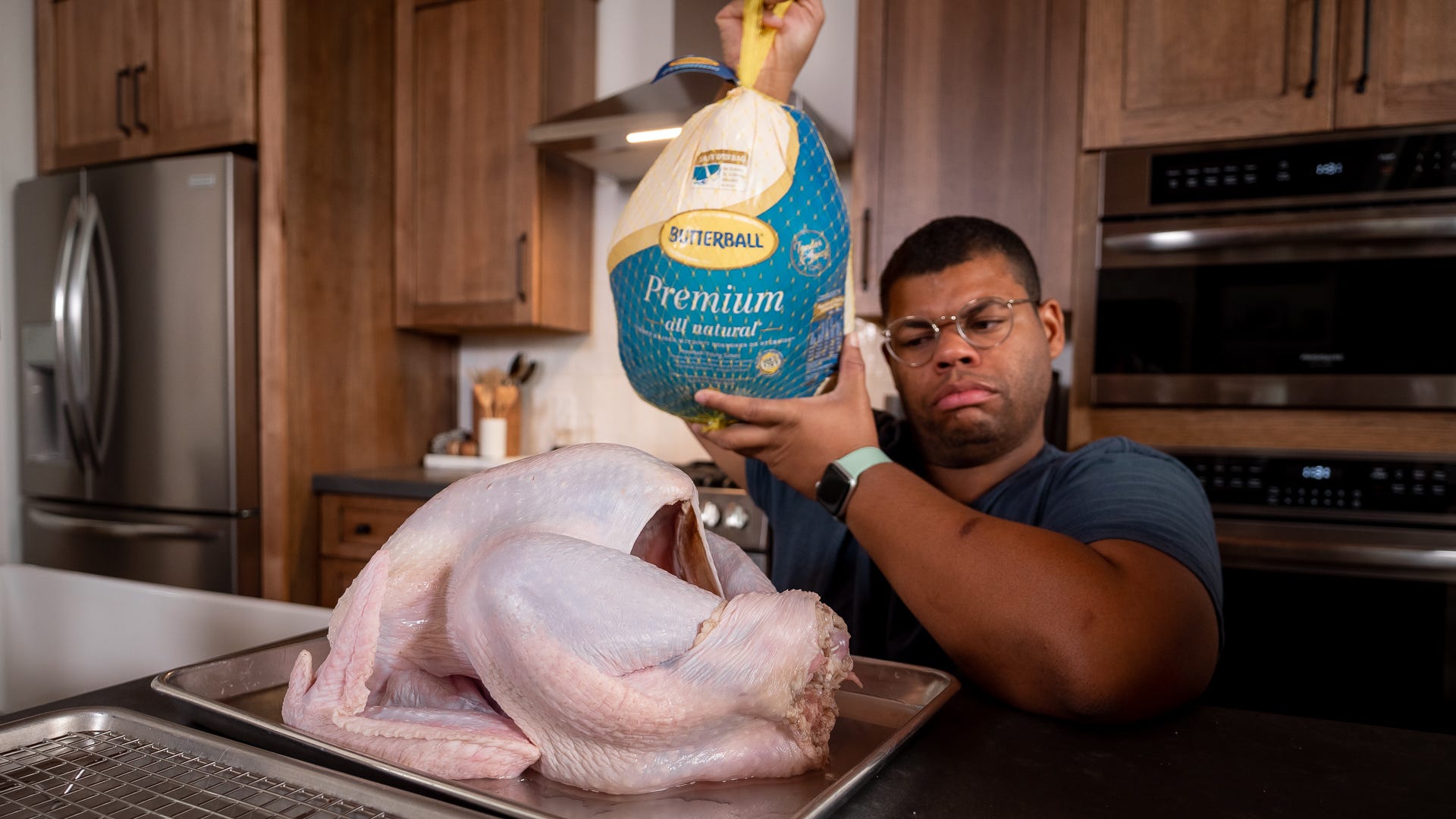

How to thaw a turkey quickly
It may take several days to thaw a whole turkey. This method speeds up the process.
Problem solved, USA TODAY
As families prepare for Thanksgiving this coming Thursday, November 27th, turkey is always the star of the dinner table. Although synonymous with fall holidays, turkey dinners can take a long time to prepare, especially if the turkey is thawed beforehand.
Turkeys often require sufficient time to thaw before a feast or festival, and may take several days in the refrigerator to fully thaw. Unless you’re getting your poultry the same day or already cooked, now is probably the time to start thawing it.
Here’s what you need to know about thawing a turkey and what to do if it’s too slow.
When should I start thawing my turkey?
If you want to thaw a frozen turkey that you bought in advance, the U.S. Department of Agriculture’s Food Safety and Inspection Service recommends thawing it in the refrigerator. Cooks should allow about 24 hours of thawing time for each 4- to 5-pound bird, and the service cites an example in which a 16-pound bird takes about four days to fully thaw.
You can also use cold water to thaw the turkey. It’s faster, but you need to cook it immediately after thawing. This method requires the cook to submerge the turkey in cold water in a wrapper or leak-proof bag, changing the water every 30 minutes. Similar to the refrigerator method, plan on 30 minutes per pound of bird, and a 16-pound bird will take 8 hours to thaw.
In any case, cooks should avoid thawing the bird on the countertop, as it is unsafe at room temperature as bacteria can grow and multiply, the service added. The USDA also has a thawing calculator that cooks can use to determine the time needed to thaw a turkey.
What to do if the turkey is not ready
If your turkey isn’t done by Thanksgiving, don’t worry. According to foodsafety.gov, there are several ways to prepare a turkey in time for dinner:
- Cook turkey in parts: Cooks can roast turkey thighs, breasts, or wings instead of roasting the whole bird at once. Oven should be set to at least 325°F. To check if the pieces are done, use a food thermometer and insert it into the thickest part of each piece of turkey until the internal temperature reaches 165°F.
- “Spatchcock” the turkey: To spatchcock the bird, foodsafety.gov recommends using kitchen shears to cut out the spine, flip it over, and press firmly on the breast bone so the turkey lies flat. The turkey should be roasted in a 450°F oven, but cooking time will vary depending on the weight of the turkey. You can also grill a spatchcocked turkey. As with partially cooking a turkey, cooks should use a food thermometer to ensure that the innermost part of the thigh, the innermost part of the wing, and the thickest part of the breast all reach 165°F.
- Cooking in the oven from frozen: Do not use an oven bag when cooking a frozen turkey. Cooks can remove the turkey giblets after 20 to 30 minutes in the oven. It is safe to consume when the innermost part of the thigh, the innermost part of the wing, and the thickest part of the breast reach 165°F.
- Cook two small turkeys: You can also cook two small turkeys in the oven, as long as there is enough space for heat to circulate around the two birds. Timing will vary, but as with other methods, the turkey is ready when the temperature of the innermost part of the thigh, the innermost part of the wing, and the thickest part of the breast reaches 165°F.


