How accurate is Deliver Me From Nowhere, the new Bruce Springsteen biopic about the making of ‘Nebraska’? Fact-check the movie.
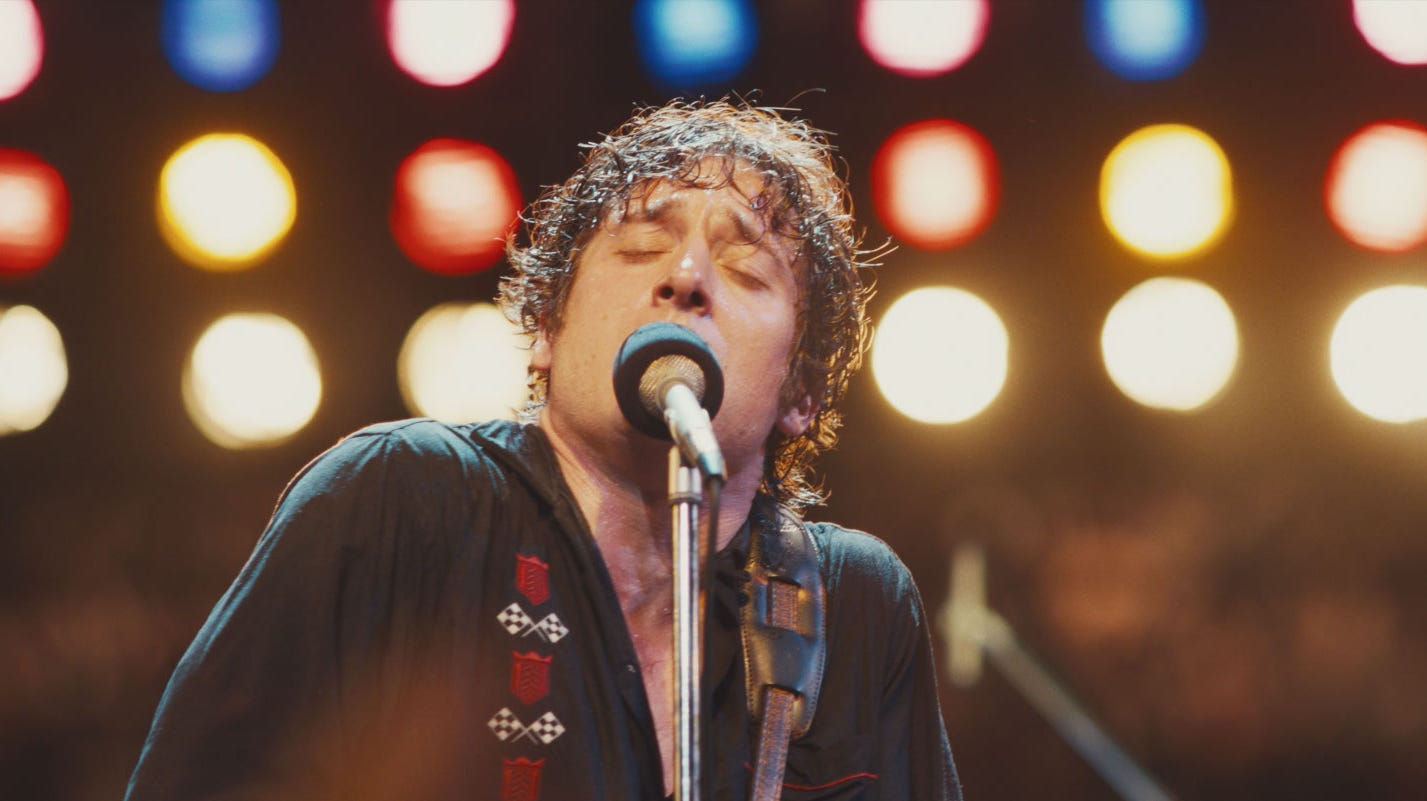

“Springsteen: Deliver Me From Nowhere” starring Jeremy Allen White
Jeremy Allen White of ‘The Bear’ explores the making of Bruce Springsteen’s album ‘Nebraska’ in the biopic ‘Springsteen: Deliver Me from Nowhere’.
- Jeremy Allen White plays Bruce Springsteen in the new biopic Deliver Me From Nowhere, which opens in theaters on Friday, October 24th.
- The film focuses on Springsteen’s mental health struggles during his rise to fame.
- What is fact and what is fiction about “Deliver Me From Nowhere”?
Spoiler alert! Plot details of the new biopic Springsteen: Deliver Me From Nowhere are discussed. Please be careful if you haven’t seen it yet.
ASBURY PARK, NJ – You’ve never seen this side of Bruce Springsteen before.
In the new biopic Springsteen: Deliver Me from Nowhere (out October 24), writer-director Scott Cooper depicts a particularly difficult time for the bubbly, raspy-voiced rocker (played by Jeremy Allen White). The film depicts Springsteen’s big creative swing with his 1982 album Nebraska, which helped him overcome family trauma and mental health issues after becoming disillusioned with fame.
Music journalist Warren Zanes discusses the sombre album in detail in his 2023 book Deliver Me From Nowhere, while Springsteen also shares a personal story with Cooper that inspired the film.
We break down what’s fact and what’s fiction in Oscar nominees.
Did Bruce Springsteen actually hit his father with a baseball bat?
The film features numerous black-and-white flashbacks to Springsteen’s childhood, when his unstable father, Douglas (Stephen Graham), was violent towards his mother, Adele (Gaby Hoffman). In one horrifying scene, Springsteen steps in to protect his mother and hits his father with a baseball bat.
“His mother felt somewhat helpless in the situation,” Cooper said. “Bruce said, ‘I just had to pick up the bat, so I swung it as hard as I could. I had no idea what the outcome was going to be. I thought I was going to get hit.’ “But his father wasn’t mad that he hit him. “I think his father had a little bit of grudging respect for him in that moment.”
Was that emotional scene where Springsteen sits on his father’s lap inspired by a true story?
At the end of the film, Springsteen reunites with his father, who is apologizing to him backstage at a concert. His father asked him to sit on his lap, and the two tearfully made amends.
“That’s exactly what happened,” Cooper said. Springsteen’s father was diagnosed with schizophrenia, and while growing up, “his father was very cold and cold because Bruce was suffering. Bruce always craved that connection.”
But one night, after a show, “his father said, ‘I want you to come over here and sit on my lap.'” Bruce said, “Dad, I just finished playing. I’m soaked. I’m 32 years old.” Despite his reluctance, Springsteen sat on his father’s lap, which was “a little awkward” but “touching.” It’s one of the most tender scenes I’ve ever shot. ”
Did Bruce Springsteen really fall in love with a woman named Faye?
Returning to his Asbury Park home, Springsteen falls in love with a superfan named Faye (Odessa Young), a young mother and diner waitress. Faye is both extremely supportive and frustrated with the distant Springsteen, who showers her with love before disappearing into the music. This fictional character is a composite of the women he dated at the time.
“Bruce said to me, ‘Look, the truth about yourself isn’t beautiful,'” Cooper recalls. “‘I had a really hard time connecting with my partner because I couldn’t connect with myself. Just when I started liking someone, somehow I just stopped.'” In today’s parlance, that’s ghosting. ”
Cooper added that although he didn’t get along with his early girlfriends, they “allowed Bruce to grow, to face things he hadn’t dealt with, and to have such a wonderful, loving relationship with his wife, Patti Scialfa.”
Did Springsteen try to crash his car in real life?
During one depressing episode, Springsteen somberly speeds down the road in his Camaro, then slams on the brakes. The shocking scenes are inspired by real events.
“That was a very low point for Bruce,” Cooper says. “There are several scenes in the movie where Bruce is suicidal, and that was one of them. You’re driving down a country road at 110 miles an hour, and at any moment the car could turn into a tree or whatever Bruce was thinking.”
But eventually, Cooper added, “he said, ‘I can’t do this anymore’ and hit the brakes.” “He was staring into the abyss. Bruce was on the brink that night, but thank God he didn’t.”
Was it Jon Landau who told Springsteen to go to therapy?
Despite channeling his demons into “Nebraska,” Springsteen still felt alone and isolated. Towards the end of the film, a worried Landau calls and tells him he needs to go to therapy.
“That was also the moment Bruce was experiencing suicidal thoughts,” Cooper says. After releasing the album, “Bruce decides to move to Los Angeles. But when he arrives, he finds himself in yet another cold home. No warmth, no connections, no partner. He was even more depressed, so he called John the first night he arrived.”
Springsteen told Landau, “‘John, the nights are getting longer. The nights are getting darker.'” And John knew it was going to be the last time he talked to Bruce,” Cooper says. “He said to Bruce, ‘I’ve tried to help you as much as I can, but you need professional help.’ The next day, he sent him to therapy, and he’s been in therapy ever since.”
If you or someone you know is in need of mental health resources or support, call, text or chat with the 988 Suicide & Crisis Lifeline or visit 988lifeline.org for access to our free and confidential service 24/7.


