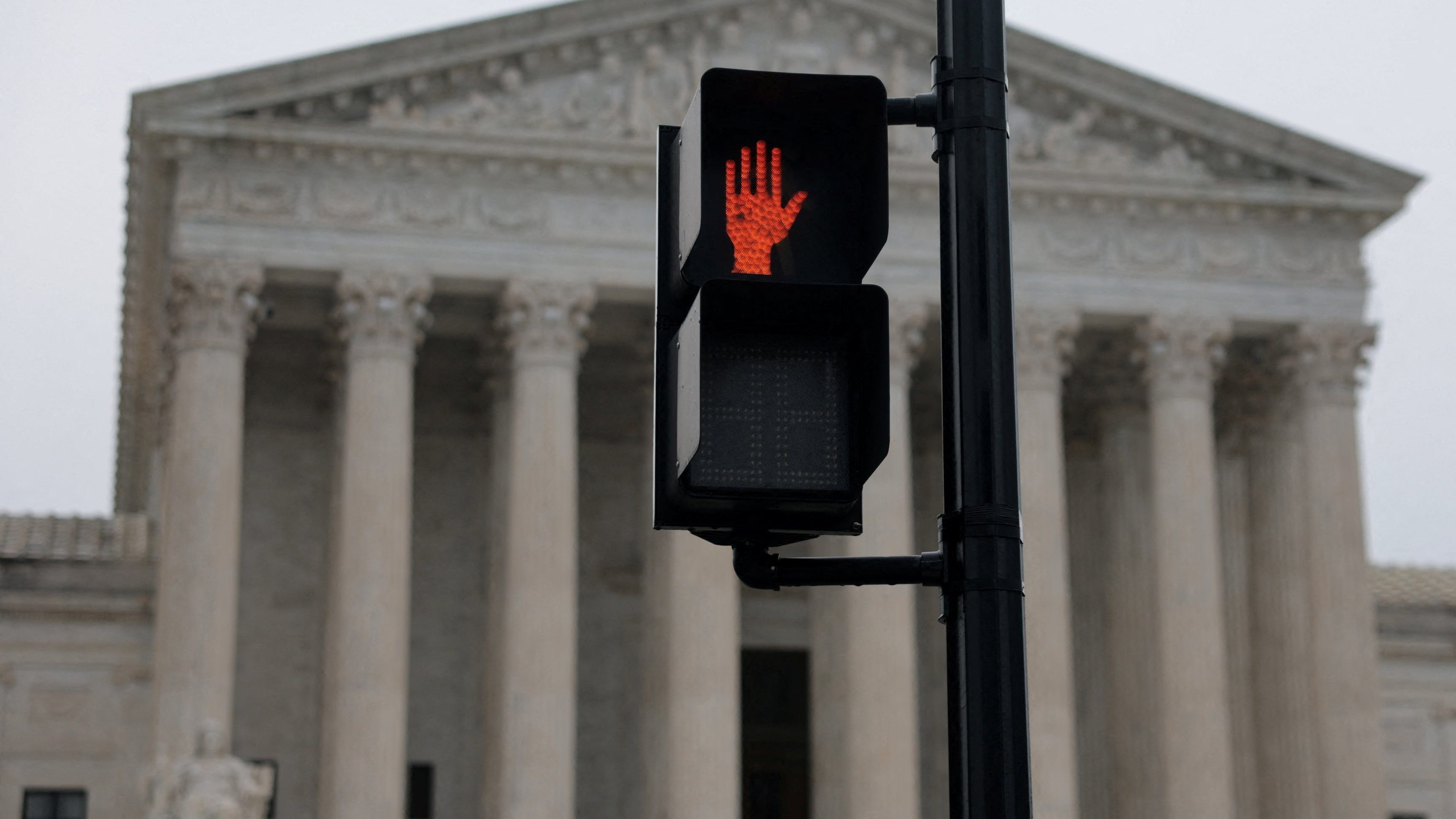

President Trump calls SCOTUS ruling on tariffs ‘shameful’
The SCOTUS tariff ruling could signal that the court may reverse some of President Trump’s other executive orders, including birthright citizenship.
U.S. Customs and Border Protection will begin a program to begin refunding businesses that paid duties on imported goods, after the Supreme Court ordered the government to do so earlier this year.
CBP said in an April 14 court filing that it will begin the first phase of the system, known as “Input Integrated Management and Processing,” on April 20.
The CAPE system is intended to unify the refund process, allowing importers to receive a single electronic payment rather than having their refund processed by CBP for each entry, the agency said on its website.
In February, the Supreme Court ruled that President Donald Trump did not have the authority to impose tariffs on companies that import goods from other countries, invalidating the full tariffs.
The following month, a U.S. Trade Court judge ordered the government to refund importers who had paid a total of $166 billion in tariffs, Reuters reported.
How does the fee refund system work?
As part of his economic policy, President Trump used a law known as the International Emergency Economic Powers Act to impose tariffs on nearly all goods imported into the United States starting in early 2025.
Importers who have paid duties under IEEPA are eligible to request a refund using the CAPE system. To do this, importers can submit a declaration known as a CAPE declaration to the authority’s automated Commercial Environment Secure Data Portal. An overview of the entire process can be found on CBP’s website.
As of April 9, more than 56,000 importers had completed the existing process to receive electronic tariff refunds, totaling $127 billion in refunds, CBP official Brandon Lord said in a court filing.
What does customs duty refund mean for consumers?
Although the refunds have been issued, President Trump continues to push for tariffs to be imposed under separate legislation. According to Reuters, these obligations are being challenged in court.
But if tariffs remain in place, consumers may continue to pay for them.
A February report from the New York Fed found that U.S. consumers and businesses paid nearly 90% of the cost of President Trump’s tariffs in 2025, a trend that could continue if tariffs remain in place this year.
A recent CNBC survey of chief financial officers across sectors found that while their companies plan to apply for tariff refunds, they have no plans to share the money with consumers.
Contributors: Maureen Groppe and Daniel de Visé, USA TODAY. Reuters
Melina Khan is USA TODAY’s national trends reporter. X Keep up with her at @melinakh and on Instagram @bymelinakhan.


