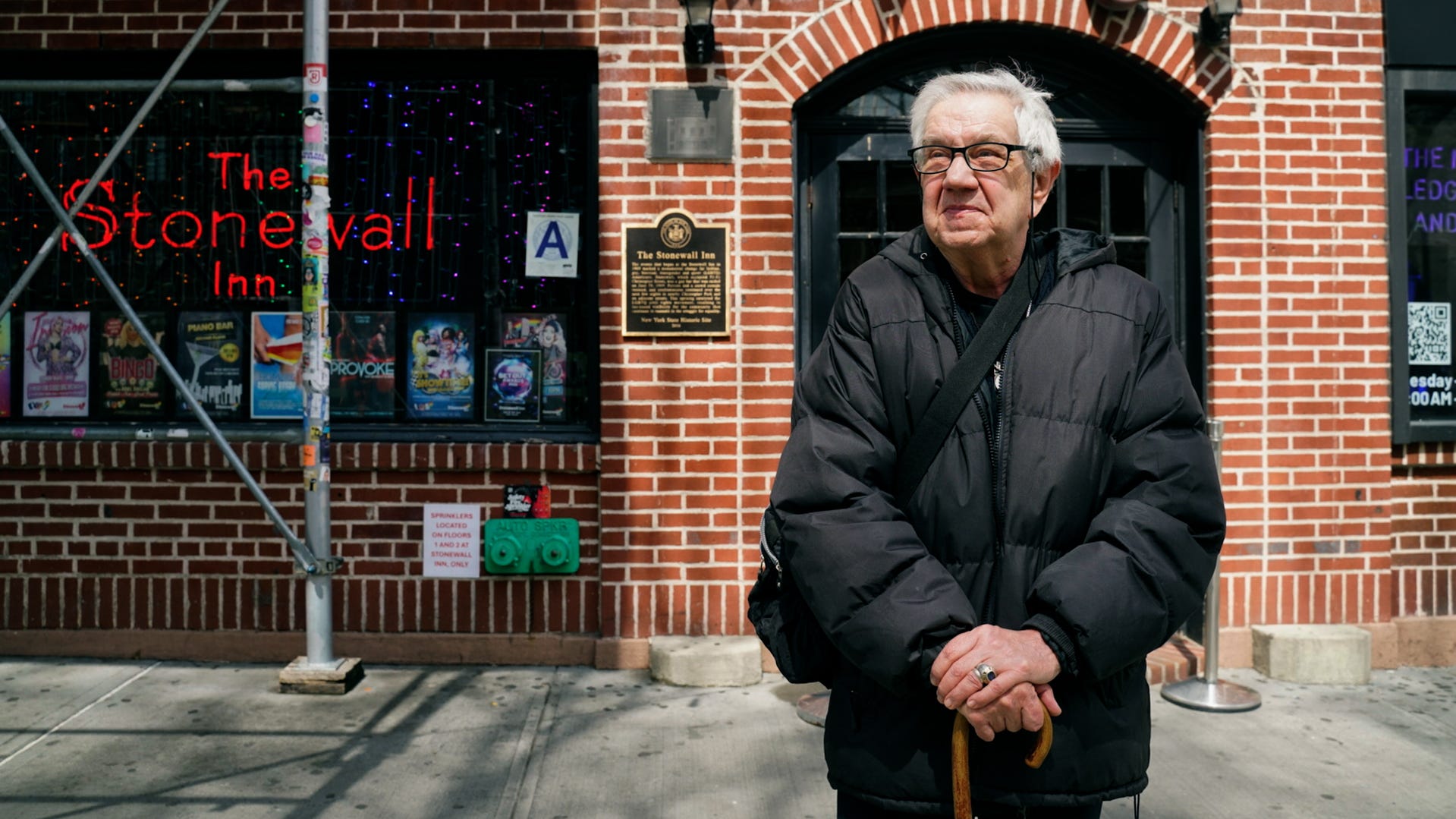

Hear Stonewall Riots veterans talk about the infamous police confrontation
Veterans of the 1969 Stonewall Inn riots reflect on the infamous clash with police and why the fight for equality over transgender rights continues.
WASHINGTON – The federal government will continue to fly the Pride flag at Stonewall National Monument in New York City.
In a decision announced April 13, the Trump administration agreed to keep the rainbow flag flying at the monument, which honors one of the most important events in LGBTQ+ history.
The flag had been flying for years on a flagpole in a park across from the popular gay bar Stonewall Inn in New York’s Greenwich Village. The Stonewall Inn was the site of a 1969 clash between bar patrons and police that has come to be seen as the beginning of the modern LGBTQ+ movement.
But in February, just weeks after the National Park Service released federal guidance on the types of banners allowed to be flown in national parks, the government quietly removed the flag. The government argued that the flag did not comply with its policies and said the Park Service only allows the U.S. flag and other approved flags to be used on flagpoles it manages.
A week later, a coalition of nonprofit organizations filed a lawsuit seeking the flag’s return.
As part of the settlement, the government agreed to return the flag that had been flown on the monument’s official flagpole within seven days and maintain it forever. The government acknowledged in the settlement that the flag falls within federal law and Park Service policy.
LGBTQ+ advocates praised the reconciliation and accused the Trump administration of trying to erase LGBTQ+ history.
“The sudden, arbitrary and capricious removal of the Pride flag from Stonewall National Monument was yet another act by the administration to erase the LGBTQ+ community,” said Karen Lowy, an attorney for the group that filed the lawsuit.
With the settlement, “the government is committed to returning this important symbol to its rightful place,” said Lowy, senior counsel and director of constitutional law practice at civil rights group Lambda Legal, which advocates for the rights of LGBTQ+ people.
The Gilbert Baker Foundation, which honors the flag’s creator, also praised the ruling.
“Gilbert Baker created the rainbow Pride flag as a symbol of hope and liberation,” said Charles Beale, chairman of the foundation. “Today, that symbol has been restored to its original location and stands guard over the birthplace of the modern LGBTQ+ rights movement.”
The flag is internationally recognized as a symbol of advancing LGBTQ+ equality and the hard-won victories the community has won through decades of struggle.
Stonewall National Monument commemorates the early morning hours of June 28, 1969, when police clashed with members of the LGBTQ+ community after officers stormed the Stonewall Inn. For six days, gay men and women, transgender people, bikers, street kids and others were tired of police harassment and fought back. The riot is believed to be the spark that ignited the modern LGBTQ+ rights movement.
The uprising is considered such an important chapter in American history that President Barack Obama designated the bar’s exterior, adjacent park, and surrounding streets as a national monument in 2016 so that what happened there and the people involved in its history would not be forgotten. The bar itself remains privately owned.
Days after the government removed the flag in February, New York City officials and activists held a ceremony at the site to once again raise it atop the flagpole in defiance of the Trump administration.
The settlement means the flag will continue to fly atop the monument.
Michael Collins writes about the intersection of politics and culture. He is a veteran reporter who has covered the White House and Congress. Follow him on X: @mcollinsNEWS


