U.S. and Iranian officials have so far been unable to reach an agreement to end the war. Uranium enrichment is an important issue.

Senate blocks new resolution to end Iran war
Senate Republicans once again blocked a measure to halt U.S. hostilities in the war with Iran.
A senior Iranian official told USA TODAY that there is no scenario in which Iran would agree to completely abandon enriching uranium for its nuclear program under a theoretical agreement with the United States aimed at ending the war.
The official spoke on condition of anonymity because Pakistan continues to cautiously try to get both sides to return to peace talks. President Donald Trump said on April 14 that peace talks between the United States and Iran could resume in Islamabad “in the next two days.”
Iran has not officially confirmed its schedule. Iranian and Pakistani officials did not respond to requests for comment on the possibility of new talks in Islamabad.
White House press secretary Olivia Wales said President Trump’s negotiating team has made clear U.S. red lines and “will never allow Iran to acquire a nuclear weapon.”
“With President Trump’s highly effective naval blockade in place, the Iranian people’s desire for a deal has only grown,” Wales said. “The President is rightfully securing the Strait of Hormuz, ensuring freedom of navigation for all ships bound for non-Iranian ports, and ending Iran’s blackmail of the world.”
Iranian officials said whether Iran would agree not to enrich uranium and for how long, and whether it would agree to abandon existing stockpiles in its nuclear program, among the hurdles for the United States and Iran to reach a deal aimed at ending the war.
Iran has long viewed its nuclear program as a red line in negotiations with the West. In 2015, Iran signed the Joint Comprehensive Plan of Action (JCPOA), commonly known as the Iran nuclear deal. The nuclear deal was negotiated by the Obama administration and signed by the United States, China, France, Germany, Russia, and the United Kingdom.
The landmark agreement aims to limit Iran’s nuclear program in exchange for significant sanctions relief, with the goal of extending its “breakout time” (the time needed to produce enough fissile material for a nuclear weapon) from two to three months to at least 12 months. The agreement also gave the International Atomic Energy Agency (IAEA) access to sites to monitor compliance, and Iran agreed to reduce its stockpile of low-enriched uranium by 98%.
The agreement required Iran to keep its uranium enrichment at 3.67%, well below the 90% enrichment needed to make bombs.
The 2015 Iran nuclear deal also includes a “sunset clause,” under which key limits set on various aspects of the deal, such as lifting restrictions on centrifuges after 10 years and reducing enrichment levels above 3.67%, will only last for 15 years. Critics feared the deal would only temporarily slow Iran’s nuclear program.
In 2018, during his first term as president, Trump withdrew from the JCPOA agreement. The United States has reimposed “maximum pressure” sanctions targeting Iran’s vital energy, petrochemical and financial sectors.
After the U.S. withdrew from the JCPOA, Iran began expanding its nuclear activities in 2019, raising uranium enrichment levels to 60%, using advanced centrifuges, reducing IAEA oversight, and moving the regime closer to weapons-grade capabilities, according to the Center for Arms Control and Nonproliferation.
Strait of Hormuz emerges as leverage for Iran
Amid a joint war launched by the United States and Israel more than six weeks ago, the Strait of Hormuz, through which about 20% of the world’s oil and natural gas is transported, has emerged as Iran’s most effective lever to block off a key maritime chokepoint for its adversaries.
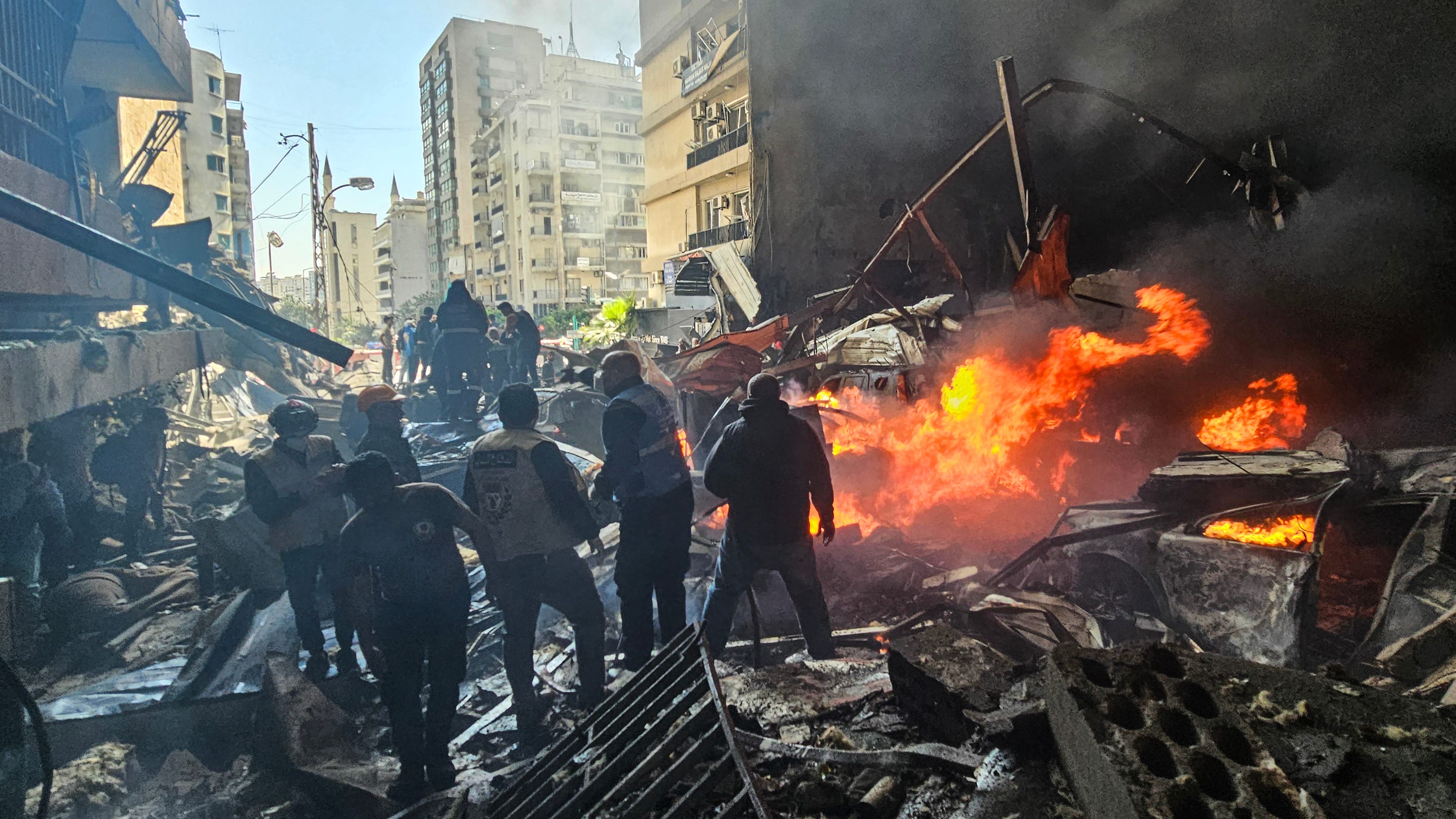
The waterway briefly reopened following the announcement of a two-week ceasefire on April 7, but Iran closed the strait the next day, accusing Israel of violating the ceasefire terms by launching an attack on Lebanon.
The U.S. military blockade went into effect at 10 a.m. on April 13, targeting all Iranian ports and coastal areas. The Trump administration has said ships from neutral countries that do not call at Iranian ports can transit through the Strait of Hormuz.
A White House official told USA TODAY that the U.S. red line includes halting all uranium enrichment. Dismantle all major nuclear enrichment facilities. Recovery of highly enriched uranium. Acceptance of a broader peace, security and de-escalation framework that includes regional allies. End funding to terrorist proxies Hamas, Hezbollah, and the Houthis. The Strait of Hormuz will be completely opened and no tolls will be charged.
Contributor: Zach Anderson


