Months after his firing, the former immigration judge returned to the mountains of Guatemala to pursue his final case, bringing with him flowers, questions and the weight of his final verdict.
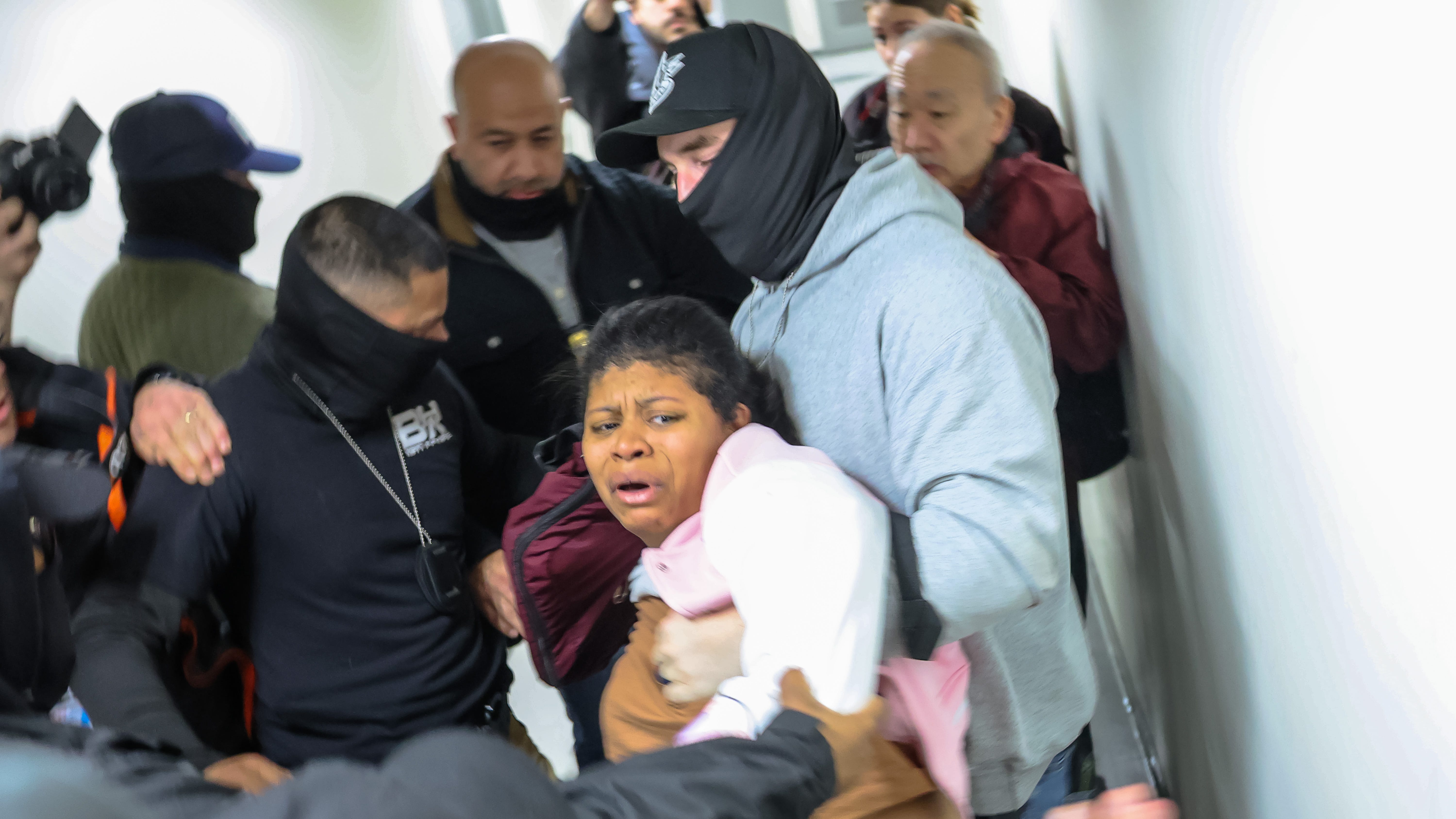

Dozens of immigration officers have been fired across the country.
As part of a broader effort to slow immigration, the Trump administration is working to restructure the nation’s immigration courts.
Five months after being fired from his job as a U.S. immigration judge, Jeremiah Johnson found himself trudging into the Guatemalan highlands on a crowded bus with a bouquet of flowers in hand.
His unusual and poetic mission was to visit relatives of Native Americans who had fled their villages to the United States and won asylum in the courts.
Mr. Johnson, 52, spent nearly a decade as an immigration judge in San Francisco, a city known for its liberalism, hearing hundreds of asylum cases. Day after day he heard stories of political and religious persecution, torture, violence, and rape. He was granted asylum 89% of the time.
He believes this statistic is likely one of the reasons the Trump administration targeted him and the San Francisco court to eliminate bias against immigration and the Department of Homeland Security.
The Justice Department, which oversees immigration judges, did not respond to requests for comment.
While President Donald Trump’s mass deportation efforts are unfolding in dramatic Immigration and Customs Enforcement sweeps and expanded immigration detention in major U.S. cities, the White House is also quietly working to reform the nation’s immigration courts, which can order immigrants to be deported or grant them the right to stay.
Since President Trump took office in January 2025, the Justice Department has fired at least 107 immigration judges, including about 20 in San Francisco alone, according to the judges’ union, the National Immigration Judges Association. Around 50 more people have resigned or been fired nationwide.
“Under President Trump, only 7% of cases are now granted asylum,” the White House said in an April 9 news release, citing a New York Times study. “The era of amnesty is over,” the release proclaimed.
The right-wing Center for Immigration Studies says this statistic likely includes not only judges’ rulings, but also abandoned cases in which applicants fail to appear in court. President Joe Biden’s comparable asylum grant rate, which includes abandoned cases, was 36% last year.
San Francisco courts have the third-highest number of asylum cases in the nation, after New York and Miami, according to the Transaction Records Access Clearinghouse, which compiles government data. The administration ordered the court to close by May 1. Most of the court’s cases are transferred to judges in a small suburban court 30 miles away in Concord, California.
“The fact that these judges are being actively removed and bullied by the administration. They don’t have the protections that regular judges have, and I don’t think people understand that,” said Rep. Mark Desaulniers (D-Calif.).
In mid-April, Johnson boarded a Guatemalan bus into the green mountains southeast of Todos Santos, not far from the Mexican border, without a phone number or address. All he had was the names of his family written in a notebook and a local guide, a veterinarian, who spoke the region’s indigenous Maam language. He was wearing a bucket hat.
Mr Johnson said the head of the asylum-seeking family was a married man who was a “refugee” and the father of two boys. The family belonged to the indigenous Mam-speaking Mayan community, which was at odds with the Spanish-speaking Ladino people of the area. The fight over water became deadly.
In 2017, a man and his brother went to fetch water from a well originally built by their grandfather. According to the family’s I-589 asylum application, which was shared with USA TODAY, a group of eight Ladino men confronted them and then violently attacked them. The man ran away to get help. “When I returned with my wife and mother, I found the body of my brother. He had been bludgeoned to death,” he said in his asylum application.
Their identities have been redacted from their asylum applications, and the family’s immigration attorney, Alicia Chen, asked that their names be withheld to protect the family.
Water conflicts are deeply rooted in the country’s civil war, which pitted the military and Ladino elites against indigenous Maya tribes. Although the war ended in the 1990s, traces of racial and ethnic tensions still remain. The family had been relying on other water sources for a while, but the water ran dry. When they again tried to draw water from their grandfather’s well, Ladinos violently confronted them again. His statement said he, his wife and young son were “bleeding and seriously injured.” The family walked for two hours to the nearest police station to report the incident. Instead, he said, they were ridiculed.
Johnson heard all this in court. Their case was the last one he judged.
“My last words on that bench were through my mom’s translator,” he recalls. “‘You have been granted asylum in the United States. The decision is final.'”
“Their persecution goes back to the civil war,” he said by phone from Guatemala. “All these villages were burned.”
He sketched a church in the village, but learned that during the war it had been used as a prison for the indigenous Maam people.
“Always keep the needs of others in mind”
Johnson was appointed to the court by then-Attorney General Jeff Sessions during the first Trump administration. A native of New Jersey, he attended the University of San Francisco School of Law. He interned at the International Rescue Committee and was inspired by lawyers who mastered the complexities of immigration law.
He adhered to his father’s words of wisdom: “Always keep the needs of others in mind.” He became an asylum officer with U.S. Citizenship and Immigration Services before applying to join the court.
If his and San Francisco’s courts have higher asylum grant rates than most, he said, it’s because of the mix of cases on the docket. Liberal Ninth Circuit case law and sophisticated attorney representation in that court.
Nationwide, judges may only hear asylum cases of Chinese nationals. Or Cuban. Or in Johnson’s case, he said, large numbers of Sikhs from India’s Punjab region faced religious or political persecution.
But closing the San Francisco courthouse is a symbolic victory for the Trump administration. Immigration judges have the power to decide whether to deport or let immigrants stay, and judges in San Francisco often let immigrants stay.
The Justice Department warned immigration judges in a June 2025 memo that some judges “appear to believe that a showing of bias is justified in certain circumstances, so long as the bias is in favor of the alien and against the Department of Homeland Security.”
That belief runs deep in the White House. Trump’s Homeland Security Advisor and Chief of Staff Stephen Miller has criticized asylum.
“Everyone involved in the asylum system knows and understands that all claims are fake,” he said on April 1. “Everyone in the asylum system knows and understands that all claims are fake: the aliens who make the claims, the lawyers at the liberal NGOs who make the claims, the judges who hear them, and the federal employees who process them.”
Johnson’s termination letter arrived in his inbox on the Friday before Thanksgiving in 2025. His email quickly got locked and he didn’t have time to print it.
find family
Johnson said senior judges were among the first to be removed nationwide last year. In San Francisco, a new judge was the first to be fired while still on two years of probation. The remaining judges saw their caseloads swell. In July, Johnson began seeing six cases a day, including three “custodial” cases of people in ICE custody.
There is a backlog of about 3.8 million cases in the nation’s immigration courts. Roughly two-thirds, or 2.4 million, are asylum applications, according to the Office of Immigration Review, which runs immigration courts within the Justice Department.
The bill to establish an independent immigration court system was first introduced in 2022 under the Biden administration and reintroduced this year by Rep. Zoe Lofgren (D-Calif.). The bill, backed by the Immigration Judges Union, would better reflect other courts in the United States and create a system that protects courts from hiring and firing by the executive branch.
That Friday in November, Johnson’s record book was empty except for one case: a family of four from Guatemala.
After being thrown off the bench, Johnson packed his backpack and set off in the opposite direction on the now largely deserted immigration trail.
He had beer with humanitarian workers at the Arizona border in January. He spoke to border ranchers who voted for Trump. He had coffee with a former Border Patrol agent and was later invited to his house for strawberry crepes. he took notes.
In Guatemala, veterinarians searched and found the parents of a male survivor of a well attack. “They’re home,” he told Johnson. “They will see you.” After the pleasantries, explanations and flowers, Ms. Johnson asked about her murdered son and refugee brother.
“Señora’s face was full of tears,” he said. Her father “started rubbing her chest.”
He and his wife wanted to show him the grave.
Lauren Villagran covers immigration for USA TODAY. Contact him at lvillagran@usatoday.com and on Signal at laurenvillagran.57.


