
President Trump says he could take a softer approach to immigration issues
President Donald Trump said in an interview with NBC News that his administration “could use a little softer approach” when it comes to immigration.
For years, Maher Tarabisi kept his disabled son alive.
Wael Tarabisi is bedridden and dependent on a feeding tube to survive due to a chronic muscle disease diagnosed as a child. His father became his primary caregiver, doing whatever he needed when he needed it.
The disease left Wael unable to eat, drink or walk, so a feeding tube became his lifeline. If it got clogged or dirty, Maher could clean it and replace it in an emergency. When Wael needed medication, Maher crushed the tablets, added a little water and injected them into his feeding tube with a syringe. Several times a day, Maher used a suction device to remove saliva and mucus from Wael’s mouth to prevent him from choking.
But when the end finally came, Maher was not by her son’s side. He was in a detention center more than three hours away from his family’s home in Arlington, Texas. He has been held at the same facility since his arrest last October during a routine inspection by federal immigration officials.
His family had petitioned the government to release him on humanitarian grounds so he could continue to care for his son, but U.S. Immigration and Customs Enforcement denied the request. When Wael died on January 23, federal authorities barred Tarabisi from performing final paternal acts for his son and refused to allow him to attend the funeral.
“ICE is responsible for Wael’s death,” said his sister-in-law, Shahad Arnaout, who watched his father’s health rapidly deteriorate in his father’s absence.
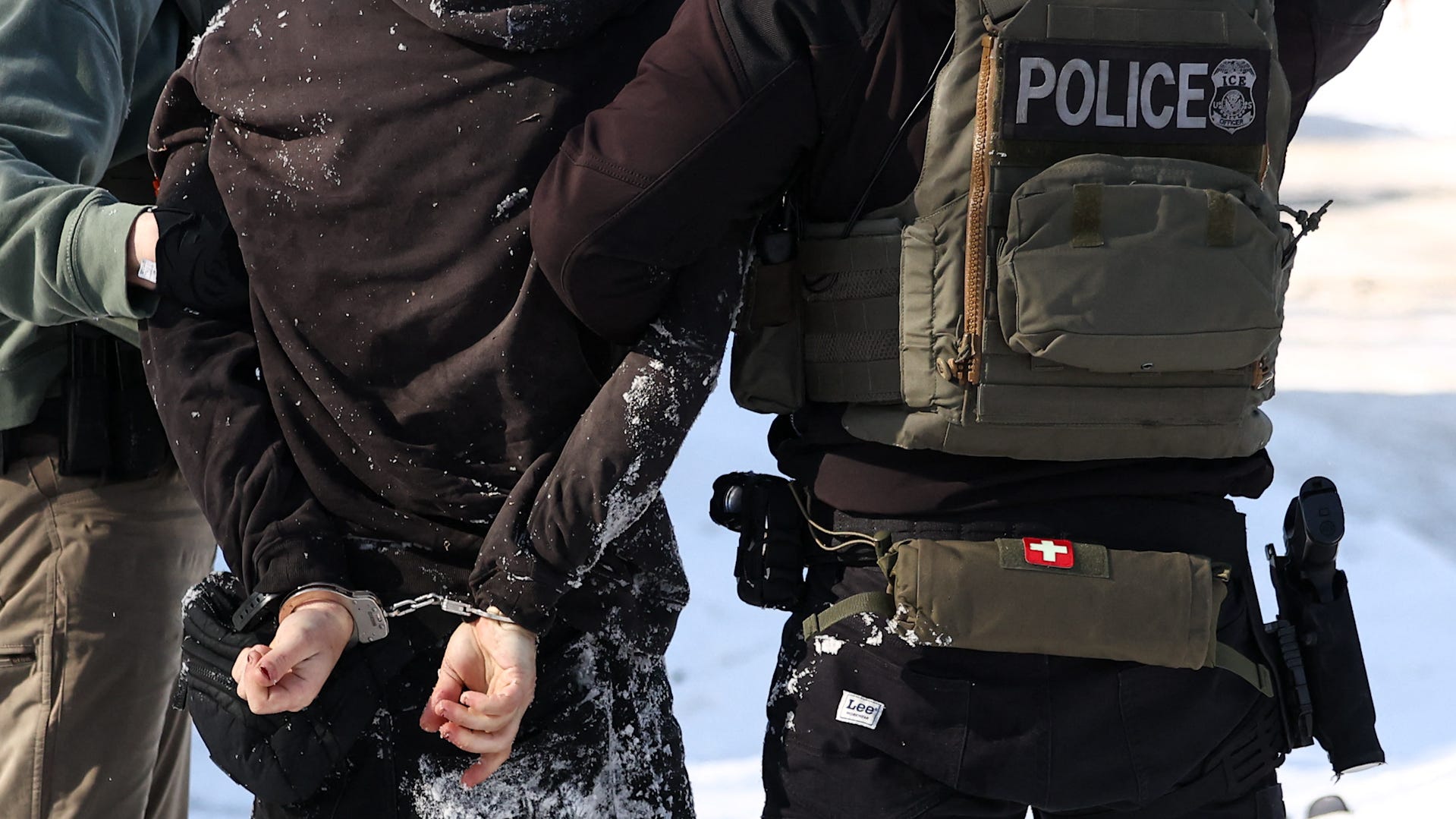
Tarabishi’s arrest comes amid President Donald Trump’s massive crackdown on immigrants living in the United States illegally. The operation involves sending hundreds of federal agents to U.S. cities and has sparked protests across the country.
Tarabisi, 62, from Jordan, is “a criminal alien and self-identified member of the Palestine Liberation Organization, a violent foreign terrorist organization that has carried out countless terrorist attacks and plane hijackings,” Department of Homeland Security Assistant Secretary Tricia McLaughlin said in a statement.
She provided no evidence to support her claim that Mr. Tarabishi was a member of the PLO.
Tarabishi’s lawyer and family maintain that he was never a member of the PLO and has no criminal record. “He doesn’t even have a speeding ticket,” said his daughter-in-law Arnaout.
Wael Tarabisi spent the last weeks of his life mourning his missing father. He used to cry and call for him. In a video shot in his hospital room and posted on Instagram in November, Wael said his life was hell without his father by his side.
“He was the one who helped me want to live for tomorrow,” he says in a quietly sombre voice from his hospital bed. “And I have no purpose in this life.”
Without him, she added, “I don’t know what would happen to me.”
Father, son and “miracle”
When Wael was a child, doctors told his parents that he would not live past the age of 10. Wael lived to be 30 years old, an amazing feat that his family attributes to his father’s care and dedication.
Wael called his father “my miracle.”
Wael had Pompe disease. Pompe disease is a genetic disorder in which a complex sugar called glycogen builds up in the body’s cells, causing problems such as muscle weakness, eating problems, respiratory problems, and an enlarged heart and liver. This is a rare disease that affects approximately 1 in 40,000 people.
Once diagnosed, it can progress rapidly. When Wael was 3 years old, he started having trouble breathing. A small fall can lead to a broken bone. Doctors made the dire diagnosis when he was four years old, but by the time he was five or six he was unable to walk. Over time, his condition worsened and he required highly specialized, round-the-clock care.
His father made sure he understood it.
Maher Tarabisi came to the United States from Kuwait on a tourist visa in 1994 with his wife and eldest son. A year later, Wael, an American citizen, was born. Maher was an IT engineer by trade, but when he had trouble finding work in the United States, he opened a shop repairing DVD players, televisions, and other electronic equipment. As Wael’s condition worsened, she quit her job so she could devote all her attention to caring for her son.
Father and son had always been close, but their bond grew even stronger in the face of Wael’s illness. “I have never seen a bond like this before – never – between father and son,” Arnaut said.
They watched sports together, mostly soccer and basketball. They were always joking with each other. Taking care of Wael became Tarabishi’s life.
He “left everything behind,” Arnaout said. “He doesn’t have any friends. He doesn’t go out. He just wanted to be around (Wael) and see if he felt the same way as the other kids.”
When her tourist visa expired, Tarabishi applied for asylum in the United States. He had lived in the United States for more than a decade before his request was denied in 2006 and a deportation order was issued.
Tarabishi appealed against the removal order. In 2011, the Obama administration issued an order dismissing the immigration case against him because he was the primary caregiver for his disabled son. Tarabishi was allowed to remain in the country, but was required to check in with immigration officials in Dallas once a year.
I did that every year. He turned himself in at the Dallas field office on Oct. 28 with a folder filled with documents identifying him as his son’s caregiver. he didn’t come home. For hours, his family sat weary and worried about what had happened. Finally, he called.
“They took me away,” Tarabishi told his family during the one- to two-minute call.
“We were trying to get answers from him, like, where are you? What do you mean they took you? Who took you?” Arnaout recalled.
“All he kept saying was, ‘Please take care of Wael.'”
“You’re lying. He’s not dead.”
Without Tarabishi, Wael’s care fell to his family. A job that used to be done by one person is now a job done by five people. His mother, aunt, brothers, cousins and sister-in-law all did what they could. They worked in shifts, some at night and others during the day, caring for him 24/7. But they worried it wasn’t enough.
What if they make a mistake? What if they accidentally cause Wael more pain? They wondered what Maher would do.
Due to the stress of his father’s absence, Wael’s health deteriorated.
On November 20, three weeks after his father was taken into custody, Wael developed a fever of 103 degrees and was rushed to Methodist Mansfield Medical Center. He had developed sepsis and pneumonia in both lungs. He was hospitalized for five days in critical condition. It was the first time in two years that he required hospitalization.
With Wael’s consent, the exhausted family decided to hire a home health nurse to help care for her. But before that happened, another crisis occurred.
On Christmas Eve, his feeding tube somehow became dislodged from his stomach. The mother was frightened and cried, trying in vain to put it back together. Desperate, the family asked Tarabishi to make a video call and explain the procedure. Still, nothing worked. After a couple of tries, they called 911.
“Wael was scared,” Arnaut said. “Usually my dad would do it in five minutes. Now I think there’s something wrong with me.”
At the hospital, doctors rushed Wael into surgery. They planned to make a new hole in his stomach for a feeding tube to help the wound heal faster. However, after several failed attempts, they decided to end the operation and try it later.
Two days after the surgery was canceled, they tried it again. This time, they discovered that Wael’s chest port was dangerously infected. Doctors removed the port and stitched it up, but decided it was too dangerous to make a new hole in his stomach. Again they waited.
Wael never regained consciousness. His blood pressure dropped, his fever rose to nearly 106 degrees, and after 30 days in the hospital, he became debilitated.
He died in his sleep.
When his father heard the news from a relative, he was devastated and said, “You’re lying. He’s not dead.” “He’s okay. He’ll be released soon. I’ll go see him.”
To face death. And ice cream.
The family’s attorney, Ali Elhoul, unsuccessfully lobbied ICE to release Tarabisi so he could care for his son. Since Wael had passed away, he asked for his father to be released until he could go to his funeral.
Elhore said in an interview with USA TODAY that he had been in contact with several ICE officials who were willing to facilitate Tarabishi’s supervised release for burial. They discussed funeral arrangements, conditions imposed by ICE, and other details. Initial steps have been taken to move Tarabishi from the Bluebonnet Detention Center in Anson, Texas, to a facility closer to his family, his attorney said.
Elhor then received a call from one of the agents he was dealing with. The agent reported that the director intervened and informed him that Mr. Tarabishi would not be allowed to attend the funeral. Mr. Elhore asked to speak to the director, but was told his request would be forwarded to the director’s office. However, the director never called me.
“I was shocked thinking about my family,” Elhore said.
A Department of Homeland Security spokesperson did not directly respond to USA TODAY’s questions about why the funeral request was denied. A spokesperson referred reporters to earlier statements regarding Tarabishi’s arrest.
Elhore said the family does not know the source of the claim that Tarabishi was a member of the PLO. He suspects it has something to do with Tarabishi’s initial asylum application. The application was filed by a man who later learned that his family had been committing fraud without authorization.
Elhore said the family is discussing other legal options for Tarabishi’s release. But before they could focus on that, they had to get through Wael’s funeral.
father is sad
The family buried Wael on Thursday, January 29, six days after his death. Funerals were delayed as snow and ice covered the ground in north-central Texas, closing roads and businesses. The day of the service was still chilly, windy, and muddy.
Following Islamic tradition, Wael’s brother and cousin washed the body before it was taken to a mosque for prayers. Hundreds of people gathered for worship. The grief-stricken mother sat on one side of the room, surrounded by other women who tried to comfort her. Her pain was so great and her sense of loss so devastating that she could not bring herself to go to the cemetery.
During the service, Arnaut searched the room to find Tarabishi’s face. Maybe ICE had changed its mind, she thought. Maybe he was allowed to come to the funeral after all, she hoped. She knew Wael would have wanted that too.
But he wasn’t there.
Then I got a call from him.
He wanted to know how it turned out. How many people came? Has anyone asked about him?
“Everyone here has been talking about you,” Arnaut assured him.
“He felt very alone,” she said.
A father without a son. Separated in their last days, now separated by death.
And he refused the chance to say goodbye.
Michael Collins writes about the intersection of politics and culture. He is a veteran reporter who has covered the White House and Congress. Follow him on X: @mcollinsNEWS


