Home Blog Page 368

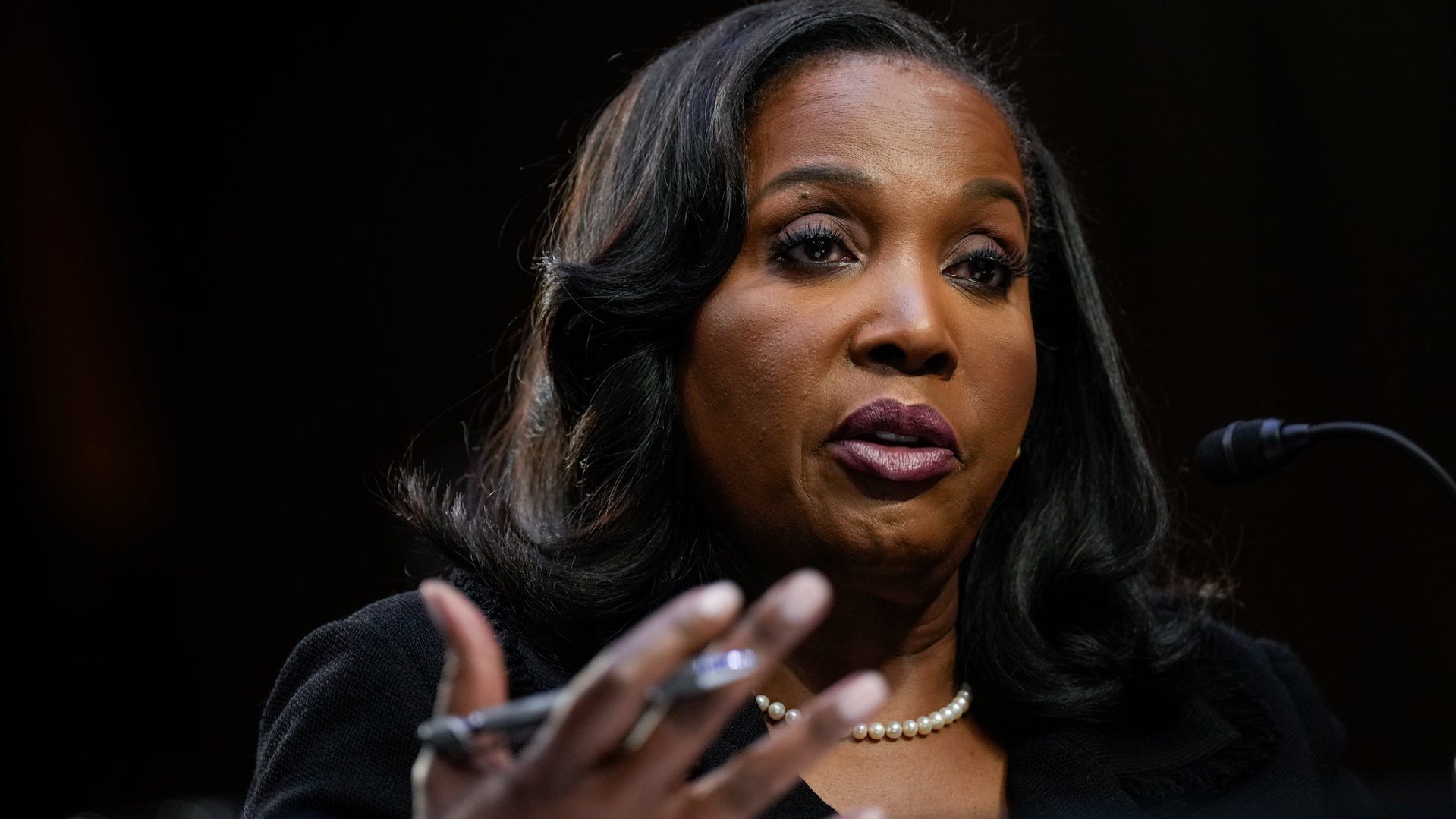
Minneapolis Mayor Jacob Frey says he will comply with Justice Department investigation

0

play

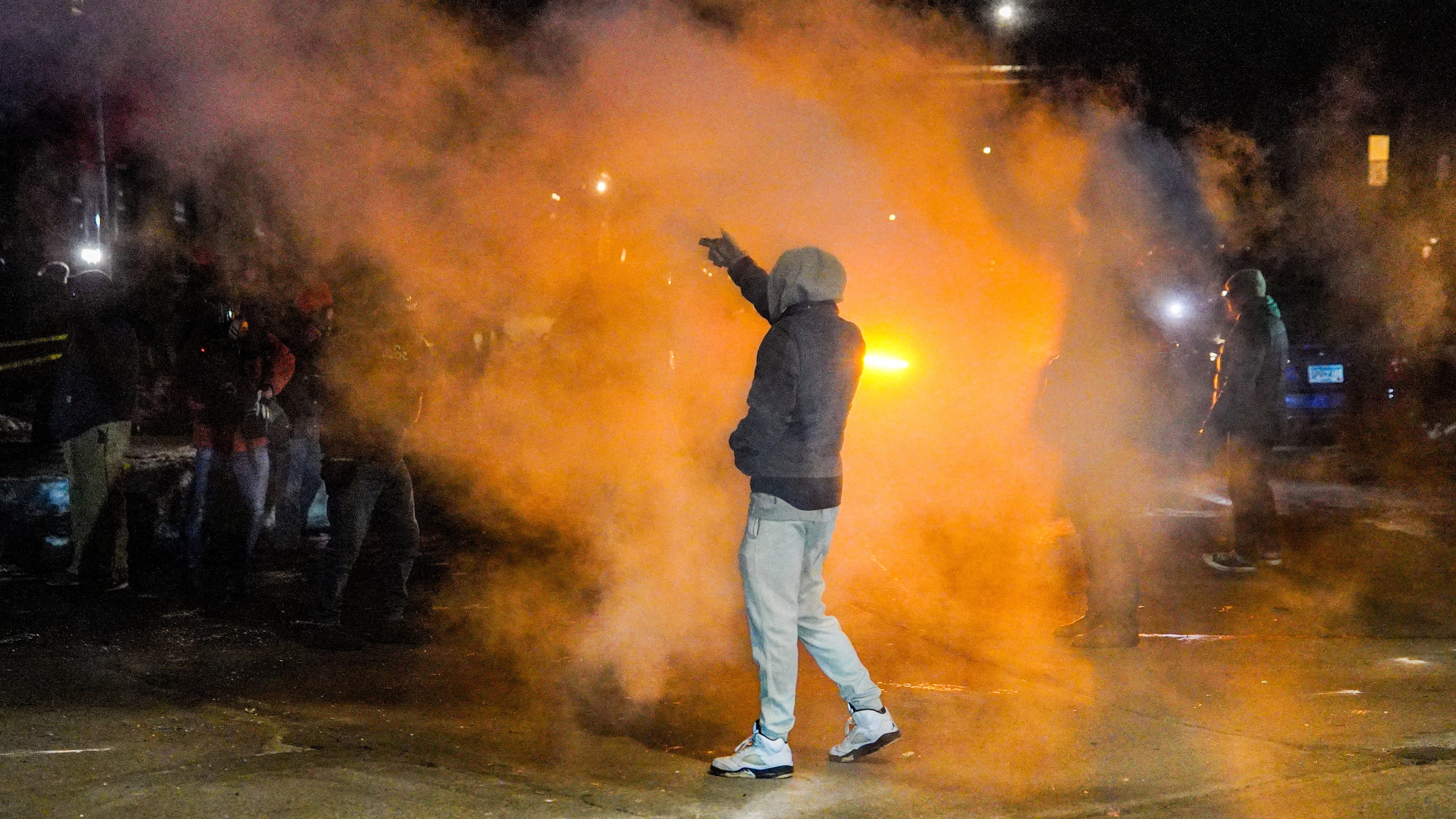
Minneapolis Mayor Jacob Frey defended his and Minnesota Gov. Tim Walz’s actions as immigration enforcement agents roiled the city as the Trump administration’s Justice Department reportedly launched an investigation related to an alleged conspiracy to obstruct immigration enforcement in the state.

Frey said in an interview on ABC News’ “This Week” on January 18, “In some countries, you get punished for something you say. In some countries, you get investigated for saying something that violates federal regulations. But that’s not the case here.”

The mayor has not yet received a subpoena from the Justice Department, but said he plans to cooperate with the subpoena because he “did nothing wrong.”

“We’re doing everything we can to keep the people of our city safe right now,” Frey told co-host Jonathan Karl. “We have been speaking out to make sure that our residents are protected and that people’s constitutional rights are upheld. It is not illegal to do so.”

The investigation, reported by Reuters and the Washington Post on January 16, comes amid a growing feud between Minnesota’s Democratic leadership and President Donald Trump. The Department of Homeland Security has sent thousands of personnel to the state in what it calls the “largest immigration operation in history.” The ministry said authorities are combating fraud in social welfare programs that officials say are linked to Somali immigrants.

Walz and Frey have called on immigration agents to leave the state, especially in the wake of the shooting death of Renee Nicole Good by Immigration and Customs Enforcement agents.

In a statement issued at the time of the report, Walz criticized the administration for the reported investigation.

“Two days ago it was Elissa Slotkin. Last week it was Jerome Powell. Before that it was Mark Kelly. Weaponizing the justice system against your opponents is an authoritarian tactic,” he said. “The only person not being investigated for the shooting of Renee Good is the federal officer who shot her.”

Deputy Attorney General Todd Blanche confirmed the investigation in an interview on “Fox News Sunday,” saying, “The American people can see what their mayor is saying, what their governor is saying, and it’s clear that it has to stop.”

Frey calls the federal government an “occupation force”

In an interview with CBS News’ “Face the Nation,” Frey called the Minneapolis immigration authorities an “occupying force.”

“What we’re talking about is over 3,000 ICE agents and Border Patrol agents coming in,” Frey said. “If the objective is safety, then that can give you a very antidote to the acts of violence that we’re seeing, and that’s to evict them.”

When asked by host Margaret Brennan about the creation of so-called “safe zones” for protests, he said, “That’s not how the First Amendment works.”

Frey’s appearance on Sunday’s show comes as Reuters reports that the Pentagon has ordered about 1,500 active-duty soldiers in Alaska to prepare for a possible deployment to Minnesota.

“That would be a shocking move,” Frey said on NBC News’ “Meet the Press.” “We don’t need more federal agents to keep people safe. We’re safe.”

If U.S. troops are deployed, it’s unclear whether the Trump administration will invoke the Insurrection Act, which gives the president the power to deploy the military or create a federal National Guard to quell domestic violence.

Contributor: Michael Loria, USA TODAY. Reuters

Voters say President Trump has gone too far with ICE efforts in WSJ poll

0

play

A new Wall Street Journal poll shows most voters believe President Donald Trump’s immigration enforcement efforts are going too far and view his handling of the issue as negative, amid a spate of clashes between federal agents and citizens protesting their entry into the country.

When it comes to President Trump’s immigration policies, just over half of the 1,500 registered voters polled the week of January 8-13 said efforts to deport illegal immigrants go too far. Alternatively, 28% of voters said his efforts were not going far enough.

A majority of respondents also viewed President Trump’s efforts to deploy U.S. Immigration and Customs Enforcement unfavorably, with controversy, protests, and the fatal shooting of two people at the hands of federal agents in Chicago and Minneapolis. According to the poll, 54% of voters said he was going too far in his efforts to deploy ICE staff, while 24% said he wasn’t going far enough.

Additionally, 56% of voters said President Trump’s efforts to expand pardon powers have gone too far, while 27% of voters said his efforts are “about right.” Majorities also view President Trump’s recent threats of action against foreign governments, such as his push to acquire Greenland, with 53% of voters saying his efforts go too far, according to the poll.

The poll also found that voters are increasingly dissatisfied with President Trump’s handling of the economy, with more respondents rating the economy weak than strong.

Despite this disapproval, polls have found that voters believe Republicans are better than Democrats in dealing with a variety of issues, including immigration, border security, the economy, inflation and price increases, foreign policy, the Russia-Ukraine war, and tariffs.

Kate Perez covers national trends and breaking news for USA TODAY. You can reach her at kperez@usatodayco.com or X @katecperez_.

She asked women why they don’t get manicures. Thousands of people responded.

0

play

Women don’t have time for manicure.

At least, that’s what hundreds of women wrote in response to a viral post on Threads.

“Girls who don’t get manicures or pedicures…why??” The original post from January 5th by a user named Jenny reads: It has been viewed 5.5 million times and has over 33,000 comments.

“Jenny because I’m a hell of a surgeon,” one commenter wrote, along with a photo of her in scrubs and a surgical mask. “I’m tired, Jenny,” wrote another, along with a photo of her holding two toddlers. “Because I’m an archaeologist, Jenny,” another person replied, along with a photo of her work site.

Survey data shows that mothers in particular are feeling overwhelmed by the mental strain of juggling motherhood and their careers. A recent USA TODAY/Peacock survey of 1,600 U.S. parents found that about one-third of women feel overwhelmed every day, and 43% of women say they feel burnt out or emotionally exhausted.

It’s not just that women are skipping manicure and hair appointments. A 2023 Ipsos survey of more than 3,200 women found that nearly half of American women do not receive preventive health services such as checkups, tests, and vaccines. Respondents said they skipped these services due to affordability and lack of time.

In the thread, other women took to the comments section to explain how work, hobbies, and taking care of their families took precedence over cosmetic self-care such as manicures, pedicures, facials, and hair treatments.

Women posted photos of themselves working jobs that don’t lend themselves to long fingernails, such as boxing or mail delivery. Some women said they needed to keep their nails short for rock climbing, hiking, gardening, crocheting, and pottery making.

One user commented: “As someone with long nails, I love all the comments from women who are against long nails and describe their great jobs and hobbies.”

One commenter listed 13 reasons why women don’t want manicured nails, including playing a musical instrument, the cost of going to a nail salon, allergies to certain products, not having enough time, and “not wanting to poke a baby.”

Another woman simply wrote, “Jenny, because I want to spend money on travel.”

Madeline Mitchell’s role covering women and the care economy for USA TODAY is supported by partnerships such as: extremely important and Journalism funding partners. Funders do not provide editorial input.

Contact Madeline at: memitchell@usatoday.com and @maddiemitch_ With X.

Trump administration officials tout auto transformation at Detroit auto show

0

play

Federal officials visited the 2026 Detroit Auto Show’s opening day to the public, toured cars and talked about how the auto industry has changed in the first year of President Donald Trump’s second term.

U.S. Trade Representative Jamison Greer said “significant progress toward affordability” has been made through regulatory cuts and a greater focus on auto manufacturing in the United States.

The average age of vehicles on U.S. roads is 13 years old, which is “far too old,” said Transportation Secretary Sean Duffy.

“If we have more affordable cars and more people can put new cars in their driveways, those cars will be safer,” Duffy said. “That’s what we want for American families, and that’s why this affordability push is so important.”

Environmental Protection Agency Administrator Lee Zeldin said high new car prices are because car companies feel they have to focus on electric vehicles. Officials said ending what Trump called the “EV mandate” — a reference to the Biden administration’s push to encourage companies to build more EVs to avoid greenhouse gas emissions — is one of the administration’s biggest steps to support the auto industry.

“Even if Americans don’t want it, when government policy dictates what kinds of cars manufacturers have to make, it comes at a cost,” Zeldin said. “When you have to hire workers, when you build factories, when you spend all of your time, energy, money, research and development to come up with a car that Americans don’t want to buy, prices go up.”

Supporters of government incentives for increased EV production argue that this is an important step toward reducing greenhouse gas emissions that cause climate change.

President Trump announced in December that he would rescind the Biden administration’s Corporate Average Fuel Economy (CAFE) standards for cars and trucks, USA TODAY reported. The standard required automakers to increase the miles per gallon of new cars and encouraged the production of electric vehicles.

“Their decisions regarding the CAFE standards have the significance of benefiting the U.S. market and U.S. consumers by making it practical and practical to apply common sense,” Zeldin said.

In early 2025, President Trump signed legislation eliminating fuel economy penalties for automakers.

Mr. Zeldin also cited the Environmental Protection Agency’s move to eliminate credits that automakers received for installing start-stop features that automatically shut off the engine when the car is idling as pushing up affordability.

Before heading to Detroit, officials stopped at a manufacturing plant in Ohio and also made an appearance at this week’s Toledo auto show.

Ford CEO Jim Farley also appeared at the Detroit Auto Show on Saturday and met with federal officials.

Officials toured the cars behind display cases and walked around the show floor as thousands of people checked out hundreds of cars and interacted on the show floor.

The 2026 Detroit Auto Show is open to the public through January 25th. Information on how to purchase tickets can be found at detroitautoshow.com.

Contact Natalie Davies at ndavies@freepress.com.

Inside GM’s stunning new Detroit headquarters, packed with automotive-inspired details

0

play

  • General Motors’ new headquarters takes technology and art cues from the iconic Warren campus.
  • GM executives say the new location will give employees direct access to the city, and the city will have direct access to GM.
  • GM did not say how many employees would move to the Hudson site.

If General Motors’ new headquarters were to be home to one of the vehicles the company would produce, it would be a Chevrolet Corvette ZR1 or a Platinum-trimmed Cadillac Escalade.

Those walking through the upper floors of 1240 Woodward Avenue in Detroit, GM’s new home until at least 2041, will see leather pillows sewn from the same material as the recently revealed Corvette CX concept, a statue of a goddess hood ornament, and numerous other Easter eggs highlighting GM’s design history and corporate achievements.

The Detroit automaker will officially set up shop on January 12 as an “anchor tenant” in Dan Gilbert’s Bedrock Real Estate Company’s $1.5 billion development on the site of the former JL Hudson department store, opening its doors to an undisclosed number of employees who will relocate from the labyrinthine Renaissance Center.

GM did not say how many employees will be relocated or the total capacity, but leaders noted that the space is designed to be flexible enough to accommodate larger groups if needed, but to avoid wasting money when fewer people work in the office.

The new building’s luxurious feel and (relatively) open concept will serve as the centerpiece of GM’s long-term strategy to attract younger, more tech-savvy employees to the Motor City.

Downsizing from five towers in the iconic seven-tower RenCen that the company has occupied since 1996 not only allows the automaker to pay rent for the first time, it also frees it from operational costs such as taxes, utilities and maintenance fees for a mostly empty building. GM can also rely in part on Bedrock’s on-site security team to ensure the safety of its buildings.

But more importantly, Hudson’s Detroit is much friendlier, giving employees direct access to the city and the city direct access to GM, said David Massaron, vice president of infrastructure and corporate citizenship.

Unlike Lensen, which served as an indoor metropolis with numerous eateries, hotels, movie theaters, and even a tailor shop tucked away in an adjacent riverside tower, Hudson’s only has one small cafe in the atrium for tenants. Bedrock also plans to open a fine-dining restaurant from Union Square Hospitality Group on the 12th floor. The building’s main entrance faces directly onto the Woodward Avenue sidewalk.

“The headquarters is, in a sense, a beacon of what the company aspires to be,” Massaron said. “Everything around us is thought out in how we approach our products. We’ll see that same attention to detail here. It’s going to be a great place for us to attract employees.”

Other building details are as follows:

  • 14 large conference rooms
  • 52 huddle rooms
  • Telephone room 63 rooms
  • three town commons

GM’s midcentury modern design roots

GM’s distinctive midcentury modern style profile, which now echoes through the halls of Hudson, emerged with the construction of Warren Tech Center, the company’s expansive engineering and design campus in Macomb County.

Completed in 1956 under modernist architect Eero Saarinen, the Warren Tech Center cemented the design cues that have defined the company’s visual legacy ever since.

The restructuring and modernization of Warren’s design capabilities at its new headquarters was under the purview of Crystal Windham, executive director of global industrial design. An employee since 1994, Windham got his start designing vehicle interiors and was promoted to Director of Cadillac Interior Design in January 2016.

“Simple, clean, straight lines. Wood and stone tones,” Windham said. “That was the goal, that was the mission, to keep things clean and timeless.” listen, About our leadership. ”

Windham also pointed out the various Speedforms, mostly Corvettes, that adorn the walls of the new space and sit on shelves. Speed ​​Forms are aerodynamic three-dimensional sculptures created by automotive designers that serve as the basic shape of a vehicle.

Hudson’s executive offices have the same vertical metal and wood flutings along the walls found in Warren, and the Tech Center’s trademark chain mail curtains decorate Hudson’s wide windows, including CEO Mary Barra’s window overlooking Comerica Park and Ford Field from the 11th floor.

Warren Tech Center’s interior spaces and finishes, custom furniture and art were created in part by GM designers and well-known artists such as experimental sculptor Alexander Calder, who designed the fountain, and sculptor and modern furniture designer Harry Bertoia, who currently has work at both sites.

There’s a good reason why GM brought the same style of dark wood, real plants, and soft, warm light to the architecture of Hudson’s office.

If Warren’s campus is GM’s heartland, its Detroit headquarters has long represented its brains. Conference rooms, offices, phone booths, and executive suites help you receive all the information essential to running America’s largest automaker.

GM’s key in-house finance, legal and accounting staff are located just a short distance from the company’s management team, allowing for faster decision-making, GM said. Decisions such as whether to allow or cancel a car launch, or whether to open or close a factory, can affect thousands of employees, millions of customers, and billions of dollars.

Massaron said democratizing the executive branch is part of ongoing efforts by Barra and GM President Mark Reuss. GM years ago did away with the mahogany rows, the luxurious office halls accessed by executive elevators at the Global Technical Center, and GM’s Hudson space was designed to reflect that change.

“Mary and Mark work in different locations. If you go to their office in Warren, they’re outside,” Massaron said. “Here they are in the public eye, along with our chief legal officer, Grant Dixton, and (GM CFO) Paul Jacobson. They are with our employees and want to be part of the culture going forward.”

technology and the future

While GM’s history is meticulously preserved in every corner of the new office space, technological upgrades are also on full display.

The first-floor showroom, Entrance One, named after the employee entrance of the original JL Hudson Department Store, will allow Detroiters to experience some of the company’s new technologies with GM product experts while exploring the city’s downtown.

Entrance 1 can accommodate up to seven vehicles at a time and will be open to the public during the Detroit Auto Show.

“This is not only an area where we can showcase our vehicles and innovations, but also an expansion area where the community can come in for a different experience,” Windham said.

There is also a lot of technology upstairs. The walls of each floor leased by GM are fitted with Cisco Spaces interactive flat-screen wayfinding displays for indoor navigation. Employees can see at a glance the number of meeting rooms available in a virtual floor plan and book rooms right from the screen.

Mike McBride, vice president of non-manufacturing facility operations, explained that once visitors select the desired room, a mapping tool generates a QR code that can be scanned with a mobile phone to find their destination. A window will open with step-by-step instructions to guide you to your destination. This is a useful technology when navigating a disoriented RenCen tower.

“We wanted to have something that could show employees the amenities, show them where the food is, and give them directions to where they are,” McBride said.

While the space definitely has a corporate feel, there’s still room for whimsy. GM designers created custom wallpaper in the hallway featuring stacks of cassette tapes with the names of songs featuring GM vehicles, from Bruce Springsteen’s “Pink Cadillac” to Prince’s “Little Red Corvette.”

The designer framed additional patent sketches in the space. One of the heart pumps is displayed on a shelf in Barra’s office, and the other with the first automatic transmission is on a shelf in Lois’s office.

An open area overlooking the atrium is covered in wallpaper featuring design sketches from GM’s 300 patents. The building’s mid-levels receive natural light through eye-shaped glass skylights inspired by the headlight covers of a 1954 Corvette.

GM and big cities

GM’s Detroit building on Hudson is the company’s second headquarters on Woodward Avenue and the fourth in the company’s nearly 118-year history.

GM’s first address was a small office at 127-129 Woodward Avenue between Fort and Congress from 1911 to 1923. GM then moved to the Albert Kahn-designed 15-story General Motors Building at 3044 West Grand Blvd., which was designated a National Historic Landmark in 1985, and then acquired Rensen in 1996.

Commissioned by Henry Ford II and designed by Atlanta-based architect John Portman and opened in 1977, Rensen became the state’s tallest building, and one GM executive called it “Detroit’s equivalent of the Eiffel Tower.”

But a lot has changed in 30 years. In 2024, GM will open a new Mountain View Technical Center in California, creating a West Coast location to bridge the gap between the automaker and Silicon Valley, where some of its executives are based. And flexible telecommuting and in-person office work, already underway thanks to breakthroughs in telecommunications applications, were further facilitated by the COVID-19 pandemic, which all but eliminated the need for a fortress-like headquarters so large that GM famously acquired its own ZIP code.

“What drove our decision to move here was that we wanted a space that fit the needs of where we are, and for the Renaissance Center, we wanted a way to open up the riverfront so that these buildings would ultimately be successful,” he said. “In the post-pandemic world, that complex needed to be unlocked to reach its full potential.”

GM bought the 48-year-old Rensen Building for $73 million this year and has since poured $1 billion into the site. The renovation costs needed to open the space were estimated at the time to be $1.6 billion, including $250 million in public funds. In its 2024 proposal, GM said Rensen’s tallest tower would remain, but the other two towers would be demolished.

It’s smaller than Hudson’s Detroit’s newest location, but the floors are more spacious. Massaron said each floor is about 50,000 square feet, while the tower is 17,000 square feet, allowing for a more open environment.

The newest headquarters will be more compact than the 14-acre RenCen, potentially concentrating GM employees throughout the space it occupies.

Approximately 5,000 employees worked at RenCen at the time of the new headquarters’ announcement on April 15, 2024, across tenants including Andiamo’s Restaurant, Marriott Hotel, and Panera Bread staff.

For comparison, GM has approximately 50,000 employees across its corporate and manufacturing operations in Michigan, and its Warren Technical Center has a capacity of approximately 19,000.

Although Detroit is smaller and has less impressive square footage, GM has no plans to leave the city anytime soon.

“We are part of Detroit and Detroit is part of us,” Massaron said. “The central nervous system of the company will remain here for a long time to come. This is a lease, so I can’t discuss terms and conditions, but this is our long-term home.”

Jackie Charniga covers General Motors for the Free Press. Contact me at jcharniga@freepress.com.

What is happening in Iran? President Trump calls for new leadership as death toll rises

0

play

The death toll from Iran’s government crackdown on nationwide protests continues to rise as authorities and aid groups gain access to information amid internet blackouts.

Since the protests began three weeks ago, President Donald Trump has repeatedly threatened military intervention, including possible attacks, unless Iran stops violence against anti-government protesters. “The time has come to find a new leader for Iran,” the president said in an interview with Politico on January 17.

President Trump and U.S. officials exchanged other expletives and accusations over the weekend as aid groups released an updated report tracking the extent of the unrest. But President Trump has changed his approach from time to time, indicating a willingness to negotiate with Iranian leaders. He said last week that authorities had stopped killing anti-government protesters.

Here’s what you need to know as the demo continues:

What is happening in Iran?

Iranians took to the streets in late December as their country’s currency, the rial, suddenly collapsed and inflation rose to more than 40%. Economic pressure has reignited longstanding discontent with the Islamic Republic’s clergy, sparking the country’s most extensive civil unrest in years.

The protests and violent response are reminiscent of the “Women, Lives and Freedom” protests that rocked the country in 2022 and 2023 in the wake of Mahsa Amini’s death. A 22-year-old woman was detained on suspicion of violating the dress code and died in police custody.

Iranian leaders have accused the United States and Israel of inciting the ongoing demonstrations. The clergy regularly blames insecurity on foreign enemies.

Several major human rights and monitoring organizations condemned violence against demonstrators by government forces. The UN’s independent fact-finding mission in Iran said in a statement on January 10 that it had received reports that security forces had been ordered to respond “firmly” without detaining protesters.

Reuters reported on January 18 that residents and state media said the violence appeared to have largely subsided due to the government’s violent crackdown.

Tensions between President Trump and Iranian leaders remain high

Iran’s Supreme Leader Ayatollah Khamenei said in a speech on January 17 that President Trump was a “criminal” and was responsible for the deaths and injuries of protesters who supported the protests. The same day, the US president said in an interview with Politico that the country needed “new leadership.”

“His crime as the leader of a country was to completely destroy this country and use a level of violence we have never seen before,” Trump said.

In response, Iranian President Masoud Pezeshkian personally rebuked Trump on social media and defended Khamenei.

“Any attack against our country’s supreme leader is tantamount to an all-out war against the Iranian nation,” he said in a Jan. 18 post.

“If the Iranian people are facing difficulties and difficulties in their lives, one of the main reasons is the long-standing hostility and inhuman sanctions imposed by the United States government and its allies,” he said.

The Trump administration last week urged U.S. citizens to leave Iran immediately and began withdrawing some personnel from the Middle East’s largest air base in Qatar, the country’s news agency said.

How many protesters have been killed in Iran?

More than 3,700 people have been killed since the protests began, according to the latest figures from the Human Rights Activist News Agency, a US-based human rights group.

Norway-based group Iran Human Rights Group said it had recorded more than 3,400 deaths related to the violence, calling the death toll “absolutely minimal” as it continues to collect and verify information. A government-imposed internet blackout has cut off much communication with people in the country since January 8, disrupting the flow of information.

Various human rights reports from the two groups and the Iranian Center for Human Rights document dozens of eyewitness and first-hand reports of authorities using brutality and deadly force against demonstrators.

Iran has not released official statistics but has acknowledged heavy casualties in recent days. In a description of a weekend speech posted on Khamenei’s official website, the leader blamed the United States for thousands of deaths.

Contributed by: Reuters.

Kathryn Palmer is USA TODAY’s political reporter. She can be reached at the following address: kapalmer@usatoday.com And to X@Kathryn Purml. Sign up for her daily politics newsletter here.

Piers Morgan hospitalized in autumn, talk show host says

0

play

Piers Morgan is sharing an update from the hospital as he continues to recover from his recent injury.

The British talk show host, 60, posted a selfie of himself lying in a hospital bed on social media on Sunday, January 18th. Morgan told her followers that she “tripped on a small step” in a London hotel restaurant and broke her femur, which was “severe enough to require a new hip.”

The former “America’s Got Talent” judge said he is recovering in the hospital and will need to use crutches for six weeks. He added that long-distance travel will not be possible for 12 weeks.

“The new year is officially starting!” Morgan also wrote sarcastically, “I blame Donald Trump.”

Morgan also shared a photo on Instagram of an X-ray showing the fracture.

According to the American Academy of Orthopedic Surgeons, femoral shaft fractures usually require surgery and can take three to six months to fully heal.

“A fracture of the femur is a serious injury that requires immediate treatment,” explains the Cleveland Clinic. “Fractures of the femur are treated with surgery and physical therapy. It can take several months for a femur fracture to heal. You can fracture your femur by being in a car accident, falling, or being shot. Older people, who are more susceptible to injuries from falls, are more likely to fracture their femur.”

The Mayo Clinic also points out that hip replacement is a surgical procedure that removes and replaces damaged parts of the hip joint, and replacement parts are “usually made of metal, ceramic, or hard plastic.”

Morgan is currently the host of the online talk show Piers Morgan Uncensored. He previously hosted “Piers Morgan Live” on CNN and held positions at British tabloids including News of the World and The Sun. Morgan, who has long faced backlash for his commentary on topics such as Meghan Markle, is also a former judge on “America’s Got Talent.”

Bruce Springsteen talks Trump, ICE and the Renee Goode shooting

0

play

The boss lowered the boom.

Bruce Springsteen criticized the Trump administration’s deployment of Immigration and Customs Enforcement agents to Minneapolis and the shooting death of Renee Good by ICE agents in comments made at his Main Event show Light of Day Winterfest in New Jersey on Saturday, January 17th.

“I wrote this song as an ode to American potential,” Springsteen said while introducing “A Promised Land.” “It was a story about a beautiful but flawed country, and the kind of country we could become. We live in incredibly critical times right now. America, the ideals and values ​​that it has stood for for the past 250 years, are being tested like never before in our time.”

The audience applauded.

“These values ​​and ideals have never been more at risk than they are now,” Springsteen said. “So tonight, as we gather together in this beautiful expression of love and care and thoughtfulness and community, if you believe in democracy and freedom and believe that truth still matters, then you must speak out, and it is worth fighting for.”

He continued. “If you believe in the power of the law and believe that no one is above the law. If you oppose heavily armed, masked federal troops invading American cities using Gestapo tactics against our fellow citizens. If you believe that you don’t deserve to be killed for exercising America’s right to protest, then send a message to this president that, as the mayor of that city said, ICE should get the motherfuckers out of Minneapolis.”

An even louder cheer rose from the audience. Springsteen’s comments echoed statements made by Minneapolis Mayor Jacob Frey after ICE agents shot and killed Good, a 37-year-old woman. The Department of Homeland Security said the officer acted in self-defense.

“This song is in memory of you and Renee Goode, an American mother of three,” Springsteen said, playing the opening notes of “Promised Land” on his harmonica.

Springsteen’s intro is similar to the Democracy Speech The Boss gave during the E Street Band’s European tour last year, which also criticized the Trump administration.

“In my homeland, the America I love, the America I have written about for 250 years as a beacon of hope and freedom, is now in the hands of a corrupt, incompetent, and treasonous regime,” Springsteen said earlier on stage in England.

President Donald Trump responded by attacking Springsteen several times on social media, including sharing a meme depicting Trump hitting a golf ball and punching Springsteen on stage. Speaking to Time magazine in September, Springsteen said he “doesn’t really care” what President Trump thinks about him.

Light of Day, supported by Springsteen, raises funds and awareness in the fight against Parkinson’s disease and related illnesses. According to Light of Day history, Springsteen was not the announced artist for Saturday’s show, which featured performances by Gary “US” Bonds, Low Cut Connie’s Adam Weiner, Dramarama, Remember Jones, Fantastic Cat, Williams Honor, James Maddock, Joe Durso and the Stone Caravan, and Will Nile.

Contributor: Brendan Morrow, USA TODAY

You can become a millionaire by investing a small amount every day.

0


Long-term compound interest is truly the eighth wonder of the world.

play

For those seeking financial security in retirement, there is a saying that all young people should keep in mind. “Time on the market is much more important than ‘timing the market.’ In other words, if you start early and make consistent contributions, you don’t need to invest huge sums of money to enjoy a healthy retirement.

By investing even small amounts early in your career, your small savings can benefit from compounded returns and dividends over many years. And when you put those savings into a tax-advantaged IRA or 401k plan, you can potentially earn compound interest without paying capital gains taxes.

Here’s how you can earn $1 million in retirement by investing just $6.66 a day.

stock market miracle

Over the long term, the U.S. stock market rose about 10% per year. Returns in any given year can vary wildly, from huge gains to stomach-churning declines, but those who stick with U.S. stocks over the long term do very well. This 10% return beats every other asset class, or at least every other asset class that is easily accessible to the average investor.

10% may not sound like a lot, but if your savings grow at that rate over several decades, that small amount of money can grow into a sizeable retirement nest egg.

A million dollars by the age of 65? There is no problem starting at the age of 25.

What do you get with 10% rebate? How about $1 million in retirement by investing just $6.66 per day? The calculation is simple but noteworthy. If the stock market rose at an average return of 9.62% over the next 40 years (slightly lower than the recent 30-year return of U.S. stocks), you would only need to contribute $200 per month, or about $6.66 per day, to reach $1 million.

So if you contribute $200 a month starting at age 25, or $6.66 a day, you’ll have $1 million by age 65. Total contributions over the 40-year period were only about $96,000, with the remaining $904,000 coming entirely from market gains and dividends.

Of course, this assumes that there are no tax leaks or management fees. However, these days it is now easy to invest in broad market indexes such as the S&P 500 and the Comprehensive Market Index with very low management fees. Examples include the Vanguard S&P 500 ETF and the Vanguard Total Stock Market ETF., Each tracks the S&P 500 index and the entire U.S. stock market, and each has a management fee of just 3 basis points, close to zero.

sit in the shade after retirement

Warren Buffett once said about long-term investing: “Someone is sitting in the shade today because someone planted a tree a long time ago.”

In fact, the example above shows that even with market average returns, the seeds of small daily savings can grow into a nest egg like a redwood tree.

And if an average return of just $6.66 per day turns your retirement into $1 million, just think how much easier your retirement would be if you were able to achieve above-average returns.

That’s what The Motley Fool tries to do with its foolish investment philosophy. We find the best companies, run by great managers, with significant or new competitive advantages, and hold these winning companies for the long term to allow the miracle of compound interest to work.

For example, if you were able to compound your portfolio at 12% instead of 9.6% through good stock selection, that $200 per month would add up to nearly $2 million over 40 years, double your total original return. So even if your annual returns seem to have improved slightly, compounding over many years could ultimately lead to even bigger results.

But whether you choose to invest in low-risk, low-cost index funds or pick your own stocks and hope for outperformance, the key is to invest as early as possible and continue to make regular contributions. This is especially true if your employer offers a tax-advantaged retirement plan that matches your contributions.

Billy Duberstein and/or his clients have no position in any stocks mentioned. The Motley Fool has positions in and recommends the Vanguard S&P 500 ETF and the Vanguard Total Stock Market ETF. The Motley Fool has a disclosure policy.

The Motley Fool is a USA TODAY content partner providing financial news, analysis and commentary designed to help people take control of their financial lives. Its content is produced independently of USA TODAY.

Should you buy Vanguard S&P 500 ETF stock now?

Offers from the Motley Fool: Before purchasing Vanguard S&P 500 ETF shares, consider the following:

of Motley Fool Stock Advisor Our analyst team has identified what they believe Best 10 stocks What investors can buy right now…and the Vanguard S&P 500 ETF wasn’t among them. These 10 stocks have the potential to generate impressive returns over the next few years.

when to think about it Netflix This list was created on December 17, 2004…if you invested $1,000 at the time of recommendation. That’s $474,578!* or when Nvidia This list was created on April 15, 2005…if you invested $1,000 at the time of recommendation. you have $1,141,628!*

Now, the important thing to note is that stock advisor Total average return is 955% — compared to the S&P 500’s 196%, a market-beating outperformance. Don’t miss our latest Top 10 list. stock advisorjoin an investing community built by retail investors, for retail investors.

See 10 stocks »

*Stock Advisor will return on January 18, 2026.

The Nobel Foundation announces that it is not possible to “inherit” a Nobel Prize after winning it.

0

play

Although President Donald Trump may win the medal, the 2025 Nobel Peace Prize awarded to Venezuelan opposition leader Maria Colina Machado cannot be redistributed to him, the Nobel Foundation said in a statement following Machado’s move to present the award to the president at a White House meeting on January 15.

The Nobel Foundation said in a statement on January 16 that Machado’s decision to award the prize to Trump does not change the prize’s recipients. The Nobel Foundation said in a statement that it aims to “protect the sanctity of the Nobel Prize and its administration” and uphold “the will of Alfred Nobel Prize and its provisions.”

“…the awards shall be awarded to those who have ‘delivered the greatest benefit to humanity’ and define who has the right to award each award,” the statement reads. “Therefore, the prize may not be transferred or further distributed, even if symbolically.”

Mr. Machado’s award was awarded in October 2025. Trump publicly lobbied for the 2025 Nobel Peace Prize, but the honor was instead given to Machado for his “efforts to advance democracy in Venezuela,” the Nobel Committee announced at the time of Machado’s award, including “confronting the country’s growing authoritarianism,” according to a Nobel support website.

Machado was blocked from running for Venezuela’s 2024 presidential election by President Nicolás Maduro’s government, and instead supported an alternative opposition candidate, Emundo González Urrutia. Both Mr. Maduro and Mr. Gonzalez have declared victory in the July 2024 presidential election, but many foreign leaders, including Mr. Trump, have questioned or denied the legitimacy of Mr. Maduro’s victory over Mr. González.

Since receiving the award, Maduro and his wife, Cilia Flores, have been captured by US forces on January 3 and charged with drug trafficking and corruption. Delcy Rodriguez, the country’s vice president under Maduro, has been sworn in as Venezuela’s new interim president. Mr. Rodriguez has said he wants to work with the U.S. administration, and Mr. Trump praised his cooperation as the United States begins selling Venezuelan oil.

As Venezuela continues to undergo leadership changes, some see Machado’s award of the peace prize as an attempt to gain future support from Trump. Machado also dedicated his award to Trump after he was first elected in October.

Still, the Nobel Foundation and the Nobel Institute insist that the prize and honor cannot be reassigned. In an earlier statement, the Nobel Institute clarified: “A Nobel Prize cannot be revoked, shared or transferred to another person. Once announced, the decision remains in effect forever.”

According to the Nobel Institute, “It is impossible to revoke the Nobel Peace Prize. Neither Alfred Nobel’s will nor the Nobel Foundation’s constitution mention such a possibility.”

But President Trump plans to keep his long-coveted award, a White House official confirmed to USA TODAY on Jan. 16. The 18-carat gold medal was presented in a large gold frame and inscribed with the inscription: “In recognition of extraordinary leadership in promoting peace through strength, advancing diplomacy, and defending freedom and property.”

“It is presented as a personal symbol of gratitude on behalf of the Venezuelan people in recognition of President Trump’s principled and decisive actions to ensure a free Venezuela,” the certificate included with the gesture said.

During the ceremony, Machado told the story of how the Marquis de Lafayette, a French military officer who served in George Washington’s Continental Army during the American Revolutionary War, handed a medal with a portrait of the first U.S. president, Washington, to Simon Bolivar, a Venezuelan soldier who fought against Spain in 1825.

“For 200 years, the Bolivarian people have returned the medal to Washington’s successor,” she said. “In this case, the Nobel Peace Prize medal in recognition of his unique commitment to our freedom.”

Contributors: Kinsey Crowley, Swapna Venugopal Ramaswamy, Jonathan Limehouse, USA TODAY

Kate Perez covers national trends and breaking news for USA TODAY. You can reach her at kperez@usatodayco.com or X @katecperez_.

Could Indiana make the list of college football’s least likely champions?

0

play

  • This article frames the hypothetical Indiana state championship as the most unexpected event in modern college football history.
  • Some of these surprise champions, such as Auburn in 2010 and Pittsburgh in 1976, were led by Heisman Trophy winners.

What could have been written back in August no longer applies: Indiana’s last outright Big Ten championship was 1945, its last nine-win season was 1967, and its last consecutive bowl appearances were in 2015-16. The last time they won consecutive games was in 1987-88.

Without a doubt, Indiana’s title would be the most unexpected in modern Bowl Subdivision history, considering the program’s dismal history as a doormat in the Big Ten and Power Four.

The Hoosiers, reborn as a powerhouse team by second-year coach Curt Cignetti, will enter the title game against Miami with a reason to be considered the best team in the College Football Playoff era.

With the undefeated Hoosiers in a class by themselves, let’s take a look back at eight past national champions who defied odds and expectations and came out of nowhere to win a title.

Two words: Cam Newton. After going 5-7 in coach Tommy Tuberville’s final season, the 2009 team went 8-5 under new coach Gene Chizik and tied for fourth in the SEC West. Auburn, ranked No. 23 in the preseason poll, then signed Newton and went on to a perfect 14-0 record with seven single-digit wins, including the Iron Bowl (28-27) and the title game against Oregon (22-19). This was Auburn’s only ranking from 2008 to 2012. The other four teams surrounding the title team had a combined score of 24-26.

It would be worth paroloing down

Perhaps the most consistently successful post-war program hit rock bottom in the 1990s, posting a three-game losing streak from 1996 to 1998 under then-coach John Blake. But Blake recruited a significant portion of the same roster that Bob Stoops had led to a national championship in his second year on the job, leading a team that debuted 19th in the preseason to the most unexpected of the program’s seven titles. Junior college quarterback Josh Heupel leads the offense, and the defense features outstanding players, including LB Rocky Calmus.

1990 Georgia Tech

The Yellow Jackets shared the title with Colorado and finished 11-1 in 1989, finishing fourth in the coaches poll. In comparison, Tech improved to 2-9 in 1987, 3-8 in 1988 and 7-4 in 1989 under new coach Bobby Ross. The 1990 George Tech team wasn’t ranked until October and didn’t crack the top five until late December, when they defeated the University of Nebraska in the Citrus Bowl to win the common title. The Jackets would fall to 19-27 over the next four seasons.

1984 Brigham Young

The last team outside of the current Power 4 teams to win a national title, BYU finished the 1984 season as the nation’s only undefeated team and one of only four teams with fewer than two losses. This perfect storm scenario lifted the Cougars over No. 2 Washington in a close poll, making the 1984 team the fifth team in six years under coach LaVell Edwards to win at least 11 games.

1983 Miami (Florida)

Miami debuted in 1926 and enjoyed some success in the 1950s, but had only two winning seasons, going 6-5 from 1968 to 1978. However, under coach Howard Schnellenberger, the program began to grow, going 9-3 in 1980, 9-2 in 1981, and 7-4 in 1982. The 1983 team lost its season opener to Florida by 25 points and did not break into the top 25 until October, ranking fifth when it played Nebraska in the Orange Bowl. After stopping the Cornhuskers’ two-point shot at the last minute, Miami surged to No. 1 after losses to Texas and Illinois and a narrow victory for Auburn, christening the dynasty that dominated the sport for the next two decades.

1976 Pittsburgh

From 1964 to 1972, Pittsburgh went 22-68-2 with four one-win seasons, including a 1-10 loss in 1972. After hiring coach Johnny Majors, the Panthers went 6-5-1 in 1973, 7-4 in 1974, and 8-4 in 1975, gaining momentum heading into 1976 with late-season wins over Notre Dame and the Sun. Beat Kansas in the bowl. Like Newton at Auburn in 2010, the 1976 Panthers were led by Heisman winner running back Tony Dorsett, who rushed for 1,948 yards during the regular season and another 202 in the Sugar Bowl win over Georgia.

1965 Michigan State University

The Spartans were 35-2 from 1950-53 and top-three in 1955 and 1957, but then fell down the Big Ten ladder, going 36-24-3 overall and 23-17-2 in conference play from 1958-64. But coach Duffy Dougherty and Michigan State ushered in a new era in college football by integrating black rosters in the early 1960s, building a team that went from 4-5 in 1964 to 19-1-2 the next two seasons. The 1965 team finished first in the National LBM Coaches Poll and shared the title, despite losing to UCLA in the Rose Bowl.

1962 Southern California

One of the dominant programs in the 1920s and 1930s, USC struggled after the war, with one 10-win season and four losing seasons from 1946 to 1961. However, the Trojans’ fortunes began to change with the arrival of future Hall of Fame coach John McKay in 1960. After going a combined 8-11-1 in their first two seasons, the 1962 team opened the year unranked, moved up in the polls after being picked by Duke in the opener, and then faced Wisconsin in the high-scoring Rose Bowl, winning the program’s first title since 1939.

When is the CFP National Championship Game? Indiana vs. Miami start time

  • time: 7:30pm (Eastern Standard Time)
  • date: January 19th (Monday)
  • position:Hard Rock Stadium (Miami Gardens, Florida)

The CFP National Championship game between Indiana and Miami will kick off at 7:30 pm ET on Monday at Hard Rock Stadium in Miami Gardens, Florida.

Why does Trump want Greenland? NATO allies condemn latest tariffs

0

play

A group of America’s closest European allies took a firm stand on January 18 against President Donald Trump’s new campaign threat to seize control of Greenland.

Eight members of the North Atlantic Treaty Organization (NATO), including Denmark, of which Greenland is an autonomous territory, condemned the US president’s tariffs as “dangerous” to transatlantic relations. President Trump said in a post on Truth Social on January 17 that countries will impose a 10% tariff on all goods sent to the United States starting February 1.

President Trump said tariffs are scheduled to rise to 25% on June 1 unless the United States reaches a deal to buy Greenland from Denmark.

“The threat of tariffs threatens to undermine transatlantic relations and risks sending us into a dangerous downward spiral,” the two countries said in a joint statement. “We will continue to come together and respond in a coordinated manner. We are committed to protecting our sovereignty.”

Still, the group said it was “ready to engage in dialogue based on the principles of sovereignty and territorial integrity.”

Denmark, Norway, Sweden, France, Germany, the United Kingdom, the Netherlands and Finland signed the statement. Representatives of the group’s governments are scheduled to attend an emergency meeting of the European Union on January 18, as President Trump’s focus on the Arctic Islands has strained the 76-year-old North Atlantic Treaty Organization (NATO) alliance.

The president also criticized recent moves by other countries to send military personnel to Greenland at the request of Danish authorities, following growing calls from President Trump to take over the autonomous territory.

President Trump said the United States needs Greenland because its strategic location and vast mineral wealth make it strategically important and under threat from Russia and China. Denmark and many of its allies in NATO and the European Union reject this claim and reiterate their commitment to security in the Arctic region.

In a social media post, the president said the countries’ presence in Greenland was “a very dangerous situation for the safety, security and survival of the planet” and that they were playing “a very dangerous game.”

A group of European countries appeared to respond to the claims in a statement.

“As NATO members, we are committed to strengthening Arctic security as a common transatlantic interest,” they said. “The Danish exercise ‘Arctic Endurance’, pre-coordinated with allies, responds to this need. It poses no threat to anyone.”

On the same day as President Trump’s announcement, people in Denmark rallied to protest the US president’s plan and support the right to self-determination for the majority indigenous people. Many European leaders also expressed outrage.

European Commission President Ursula von der Leyen reiterated the text of the eight countries’ statement and defended pre-arranged military exercises with Denmark.

The leaders of France and Britain, America’s closest allies, also targeted President Trump’s tariff plans.

“It is completely wrong to apply tariffs to our NATO allies in pursuit of their collective security,” British Prime Minister Keir Starmer said in the X-Post. “Of course, we will pursue this matter directly with the U.S. government.”

In a statement posted on social media hours after Trump, French President Emmanuel Macron called the latest round of tariffs “unacceptable” and said European countries would “response in a united and coordinated manner” if they were to be imposed.

“In the face of such a situation, no intimidation or threat will affect us, whether in Ukraine, Greenland or anywhere in the world,” Macron said.

Contributors: Eduardo Cuevas and Josh Meyer, USA TODAY.

Kathryn Palmer is USA TODAY’s political reporter. She can be reached at the following address: kapalmer@usatoday.com And to X@Kathryn Purml. Sign up for her daily politics newsletter here.

Why does Trump want Greenland? Explained with a map (and shows its size)

0

President Donald Trump is ramping up pressure to make Greenland part of the United States, linking Greenland to missile defense in a Jan. 14 social media post and saying, “We will not accept anything less.”

“America needs Greenland,” President Trump wrote.

President Trump posted on Truth Social ahead of Vice President J.D. Vance and Secretary of State Marco Rubio’s meeting with Greenlandic and Danish officials at the White House. Greenland has said it does not want to become part of the United States.

U.S. officials met with Danish Foreign Minister Lars Lökke Rasmussen and Greenlandic Foreign Minister Vivian Motzfeldt. During the talks, neither side changed their positions. Further talks are also planned.

Greenland, the world’s largest island, is an autonomous country that is part of the Kingdom of Denmark, a member of the North Atlantic Treaty Organization and a long-time ally of the United States.

Where is Greenland? And why does Trump want it? that?

If you can’t see the graphic, click here to reload the page.

President Trump has stated that the national security of the United States depends on the annexation of Greenland, and has not ruled out the possibility of military action toward annexing Greenland. “Whether they like it or not, we’re going to do something in Greenland,” he said at a White House meeting on January 9.

According to Reuters, European countries are planning to expand their NATO presence and are sending small troops to the island nation.

On January 16, President Trump dubbed himself the “tariff king” and threatened to use tariffs to force other countries to follow his plans.

A U.S. takeover could spark an international crisis, but the next move against Greenland could come within “a few weeks,” a U.S. official told USA TODAY in an exclusive interview.

Greenland has maintained a relationship with the United States that began in World War II.

The island is strategically located in a place called the GIUK Gap, an abbreviation for Greenland-Iceland-United Kingdom, an important sea-air chokepoint between the Arctic Ocean and the Atlantic Ocean during World War II and the Cold War.

Its location gives Greenland a tactical advantage in tracking missiles and monitoring maritime traffic in the North Atlantic.

After Germany invaded Denmark in World War II, the United States occupied Greenland. The U.S. military built about a dozen bases of various sizes in Greenland during and after the war. The only one left is Pitufik Cosmodrome, formerly known as Thule Air Base.

The base is used for missile defense and space surveillance. The United States operates it under an agreement with Denmark known as the 1951 Greenland Defense Agreement.

What else makes Greenland valuable?

In addition to its military value, Greenland is rich in uranium, iron, and rare earth minerals, 17 of which are prized for use in advanced industries from smartphones to MRI machines to weapons systems. The United States was once the top producer of rare earths, but has now been supplanted by China.

Greenland’s rare earth reserves are estimated to be the eighth largest in the world. Gaining access to them would reduce U.S. dependence on China, which is already investing in mining projects in Greenland.

Next is commercial transportation. According to the U.S. Naval Research Institute, the Arctic Ocean is a shortcut for ships sailing between the U.S. and Asia, and between Europe and Asia. The distance will be approximately 40% shorter than routes using the Panama Canal or Suez Canal.

Why is Greenland important to President Trump?

President Trump first spoke about acquiring Greenland during his first term in office in 2019. Trump has argued that Russia or China could seize Greenland if the U.S. doesn’t act, and said NATO would be stronger if the U.S. took control of Greenland.

China and Russia are increasing their military presence in the Arctic, according to a 2024 report from the Arctic Institute. The study recommended that the United States and NATO pursue an aggressive Arctic strategy.

In response, Denmark and Greenland have increased their military presence in and around Greenland. Denmark has increased its Arctic defense spending by $2.1 billion in 2025.

Could President Trump get the US to buy Greenland?

A US purchase of Greenland could only happen if Greenland and Denmark agree. That is unlikely, as representatives of both governments have said the island is not for sale.

The U.S. purchase of Greenland would require Senate ratification and Congressional approval.

What other options are available?

Alternative strategies for the United States include:

  • Revise the 1951 Defense Agreement to provide more benefits to the United States.
  • Establish long-term leases for more defensive sites.
  • Expand investment and economic cooperation.

How big is Greenland?

Greenland is an island nation roughly the size of Alaska and Montana combined. The population is approximately 56,000, about the same as Carson City, Nevada.

How large is Greenland?

Approximately 80% of Greenland is covered in ice, which can be up to a mile thick. Most of the island lies inside the Arctic Circle, which is being transformed by climate change.

The country’s economy is based on fish and shrimp exports, along with economic support from Denmark. But that could change as the Arctic ice melts.

Contributor: Kim Hjelmgaard, janet rourke, and Sean J. Sullivan.

Source: USA TODAY Network reporting and research. Reuters; Center for Strategic and International Studies. justsecurity.org;U.S. Naval Research Laboratory;Arctic Research Institute

Polar vortex forecast for January 2026 warns of two Arctic explosions

0


Thanks to the polar vortex, dramatic cold air could hit the United States in late January. What could happen?

play

Our winter friend, the polar vortex, is scheduled to send bitterly cold air south from Canada twice more in January, once over the weekend of January 17th and again in about a week.

“The first round of cold air over the weekend and early next week will be an appetizer, with the real cold air coming in the following week,” AEM climatologist Judah Cohen said in an email to USA TODAY on Jan. 14. “I think the second wave of cold air could be more extreme.”

Another expert, Weather Trader meteorologist Ryan Maue, agreed, pointing out this week: “This is two weeks away, so the details and intensity will change, but we are poised to see a potentially historic arctic ‘polar vortex’ eruption across North America by the end of January.”

“Stretched” polar vortex

According to the National Weather Service, a polar vortex is not a storm but a large, sustained region of low pressure and frigid air high in the atmosphere above the Earth’s poles. This phenomenon exists all year round, but is stronger in the winter when polar temperatures drop, and weakens in the summer.

When the vortices are strong, cold air remains trapped above the poles.

But if the vortex weakens, stretches, or becomes disturbed, some of that unspeakably cold air can flow south into the United States, Europe, or Asia, creating the frigid air of the Arctic. That’s what’s happening in January.

Cohen said there will be one polar vortex in mid-January. Its range will return to below normal into the eastern United States.

Recently, much of North America’s cold air was cleared by a strong (but more importantly circular) polar vortex in early January, allowing calm Pacific air to flow into much of Canada and the United States. The polar vortex will briefly ease before the next stretch begins as we approach the final week of January.

At that point, Cohen said, “the expansion of the polar vortex will begin in western North America and quickly slide eastward. This will reintroduce the cold air over western Canada that we saw for most of December, then move southeast into the north-central United States and ultimately into the northeastern United States during the fourth week of January.”

What does this mean for snow and cold?

The $64,000 problem is snow, Cohen told USA TODAY. “Snow is likely to continue in the usual places, such as around the Great Lakes and in northern New England’s lake effect regions. It’s a tough call whether we’ll get a lot of snow in the big cities. I think this pattern will eventually start to snow more broadly, but that’s not clear. In the meantime, it looks like we’ll get another nuisance type of snow from the Alberta Clippers.”

According to AccuWeather, the large, rounded shape of the drop in the jet stream makes it difficult for the southern storm to quickly intensify along the Atlantic coast and become a major snowstorm.

“Most of the storms will remain weak and move quickly, moving out to sea through much of next week,” AccuWeather meteorologist Alex Sosnowski said in an online forecast. “However, even a short change could be enough to cause the southern storm to take a course further north and closer to the Atlantic coast.”

Meanwhile, temperatures in Chicago are expected to fall from near normal to 10 to 20 degrees below normal over the next one to two weeks, according to AccuWeather. The average high temperature in Chicago is near 32 degrees Fahrenheit.

In New York City, during the polar vortex, temperatures range from 5 to 10 degrees below historical averages in the low 30s.

National Popcorn Day sales, giveaways and more at Cinemark, AMC, Regal, and more

0

play

Popcorn is great whether you’re at the movie theater, strolling through a theme park, or just looking for something to eat at home. What better way to show your love for this iconic snack than by celebrating National Popcorn Day?

National Popcorn Day is Monday, January 19th, which also happens to be Martin Luther King Day, a federal holiday, and movie theater chains across the country are celebrating the day with great deals and promotions for popcorn lovers to enjoy over the long weekend.

From giveaways to BYOB (Bring Your Own Bucket), movie theaters are having sales this year.

So, whether you want to add extra butter and salt, cheese powder, or M&M’s and raisinettes to your popcorn, popcorn lovers can throw a bucket of their favorite snacks and sit back and relax knowing they may have saved money while watching a movie.

Check out this year’s National Popcorn Day deals.

Cinemark BYOB event

From Sunday, Jan. 18 to Monday, Jan. 19, Cinemark-goers can pay $5 to participate in the Bring Your Own Bucket event and fill their favorite container of up to 400 ounces (just over 3 gallons) with water, according to a post on the movie theater chain’s Instagram.

This year, the movie theater is partnering with Lowe’s for National Popcorn Day.

From Sunday, Jan. 18 through Monday, Jan. 19, anyone who brings in a 5-gallon blue bucket from Lowe’s can fill it with popcorn for $5 at Cinemark, according to a news release. During this period, guests will also receive a 10% off online gift card.

Free popcorn at AMC

AMC is celebrating National Popcorn Day by giving away free popcorn.

From Friday, January 16th through Monday, January 19th, moviegoers with an AMC Popcorn Pass ($29.99 plus tax annually) will receive their first large popcorn for free, according to an Instagram post from AMC Theaters.

The theater will also be selling Popcorn merchandise, including Popcorn stuffed animals and figurines.

Dress up and enjoy popcorn at Regal Cinemas

According to Regal Cinemas’ Instagram account, costumed moviegoers will receive a free large box of popcorn on Monday, January 19th.

Anyone who posts a photo of themselves in costume at a Regal store and tags @RegalMovies will also have a chance to win three free months of Regal Unlimited. Regal Unlimited is a monthly subscription that allows movie fans to watch their favorite 2D movies anytime and provides additional benefits.

More National Popcorn Day Deals

Other National Popcorn Day deals include:

  • cineplex– Receive a free small popcorn with any ticket purchase from Friday, January 16th to Monday, January 19th.
  • marcus theaters– We’ll be giving away a free large popcorn on Monday, January 19th, as well as a chance to win discounted prizes with scratch-off coupons.
  • B&B Theaters– Backstage Pass members will receive free regular popcorn with the purchase of a ticket on Monday, January 19th.
  • Harkins Theaters– On Monday, January 19th, we’re offering 50% off any size popcorn. Harkins Awards Members who celebrate National Popcorn Day at the Harkins Theater will also receive a free small piece of popcorn in February.

Popcorn: A sweet that has been loved around the world for centuries.

According to the National Day Calendar, in the 16th century, Aztecs wore popcorn during ceremonies honoring Tlaloc, the Aztec god of corn and fertility. The treat as we know it today was used to decorate the headdresses worn during ceremonies.

However, it is popPopcorn became popular in America in the 1800s when candy store owner Charles Creters developed a popcorn machine that used steam to pop the kernels. Eventually, by 1900, the Creters had a popcorn wagon that ran the streets of Chicago.

One hundred years later, Americans eat more popcorn than any other country, eating about 13 billion quarts of popcorn each year.

This snack is so popular that theaters and theme parks sell popcorn buckets with elaborate designs. Examples include a music box-style popcorn bucket that spins and plays music, modeled after the Prince Charming Regal Carousel at Walt Disney World’s Magic Kingdom, sold in 2025, and the “Now You See Me: Now You Don’t” popcorn bucket sold at AMC Theaters in November, where the popcorn appears to magically disappear.

Other popcorn buckets inspired by movies and characters are so popular that they can sell out almost instantly, or people can line up for hours for a chance to get their hands on one.

Julia is a trend reporter for USA TODAY, covering scientific research, natural disasters, and trending news. Connect with her on LinkedIn ×Instagram, TikTok: @juliamaigz or email jgomez@hannett.com..

Immigration officials have had previous conflicts with citizens. What you need to know.

0


The Border Patrol has a history of tough enforcement along the U.S.-Mexico border. Now they’re using the same tactics in cities across the country.

play

Federal immigration agents stopped a Hispanic high school football coach driving his players to a game and held a pistol to his head.

They swarmed the high school parking lot and questioned Hispanic students about their citizenship. After the teens explained that they were U.S. citizens, officials placed them in a Border Patrol vehicle anyway.

Agents drove around high school baseball and football fields. And they questioned the citizenship of a school clerk on his way home from work.

For the past few months, this hasn’t been Minneapolis or Los Angeles or Chicago. It was 1992 in El Paso, Texas.

At the time, U.S. Border Patrol agents operated with impunity, aggressively pursuing people who appeared to be Hispanic living near the U.S.-Mexico border.

The rights movement gained momentum in the wake of the community’s lawsuit, and grassroots organizers soon began warning other parts of the country that the tactics used at the U.S.-Mexico border could eventually spill over into every city in the country.

“We were saying: borders will become nations,” said Fernando Garcia, executive director of the Human Rights Border Network. “And it happened.”

Strengthening authority in border areas

The 19 million people living in the southwest border region, which stretches 160 miles inland, are under constant surveillance. They are at risk of getting in the way of Border Patrol high-speed vehicle pursuits. And they are surrounded on all sides by federal highway checkpoints where they must verify or prove their American citizenship.

Sito Negron, 59, from the Bronx, New York, moved to El Paso as a teenager in the 1980s and quickly learned about the exceptions to “normal” American life at the border.

“The first time I went through a national checkpoint, I thought, ‘What is this?'” he said. He had previously believed that “Americans are free because there are no armed, uniformed militia members walking around to verify my identity and ability to move.”

But in border states, laws allow federal officials to push the boundaries of the Fourth and Fourteenth Amendments in ways they cannot at home. (The Fourth Amendment prevents unreasonable searches, and the Fourteenth Amendment guarantees equal protection under the law regardless of race.)

What many people don’t know is that the 100-mile zone doesn’t just include border cities and towns like San Diego in California, Tucson in Arizona, or El Paso and Brownsville in Texas. It stretches 160 miles inland from all coasts and includes Los Angeles, Seattle, Chicago, Boston, New York, Miami, New Orleans, and Houston along its northern border. It includes more than 200 million people, almost two-thirds of the country’s population.

Within that vast zone, much of which has traditionally been largely unenforced as a “border,” U.S. Customs and Border Protection agents and agents can board public transportation, set up checkpoints and question people about their immigration status without a warrant or probable cause, according to the Southern Border Communities Coalition. ACLU affiliates are protesting the actions in Washington, D.C., Chicago, and Minneapolis, more than 400 miles from the Canadian border.

Despite the distance and history of rights violations documented by authorities, Garcia said the executive branch, with support from the courts, is beefing up the Border Patrol with “extraconstitutional powers.”

“Currently, trained Border Patrol agents at the U.S.-Mexico border are the leading immigration enforcement agency in other parts of the country,” he said.

Immigration officers, two different agencies

ICE has emerged as a prominent enforcer of President Donald Trump’s mass deportation campaign. The ICE Watch group in Minneapolis and other major cities tracks the movements of immigration agents. Demonstrators chant slogans calling for the abolition of ICE. Hollywood stars are holding up ‘ICE out’ pins on the red carpet.

But videos and photos of violent encounters on social media, including in Minneapolis, often show officers wearing Border Patrol patches conducting the crackdowns.

U.S. Customs and Border Protection is the nation’s largest law enforcement agency, with more than 25,000 Customs agents and 19,000 Border Patrol agents.

ICE (U.S. Immigration and Customs Enforcement), the agency tasked with enforcing immigration in the interior of the country, was smaller than its roughly 6,000 deportation officers before the recent hiring surge. Historically, ICE has targeted immigrants who have committed serious crimes, surveilling them and quietly arresting them.

In Los Angeles, Chicago, New Orleans and Minneapolis, Border Patrol Commander Gregory Bovino is leading enforcement operations with support from the elite El Paso, Texas-based Border Patrol known as BORTAC.

Art Del Cueto, a former Border Patrol agent, said it is imperative that Border Patrol agents find and apprehend migrants who arrived during the Biden administration and were not properly screened.

“It’s not a great look to have these people in camouflage and heavily armed on the streets, but they’re there because of the incompetence of the previous administration,” he said.

In a post on social media site X, the Department of Homeland Security, The agency, which oversees both ICE and the Border Patrol, said Operation Metro Surge in Minneapolis has resulted in the arrest of 2,500 suspected “murderers, fraudsters, looters and gang members.”

The Department of Homeland Security denied a request from USA TODAY for a breakdown of the roughly 3,000 federal agents deployed to Minneapolis, including Border Patrol agents and ICE agents.

Minneapolis City Councilman Jason Chavez said immigration agents being sent to inner-city areas are causing more problems than they are solving, regardless of who is doing the enforcement.

“My immigrant neighbors are driving to work… They’re shaking behind the wheel, praying to God that they can get to work and go home safely,” Chavez said.

On January 15, the ACLU filed a complaint against the Border Patrol, its commanders, and other federal agencies, alleging an “alarming pattern of abuse” in Minneapolis that included “violently stopping and arresting countless Minnesotans solely because of their race and perceived ethnicity.”

The state of Minnesota has also sued the Department of Homeland Security, calling it a “federal invasion” and seeking to halt ongoing immigration enforcement. On January 14, a federal judge refused to issue a temporary restraining order to halt operations.

The next day’s front page headline in the Minnesota Star Tribune could have been ripped from an old El Paso newspaper: “Citizens file suit, seek ruling to curb operatives’ tactics.”

Border Patrol actions ‘did not make communities safe’

El Pasoans won relief in a 1992 lawsuit that opened the door to better communication and cooperation between the community and Border Patrol.

“The judge recognized that the limits are being pushed,” said Rep. Veronica Escobar (D-El Paso). “The Border Patrol’s actions at the time had a chilling effect on the community, but it didn’t make the community safer. It created mistrust.”

El Paso borders Mexico’s Ciudad Juarez, and Bowie High School, the center of a law enforcement controversy in the 1990s, overlooks the border. Currently, the city is more than 80% Hispanic and majority Democratic, but Trump gained momentum in the last election.

The region is full of contradictions, where immigration is militarized but Border Patrol agents coach local soccer teams. Here, the majority of residents can trace their roots to Mexico, including the Border Patrol agents themselves. There, racial profiling by agents who are also Hispanic is an unpleasant reality of daily life for many.

Ruby Montana, 44, grew up in El Paso. Her father was a Border Patrol agent in the 1980s and ’90s. She recalled saving photos of herself posing over handcuffed migrants “as if I were hunting a trophy.” She fights with him about it, reminding him that his own parents came from Mexico without permission.

Now a professor of Chicano studies at the University of Texas at El Paso, Montana works closely with the Border Patrol to rescue animals found along the border. She sees two aspects of the agency: institutional biases that can lead to heavy-handed policing, but also individuals who come forward to help with abandoned animals.

“People will say, ‘Border Patrol is just following the law,'” she says. “Technically, the people here are breaking the law illegally, a misdemeanor, and the agents are following their orders. Slavery was the law of this land. It was against the law to hide Jews from the Nazis. Many people confuse law with morality.”

After the 1992 lawsuit, Garcia’s Human Rights Border Network became a conduit for an engagement model that included regular roundtable discussions with Border Patrol leadership, leading to a sharp decline in complaints about Border Patrol tactics.

Garcia said that cooperation largely ended under the Trump administration.

“There have been success stories in the past,” he says. “Right now, the relationship is at an impasse.”

Federal agents raided two construction sites on the eastern outskirts of town on January 15th. Concerns about the traditional blanket execution led local Democratic Party officials to hold a press conference and call for restraint.

“During that time, we were actively occupied,” Negron said. “The federal government listened to the community and recognized that it was a mistake. Now the federal government is doing the same in other parts of the country.”

He added that “Americans should not get used to living under these conditions.”

Lauren Villagran covers immigration for USA TODAY. Contact him at lvillagran@usatoday.com.

Investigators stopped the two teens on their way home from school, asked them about their citizenship, and both said in English that they were U.S. citizens, before slamming one of the teens against a fence and searching them.

A federal agent jumped the curb, crashed into a high school baseball diamond and went through center field.

Out of this movement was born the El Paso Human Rights Border Network, which has fought for decades against border militarization, human rights abuses, and impunity.

The coach asked the agent to put it in his gun holster. The following assistant coach stopped his car, got out, and informed the deputy that he had stopped the soccer coach. of

Nearing the end…

Affected residents formed a class and sued the federal government and won.

play

Demonstrators clash with ICE in Minneapolis, intensifying protests

Protests intensified in Minneapolis as thousands of people clashed with ICE over enforcement tactics following a fatal shooting.

Pharmaceutical companies will raise prices in 2026. How much more do you plan to use?

0

play

Pharmaceutical companies have raised the prices of hundreds of drugs so far in January, and the cost of everything from coronavirus vaccines to Ozempic is set to rise in 2026, despite the Trump administration’s efforts to strengthen affordability.

Companies raised the list prices of more than 850 drugs by a median of 4% above 2025 prices, according to data from drug pricing nonprofit 46Brooklyn Research. The changes implemented as of January 9 are equivalent to the amount drug companies raised their prices in 2025.

List price is typically not the amount a consumer pays over the counter at a pharmacy or for a mail-order prescription. Factors such as rebates, insurance discounts and copays, deductibles, and coinsurance all determine the amount you need to pay to get your prescription filled.

But list price increases make drugs more expensive for consumers and insurers, “something we see every year,” said Lee Purvis, AARP’s director of prescription drug policy.

Purvis said annual price increases are lower than they were a decade ago, when annual increases typically exceeded 10%. But he said pharmaceutical companies were launching new branded drugs at high prices.

“We know that the median launch price is now approaching $400,000 a year,” Purvis said. “So while the percentage may seem a little small, it can actually lead to quite large price increases.”

How much have prices changed?

Pfizer has raised the list prices of dozens of drugs, including the cancer drug Ibrance, the migraine drug Nurtec and the COVID-19 drug Paxlobid, as well as hospital-administered drugs such as the synthetic opioid Demerol.

The list price of Pfizer’s coronavirus vaccine “Comilnati” has increased by 15%, making it the company’s largest price increase for a non-hospital drug.

Pfizer said in a statement that average list price increases were below the rate of inflation. The pharmaceutical giant said its net price (the amount collected after rebates and insurance discounts) has been declining in recent years.

“This modest increase is necessary to support our investments as we continue to discover and deliver new medicines and address rising costs across our business,” Pfizer said in a statement.

Novo Nordisk and Eli Lilly have each raised the list prices of their blockbuster diabetes drugs Ozempic and Munjaro by 3%. Most insurance companies cover Ozempic and Munjaro when prescribed to treat diabetes, but half of large employers do not cover reduced versions of these drugs, according to a study by benefits consultant Mercer.

In 2025, the companies announced price reductions for weight loss drugs Wegovy and Zepbound for cash-paying consumers. Lilly has lowered the price of its weight-loss drug Zepbound for consumers who buy prescription drugs directly from drug companies. In similar deals, Novo offered discounts on Wegovy to consumers purchasing from pharmaceutical companies, telemedicine partners, or retail pharmacies.

Pharmaceutical companies resist federal pressure to lower prices

This price increase came despite efforts by the federal government to limit price increases for some Americans. The Climate, Health and Inflation Control Act of 2022 allows Medicare to negotiate prices on a limited number of medications for older Americans enrolled in federal health programs.

In January, Medicare enrollees will save an average of more than 50% on out-of-pocket costs on the first 10 drugs prescribed to treat cancer, heart disease, autoimmune diseases and diabetes, according to an AARP analysis. The drugs affected are Eliquis, Jardiance, Charelto, Januvia, Fasiga, Entrest, Enbrel, Imbruvica, Stelara, and Novolog.

President Donald Trump has also threatened tariffs to pressure drug companies to lower prices. In the deal, known as a “most-favored-nation” arrangement, the Trump administration negotiated prices with more than a dozen drug companies to sell drugs at discounted prices to federal health programs and to TrumpRx, the Trump administration’s direct-to-consumer website scheduled to launch in early 2026.

On January 15, President Trump announced his health care plan that he said would pressure drug companies to lower prices.

The president said his plan would “ensure deep discounts on prescription drugs” through most-favored-nation pricing. “Drug prices will be reduced by 80%, 90% in some cases, and these are numbers that no one has ever heard of,” Trump said.

Health analysts expect TrumpRx’s discounts will primarily be used by nearly 1 in 10 Americans without health insurance. Uninsured people could save about $2 billion on branded drug spending through TrumpRx discounts, according to a research note from ING Research.

This represents a fraction of the $700 billion spent on medicines in the United States, ING said.

“The deals the Trump administration has struck with drug companies don’t change the fundamentals of the system,” said Diederik Stadig, healthcare technology economist at ING Research. “They are a workaround for a small portion of the market.”

Rebates and government requirements drive up prices

Experts say list prices often do not reflect drug pricing and reimbursement trends.

46 Brooklyn analyzed changes in drug prices for Medicaid, the federal and state health care program for low-income households and people with disabilities. An analysis based on the frequency of drug prescriptions and purchases showed a slight decline in prices in 2026.

Medicaid often requires drug companies to pay large rebates on drugs. Another federal drug program, called 340b, allows hospitals and health care providers to purchase drugs at a discount and receive high reimbursement from federal health insurance programs. Hospitals and other health care providers make money from the pricing spreads that allow them to provide other services.

Antonio Ciaccia, CEO of 46Brooklyn, said government requirements such as Medicaid rebates and the $34 billion discount often artificially raise drug prices for consumers and insurers in order to generate revenue for hospitals and other health care providers.

He said Congress needs to address such rebate programs to lower drug prices for consumers.

“You can’t have your cake and eat it too,” Ciaccia said. “You either want a lower price or you don’t.”

Contributed by: Reuters

Contact the reporter at alltuck@usatoday.com..

How President Trump failed to keep his economic promises

0


The president promised to lower prices. One year after he took office, his approval ratings are still on the rise. Here’s why:

play

  • Despite the president’s claims to beat inflation, current interest rates are about the same as they were when he took office.
  • Gasoline prices have fallen markedly, but household utility bills and food prices continue to rise.
  • Some economists say President Trump’s policies are not causing prices to fall, but rather making them higher than they would otherwise be.

Taming the U.S. economy is easier said than done, and President Donald Trump is learning the lesson.

A year after his administration returned to the White House, economic indicators show that nearly all of the challenges he promised to solve during his presidential campaign two years ago, including cutting energy costs in half, making housing more affordable and ending inflation, remain problems or are getting worse.

That hasn’t stopped the president from lashing out at his critics and proclaiming that prosperity is returning when faced with how unfulfilled his promises are, striking the same nerves among disaffected voters ahead of the 2026 midterm elections.

“Growth is exploding, productivity is soaring, investment is booming, incomes are rising,” President Trump said at the Detroit Economic Club on January 13. “Inflation has been defeated.”

In fact, the current inflation rate of 2.7% is roughly unchanged from the 2.8% inflation rate during President Trump’s first full month in office.

About 53% of U.S. adults say the nation’s economy has worsened somewhat or significantly since President Trump took office, an Associated Press-NORC Center for Public Affairs Research poll released two days after the speech found.

Trump’s affordability track record falls short of previous promises

As a candidate, Trump made several bold promises about how to quickly reduce the cost of living.

“From the day I take the oath of office, I will rapidly lower prices and make America affordable again,” he said at a rally in Wilkes-Barre, Pennsylvania, in August 2024.

No one expected him to actually stop inflation as he promised (though some price increases are necessary for economic growth), but inflation hasn’t come down as much as many would like.

The consumer price index in December rose 2.7% from the previous year. Inflation is much lower than its post-pandemic high of nearly 9%, but still higher than the Federal Reserve’s 2% target.

Importantly, some economists say Trump’s policies are not causing prices to fall, but rather keeping them higher than they would otherwise be. By the time President Trump took office on January 20, 2025, the inflation rate was declining. The inflation rate continued its downward trajectory to 2.3% in April 2025, but then rose again.

Retailers also swallowed a significant portion of the higher costs from several tariffs the White House imposed on foreign enemies and allies last year, but some of it is still passed on to consumers. A recent academic paper demonstrated that new tariffs increased current inflation by 0.7 percentage points.

The average tariff rate in January 2024 was approximately 3%. That rate currently hovers around 15%, according to the Yale Budget Institute, a nonpartisan policy research center that studies federal economic policy in the United States.

According to an AP-NORC poll released on January 15, about 58% of Americans said they believe new tariffs would go “too far.”

On the eve of the 2024 presidential election, Trump declared at a rally in Pittsburgh, Pennsylvania, that voting for him “means cheaper groceries.” That didn’t happen. Over the past 12 months, the meat, poultry, fish and egg price index has increased by 3.9%.

The White House did not respond to USA TODAY’s requests for comment, but conservative allies say the president should continue touting blitzkrieg strategies aimed at cutting costs.

On his first day as president, Trump signed a series of executive orders, including declaring a national energy emergency. The U.S. Department of Energy claims President Trump lowered gasoline prices by eliminating regulations.

“In terms of actual policy, President Trump is messing with the kitchen sink in terms of executive orders,” Peter St. Onge, senior economist at the Heritage Foundation, said in an interview.

He points out that Congress — even though Republicans control both chambers of Congress — has quietly resisted some of the administration’s demands for deep cuts in federal regulation and spending.

“The point is, Congress has to do most of the heavy lifting on the economy,” said St. Onge, a conservative policy contributor known as Project 2025. “He’s working on executive orders. There’s only so much he can do.”

But Democrats say Trump’s actions are more likely to raise prices than lower them.

“There were some very active policy decisions, probably some of the most active policy decisions we’ve ever seen in a first year, but most of those policies were going in directions that economists would find problematic, such as unprecedented increases in the average rate of tariffs that consumers ultimately pay,” said Ben Harris, director of economic research at the Brookings Institution and chief economic adviser to then-Vice President Joe Biden.

President Trump promised to cut energy costs in half, but energy costs have risen.

President Trump’s most ambitious promise may have been to cut energy bills in half.

“We will cut energy and electricity prices in half within 12 months, up to 18 months,” President Trump said at a rally in August 2024.

Household utility costs jumped 41% between 2020 and 2025, according to a September analysis by JD Power based on electricity, household gas and water prices from the second quarter of each year. The report says these costs have increased 5% since January 2025, although much of that increase occurred before President Trump took office.

The price per kilowatt-hour of electricity rose from 17.9 cents in January 2025 to 18.9 cents in December 2025, according to the St. Louis Fed.

According to AAA, consumers are seeing a noticeable drop in gasoline prices, which as of Jan. 15 were about $2.84 per gallon nationwide, down from $3.09 a year ago. This is still significantly higher than the “less than $2 per gallon” gasoline price promised by President Trump in his speech at the New York Economic Club in September 2024.

The Trump administration is trying to increase oil supplies by leasing more federal land and water to drill and control Venezuela’s oil industry, but these steps take years to ramp up production and only 1% of U.S. electricity comes from oil.

Is Trump helping people achieve the American Dream?

Research shows that while homeownership remains an important milestone for most Americans, homeownership is becoming out of reach for many as homes remain rare and expensive for buyers.

In a speech in September 2024, President Trump said that “lowering mortgage rates” would lead to more young people buying homes. “We intend to bring them back to 3% or even lower,” he added.

Bankrate, which compiles mortgage interest rates daily, reported on January 16 that the average interest rate for a 30-year fixed-rate mortgage was 6.11%. That’s lower than the 7.04% rate when Trump took office, but still higher than Trump and many homebuyers would like. Many of the same factors are keeping inflation and interest rates higher than he expected, including expectations for increased government borrowing and uncertainty from tariffs to Federal Reserve appointments.

The median price of existing homes sold in December was $405,400, up just 0.4% from a year ago.

Still, prices have increased significantly over the past few years, forcing many young people out. The National Association of Realtors announced in November that the proportion of first-time buyers in the market was at an all-time low of 21%, and the average age was at an all-time high of 40.

In the same speech, President Trump said, “We will eliminate regulations that drive up housing costs, with the goal of cutting the price of new housing in half.”

The National Association of Home Builders, a lobbying group, says the regulations could add about $94,000 to the price of new homes.

NAHB CEO Jim Tobin told USA TODAY that President Trump has taken several important steps toward streamlining the regulatory burden, including rolling back the Clean Water Act.

But the most onerous regulations come from local governments, Tobin said, limiting the White House’s influence.

According to NAHB, census data through October shows that construction costs for a typical single-family home have increased by just 3.1% compared to October 2024.

President Trump recently floated the possibility of banning Wall Street investors from buying single-family homes, but his administration has rolled back regulations that favored residential buyers over institutional investors.

Republican message: ‘The best is yet to come’

One area where Mr. Trump’s allies see a glimmer of hope in changing voter attitudes before the fall election is the expected benefits of making permanent the 2017 tax cuts of Mr. Trump’s first term, including increasing the child tax credit cap from $200 to $2,200 and creating a partial income tax exemption for tipped workers such as bartenders, hall staff and food service workers.

Democrats have regularly criticized the proposal for unfairly benefiting the wealthy while cutting programs for the poor, such as Medicaid.

More than two-thirds of the total tax cuts will go to households with incomes of $217,000 or more, and one-quarter of the cuts will go to households with incomes of $1.1 million or more, according to an analysis by the Tax Policy Center. Americans with incomes less than $50,000 will lose an average of $700 due to social spending cuts.

In December, the president predicted in a prime-time White House speech that 2026 would be the “biggest tax refund season in history,” and experts say filers could see significantly higher refunds this year.

That would be good news for Republican incumbents and other candidates planning to vote this year in preparation for a Democratic wave.

Mike Marinella, a spokesman for the National Republican Congressional Committee, the political arm of House Republicans, said Democrats have spent years “teaching families to endure” a collapsed economy, but that conservative lawmakers have worked with Trump to cut taxes and better manage the economy.

“This is what happens when Republican leadership replaces Democratic Party failures,” he said. “The contrast could not be more stark, but the best is yet to come.”

But experts say President Trump’s new tax law will widen the budget deficit and raise borrowing costs. The more the federal government borrows, the more bond buyers are likely to demand higher interest rates.

Yale Budget Lab estimates that by 2054, the 10-year Treasury yield will be 1.4 percentage points higher than it would have been without the bill, pushing up interest rates on everything from homes to cars.

‘SNL’ cruelly mocks President Trump on Venezuela and Minneapolis

0


Colin Jost once again plays Secretary of Defense Pete Hegseth, and Ashley Padilla plays Secretary of Homeland Security Kristi Noem.

play

“Saturday Night Live” is back. There are many things to see.

The sketch show returned on January 17th with its first new episode of 2026. In the cold air, James Austin Johnson appeared as President Donald Trump and gave a speech to inform viewers of all the events that had taken place during the show’s off-air time, including the U.S. capture of Venezuelan President Nicolas Maduro.

Like Trump, Johnson said: “I hope everyone had a great holiday and got what they wanted for Christmas.” “I got what I wanted: my own, someone else’s Nobel Prize. I’ll cherish it! And there was a Maduro in my stocking. Nicolas Maduro! We did a reverse Santa on him. We came down the chimney with the sack and took him away.”

Colin Jost once again played Secretary of Defense Pete Hegseth, who angrily took to the stage to discuss the situation in Venezuela. “We stormed in and stole the president head on,” Hegseth said, adding that the U.S. will target Iran next “because they don’t have the courage to kill protesters. That’s our job!”

The sketch also acknowledged tensions in Minneapolis after the shooting death of Renee Nicole Good by Immigration and Customs Enforcement officers. Ashley Padilla played Homeland Security Secretary Kristi Noem.

“Before we start, I want to say a word to my hair and makeup team, who hate me so much,” she said. “Now, obviously, there were conflicts on both sides in Minneapolis, but were we perfect? ​​Yes.”

She continued, adding, “Please know, you can always count on me. My last name is Noem, so am I in control of the situation? Noem, I’m not.”

The cold open also included brief parodies of other recent Trump news, including a moment when the president reads out loud a memo from Secretary of State Marco Rubio, and ended with Johnson’s Trump casually announcing, “The midterm elections are canceled too!”

Finn Wolfhard hosted the first new “SNL” of 2026 with musical guest A$AP Rocky. The episode was released a few weeks after the series finale of Wolfhard’s Netflix show Stranger Things. Meanwhile, Rocky recently released his latest album, Don’t Be Damn.

“SNL” was most recently hosted by Ariana Grande on Dec. 20 and featured musical guest Cher. This episode was the last for longtime cast member Bowen Yang, who tearfully bid farewell to the show in a meta sketch playing an airport worker on his final shift.

Who will be the next “SNL” host?

Wolfhard’s episode marked the beginning of three consecutive weeks of new “SNL” programming.

“SNL” is set to air next week with Teyana Taylor hosting and musical guest Geese. Taylor’s hosting debut comes amid Oscar buzz for her role in “One Battle After Another,” for which she recently won a Golden Globe for Best Supporting Actress.

Next week, Alexander Skarsgard will make his debut as host of “SNL” on Jan. 31, along with musical guest Cardi B.

Will the Supreme Court allow President Trump to take control of the Fed?

0


President Trump’s attempt to remove Lisa Cook from the Federal Reserve Board is part of an effort to assert unprecedented economic control.

play

WASHINGTON – As the Supreme Court decides whether President Donald Trump’s sweeping tariffs are legal, the justices will take up another major attempt by the president to assert unprecedented control over the U.S. economy on January 21.

While it’s not unheard of for a president to put pressure on the Federal Reserve over monetary policy, Trump is the first president to try to fire a member of the central bank’s board.

A court is considering whether President Trump can remove Lisa Cook from the seven-member board of governors, as the political and business worlds remain reeling from the shocking revelation that the Justice Department is investigating whether to bring criminal charges against Federal Reserve Chairman Jerome “Jay” Powell.

“This is a bigger case than Mr. Cook,” said Lev Menand, a Columbia University law professor and former Treasury official. “Cook’s removal can be thought of as asking the courts for a roadmap for potentially removing other governors, including Jay Powell.”

President Trump wants to lower interest rates

President Trump is angry that the Fed didn’t lower interest rates as quickly as he wanted.

“It would be a lot easier with the Fed’s help,” Trump said in a recent speech at the Detroit Economic Club, which also included criticism of Powell. “That bastard will be gone soon.”

Lower interest rates could slow the economy, create more jobs, and reduce the value of the federal debt.

That would give Trump a political advantage in this year’s midterm elections. Opinion polls show voters are dissatisfied with his handling of economic policy.

Rapid interest rate cuts may cause inflation

But the Fed is taking a more cautious approach to rate cuts because short-term economic gains could threaten long-term economic stability and lead to a sustained rise in inflation.

That’s why all living former Federal Reserve chairmen, along with many former economic officials and economists, emphasized before the Supreme Court the importance of preserving the independence of the U.S. economy’s highest policy-making body, which is also the foundation of the global financial system.

“The Fed’s ability to fight inflation is directly related not only to its practical insulation from short-term political pressures, but also to the public’s perception of the Fed’s independence,” Janet Yellen, Ben Bernanke, former Fed Chair Alan Greenspan and others wrote in support of Cook.

The U.S. Chamber of Commerce similarly said that the Fed’s independence is “essential to a strong economy and financial stability.”

The Trump administration countered that the “perceived benefits” of an independent Fed were a policy argument and that the only question before the Supreme Court was whether the president’s attempt to fire Cook followed the law.

Supreme Court signals support for Fed independence

Despite the court’s 6-3 conservative majority, it has already signaled it may be skeptical of Trump’s legal claims.

The high court did not immediately consider a lower court’s decision to allow Mr. Cook to remain at the Fed while he fights Mr. Trump’s attempt to fire him. Instead, sentencing was postponed until after oral arguments on January 21st.

By contrast, the court has allowed President Trump to temporarily remove the leadership of other independent agencies before litigation begins in earnest.

And in its May rulings regarding the removal of members of the Merit System Protection Board and the National Labor Relations Board, the court went out of its way to portray the Fed as a different type of agency than those it says should be under the president’s direct control.

“The Federal Reserve System is a quasi-private organization with a unique structure that follows the distinct historical tradition of the First and Second Banks of the United States,” the opinion states.

The administration’s investigation into whether Mr. Powell allegedly misled Congress about plans to renovate the Fed’s headquarters building could harden the justices’ consensus in the Cook case.

Mr. Menand, the Columbia University law professor, said that by suggesting that Mr. Trump’s overall goal was to take control of the Fed, rather than finding out whether Mr. Cook committed an expungable crime, he created a context that undermined Mr. Trump’s case.

Mr. Cook has not been charged with a crime.

President Trump accused Cook of making false statements on a mortgage application before his 14-year term begins in 2023.

Mr. Cook has not been charged with a crime and has not been given the opportunity to formally respond to Mr. Trump’s social media claims that he declared multiple homes as “primary residences” to get better rates on second homes.

The law allows Fed directors to be removed for “just cause,” but it does not spell out what constitutes cause or specify the steps to prove someone has committed disqualifying conduct.

Mr Cook “strongly disputes” that he committed mortgage fraud, but claims the allegations are an excuse to fire him for his stance on monetary policy. His lawyers also said unproven allegations about mortgage documents that Mr. Cook signed before joining the Fed are not sufficient reason to fire him under “just cause” removal protections created by Congress to protect the Fed from political pressure.

“Congress never intended for the nation’s monetary policy to begin a game of finding criminal suspects,” they wrote in their filing.

President Trump denies concerns about Fed independence

The Justice Department argues that the law creating “good cause” protections does not specify how it would work, leaving the president, not the courts, to decide when there is good cause.

The Justice Department said allowing Mr. Cook to remain at the Fed while he fights the allegations would undermine public confidence in the central bank.

“Americans should not have their interest rates determined by someone who has materially misrepresented mortgage rates in a manner that appears to be grossly negligent at best and fraudulent at worst,” the department said in a filing.

In a recent interview with Reuters, President Trump dismissed concerns that undermining the Fed’s independence could undermine the dollar’s value and spark inflation.

“The president should say something” about the Fed’s policy, Trump told Reuters. “I made a lot of money in the business, so I think I understand it better than Jerome Powell from Too Late.”