Home Blog Page 304

How will President Trump maintain tariffs following the Supreme Court ruling?

0

play

President Donald Trump remains determined to impose tariffs despite a Feb. 20 Supreme Court ruling invalidating the president’s emergency tariffs from last year.

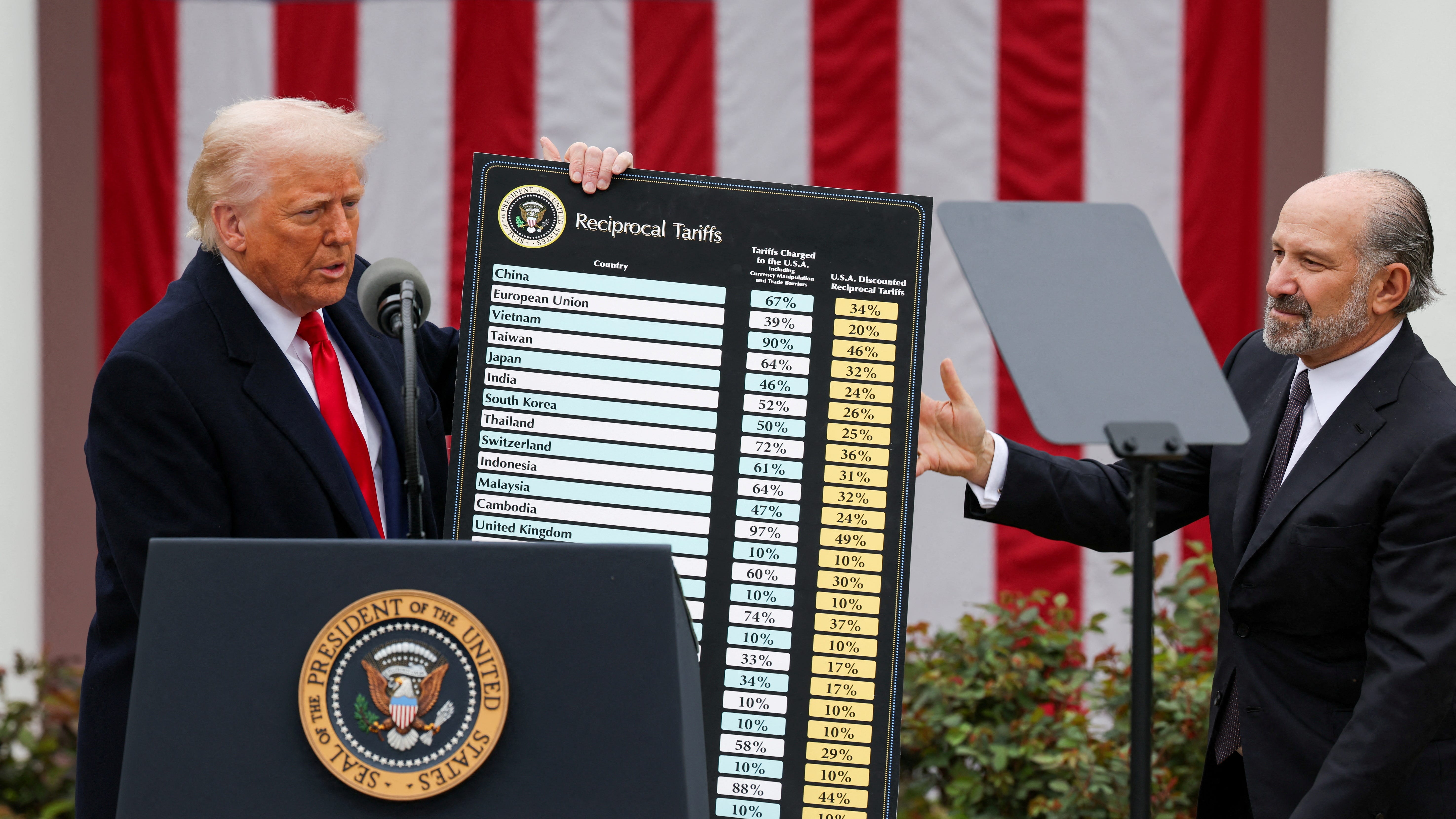
President Trump said at a press conference that he would immediately sign an executive order imposing 10% tariffs worldwide to replace the tariffs overturned by the Supreme Court. Regarding the 10% tariffs, President Trump cited the 1974 Trade Act rather than the 1977 International Emergency Economic Powers Act, which the high court ruled lacked authority to use.

And it’s just the beginning. President Trump has vowed to use other methods to impose tariffs. “We’re going to keep going,” he said.

But how can the president continue?

“The president still has multiple legal authorities that allow him to replicate much of the tariff policy that effectively erected a new wall around the United States last year, when average weighted tariff rates rose from about 3% to over 15%,” Drew DeLong, director of geopolitical dynamics at global strategy and management consulting firm Kearney, said in an emailed commentary.

Below is a summary of the paths analysts think the President may take to impose additional tariffs.

Judge Kavanaugh’s proposal

Supreme Court Justice Brett Kavanaugh “clearly pointed to the Trade Expansion Act of 1962 (section 232), the Trade Act of 1974 (sections 122, 201, and 301), and the Tariff Act of 1930 (section 338),” DeLong said.

They are:

Trade Act of 1974 (sections 122, 201, and 301)

Article 122 It authorizes tariffs of up to 15% to address massive trade imbalances, and President Trump said he would sign it on February 20, except he chose 10% instead of 15%. However, these expire after 150 days.

Article 201 The president can impose tariffs if there is a surge in imports that poses a serious threat to U.S. industry.

Article 301 Allows the United States to impose tariffs if a trading partner is determined to be violating trade agreement commitments or engaging in discriminatory or unreasonable practices that burden or restrict U.S. commerce. The Council on Foreign Relations said Section 301 provides a wide range of remedies and does not place a cap on tariff levels, but requires a formal investigation process and outcome before taking action.

Trade Expansion Act of 1962

The Trade Expansion Act of 1962 (Section 232) allows the president to impose restrictions on the importation of goods that threaten the national security of the United States.

Article 232 The CFR said it would authorize the president to impose tariffs deemed to threaten U.S. national security after review and recommendations by the Secretary of Commerce. President Trump said the existing 232 will remain at “full strength.”

Other options include the Tariff Act of 1930

Article 338 The Tariff Act of 1930 authorizes the President to impose tariffs of up to 50 percent of the value of the goods on imports from countries that unfairly discriminate against U.S. trade through tariffs, regulations, or other measures.

What routes are possible?

“My best guess as to where we will end up after the 150-day period in Section 122 expires is an attempt to enact Section 338, which would allow for tariffs of up to 50%,” DeLong said. “There will be similar questions about the legal validity of this mechanism, but the cleanest path for the administration is to restructure tariff policy with a similar structure. If they choose a legally solidified path, Section 301 will likely be the vehicle of choice, but six months and more than 100 investigations will be a daunting task.”

What will happen to President Trump’s trade deals?

Some analysts expect the trade deals President Trump signed with countries last year to remain in place.

“Trading partners that have already negotiated agreements are unlikely to terminate them, and existing tariffs under Sections 232, 201, and 301 will remain unaffected,” said Brian Gardner, chief Washington policy strategist at Stifel.

Finally, he said: “Despite the court’s rebuke, the new tariff framework is likely to remain in place, raising questions about how much benefit the actual rescue operators will gain, but probably not by much.”

Medora Lee is USA TODAY’s money, markets and personal finance reporter. Please contact us at mjlee@usatoday.com. Subscribe to our free Daily Money newsletter for personal finance tips and business news every Monday through Friday.

Customs attorney Neil Katyal knew he was filing a SCOTUS lawsuit to defeat Trump

0


Veteran Supreme Court lawyer Neil Katyal said he knew he could win President Donald Trump’s wide-ranging tariff case, calling his actions “grossly illegal.”

play

WASHINGTON – The lawyer who won a sweeping new Supreme Court decision blocking President Donald Trump’s tariff lawsuit acknowledged on Tuesday that a challenge to presidential authority was highly likely, but said he always believed the court would ultimately side with the president. “This was a complete victory,” Neil Katyal told USA TODAY shortly after the verdict. “We got everything we wanted. I thought the Supreme Court upheld our Constitution.”

“We have always believed that this is a serious violation,” Katyal added. “And we were very pleased that six members of the Supreme Court agreed with us.” The decision marks a rare and consequential rebuke of presidential power in the area of ​​trade, where courts have historically given broad discretion to the executive branch, said Katyal, a Georgetown University law professor and former acting attorney general in the Obama administration.

That backlash, including support from two conservative judges appointed by President Trump, made the victory particularly significant.

“Courts are very cautious about saying no to a president when challenging significant actions by the president,” he says. “It’s always a tough hill.”

In dozens of previous cases, the Supreme Court has mostly handed President Trump short-term victories over executive powers in cases brought as part of the high court’s emergency proceedings, allowing his policies to temporarily take effect until lower courts rule.

However, tariff cases are routine cases before the Supreme Court, and the Supreme Court has ordered full arguments and expedited arguments.

So this was the first time the justices had a real chance to say yes or no to Trump, who has been actively lobbying the courts to side with him in recent months, Katyal said.

play

President Trump reacts to SCOTUS tariff decision to lower tariffs

After expressing disappointment with the SCOTUS tariff decision, President Donald Trump announced that he had signed an order imposing 10% tariffs worldwide.

Still, Katyal said he never doubted the legal basis for the challenge. “I always knew in my heart that this was blatantly illegal,” he said, adding that his team believed this was “the best originalist understanding from the founder’s perspective.” He also sharply criticized the underlying policies, calling President Trump’s actions “truly and fundamentally un-American.” This victory carries particular weight given Katyal’s extensive Supreme Court experience. He said the case was his 53rd argument before the high court, part of a career that now stands at 54. But the arguments stood out even to veteran SCOTUS warriors as the definitive message the justices sent about the limits of presidential power. “We felt this decision was incredibly important at this time in order to uphold the rule of law and the separation of powers,” Katiyar said.

Trump bans reporters from White House meeting with governors

0


Trump’s latest move comes after a confrontation with the Democratic government. Maryland’s Wes Moore and Colorado’s Jared Polis.

play

WASHINGTON – President Donald Trump kicked reporters out of a breakfast meeting with governors on February 20 to allow officials to speak “candidly.”

“Then we’ll have a very candid conversation and we’ll take questions at the end,” Trump said. “Thank you to all the media. It’s safe to go home now.”

Trump’s latest move comes after a confrontation with the Democratic government. Maryland’s Wes Moore and Colorado’s Jared Polis caused confusion over who could attend a meeting called a “working breakfast” in the East Room.

Reporters shouted as they were escorted out of the room, including questions about whether they were considering military action against Iran.

President Trump said, “I would say we are considering it.”

He did not respond to questions about whether he spoke with Moore about the Potomac River sewage spill.

Days before this year’s meeting, President Trump blamed Moore for the largest sewage spill in history. The sewer system is overseen by officials in Washington, D.C., Maryland and Virginia, but President Trump targeted Moore.

Moore did not applaud when Trump entered the room. Moore urged President Trump to do his job to help local governments recover from the emergency. At least 200 million gallons of raw sewage flowed into the Potomac River from a collapsed pipe known as the Potomac Interceptor.

Moore issued a statement saying he attended the meeting to work with governors of both parties to resolve the issue.

“But let me be clear: I do not participate in political stunts,” Moore said. “The American people are tired of the divisiveness and toxicity from Washington, and we are all praying for things to get better.”

The annual meeting between the president and the National Governors Association is traditionally bipartisan. But President Trump singled out Democratic Maine Gov. Janet Mills over her compliance with an executive order aimed at banning transgender athletes from school sports. “I’ll see you in court,” she replied.

Which Latin American countries will win under President Trump’s tariff ruling?

0

play

The U.S. Supreme Court has declared tariffs imposed by executive order under emergency powers illegal, putting the brakes on one of President Donald Trump’s most aggressive trade tools. The 6-3 ruling not only redefines the limits of presidential power, but also shakes up Latin American countries caught in the crossfire of U.S. trade policy.

For months, Latin American factories, ports and fields have been operating under the shadow of tariffs that have raised the price of key exports to the United States. Now, this decision opens a window of relief, but it does not guarantee stability. Washington could still explore other legal means to impose new taxes.

Which Latin American countries are most affected by tariffs?

The impact was uneven, but deep. Mexico was most at risk because of its direct integration with the U.S. economy. Tariffs have hit auto parts, industrial manufacturing and agricultural products, raising costs in supply chains that cross borders every day.

In South America, Brazil felt pressure on steel and aluminum, sectors already vulnerable to the global economic slowdown. Colombia, Chile, and Peru face uncertainties in agricultural and mining exports, and even small cost increases could make them uncompetitive compared to other markets.

Why does the Supreme Court’s decision change the regional panorama?

The Supreme Court ruled that President Trump did not have Congressional authority to use the 1977 Emergencies Act to impose sweeping tariffs. In practical terms, this means the United States cannot reimpose major tariffs overnight, making trade unpredictable for its Latin American partners.

For the region, the ruling reduces the immediate risk of sudden measures that would make exports more expensive. But business leaders have warned that the administration could resort to other laws to maintain uncertainty, such as “national security” or trade retaliation.

What does this mean for Latin America’s economy, jobs and prices?

In the short term, this relief will become a reality. Exporters will regain their margins and some contracts may be renegotiated. The ruling will ease pressure on factories and fields in countries such as Mexico and Brazil, where exports to the United States support thousands of jobs.

However, the effect is not automatic. Costs already absorbed will not be recovered quickly, and investment will remain cautious unless there is clarity on the U.S. government’s future trade policy. For Latin American consumers, this news will help stabilize prices for imported raw materials, although there is no promise of quick discounts.

Trade ceasefire is not the end of the story

The Supreme Court’s decision gives Latin America much-needed pause, but it does not give it firm ground. Future development requires a strategy. It is about diversifying markets, strengthening regional agreements and reducing dependence on political decisions from Washington. For governments and businesses, the message is clear: Tariff wars can be stopped in court, but trade uncertainty is far from over.

Contributed by: USA TODAY

Boris Q’va is a national Spanish language trends news reporter for Connect/USA TODAY Network. You can follow him on X as @ByBorisQva or write to him at BBalsindesUrquiola@gannett.com.

A large tax refund is expected. Early IRS data shows that’s true

0

play

IRS data shows the IRS has received fewer tax returns so far this tax season than last year, but refunds have increased by double digits.

Through February 6, the average refund amount was $2,290, an increase of nearly 11% from $2,065 during the same period in 2025, but the total amount of returns received decreased by 5.2%. The IRS noted that the number of refunds should also increase because the law requires that refunds claiming the Earned Income Tax Credit (EITC) or Additional Child Tax Credit (ACTC) be held until February 15.

These “refund amounts do not include millions of EITC and ACTC refunds to these taxpayers,” the agency said in a release. “This means that for refunds processed by February 20th, the number of refunds scheduled to be announced on February 27th is expected to be even higher.”

Analysts said this should be encouraging news for Americans struggling under the weight of rising prices and a slowing job market.

“The increase in tax refunds should be a boost for consumers, especially low-income earners who use their tax refunds to pay off debt or make big purchases,” said Mihir Bhatia, an analyst at Bank of America.

The average refund amount is high. How can I get mine faster?

“A combination of direct deposit and electronic filing is the fastest way to receive your refund,” the IRS said. For taxpayers who file a complete return electronically and choose direct deposit, most refunds will be issued within 21 days.

Nine out of 10 taxpayers already receive their tax refund through direct deposit, but to bring it closer to 100%, the IRS began phasing out paper checks last September.

“Paper checks are more than 16 times more likely to be lost, stolen, altered, or delayed than electronic payments,” the IRS said. “Direct deposit also avoids the possibility of your refund check being returned to the IRS as undeliverable.”

How do I know when my refund will arrive?

The IRS’ “Where’s My Refund” tool allows you to track when the IRS received your tax return, approved your refund, and issued your refund. The money should be in your account within five days from the date the IRS approves your refund.

The IRS says if you mailed a paper return and are expecting a refund, it could take more than four weeks for your return to be processed.

Refunds for Americans who claimed EITC/ACTC will not be released until mid-February for early filers, so these taxpayers may have to wait until around March 3 for their refunds to show up in their bank accounts or debit cards if they choose direct deposit and there are no issues with their tax returns.

If you don’t have a bank account, find one using the FDIC website or the National Credit Union Administration’s Credit Union Locator Tool. You can usually open a bank account quickly. You can also ask your tax professional if they offer other electronic payment options.

Otherwise, you may be able to deposit your refund to a reloadable prepaid debit card or mobile app. Many reloadable prepaid cards and mobile apps have a routing number and account number, which may be different from your card number. Check with your financial institution to see if your card or app can accept deposits, and double-check your routing and account numbers.

How should people take advantage of their tax refunds?

Financial experts say a big check comes with a big responsibility, so make sure you don’t spend it all. Here are some ideas:

  • You can expect your refund to be larger than usual, so paying in installments is a convenient way to manage your money. You can split your refund in any proportion and send a portion to your immediate account and a portion to up to three different accounts at a U.S. financial institution, reloadable prepaid debit card, or mobile app for future savings. You can file your return electronically using tax software, or if you file a paper return, you can use IRS Form 8888, Refund Distribution.
  • Plan how you will use your refund before you receive it. “This reduces the risk of overspending by pre-allocating tasks for repayments, such as debt repayments, emergency savings, and necessary expenses,” said Paul Rich, CEO of personal loan site Best Egg.
  • Prioritize debt reduction and financial health over lifestyle improvements. “Applying refunds against high-interest balances can reduce financial stress and improve credit utilization,” Rich said. “Prioritizing emergency savings, or three to six months’ worth of expenses, can help you avoid relying on credit when unexpected expenses arise in the future.”

Medora Lee is USA TODAY’s money, markets and personal finance reporter. Please contact us at mjlee@usatoday.com. Subscribe to our free Daily Money newsletter for personal finance tips and business news every Monday through Friday..

When Hilary Duff and her partner are worried they’ll leave

0

play

Hilary Duff’s return to music has garnered a lot of attention, and so has her latest interview with Rolling Stone.

The singer revealed that she often worries that her husband, musician and producer Matthew Koma, will cheat on her, saying it is a “recurring dream” of hers.

“I keep thinking that Matt is going to leave me and go to some of the indie songwriters I work with at Coolio,” she said. “That’s insane,” Koma replied. “But they’re also very real. They’re real things that you have to be emotionally attached to.”

When this article was shared on X, some readers expressed concern about Duff.

“I’m sorry but a good man would never make you feel like that,” one person wrote. “Does she know she’s Hilary Duff?” another answered. Others came to Koma’s defense and praised Duff for opening up about her concerns.

So what do you do when you’re worried your partner will leave you? Relationship experts say this fear is not uncommon, even in loving and stable relationships. By openly discussing these concerns, you can dispel them and even strengthen your relationship.

Relationship anxiety is ‘very common’

Psychotherapist Stephanie Serkis says that even when there are no signs or patterns of behavior that indicate a partner might cheat or leave, these fears are “very common” and have less to do with the current partner and more to do with “past experiences, past betrayals, core beliefs like ‘I’m not good enough.'”

Fear doesn’t necessarily rely on hard evidence, and “anxiety typically doesn’t differentiate between past and present threats,” Serkis explains.

Amy Morin, psychotherapist and author of 13 Things Mentally Strong Couples Don’t Do, warns that if left unchecked, these fears can lead to behaviors that ultimately drive your partner away.

“For example, if you’re spying, snooping, or making accusations, your partner might back off a little bit,” Morin says. “That decline could be misconstrued as evidence that they are leaving or are already having an affair.”

How to distinguish between “gut feeling” and unfounded fears

Poor intuition can lead to anxiety in relationships, and it can be difficult to distinguish between intuition, anxiety, or unfounded anxiety.

“If you’re always afraid that people are going to leave, that’s not a gut feeling,” Morin says. “In certain situations, you can step back and look at the facts. Has your partner given you a real reason to believe they are not committed to you? Weigh your emotions against your logic for a more balanced view.”

Look for “observable data,” says Serkis. If your anxiety persists despite the lack of evidence, it’s more likely to be anxiety than intuition.

How can couples deal with the fear of abandonment?

Anxiety is an emotion, not a prophecy.

“It doesn’t have to influence your behavior,” Morin says. “You can work on changing the thoughts and behaviors that trigger your emotions and finding healthy ways to cope.”

The first step to overcoming your fear of abandonment may be to share your concerns with your partner. Morin says these conversations can either strengthen a healthy relationship or point out flaws in an unhealthy relationship, like when your partner doesn’t take you seriously or downplays your feelings.

If fear persists or problems arise within the relationship, Morin and Serkis suggest seeking support from a qualified mental health professional in individual and couples therapy.

“A therapist can also help you figure out whether your fears are due to attachment issues, past trauma, or a toxic relationship,” Morin says.

Has Del Taco closed all of its stores in Georgia? Here’s what we know.

0

play

Del Taco’s Georgia locations have abruptly closed after the restaurant’s franchise owner filed for Chapter 11 bankruptcy protection, the company announced.

As of Friday, Feb. 20, when searching for the American-Mexican fast-food chain’s Georgia location, the website says, “Sorry, this location no longer exists.”

Del Taco said in an emailed statement on Feb. 20 that its franchisee, which operates stores in Atlanta, Columbus, Macon and Chattanooga (Fort Oglethorpe), has closed all 14 stores.

“This closure was made without prior notice to Del Taco,” the company said in a statement. “Our franchisees are currently in bankruptcy proceedings and we are actively considering options to reopen these stores as soon as possible. Updates will be shared once plans are finalized.”

Del Taco was owned by Jack in the Box from 2021 until late 2025, when the company was acquired in December 2025 by Yadav Enterprises, which operates more than 300 franchised restaurants across the United States. At the time, Del Taco said it operated more than 600 stores across the United States, with most restaurants in California, where the company is based.

A Redditor shared on Tuesday, Feb. 17, that a store in Warner Robins, Georgia, about 32 miles south of Macon, has closed.

A user wrote on Feb. 17: “My manager told me the Del Taco location in Georgia is closing as of today. There’s been no news about this. Does anyone know what’s going on? She said we need to file for Chapter 11 bankruptcy.”

A franchise owner of 22 Del Taco locations in Georgia and Alabama filed for Chapter 11 bankruptcy in South Carolina in July 2025, according to court records obtained by USA TODAY.

USA TODAY reached out to the franchise owner, Matador Restaurant Group, but did not immediately receive a response as of Feb. 20. The company has approximately 336 employees, according to the documents.

Del Taco franchise owner takes out high-interest loan to combat financial difficulties

The restaurant group said in a July 2025 court document that the company was experiencing “cash flow issues” and had previously closed two unprofitable locations.

The restaurant group’s financial crisis began in late 2024 due to the company’s growth, “unexpected sales declines, and increased operating costs,” according to court filings.

After discussing the issue with its broker, the company took out a Merchant Cash Advance (MCA) loan to resolve the issue. According to the California Department of Financial Protection and Innovation, MCA loans require businesses to “prepay a sum of cash in exchange for a portion of the business’s future sales or income.”

The restaurant group said the MCA loan “put the company into further financial distress due to excessive fees, excessive effective interest rates, and aggressive repayment schedules.”

“Despite efforts to reduce costs, (the restaurant group’s) revenues have not kept up with its MCA obligations,” the company wrote in a statement, adding that as of July 15, 2025, the company had 10 MCA loans from nine different creditors.

The restaurant group said it had $2.701 million in debt, according to documents.

Another franchisee, Newport Ventures, abruptly closed 17 of its 18 Colorado stores in March after problems with Del Taco and a bankruptcy filing, the Pensacola News Journal, part of the USA TODAY Network, reported. Del Taco confirmed to USA TODAY in June 2025 that 17 of its stores had reopened.

How long ago did the Del Taco closures begin?

Online reports of Del Taco closings in Georgia date back to at least August 2025, when a Redditor and fan of the chain tried to visit the Kennesaw location, sharing that “the doors were locked and signs were posted everywhere indicating the store was permanently closed.”

“This is the second DT in the city to close in recent months,” the user wrote. “GA has already lost Del Taco once, and I fear we are heading into a second dark age.”

Another user added that they also visited a Georgia store in August, this time in Morrow, and found it boarded up as well.

Elsewhere in the U.S., Del Taco locations in Florida have closed. Pensacola Del Taco District Manager Kimberly Galasi previously confirmed to the Pensacola News Journal that five Del Taco locations in Florida will be closing.

The Tallahassee, Fla., store has closed about a year after opening, according to the Tallahassee Democrat, part of the USA TODAY Network. According to the Democratic Party, a note posted at the Del Taco drive-thru read, “This location is currently closed. Thank you for your support!”

But while franchise closures have been reported in multiple states, Del Taco has announced expansion plans.

According to the Louisville Courier-Journal, which is also part of the USA TODAY Network, Del Taco announced plans to open five stores in Louisville, Kentucky, in summer 2025 with new franchisee Karan Pandher.

Del Taco said the first store will likely have a grand opening by 2027, according to the Courier-Journal.

Contributor: Kyla A Sanford, Tallahassee Democrat. Brittany Misencik, Pensacola News Journal. Amanda Hancock, Louisville Courier-Journal

Saleen Martin is a reporter for USA TODAY’s NOW team. She is from Norfolk, Virginia (757). Email sdmartin@usatoday.com.

Virginia Roberts Giuffre’s family sees hope after former prince’s arrest

0

play

Andrew Mountbatten-Windsor’s arrest was not related to sexual abuse.

But for women who say they were victims of the former prince and Jeffrey Epstein, his arrest in the UK on February 19 for public misconduct is another vindication.

The case comes decades after the women first spoke out about the abuse, were fired by police, and denied and scorned by the former prince and Epstein. And this follows the release of more files that Epstein’s accusers have sought to hold more people accountable, including Bill Gates and Les Wexner.

“Today is just the beginning of the accountability and justice brought to us by Virginia Roberts Giuffre. A young mother who loved her daughter so deeply that she fought the most powerful men on earth to protect her. She did this for everyone’s daughters. Now, let’s demand that the dominoes of power and corruption begin to fall,” Maria Farmer said in a statement.

In 1996, Farmer reported Jeffrey Epstein and Ghislaine Maxwell to law enforcement in New York City, accusing them of abusing her and her sister. Farmer later reported being abused by Epstein and others in New Mexico and Ohio. Maxwell was later sentenced to prison for sex trafficking. Epstein died by suicide in 2019 and was awaiting trial on similar charges.

Roberts Giuffre said she was trafficked for sex with Prince Andrew as a teenager and later became one of the most outspoken victims of Epstein and Andrew. Her memoir, Nobody’s Girl, was published in October 2025, six months after she died by suicide.

Roberts-Giuffre’s family said in a statement: “Today our broken hearts are lifted by the news that no one is above the law, even members of the royal family.”

“On behalf of our sister Virginia Roberts Giuffre, we would like to thank the UK Thames Valley Police for their investigation and arrest of Andrew Mountbatten-Windsor,” her brothers Skye Roberts and Danny Wilson said on February 19.

“He was never a prince,” they said. “For survivors around the world, Virginia did this for you.”

In 2022, Roberts Giuffre settled a civil sexual abuse lawsuit against the then-prince. The conditions were top secret. The British royal family has denied any wrongdoing by the former second-in-line to the throne.

It’s been six years since Epstein died by suicide. And hundreds of women calling themselves “Survivor Sisters” are calling for the identification of Epstein’s associates who abused, raped and participated in human trafficking.

Their advocacy led to near-unanimous votes in the House and Senate to release the Justice Department’s investigative files on Epstein.

Mr Mountbatten-Windsor was arrested on February 19 on suspicion of misconduct in office related to his relationship with a convicted sex offender. He was released the same day.

Gloria Allred, a lawyer who represents several Epstein accusers, said the state needs to act not just on allegations of financial crimes, but also on allegations of rape, child molestation and sex trafficking.

When Roberts Giuffre first met Mountbatten-Windsor in March 2001, he was a prince. she was 17 years old.

Epstein and his colleague Maxwell introduced them.

“My daughters are a little younger than you,” he said of his daughters Princess Beatrice and Princess Eugenie. “We’ll probably have to trade her soon.”

Maxwell tells her that her job is to look after the former prince.

Roberts Giuffre said she did not want to have sex with the then-prince. “But I felt I had to,” she wrote. “There was no way to break free from Epstein and Maxwell’s control.”

Laura Trujillo is a national columnist focused on health and wellness. She is the author of “Stepping Back from the Ledge: A Daughter’s Search for Truth and Renewal” and can be reached at ltrujillo@usatoday.com.

The latest forecast for the upcoming East Coast nor’easter.

0

play

A nor’easter is forecast for the East Coast this weekend, but as of Friday, February 20th, the amount and amount of snowfall remains difficult to pinpoint.

“While an East Coast storm is expected to develop this weekend, the path of this potential nor’easter is not yet determined, and the impact of snow, rain, wind, and coastal flooding from New England to the Mid-Atlantic states Sunday (Feb. 22) through Monday (Feb. 23) is uncertain,” Weather.com meteorologist Jonathan Erdman said in an online forecast Friday morning.

According to AccuWeather, the storm is rapidly intensifying and could bring heavy snow to parts of Interstate 95, including New York City and Philadelphia.

However, the situation should soon become clearer. “Forecast totals and timing should become more focused by late tonight,” the National Weather Service in Philadelphia said in an online forecast discussion posted early Friday morning.

Regardless of the final outcome, “we are still in a ‘wait and see’ period with this storm, so please take precautions now in case the worst-case scenario unfolds,” the National Weather Service’s forecast office in Sterling, Virginia, said in an online forecast, urging caution and preparedness. “It’s never a bad idea to stock up on supplies.”

Storm trajectory determines impact

In recent days, computer models used by meteorologists to predict the weather have struggled to agree on the future path of storms that have not yet fully formed. The closer the track is to shore, the more snow there is, and the farther offshore the track is, the less snow there is.

“The key issue regarding heavy and light snow along I-95 is the path of the coastal storm,” Dan DePodwin, AccuWeather’s vice president of forecast operations, said in an email to USA TODAY. “Its path will depend on how quickly the storm intensifies.”

Erdmann agreed, pointing out that “the main uncertainty is where this offshore low pressure system will reach. That will affect who will experience the snow, rain, wind and coastal flooding, and the magnitude of those impacts.”

How much snow is likely to fall?

The heaviest snow is expected along the coast from New Jersey to Massachusetts, where more than 4 inches of snow could accumulate, and more than a foot in the northern Appalachians, Erdman said.

From Washington, D.C. to Philadelphia, New York City and Boston, precipitation is expected to fall primarily as snow, but colder temperatures may limit accumulation on pavement during the day, AccuWeather said.

“During the daytime on Sunday (February 22) and Monday (February 23), when snowfall is not severe, highways and city streets may become wet or slushy in places due to near-freezing temperatures and the higher sun angle of late February,” Depodwin said.

“However, there will be periods when snowfall is high enough to exceed critical temperatures and sunlight, especially at night,” he added.

Another snowy weekend

This is the fifth straight week of snow expected in some Northeastern cities, according to AccuWeather.

Overall, New York City recorded 22.3 inches of snow this season, close to the historic average of 22.1 inches, after a period of temperatures 9.4 degrees below the historic average.

What the Supreme Court’s tariff ruling means for consumer prices

0

play

Economists say a landmark Supreme Court ruling that struck down many of President Donald Trump’s import tariffs could mean savings for consumers in the coming months.

The greatest relief is expected for the categories of consumer items most affected by tariffs, including glassware, tableware, furniture and a wide range of household goods.

President Trump’s tariffs have raised the price of many imported goods, and the impact is reflected in January’s inflation report. Prices of home furnishings and supplies increased by 3.8% from January 2025 to January 2026. Furniture and bedding prices rose 4%. Prices of tableware and tableware increased by 5%.

“We think the tariffs have increased consumer goods prices by about 2% overall,” said Michael Pearce, chief U.S. economist at Oxford Economics.

Will consumer prices fall as a result of tariff decisions?

Where does the price go from here? Much will depend on whether the Trump administration responds to the high court’s ruling with new tariffs by leveraging some legal authority other than the authority granted by the courts.

“If the administration does not respond with new tariffs, this means that some of the tariff-related price increases seen last year could be reversed in the coming months,” Pierce said. “Consumers could potentially earn a little more in their take-home pay.”

There is intense debate about how much tariffs are already pushing up prices.

U.S. consumers and businesses paid nearly 90% of President Trump’s tariff costs through late 2025, according to a February report from the New York Fed.

The research was shocking. White House chief economic adviser Kevin Hassett slammed the report and suggested the authors should be “reprimanded.”

A separate analysis by the nonprofit Tax Foundation found that President Trump’s tariffs amount to a $1,000 tax increase per household in 2025. Households are expected to pay an additional $1,300 in 2026.

This estimate may change in light of new court rulings. Yale University’s Budget Lab suggests that consumer prices will increase by 0.6% in the short term, costing the average U.S. household about $800. Without the High Court’s ruling, prices would rise twice as fast, Budget Labs said.

Whatever their impact, the tariffs have not caused the inflation crisis that many observers feared. The annual inflation rate remained at 2.4% for January as a whole.

Pearce estimates that the Supreme Court’s ruling will reduce the effective U.S. tariff rate from 12.8% to 8.3%.

Yale University’s Budget Institute estimates the new tariff rate at 9.1%. Barring last year’s policy change, this remains the highest U.S. tariff rate since 1946, according to Budget Lab.

The Supreme Court’s ruling does not apply to all of President Trump’s 2025 tariffs. For example, tariffs on certain industrial sectors such as steel and automobiles are excluded.

Where are tariffs still applicable?

The remaining U.S. tariffs that were not lifted due to the court ruling “hit the heaviest on metals, automobiles, and electronics,” Budget Lab reports.

Thousands of U.S. importers could soon get partial or full refunds for the estimated $150 billion in duties they paid.

Pearce and other customs experts say it’s unclear how those refunds will reach consumers. If there is a refund, the refund will likely go to the importer who paid the tax.

In fact, some companies “have already said they’re going to raise prices this year because of the tariffs they paid last year,” said Alex Jacques, director of policy and advocacy at the progressive think tank Groundwork Collaborative.

Pete Buttigieg backs Democrat Sean Harris to replace MTG in Georgia

0

play

ROME, Ga. — The race is heating up in northwest Georgia as more than a dozen candidates seek to take over the reins from Marjorie Taylor Greene.

The former congressman resigned from his post in January after a highly public falling out with President Trump. The two continue to spar, and the president nicknames her Marjorie “Traitor” Greene.

The president traveled to Rome, Georgia, on Thursday to tout his economic policies and double down on his support for Republican District Attorney Clay Fuller to replace Greene in a special election that began early voting on Monday.

Fuller will need enough support from the crowded Republican base to take on Democrat Sean Harris, a seasoned candidate who ran against Greene in 2024.

Pete Buttigieg endorses Sean Harris

“No state or district is permanently red, and I believe Sean Harris has the background and values ​​to come together and win,” the former secretary said in a Feb. 20 statement.

Buttigieg and Harris have military records, with the former serving as a naval intelligence officer in Afghanistan and the latter a retired brigadier general.

“Sean is running because he knows the status quo in Washington isn’t working for the people in his district, and he’s ready to work to lower prescription drug prices, pass a farm bill that works for rural Georgia, and protect Medicare and Medicaid,” Buttigieg said.

Harris called the endorsement “an honor” and said the former representatives from northwest Georgia “have not put (their constituents’) needs first.”

In a conversation with Harris on Thursday, shortly before Trump arrived in Rome, where the Harris campaign is based, he said that during Greene’s time as Georgia’s 14th representative, “it was clear that she didn’t represent everyone here in this district.”

“She was only focused on MAGA. And because she was only focused on MAGA, everyone else was left out. I think what’s really happening as Trump begins his transition, he’s going to find out here today that communities are getting closer together and they want a candidate who represents everyone,” Harris said. “Yes, I’m a Democrat, but at the end of the day, I’m a centrist and I want to serve the American people directly, or the people here in northwest Georgia. That’s it.”

Fuller calls President Trump ‘the greatest president in our country’s history’

Earlier this month, President Trump endorsed Fuller in a post on Truth Social, calling him a “highly respected MAGA warrior” and saying he has his “full and complete support.”

But Trump appeared to abandon, or perhaps forget, his support for Fuller earlier this week, saying in a statement aboard Air Force One that there are “a lot of good candidates” running in Georgia.

“You have to choose,” the president said. “They say the person I support will win.”

Former Congressman Colton Moore, who is running against Fuller as a fellow Trump-supporting MAGA candidate, capitalized on the remarks. In a post on X, he shared a video of his remarks and said, “Thank you, Mr. President!”

But on stage in Rome, Fuller and Trump appeared as a united front, and the president doubled down on his support.

Mr. Trump urged the audience to go out and vote for Mr. Fuller, who responded by calling Mr. Trump “the greatest president in the history of our country.”

“We will never stop fighting for the MAGA movement and President Donald Trump,” Fuller said.

Eileen Wright is an Atlanta Connect reporter on USA Today’s Deep South Connect team. X Find her at @IreneEWright or email her at ismith@usatodayco.com.

Lindsey Vonn’s injury update after latest surgery that took 6 hours

0

MILAN — Lindsey Vonn said her recent surgery went well and she hopes to be able to leave the hospital soon.

The surgery on Wednesday, February 18, took just over six hours, and photos of her left leg showed more than a dozen screws. Vonn suffered a compound tibia fracture in a collision during the Olympic downhill race on February 8th.

“As you can see, it took a lot of plates and screws to put it back together, but Dr. Hackett did an amazing job,” Vonn wrote on Instagram, referring to her longtime orthopedic surgeon, Tom Hackett.

“Due to the extent of the trauma, I’m having a bit of a hard time post-surgery and haven’t been able to leave the hospital yet,” she added. “We’re almost there. Baby steps.”

Vonn also posted a photo of herself being taken to the operating room in a wheelchair, the fifth time since the accident. She gave a victory sign and a fist pump while holding a stuffed shark she received when she was hospitalized in an Italian hospital.

Vonn was hospitalized in Italy for eight days and returned to the United States earlier this week.

What happened to Lindsey Vonn?

Bong hooked the fourth gate with his right arm and spun into the hard-packed snow. She fell several times before stopping.

“Things happen so fast in this sport,” American teammate Vera Wright said after the race. “Lindsay seemed to have incredible speed coming out of that turn and ended up catching her arm.”

The three-time Olympic medalist remained face down in the snow and screams of pain could be heard. Fans’ gasps and groans died down to a shocked silence as medical workers treated her. Vonn remained on course for approximately 13 minutes before being loaded onto a helicopter.

What is Lindsey Vonn’s injury?

In an Instagram post on February 9, Vonn shared the shocking news that she had suffered a compound fracture of her tibia and would need multiple surgeries. The 41-year-old updated her fans on February 11 after undergoing her third surgery in Italy, and also posted some scary photos showing her progress. Vonn, who returned to the United States on February 17, said her injuries were “much more serious than just a broken leg.”

“I’m still trying to wrap my head around what that means and what’s to come,” Vonn wrote. “But we will provide further details in the coming days.”

A tibia fracture is a fracture of the shin bone that requires urgent treatment. According to the Cleveland Clinic, “The tibia is some of the strongest bones in the body, and it typically takes significant force to break it.” “If you fracture your shin bone, you probably won’t be able to stand, walk, or put any weight on your foot.”

According to Yale Medicine, a compound fracture involves the fracture of multiple bones and damaged soft tissue. Symptoms include extreme pain, numbness, and in some cases, bones may protrude through the skin. Treatment includes stabilization and surgery.

Lindsey Vonn Accident Video

NBC broadcast the Olympics and posted video of Vonn’s crash.

USA TODAY Sports’ Samantha Cardona-Norberg provides commentary in the aftermath of Lindsday Vonn’s crash.

Fans fell silent as soon as Vonn crashed, reacting with shock and sadness, then cheering as a helicopter hoisted her into the sky. USA TODAY Sports spoke to some fans after the accident.

Is Lindsey Vonn okay?

After the crash, Vonn was clearly in pain but was able to move her arms, head and neck.

Approximately 18 minutes after the crash, the helicopter slowly began its flight towards Cortina. “Let’s hear from Lindsey Vonn!” the American announcer said as the helicopter flew away with her, and the crowd cheered and applauded.

Vonn’s sister Karin Kildow was on the downhill course today and told an NBC reporter during a live broadcast:

“That was definitely something we didn’t want to see happen and it happened so fast. When something like that happens, you just hope she’s okay right away. And then when you start seeing the stretcher being taken out, it was scary because that’s not a good sign,” Kildow said. “But she really…she was very brave and gave it her all. So it’s really hard to tell, but we really hope she’s okay.”

“She has all her surgeons and PT staff here, as well as her doctors, so I’m sure they’ll give us a report and we’ll see her wherever she is at the hospital.”

Lindsey Vonn suffers anterior cruciate ligament tear

It was the second time in recent weeks that Vonn had left the summit by helicopter. She suffered a complete rupture of her left anterior cruciate ligament, a torn meniscus and bone contusions in a downhill accident on January 30, the last World Cup event before the start of the Olympics.

Vonn has had her right knee partially replaced and is also skiing. She was dominating the sport even before her accident, finishing on the podium in all five downhill races this season and winning two of them.

Despite her recent injury, Vonn was determined to compete in her fifth and final Olympics. She said her knee feels stable and strong and has been doing intensive rehabilitation, pool training, weightlifting and plyometrics over the last week. She skied both training runs and had the third fastest time on the second run before it was canceled due to fog and snow.

Lindsey Vonn suffers anterior cruciate ligament tear

Vonn, 41, skied in her fifth Winter Olympics (2002, 2006, 2010, 2018 and 2026). She won three medals at the Olympics (1 gold, 2 bronze).

Will car prices “crash”?

0

good morning! I’m Daniel de Visse for Daily Money, filling in for Betty Lynn Fisher on Consumer Friday.

Keith Lane reports that President Donald Trump is rolling back federal emissions standards to lower sticker prices for car buyers, vowing that prices will soon “crash.”

With this pledge in mind, the USA TODAY Cars team looked at what happened to car prices the last time President Trump lowered federal fuel efficiency standards, and what car buyers can expect this time around.

Is the Social Security Fairness Act unfair?

Last year, the Social Security Fairness Act increased Social Security benefits for public servants who already receive pensions.

Some lawmakers are now arguing that the act itself is unfair.

📰 Other stories you can’t miss 📰

📰 great read 📰

And here are some popular articles from earlier this year that you may have missed. Please read it! share!

Barbie launches its first autism doll to represent how people with autism spectrum disorders experience the world around them.

Daniel de Visse covers personal finance for USA TODAY. Daily Money breaks down complex consumer and financial news. Subscribe here.

Supreme Court rules on tariffs, major setback for President Trump

0

play

WASHINGTON – The Supreme Court dealt a major blow to President Donald Trump’s economic policies, ruling that the president does not have the power to impose sweeping tariffs with the stroke of a pen.

On February 20, the court struck down the tariffs, a centerpiece of his economic policy and a major foreign policy tool, but also rising costs for consumers and businesses. The conservative court’s 6-3 decision was the court’s first major ruling on President Trump’s controversial expansive view of executive powers.

Chief Justice John Roberts wrote: “The president asserts extraordinary authority to unilaterally impose tariffs without limit in amount, duration, or scope.” “Given the breadth, history, and constitutional context of that asserted power, the president must identify clear Congressional authorization to exercise it.”

Mr. Roberts concluded that Mr. Trump cannot do that.

Democrats welcome Supreme Court decision invalidating emergency tariffs

Democratic senators welcomed the high court’s decision to invalidate President Trump’s emergency tariffs.

Dick Durbin, the Illinois Democratic Party’s assistant minority leader, said the “misguided” policy has created a burden on families and businesses.

“Today’s decision is a victory for the American people and a rare example of the Supreme Court’s ability to use its constitutional authority to stop President Trump’s corruption and chaos,” Durbin said in a statement.

Sen. Patty Murray of Washington, the top Democrat on the Appropriations Committee, called the tariffs “nothing short of economic arson,” but said the court’s decision “hangs an important thread” on it.

“The president will upend entire industries on a whim, dramatically raising costs and locking small businesses out of markets they depend on. It’s sheer stupidity that has cost us jobs and raised prices for almost everyone,” Murray said.

–Bert Jansen

In a dissent joined by Justices Clarence Thomas and Samuel Alito, Justice Brett Kavanaugh said that tariffs are the “traditional and common tool” the law gives presidents to use to regulate imports.

“The tariffs at issue here may or may not be wise policy,” Kavanaugh wrote. “But they are clearly legal based on the text, history and precedent.”

He also said the majority’s decision “doesn’t say anything” about whether or how the government must return the billions of dollars it has already collected.

Kavanaugh said the process would likely be “chaotic.”

President Trump called the ruling “shameful” after it came during a meeting with state governors, Reuters reported.

The ruling could calm some critics who complained that the court, which has a 6-3 conservative majority, allowed President Trump to make major policy decisions without Congress’ permission, after blocking a major initiative by Democratic President Joe Biden.

President Trump had hoped the tariffs would boost the federal budget by more than $2 trillion over the next decade and bring manufacturing back to the United States.

The president warned the court that repealing the tariffs would have “devastating national security, foreign policy, and economic consequences.”

However, government officials also noted that there are other means of imposing import fees and vowed to move quickly to take advantage of them.

This means that uncertainty about operating costs will likely continue for retailers and other businesses, even as President Trump welcomes the decision that the Emergency Powers Act of 1977 cannot be used to circumvent the more complex and restrictive tariff procedures set out in other laws.

“We urge the president to refrain from using other authorities to impose tariffs on agricultural inputs because farmers are under cost pressure and agricultural input costs remain high,” Scott Metzger, an Ohio farmer and president of the American Soybean Association, said after the ruling.

Customs duties are paid by companies when they import goods from other countries. Awaiting this ruling, thousands of companies filed lawsuits seeking refunds.

Stock market rejoices over SCOTUS tariff ruling

Major U.S. stock indexes ended early losses after the Supreme Court struck down President Donald Trump’s emergency tariffs.

In a 6-3 decision, the court found that President Trump exceeded his authority by imposing the mandate without explicit authorization from Congress. The ruling does not address whether customs duties already paid must be returned.

Last year, retail stocks such as Nike, Decker’s Outdoors and Abercrombie & Fitch, which were hit hard by rising import and manufacturing costs due to tariffs, rose in value, pushing up the overall index.

As of 10:53 a.m. ET, the S&P 500 index rose 0.62%, or 42.82 points, to 6,904.71, and the blue-chip Dow Jones Industrial Average rose 0.25%, or 122.42 points, to 49,517.58. The tech-heavy Nasdaq rose 1.06% (239.219 points) to 22,921.948. The benchmark 10-year US Treasury yield rose to 4.094%.

Stocks opened lower after data showed economic growth slowed in the final three months of 2025. Gross domestic product (GDP) rose 1.4%, well below the 2.5% increase expected by economists polled by Dow Jones and reflecting the larger-than-expected impact of a record-long government shutdown. The Commerce Department estimates that the shutdowns have shaved about 1 percentage point off economic growth.

—Medora Lee

Foreign business leaders say tariff decisions could bring further uncertainty

Foreign leaders reacted cautiously to the decision, as the Trump administration could impose tariffs other than by declaring a state of emergency. One law authorizes tariffs on imports that threaten national security, and another authorizes retaliatory tariffs on countries that send more goods to the United States than they import.

Candice Lane, president and CEO of the Canadian Chamber of Commerce, said the decision is a legal ruling and not a reset of U.S. trade policy.

“Canada should prepare new and insensitive mechanisms to reassert trade pressure, with potentially broader and more devastating effects,” Raine said in a statement.

William Bain, head of trade policy at the British Chambers of Commerce, said separate legislation was used by the US to impose tariffs on steel and aluminum.

“While this decision clarifies the president’s executive authority to raise tariffs, it does little to clear up the mud in business,” Bain said in a statement.

—bert jansen

Companies asked for refunds even before the Supreme Court’s ruling.

Even before the high court overturned President Trump’s emergency tariffs, thousands of companies were suing to recover the billions of dollars they had already collected. But government officials say government refunds will be issued without litigation.

Costco Wholesale, Revlon and Goodyear Tire are among the companies that have sought refunds through lawsuits in the U.S. Court of International Trade. He said small businesses will need to take out loans, halt expansion plans and freeze hiring to cope with the tariffs.

“Today’s Supreme Court decision is a huge victory for America’s small businesses that have endured the crushing burden of tariffs,” said Dan Anthony, executive director of the advocacy group We Pay the Tariffs.

Treasury Secretary Scott Bessent told Reuters on January 9 that the administration has enough money to refund the tariffs, but the repayments could take weeks or even a year. As of January 8, the Treasury had nearly $774 billion in cash on hand.

–Bert Jansen

The International Emergency Economic Powers Act of 1977, passed after the Watergate scandal when Congress wanted to take control of the executive branch, has historically been used to impose economic sanctions and other penalties on foreign countries. But the administration argued that the law gives the president the power to “regulate” imports in response to “extraordinary and unusual threats,” including the power to impose tariffs.

Starting in early 2025, President Trump used the law to impose tariffs on almost all goods imported into the United States, claiming he was cutting a persistent trade deficit that had hollowed out the nation’s manufacturing base.

President Trump leveraged other tariffs he imposed on imports from Mexico, Canada, and China to force those countries to take further steps to stop fentanyl from entering the United States.

Several small businesses and more than a dozen states with Democratic attorneys general sued the administration.

They argued that President Trump had stretched the word “regulation” beyond its original meaning. If “regulation” means “tax,” they said, the president “can tax everything from cars to zoos,” even though the Constitution gives Congress the power to raise revenue.

During oral arguments in November, the Justice Department said the tariffs were “regulations” imposed for diplomatic and domestic policy reasons, not to increase government coffers. But Trump also boasted that the tariffs would significantly increase revenue.

Still, the administration argued that Congress wanted the president to have greater authority over international trade in emergencies, and that was appropriate because the Constitution gave the president broad authority in foreign affairs.

But Roberts said that when Congress delegates tariff authority, it does so under clear conditions and with strict limits.

“What common sense suggests, Congressional practice confirms,” ​​he wrote.

The court’s three liberal justices, Justices Elena Kagan, Sonia Sotomayor, and Ketanji Brown Jackson, disagreed with the entire reasoning of Roberts’ opinion.

In a separate opinion, Kagan wrote for the trio that the tariffs could be invalidated based solely on the text of the bill. The liberal justices did not support Roberts’ use of the “grave issue” legal doctrine, which prevents the executive branch from taking issues that have a major economic impact or are of major “political importance” without explicit authorization from Congress.

This principle was used by the courts to block Biden’s attempt to forgive $400 billion in student loan debt.

Courts have similarly previously ruled that Biden cannot extend an eviction moratorium related to the coronavirus pandemic and that the Environmental Protection Agency cannot regulate power plant emissions that contribute to climate change.

“We have long expressed a reluctance to read too deeply into ‘vague statutory language’ that specifically delegates Congressional authority,” Roberts wrote, citing past rulings on tariffs.

The U.S. Court of Appeals for the Federal Circuit divided, but lower courts sided with the challengers.

Opinion polls consistently show that tariffs are unpopular.

The cases Learning Resources v. Trump and Trump v. VOS Selection were the first cases in which challenges to policies enacted by Trump during his second term received serious consideration by the Supreme Court. Until these cases were decided, the justices had only made tentative rulings on whether President Trump’s policies could remain in effect during the litigation. In these preliminary rulings, Mr. Trump was overwhelmingly successful.

Contributed by: Reuters

Eric Dane passed away after a battle with ALS. What is it?

0


“Grey’s Anatomy” star Eric Dane has died at the age of 53 after battling ALS. What you need to know about Lou Gehrig’s disease.

play

“Grey’s Anatomy” star Eric Dane has died at the age of 53 after battling ALS.

ALS, short for amyotrophic lateral sclerosis and also known as Lou Gehrig’s disease, is a neurological disease that affects the brain and spinal cord and causes loss of muscle control, according to the Mayo Clinic.

“ALS is a nasty disease,” Dane said in an interview with The Washington Post in October. After taking a fall in the kitchen, he was “in the hospital for stitches in his head during the Emmy Awards ceremony.”

“ALS is a progressive disease in which the connection between a person’s brain and muscles is lost, gradually leading to a loss of the ability to walk, talk, eat, and eventually breathe,” the ALS Association website states.

Here’s what you need to know about this disease.

ALS symptoms

According to the Mayo Clinic, ALS typically begins with muscle weakness that spreads and worsens over time. Symptoms vary from person to person depending on which nerve cells are affected, but may include the following:

  • Difficulty walking, stumbling, and falling
  • Muscle weakness in the hands, legs, feet, and ankles
  • Slurred speech or difficulty swallowing
  • muscle spasms or spasms
  • Unexpected crying, laughing, or yawning
  • Changes in thinking and behavior

In December, Dane announced his determination to continue working despite his symptoms.

“As an actor, I’m quite limited in what I can do physically, but I still have a brain and I can speak, so I’m willing to take on any role,” he said. “I am grateful to still be able to work in any capacity.”

What is the cause of ALS?

ALS affects nerve cells called motor neurons, which control voluntary muscle movements such as walking and talking, the Mayo Clinic explains.

“ALS causes both groups of motor neurons to gradually deteriorate and then die. When motor neurons are damaged, they stop sending messages to the muscles, and as a result, the muscles are unable to function,” the clinic points out.

In about 10% of ALS patients, a genetic cause can be identified, the clinic added. However, for the rest, the cause is unknown.

Who is at risk for ALS?

In addition to genetics as an established risk factor for ALS, age and gender are also factors to consider.

The risk of ALS increases with age, and is most common between the ages of 60 and mid-80s, according to the Mayo Clinic. The clinic also points out that men are slightly more likely to develop ALS than women before age 65, but after age 70, the gender difference disappears.

Other factors, such as smoking, exposure to toxins, and military service, are also associated with an increased risk of ALS.

ALS treatment

The ALS Association points out that while there is no cure or cure to stop the progression of ALS, certain treatments may slow or reduce symptoms.

Treatment options include physical therapy, occupational therapy, speech therapy, respiratory therapy, psychological therapy and certain medications, the association said.

US economic growth slows sharply in the fourth quarter

0

play

WASHINGTON, Feb 20 (Reuters) – U.S. economic growth slowed more than expected in the fourth quarter after disruption from last year’s government shutdown and subdued consumer spending, but tax cuts and investment in artificial intelligence were expected to support economic activity this year.

The Commerce Department’s Bureau of Economic Analysis released preliminary estimates of fourth-quarter GDP on Friday, saying gross domestic product grew at an annualized rate of 1.4% last quarter. Economists polled by Reuters had forecast that GDP would grow at a pace of 3.0%. But the survey was completed before Thursday’s data showing the trade deficit widened in December to a five-month high.

The economic growth rate in the third quarter was 4.4%. The nonpartisan Congressional Budget Office estimated that the government shutdown would subtract 1.5 percentage points from GDP in the fourth quarter due to reduced services provided by federal employees, reduced federal spending on goods and services, and temporary reductions in Supplemental Nutrition Assistance Program benefits.

CBO predicted that most of the lost production would eventually be recovered, but between $7 billion and $14 billion would not.

Ahead of the report’s release, President Donald Trump posted on social media: “The shutdown cost America at least 2 points of GDP. That’s why they’re planning again in mini form. No shutdown! And lower interest rates.”

The report, delayed by a record 43-day government shutdown, highlighted a “K-shaped” economy in which higher-income households are doing well while lower-income consumers are struggling amid jobless expansion, high inflation due to import tariffs and stagnant wage growth.

This situation is creating what economists and President Trump’s opponents call an “affordability crisis.” Just 181,000 jobs were added last year, the fewest outside of the pandemic since the Great Recession of 2009, and down from 1,459,000 in 2024.

Growth in consumer spending slowed from a strong 3.5% pace in the third quarter. Economists say spending is largely driven by high-income households, whose purchasing power is eroded by inflation and at the expense of savings.

Economists expect the tax cuts to expand tax refunds this year, which could provide a tailwind to consumer spending. Economists estimate that AI, including data centers, semiconductors, software and research and development, will account for a third of GDP growth in the first three quarters of 2025, cushioning the blow from tariffs and lower immigration. This old report probably won’t affect monetary policy.

Refunds and new trade deals among four issues to watch after tariff ruling

0


Refunds are expected to be complicated, with Treasury Secretary Scott Bessent saying it could take a year. President Trump warned of “retaliation” from countries where there is no threat of tariffs.

play

WASHINGTON – The Supreme Court’s decision to overturn most of President Donald Trump’s tariff policies has raised concerns about how he will handle domestic budgeting and international trade.

Tariffs are projected to generate $2.5 trillion over the next 10 years. The loss of some of the tariffs that courts have ruled illegal will leave a gaping hole in President Trump’s spending priorities and deficit reduction.

Trump also argued that tariffs would give him greater leverage in negotiations with foreign leaders and businesses on trade, immigration, drug enforcement and military conflicts.

“We failed!” President Trump said on social media on January 12 if the high court overturns the tariffs.

In a social media post before the high court’s arguments in November, President Trump warned that the country would face “economic disaster” if the tariffs were not continued, calling the case a “life or death” issue.

Following the High Court’s ruling, we would like to introduce four issues that deserve attention.

President Trump could impose tariffs under another law

Treasury Secretary Scott Bessent said if the Supreme Court overturns tariffs under the International Emergency Economic Powers Act of 1977, the administration could impose tariffs under other statutes.

But Trump insists that none of the other options are as easy to impose or wield as threats.

The administration expanded tariffs on steel and aluminum and imposed tariffs on automobiles and parts under Section 232 of the Trade Expansion Act of 1962. The law authorizes the president to impose tariffs if the Secretary of Commerce determines that products are “imported into the United States in quantities or under circumstances that threaten to compromise national security.”

Bessent said tariffs could also be imposed to correct unfair trade practices under Section 2 of the 1974 Trade Act. One provision allows for the imposition of tariffs of up to 15% for 150 days, such as when there is a large trade surplus. Another section addresses “foreign practices that are unreasonable or discriminatory and burden or restrict U.S. commerce.”

The administration has already held hearings on whether China’s semiconductor policies merit tariffs. President Trump has directed the U.S. Trade Representative to consider whether taxes on digital services levied by Austria, Canada, France, Italy, Spain, Turkey, and the United Kingdom amount to tariffs.

Refunds ‘could take more than a year’: Bessent

Even before the high court’s ruling, thousands of importers, including Costco, Revlon, and Goodyear, filed suit in the U.S. Court of International Trade seeking refunds for an estimated $150 billion in duties they paid.

But Trump administration officials said that if the Supreme Court finds that the tariffs were collected illegally, companies will receive refunds without filing a lawsuit.

The Committee for a Responsible Federal Budget estimated in October that about $90 billion of the $195 billion in tariffs collected in Trump’s first year in office could be returned, based on Customs and Border Protection figures. According to the Ministry of Finance, the government collects more than $30 billion in customs duties every month.

Bessent told Reuters on January 9 that the administration has enough funds to refund the tariffs, but that the repayments could take weeks or even a year. As of January 8, the Treasury had about $774 billion on hand.

“We’re not talking about money disappearing in a day,” Bessent said. “Probably weeks, months, maybe even a year or more?”

Supreme Court ruling could cost trillions of dollars to federal budget

The tariffs are expected to raise a significant amount of money for President Trump’s spending priorities and deficit reduction.

The nonpartisan Congressional Budget Office (CBO) predicted in November that total tariffs would generate $2.5 trillion over the next 10 years. By reducing the need for additional borrowing, the tariffs are projected to reduce interest payments on the national debt by $500 billion.

Lawmakers use the CBO as part of calculating how much they spend each year. But lower tariffs mean less revenue available to spend.

The tariff rates subject to the Supreme Court’s decisions varied over the years. But the Committee for a Responsible Federal Budget, an advocacy group, estimated in October, based on Customs and Border Protection figures, that $90 billion in total tariffs collected during President Trump’s first year in office could be refunded.

Proposals for funding had expanded even before the High Court ruling. Trump’s proposals included reimbursing farmers billions of dollars for crops they can’t sell overseas due to retaliatory tariffs and mailing $2,000 checks to U.S. taxpayers.

But since Trump took office, the average American household has paid nearly $1,700 in tariffs, according to Democrats on the Congressional Joint Economic Committee. According to the commission, Americans paid an estimated $231 billion in tariffs between February 2025 and January 2026.

“President Trump’s tariffs are a disaster for American families, raising costs at the worst possible time,” Sen. Maggie Hassan of New Hampshire, the committee’s top Democrat, said in a Feb. 20 statement. “Thankfully, the Supreme Court correctly ruled that much of President Trump’s tariff agenda is an unlawful exercise of presidential power, but today’s ruling cannot undo the damage the tariffs have already caused.”

How will other countries that have condemned the tariffs react?

Leaders of other countries denounced the tariffs when President Trump announced them before negotiating new trade deals to soften the impact of the tariffs.

For example, China and Canada have imposed retaliatory tariffs. China’s tariffs severely restricted imports of American soybeans and other agricultural products until the armistice. President Trump announces $12 billion in agricultural aid. Canada continues to negotiate.

Britain and the European Union each condemned the tariffs before reaching a new trade deal.

In a Jan. 12 social media post, President Trump warned of “retaliation” from countries and companies that abandon trillions of dollars of investment in U.S. factories and equipment without the threat of tariffs.

Girl and father killed in Utah avalanche, latest tragedy

0

play

A father and a girl riding a snowmobile with their son were killed in separate avalanches in Utah, and the latest avalanche death comes as recent storms have brought heavy snow and unstable, remote terrain to mountains across the Western states.

The deaths occurred on February 18 and 19 while two different families were participating in winter recreational activities, according to local authorities and news outlets. The avalanche comes on the heels of the deadliest avalanche in the United States in decades, which occurred in California’s Sierra Nevada on February 17, killing eight backcountry skiers and leaving one more missing and presumed dead.

On February 18, a man and his minor son were snowmobiling in the Snake Creek area of ​​Wasatch County near Midway, Utah, about 80 miles from Salt Lake City. The Wasatch County Sheriff’s Office said the father was buried in an avalanche around 4 p.m. The son used an avalanche beacon to find his father and dig him out of the snow, but the man was already dead, the sheriff’s office said.

In a statement, the sheriff’s office praised the son’s “courageous efforts” in trying to save the man.

“The Wasatch County Sheriff’s Office extends its deepest sympathies to the family, friends, and everyone affected by this tragic incident,” the statement said.

The next day, in Salt Lake County, a girl and her family were caught in an avalanche in a remote area near Brighton Ski Resort in a mountainous suburb of Salt Lake City, NBC News and Salt Lake City’s FOX13 reported.

Officials told FOX 13 that the family was skiing outside the resort grounds when an avalanche buried an 11-year-old boy in the snow. Family members searched for her, and authorities used a drone to search for her, NBC reported. She was taken to a hospital where she later succumbed to her injuries, news outlets reported.

Salt Lake County Sheriff Rosie Rivera told NBC News: “With unpredictable snowfall, conditions are always changing, and this incident is a reminder that avalanches can happen in an instant.” “Our hearts go out to the victims and their families.”

After recent storms dumped several feet of snow on the state early in the week, Utah officials warned recreationalists that remote areas away from ski areas are especially dangerous. An avalanche warning was issued for mountain ranges around the state on Feb. 19, as recent snowfall and strong winds have increased the risk of both natural and man-made avalanches, according to the Utah Avalanche Center.

Rivera said in a statement posted on social media that people venturing into remote areas should take safety precautions and consider never going in dangerous conditions. The sheriff’s office says people should check the Utah Avalanche Center’s daily avalanche forecast before heading out and make sure they don’t travel alone, share their route and return time with others, bring avalanche equipment such as beacons, shovels and probes, as well as extra clothing, food, water and supplies, and are trained to recognize avalanche terrain.

The latest fatal accident in Utah occurred after a group of 15 skiers were caught in an avalanche near Lake Tahoe, California, on February 17 while returning from a three-day stay at a remote and remote cabin through a mountain guide company. Six people were rescued after being stranded for several hours and survived, while eight were found dead. One person remains missing and presumed dead, and search teams have not been able to recover the victim’s body from the mountain due to continued harsh winter conditions and a high risk of further avalanches.

Among the dead were a group of women whose families were experienced skiers, including Carrie Atkin, Liz Clabaugh, Danielle Keatley, Kate Morse, Caroline Sekhar and Kate Witt.

“We are shocked beyond words,” the family said in a statement shared with USA TODAY. “Our focus now is to support these children through this incredible tragedy and honor the lives of these incredible women… They were passionate and accomplished skiers who cherished the time they spent together in the mountains.”

Contributor: Amanda Lee Myers

Can ski resorts survive a warm winter? Big Sky tries.

0


Facing below-average snowfall, Big Sky Resort uses advanced snowmaking and tracking tools to keep the terrain driveable.

play

  • Big Sky relies on advanced snowmaking and care techniques to maintain skiable conditions.
  • Despite a slow start, the ski season could extend into late spring if snow management improves.
  • Climate change is making snowfall less reliable, forcing resorts to invest in technology and forcing skiers to be more flexible.

BIG SKY, MT – In early February, Big Sky didn’t have as much snow as usual. Most of the terrain was open, but there were quite a few bald spots. There were days when the afternoon maximum temperature approached 50 degrees, making the ski conditions unexpectedly spring-like in early February.

As a snowboarder from the East Coast, I was hoping for more consistent powder conditions on a mountain known for frigid temperatures and vast terrain rather than the volatile conditions I’m used to seeing on mountains closer to home.

Like many of the Western mountains this season, Big Sky’s early winter has been a bit unfavorable with above-average temperatures and below-average snowfall, especially at lower elevations.

Nevertheless, thanks to new technology, mountains like Big Sky are able to remain open and climbable even as climate change makes snowfall less certain.

Here’s how Big Sky works.

Dependence on and investment in snowmaking

“This has been a really interesting season. The actual snowfall is much lower than in previous years,” Adam West, Big Sky’s vice president of mountain operations, told USA TODAY. “This mountain is skiing really well, even with much less snow than usual.”

West said the mountain’s stability this winter is due to several factors, including its higher northern latitude compared to other Western resorts and improved snowmaking and snow management methods in recent years.

He said snowmaking in Big Sky typically begins in October. In most seasons, the mountain can rely on natural snowfall by mid-December, but in warm winters like this year, snowmaking remains a major component of the season’s longevity.

Making snow in Big Sky is no accident, West said. The resort uses software called iSno to monitor its snowmaking system in real time. This software allows mountain managers to track snow gun performance and water and energy usage to optimize snowmaking capacity.
“It’s very important to have all the water in the right place,” West said.

This year, Big Sky added LIDAR technology to some of its grooming machines. This allows trail maintenance technicians to more consistently maintain coverage and prevent bald spot formation.

The system, called SnowSat, gives grooming machine operators real-time information about the exact depth of powder on the trails they’re working, allowing them to reliably push snow to maximize consistent depth across the terrain or build additional pads where needed.

Big Sky’s investment mirrors that of other Rocky Mountain and Western resorts that have become increasingly reliant on snowmaking in recent years.

“We’re seeing temperatures rise and we’re seeing all sorts of things happening that are impacting snowpack,” Lee Parton, an assistant professor of economics and environmental economist at Boise State University, previously told USA TODAY. “People are responsive to where they book, and where they go is sensitive to how much snow resorts get.”

The second half of the season will be longer

Ski season may be taking a little longer to get into full swing in recent years, but strong snow management often allows mountains to stay open until late spring.

West added that snow quality also contributes to the mountains being able to stay open.

He said that although there was less snowfall overall on the mountain, the powder that did fall was a little wetter and denser than in the cold winter, which allowed it to adhere better to the terrain, allowing maintenance crews to work with more material during overnight maintenance on the mountain.

“The skiing here is very good. It was warm and muddy, but still good coverage,” West said. “Generally speaking, the whole mountain is skiable and the skiing is good.”

He added that he expects snowfall to eventually trend back to normal later this winter, which would position Big Sky for late winter and spring skiing.

What does the future hold for winter sports?

With snowfall becoming less reliable at ski resorts, winter sports fans will need to be more strategic when booking their travels.

West said Big Sky has seen an increase in tourism this winter, but resorts further south in the Rocky Mountains are struggling more with early-season weather. As a result, many skiers are now chasing powder more carefully.

Parton, the economist, previously told USA TODAY that this is a long-term trend for winter sports enthusiasts and is likely to continue. This could lead to more people buying passes like Epic and Icon. The most expensive versions of these offer a high level of flexibility for skiers to make last-minute trips to rostered mountains.

“Some regions are predicted to get more snow under the increased emissions scenario, and those regions could be winners,” Parton said. “Recreation enthusiasts and winter sports enthusiasts now have more options to change their destinations with Megapasses like the Epic Pass and Icon Pass.”

The reporter for this article received access from Expedia and Visit Big Sky. USA TODAY maintains editorial control of content.

Zach Wichter is a travel reporter and writes the Cruising Altitude column for USA TODAY. He is based in New York and can be reached at zwichter@usatoday.com.

The Social Security Fairness Act made benefits fairer. Now comes the taxes.

0

play

The Social Security Fairness Act, signed into law in early 2025, is currently unfair, at least when it comes to taxes, according to some members of Congress.

The Social Security Fairness Act eliminated the Windfall Exemption Provision (WEP) and the Government Pension Offset (GPO), reducing Social Security benefits for approximately 3.2 million retired public employees who also earned pension income. The law’s effective date was retroactive to January 2024, so many beneficiaries received one-time retroactive benefits last year that could amount to thousands of dollars and larger monthly benefits starting in 2025.

Experts say that surge in income last year likely meant many people faced higher taxes. To address the potential tax bomb, Rep. Lance Gooden (R-Texas) introduced the bipartisan Recovery Benefits Tax Exemption Act in early February, which would amend the tax code to specifically exclude from federal taxable income retroactive Social Security payments related to WEP and GPO repeals.

“The bipartisan Social Security Fairness Act was truly transformative for hundreds of thousands of Americans, ensuring they receive the benefits they deserve,” Rep. Chellie Pingree, D-Maine, a co-sponsor of the bill, said in a news release. “But it was never intended to impose a windfall tax on widows, low-income seniors, or dedicated public servants.”

How much is the additional tax?

How much people’s Social Security benefits are taxed is determined by the total amount of their income, including nontaxable interest such as municipal bonds, plus one-half of their Social Security benefits for the tax year.

Up to 85% of your Social Security benefits can be taxed, depending on how much your total income exceeds the threshold for your filing status.

The basic amount based on application status is as follows.

  • $25,000 if single, head of household, or eligible surviving spouse
  • $25,000 if you are married and file separately and live separately from your spouse for the entire year
  • $32,000 if married filing jointly
  • If you’re married and file separately and live with your spouse at any time during the tax year, it’s $0.

If you’re married and filing a joint return, you and your spouse must combine your income and Social Security benefits when calculating the taxable portion of your benefits. Even if your spouse did not receive benefits, you must add his or her income to your income when calculating whether your benefits are taxable on your joint return.

The Social Security Administration offers a tool to help you calculate whether and how much your Social Security benefits are taxed.

Jaime Eckels, a certified financial planner and wealth management partner at Plante Moran Financial Advisors, said that in addition to the higher percentage of Social Security benefits being taxed, beneficiaries also need to be aware of their overall income taxes.

“This payment could push an individual into a higher tax bracket or IRMMA bracket, impacting Medicare premiums,” he said.

IRMAA stands for Income-Related Monthly Adjustment Amount and is an additional charge added to Medicare Part B and Part D premiums for high-income individuals.

Can the “Recovery Benefits Tax Exemption Law” be passed?

Some experts said they doubted whether the tax law reform bill would pass.

“In my opinion, the chances of anything passing this Congress are pretty slim,” said Philip Hulme, owner of Stars and Stripes Financial Advisors. “I think last year we set a record for the fewest bills passed by any class of Congress.”

But also, never say never.

“This is probably one of the few tools they (politicians) can use to rally support for themselves,” he said. “After all, who doesn’t like free money?”

Can the beneficiary reduce their taxes?

People have several options they can try to avoid further taxes. According to experts, they include:

  • If a retroactive lump sum payment causes your total income to exceed the Social Security tax threshold, the IRS will allow you to allocate it to the year it was originally received, Eckels said. There is also no need to “amend” your previous year’s tax return. Instead, if the taxable portion of your benefits is reduced, check the box on line 6c of Form 1040 or 1040-SR to pay last year’s taxes on this year’s tax return.
  • Contact your local Taxpayer Assistance Center or CPA for guidance on avoiding Medicare IRMAA increases. “Since the outstanding balance is not expected to continue, they may argue that they expect a reduction in income and may be subject to the IRMAA exclusion,” Hulme said. “You have to file Form SSA-44 to request an exception, but since this is a new use case, we don’t know what the IRS will decide.” But it’s worth a try, he said.

Medora Lee is USA TODAY’s money, markets and personal finance reporter. Please contact us at mjlee@usatoday.com. Subscribe to our free Daily Money newsletter for personal finance tips and business news every Monday through Friday morning.