Home Blog Page 280

Gen Z and Millennials are drinking less and exercising more

0

play

Ethan Jones Romero said it wasn’t unusual for him to go out drinking during his college days and into his early 20s.

But now 27 years old, Jones-Romero said he has cut back on drinking to focus more on his health and training.

“The way I feel after drinking is completely worthless for how much fun I had,” the actor, who lives in Brooklyn, New York, told USA TODAY.

His transition from drinking to a healthier lifestyle, including running and working out at the gym, is not unusual for his generation.

Gen Z and Millennials are drinking less alcohol and exercising more, according to a new report from Bank of America Research Institute, “Young Generations Are Moving from Barstools to Barbells.”

Generation Z and Millennials are drinking less alcohol

Bank of America Research Institute economist Joe Wadford analyzed credit and debit card spending data from 70 million Bank of America consumer and small business accounts and found that younger generations are reshaping where and how Americans socialize.

“Young Americans are really driving this movement that we call ‘The Great Moderation,'” Wadford told USA TODAY.

Bank of America card data shows that Dry January, the month when people completely stop drinking alcohol, is slower than other months, but holiday splurges have become more subdued, “thus, we believe the long-term trend is for moderation to be more important than abstinence,” the report said.

The report also cites data from the U.S. Substance Abuse and Mental Health Services Administration, which shows that over the past decade, the number of people over 50 who binge drink (defined as more than four or five drinks at a time) has increased, but that number has been offset by approximately 3.9 million people between the ages of 21 and 34 who have stopped binge drinking.

According to Bureau of Labor Statistics data cited in the report, the share of household spending on alcohol remains at its lowest level in nearly 40 years.

The drop in alcohol spending is not due to price changes, but because consumption is lower, the report said.

“Bank of America card data shows that people are simply choosing to drink less, especially at home. There is a clear divide: spending at liquor, wine, and beer outlets is down, while spending at bars is still significantly up,” the report said.

More money spent at bars, but not necessarily on drinks

Although alcohol prices are up about 2% year-over-year, according to the BLS’s latest inflation data, spending at liquor, wine and beer outlets in January was down 5% year-over-year, while spending at bars was up 4% year-over-year, according to Bank of America card data, according to the report.

“In our view, there is a possible explanation for this dichotomy: some people may seek the social aspect that bars offer, but refrain from drinking at home,” the report said.

Wadford said the bar has had great success with its non-alcoholic menu, including mocktails and non-alcoholic beers, and has also expanded its dining and social activities.

“People can go out and socialize and enjoy the atmosphere, but they can also choose not to drink,” Mr Wadford said.

It has also become more socially acceptable to not drink, Wadford said.

Gym spending is on the rise among Gen Z and Millennials

Bank of America data also shows Gen Z consumers are seeing a significant increase in spending on fitness and active hobbies, the report said.

According to Bank of America Global Research, Gen Z and, to a lesser extent, Millennials still prefer experiences. Bank of America data also shows that millennials, especially Gen Z, are seeing much stronger growth in spending on fitness activities such as gyms and golf. Gen Z’s credit or debit card spending in the fitness category is up about 9%, but spending at bars is up less than 4%.

In contrast, fitness growth for Generation X was about 4%. According to the report, baby boomers were slightly higher at 5%, while bars were at nearly 8%.

With consumers also facing affordability issues, Wadford said monthly gym memberships are much cheaper than going weekly. He said working out is also tied to the desire of younger generations to become healthier while providing an outlet for social activities at the gym.

“I think this movement has legs and is going to shape this industry,” he said.

Shikha Jain, partner and head of North American consumer at commercial strategy consulting firm Simon Kuchar, agreed, adding that the non-alcoholic beverage industry is also growing.

“I don’t think this is just a fad. I think this is a strong trend,” she said.

Increase training efficiency by reducing alcohol intake

Jones-Romero said fitness has been important to him since his college days, but in recent months he has begun to notice that his “Weekend Warrior” drinking and hangovers are affecting his health and training.

In the past two months, I only drank alcohol once when I went out with friends. The main reason, he said, was that he couldn’t find a way to have just one or two drinks; he’d rather not drink at all.

He said he felt better training because he drank less.

“I can drive more efficiently. I used to use regular gasoline, but now I use premium gasoline,” he said.

He said his friends have been supportive.

“If my friends aren’t happy about me going out sober, I don’t think they’re good friends. They really support me and don’t put pressure on me,” he said.

Betty Lin-Fisher is a consumer reporter for USA TODAY. Contact her at blinfisher@USATODAY.com or follow her at @blinfisher on X, Facebook and Instagram and @blinfisher.bsky.social on Bluesky.. Sign up for our free The Daily Money newsletter, breaking down complex consumer and financial news. Subscribe here.

United Airlines can now ban passengers from entering the country if they don’t wear headphones

0


A new policy change will allow United Airlines to refuse transport to passengers who play media without headphones.

If you’re blasting a TikTok video on your next United Airlines flight, think again. He could face a permanent ban from the Chicago-based airline.

Wearing headphones during a flight has long been considered proper etiquette, but United Airlines has made it mandatory. As first reported by CBS News, United Airlines quietly updated its terms of carriage on February 27 to include “passengers who did not use headphones while listening to audio or video content” as a reason for refusal of carriage, with the possibility of permanent banishment from the airline.

According to the Refusal of Carriage section, a legally binding condition that passengers agree to when purchasing a ticket, the Contract of Carriage provides that United Airlines “shall have the right to refuse carriage, permanently or temporarily, or to remove the passenger from the aircraft at any time.”

United Airlines did not immediately respond to USA TODAY’s request for comment.

The addition is listed under safety, meaning it “may be necessary” to refuse or remove passengers for the safety of everyone on the plane.

Other violations that can result in being removed from the plane or permanently banned include: Breaking the no-smoking policy. You can also make video calls and phone calls when the aircraft door is closed, while taxiing for takeoff, or during flight.

Travelers who forget their headphones don’t have to sit in silence. United Airlines says you can request free earphones if available.

Is your state tax refund delayed? Some areas have been warned

0

play

For most Americans, your tax refund is the biggest payday of the year, but if you live in certain states or Washington, D.C., you may have to wait a little longer for that day.

President Donald Trump’s signature tax and spending bill introduced a series of new tax cuts for middle-class Americans in 2025, but some states are struggling to implement them or opt out of them. Software and tax forms must be updated to take into account new provisions such as the super-senior deduction, tax exemption for tips and overtime pay, and the new auto loan interest deduction that states have decided to follow. Meanwhile, the District of Columbia is locked in a battle with the federal government over whether to comply with new federal tax laws.

All of this means, taxpayers, that your state tax refund may be delayed.

“State tax compatibility will be the biggest hurdle because some states will be compliant, some states will not be compliant, and some states will only be partially compliant” with President Trump’s new tax law, said Richard Pong, a certified public accountant in San Francisco.

Which states are warning about tax refund delays?

Taxpayers in four states and the District of Columbia may see their tax refunds slower than usual. Here’s why:

  • Idaho: Lori Wolf, administrator of the state Office of Fiscal Management, warned in a memo that the budget cuts would result in fewer temporary employees during tax season, delaying tax processing by 12 to 24 weeks and delaying refunds to taxpayers by up to six weeks. The delay will cost taxpayers up to $7 million in increased refund interest payments, he said.

Additionally, Idaho Governor Brad Little did not sign the state’s bill into compliance with federal tax law until February 11, after the IRS’ January 26 start of tax season, and more than 158,000 Idahoans had already filed their taxes.

“Typically, it takes the Tax Commission nine months to complete documentation and changes to the system, but it is our priority to update and provide taxpayers with a plan to follow as quickly as possible,” Tax Committee Chairman Jeff McCray said in a Feb. 17 release.

  • new york: An issue with the Intuit TurboTax software that was supposed to be fixed on Feb. 4 may have prevented filings and delayed some tax refunds, according to customer complaints on various bulletin boards and local news reports.
  • Oregon: The state Department of Revenue says even if taxpayers file paper returns, processing won’t begin until at least the end of this month. It said the first refunds would not be issued until early April. The department said the IRS had been slow to provide tax forms and information needed to program the state’s computer system.

The Oregon Department of Revenue also said a “small number of taxpayers” claimed incorrect amounts for the Oregon Kids Credit due to form errors. The agency said the discovery was made early enough that refunds should not be delayed, but warned that if necessary, it would adjust refunds for those who claimed the Oregon Kids Credit and one or more of the new federal deductions for overtime, tips and new car loan interest.

  • South Carolina: In a warning posted on the Department of Revenue’s website, the Palmetto State says it is not complying with President Trump’s new federal tax law and is taking longer than usual to process its taxes. Taxpayers should be especially careful and adjust their state tax returns to include any income that may have been deducted at the federal level. These could include tips, overtime pay, additional senior citizen deductions, car loan interest, and more. Failure to do so may result in taxpayers having to file an amended return and potentially delaying their refund.
  • Washington DC: D.C. is embroiled in a battle with the federal government that has thrown its tax filings into chaos. The district voted late last year not to comply with the new tax law, but the Legislature voted to reverse that decision during tax season. President Trump signed the law on February 18th. “The filing of electronic and paper versions of the 2025 local income tax return will be delayed,” the Internal Revenue Service said on its website.

The D.C. Attorney General filed an opinion arguing, among other things, that Congress’ repeal is invalid because the deadline for taking such action has passed. If the dispute is not resolved soon, D.C. Chief Financial Officer Glenn Lee said the tax filing deadline could be pushed back to September, disrupting the D.C. government’s cash flow by $400 million.

How the dispute is resolved could have major implications for Washington, D.C., taxpayers. The National Taxpayers Union Foundation said about 60,000 people who have already filed their DC taxes may have to re-file.

Additionally, nearly 90% of taxpayers take the standard deduction, which would be $15,750 if Congress is right and $15,000 if D.C. wins. According to a nonpartisan research and education organization, the local child tax credit would go from $0 if Congress gets its way to $420 per child if Washington, D.C., gets its way.

Medora Lee is USA TODAY’s money, markets and personal finance reporter. Please contact us at mjlee@usatoday.com. Subscribe to our free Daily Money newsletter for personal finance tips and business news every Monday through Friday.

Dunkin’ will be adding Berry Acai Refresher and Banana Latte. View Spring 2026 Menu

0

play

Bananas are recommended for Dunkin’s new spring menu.

The new menu, available on Wednesday, March 4, does not include 48-ounce coffee buckets. However, in addition to the three new lattes made with banana cold foam and banana syrup, there are also several other banana-inspired drinks, including a banana protein latte.

“We’re featuring bananas on our menu because they’re nostalgic, comforting and incredibly versatile,” Anthony Epter, Dunkin’ vice president of menu innovation, said in a news release. “What makes this launch so special is the selection. From espresso and iced coffee to matcha and refreshers, Banana is featured on Dunkin’ menus that are sumptuous, balanced, and completely at home.”

To celebrate its new banana-centric beverage lineup, Dunkin’ will be rolling out limited edition banana-themed products on its social channels next week.

Dunkin’ also announced a new Berry Acai Refresher and a new Dunkin’ Zero Zero Sugar Energy Drink (made with plant-based sweeteners stevia and allulose), available in three flavors: Blackberry Tangerine, Tropical Mango, and Juicy Peach (which can also be mixed together for additional flavors).

Also, return to the menu. The $6 meal deal offers a bacon, egg, and cheese sandwich, hash browns, and medium hot coffee (14 ounces) or iced coffee (24 ounces). Prices for other menu items vary by restaurant, so please check prices on the Dunkin mobile app.

And for National Proposal Day on Friday, March 20, which is celebrated each year on the Spring Equinox, Dunkin’ will be introducing new Wedding Cake Munchkins.

Dunkin’s banana latte lineup

Dunkin’ is adding three new lattes to its menu featuring banana syrup and banana cold foam. However, you can also add syrups and foam to customize your espresso drink, iced coffee, matcha, or refreshing drink.

Here are some highlights of the new drink lineup.

  • Banana Pudding Cloud Latte: Made with espresso, whole milk, banana flavor, and finished with banana cold foam.
  • Monkey Business Cloud Latte: Whole milk mixed with espresso and butter pecan flavor, topped with banana cold foam.
  • Nutty Banana Cloud Dankaratte: Espresso, coffee milk, hazelnut flavor topped with banana cold foam.
  • Banana Daydream Refresher: Blend strawberry dragon fruit, mango pineapple, or berry acai refreshers with oat milk and top with banana cold foam.
  • Bananarama Matcha: Matcha latte with whole milk, matcha, and banana flavor.

Other banana drinks available include Banana Protein Latte, Chocolate Covered Banana Iced Coffee, and Banana Cream Iced Coffee.

Dunkin’s new spring menu deals

To kick off the launch of the new Dunkin’ Zero Sugar Energy Drink, members of the Dunkin’ Rewards loyalty program can get a medium-sized Dunkin’ Zero drink for $3 starting Wednesday, March 4 through March 18 after 1 p.m.

Other benefits for Dunkin’ Rewards members include:

  • Mobile Monday: Earn 100 bonus points when you pre-order on Monday
  • March 23rd: Earn 4x points on every wake-up lap

Mike Snyder is a national trends news reporter for USA TODAY. You can follow him on Threads, Bluesky, and X, and email him at: mike snyder & @mikegsnider.bsky.social & @mikesnider & msnider@usatoday.com.

‘GMA’ host Joanne Landen claims she was sexually harassed by her former boss

0

play

“Good Morning America” ​​alum Joanne Landen gets candid about her early days in the news industry.

Landen, a renowned television journalist who co-anchored the ABC morning show from 1980 to 1997, claims in her new memoir, “Joan: A Life Beyond the Script,” that she was sexually harassed by a former boss during her time as an up-and-coming host at WABC.

A Daytime Emmy Award-nominated broadcaster, Landen worked as a reporter and then anchor for the television network’s flagship New York station from 1975 until her “GMA” debut in 1980.

In her memoir, Ms. Landen said that her boss, a story editor who uses the pseudonym “Ted,” invited her to a work gathering on Fire Island, initially describing the trip as “a good opportunity to socialize with the rest of the team.”

Lunden, who was 25 when she joined WABC, wrote that she “didn’t have any close friendships in the newsroom and was worried that I would feel awkward and uncomfortable like the tagalongs.” “With some encouragement, I agreed to go. I had never been to the famous Fire Island before. I had heard that cars were not allowed on the island, so I had to take a ferry.”

But when she and Ted arrived on the barrier island, Landen said she was surprised to find that the only other people in attendance were a WCBS reporter and his girlfriend, giving the impression that the gathering was actually more like an “overnight double date.”

“I felt ashamed that I had been naive enough to let this situation go on, and as a woman, I was angry that my male boss at work thought I could get away with it,” Lunden recalled. “He thought I would go along with it.”

USA TODAY has reached out to a representative for WABC for comment.

Joanne Landen details sexual harassment by former boss

After Landen realized her travel plans had changed, she made it clear to Ted that she was not interested in making their relationship personal.

“‘Ted, you know, this is not what I signed up for,’ I said, trying to be strong but not too aggressive, because he was my boss,” Landen recalled in his memoir. “I was praying that he would say, ‘Oh, that’s too bad. I’m sorry, please let me take you home.'” Instead, he tried to be charming and downplay it. “Look, the original plan may have failed, but we’re all here, so let’s just have fun.”

Ms Landen added that Ted allegedly pressured her to sleep in the same bedroom and then ended up sleeping on the sofa.

The “Good Morning America” ​​alum explained that after the Fire Island trip, Ted’s professional attitude seemed to become more hostile, with co-workers beginning to “crush” her articles or interfere with her work’s airtime.

“I was learning that there is no fury in hell like a man scorned,” Landen wrote. “I felt weak and powerless. Not only that, but my reputation was tarnished. It was obvious that a) I went to Fire Island with my immediate superior, and b) that my story wasn’t getting out to the public.”

Joanne Landen threatens legal action against ex-boss after workplace ‘revenge’

Landen said the fact that her story wasn’t aired also affected her income at the time, as reporters typically “paid a base salary plus an additional fee for each story that aired.”

“But even more disturbing than the loss in pay was having to put up with his behavior and the words it spoke to me and other women who just wanted to work as equals,” Landen wrote. “His actions clearly sent the message that women are not equal to men, and that if I rejected his advances he was free to take revenge. This was clearly sexual harassment and sexism.”

The TV journalist said Ted’s behavior continued for “several months” and that she consulted with her agent and lawyer, who advised Landen that she could sue for sexual harassment and discrimination. She then met with Ted to inform him of possible legal action, which “gave his attention” and even prompted an apology.

“I could tell by the look on his face that my punch had landed,” Landen wrote. “He left and we both went back to work. Sometimes you have to put on your big girl pants and stand up for yourself, even if it feels very uncomfortable and scary.”

If you or someone you know has experienced sexual violence, RAINN’s National Sexual Assault Hotline provides free, confidential, 24/7 support in English and Spanish to survivors and their loved ones: 800.656.HOPE (4673) and Hotline.RAINN.org and en Español RAINN.org/es.

Do white men face DEI discrimination? These men claim they do.

0

play

David Duvall was told in July 2018, after five years as Novant Health’s senior vice president, that the multibillion-dollar health system was “going in a different direction.”

After his firing, Novant Health promoted two deputies, a white woman and a black woman, to take over Duvall’s duties while it searched for Duvall’s successor. A black woman was appointed as his permanent replacement.

Duvall filed a lawsuit in federal court in November 2019, alleging he was fired for promoting diversity in leadership.

At trial two years later, Duvall presented evidence that he received strong performance reviews and received national recognition for the marketing program he developed for Novant Health. His manager testified that he had seven white men reporting to him in early 2018, but none at the time of the trial.

His former employer said Mr. Duvall was fired for performance issues, including walking off the stage during a public presentation. Novant Health said he was given a job coach and more public speaking opportunities, but Duvall delegated them.

The jury sided with Mr. Duvall. A federal appeals court subsequently upheld the $4.8 million award in 2024.

Duvall’s case became a bellwether case that spotlighted high-profile cases in which white men accuse their employers of racial bias and that they were fired or denied opportunities to help companies make room for more women and people of color through diversity, equity and inclusion programs.

Legal experts say the ruling marks an early blow to diversity efforts that are exclusive rather than inclusive.

These incidents are on the rise as anti-DEI activists and the Trump administration target companies’ diversity efforts, even though men, especially white men, make up the majority of American companies.

Although statistically rare, research shows that white men still claim discrimination, just at a lower rate than other groups.

White workers make up about two-thirds of the U.S. workforce but only account for about 10% of all racial discrimination claims, according to data obtained by USA TODAY from the EEOC in 2023. A study by the University of Massachusetts Employment Equity Center found that between 2012 and 2016, white men accounted for about 9% of racial discrimination complaints.

President Trump targets white racism

The view that “illegal” and “woke” DEI policies are harming white Americans, especially white men, was central to President Donald Trump’s presidential campaign and now his second term in office.

The Trump administration has called on white men to call out bigotry, reversing decades of civil rights policies that once prioritized the rights of women and people of color.

The Equal Employment Opportunity Commission has made DEI enforcement a top priority. The agency, which fights workplace discrimination, is investigating Nike’s diversity policies for allegedly discriminating against white employees and has sued a Coca-Cola distributor for discriminating against male employees by organizing a women-only training camp.

EEOC Chair Andrea Lucas signaled that the commission was open to pursuing further enforcement actions and warned Fortune 500 leaders that the Trump administration would not tolerate “discrimination against any particular race or group.”

”all Citizens are entitled to equal treatment under the law and should therefore be afforded equal opportunity in all areas of society, including the workplace,” she wrote in a letter last month.

Claims of “reverse discrimination” increase

Even before President Trump took office, so-called “reverse discrimination” lawsuits were on the rise. Now, lawyers predict that the Trump administration’s enforcement efforts will lead to more complaints of bias from white men.

In June, the Supreme Court unanimously ruled that anti-discrimination laws apply equally to everyone, regardless of race or gender, making it easier to bring such lawsuits.

“Discrimination is illegal whether the victim is black or white, male or female,” Nick Barry, senior counsel at advocacy group America First Legal, told USA TODAY. “Many were hesitant to come forward for fear of retribution or backlash. But the tide is finally turning, and momentum is building around the simple principle that ability, not race or gender, should govern workplace decisions.”

Senior portfolio manager Stephen Miller recently sued Bausch & Lomb and his billionaire employer, Carl Icahn, for denying him a board seat because he is white.

According to a complaint filed in Miami federal court in December, Bausch & Lomb demanded that one of the two board members appointed by Icahn Capital be “diversified,” or non-white.

Bausch & Lomb and Icahn Enterprises did not respond to requests for comment.

“There is no doubt that employers will soon experience the impact of this message,” said Charles Plumb, an attorney at McAfee & Taft in Oklahoma. “We should expect an increase in adverse employment discrimination investigations and lawsuits against employers by federal agencies.”

Prejudiced claims face difficult hurdles and long odds

Like cases brought by women and people of color, these discrimination lawsuits face steep hurdles and long odds, although some white workers have prevailed in court.

A New Jersey jury has awarded $1.3 million to two white educators who say they were removed from a vice principal position at a Newark high school reserved for young, inexperienced candidates of color. Starbucks has been ordered to pay $25 million to regional director Shannon Phillips, who claims she was fired because she is white.

“Sadly, the chances of the employee winning or even going to court are extremely slim,” Duvall told USA TODAY in an email in 2024.

“I hope that my journey of almost six years will be of help to others who have unjustly lost their livelihoods,” he wrote.

His attorney, Luke Larges, said Duvall never set out to become the face of the anti-DEI movement. Rajis said he supported Novant Health’s diversity efforts during his tenure.

Novant Health told USA TODAY in a statement that equal employment opportunity “is a fundamental aspect of Novant Health’s culture and we continue to categorically disagree with any finding of liability.”

For Duvall, standing up for himself in court came at a high cost. He told USA TODAY that the lawsuit has caused “immeasurable damage to my employment, professional reputation and career.”

After Novan, Duvall took a job that paid more and included a contract bonus. He was fired shortly after filing the discrimination lawsuit in November 2019.

Still, headhunters contacted him with interest from four employers. When Duvall informed him of the lawsuit, his phone stopped ringing.

This talented marketing executive currently works as a consultant.

Will Iran eliminate Congress’ right to declare war?

0

play

Congress is scheduled to vote this week on whether to authorize the war against Iran that President Donald Trump has already launched, in what experts call a “tipping point” for Congress’ unique war-declaring power, which has been eroded for decades by presidents who have overstepped constitutional limits.

The Senate is scheduled to vote on the bill on March 4, according to Sen. Tim Kaine, one of the Democrats leading the Senate effort. The bipartisan duo of Democratic Representative Ro Khanna and Republican Representative Thomas Massey have introduced a bill in the House of Representatives that would force a vote on the Iran war.

“The American people are tired of regime change wars that cost billions of dollars and risk lives,” Khanna said in a video statement on February 28, hours after President Trump launched the war. “Every lawmaker needs to go on record today.”

The constitution provides that only Congress has the power to declare war. However, President Trump has launched military attacks on seven countries this term, without getting the go-ahead from Capitol Hill in each case.

The United States has not officially declared war since World War II. But experts say a new war in Iran could put the nail in the coffin, effectively erasing Congress’s sole constitutional power to declare war.

“If Congress doesn’t act here, we’ve really crossed the Rubicon in a way we’ve never seen before,” said Tess Bridgman, a former National Security Council adviser under President Barack Obama.

Iran war superpower vote likely to be rejected

In a letter sent to Congress on March 2 and shared by CBS and other news organizations, President Trump argued that Iran’s support for “terrorism” and missile stockpiles “pose a direct threat” to the United States and have “become unsustainable.”

“At this time, it is not possible to know the full scope and duration of any military operations that may be required.”

It is unlikely that enough Republicans will cross the aisle to vote in favor of the War Powers Resolution to curb the Trump administration’s three-day war on Iran. Several Republican senators in January declined to take a position on Mr. Kaine’s efforts to block President Trump from further U.S. military involvement in Venezuela after the U.S. military detained President Nicolás Maduro.

Sens. Todd Young of Indiana and Josh Hawley of Missouri initially voted to advance the bill, but reversed themselves during a vote in mid-January after pressure from the administration. The resolution was not passed.

The War Powers Resolution requires the president to warn Congress within 48 hours of any use of force by the U.S. military. It then has 60 to 90 days to win support from Congress or cancel it.

The ongoing attacks on ships in the Caribbean and Eastern Pacific Ocean, launched by President Trump in September, have killed at least 140 people from Colombia, Venezuela, Ecuador and elsewhere, and are already well past their deadline.

In a letter sent to some members of Congress in October, President Trump claimed that the United States was in a “non-international armed conflict” with drug cartels and that their drug trafficking constituted an “armed attack against the United States.” The administration has shown no evidence that those killed in the attack were trying to bring drugs into the country, and legal experts have bristled at the argument that drug traffickers could be considered armed combatants.

President Trump “doesn’t bother” seeking approval from Congress

President Trump’s disregard for Congress’s power to declare war follows past precedent. His predecessors had expanded the scope of the Constitution over the years, discouraging the commander-in-chief from seeking parliamentary approval..

“This has just become crystal clear and clear what has been true for quite some time,” said Timothy Edgar, a national security lawyer who worked in the Office of the Director of National Intelligence. “The president is not bound by the Constitution and hasn’t been for a long time.”

Congress enacted the first War Powers Resolution in 1973 amid concerns in Washington that the Korean War and the Vietnam War, both of which began without a formal declaration of war, had troublingly expanded the president’s authority to use military force unilaterally. In the late 1960s and early 1970s, revelations that President Richard Nixon had ordered secret bombing raids on two neutral countries, Cambodia and Laos, prompted Congress to take action. Nixon vetoed the 1973 bill, but Congress overrode it.

For more than half a century, presidents have launched numerous military attacks around the world without a formal declaration of war from Congress, from President Bill Clinton’s bombing of Yugoslavia to President Barack Obama’s bombing of Libya.

After the September 11 attacks, Congress authorized President George W. Bush to use military force against countries or terrorist groups he deemed responsible. In the decades since then, presidents have relied on Congressional orders to justify usurping military counterterrorism efforts, such as detaining unconvicted people at Guantanamo Bay and secret wiretapping of American citizens.

Congress has made repeated attempts in recent years to reassert that power, to no avail.

During President Trump’s first term, the House and Senate passed a resolution in 2019 barring him from using the military indefinitely to support Saudi Arabia’s war in Yemen, and a resolution in 2020 barring him from launching a major attack on Iran after he ordered the killing of the country’s top general. President Trump overrode both resolutions with a presidential veto.

But for now, the line between all-out war that requires Congressional involvement and limited military use outside the scope of war is “political” rather than “legal,” said Edgar, who testified for the American Civil Liberties Union in a Sept. 1 speech. 11 Authorization for the Use of Military Force. As a result, “the president can do whatever he wants,” he said.

Trump is the first president to “not even bother to ask or argue with the American people about the need for military action,” he said.

“If this is not a war in the constitutional sense, then it is no longer a war,” Bridgeman said.

GI infection outbreak on Holland-America cruise, 76 passengers and crew unwell

0


Hong Kong authorities boarded the Holland America Line’s Westerdam after a stool sample tested positive for norovirus.

play

Hong Kong health authorities have announced that a “suspected norovirus outbreak” has occurred on a Holland America Line cruise ship, with nearly 80 people becoming ill.

The Center for Health Protection boarded the cruise line’s Westerdam ship on March 1 to investigate, according to a news release. Of the approximately 2,800 passengers on board, 65 passengers and 11 crew members developed symptoms of acute gastroenteritis. These included diarrhea, vomiting, and fever.

The ship left Yokohama, near Tokyo, on February 15th.

Stool samples from seven patients tested positive for norovirus. “The CHP’s Public Health Laboratory Services Division will conduct further tests on the relevant samples,” the health authority said.

Holland America told USA TODAY that during the ship’s previous voyage, “a number of guests reported symptoms of gastrointestinal illness.”

“Most cases were mild and recovered quickly,” the cruise line said in an emailed statement. “As a precautionary measure and in line with our standard protocols, we have implemented enhanced hygiene procedures and conducted additional deep cleaning when the ship completed its voyage in Hong Kong.”

These cases were not under the jurisdiction of the Centers for Disease Control and Prevention’s Ship Hygiene Program, which handles international voyages that call at U.S. ports. “Given the current high levels of norovirus activity in some tourist destinations, particularly in neighboring regions such as Japan and South Korea, where activity has increased since late last year, we urge cross-border cruise passengers and operators to take special precautions for personal, food, and environmental hygiene to protect personal health and public health,” CHP Administrator Dr. Edwin Tsui said in a statement.

The CDC records one gastrointestinal illness outbreak on a cruise ship that meets publication criteria by 2026. Last year there were 23 outbreaks, 17 of which were caused by norovirus, and 15 of the 18 total outbreaks in 2024 were caused by norovirus.

Norovirus is often associated with cruise ships, but it only accounts for 1% of all reported outbreaks.

“(Epidemics) often happen within communities, and we often don’t realize it’s happening,” Sarah R. Michaels, an assistant professor at Tulane University’s Celia Scott Weatherhead School of Public Health and Tropical Medicine, previously told USA TODAY. “In fact, areas where people are in close contact, such as day care facilities, nursing homes, and cruise ships, are more likely to be diagnosed, reported, and brought to our attention.”

Nathan Diller is a consumer travel reporter for USA TODAY based in Nashville. Please contact us at ndiller@usatoday.com.

US operations in Iran and Venezuela herald a new era in diplomatic relations

0

play

WASHINGTON – On the night he was elected to a second term, President Donald Trump sought to allay concerns from his critics that he would lead the United States into war.

“I’m not going to start a war,” he said in a victory speech to a crowd of supporters at the Palm Beach County Convention Center in Florida. “I will stop the war.”

But during his first year back in the White House, Trump unleashed U.S. military power on seven other countries. He ordered U.S. troops in Venezuela to detain the country’s leader, Nicolas Maduro. And in the most extensive military operation of the president’s term, the United States and Israel launched a joint strike against Iran over the weekend, targeting missile capabilities and its leadership in the region.

The attack killed six U.S. military personnel and more than 700 Iranians, including the country’s supreme leader Ayatollah Khamenei.

Mr. Maduro’s capture and war in Iran are significant not only because of the scale of their operations but also because they appear to signal a new approach to foreign policy under the Trump administration. Both sought to not only eliminate what President Trump claimed was a threat to the United States, but also to decapitate those countries’ governments and remove their heads of state.

“We are in uncharted territory,” said Alexander Downs, director of the Institute for Security and Conflict Studies at George Washington University.

White House Press Secretary Caroline Levitt said in a statement to USA TODAY that President Trump’s decision to launch a military attack on Iran “is based on a truth that presidents have been talking about for nearly 50 years, but no president has had the courage to stand up to.” That is, Iran poses a direct and immediate threat to the United States and its military in the Middle East.

“The rogue Iranian regime, under the evil hands of the Ayatollahs, has killed and seriously injured thousands of American citizens and soldiers over the years, and that will end with President Trump,” she said.

From John F. Kennedy’s invasion of the Bay of Pigs in Cuba to Ronald Reagan’s bombing of Libyan leader Muammar Gaddafi’s mansion to George W. Bush’s war in Iraq, the United States has a long and largely unsuccessful history of trying to bring about regime change or unleash domestic forces that incite the peoples of other countries to overthrow their leaders.

But what happened in Venezuela, where American troops raid another country to capture an elected leader, has never happened before outside of war. U.S. forces captured Panama’s Manuel Noriega during the 1990 invasion, but Noriega never officially served as president of the Central American country. He was a military dictator, an unelected leader who ruled behind the scenes.

Similarly, the attack on Iran was unprecedented and marked the first time a sitting head of state was killed by a U.S. airstrike, Downs said.

The United States has targeted other foreign leaders in the past.

The U.S. government attempted to kill Cuban leader Fidel Castro several times, primarily through covert operations led by the CIA. In 1986, President Ronald Reagan ordered an airstrike on Gaddafi’s compound in Tripoli, accusing Libyan agents of involvement in the Berlin nightclub bombing that killed two U.S. servicemen and injured dozens. Gaddafi survived the attack on his home, but claimed his adopted young daughter had been killed, although later reports suggested this was false.

But President Trump’s decision to use military force to go after foreign leaders is a turnaround that has infuriated many of his MAGA supporters.

“‘Make America Great Again’ was supposed to be about the American people first, not Israel first, not any foreign country first, not any foreigners first,” Trump supporter-turned-critic and former Congresswoman Marjorie Taylor Greene said on former Fox News host Megyn Kelly’s podcast on Monday, March 2.

“What’s happening to the people I supported, the people you supported, the people who condemned what happened in Iraq, the people who promised on the campaign trail that there would be no more foreign wars, no more regime change?” Greene asked.

Longtime Trump supporter and former Fox News host Tucker Carlson denounced the Iran operation as “absolutely disgusting and evil.”

Before entering politics, Trump repeatedly criticized then-President Barack Obama, claiming he was not a good negotiator and would go to war with Iran to improve his public image.

During his first term and while campaigning for re-election, Trump repeatedly denounced “forever wars” and regime change. In his second inaugural address, he said the country would measure his administration’s success “not only by the battles we win, but also by the wars we end and, perhaps most importantly, the wars we never get into.”

But just eight months after taking office, he appeared to have a change of heart.

Last September, President Trump changed the name of the Department of Defense, which the government had abolished more than 70 years ago, to the Department of the Army.

To some, this rebranding seemed to signal a shift from a defensive stance to a more aggressive and dangerous image. Defense Secretary Pete Hegseth, who has argued that the military should move toward a “warrior mentality,” said the name change would convey “peace through strength.”

President Trump has publicly vowed to keep the United States out of costly and destructive wars and lobbied for the Nobel Peace Prize, but he has also been active in directing American military power against foreign adversaries.

In his first year as president, he attacked seven countries: Iran, Venezuela, Nigeria, Somalia, Syria, Iraq, and Yemen.

For example, Syria was hit with large-scale airstrikes in December last year and again in January of the following year in operations targeting Islamic State. Somalia has been repeatedly targeted in operations against Islamic State operatives, being attacked 168 times, according to New America, a nonprofit organization that tracks military operations.

President Trump has ordered attacks on ships in the Caribbean and Eastern Pacific Ocean that his administration says are transporting drugs such as fentanyl and cocaine to the United States.

In January, U.S. forces raided President Maduro’s mansion in Caracas, captured the Venezuelan president and his wife, and took them to New York to stand trial on drug conspiracy charges. President Trump allowed Venezuela to maintain its leadership. Venezuelan Vice President Delcy Rodriguez has been elevated to interim president, but President Trump has said he will run the country under the supervision of a U.S. team that includes Secretary of State Marco Rubio.

Tim Natfari, a presidential historian and scholar at Columbia University’s Institute of World Politics, said the regime’s successful campaign in Venezuela may have encouraged Trump to take even greater risks in Iran, where the United States and Israel bombed three Iranian nuclear facilities last summer, claiming the regime was developing nuclear weapons. These attacks were a precursor to the current war that killed Supreme Leader Ayatollah Khamenei and other senior leaders.

The Trump administration has offered various justifications for war, saying Iran is close to producing nuclear weapons and ballistic missiles that can reach the United States. But President Trump called on Iranians to rise up and overthrow the ruling regime.

Naftali said that by carrying out airstrikes targeting Iranian leaders, the United States has entered a new era.

“The removal of Ayatollah Khamenei, and I will not shed any tears for him, is a new chapter in U.S. foreign relations and one that raises the possibility of unintended consequences,” Naftali said.

For decades, U.S. policy has prohibited the government or its officials from targeting foreign leaders. Gerald Ford signed an executive order to establish the policy in 1976, and Reagan expanded it five years later. Although the government has targeted and killed terrorist leaders such as Osama bin Laden, the ban on political assassinations remains in effect.

The United States has a mixed record when it comes to forcing regime change in other countries.

During the Cold War, the United States attempted to change the leadership of foreign governments 72 times, according to Lindsay O’Rourke, a political scientist at Boston University who has studied international relations and regime change. Of those, 66 were covert operations. According to O’Rourke’s report, only 26 companies succeeded in bringing the U.S.-backed government to power.

Downs, director of the George Washington University Institute, said that despite Khamenei’s death, regime change in Iran remains a distant prospect.

“The United States and Israel are not going to do it themselves,” he said. “We are trying to create the conditions for the Iranian people to do so.”

But Iran’s ruling regime has been in place for nearly 50 years, is firmly entrenched, and has a long history of suppressing dissent. Iranian security forces massacred thousands of demonstrators in a crackdown on street protests in January.

With President Trump’s call for regime change, “we’re basically expecting them to stand up unarmed and fight a regime that killed thousands of people just a few months ago,” Downs said.

Meanwhile, President Trump predicted the Iraq war would last another four to five weeks, or longer if necessary. The United States has enough weapons stockpiled to continue the war “forever,” he wrote in Truth Social.

Michael Collins writes about the intersection of politics and culture. He is a veteran reporter who has covered the White House and Congress. Follow him on X: @mcollinsNEWS

More than 14,000 child seats have been recalled. See which model.

0

play

The National Highway Traffic Safety Administration (NHTSA) has recalled more than 14,000 child seats after officials said their safety manuals contained incorrect information.

According to a recall notice from NHTSA, the recall affected “14,020” Evenflo-branded child seats, more specifically the company’s LiteMax Factory Select child seats with model number CS100111198.

NHTSA says the problem lies in the Spanish version of the seat’s safety manual, which incorrectly lists weight and height restrictions.

“Inaccurate information in the manual may result in children being improperly restrained, increasing the risk of injury in the event of an accident,” the recall notice says.

Owners are expected to receive a notice of ownership on March 31st. Evenflo will then send the correct manual in Spanish to the customer free of charge.

Evenflo car seat recall won’t be the first in 2026

This week’s recall comes nearly two months after Evenflo announced a voluntary recall of more than 74,000 car seats.

This recall affected approximately 40% of All4One child seats where the adjustable recline mechanism moves out of position when the seat is turned rearward. Affected seats were eligible for replacement until March 4th, and notices to owners were mailed starting January 26th.

The recalled seats are no longer in production. Replacement items have different designs.

Contributor: Greta Cross, USA TODAY

Fernando Cervantes Jr. is a trending news reporter for USA TODAY. Contact us at fernando.cervantes@gannett.com and follow us at X @fern_cerv_.

Michael Jackson accused of child sex trafficking in 1990s

0


Michael Jackson’s estate attorney Marty Singer told USA TODAY that the lawsuit is a “desperate” attempt by family friends who have previously “staunchly defended” the pop star as a “multimillion-dollar paycheck.”

play

This story contains graphic depictions that some readers may find disturbing.

Four brothers who were avid supporters of Michael Jackson have sued his company and estate, alleging they were sex trafficked as children in the 1990s.

Former friends of the Jackson family, Edward, Dominic and Aldo Cascio, and their sister Marie Nicole Porte filed a lawsuit in California federal court on February 27, accusing Jackson’s employees of aiding and abetting his alleged abuse. They also claim that representatives of his estate forced him under false pretenses to sign an agreement that allegedly prevents him from “talking about the abuse he endured over the years.”

The lawsuit alleges child sex trafficking, negligence, intentional infliction of emotional distress, breach of contract and fraud, and seeks monetary damages and a judgment that the signed agreement can be voided.

Jackson, who died in 2009 at the age of 50, was “a serial child predator who drugged, raped, and sexually assaulted each plaintiff over a period of more than 10 years, beginning when some of them were 7 or 8 years old,” the suit states.

The lawsuit also alleges that “years of brainwashing by Mr. Jackson left the Plaintiffs unable to seek help during their lives and for years afterward, or even to understand the vile acts they had endured.” In 2019, Jackson’s estate offered to send “five annual payments of approximately $690,000,” minus a 6% commission, to a man who represented them but said he was working with the estate’s attorney, in exchange for signing a “purchase and consulting agreement,” the family said.

The negotiations are said to have taken place after the release of HBO’s shocking documentary Leaving Neverland.

“In defiance of threats of financial ruin from the Michael Jackson Estate and in the face of publicly false accusations of extortion and falsehoods, the Cascios have chosen to remain silent,” Howard King, the Cascios’ attorney, said in a statement provided to USA TODAY on March 2.

He continued: “Not only are they seeking fair compensation for more than a decade of abuse of their entire family, they also hope that their accusations will inspire other victims and their supporters to shake off the bond of silence.”

Michael Jackson’s lawyer claims his accuser is seeking a ‘multi-million dollar salary’

In July 2025, representatives of Jackson’s estate and company filed a motion to force out-of-court arbitration against the Cascios, including his brother Frank, who wrote his 2011 memoir, “My Friend Michael,” and is accused of extortion by the estate. Mr. Cassios pushed back against the move, arguing that the arbitration agreement could not be enforced.

In a March 2 statement to USA TODAY, Jackson estate attorney Marty Singer said, “This lawsuit is a desperate money grab by additional members of the Cascio family who have jumped on the bandwagon along with their brother Frank, who has already been sued in a civil racketeering arbitration.”

“For more than 25 years, the family has vigorously defended Michael Jackson and exonerated him of any wrongdoing. This new court filing is a transparent forum shopping tactic in their scheme to obtain hundreds of millions of dollars from Michael’s estate and businesses.”

Singer said the Cascios are threatening to “go public with heinous accusations that completely contradict everything they’ve said in defense of Michael unless the estate pays an extraordinary amount of money” and are seeking “a multi-million dollar salary.”

The family previously “threatened to press charges” after the release of “Leaving Neverland,” Singer wrote. As a result, Jackson’s estate “reluctantly paid Casios $2.8 million each over five years to protect Michael’s family and future projects that were important to Michael’s estate and fans, which was worth hundreds of millions of dollars to Michael’s beneficiaries and to the estate,” he added.

Michael Jackson allegedly ‘gave’ children alcohol and drugs

The Cascios met Jackson through his father, who worked at a hotel where the “Thriller” singer “frequently stayed,” according to the lawsuit. According to the complaint, Jackson spent various holidays with the Cascio family, sometimes including their children, and stayed at their home.

He also allegedly sexually abused, “groomed, and brainwashed” each of the children “without the knowledge of others or their parents” in the 1990s, according to the complaint. He allegedly gave the children “alcohol, marijuana, illegal hard drugs, and prescription drugs such as Xanax, Vicodin, and Viagra.”

The suit also alleges that Jackson lavished them with gifts, visits to special theme parks, meetings with celebrities, and travel, including accompanying them on the Dangerous and History World Tours.

Cassios’ lawsuit says this “manipulation and psychological and emotional abuse continued until days before Jackson’s death.”

The document they were prompted to sign was described as a “right to life” agreement, but rather it released Jackson’s estate “from liability for Jackson’s crimes,” according to the lawsuit. If the family had “fully understood the meaning of the document, they would not have signed it.”

The Casios claim that around April 2024, representatives from Jackson’s estate approached them “to increase the estate’s compensation,” and now the brothers have hired their own lawyers. They then “demanded restitution commensurate with Jackson’s crimes and the harm they caused,” the lawsuit says, which led the foundation to release “false and defamatory statements” about Jackson to the press.

If you or someone you know has experienced sexual violence, RAINN’s National Sexual Assault Hotline offers free and confidential 24/7 support in English and Spanish via chat and 800-656-4673.

Mega Millions winning numbers for March 3rd drawing: $473 million jackpot

0

play

The Mega Millions jackpot rose for the Tuesday, March 3rd drawing to reach $473 million with a cash value of $221.8 million.

If someone is lucky enough to win on Tuesday, they have two options. Take home one-time cash or get paid instantly and then receive an annual check, each 5% larger than the previous year.

Tuesday’s drawing came after a lucky person in Arkansas took home a $251 million Powerball jackpot. Mega Millions has been on a bit of a slump lately. No one has won the jackpot since December, when a New Jersey ticket holder won a $90 million prize.

Here’s what you need to know about Tuesday’s Mega Millions drawing, including the winning numbers.

What are the winning Mega Millions numbers for March 3, 2026?

The winning numbers for Tuesday, March 3rd’s Mega Millions drawing are: 7, 21, 53, 54, and 62. mega ball is 16.

When is the next Mega Millions drawing?

The next Mega Millions drawing is scheduled for Friday, March 6th at 11:00 PM ET.

Top 10 Mega Millions Jackpots

  • August 8, 2023, $1.602 billion in Florida.
  • $1.537 billion in South Carolina on October 23, 2018
  • January 1, 2023, $1.348 billion in Maine
  • July 29, 2022, $1.337 billion in Illinois
  • December 27, 2024, $1.269 billion in California
  • $1.128 billion in New Jersey on March 26, 2024
  • January 22, 2021, $1.05 billion in Michigan
  • $983 million in Georgia on November 14, 2025
  • $810 million in Texas on September 10, 2024
  • March 30, 2012, $656 million in Illinois, Kansas, and Maryland

What is Mega Millions?

Mega Millions is a lottery that is played in 45 states, the District of Columbia, and the U.S. Virgin Islands.

Each ticket costs $5, and players can choose six numbers from two different number pools: five different numbers from 1 to 70 (white balls) and one number from 1 to 24 (gold mega ball), or choose Easy Pick/Quick Pick.

If you match all six winning numbers in the drawing, you win the jackpot. If there are multiple jackpot winners, the jackpot prize will be shared.

How to play Mega Millions

To play Mega Millions, you must purchase a ticket. This can be done at several locations, including local convenience stores, gas stations, and grocery stores. In some states, you can purchase Mega Millions tickets online.

Once you have your ticket, you have to choose six numbers. Five of them are white balls numbered 1-70. The golden mega ball ranges from 1 to 24.

If you’re feeling particularly unlucky or don’t want to go through the hassle of picking, you can request a “quick pick” or “easy pick.” When you use these options, your computer randomly generates numbers.

Mega Millions tickets have built-in multipliers that increase your non-jackpot prize by 2, 3, 4, 5, or 10 times. Previously, players had to pay an extra dollar to add a “Megaplier”.

Fernando Cervantes Jr. is a trending news reporter for USA TODAY. Contact us at fernando.cervantes@usatodayco.com and follow us at X @fern_cerv_.

Congressman Dan Crenshaw loses Texas Republican Congressional primary

0

play

Texas Rep. Steve Toth’s upset victory over four-term Rep. Dan Crenshaw in the Republican congressional primary was one of the most surprising moments early in the 2026 midterm season, NBC News and the Associated Press reported.

On March 3, Mr. Toth declared victory over incumbent Mr. Crenshaw in Texas’ newly drawn 2nd Congressional District. On his way to victory, Mr. Toth led Mr. Crenshaw by nearly 19 points in the Houston-area district, according to NBC News and the Associated Press.

“The voters of Congressional District 2 want a representative in D.C. who stands by his beliefs, fights for his constituents, and follows through on his promises. I will not let them down,” Toth said in a news release, according to the Texas Tribune.

Toth’s primary victory was also strengthened by support from longtime Texas Sen. Ted Cruz.

“Steve is an unwavering warrior for school choice, fiscal responsibility, and the next generation of Americans,” Cruz said in a Feb. 24 post on the X Show. “We need bold leadership and representation in Washington who will stand up for Texans at every turn.”

Crenshaw is running for a fifth term in a newly mapped district.

In addition to potentially losing money due to Texas’ controversial new redistricting, Crenshaw also lost the support of President Donald Trump.

As a result, Crenshaw, a former Navy SEAL who lost his right eye fighting for the United States in Afghanistan, becomes the only House Republican in Texas running for re-election without the president’s support.

Still, Crenshaw remained optimistic as voters headed to the polls.

“You know, my opponents, like Tucker Carlson and Ted Cruz, came out with knives for no good reason,” Crenshaw told Fox News Digital on March 3, adding that he would like to avoid a runoff but would not rule out the idea.

“Anything is possible,” Crenshaw added.

Polymarket trader “Magamiman” earns over $500,000 betting on Iran

0

play

A mysterious Polymarket user made a series of bets that Iran’s Supreme Leader Ayatollah Khamenei would be ousted hours before he was killed in a US and Israeli airstrike on Saturday, February 28th, making more than $553,000.

The account, which calls itself “Magamiman,” was created in October 2024 and repeatedly bet on US and Israeli military action against Iran. One bet alone, predicting that the US would attack Iran by February 28th, generated a profit of $431,146.

The deal has reignited the debate over prediction markets, with critics warning that the platforms could allow people with advance or inside knowledge of military operations to profit from wars.

The timing of the bet drew immediate scrutiny from lawmakers. “It’s insane that this is legal. Those around Trump are profiting from war and death,” Sen. Chris Murphy, D-Connecticut, wrote of X, adding that he plans to introduce legislation to ban such gambling.

The White House denied that anyone associated with President Donald Trump was behind the account. “The only special interest guiding the Trump Administration’s decision-making is the best interests of the American people,” the White House said in a statement to USA TODAY.

The controversy arose amid close ties between Polymarket and the president’s family. In August 2025, Donald Trump Jr. joined Polymarket’s advisory board after his venture firm 1789 Capital invested millions of dollars in Polymarket. In early 2025, the Trump administration halted two federal investigations into polymarkets that had been launched under the Biden administration.

Betting on Iran is not an isolated case. In January, another Polymarket user turned around $32,000 into more than $436,000 betting that Venezuelan President Nicolas Maduro would be removed from power by the end of the month. The gamble paid off when the U.S. military captured Mr. Maduro on January 3 and extradited him to the United States for federal prosecution.

The same account also won bets predicting that U.S. troops would enter Venezuela, that the U.S. would invade, and that Trump would use military force, all of which were in the bettor’s favor.

Polymarket did not respond to a request for comment.

Contributor: Michelle Del Rey, america today

Fernando Cervantes Jr. is a trending news reporter for USA TODAY. Contact us at fernando.cervantes@gannett.com and follow us at X @fern_cerv_.

5 takeaways from the Texas and North Carolina primaries on March 3, 2026

0


The closely watched Texas Democratic Senate primary race saw drama unfold at the voting booth, with James Talarico putting up a good fight against Representative Jasmine Crockett.

play

Surprise and anxiety dominated the night after millions of Americans turned out to vote on March 3 for the high-stakes 2026 midterm elections, a referendum on President Donald Trump’s return to power.

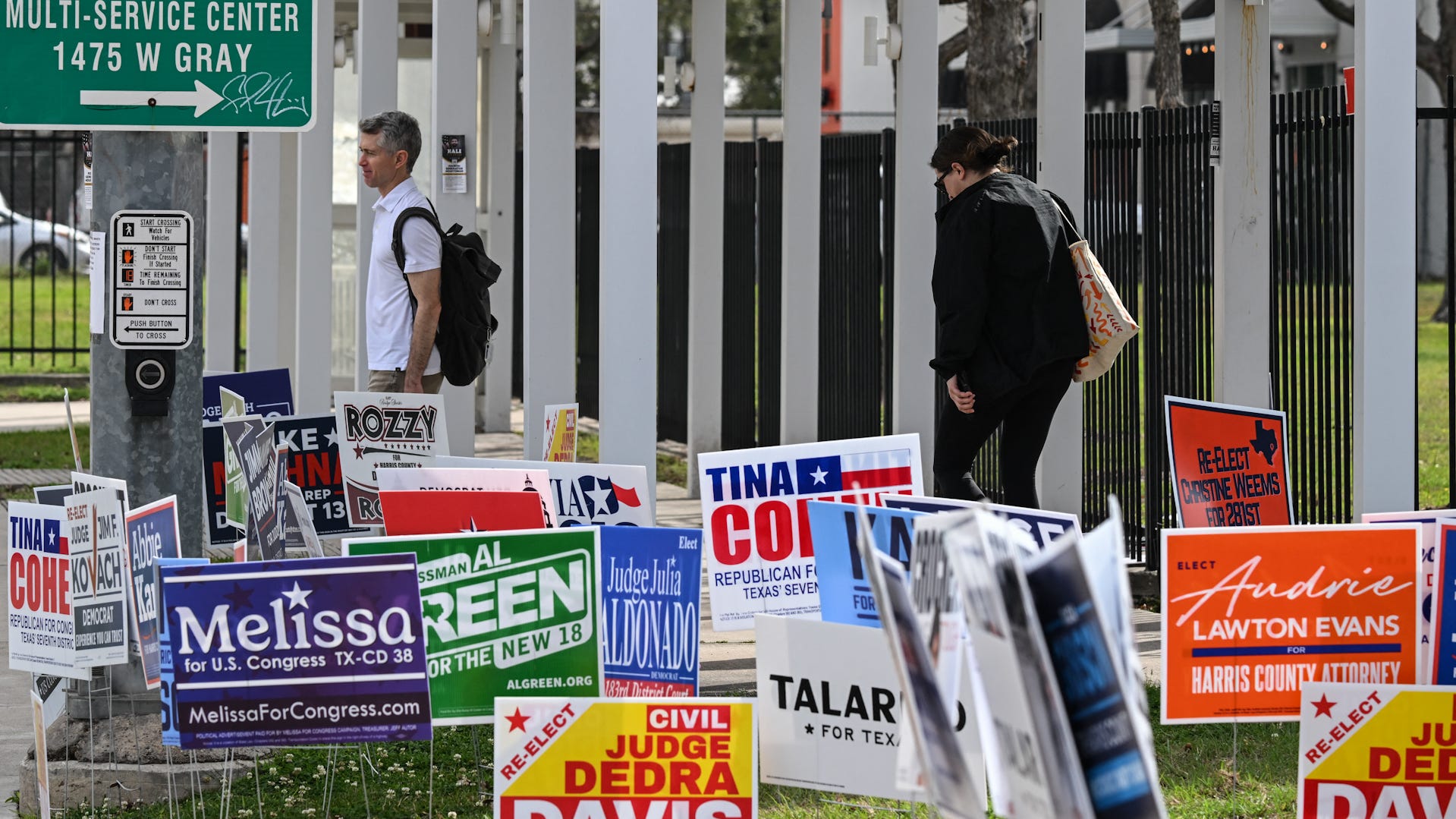
Voters in three states – Arkansas, North Carolina and Texas – made their voices heard, but much of the national attention focused on the Lone Star State’s U.S. Senate Republican and Democratic primaries, which cost a total of about $110 million, breaking campaign spending records.

But the November race between Rep. Jasmine Crockett and state Rep. James Tallarico, fought more over style and electability than over modest policy differences, was muddled by election rules and court orders that spread confusion on the Democratic side.

“I’m not going back tonight because I have no idea when the results are going to be out and I fully expect it to be tomorrow,” Crockett told supporters at his campaign event late Tuesday night.

The contest served as a test for Democrats on how best to take on Mr. Trump and appeal to unsettled voters.

But Republicans have had their share of skirmishes, primarily in Texas, where longtime Sen. John Cornyn faces a major challenge from more right-wing insurgents and Rep. Dan Crenshaw (R-Texas), once seen as a rising star in the Republican Party, lost a crushing primary to a newcomer.

Here are key takeaways from the March 3 primary.

Election rules and court orders disrupt Crockett vs. Talarico showdown

About 1.4 million voters cast their ballots in the Democratic primary contest between Crockett, known for his passionate criticism of the Republican Party, and Talarico, who has a populist message.

Early results show Talarico is performing well in Hispanic neighborhoods. Tararusio held a lead with just 51% of votes counted, according to the Associated Press, but predictions for the race were upended by reports that voters in two key counties, including Crockett’s hometown of Dallas, were being denied access to polling places.

Local voters have long been allowed to vote anywhere in the county, but Republicans in Dallas and Williamson counties have opted to change the rules for the 2026 primary, requiring them to vote only in their assigned precincts.

The judge ordered the voting period to be extended by two hours at the request of both Democratic candidates. But the Texas Supreme Court ruled that Dallas County ballots cast after the original polls had to be separated from other ballots, per an order from state Attorney General Ken Paxton.

It remains unclear when those votes will be counted, if at all, or if they will affect the outcome, but Crockett declared that the disruption means there will be no results on election night.

“Unfortunately, this is what the Republicans want to do, so they specifically targeted Dallas County, and I think we all know why,” she said.

A spokesperson for her campaign told The Associated Press that she plans to file a lawsuit alleging disenfranchisement.

Cornyn and Paxton head to an even worse runoff on May 26th

The Republican Party waged a bitter primary for Mr. Cornyn’s career, as he tried hard to fend off two MAGA-related challengers, Rep. Wesley Hunt and scandal-plagued state Attorney General Ken Paxton.

As polls predicted, neither Cornyn nor Paxton received enough votes to pass the 50% threshold needed to avoid a runoff, so their messy contest will continue until a rematch on May 26th.

The 74-year-old incumbent defeated both rivals with support from Senate Republican leadership. Trump specifically refused to endorse anyone in the race. The attacks on Paxton focused on his bribery allegations and marital drama.

“Judgment Day is coming for Ken Paxton,” Cornyn’s camp said in a March 3 post on the X show.

Paxton is considered a MAGA darling, highlighting his lawsuit against the Biden administration and his support for Trump. He also demonstrated an uncanny ability to survive an onslaught of political scandals.

What happens next depends largely on Mr. Trump, who will receive heavy lobbying from top Senate leaders and former campaign advisers, but “now is the time to put Texas to bed for the Senate majority,” a Republican operative close to Cornyn’s campaign told USA TODAY.

Crenshaw follows suit in shocking upset of Texas Republican Party

There was a time when Rep. Dan Crenshaw (R-Texas) was thought to be the face of a new conservative movement after speaking at the 2020 Republican National Convention.

A veteran of the wars in Iraq and Afghanistan, he wears his trademark eyepatch after being wounded in combat and receiving national media attention.

He has championed causes on the political right, such as banning federal funding for gender-affirming care, while also receiving praise from the National Rifle Association.

But Mr. Crenshaw’s support for aid to Ukraine, certification of the 2020 election results and support for a bipartisan immigration enforcement agreement during the Biden administration frustrated Mr. Trump. As of 2026, he was the only incumbent Republican member of the House of Representatives in Texas not to be endorsed by the president.

Crenshaw has attracted multiple primary challengers, including state Rep. Steve Toth, backed by Sen. Ted Cruz, in a newly redistricted district that covers largely new territory.

With 62% of the votes counted, Toth led Crenshaw 58% to 39% and declared victory, even though news outlets had not yet announced the results.

Age referendum in newly defined Texas district?

The age of America’s elected officials in 2024 became a major sticking point for Democrats, given the persistent questions about then-President Joe Biden and the fact that about 6 in 10 Americans told pollsters that President Trump’s age was a concern.

This generational divide will be one of the key features of the 2026 Democratic primary, as a swarm of younger candidates seeks to unseat veteran conservatives.

One of the first races in which the issue came to light was the Texas primary between U.S. Rep. Al Green, 79, and Rep.-elect Christian Menefee, 37, in the state’s newly drawn 18th Congressional District, orchestrated as part of President Trump’s massive redistricting war.

With about 70% of precincts reporting, Ms. Menefee holds a roughly 4-point lead over Ms. Greene, who is known for disrupting the past two State of the Union protests, potentially signaling to voters that a new generation of Democrats is ready to take over.

North Carolina Senate race takes shape

Senate Democrats remain bullish on their chances of taking back the Senate this year, but they will need a near-perfect performance in November to do so.

North Carolina State is part of that equation given its toss-up situation. Trump will win the battleground state by about 3 percentage points in 2024, and a vacant Senate seat will be created thanks to retiring Republican Thom Tillis’ reelection bid.

Democrats successfully fielded former Gov. Roy Cooper, a moderate who was first elected in 2016 and served two terms, with a strong victory on Tuesday. He will face former Republican National Chairman Michael Whatley, an ally of President Trump, in the year’s most important and likely expensive Senate race.

“If (Cooper) is elected governor, he probably has a chance to be elected to the Senate,” said Linda Ekman, 73, a retired doctor who voted in Handersville, North Carolina.

But this will be an uphill climb for Democrats, given that the current 53-47 Republican majority requires them to flip not only North Carolina but also Alaska, Maine, and Ohio while preserving seats in Georgia and Michigan.

Contributor: Katherine Palmer

Harry Styles’ new album makes you stop overthinking and just feel

0

play

It was clear from the first song, “Aperture,” that Harry Styles’ new album wasn’t going to be the same as his previous one.

While his Grammy-winning “Harry’s House” danced around with taut melodies, inescapable hooks and blasts of brass (“We Still Love You,” “Music for a Sushi Restaurant”), Styles’ fourth solo album, “Kiss All the Time. Disco, Occasionally,” is as quirky and eyebrow-raising as its title.

This isn’t a criticism, just an acknowledgment that Styles’ first release in four years, due out on March 6th, marks a major shift towards electronic music with 80s dark wave influences.

Refreshing pop, this is different. But it is teeth It’s a showcase of artists who aren’t afraid to stretch and plunge into the deep end.

The thumping “Aperture” already debuted as a slow song that sounded like a remix, but its unconventionality propelled it to the top of the Billboard Hot 100 (along with the Global 200, Streaming Songs, and Digital Song Sales charts) in February.

Styles, 32, produced more than a dozen of the album’s songs with his trusted producer Kid Harpoon, and the pair happily experiment with blasting synths and take cues from artists such as British DJ/producer Jamie XX (who will perform with Styles at this summer’s Madison Square Garden show).

Many song titles – “Season 2 Weight Loss”, “Ready, Steady, Go!” and “Taste Back” among them will never be clear after hearing the lyrics, which an archaeologist would need to debunk. Styles tosses lyrics like “But you call me Leon/You only call it that in my head” on the Eurotrash disco banger “Ready, Steady, Go!” This leads to the call-and-response coda, “You gotta get your feet wet/Respect!/Respect your mother!” The funky “Dance No More” seems to convey a message: don’t worry about understanding, just feel.

That said, fans will likely search the internet for clues regarding the subject matter of the album’s final song, “Carla’s Song.” The song is driven by bright synths and throbbing bass, escalating into a rattlesnake sway as Styles yells, “Everything’s waiting for you out there.” Similarly, “American Girls,” with its slow groove and piano pulse, finds Styles blasting the song’s chorus, “I’ve known you for years/All I’ve heard/My friends are in love with American Girls.”

Throughout the album, Styles is admirably committed to progress, even if it’s not gift-wrapped radio fodder. But when these EDM-infused tracks are played live, they’re sure to cause a stir.

We would like to introduce some of the representative songs of “KATTDO”.

“Are you listening yet?”

Styles speaks and sings using cascading keyboards on the album’s most verbose song, but it’s also his most musically exciting. The crackling chorus goes, “I’m out of options/Are you listening yet?” It will soon take off. But then the electric guitar swoops in, the song detours into a drum-heavy break, and somehow everything still sounds coherent.

“Taste Back”

It’s a very ’80s moment, with obvious influences from the industrial synth-pop of Depeche Mode and Soft Cell, as Styles sings over a sweet, soothing chorus. “Paris must be lonely if you say that…Has your sense of taste returned?/Or do you need a little love?” Styles considers the question in real time and decides, “All you need is a little love.”

“Coming Up Rose”

This string-laced ballad is one of Styles’ most light-hearted songs, and includes the magical lyric, “Just for tonight, let’s chase the hangover.” Enchanting strings give this song an old-fashioned, rich feel. But what’s so interesting about KATTO’s eighth song is that its softness comes out of left field, like “Yesterday,” which appears between “I’ve Just Seen a Face” and “Dizzy Miss Lizzy” on The Beatles’ “Help!” album.

‘pop’

If anything resembles Styles’ past, well, pop, this is it. Except this time, he weaves repetitive techno into the mix. As the song unfolds, you can hear Styles unraveling, but there’s no denying the emphasis on the title’s chorus: “Am I crazy?/This can go anywhere/I did it and I’ll do it again/It’s meant to be pop.” “It’s great to mix two flavors together,” Styles sings, once again offering mysterious lyrics that only he might understand. And once again, we remind ourselves that it’s okay to feel as well as think.

0


play

. It was the right medicine, and this old Linux box has been smooth as silk in the past four months.

Anders Bylund has positions in Alphabet, Amazon, Micron Technology, Newegg Commerce, and Nvidia. The Motley Fool has positions in and recommends Alphabet, Amazon, Best Buy, Micron Technology, Microsoft, Nvidia, and eBay. The Motley Fool has a disclosure policy.

The Motley Fool is a USA TODAY content partner providing financial news, analysis and commentary designed to help people take control of their financial lives. Its content is produced independently of USA TODAY.

Offers from the Motley Fool:

of

Netflix you have $445,995 Nvidia you have $1,198,823

Total average return is 927

*Stock Advisor will return on February 26, 2026.

Iowa honors reservists killed in Iran attack

0


Captain Cody A. Koch, 35, of Winter Haven, Florida; Sergeant 1st Class Noah L. Tietjens, 42, of Bellevue, Nebraska. And Sgt. Also killed were Private 1st Class Nicole M. Amor, 39, of White Bear Lake, Minnesota.

play

  • Declan Cody, an Iowa soldier and Army reservist, was killed in an Iranian attack in Kuwait.
  • Cody’s death follows the deaths of two Iowa National Guard members in Syria six weeks ago.
  • The 20-year-old is a sophomore at Drake University and a 2023 graduate of Valley High School.

An Iowa soldier killed in an Iranian attack is being remembered in his home state as a “young Iowan who heroically answered the call to national duty and made the ultimate sacrifice.”

Iowa Gov. Kim Reynolds also asked Iowans in a statement to join them in praying for Sergeant Johnson’s family. Declan Cody, 20, a sophomore at Drake University and an Army reservist from West Des Moines.

Cody was killed in an Iranian attack on Kuwait’s Shuaiba port on Sunday, March 1st. The attack also killed three other soldiers from the 103rd Sustainment Command, a Des Moines-based unit.

Shuaiba, in the Persian Gulf, is near Camp Buehring, the U.S. military base where Cody’s father, Andrew, and sister, Keira, told the Des Moines Register they were stationed.

The Pentagon on Tuesday, March 3, identified the other person killed in the airstrike as Capt. Cody A. Koch, 35, of Winter Haven, Florida. Sergeant 1st Class Noah L. Tietjens, 42, of Bellevue, Nebraska. And Sgt. 1st Class Nicole M. Amor, 39, of White Bear Lake, Minnesota; It was also confirmed that Cody, who was posthumously promoted from specialist to sergeant, was among them.

The attack came after the United States and Israel launched “Operation Epic Fury” against Iran on Saturday, killing senior Iranian officials including Supreme Leader Ayatollah Khamenei in attacks.

Cody’s family said they were notified of his death Sunday around 8 p.m.

“We are heartbroken to learn that Declan Cody, a popular and highly dedicated Drake University student studying information systems, cybersecurity, and computer science, has been identified as one of the six U.S. service members killed in Kuwait on Sunday. He bravely served in the U.S. Army Reserve as an information technology specialist starting in 2023 and had an incredibly bright future ahead of him,” Drake University said in a statement.

“At times like these, it is time for us all to come together and show the Cody family some much-needed love and compassion during this incredibly difficult time,” the statement said.

Cody’s awards and decorations include the Army Service Ribbon, the National Defense Service Ribbon and the Overseas Service Ribbon, according to a statement from the Army.

The last time the father spoke to his son was Saturday.

Andrew Cody said the last time he spoke to his son was Saturday. “He told us he was safe.” Declan Cody updated his family hourly, and finally spoke to his brother Aidan, 25, an army corporal stationed in Italy.

Cody told his brother he was OK, his father said, “but based on the limited time frame, we felt this incident occurred shortly after he got off the phone with his brother.”

Cody’s sister Keira, 22, who will graduate from Drake University in 2025, said, “He was my little brother…I’m so sad that I didn’t get a chance to tell him I love him one more time.”

While at Drake, Cody joined the Army Reserve. Although he could have been exempted from deployment because he was in ROTC, he was still sent to Kuwait and left in August 2025.

His father said he is considering active duty after deployment. “That’s how much he loved it,” he said.

Cody would have turned 21 on May 5th.

A GoFundMe post asking for support for the family said: “Declan was more than just a soldier, he was a son, a family member, a friend and a light in the lives of everyone who knew him. He served his country with honor, courage and dedication and epitomized the very best of what it means to wear the uniform.”

The funds raised will be used for funeral, memorial, and travel expenses.

“Let us come together to honor Declan’s life, his service and sacrifice, and surround his family with love and support,” the post reads.

As of Tuesday, six American soldiers had been killed in the conflict.

The deadly retaliatory attack came just over a month after Reynolds visited key installations in the Middle East where Iowa National Guard troops are deployed, including Camp Buehring. The trip covered Syria, Jordan, Iraq and Kuwait, where about 1,800 Iowa National Guard troops were deployed at the time.

“A person who is quite shy and doesn’t talk much.”

Cody is a 2023 graduate of Valley High School in West Des Moines.

“He was a really kind person. He was very shy and quiet, but he was wonderful,” his sister said.

“He was still sociable in many ways. He wasn’t afraid to do anything,” his father added. “He always went out of his way to help people. Declan was very good at his job in the Army.”

Cody rose through the ranks of the Boy Scouts, earning the highest rank, Eagle. His two brothers did the same.

Declan loved gaming, going to the gym, his cat Autumn, and enjoyed camping and hiking with his family.

“We were all very close growing up,” his sister said.

Mr. Cody’s death follows that late last year of Iowa National Guard Staff Sgt. William Nathaniel “Nate” Howard, 29, of Marshalltown and Edgar Brian Torres-Tovar, 25, of Des Moines. Suspected ISIS gunmen ambushed them near Palmyra, Syria, and also killed a civilian interpreter from Michigan. Three other Iowa National Guard members were injured.

Howard and Torres Tovar’s bodies were transported to Iowa on Christmas Eve and buried at the Iowa Veterans Cemetery on December 29th. They were the first members of the Iowa Army National Guard to die in combat since Sergeant Howard. Terril L. Pusker was killed in the Afghanistan War in July 2011.

Iowa had about 1,800 soldiers deployed across the region as part of Operation Inherent Resolve before the first wave of about 250 Guard soldiers returned in February. The Guard announced last weekend that another 575 people were on their way home.

Capitol Police Director Stephen Gruber Miller and staff writers Tyler Jett, Virginia Barreda, and Samantha Hernandez contributed to this article.

Kevin Baskins covers jobs and the economy for the Des Moines Register. Please contact kbaskins@registermedia.com.

Kyle Warner is the Register’s breaking news and public safety reporter. Please contact kwerner@registermedia.com..

Burger King subtly attacks McDonald’s CEO with giant Whopper bites

0

play

Burger King isn’t afraid to go big. At least that’s what a recent viral video featuring Tom Curtis, the president of the popular fast food chain, shows.

Hours after the internet started teasing McDonald’s CEO Chris Kempczinski for his less than convincing endorsement of the new Big Arch Burger, BK shared a clip of Curtis enthusiastically gorging on the new and improved Whopper.

A few seconds after taking a bite, Curtis says, “There was just one thing missing.” “It’s a napkin.”

Burger King’s subtle jab at McDonald’s didn’t go unnoticed, with some users comparing and pointing out the differences in reactions to Kempczinski and Curtis’ respective “products” in the comments.

“This is a human bite,” one social media user wrote. “Please take a note at McDonald’s.”

Kempczinski’s reviews, explanations, and tastings themselves garnered quite a bit of attention, with some people questioning whether he even liked hamburgers at all.

“I love this product,” Kempczinski says in the clip before sampling the burger. “It’s very delicious. I’m going to try it now, but I’m going to have this for lunch, just to be sure.”

McDonald’s did not immediately respond to USA TODAY’s request for comment on Tuesday, March 3.

Burger King shares taste test just for ‘fun’

Mr. Curtis’s review, like Mr. Kempczinski’s, was filmed and shared to highlight the menu item. Burger King said TikTok was a “fun way” to highlight the newly “elevated” Whopper, and that “giving Tom a first-hand taste felt like a natural way to commemorate the moment.”

“We’re thrilled to see our guests excited about the Whopper, and Burger King President Tom Curtis is no exception,” Burger King said in a statement on Tuesday, March 3.

According to Burger King, Curtis’ taste test was filmed in February and originally shared as part of a longer TikTok featuring direct feedback from guests.

USA TODAY also tried the Big Arch Burger

play

Try McDonald’s Big Arch Burger on USA TODAY

USA TODAY’s Mike Snyder sampled McDonald’s Big Arch Burger, which will be released nationwide in March 2026.

USA TODAY Trends reporter Mike Snyder sampled Big Arch for a week ahead of its Tuesday, March 3, release and called the burger “heavy.”

“When you order this, you should be hungry,” Snyder said during the tasting.

Big Arch Burger Details

McDonald’s Big Arch Burger is already appearing in stores nationwide. This hamburger has been attracting attention for some time due to its size, but the recently released tasting video has also attracted attention.

As Kempczinski noted in the tasting video, McDonald’s is touting it as its “biggest, boldest burger ever,” featuring two quarter-pound beef patties, three slices of melted white cheddar cheese, lettuce, pickles, crispy onions and Big Arch sauce.

McDonald’s online menu spotter page describes Big Arch Sauce as “a tangy, creamy sauce with perfectly balanced mustard, pickle, and sweet tomato flavors.”

Contributed by Kate Perez and Mike Snider, USA TODAY

US and Ecuadorian forces begin counter-narco-terrorism operation

0

On March 3, U.S. Southern Command announced in a statement published in X that U.S. and Ecuadorian forces had begun an operation targeting a “designated terrorist organization” in Ecuador.

The statement said the operation was to “combat the scourge of narco-terrorism.” Details of the operation were not disclosed.

“We commend the men and women of the Ecuadorian military for their unwavering commitment to this fight and the courage and determination they have shown through their continued action against narco-terrorists in the country,” Southern Command Gen. Francis L. Donovan said in a post.

“We are starting a new phase against narco-terrorism and illegal mining,” Ecuador’s Ministry of Defense said in a post on X shortly after the Southern Command announcement. Ecuadorian President Daniel Noboa Azin made a similar statement in a March 2 post on the site.

The ministry said in a statement to Reuters that details of the “offensive” operation were confidential.

Asked for comment by USA TODAY, Southern Command representative Stephen McLeod said the military had “nothing further to add” beyond the statement. USA TODAY has also reached out to the Department of Defense and the Ecuadorian Ministry of Defense for comment.

This story has been updated.

Contributor: Eduardo Cuevas, USA TODAY. Reuters