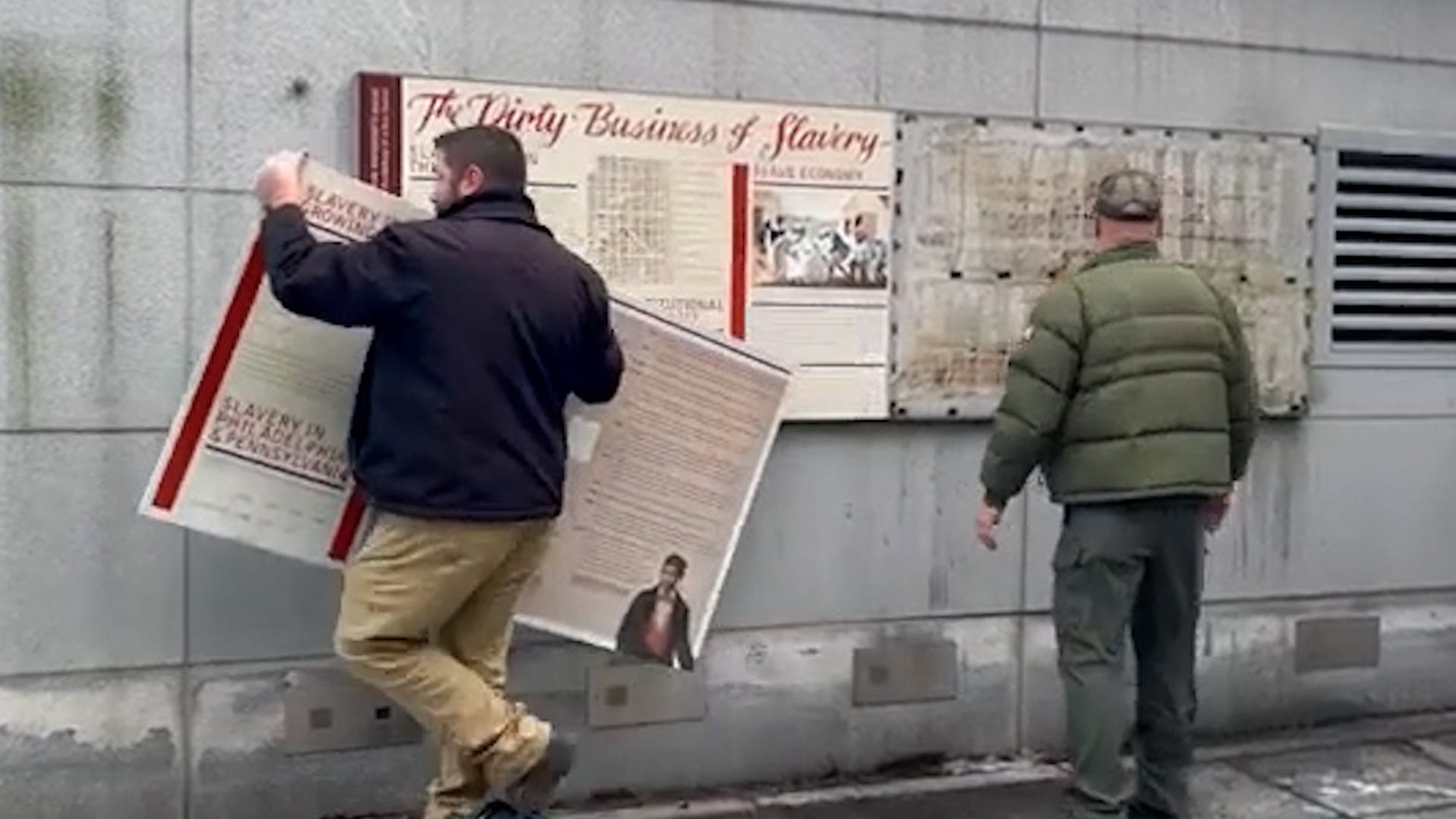

Philadelphia slavery exhibit removed by National Park Service
An exhibit memorializing the enslaved people who lived and worked in George Washington’s home during his presidency has been removed in Philadelphia.
The Trump administration has removed more than 40 facilities and other materials at national parks across the country, following an effort to remove from parks anything that “disrespects past or living Americans,” according to a recent court filing.
The government filed the application last week in response to a judge’s ruling that exhibits and signage on topics such as slavery and climate change that had been removed from parks and monuments across the country must be restored because they “do not align with the government’s preferred narrative.”
Here’s what you need to know about the list of affected items:
From portrait descriptions to junior ranger books
A June 17 court filing revealed that the Trump administration removed 57 exhibits, signs, and other materials from parks and monuments across the country for two main reasons: They were either deemed “irrelevant to the beauty, richness, and grandeur of the natural landscape,” or they were “disrespectful of past or living Americans.”
On June 12, U.S. District Judge Angel Kelly in Boston issued a preliminary injunction blocking the government’s efforts to rebuild the park, after several groups representing conservationists, historians, and scientists filed a lawsuit accusing the Interior Department of a “sustained campaign to erase history and undermine science.”
As part of the injunction, the government was required to provide a list of items targeted so far.
Items removed for “disrespecting Americans” include:
- Portrait Description at Independence National Historical Park
- Tribal land acknowledgment sign on George Washington Memorial Parkway
- Junior Ranger Books for Buck Island Reef National Monument, Fort Raleigh National Historic Site, and Medgar and Murray Evers Home National Historic Site
- Roadside African American Civil War Memorial on the National Mall and Memorial Park
Government’s call for public support backfired
The removal of the material was in response to an executive order signed by President Donald Trump in the first months of his second term, calling on federal officials to scrutinize monuments, memorials and statues and remove language that the administration says supports a “revisionist movement” that characterizes U.S. history as “inherently racist, sexist, oppressive, or otherwise irredeemably flawed.”
To strengthen this effort, the Interior Department has installed what critics call “snitch signs” with QR codes inside national parks, encouraging visitors to report signs that portray Americans negatively or center stories about slavery, land theft, and discrimination. As USA TODAY previously reported, the campaign largely backfired.
Contributed by: Nate Raymond, David Thomas, Reuters
Drew Pittock covers trending news from around the country for USA TODAY. He can be reached at DPittock@usatodayco.com.


