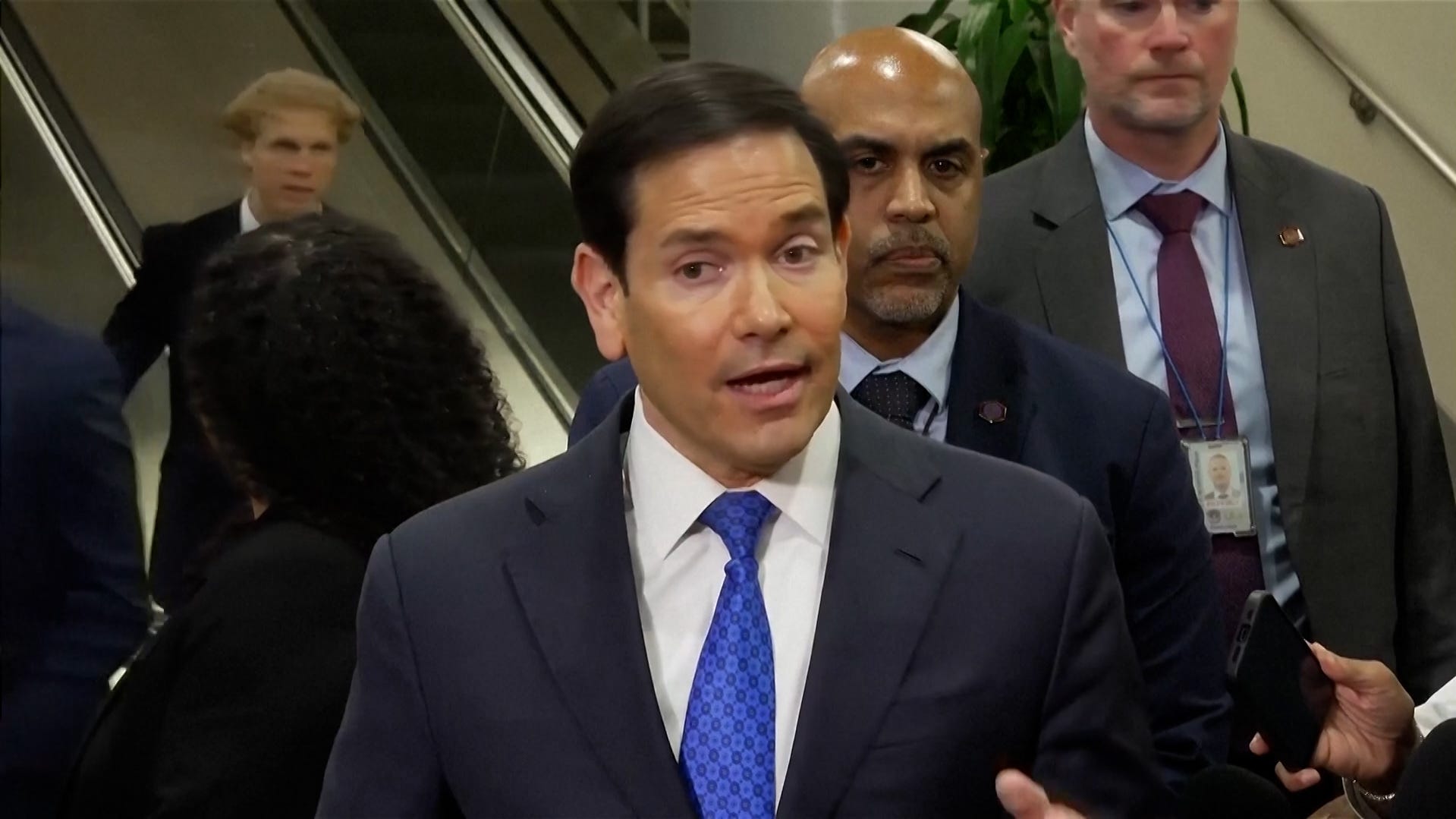

Thousands of Americans are fleeing the Middle East amid wars, Rubio says.
Secretary of State Marco Rubio announced that 9,000 Americans have been evacuated from the Middle East since the outbreak of the US-Iran war.
Missile sirens sound every few hours. Young children scream in fear. Fire lights up the sky.
For more than 1,000 Afghan refugees holed up in a US-run camp in Qatar, this has been life since the US and Israel began a war with Iran less than a week ago.
Since the U.S. withdrawal from Afghanistan in 2021, these people have been waiting to be resettled in the U.S. at Camp al-Sayriya, a U.S. military base-turned-refugee camp on the outskirts of Qatar’s capital Doha.
Many of the 1,100 Afghan refugees stuck at the base served with the U.S. military during the occupation of their homeland, and about 150 of them are family members of active-duty U.S. military personnel. They can no longer return to their homeland, where they risk persecution and death by the ruling Taliban government.
A new war in the Middle East, launched by the Trump administration and Israel on February 28, has left both countries in fear and confusion as Iranian retaliatory missiles fly overhead, are intercepted by US and Qatari air defense missiles, and rain debris. Residents told USA TODAY that people could not sleep all night standing outside watching the missiles pass through the sky. An explosion was heard nearby and the children screamed.
Four refugees at the camp spoke to USA TODAY on condition of anonymity due to the sensitivity of the situation. Residents of the camp have received messages from officials and the Qatari government ordering them not to speak publicly about the missile attack since the war broke out days ago.
“We came from the war,” a 14-year-old girl living in the camp told USA TODAY. “Right now, there is a war going on here, and every day there are missiles flying, missiles flying, explosions happening.”
“We haven’t committed any crime,” she said. “We are in this camp like people in prison.”
Approximately 800 of the camp residents who fled Afghanistan after the U.S. withdrawal were admitted to the United States under the Refugee Resettlement Program after an extensive screening and interview process, according to a letter sent to Trump administration officials by AfghanistanEvac, an advocacy group for Afghan allies. Within hours of taking office in 2025, President Donald Trump suspended migration programs indefinitely, plunging their lives into chaos and uncertainty. Many Afghans have now been stuck in camps in Qatar for years.
After the first U.S. and Israeli attacks on Iran, the country launched a barrage of missiles and drones at U.S. allies in the region, including Qatar. In the days that followed, refugees said there was panic at Camp as Sairiya, a former army base in the desert outside Doha, as sirens blared intermittently throughout the day and residents took shelter in small shipping containers.
“The container detention facilities we live in do not provide meaningful protection and there are no hardened shelters readily accessible to residents,” the camp residents wrote in a joint letter to the State Department and members of Congress. “When these alarms go off, mothers and children often have no safe place to go.”
“Roughly 1,100 civilians are currently living in conditions of anxiety, fear and waiting.”
A State Department spokesperson told USA TODAY in an email that the agency is “actively addressing all relevant operational concerns in the region,” including “the safety of the residents of Camp As Seiyah (CAS), which is under U.S. control.”
Missile fragments hit family shelter
Refugees at the camp told USA TODAY that on the first day of the war, missile alerts came within 15 minutes. Now it happens every few hours.
Refugees said young children and pregnant women screamed in fear as explosions rang out nearby. According to the 14-year-old girl, most people at the camp, including the girl and her parents, have already been prescribed antidepressants due to high stress. One man said he believes his wife went into premature labor a few days ago due to the stress of being caught up in a war with no way out.
The missile barrage has not yet caused physical injuries to anyone in the camp, but several refugees reported that fragments from the intercepted missile hit one family’s empty shelter. Photos and videos of the aftermath showed a gaping hole in the roof and people examining a dinner plate-sized piece of metal found on the ground.
The 50-year-old man, who fled Afghanistan after working for the U.S. government for more than a decade, said he begged camp authorities to move his children to a safer location, but was told authorities had nowhere else to go.
The man said that on March 2, about 100 people packed up their belongings and arrived in Doha, sought help from Qatari authorities and tried to flee through the camp’s main gate, but guards ordered them to turn back.
“The government is busy. It can’t do anything for you,” they told the man. “They are busy saving their own people.”
People who have lived in the camps for years are already “mentally numb,” the man said. But the barrage of missiles has pushed many over the edge, he said.
The camp has become a “hellish place,” he said. “It’s because of God’s kindness that we were saved, but nothing has happened yet. Things will only get worse if things continue like this.”
Hundreds of refugees in the camp live in large warehouses and sleep in bunk beds. Since the missile barrage began, people have been moved to metal shipping crates to sleep. Photos and videos they shared with USA TODAY showed families of seven or eight crammed into a single container, with children huddled in a narrow niche along a wall. Evacuees say walls shake when missiles explode outside.
The father, who has been living in the camp with his wife and five children for more than a year, said his youngest daughter, 10, had stopped eating or sleeping since the missile barrage began.
She’s “re-traumatized,” he says. “She cries day and night.”
The State Department says it plans to close the camp by March 31, but has not specified where the residents will go next. Refugees who spoke to USA TODAY said they were told they would be sent to an unspecified third country. A March 3 meeting with State Department officials was told that the next destination had not yet been determined.
“The war has started. We don’t know what will happen,” the father said.
“What will our future be? What will our children’s future be?”


