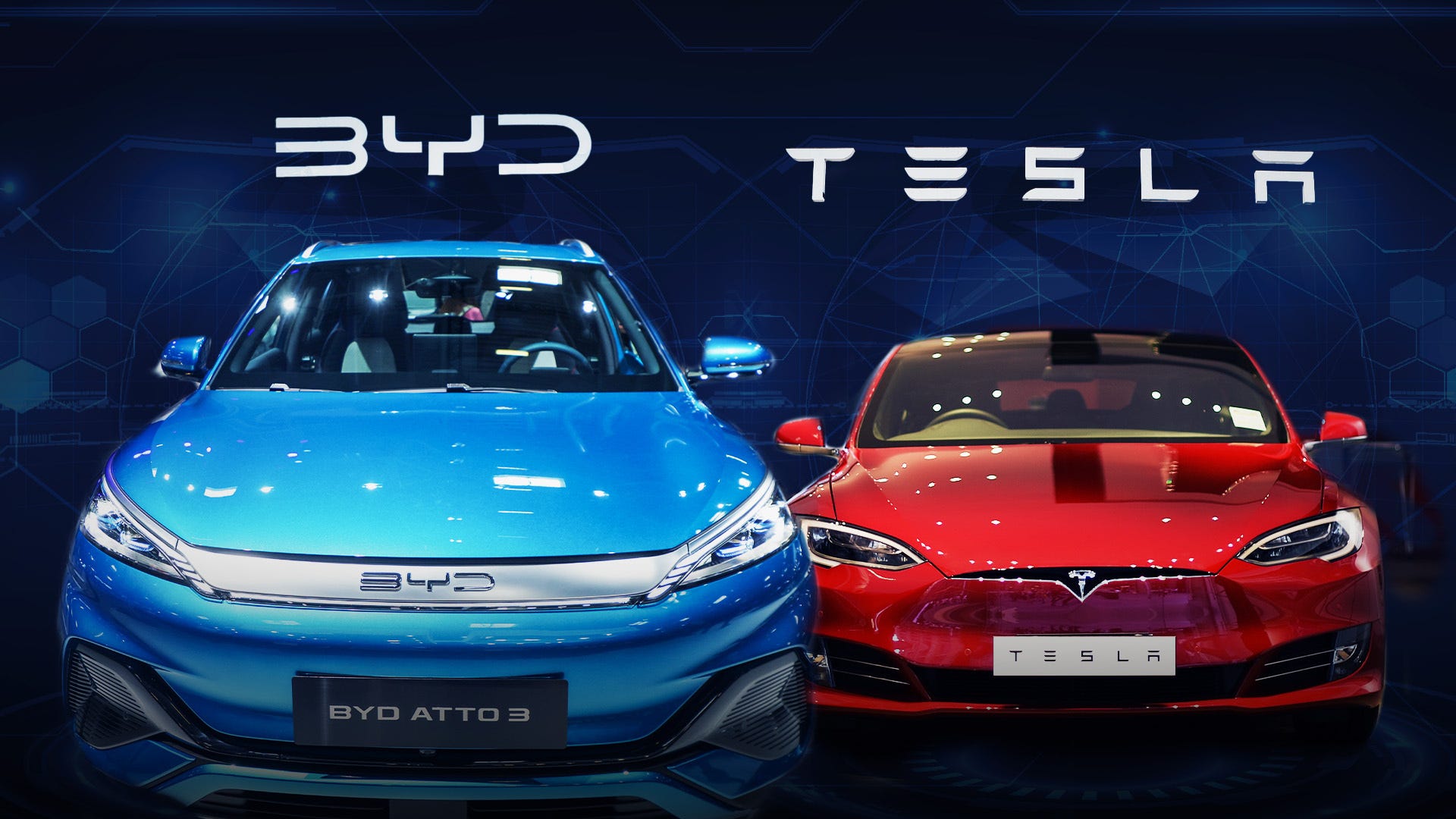

China’s BYD defeats Tesla and becomes EV king
BYD is now the world’s top electric car seller, overtaking Tesla, which Elon Musk’s company has dominated for a decade. Bloomberg analyzes how the world’s richest person came in second place.
bloomberg
- Canada and China have announced a new trade agreement that will allow up to 49,000 Chinese-made electric vehicles to enter the Canadian market.
- The agreement is expected to spur new Chinese investment in Canada’s auto manufacturing sector within three years.
- Canada’s Unifo union criticized the deal, saying it puts jobs in Canada’s auto industry at risk.
BYD electric vehicles will soon be available for purchase in Canada under a new trade agreement between Canada and China announced on Friday, January 16th.
Canadian Prime Minister Mark Carney said Canada will allow up to 49,000 Chinese-made electric vehicles to enter the market at a most-favored-nation tariff of 6.1%. Carney’s office said the amount of Chinese-made electric vehicles that Canada plans to allow for sale in Canada “represents the volume of the 2023-2024 year prior to the recent trade dispute regarding these imports, and represents less than 3% of the market for new vehicles sold in Canada.”
“This agreement is expected to significantly facilitate new Chinese joint venture investments in Canada with trusted partners within three years, protect and create new auto manufacturing careers for Canadian workers, and ensure the construction of a strong Canadian EV supply chain,” Kearney’s office said in a statement.
“With this agreement, we expect that in five years, more than 50 per cent of these vehicles will be affordable EVs with an import price of less than $35,000, creating a new low-cost option for Canadian consumers,” Carney’s office said.
Who is the largest EV seller in Canada right now?
According to the Canadian Energy Regulator, the best-selling EV models in Canada from 2020 to 2024 are:
- tesla model 3
- Tesla Model Y
- hyundai ionic 5
- hyundai kona electric
- Volkswagen ID.4
What do unions think about Canada allowing the sale of Chinese-made EVs?
The Unifor union, Canada’s largest private labor organization, condemned the deal that would allow Chinese-made EVs to be sold in Canada.
“This is a self-inflicted wound on Canada’s already damaged auto industry,” Unifor National Chairman Lana Payne said in a statement. “While rewarding, Canada’s auto jobs are at risk for labor law violations and unfair trade practices, backed by massive state subsidies, overproduced, and a springboard for cheap Chinese-made EVs aimed at increasing market share through export.”
Payne also said the decision will make it harder for Canada to resolve problems caused by U.S. tariffs on Canadian cars and rollbacks in U.S. electric vehicle policies that are hurting the country’s auto workers.
“Finding a solution to U.S. auto tariffs is becoming more difficult now that Canada has given up its market-opening influence to China,” she said.
What do US EV advocates think about Canada allowing the sale of Chinese-made EVs?
U.S. electric vehicle advocates have accused President Donald Trump’s tariffs of opening the door to a deal between Canada and China.
“China just gained a foothold in the North American EV market, and that was no accident,” Mike Murphy, CEO of the American EV Jobs Alliance, said in a statement.
“When U.S. trade policy becomes chaotic, unpredictable, and destructive, negative outcomes are inevitable,” Murphy continued. “President Trump has truly failed when it comes to protecting American auto jobs and North American auto manufacturing.”
The White House did not respond to requests for comment.
Albert Gore, executive director of the Zero Emission Transportation Association in Washington and son of former Vice President Al Gore, said in a statement that the announcements by Canada and China, as well as earlier announcements of similar agreements between China and the European Union, “demonstrate that the global auto market’s interest in electric transportation remains strong,” adding, “Electric vehicles are a great product and popular with motorists.” “If the United States doesn’t invest in them, our competitors around the world will.”
“Canada’s decision to open its market to Chinese electric vehicles risks giving Beijing a foothold in the North American auto market, threatening thousands of jobs and undermining a century of unified automotive leadership,” the U.S. House Select Committee on China said in a post on social media website


