Mattel’s new autistic Barbie doll is drawing mixed emotions from people within the autism community. why?

See Barbie’s first autistic doll
Barbie expands its Fashionista collection with the first autistic Barbie doll with flexible joints and sensory-sensitive dress fabric.
Mattel’s new autistic Barbie doll has been widely praised online for being a great example of the community. But not everyone is sold on the new dolls, including some autistic people and their families.
USA TODAY exclusively revealed on January 11 that Barbie will be releasing its first autism doll to show how people with autism experience the world around them.
The doll’s accessories include items used by some people with autism, such as noise-cancelling headphones, a fidget spinner, and a tablet with an augmentative and alternative communication (AAC) app to help people communicate. Mattel said there are also intentional design choices, such as flexible joints for stimulation, which refers to repetitive body movements to process sensory information.
Mattel said the doll, which is currently available at Mattel Shops and Target, had been in development for more than 18 months in partnership with the Autism Self-Advocacy Network (ASAN), a nonprofit disability rights organization.
While some support Mattel’s efforts, others argue that no single doll can adequately represent a condition with a wide range of needs.
“I love the message it sends to children.”
Although autism is not a physically visible condition, Barbie’s new autism dolls include certain items and types of clothing that some autistic people may use.
“We wanted to allow autistic children to express different sides of themselves. Not all autistic people do that, but many do. We also wanted non-autistic people to be able to see that and learn in a fun and creative way,” Colin Killick, executive director of the Autism Self-Advocacy Network, told USA TODAY.
Emily Katie, an autistic author and content creator, said she became emotional when she learned about the autistic Barbie doll.
“I love the message this movie sends to kids,” Katie told USA TODAY. “It’s like telling autistic children who may see themselves in a Barbie doll that they are not alone, that they matter, and that there is nothing wrong with who they are.”
On social media, many others said they shared Katie’s feelings.
Chloe Hayden, an autistic content creator with more than 1 million followers on TikTok, cried while talking about her new doll.
“Once you see these really cool, beautiful dolls using these devices, I think a lot of kids will want to be able to use them themselves,” Hayden said in the video, adding, “I hope everyone realizes how truly important these dolls are.”

What is autism and what we still don’t know
Autism remains a complex and evolving condition, from early diagnosis to lifelong questions.
The TikTok account @LewisEmpire6, which has about 900,000 followers and is run by a family with an autistic daughter, shared a video of them unwrapping an autistic Barbie doll from Mattel, which has been viewed more than 9 million times as of January 16.
“Do you know what this is? The first Barbie doll to represent autism,” mother Ashley Lewis tells her son in the video, as his eyes light up with excitement for his little sister.
“Words can’t really describe how we felt when we opened this,” Lewis wrote in the comments of the video.
Critics say autism is invisible
However, while they understood the importance of representation, some said they had a problem with trying to portray autism in a physical way.
In addition to the autistic Barbie doll accessories, the doll is designed with a slightly shifted gaze to the side, which is “intended to reflect the avoidance of direct eye contact by some members of the autism community,” Mattel said in a release.
Australian psychological researcher and autistic mother Christine Sommer said in an Instagram post that the doll “makes autism visible.”
“Headphones, AAC devices, certain clothing, certain body language, yes they create expression, but expression does two things at the same time: It can affirm some people and define boundaries for others. This is where we need to be careful,” Sommer said in a reel that had been viewed more than 200,000 times as of Jan. 16.
In a post on X that has been viewed more than 7 million times as of Jan. 16, author and psychologist Jessica Taylor called Barbie an “aesthetic label.”
“This is what we call ‘autism’ with the sharp edges removed. An autism that doesn’t disrupt anything to anyone. An autism that doesn’t challenge institutions and social norms. An autism that doesn’t offend anyone,” Taylor wrote.
Clinical psychologist Emma Bagnall said in an Instagram post that Barbie dolls are harmful.
“Autism has no appearance. Neurodivergence is not a visual category,” Bagnall wrote, later adding, “While I’m happy for the girls who feel seen, I can’t help but think of the girls who don’t feel represented in this Barbie doll.”
How should it be expressed?
Although opinions vary, the widespread reaction to the new Autistic Barbie has sparked a debate about how to truly represent autism.
James Hunt, father of two autistic sons and creator of the social media page Stories About Autism, wrote on Facebook that while concerns about stereotypes are valid, he still feels the new Barbie doll is a “huge step forward.”
“This is not to say that all autistic people are like this. That’s not possible. This is a matter of representation and starting a dialogue far beyond the autism community,” Hunt wrote.
The autism spectrum spans a wide range. This means that autism may have a significant impact on one person’s life, but may have little impact on another person’s life.
For example, some people have intellectual disabilities or co-occurring illnesses, but others need far less support, Dr. Carol Weitzman, a pediatrician and co-director of the Autism Spectrum Center at Boston Children’s Hospital, told USA TODAY.
“There are few other disorders, at least to my understanding, that are as widespread as autism, so trying to recreate this in a doll is very difficult,” Weitzman said.
James McPartland, director of the Yale Developmental Disorders Clinic and the Yale Center for Brain and Mental Health, emphasized the broad diagnostic implications of the autism spectrum.

Watch Ilona Maher’s new Barbie doll make history
Rugby star Ilona Maher has teamed up with Mattel to bring to life a new Barbie doll featuring a muscular physique similar to Martel’s.
“If the autism diagnosis itself doesn’t say the same thing about everyone, how on earth could a plastic doll manage to capture all of that diversity?” McPartland told USA TODAY. “And perhaps if people criticize elements of autism that the dolls do not acknowledge, it is perhaps a reproduction of the nature of the diagnostic category itself.”
Killick, ASAN’s executive director, acknowledged that it’s impossible to represent every person with autism in one Barbie doll.
“The goal of this was not to represent all autistic people. The goal was to make certain aspects of autistic identity more visible, to represent aspects that people may not know as much, to help break down those stigmas and actually celebrate them,” Killick said.
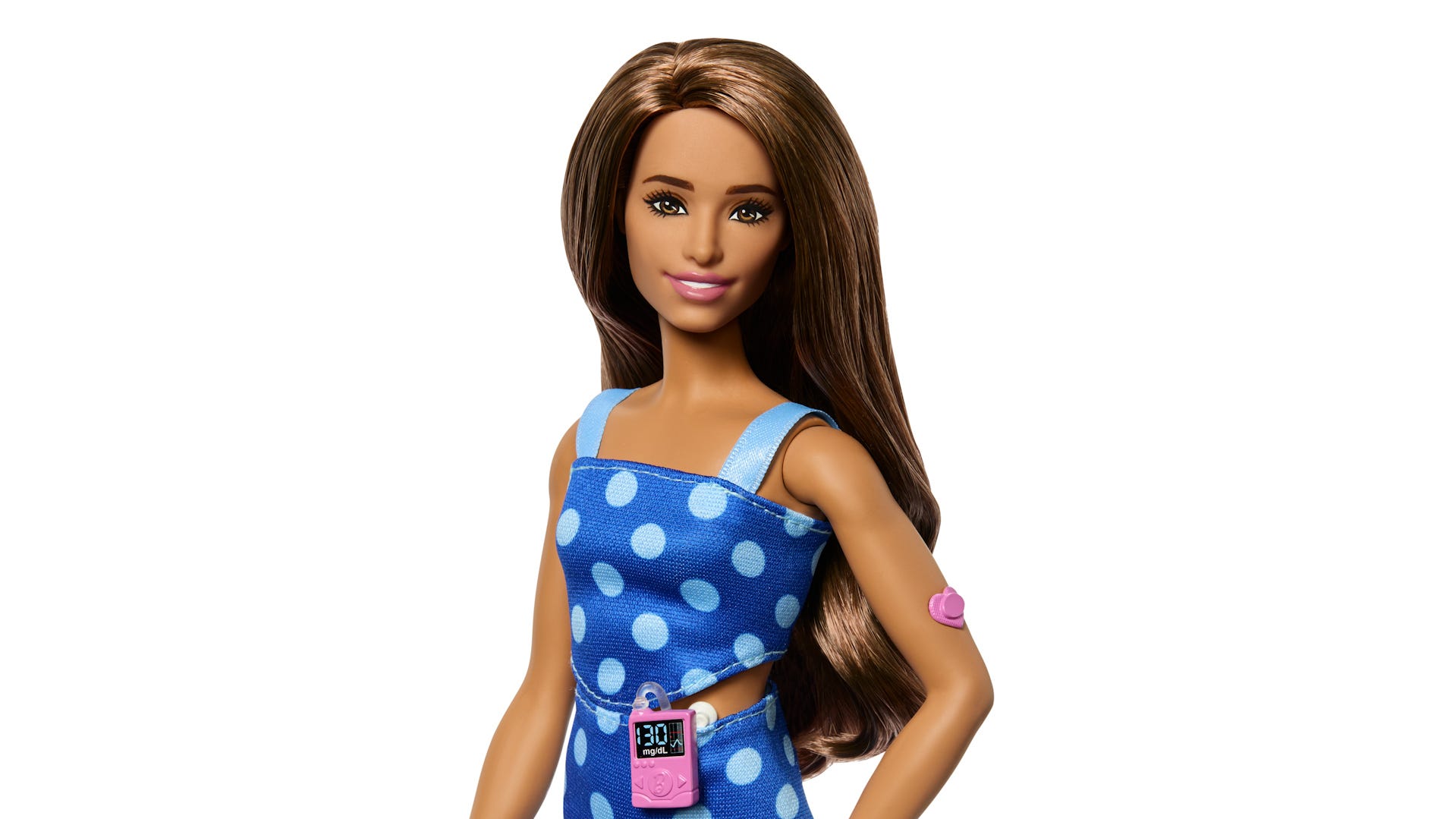
Barbie doll launches doll with type 1 diabetes
The Barbie Fashionista line includes a type 1 diabetic doll with a pink glucose monitor and an insulin pump.
For example, highlighting tools like AAC tablets can be an opportunity to celebrate differences, Killick says.
“The purpose of this activity, again, is to look at that difference and celebrate that and say this is fun. This is interesting. This is what defines who this person is. And that’s something to celebrate, not to be ashamed of, not to hide. This is a celebration of the visibility of autism,” Killick said.
Weitzman said she feels the new Barbie doll has both the positive side of making people feel seen, and the risk that autism will be perceived as an alien condition. But in any case, it can serve as a starting point for further development.
“The best way to use this doll is to have an open conversation and help a lot of young children understand the diversity of the human experience,” Weitzman said. “If it’s an educational tool and a conversation starter, then Mattel has done something good.”
Melina Khan is USA TODAY’s national trends reporter. Contact her at melina.khan@usatoday.com.


