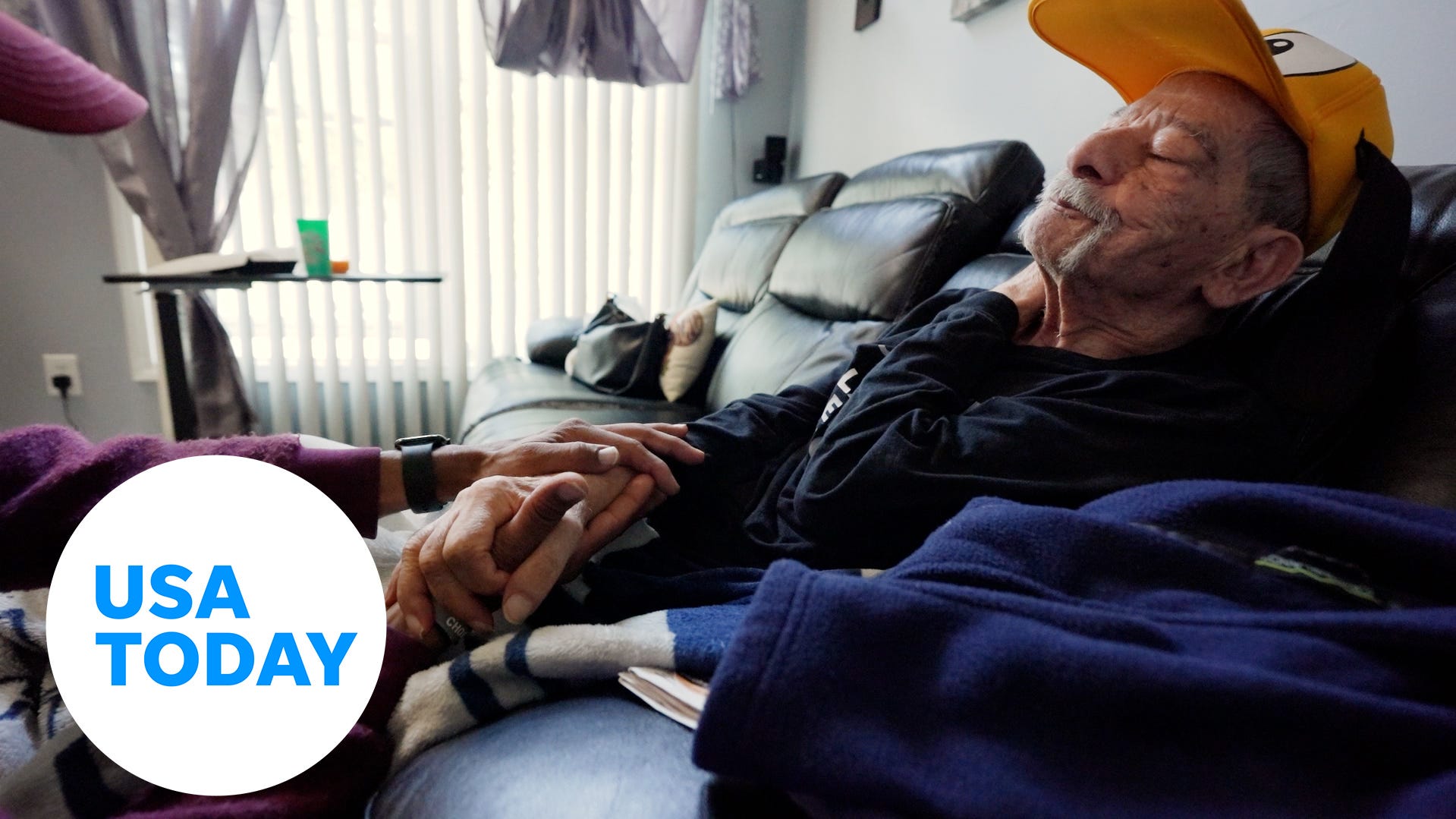

Caregiver is juggling her father’s dementia, her husband’s lupus, and family and work.
Jennifer Cortez is dealing with her father’s dementia, her husband’s lupus, raising children, and a job in Rochester, New York.
Almost one in four adults is a caregiver, a 45% increase compared to the number of caregivers in the United States in 2015.
That means 63 million adults struggle to care for a loved one with an illness or disability, often leading to financial, physical and emotional strain.
Caregiving advocacy groups, nonprofit organizations and government agencies are building programs to help caregivers, but access to caregiving assistance depends on where you live, according to new data jointly released by AARP and the National Alliance for Caregiving.
“These state-by-state disparities reveal how policy choices determine whether families thrive or collapse under the burden of caregiving responsibilities,” Jason Rezendes, the coalition’s president and CEO, said in a press release. “Fifty-nine percent of family caregivers in Georgia experience financial strain, compared to just 34 percent in Minnesota. So given that where you live can double your risk of financial hardship, it’s clear that patchwork state solutions are insufficient.”
AARP and the American Alliance for Long-Term Care are calling on state and federal lawmakers to address the growing crisis.
Below are the key takeaways from the data. More information for each state, including state-specific resources for caregivers, can be found on AARP’s website.
Five key takeaways from newly released care status data
- The percentage of adults who are caregivers ranges from 20% in Washington, DC to 34% in Mississippi.
- High-intensity caregivers, those who provide the most intensive care to their loved ones, were lowest in Wisconsin at 32% and highest in Tennessee at 55%.
- The percentage of family caregivers providing 40 or more hours of care ranges from 14% in Iowa to 37% in Tennessee.
- Many caregivers help their loved one with at least one task of daily living, such as bathing, dressing, eating, using the toilet, and getting in and out of bed. The percentage of caregivers who help with these tasks ranges from 54% in Indiana to 76% in Georgia.
- Paid family caregiver programs, including the Medicaid Home and Community-Based Services Waiver and Veterans Affairs Assistance, can help caregivers, but each state has different rules. Some states do not allow spouses to receive compensation for caregiving work. The percentage of family caregivers who receive wages for their caregiving work is lowest in Iowa at 10% and highest in New Jersey at 28%.
The report found that states with paid leave, respite care, and health system integration generally had better outcomes for family caregivers.
Nancy Leamond, AARP’s executive vice president and director of advocacy and engagement, said caregivers are the “invisible backbone of our health care system and economy.”
“Too many people are paying that price out of pocket,” Leamond said.
Madeline Mitchell’s role covering women and the care economy for USA TODAY is supported by partnerships such as: extremely important and Journalism funding partners. Funders do not provide editorial input.
Contact Madeline at: memitchell@usatoday.com and @maddiemitch_ With X.


