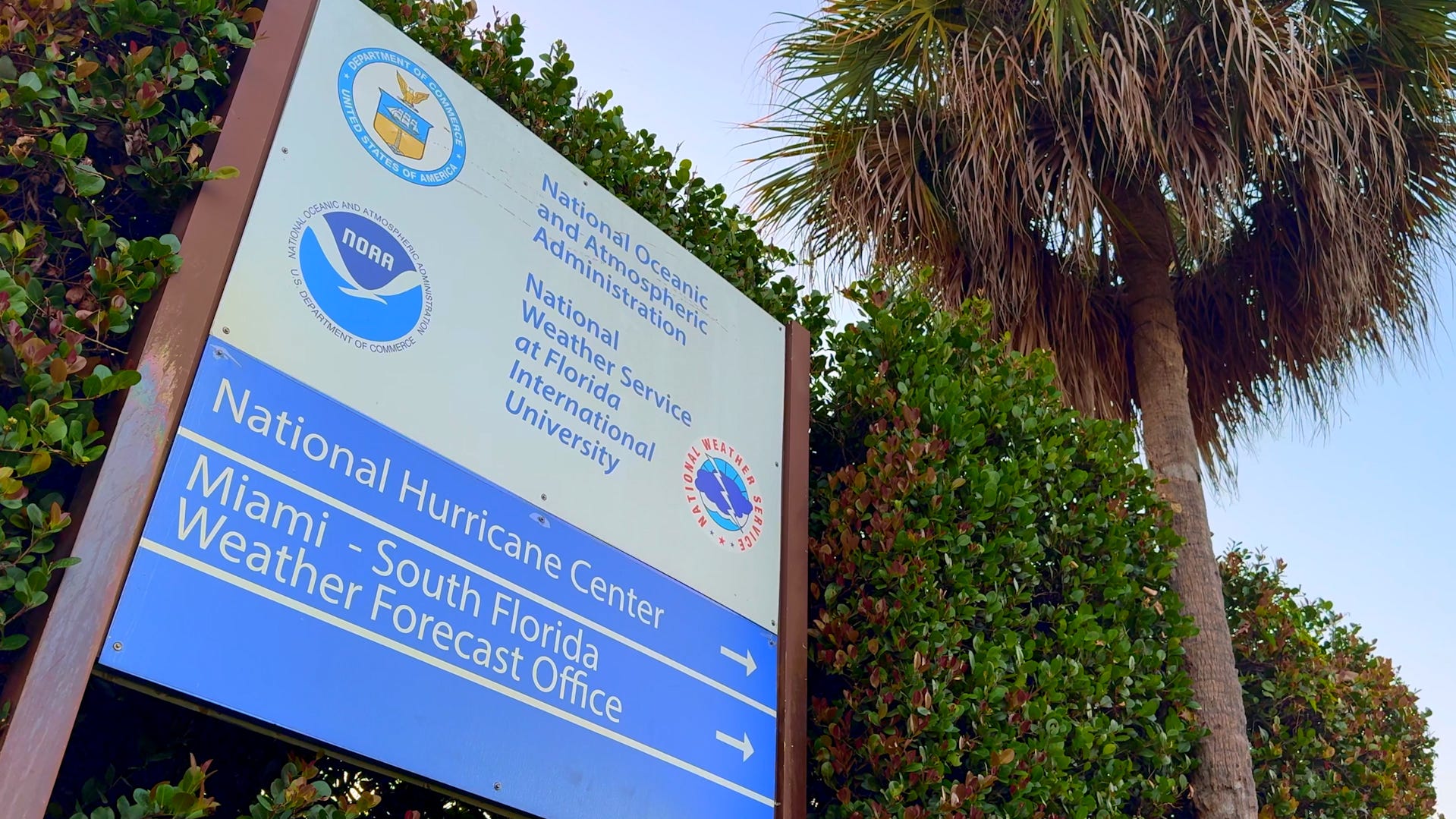

Impact of government shutdown on National Weather Service
With many federal agencies closed during the shutdown, NOAA cannot close its doors, but it must suspend some services.
Tropical Storm Melissa continues to circle the Caribbean Sea. at the same time, The National Hurricane Center (NHC) said “catastrophic and life-threatening flash flooding and landslides” are expected to occur in southern Hispaniola and parts of Jamaica over the weekend.
In an advisory issued at 2:00 pm ET on Friday, October 24, the NHC announced that Melissa is located approximately 400 miles southwest of Port-au-Prince and approximately 330 miles southeast of Kingston, Jamaica, with maximum sustained wind speeds of 60 mph and stronger wind gusts.
Melissa is expected to become a hurricane by Saturday and a major hurricane by Sunday, October 26th.
A hurricane watch is in effect for the area that borders Jamaica and the Dominican Republic from southwest Haiti to Port-au-Prince. Along with Jamaica, the peninsula is also under a tropical storm warning.
“Due to Melissa’s slow movement, Jamaica continues to face an increased risk of potentially damaging winds, heavy rains that could cause life-threatening flash flooding and numerous landslides, and storm surge over the next few days,” said NHC forecaster Philippe Papan.
Heavy rains are expected to cause “catastrophic flash floods and landslides across southwestern Haiti into early next week,” Papan said, adding: “Significant damage to roads and buildings is expected.”
Forecasters said Melissa was drifting east-southeast at 2 mph. It is expected to turn northeast and north in “continued slow motion” during the afternoon or evening of Friday, October 24th. The storm will then move westward on Saturday, October 25th and continue into Monday, October 27th. By early next week, the storm is expected to move near or just south of Jamaica.
Tropical Storm Melissa could become a Category 5 hurricane
According to AccuWeather, this storm could be one of the strongest storms of the season.
“The very warm ocean, which can reach depths of several hundred feet, will act like jet fuel and provide additional energy to Melissa,” said Alex DaSilva, lead hurricane expert at AccuWeather. “The warmest waters in the Atlantic Basin are in the central Caribbean and are in the direct path of this storm. It is not inconceivable that it could rapidly strengthen into a Category 5 hurricane this weekend.”
The storm could bring strong winds that could damage buildings, knock down trees, and cause widespread power outages and communications disruptions.
‘Life-threatening’ conditions expected across the Caribbean
Through Sunday night, Tropical Storm Melissa is expected to dump 8 to 14 inches of rain across the southern Dominican Republic, southern Haiti, and eastern Jamaica. A hurricane is possible in Haiti on Saturday and in Jamaica late Saturday or early Sunday.
Three to five inches of rain is expected to fall in the northern Dominican Republic, northern Haiti and western Jamaica through Sunday night, potentially increasing the impact of flooding across Jamaica next week.
The southern Dominican Republic and eastern Jamaica are expected to face “life-threatening flash flooding and numerous landslides,” according to the NHC. “Catastrophic” flash floods and landslides are also expected in southern Haiti.
Tropical Storm Melissa Path Tracker
This predicted track shows the most likely path of the storm’s center. This does not indicate the full width of the storm or its impact, and the center of the storm can move outside the cone up to 33% of the time.
Tropical Storm Melissa Spaghetti Model
Illustrations include a variety of predictive tools and models, and not all are created equal. The Hurricane Center uses only the top four or five best-performing models to make predictions..
How do hurricanes form?
Hurricanes are formed over warm water in the tropics. Thunderstorms can form over the ocean when water temperatures exceed 80 degrees. If conditions are right, the cluster will swirl into a storm known as a tropical wave or tropical cyclone.
A tropical cyclone becomes a named tropical cyclone when its sustained wind speed reaches 39 miles per hour. When wind speeds reach 114 miles per hour, a storm officially becomes a hurricane.
Prepare for hurricanes now
Delaying potentially life-saving preparations could mean waiting until it’s too late. The National Oceanic and Atmospheric Administration recommends, “Get disaster supplies while shelves are stocked and get your insurance check early, as flood insurance requires a 30-day waiting period.”
- make an evacuation plan. If you are in danger of a hurricane, you need an evacuation plan. Now is the time to start planning where you’re going and how you’re going to get there.
- Prepare disaster prevention supplies. Whether you’re evacuating or sheltering in place, you’ll need supplies to not only survive the storm, but also likely for the long-term aftermath, NOAA says.
- Get an insurance check and fill out the paperwork with your belongings. Contact your insurance company or agent today to make sure you have enough insurance to repair or replace your home and belongings. Note that home insurance and renters insurance do not cover floods, so you will need separate insurance for those. Flood insurance is available through your company, agent, or the National Flood Insurance Program.
- Create a family communication plan. NOAA says you should take the time now to write down your hurricane plan and share it with your family. Decide where your family will gather, and be sure to include locations outside the city in case you evacuate.
- strengthen your home. Now is the time to make your home more resilient to hurricanes. We cut down trees and install storm shutters, accordion shutters, and impact-resistant glass. Seal openings in exterior walls.
This story has been updated with new information.
Contributor: Jonathan Limehouse, USA TODAY
Julia is a trends reporter for USA TODAY, covering scientific research and trending news. Connect with her on LinkedIn ×Instagram, TikTok: @juliamaigz or email jgomez@hannett.com..
Gabe Hauari is USA TODAY’s national trends news reporter. You can follow him at X @gabehauari Or email Gdhauari@gannett.com.


