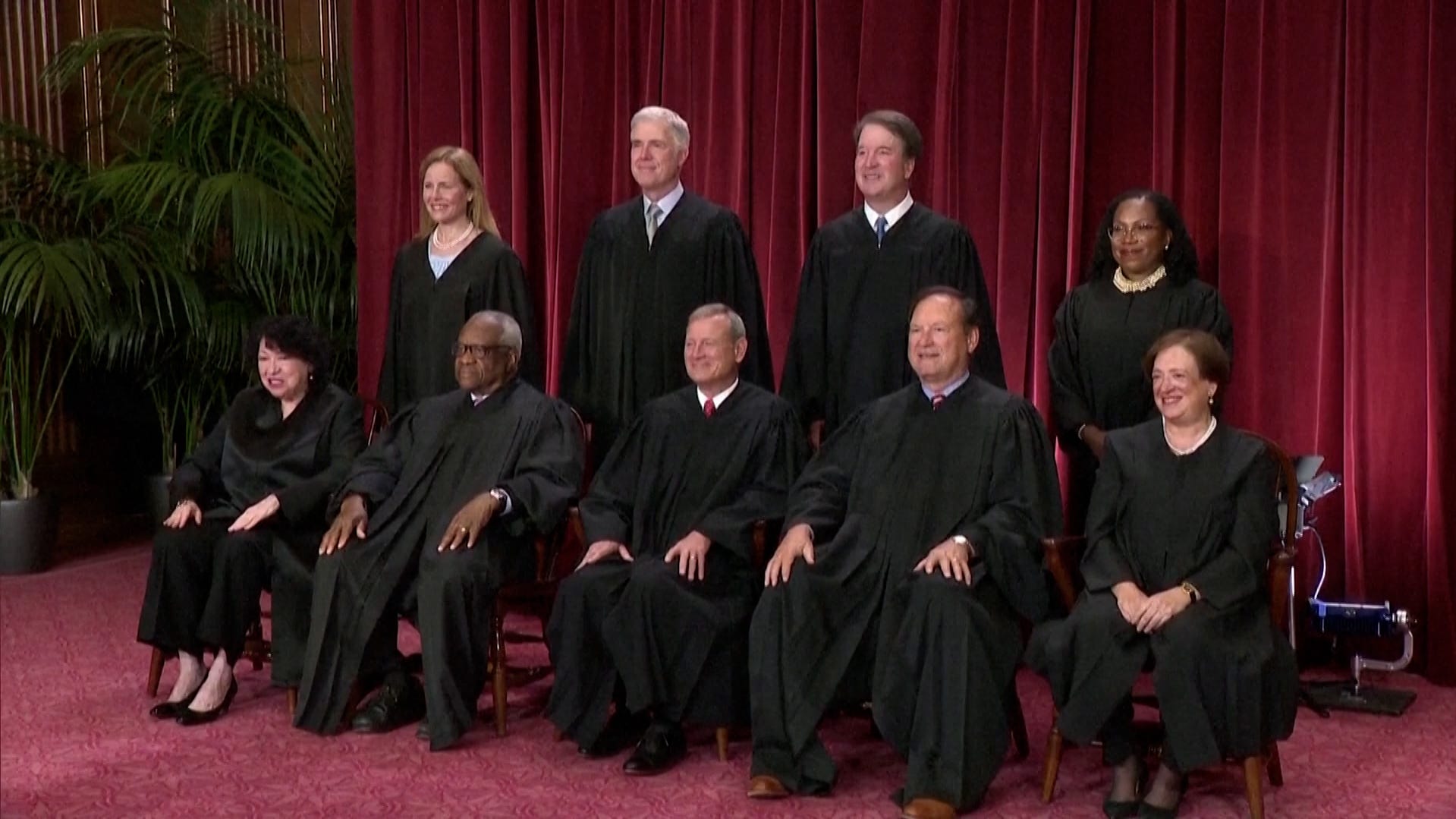

Supreme Court hears debate over the judge’s block on Trump’s birthright
The judge heard debate about whether it is okay for judges to universally block President Donald Trump’s executive order on birthright citizenship.
The U.S. Supreme Court has decided that could change the way immigration policies and other federal measures are suspended.
According to ideological boundaries, in a divided decision 6-3, the Supreme Court upheld the Trump administration in an attempt to limit universal judicial orders that blocked the application of policies across the country. These measures have been important in recent years to protect the rights of vulnerable communities, including immigrants.
This decision does not exclude the constitutional right of citizenship by birth established in the 14th Amendment since 1868, but it affects the ability of federal courts to broadcast people from direct cases.
Why is it relevant? This is because these universal judicial orders have historically been used to stop large-scale deportations, sudden changes in asylum programs, or sudden changes in measures that affect thousands without anyone requesting them individually.
What happened and what was the decision?
The lawsuit came after Donald Trump, whose presidency is once again enacted this year, signed an executive order that declared that he should not enter the country without documents or enter with a temporary visa, and three federal judges in the United States quickly blocked the order and issued a universal judicial order that delayed it nationwide. However, on Friday the Supreme Court held that the court has no authority to issue a state closure if it is not strictly necessary to protect the plaintiffs directly.
In conservative majority language written by Judge Amy Coney Barrett, “a universal judicial order probably exceeds the fair power granted to federal courts by Congress.” Therefore, the court returned the case to a lower court to reconsider the amplitude of this decision, but made it clear that Trump’s executive order could not be enacted for up to 30 days. This period allows professional immigration organizations to prepare new legal resources.
Does this mean that citizens are excluded by birth?
no. The Supreme Court decision does not change citizenship rights at birth. This right is protected by the Fourteenth Amendment, which has established since 1868 that “everyone born or naturalized in the United States and subject to jurisdiction is a US citizen.” It was created to reverse the infamous Dreadscott decision. Scott’s decision denied citizenship to black people and has since protected those born in American soil, regardless of their parents’ immigration status.
However, the ruling sends a worrying message to immigration rights advocates. This is to limit the power of federal courts to issue state closures against policies that affect the entire community. At present, attempts to halt federal measures must be made with greater legal accuracy, perhaps with multiple requests. This can be expensive and complicated for low-income organizations and families.
What does it mean for the US immigrants and the Latino community?
For millions of Latin families, this decision means that while the right to citizenship by birth remains intact, there is a risk that future immigration policies will be more difficult to halt anytime soon. If the executive order affects the entire community, the judge may not be able to block it entirely preventively, but only protect the original plaintiff until at least the case is resolved or a new request is filed.
This could encourage future administrations to approve controversial executive orders. It also means that legal defense organizations must prepare to litigate multiple cases simultaneously, rather than relying on a single obstacle to protect everyone.
What did the liberal judge say about this decision?
Three Supreme Court Freedom Judges opposed the verdict. In her dissenting opinion, Judge Sonia Sotomayor wrote that limiting universal judicial orders “ignoring the fundamental principles of fairness and the long history of judicial relief given to those who exceeded the original plaintiffs when their rights were affected.” In other words, they criticized the decision for prioritizing procedural restrictions on actual protection of people in vulnerable circumstances.
Trump’s reaction and next steps
Donald Trump called her a “great victory” and celebrated the true social decision. He also reiterated his position that immigrants attempt to “demn the process” to obtain citizenship, saying that the 14th Amendment should only apply to “slave babies (that same year).” His statement reflects his restrictive vision of citizenship, which is directly contradicted by constitutional experts.
For now, Trump’s executive orders are not enforced, and organizations such as the ACLU and NILC have already announced that they will continue their lawsuits to protect citizens by the birth of attempts to revoke or limit them.
contribution: USA TODAY
Boris Q’va is a national news reporter for Spanish trends on the Connect/USA Today network. You can follow him on X as @boborisqva or email him at bbalsindesurquiola@gannett.com.


