Authorities have identified 1,200 victims allegedly trafficked by Jeffrey Epstein and Ghislaine Maxwell or their relatives.
WASHINGTON – The Justice Department’s long-awaited partial release of Jeffrey Epstein files raises important questions about how the investigation may have gone awry and what other evidence the government has about potential co-conspirators, lawmakers and victim advocates say.
Many of the thousands of documents released Dec. 19 to meet legal deadlines included heavily redacted entire files and grand jury transcripts. Other key investigative documents known to be in the government’s possession were completely missing, including information that led to the federal indictments of Epstein in 2019 and longtime colleague Ghislaine Maxwell in 2020.
The announcement was the first confirmation that authorities had identified 1,200 victims allegedly trafficked by Epstein and Maxwell or relatives of those victims, but their names had to be carefully redacted from the documents.


Epstein files to be dropped on legal day, but remain incomplete
The Justice Department released the Epstein file in response to the Epstein File Transparency Act, but many documents are still missing.
But the massive haul did not support long-standing claims by people, including top aides to President Donald Trump, top Republicans and some Democrats, about a government cover-up to protect Epstein’s wealthy accomplices. The Justice Department released additional documents on the afternoon of December 20, CBS News and Politico reported.
Here are some of the main unanswered questions.
What was on Epstein’s computer?
For example, an evidence list released on Dec. 19 described a large number of computers, hard drives, and digital tape recorders seized during a search of Epstein’s home, but its contents were not made public. It also included a list of more than 200 of Epstein’s masseuses, but their names were redacted due to Justice Department policy aimed at protecting victims.
And while there are many suspicions about the ubiquitous cameras that captured everything that happened in his various mansions and massage rooms, the “Epstein Library,” as the Justice Department calls its first batch, contained no such videos.
“They didn’t even release the interviews with the victims, only the photos of the tapes of the interviews,” said Julie K. Brown, author of the 2021 book “Perversion of Justice: The Story of Jeffrey Epstein.”
“Think about it: a picture of a tape cassette,” Brown said in a post on Substack. “It would be funny if this wasn’t about a crime involving the rape of a 14-year-old girl.”
Investigators said the former hedge fund manager and international socialite lured girls as young as 14 to his mansions in New York, Palm Beach and the Caribbean, sometimes paying them cash for massages that led to sex acts, possibly over decades.
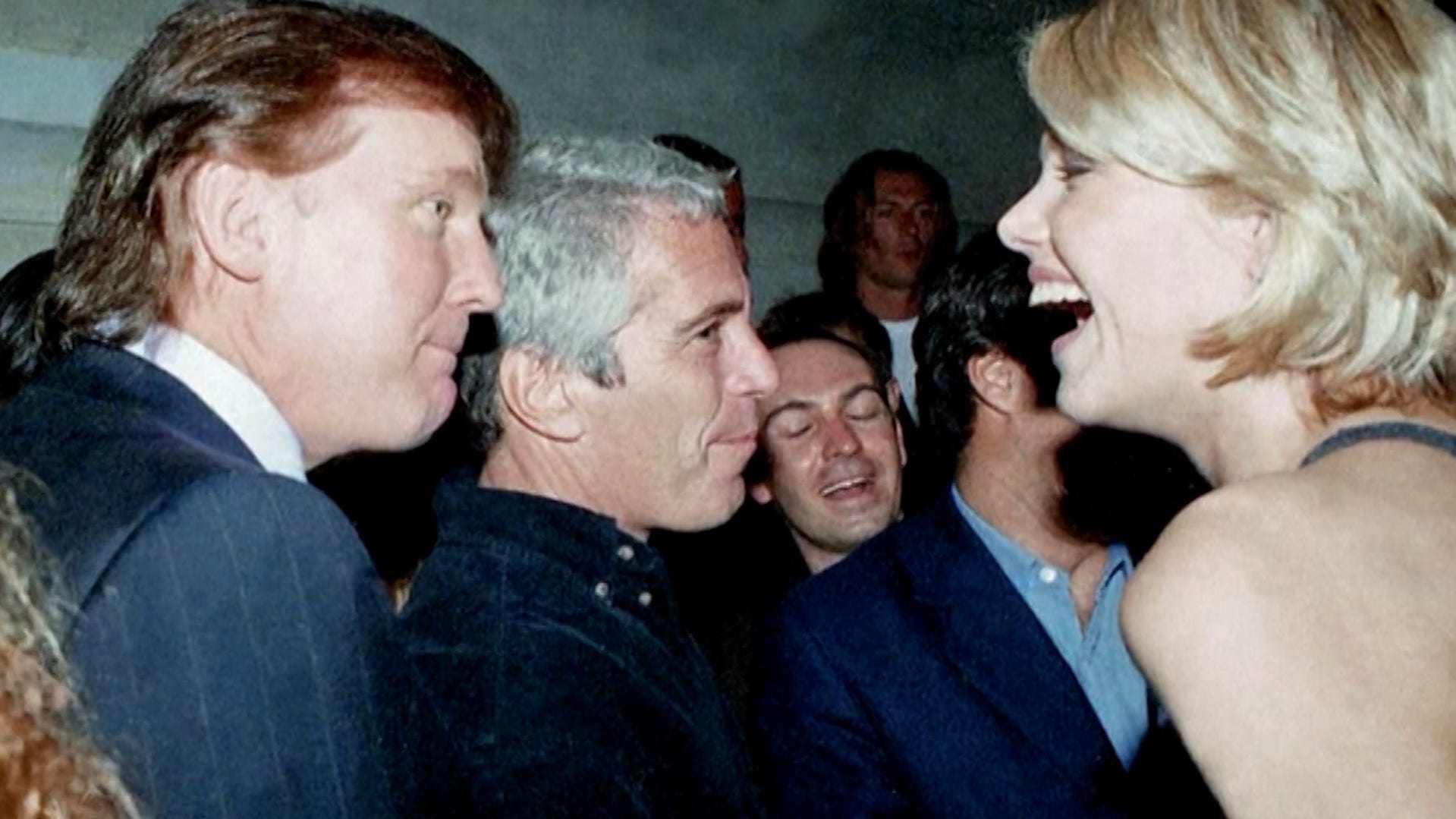
How the Epstein file haunted President Trump’s second term
The Epstein scandal revealed the limits of President Trump’s influence over the MAGA base.
Rep. Thomas Massie (R-Kentucky), who led the charge to force the Trump administration to release the Epstein files, said the Justice Department’s partial release was “in flagrant violation of both the spirit and letter of the law” and vowed to file a legal challenge.
Democratic Representative Ro Khanna of California, co-author with Massey of the Epstein File Transparency Act, said the release amounted to a political cover-up, even given the Justice Department’s claims that it was processing the documents as quickly as possible.
Deputy Attorney General Todd Blanche said the Justice Department is doing its best to balance legal disclosure requirements with its obligation to redact all information about victims from its files. He told Fox News that he plans to “release more documents in the coming weeks.”
“Today there are hundreds of thousands,” Blanche said. “And we expect to see hundreds of thousands more in the coming weeks.”
Blanche also rejected claims that the Trump administration was trying to protect Trump, saying the Justice Department would release any documents it has on him and others in its files by the end of the year.
“Assuming it’s consistent with the law, yes,” Blanche told ABC News. “There is no effort to hold anything back because of the name Donald J. Trump or anyone else’s name. … We are not redacting the names of any well-known men or women associated with Epstein.” Mr. Trump and Mr. Epstein were close friends for more than a decade in the 1990s and early 2000s, but have since fallen out.
Giving the Department of Justice the “benefit of the doubt”?
Khanna said the Justice Department is not doing enough.
“Look, we’re going to give them the benefit of the doubt,” Khanna told CNN. “But we found out that the most important documents were missing.”
“They over-edited it,” he said.
Does the file mention Donald Trump?
The documents include numerous photos of Epstein with celebrities, including former President Bill Clinton. He has long been linked to Mr. Epstein, but like Mr. Trump, he has not been accused of any wrongdoing.
Two of the photos showed Clinton in a hot tub or swimming pool with women with their faces painted black, and White House and Justice Department officials flooded social media with claims that Clinton was with Epstein’s victims at the time.
Mr. Clinton’s press secretary, Angel Ureña, denied this, saying in a statement that the Trump administration was trying to use people like Ms. Clinton as “scapegoats.”
“This is about protection from what happens next, or what they try to hide forever,” Ureña said. “So they can release as many grainy photos as they want from over 20 years ago, but this is not about Bill Clinton. It has never been released and will never be released.”
A series of photos and other information released on Dec. 19 contained few references to Trump, even though the two have been close friends for more than a decade.
Trump’s name appears on Epstein’s private jet flight manifest, as do those of Clinton and dozens of other VIPs.. President Trump has strongly denied any wrongdoing. He declined to answer questions from the Justice Department on Dec. 19 about his release.
“I don’t want to taint the situation by asking questions, even if they’re very fair questions, and I’d love to answer them,” Trump told reporters. “So I think we should stop here.”
Democratic lawmakers and victims’ advocates have publicly questioned whether Trump was included in the documents, noting that for months he vehemently opposed the release of the Justice Department and FBI documents and tried unsuccessfully to arm-twist Republicans to defeat legislation requiring it.
For weeks, Mr. Trump’s allies in Congress, led by House Speaker Mike Johnson, refused to swear in newly elected Democratic lawmakers to block a tie-breaking vote to order the Justice Department to release the files.
What do the files say about the early Epstein investigation?
For Epstein’s alleged sexual assault victim, Maria Farmer, the release confirms longstanding claims that she went to the FBI about Epstein and Maxwell in 1996, nearly a decade before the sex trafficking investigation that led to the first indictment in South Florida in 2008.
The new documents include a September 3, 1996 FBI report in which Farmer accused Epstein of involvement in “child pornography.” said Farmer, one of the earliest public whistleblowers against Epstein. Friday The department failed her and other victims by not pursuing her complaint.
“This is the moment I’ve been waiting for more than half my life, 30 years,” Farmer said in a statement released before the Justice Department’s announcement. “When I was ignored and detained by the FBI in 1996, my world turned upside down and time seemed to stand still. I faced death threats, ridicule, and ridicule from some of the most powerful people on Earth.”
Farmer said the release is an important step for Epstein’s victims to hold the government accountable for “the largest grotesque law enforcement failure in American history.”
“Had the FBI acted, it could have saved thousands of victims and nearly 30 years of trauma,” added Farmer’s attorney Helen Weiss.
What is missing from the Department of Justice release?
Khanna and Massey said the Justice Department has failed to turn over important investigative materials and is ignoring the new law.
It includes information about how federal authorities handled investigations into Epstein in 2008 and in 2019 after Brown’s Miami Herald exposed a lenient plea deal between Epstein and local prosecutors.
As a result of that second investigation, Epstein was arrested on federal sex trafficking charges. He died by suicide in a Manhattan jail while awaiting trial. Maxwell was convicted of sex trafficking and is currently serving a 20-year prison sentence.
However, over 350 pages were completely blacked out.
Documents missing from the initial South Florida investigation include 53 draft indictments and an 82-page prosecution memorandum from 2007 that were uncovered in a 2020 victim lawsuit against Epstein.
The U.S. attorney for the Southern District of Florida at the time was Alex Acosta, who allowed Epstein to obtain a lenient plea deal from local Palm Beach prosecutors on a minor state charge of soliciting a minor into prostitution.
Epstein served just 13 months at the Palm Beach facility and was allowed to leave custody and work in an office six days a week. Acosta was later selected by President Trump to be the first Secretary of Labor, but resigned after the plea deal became public.
Also missing from the Dec. 19 document were key documents from the 2019 federal investigation and prosecution, as well as a report from the Justice Department’s internal investigation into the failed investigation into Epstein.
Massey tweeted on Friday a copy of the law stating that “all unclassified records, documents, communications, and investigative materials” must be made public.
Khanna called for “the wealthy and powerful men who raped underage girls and covered up this abuse to be held accountable. The Epstein class must go.”
The Justice Department has 15 days to produce a report detailing why documents are withheld or redacted.


