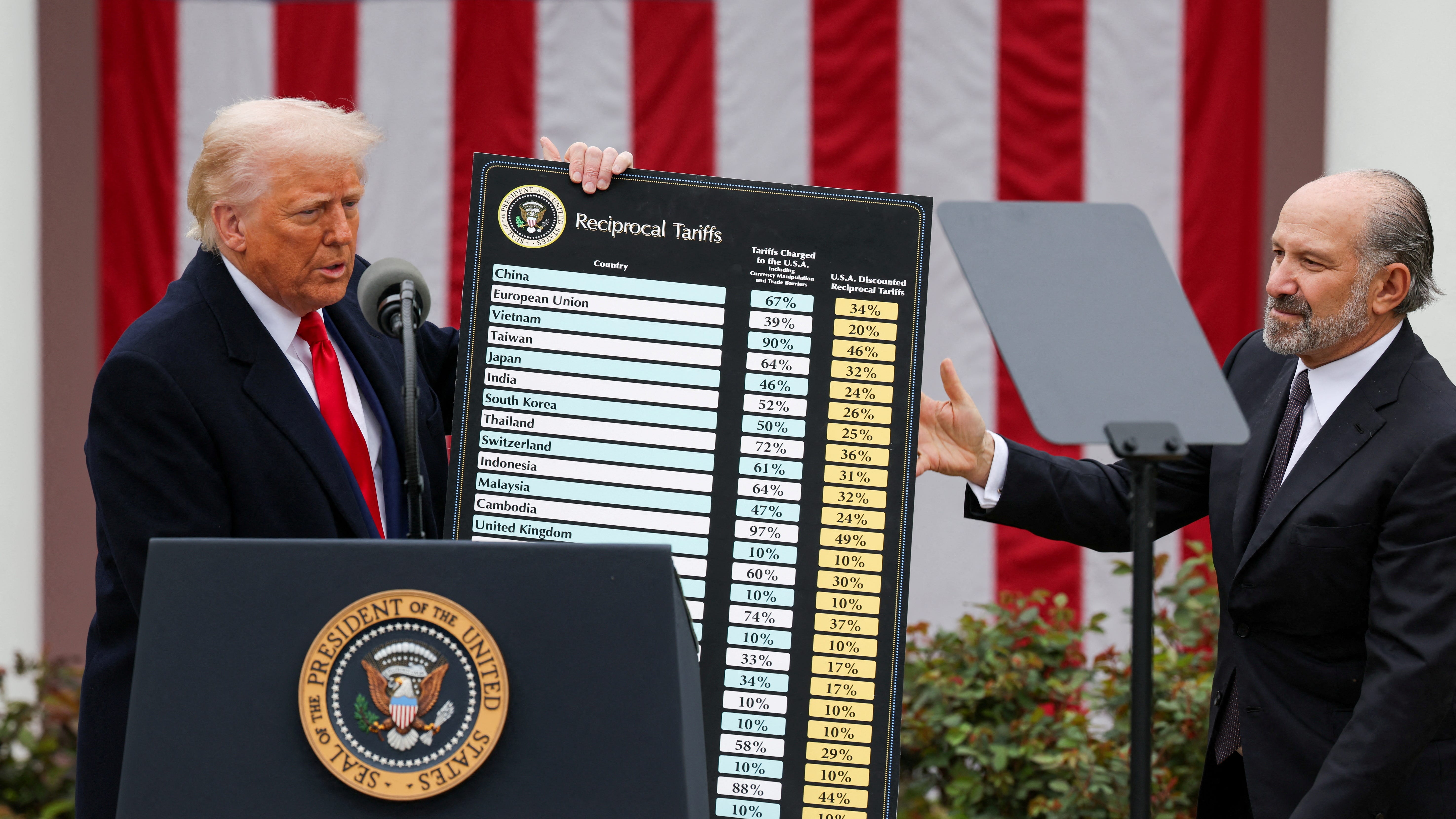

SCOTUS rules against President Trump’s sweeping tariffs in 6-3 decision
The Supreme Court has ruled that President Donald Trump does not have the power to impose large tariffs at will.
The U.S. Supreme Court has declared tariffs imposed by executive order under emergency powers illegal, putting the brakes on one of President Donald Trump’s most aggressive trade tools. The 6-3 ruling not only redefines the limits of presidential power, but also shakes up Latin American countries caught in the crossfire of U.S. trade policy.
For months, Latin American factories, ports and fields have been operating under the shadow of tariffs that have raised the price of key exports to the United States. Now, this decision opens a window of relief, but it does not guarantee stability. Washington could still explore other legal means to impose new taxes.
Which Latin American countries are most affected by tariffs?
The impact was uneven, but deep. Mexico was most at risk because of its direct integration with the U.S. economy. Tariffs have hit auto parts, industrial manufacturing and agricultural products, raising costs in supply chains that cross borders every day.
In South America, Brazil felt pressure on steel and aluminum, sectors already vulnerable to the global economic slowdown. Colombia, Chile, and Peru face uncertainties in agricultural and mining exports, and even small cost increases could make them uncompetitive compared to other markets.
Why does the Supreme Court’s decision change the regional panorama?
The Supreme Court ruled that President Trump did not have Congressional authority to use the 1977 Emergencies Act to impose sweeping tariffs. In practical terms, this means the United States cannot reimpose major tariffs overnight, making trade unpredictable for its Latin American partners.
For the region, the ruling reduces the immediate risk of sudden measures that would make exports more expensive. But business leaders have warned that the administration could resort to other laws to maintain uncertainty, such as “national security” or trade retaliation.
What does this mean for Latin America’s economy, jobs and prices?
In the short term, this relief will become a reality. Exporters will regain their margins and some contracts may be renegotiated. The ruling will ease pressure on factories and fields in countries such as Mexico and Brazil, where exports to the United States support thousands of jobs.
However, the effect is not automatic. Costs already absorbed will not be recovered quickly, and investment will remain cautious unless there is clarity on the U.S. government’s future trade policy. For Latin American consumers, this news will help stabilize prices for imported raw materials, although there is no promise of quick discounts.
Trade ceasefire is not the end of the story
The Supreme Court’s decision gives Latin America much-needed pause, but it does not give it firm ground. Future development requires a strategy. It is about diversifying markets, strengthening regional agreements and reducing dependence on political decisions from Washington. For governments and businesses, the message is clear: Tariff wars can be stopped in court, but trade uncertainty is far from over.
Contributed by: USA TODAY
Boris Q’va is a national Spanish language trends news reporter for Connect/USA TODAY Network. You can follow him on X as @ByBorisQva or write to him at BBalsindesUrquiola@gannett.com.


