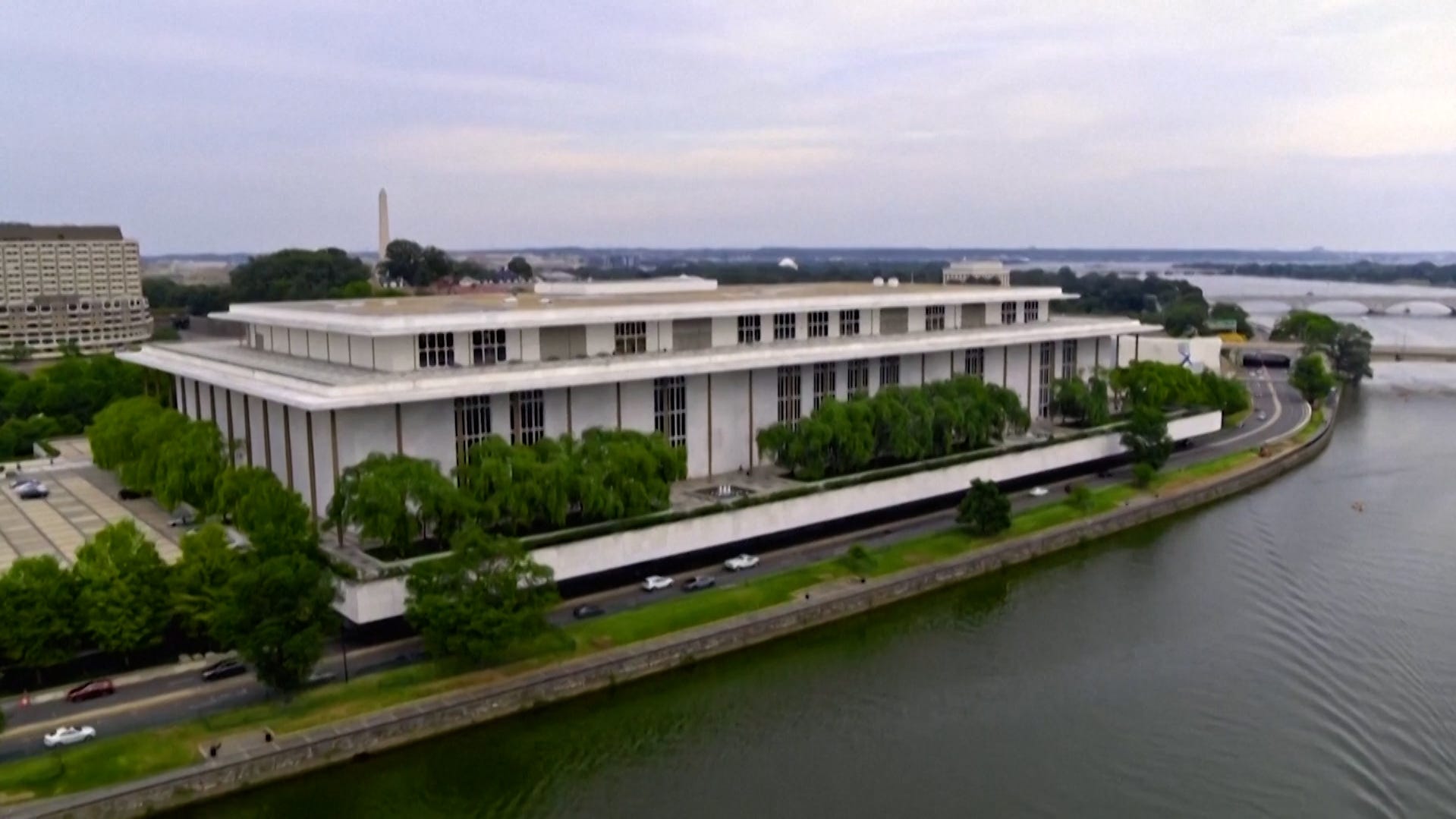

President Trump to close Trump Kennedy Center for two years for renovations
President Donald Trump has announced that the Trump Kennedy Center will be closed for renovations that will take two years.
Despite the partial government shutdown that has been in place since February 2, much of Washington has continued business as usual.
Yes, some federal agencies, including the Department of Defense and the Department of Health and Human Services, have been left without regular funding and have been ordered to begin “orderly closures” starting January 31st for at least several days. That’s because Congress failed to pass a spending package that included a controversial measure to fund the Department of Homeland Security.
However, other government operations are operating as usual. That means Americans will find themselves on the edge of a functioning government starting this week as lawmakers consider a bill that would fund services through September.
No one knows exactly how long the shutdown will last. House Speaker Mike Johnson (R-Louisiana) said in an interview that he was confident he had enough Republican votes to reopen the government “by Tuesday.” To restart, the House must pass a bill that would extend spending for Immigration and Customs Enforcement and DHS, which oversees Customs and Border Protection, for two weeks while lawmakers continue negotiations over ICE reforms demanded by Democrats.
“Our intention is to have all but one federal agency funded by Tuesday,” Johnson said, referring to DHS. “And we’re going to have two weeks of good faith negotiations to resolve it.”
Here’s how the partial shutdown is impacting Americans during that time.
Will Social Security, Medicare, and Medicaid be affected?
No, mandatory spending that is not subject to annual spending, including Social Security, Medicare, and Medicaid, will not be suspended during the partial shutdown, according to the Committee for a Responsible Federal Budget.
National parks and food inspection services are also operating as usual, CRFB said.
However, a partial shutdown could mean that certain federal operations are halted or curtailed to ensure only essential operations are performed.
For example, guidance issued by the Department of Education ahead of the long-term closure in 2025 said investigations into allegations of civil rights violations would be suspended. In its emergency response plan for this year, the Department of Health and Human Services said it would no longer be able to process Freedom of Information requests and the National Institutes of Health would not accept new patients for clinical research trials. However, the Centers for Disease Control and Prevention said it would continue to monitor the spread.
Americans continue to suffer from winter weather
The closures come as many U.S. cities are still dealing with the effects of last month’s severe winter storms. The Federal Emergency Management Agency, part of DHS, is one of the agencies targeted for reappropriation this year.
FEMA’s Disaster Relief Fund has enough money to last several weeks and is helping states respond to the winter storm after extreme snow and cold left tens of thousands of people without power and roads closed. But a prolonged shutdown could put a strain on disaster relief funds, especially if other natural disasters occur and more states request assistance.
Check flight status
It’s probably safe to fly. Federal Aviation Administration and Transportation Security Administration employees who perform critical duties related to flight safety will continue to work during the closure.
Still, the longer the closure lasts, the greater the strain on the air traffic system. During the 2025 shutdown, the Department of Transportation ordered airlines to reduce their flight schedules by up to 10%, helping to ease the workload on air traffic control towers that were overburdened and understaffed, causing days of headaches for travelers.
If your flight is delayed or canceled for any reason at this time, it may be due to continued severe winter weather that is disrupting airport operations.
It is not yet clear when, how, or if flights will be affected by the suspension. USA TODAY has contacted the Department of Transportation for additional information.
ICE is still active
The closure is driven by political divisions over President Donald Trump’s continued immigration enforcement. Many Democrats have expressed demands for DHS reform, which Congress is expected to finalize in the coming weeks.
Federal employees are expected to continue working, including immigration enforcement officers, prison workers and active-duty military personnel. They will receive back pay, but they will not immediately receive a paycheck for working during the shutdown.
Don’t pause your tax planning
The IRS says it will use funds granted through the Inflation Control Act to stay open for five business days.
Your tax refund may be affected, but don’t avoid filing. The April 15 tax filing deadline will not change in the event of a government shutdown unless explicitly stated otherwise.
This story has been updated with new information.
Contributor: Katherine Palmer, Zack Wictor, francesca chambers


