

What we know about tensions between the US and Venezuela
Here’s what we know about rising tensions between the United States and Venezuela.
military action. Secret operation. “Big stick” diplomacy
The United States has a long and checkered history of direct and indirect intervention in the political, economic, and social affairs of Latin American countries for more than a century.
President Donald Trump’s administration has already made military attacks on civilian vessels suspected of carrying drugs from Venezuela, adding to this extensive record.
President Trump also ordered a platoon of U.S. warships, fighter jets, drones, and thousands of military and special forces troops for potential operations in or on Venezuela as part of a pressure campaign against President Nicolas Maduro. President Trump appears to be placing the blame for gangs and drugs on America’s streets on leftist dictator Maduro. According to the latest reports, President Trump has not yet made a final decision on what he intends to do in Venezuela.
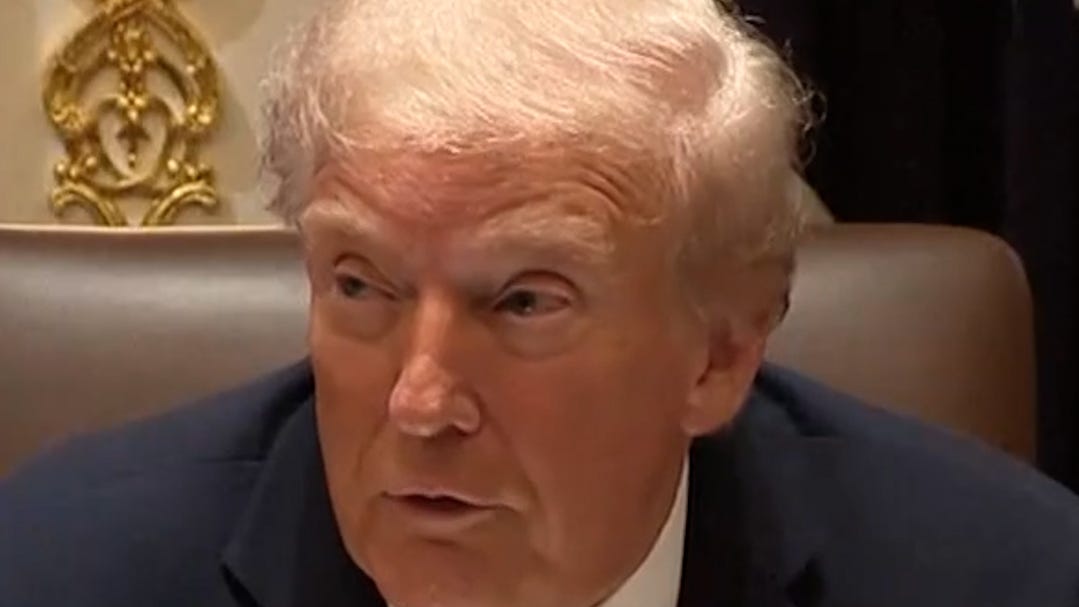
Watch: Trump insults Venezuelan President Nicolas Maduro
President Trump told Venezuelan President Nicolás Maduro the following about why the United States was offered to invest in Venezuela’s natural resources:
But some experts and former officials have warned that Trump needs to tread carefully in Venezuela or risk tangled in American blood and treasure in a region where various forms of intervention have been repeatedly attempted with mixed results.
“This could be a very troubling situation,” said Brett Bruen, a former U.S. diplomat who served in Venezuela. “Yes, Trump should look at ways to help restore democracy in Venezuela. Yes, he should undermine drug trafficking in Venezuela. But this is not the way to do it. It’s in Maduro’s hands,” said Bruen, who served as the White House’s director of international engagement in the Obama administration. He currently runs a consulting firm, Global Situation Room. Bruen added that if President Trump launches an attack on Venezuela, Maduro could resort to “asymmetric attacks” against, for example, American tourists and business travelers in Latin America.
Still, Will Freeman, a Latin America researcher at the Council on Foreign Relations think tank, said there are many examples of U.S. intervention in Latin America being “destructive” for the countries and peoples involved, but the situation is not that simple. This intervention is often welcomed, he said. Freeman noted that recent public opinion polls in Mexico indicate that a significant percentage of the population (about 30%) is open to the idea of a unilateral attack by the United States or special operations targeting the country’s cartels. “For people living under cartels, gangs, and predatory governments, their biggest concern is not U.S. involvement, but their own safety.”
Here we take a look at some of the notable US interventions in Latin America, why they happened, and what impact they had.
Guatemalan coup d’état, 1954
What was your goal? Declassified CIA documents reveal that the US sought to remove democratically elected Guatemalan President Jacobo Arbenz, This was at least in part because he was implementing land reforms that affected the exploitative labor practices of the United Fruit Company, based in the United States. For the Truman administration, which gave the green light to this project, Arbenz’s consideration for the rural poor had a hint of communism, a conspiracy of the times.
what happened? The CIA directed Operation PBSUCCESS, a secret program to foster dissent and train and finance anti-government rebels. The CIA considered assassinating Arbenz, according to documents in declassified CIA records. However, he resigned as president and went into exile before that could happen.
What was the impact? The United States helped establish a military dictatorship under Carlos Castillo Armas, whose policies ultimately led to a civil war and massive human rights violations, during which more than 200,000 Guatemalans were killed or forcibly disappeared. Freeman, who is from Latin America, said the coup had closed off “the possibility of democracy.”
Bay of Pigs Invasion, Cuba, 1961
What was your goal? The CIA trained Cuban exiles to invade Cuba, overthrow Fidel Castro’s socialist revolution and government, which had close ties to the Soviet Union, and install a regime friendly to the United States. what happened? The operation was poorly planned and executed, and rumors of a secret plan leaked out even before the invasion occurred. The Cuban military quickly quelled the invasion after one of the invasion forces landed in the wrong place, CIA bombers missed many targets, and the Cubans failed to rise up against Castro, contrary to the CIA’s expectations.
What was the impact? President John F. Kennedy’s administration was deeply embarrassed by this debacle. This increased Castro’s domestic popularity and brought Cuba closer to the Soviet Union. Historians say this led directly to the 1962 Cuban Missile Crisis. It is now generally believed that the Cold War was the closest we came to an all-out nuclear war.
Dominican Republic intervention, 1965
What was your goal? President Lyndon Johnson initially sent approximately 400 U.S. Marines to Santo Domingo to rescue Americans trapped and in danger by the outbreak of civil war. Prime Minister Johnson also wanted to prevent the return of ousted President Juan Bosch due to a growing left-wing movement. The US feared he might become a communist.
what happened? The size of the US Marine Corps rapidly expanded. Ultimately, thousands of U.S. soldiers became involved in what became known as the “Dominican intervention,” first as part of a unilateral military force and later in conjunction with an international force assembled by the Organization of American States.
What was the impact? The United States helped form a government under President Joaquín Balaguer. Mr. Balagar pursued a strong public works program, building hospitals and schools. However, the government was hurt by reports of political repression, enforced disappearances, and assassinations of opponents.
Invasion of Panama, 1989
What was your goal? Thousands of American soldiers arrived in Panama by land, sea, and air to oust de facto leader Manuel Noriega. Noriega was a former key American ally who was recruited by the CIA to help the United States stop the spread of communism in Central America. President Bush wanted to bring Noriega to the United States on charges of drug trafficking and money laundering. The administration also suspects him of being a double agent for Cuban intelligence.
what happened? In Operation Just Cause, ordered by President George H.W. Bush, more than 20,000 U.S. troops invaded the country and took control of military and infrastructure facilities. They encountered scattered resistance. Officially, 514 Panamanian soldiers and civilians died in the invasion. However, some local reports put the number at double that. 23 U.S. military personnel were killed.
Noriega was eventually arrested by U.S. Drug Enforcement Administration agents., But that was only after they planned to have him leave the Vatican embassy in Panama City, where he had taken refuge. The plan included having speakers blast music in his direction at deafening volumes for 24 hours. According to the official account, some of the songs played included Alice Cooper’s “No More Mr. Nice Guy” and Black Sabbath’s “Paranoid.”
What was the impact? Critics of the episode say it is an example of America’s blatant disregard for national sovereignty. Noriega’s opponent, Guillermo Endara, was sworn in as president hours after the invasion with support from the U.S. military.
Haiti intervention, 1994
What was your goal? U.S. involvement in Haiti dates back to 1915 and much earlier, when President Woodrow Wilson sent 340 U.S. Marines to the island to restore order and maintain political and economic stability in the Caribbean. In 1994, US troops arrived again as part of Operation Democracy Preservation, part of a multinational force aimed at reinstating Haiti’s democratically elected president, Jean-Bertrand Aristide, into power. Aristide had been ousted in a military coup three years earlier.
what happened? U.S. troops landed in Haiti without resistance and were welcomed by enthusiastic crowds weary of three years of military rule. The invasion force consisted of approximately 25,000 military personnel from all military services, supported by two aircraft carriers and extensive air support.
What was the impact? Haiti’s leadership quickly surrendered, and bloodshed was largely averted. Aristide returns as Haiti’s leader. However, the intervention in Haiti was a short-lived success. Ten years later, in 2004, when President Aristide’s government was again overthrown, the United States led a new international intervention.
American intervention continued
- In Chile in the 1970s, the United States worked to end the presidency of Marxist physician Salvador Allende, thereby supporting the rise of the authoritarian dictatorship of Augusto Pinochet.
- In the 1980s, the Reagan administration unsuccessfully attempted to overthrow Nicaragua’s socialist Sandinista government and provided illegal aid to the Contra rebels, leading to the Iran-Contra scandal.
- The United States provided hundreds of millions of dollars in military aid to El Salvador’s military during the civil war in the 1980s as part of its Cold War policy against left-wing rebels.
- President Ronald Reagan orders the U.S. military to invade a Caribbean island. of Grenada was invaded in 1983 because the country’s pro-Marxist government was believed to pose a threat to American medical students studying on the island. The Grenada government was overthrown in about a week. 19 American soldiers were killed.
- During President Trump’s first term, the White House recognized opposition leader Juan Guaidó as Venezuela’s interim president in 2019 and provided him with political and financial support.


