SNAP recipients brace for a hungry weekend as Trump administration appeals order to provide full SNAP benefits
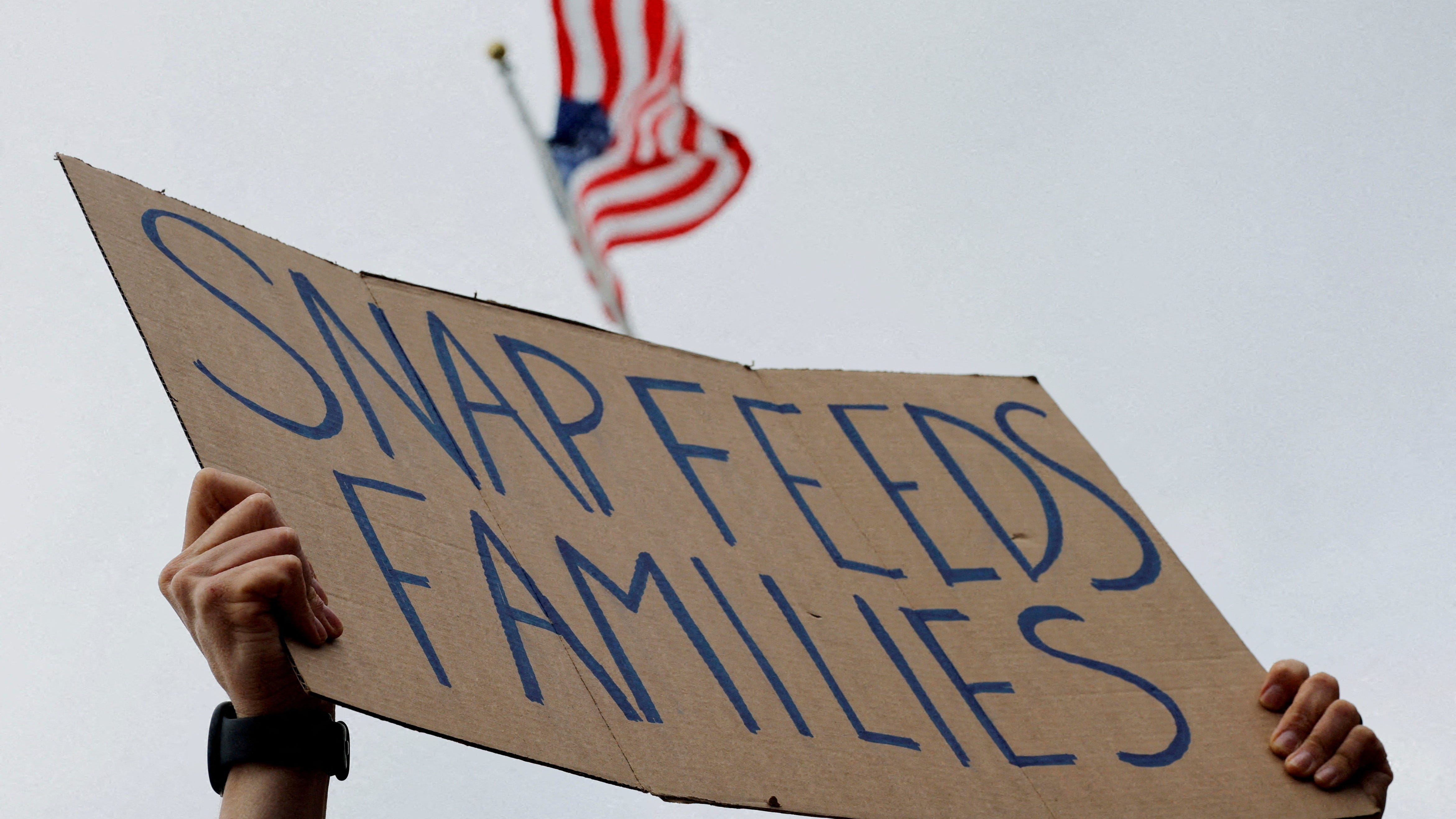

When politics cut off the food supply
For 42 million Americans, SNAP means food on the table. But that safety net is now embroiled in a political impasse.
Tens of millions of Americans are spending the weekend anxious and hungry as they await resolution of political and legal disputes over federal food aid.
The Supreme Court late on November 7th allowed the federal government to make only a partial payment for now. The dispute finally ended in the Supreme Court that day, when the government filed a second appeal of a federal judge’s order to fully fund the Supplemental Nutrition Assistance Program by the end of the day.
The judge, Rhode Island’s John McConnell, had accused the government of playing politics with the lives of the 42 million Americans who rely on food stamps.
Appeals are a routine part of the judicial process, but the timing of the Supreme Court’s decision means SNAP recipients will be stuck for at least the weekend, if not longer. The majority of SNAP beneficiaries are very low-income families with children, the elderly, and the disabled.
Food banks and pantries say they are already scrambling to meet the needs of millions more families, and grocery stores report struggling with reduced spending from SNAP recipients.
The crisis was caused by a government shutdown and is now in its second month. The federal government has fully funded food assistance during previous government shutdowns, but said it would not be able to do so this time.
Vice President J.D. Vance on Nov. 6 denounced the Rhode Island District Court’s decision as an “absurd ruling,” telling reporters: “In the middle of a government shutdown, you can’t have a federal judge tell the president how he has to triage the situation.”
On November 7, Attorney General Pam Bondi said on social media that the Trump administration had filed an “emergency stay request for immediate relief” with the Supreme Court, citing “atrocious judicial conduct.”
“A single district court in Rhode Island should not take center stage in a government shutdown, try to upend political negotiations that could produce quick political solutions to SNAP and other programs, or determine its own preferences on how to spend scarce federal funds,” she said.
The Senate again failed to reopen the government in a vote on November 7th. Senate leaders have summoned senators to an unusual weekend session, which may indicate they believe a deal could be reached quickly.
So, more than a week after food safety net funds were delayed for the first time in the program’s 60-year history, recipients continue to wait anxiously.
stuck
Tonya LaFale, 47, of Des Moines, Iowa, is among those already struggling without November’s SNAP benefits. The $70 she usually receives each month did not arrive as scheduled on November 5th. All she has left in her SNAP account is the $0.82 she didn’t spend in October.
There are no updates from the state or the Department of Agriculture, just information she gleaned from the news.
“None of us have heard anything,” said Laffer, who recently obtained housing after a period of homelessness.
She would like to hitchhike to the nearest food pantry, but the pantries are overcrowded and she is limited to visiting once a month. The communal refrigerator at her local library sometimes has food for her to eat, but as a diabetic, her options are limited. Sometimes someone leaves canned goods in the common room of their apartment.
“I don’t understand how they want us to survive,” Laffer said.
The path that causes the most harm for SNAP recipients
In his ruling, Judge McConnell said the USDA intentionally took a path that caused the greatest harm to beneficiaries.
Mr. McConnell gave the USDA two options. Either find the money to fully fund SNAP benefits from other sources, or quickly remove the “administrative and administrative burden” that stands in the way of quickly providing partial benefits by November 5th.
The USDA opted this month to use a portion of its emergency fund to pay out up to 65% of benefits, saying it would require computer system changes that could take weeks or months, and declined to use other available funds for the remainder.
“The court finds it surprising that defendants even chose to pursue this path, knowing all the hardships and delays that such a partial payment of SNAP benefits would entail,” McConnell said in his order.
USDA argued that Congress should not use Child Nutrition Program funds to cover the $4 billion SNAP gap in November because there is no guarantee that there will be a replacement for child nutrition payments.
“There is no legal basis for an order directing the[U.S. Department of Agriculture]to somehow find $4 billion in the metaphorical couch cushions,” the government said in its appeal.
USDA is already using this fund to help continue funding WIC during the government shutdown, which has lasted more than a month.
McConnell noted in his ruling that the child nutrition program has $23 billion on hand and costs $3 billion a month to operate. He said the potential for immediate harm to the program, which funds school meals, is less likely than the immediate need for SNAP.
Countries are struggling to catch up
While the legal arguments were being fought on Nov. 7, the Department of Agriculture began working to ensure that the benefits were disbursed quickly and that states received the full amount of benefits.
But Massachusetts Attorney General Andrea Joy Campbell told USA TODAY that even after the Department of Agriculture was ordered to provide at least partial benefits earlier in the week, it provided inaccurate information to the state about how much it would provide to 1.1 million recipients, further delaying the process.
“Frankly, the states are a little confused,” Campbell said.
Massachusetts is one of 26 states suing the federal government this month in a separate lawsuit to force it to provide full benefits. The judge in the case also ordered the Department of Agriculture to provide at least partial benefits.
Campbell said states receive some of the money from the USDA and are moving as quickly as possible to spend it, but that means recalculating amounts and reprogramming systems.
California, Connecticut, Oregon, Pennsylvania, and Wisconsin began depositing money into debit-style EBT cards for recipients on November 7th.
How quickly money appears in people’s accounts varies by state. Massachusetts said it hopes to have some funding by early next week.
“We’ve all heard complaints and stories from real people who can’t use their benefits to buy food. … We’re working as quickly as possible to get benefits on the card, but this confusion by the federal government is causing longer delays than we would have liked,” she said.
Families can’t think of anything and aren’t given time to plan.
Misha Dancing Waters, 54, a county-level economic assistance specialist in Dane, Wisconsin, said working families who rely on federal food assistance were blindsided by the news that SNAP would not be implemented in November. she spoke to USA TODAY as a member of AFSCME Local 720.
Many of her customers were already passing through, she said. A loss of a few hundred dollars this month could be fatal.
“People are reaching a panic stage,” she says. “This is just cruel.”
Sarah D. Wire, USA TODAY’s senior national political correspondent, can be reached at swire@usatoday.com.


