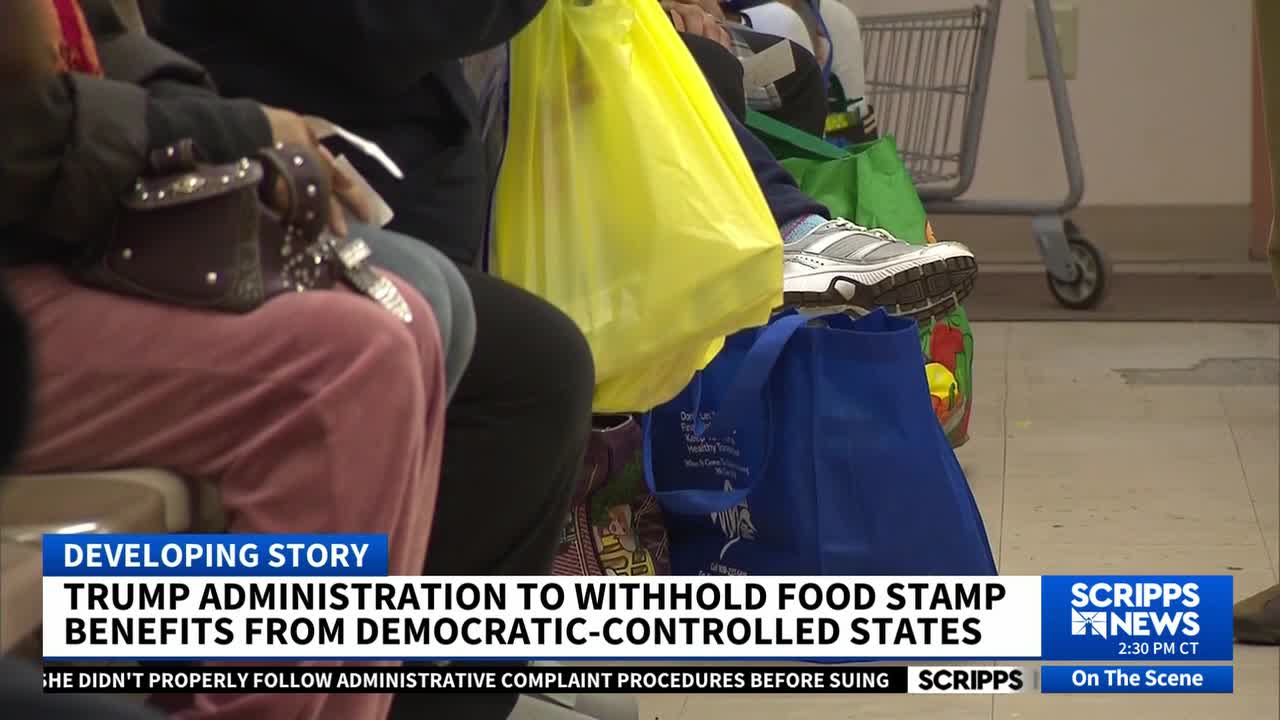

Trump administration could withdraw SNAP funds from Democratic states that refuse to share data
The government is checking the names and immigration status of aid recipients. (Scripps News)
scripps news
Agriculture Secretary Brooke Rollins said at a Tuesday, Dec. 2, Cabinet meeting that the Trump administration will withhold certain funding for the Supplemental Nutrition Assistance Program (SNAP) if about 20 Democratic-led states do not provide personal information about recipients of the nutrition program.
Starting next week, federal funding will be withheld from states that don’t comply with federal requests, Rollins said in a video conference.. The U.S. Department of Agriculture (USDA) later clarified that only the funds sent to support the program’s administrative costs, which are split 50-50 between USDA and each state, would be seized, not the benefits themselves.
Rollins said 29 Republican-led states have already sent the requested personal data, including immigration status and Social Security numbers, while 21 Democratic-led states have not yet. The USDA revised those numbers in a Dec. 3 statement sent to USA TODAY, saying 28 states and Guam provided information, but 22 “blue states” including California, New York and Minnesota did not.
The USDA claims it needs this information to “root out” what Rollins has repeatedly characterized without evidence as widespread “fraud.” USDA has declined multiple requests from USA TODAY to share more information about these claims
“Therefore, starting next week, we have begun and will begin halting the transfer of federal funds to these states until they comply and direct and allow us to root out this fraud and work with us to protect American taxpayers,” Rollins said on Tuesday, Dec. 2.
Request for SNAP data previously blocked by federal judge
The request for sensitive data about SNAP recipients, which helps about 42 million Americans, was first issued in February before being challenged in court by 22 states and Washington, D.C. That order was blocked in October by a federal judge in California, which temporarily barred the federal government from collecting information or withholding funds from states that don’t provide it.
USDA has until Dec. 15 to appeal the decision, but the judge has already said the court will not temporarily suspend the injunction in the event of an appeal. USDA declined to answer questions about the appeal or compliance with the order.
The USDA also told USA TODAY it has formed a “SNAP Integrity Team” to scrutinize data to end allegations of “indiscriminate welfare fraud.” An April 7 report from the U.S. Congressional Research Service said SNAP fraud is “rare” and said that based on available data and reports, a large number of overpayments could be due to unintentional errors.
“We are sending additional data requests to Democratic states, and if they do not comply, USDA will issue a formal warning that administrative funding will be withheld,” the USDA said in a Dec. 3 statement.
States challenging the requirement have cited privacy concerns, arguing in an earlier lawsuit that it is yet another attempt to “amass vast amounts of personal information and private data in furtherance of goals that have nothing to do with combating waste, fraud, and abuse in federal benefit programs.”
SNAP requirements in the spotlight
The nation’s largest nutrition assistance program became the flashpoint of a 43-day government shutdown, leading to unprecedented payment disruptions and a flurry of court rulings. The spending package that ended the shutdown on Nov. 12 restored full funding to the Department of Agriculture, which oversees SNAP, after benefits were withheld in November for the first time in the program’s history.
The Trump administration has repeatedly promised to overhaul the program. Rollins said in November that the USDA would have all recipients “reapply” to continue receiving benefits, but the agency later told USA TODAY it would use the “standard recertification process for households” that already exists. Currently, recipients must recertify periodically to maintain eligibility, and approved recipients have a limited time frame in which they can use their benefits.
The massive tax and spending bill, which President Trump called “a beautiful big bill,” will cut SNAP funding by an estimated $186 billion through 2034, according to the Congressional Budget Office. It also placed new restrictions on the program, including expanding work requirements (raising the working age from 55 to 65) and eliminating work exemptions for veterans, recent elderly nursing home exits, and people without housing.
States are currently responsible for up to 15% of the cost of benefits, depending on payment error rates, and administrative costs are expected to increase.


