Travelers are rethinking travel as safety concerns, rising costs and airport disruptions undermine confidence in flying.
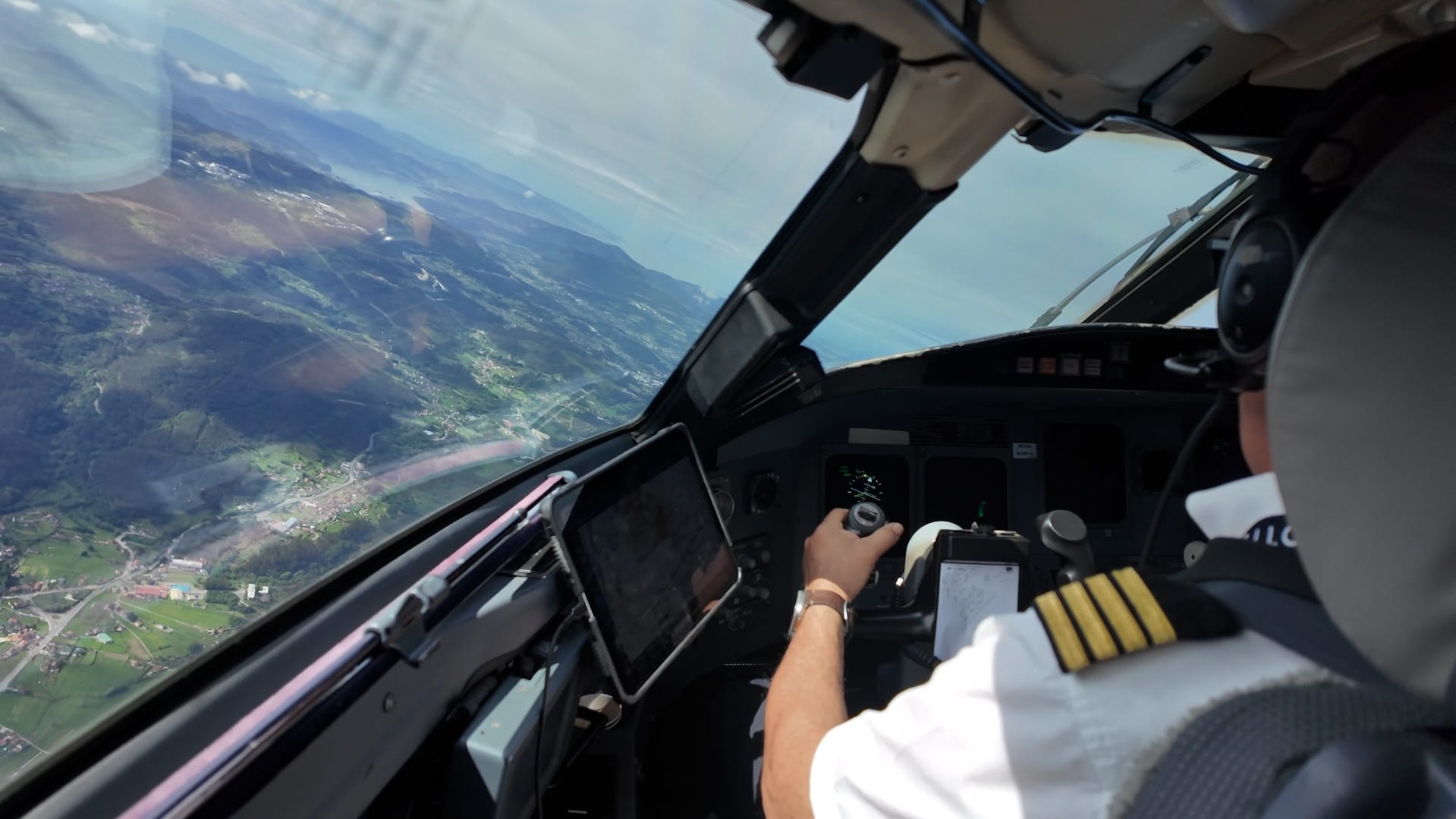

Global conflicts can disrupt flights even if they are not heading to their destination
International conflicts and foreign policy changes can reshape air travel overnight, forcing longer routes, increasing costs, and potentially causing sudden cancellations and delays.
- Geopolitical tensions, airport disruptions and rising prices have combined to make travel uneasy for some Americans.
- Some travelers are canceling or reconsidering trips due to concerns about terrorism, long TSA lines, and increased airfare prices.
- Travelers are also rerouting their trips to avoid geopolitically volatile regions such as the Middle East.
Kara Richardson was looking forward to mid-March.
The Georgia-based travel content creator was planning a trip to Orange County, California, where he was scheduled to attend the Overland Expo. But in the days leading up to her flight, a series of headlines, from geopolitical tensions to airport chaos, began to chip away at her confidence in the trip.
After reading a report that the FBI had warned California authorities about a possible attack by Iran on the West Coast, which the FBI said did not have enough verified information to support that claim, she decided not to go.
The 42-year-old told USA TODAY: “It was so scary that I decided to put an end to it.”
Other events also strengthened her decision, including the diversion of her Southwest Airlines flight due to potential safety issues, long lines at the airport and rising airfares on her route.
Richardson, who typically travels five or six times a year with her husband, Duane, chose to stay home instead.
Her hesitation reflects a moment of widespread disruption across the travel industry, one not caused by a single crisis but the convergence of multiple crises.
A new kind of travel anxiety
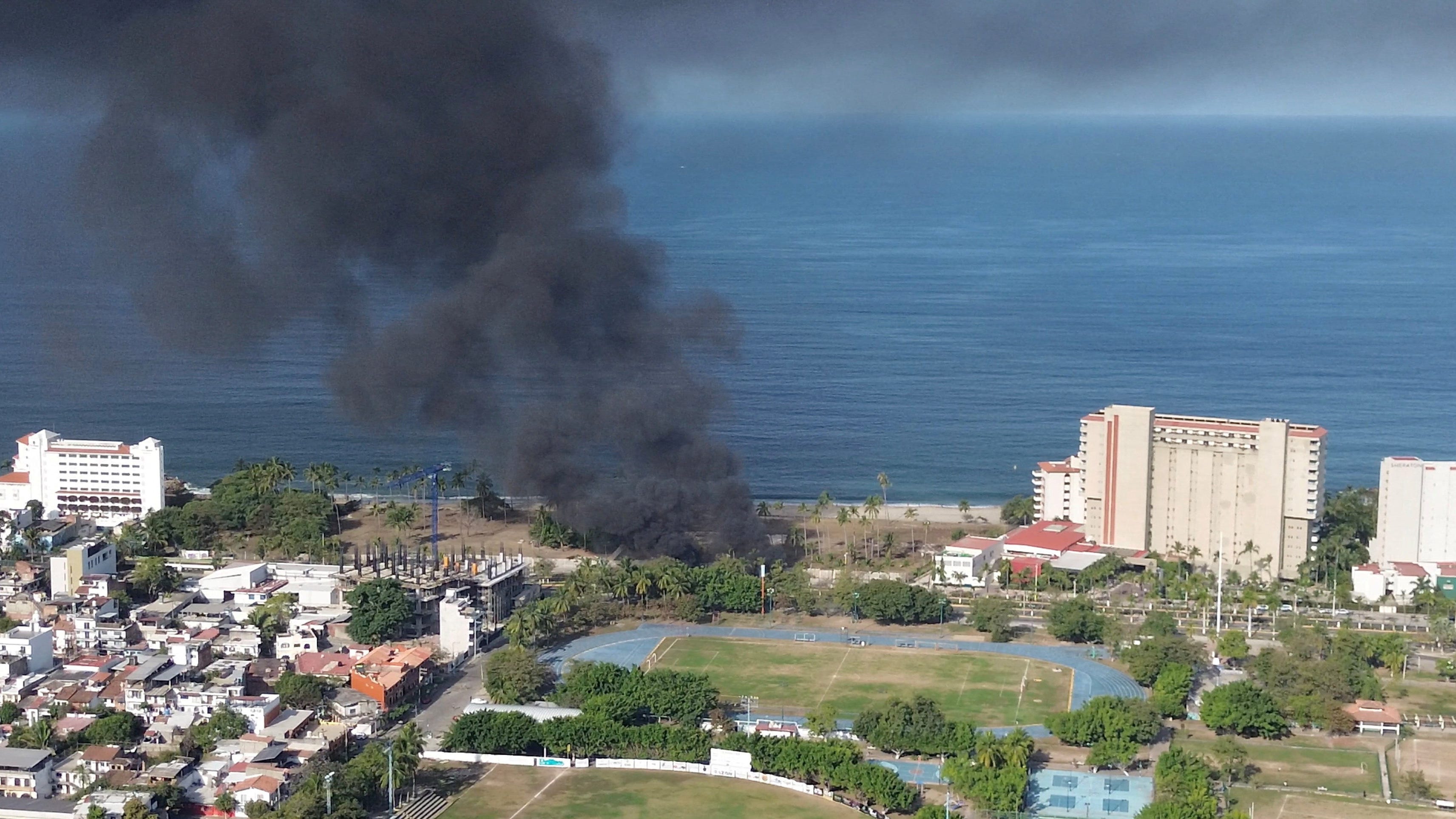
Is it safe to travel to Mexico? See what our experts say.
USA TODAY’s Eve Chen spoke with former CIA officials and security experts about the current situation in Mexico after the death of “El Mencho.”
In the early days of the COVID-19 pandemic, travel demand collapsed under the weight of health concerns and government restrictions. In the spring of 2026, the pressure will be more dispersed but less influential.
Geopolitical tensions, including the Iran war, have renewed fears of terrorism and instability. Former Secretary of Homeland Security Jeh Johnson told CNBC that the United States operates in “an environment of heightened security threats due to the fact that Iran is a state sponsor of terrorism.”
For some travelers, these warnings hit close to home.
Kate Swarthout, 50, last week prepared for a long-planned trip to visit family in New Zealand. But her thinking about flying changed dramatically.
“And even though I’m still really nervous, more nervous about domestic flights than international flights, I felt like it was worth going and trying to put the fear aside,” the California resident said. “But with that said, I can tell you right now, it’s going to be a big mess on this plane.”
Swarthout has largely overcome her lifelong fear of flying.
“I was in my mid-20s on 9/11, and the visuals from that time are still very vivid,” she told USA TODAY.
While aviation experts continue to stress that the risks of air travel remain low and that the potential threat extends beyond airports and planes, the psychological impact is more difficult to quantify.
In preparation for the trip, Swarthout turned to coping strategies such as EFT tapping, meditation, and downloading “favorite comfort shows” and movies like “Ted Lasso,” “Crazy Rich Asians” and “Anyone But You.”
Still, the experience caused her to reconsider her future plans.
She said she typically flies at least once a month, but is “really having second thoughts about doing any domestic travel in the near future.”
Domestic Disruption: Shutdowns and Security Lines
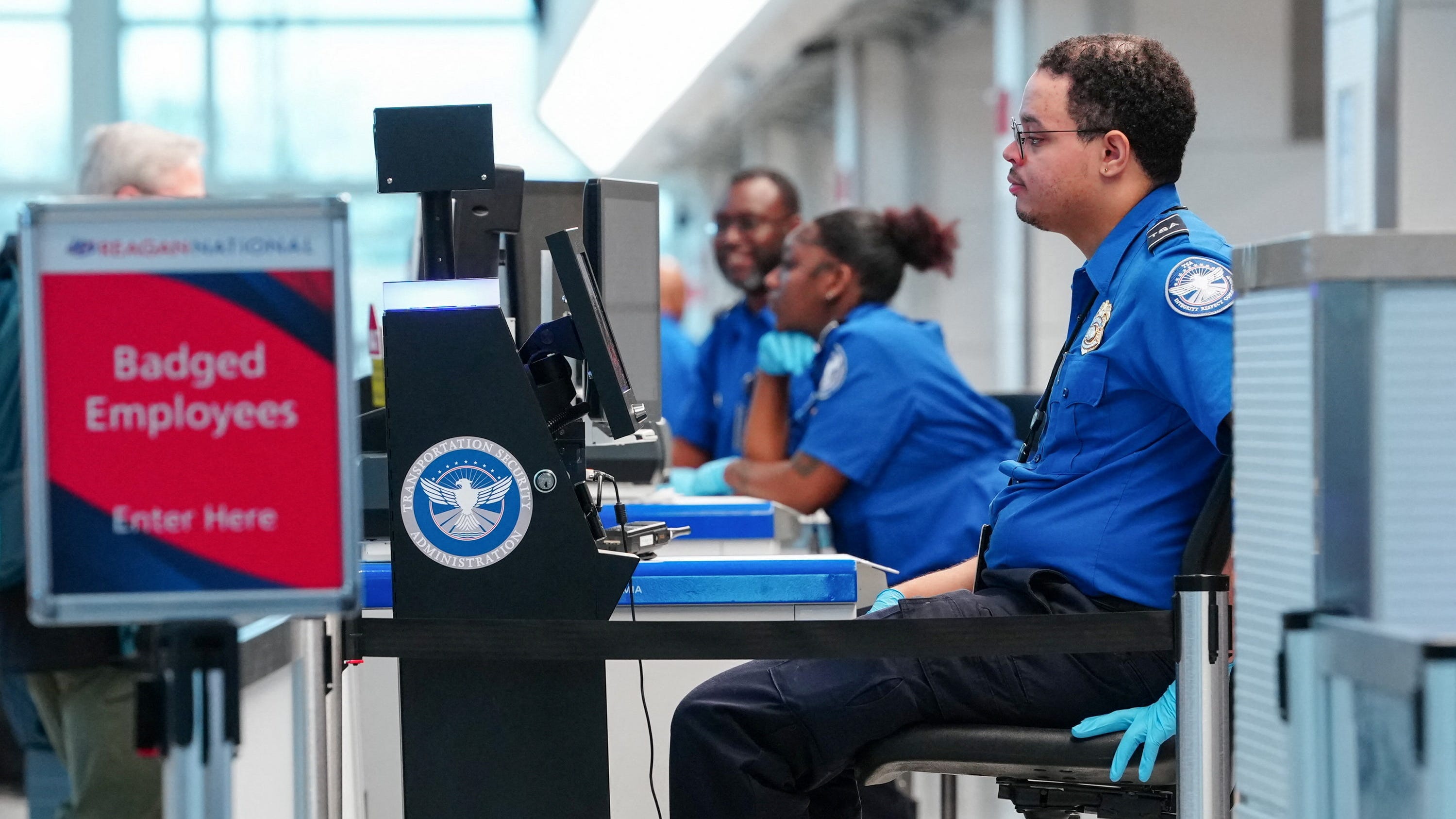
TSA security screenings delayed at airports nationwide due to government shutdown
Travelers are facing significant TSA delays as the government shutdown leaves employees unpaid and airports nationwide strained.
Even travelers trying to overcome safety concerns are encountering practical hurdles closer to home.
The partial government shutdown has put a strain on the Transportation Security Administration, contributing to long security lines at airports across the country. Due to staffing shortages, some travelers are forced to wait significantly longer for flights, sometimes even taking several hours longer than usual.
For travelers like Richardson, that uncertainty is enough to completely derail plans.
“We usually have to start (our trips) in Atlanta, which is the busiest airport in the world,” she said. “And even though there’s a TSA pre-screening, even if I’m like, ‘OK, okay, no need to be scared,’ should I get to the airport eight hours before my flight? Like, do I need to stay the night before? What am I supposed to do here?”
The usual advice to arrive two hours early for domestic flights and three hours early for international flights is becoming less reliable as wait times and staffing levels fluctuate.
For frequent travelers who are used to traveling efficiently, the idea of arriving at the airport half a day early may be hard to swallow.
Increasing costs add new layers
At the same time, economic pressures are driving up the cost of travel.
Rising gasoline prices are increasing the cost of jet fuel, a major expense for airlines. These increases are often passed on to consumers in the form of higher airfares, another factor Richardson cited as a reason for canceling trips.
Travel demand surged in the years immediately following pandemic restrictions, but price sensitivity appears to be returning as economic uncertainty increases.
What the data shows: demand slows, routes change
Early indicators suggest that these overlapping concerns are beginning to impact global travel patterns.
According to aviation analytics firm Cirium, advance booking directional data shows a significant decline in transatlantic travel demand for summer 2026.
Bookings from Europe to the US decreased by 15.34% year over year, and bookings from the US to Europe decreased by 11.19% year over year. This data is based on reservations made through online travel agencies and global distribution systems between October 7, 2025 and March 14, 2025, comparing trips made in July 2026 and July 2025 to the same booking period one year earlier.
This decline was a slight decrease from the beginning of the year, when bookings between Europe and the US were down 14.22% and bookings between the US and Europe were down 7.27%.
This trend is consistent with anecdotal reports from travelers who are reconsidering or postponing their trips.
However, the impact is not uniform across all regions.
In the Middle East, where airspace disruption complicates flight paths, the data shows “some disruption” rather than a widespread decline.
For example, bookings from Australia to Europe that avoided connections through major Middle East hubs such as Dubai, Abu Dhabi, Doha and Bahrain have soared, increasing by 48.6% since February 28, with year-on-year bookings increasing by 24%. This increase suggests that travelers are actively rerouting themselves to avoid certain areas.
World Cup travel shows resilience, but not immunity
Even major world events are not completely isolated from the current climate.
According to Cirium, travel bookings from Europe to North American FIFA World Cup host cities, including New York/New Jersey, Los Angeles, Atlanta and Miami, fell 6.7% year-on-year in June 2026.
Canada’s decline was smaller at 1.5%, with bookings to Mexico down 6.4%.
City-level data shows sharp declines from certain European hubs. For example, bookings from Frankfurt to the US are down 35.74%, and bookings from Amsterdam are down 22.91%. This suggests that even high-profile events are battling the same headwinds that affect the industry as a whole.
On the U.S. side, demand for major European cities has also slowed, with bookings to Frankfurt down 26.8% and bookings to London down 11.31%.
For now, some U.S. travelers are taking a cautious stance.
Richardson and her husband plan to visit Glacier National Park again this summer, but are holding off on booking additional trips, at least until the government shutdown is lifted. For people like Swarthout, that means pushing through fears to stick to long-held plans.
Contributors: Zach Wichter, Eve Chen, Josh Rivera. america today


