Companies such as Toyota and General Motors have suffered billions of dollars in tariff losses.
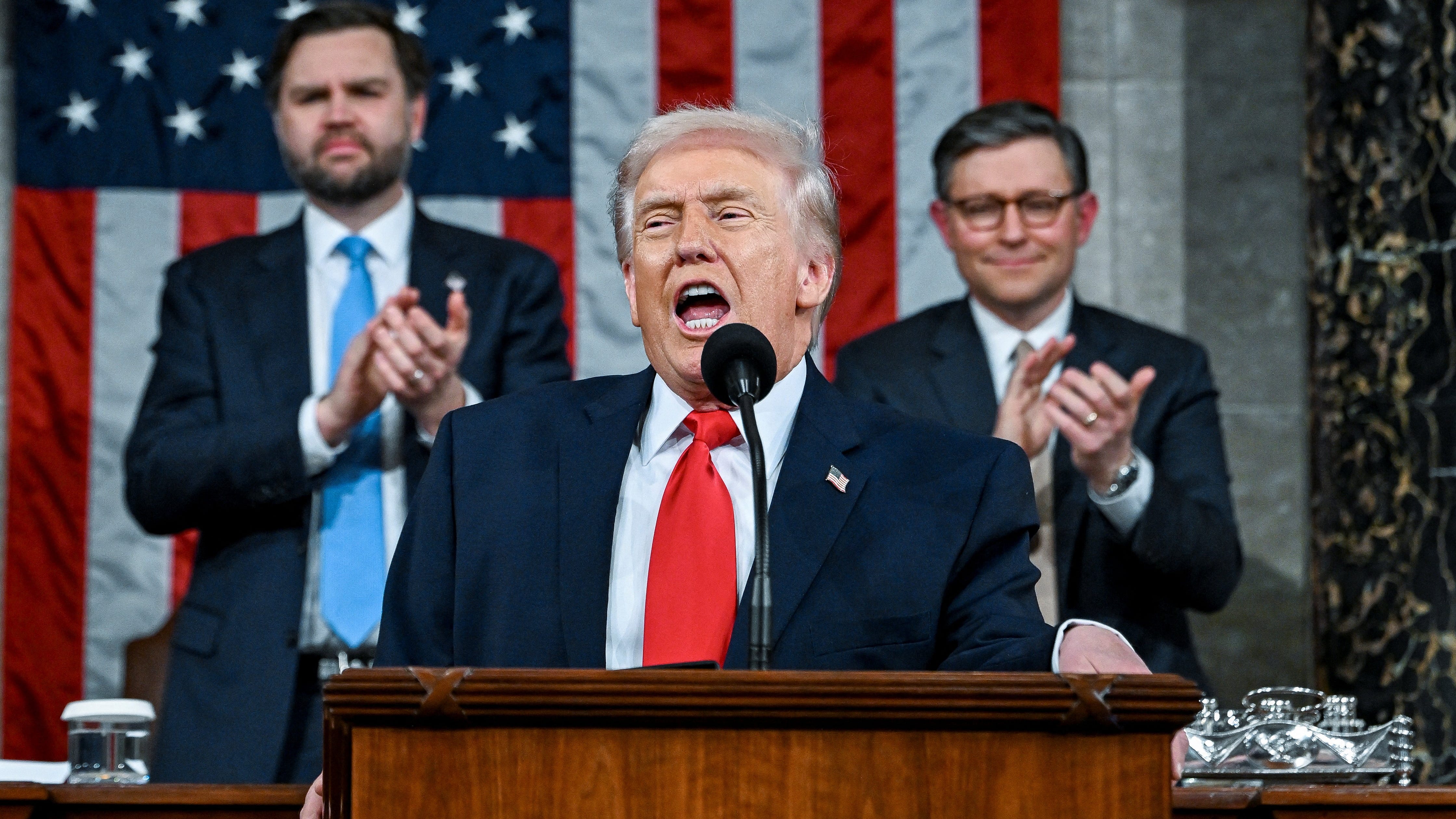

Analysis of President Trump’s 2026 State of the Union Address
USA TODAY’s Washington Bureau Chief Susan Page takes a closer look at President Trump’s 2026 State of the Union address.
- The Trump administration’s auto import tariffs and parts tariffs have cost major automakers billions of dollars in losses.
- The company with the biggest financial impact was Toyota, which suffered an estimated $9.6 billion in losses due to the tariffs.
- Some automakers, including Ford and Toyota, have absorbed higher costs to maintain sales and avoid rising consumer prices.
Auto import and parts tariffs have cost some of the world’s largest automakers billions of dollars in losses. President Donald Trump’s sweeping tariffs have increased production costs for most car brands as they rely on foreign imports and supply chains.
Some automakers have been more affected than others, and brands like Tesla, which has focused on domestic production, have thrived. According to Reuters, the Trump administration is currently being sued for more than $150 billion in restitution following a Supreme Court ruling that ruled many tariffs illegal.
Companies suing the U.S. government range from retailers like Costco to automakers like Toyota. Here are the top automakers who lost billions in tariff costs and how they adjusted to reduce their losses.
How much did auto brands lose from Trump-related tariff costs?
Several major automakers announced billions of dollars in losses directly related to tariff-related costs, including Ford, General Motors, and Stellantis.
These car companies lost billions of dollars due to tariffs.
- Ford: estimated at $1 billion
- Mercedes-Benz: estimated at $1.2 billion
- Volkswagen: estimated at $1.5 billion
- Stellantis: estimated at $1.7 billion
- General Motors: Estimated $3.1 billion
- Toyota: estimated at $9.6 billion
While some automakers pivoted their strategies to adapt to the rapidly changing and volatile auto industry, others were unable to react sufficiently to soften the blow of devastating tariffs.
Despite heavy losses, Ford tried to save consumers from increased costs
American automaker Ford was the least affected of the Big Three automakers, with losses estimated at $1 billion, according to CNN Business’ late 2025 report. The company initially expected an annual loss of $2 billion because many Ford vehicles are assembled in Mexico and Canada.
Ford adjusted its strategy in 2025, introducing the “From America, For America” campaign in April. The campaign lowered prices when consumers were expecting higher prices and offered employee pricing to buyers. The Blue Oval resisted the economic fallout from tariffs, with sales up 14% in the second quarter thanks to a pro-American marketing campaign.
Mercedes-Benz’s profits have been hit hard by tariffs.
German luxury car brand Mercedes-Benz has seen its revenue “more than halved” due to the $1.2 billion tariff, the New York Post reported. Many of the engines, axles and transmissions for the company’s vehicles are manufactured in and imported from Germany. Apart from parts, Mercedes imports a large portion of its entire portfolio from other countries and therefore faces severe parts and import duties on most of its vehicles.
The company did not pass on costs to consumers immediately after implementing sweeping tariffs. Prices have not increased significantly in 2026, but tariffs could cause prices to rise later in the year. Mercedes is adapting to the tariffs by increasing production at its plant in Tuscaloosa, Alabama.
Volkswagen’s tariff costs could soon be passed on to buyers
According to a CNBC report in July 2025, mainstream German automaker Volkswagen is expected to lose at least $1.5 billion in 2025. Volkswagen’s Chattanooga, Tennessee, plant makes some VW nameplates for the United States, but many models are also made or imported from Mexico and Germany.
Automakers responded to lower tariff costs by announcing their intention to add a 25% import fee to stickers on vehicles assembled abroad. VW is considering building an additional factory in the United States and has suspended shipments from Mexico as it reviews its supply chain.
Stellantis production disrupted by tariffs
Stellantis, the big three automaker that makes Jeep, Ram, Chrysler, Dodge and Maserati, expects the tariffs will result in a loss of $2.7 billion in the first half of 2025. The company revised that forecast to a loss of $1.7 billion in July 2025, according to CBS News.
The American automaker has suspended production in Canada and Mexico and laid off nearly 900 employees across five major manufacturing facilities in 2025.
Stellantis plans to “increase U.S. production by 50%” over the next four years, according to the United Auto Workers union website. The move should help get production back on track within the next few years and reduce the impact of the tariffs.
Of the Big Three American automakers, General Motors suffered the most.
GM and its Buick, Cadillac, and Chevrolet brands were among the worst hit financially of the Big Three U.S. automakers. The company racked up $3.1 billion in tariff-related losses, down from an estimate of $3.5 billion to $4.5 billion, according to financial news site The Street. Nearly half of the vehicles in the company’s U.S. portfolio are imported from Canada, Mexico and South Korea.
The company leveraged cost-cutting efforts and supply chain shifts to reduce tariff losses by millions of dollars by the end of 2025. The company has moved production of some nameplates from China and Mexico to the United States and is investing heavily in domestic auto parts production.
Toyota faces biggest impact from tariffs, but sales remain strong
CNBC reported that Japanese automaker Toyota estimated the tariff costs at a mind-boggling $9.7 billion. The impact of the tariffs will be significant because automakers rely on parts and production from countries such as Japan, Canada and Mexico.
Toyota’s North American sales increased 8%. According to its annual sales report, the company sold a whopping 2,518,071 vehicles in 2025. It absorbed many production cost increases to keep prices affordable for American drivers and boost sales during a time of economic uncertainty.
Major automakers sue government
Thousands of companies are seeking refunds following a recent Supreme Court ruling, and many of the world’s largest automakers have indicated they intend to fight the administration in court. According to Yahoo Finance, Toyota’s subsidiary is one of the entities filing a protective lawsuit to “challenge the legality of IEEPA tariffs and ensure access to refunds.”
Chinese automaker BYD is also suing the U.S. government, seeking repayment of fines imposed since sweeping tariffs were imposed. Many other car companies are likely to follow suit in the coming months with these two world best-selling car brands.


