
What happens when the AI stock market bubble bursts?
The hottest stocks in the market – Apple, Nvidia, and Meta – reflect the hype from past crashes. Is AI optimism about to crumble?
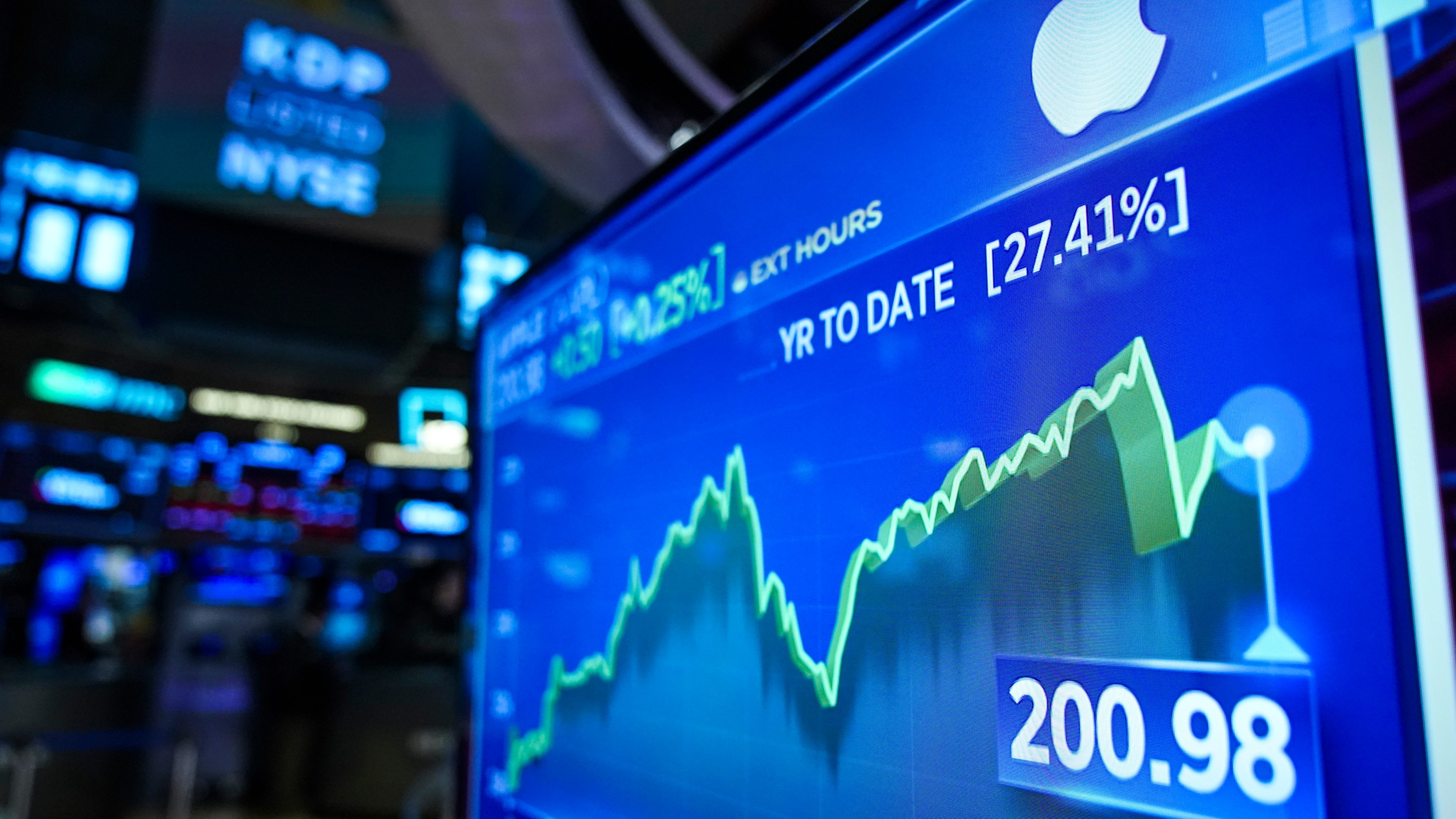
I’ve heard from friends who bought Nvidia, Amazon, and Apple stock when they were cheap, and now those stocks are worth five or six digits.
They are inspiring stories. But how safely can you invest in individual stocks?
Financial planners usually advise armchair investors and retirement savers that the wisest course of action is to buy shares in index funds, the type that track the performance of a broad stock index or the overall market. Individual stocks tend to be very volatile.
But millions of investors buy individual stocks, and many have success stories.
Is there room for individual stocks in your retirement portfolio? If so, how much is too much? We asked several investment experts.
Ordinary Americans are keen to invest in individual stocks. A recent study by the BlackRock Foundation and Commonwealth found that 54% of low- and moderate-income Americans (annual incomes between $30,000 and $80,000) invest in the capital markets, and that new investors prefer individual stocks over mutual funds and ETFs.
Investors may watch YouTube and TikTok videos of influencers who claim they can’t miss their stock picks. They troll the internet for recommendations from the Motley Fool and Morningstar. Then they sit back and wait for the stock price to rise.
“There’s a certain amount of fun to this,” said Zachary Layfield, head of goals-based investing research at Vanguard.
Are you ready to buy individual stocks?Here are some tips.
start small
If you invest in an index fund or a target date retirement fund, your investment will likely track the overall market. Stock indexes have good years and bad years, but they are less volatile than individual stocks.
If it’s a single stock, you’re likely to see big fluctuations and it won’t always go up. Experts say if you’re just starting out, it’s wise to invest just a small portion of your portfolio in individual stocks. This is especially true if you’re using your retirement savings to invest.
“I think everyone should build their retirement on a foundation of index funds,” said Robert Brokamp, senior retirement advisor at The Motley Fool. “Then we’ll gradually move into individual stocks,” committing “maybe 5%” of the portfolio. “Then you might find that you really like it and be able to gradually increase that percentage.”
avoid concentration
Investment experts say that no matter how much money you invest in a single stock, you should try to avoid owning too much of a single stock.
“A simple rule of thumb is to make sure that no position in your portfolio accounts for more than 5% to 10% of the total portfolio value,” said Caleb Silver, editor-in-chief of financial journalism site Investopedia.
Hyperconcentration can happen by chance. Let’s say you bought Nvidia stock a few years ago and watched it increase in value 10x. These stocks may now make up the majority of your holdings.
“Many of our members have 30% of their portfolio in Nvidia,” said Brokamp, whose site has been recommending Nvidia stock for years.
The problem with individual stocks is that “if any one stock goes down significantly, you’re vulnerable to a sharp decline in your portfolio,” Silver said.
It’s less of a problem if stocks make up 5% of your portfolio, but it’s more of a concern if they make up 30%.
“Individual stocks can be a great complement to a well-diversified portfolio, but it’s important not to let a single stock overshadow the overall mix,” said Ryan Victorin, vice president and financial consultant at Fidelity Investments.
diversify
Diversification in investment terms means holding different types of assets. You can diversify by owning stocks in different sectors, large and small companies, U.S. and foreign markets, and by owning non-stock assets such as bonds and money market funds.
If you have only 5% or 10% of your portfolio invested in a single stock, you don’t necessarily need to worry about diversifying those stocks.
Investopedia’s Silver says, “It’s better to focus on five to 10 stocks with reliable track records and own significant stakes in those companies.”
“If you’ve invested in any of the top 10 companies in the S&P 500 over the past five years and built positions in those companies, you’ve outperformed the stock market,” Silver said. Case in point: Nvidia.
The Motley Fool’s Brokamp suggests a broader approach.
“You should have at least 25 stocks, and they should represent a variety of different types of companies,” he said.
Silver’s approach allows you to take a greater stake in fewer companies. With Brokamp you can be more diversified, but each stock has a smaller stake.
Don’t expect to beat the market
One of the tenets of investing is that actively managed funds often underperform the overall market. Simply put, it is difficult to beat the market by picking stocks yourself.
And that rule definitely applies to amateur stock pickers as well.
“If you do this yourself, you’re a working manager,” says Vanguard’s Layfield. “And many active managers fail to outperform the overall market.”
Smart investors sell stocks that have declined in value at a loss and use that loss to offset gains on other investments at tax time. This is a technique called tax loss harvesting.
Cutting underperforming stocks can make investors overly optimistic about their success.
“When you’re selling to losers, you can get a little too proud of your own abilities,” said Colin Day, a certified financial planner in St. Louis. “We forget the losers. We remember only the winners.”
Brokamp said that when you invest in a large number of individual stocks, you should expect them to move in different directions, with some going up and some going down. Its returns will not resemble the trajectory of a broad index fund that captures the collective movements of many stocks.
“A lot of individual stocks are going to fail,” Brokamp said. “It takes just a handful of successes to motivate you to come back.”


