In winter, Yellowstone National Park is a hidden gem with fewer tourists, steaming geysers and rare wildlife.

Why you should visit Yellowstone in winter
Winter isn’t the most popular time to visit Yellowstone National Park, but could it be the best? Reported by USA TODAY’s Zach Wictor.
- Yellowstone National Park offers unique experiences in both summer and winter, with fewer people in the colder months.
- The park was initially established to protect geological features, similar to Old Faithful, followed by animal conservation efforts.
- Unlike other popular national parks, Yellowstone does not require timed entry reservations.
I saw a wolf in the distance.
This is the best animal viewing you can do in Yellowstone National Park. The guides were also excited, saying, “This is the first time a wolf has been seen in this park in about a month.”
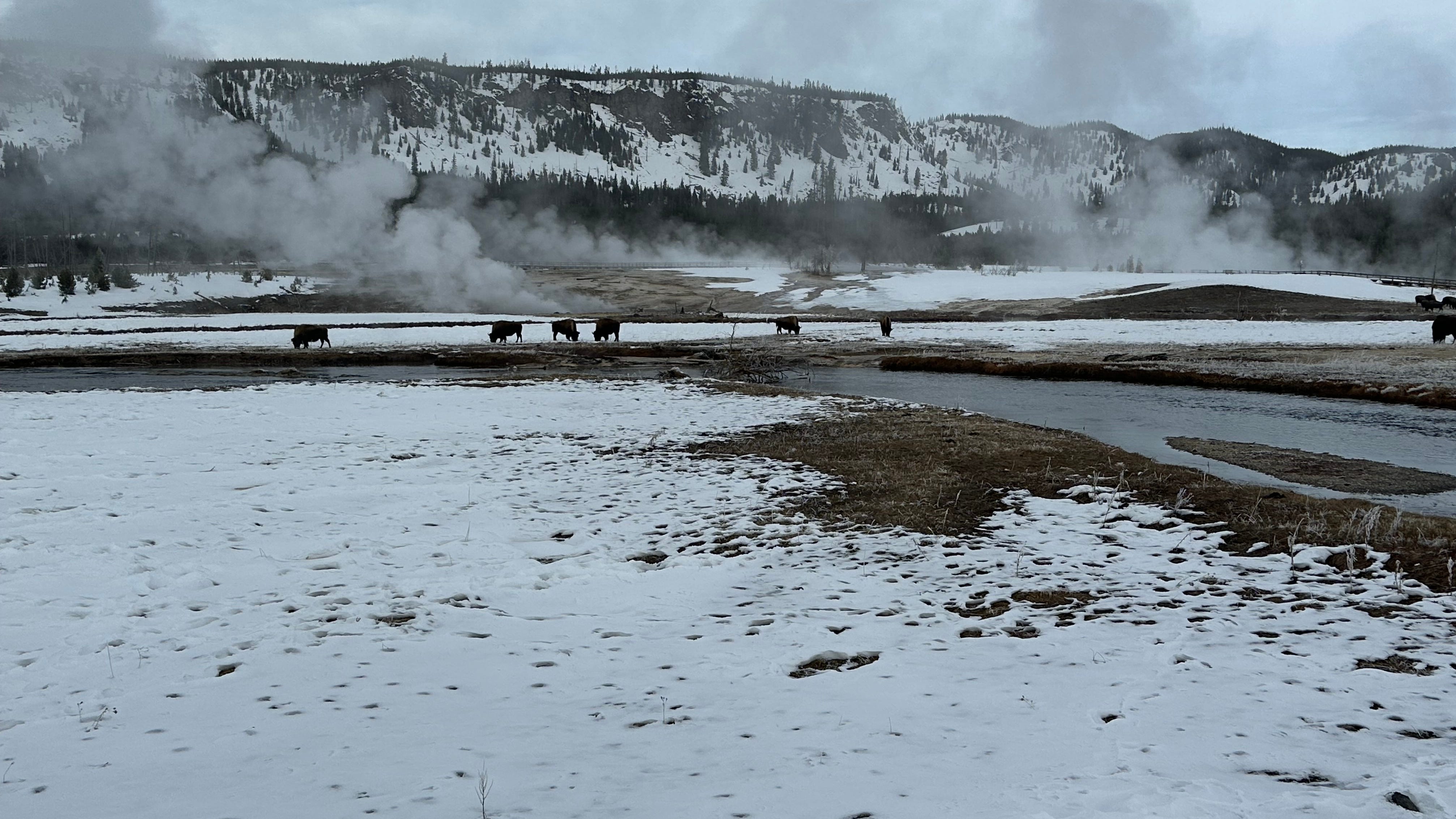
Although the wolves were more than a mile away (all I could do to capture the moment was very grainy cell phone video), it emphasized to me just how special Yellowstone and the entire National Park System is. There I was, in the middle of the American wilderness, watching wolves trot across the snow as steam rose around me from natural vents beneath the ground.
Yellowstone is not just about wildlife. In fact, it was the first national park in the United States established to protect the natural landscape.
Yellowstone National Park was established in 1872 to protect access to its unique geological and hydrothermal features, including Old Faithful Geyser. Animal protection efforts began later.
While summer brings visitors to the park (nearly 1 million people passed through its gates in July 2025), winter is a time when the park is much emptier. According to our guide, only about 2,000 people a day enter the park during the winter. That means you don’t have to fight your way through crowds to get the best views or spot wildlife.
In Washington, national parks like Yellowstone continue to grapple with funding uncertainty, but for visitors they remain as important, valuable, and fulfilling as ever.
If you’re considering a trip to Yellowstone, don’t rule out the idea of going when it’s snowing. Here’s what you need to know to make the most of your Yellowstone experience any time of year.
Things to see and do in Yellowstone
No matter what season you visit Yellowstone, the scenery takes center stage.
In the summer, hot springs around the area, such as the Fountain Paint Pot Trail, display vibrant colors with mats of thermophilic bacteria that thrive in the extreme environment.
Even in winter, if you’re lucky, you’ll have the chance to see animals like bison and wolves, but you’ll also get a sense of how much thermal activity is going on beneath the park’s feet. Random patches of melting snow mark areas where magma just below the park’s surface maintains temperatures in unexpected patterns.
Stop by Old Faithful, perhaps one of Yellowstone’s most famous attractions, to enjoy a nature show. One of the benefits of going in the winter is that you don’t have to fight for a front row seat at the geyser.
Despite being one of America’s most visited national parks, Yellowstone does not require timed entry reservations or permits to access popular spots, unlike other parks with restrictions.
But there’s plenty to see outside of these famous tourist spots, as long as you stay on the well-marked roads. The landscape of geysers, mud pots, hot springs and fumaroles will enchant you.
Due to Yellowstone’s unique geology, you may encounter treacherous ground if you stray from your designated area. It’s not worth getting a steam or acid burn just to take an Instagram post from a more unique angle.
“This is a place to be sensed,” said our guide Missy, but perhaps not to cover up a body with third-degree burns.
How are parks responding to record visitor numbers?
National parks continue to be very popular tourist destinations, and many of the major parks are working on infrastructure upgrades to safely accommodate large numbers of visitors.
For example, Yellowstone has a robust road infrastructure and facilities such as restrooms are scattered throughout the park. Still, my guide said the park recognizes that more can be done to improve its facilities and that some of its ongoing capital projects have been delayed.
Most of Yellowstone’s roads are closed during the winter, but during the rest of the year, vehicles can travel on the giant figure-eight roadway that runs through much of the park. Wildlife sightings can increase traffic as bison cross the road or cars stop to see other animals in the distance.
“Parks utilize a combination of seasonal staffing increases, traffic control measures, real-time visitor messaging, expanded transportation operations, and interagency coordination to safely and responsibly manage crowds,” an Interior Department spokesperson previously told USA TODAY, highlighting the National Park Service’s commitment to safe and responsible access and resource management.
How did Yellowstone deal with the National Park Service changes?
Despite staff cuts and funding uncertainty, national parks remain open.
“During the appropriations lapse, the government has kept America’s national parks as safe, clean, and open as possible,” a National Park Service spokesperson said in a statement. “Thanks to strong leadership and a well-executed emergency response plan, the National Park Service maintained essential services, minimized disruption, and prevented damage to resources.”
Still, when the layoffs were announced last year, advocates such as the independent National Parks Conservation Association and the National Parks Conservation Coalition warned that the cuts would lead to lower service levels and a diminished ability to protect and share park resources.
How to get to Yellowstone
Yellowstone National Park, which straddles Montana, Wyoming, and Idaho, has multiple entrances, so getting there depends on which area you’re visiting.
Public access is restricted during the winter, and most visitors must take a guided tour.
During my trip, I flew to Bozeman, Montana. I primarily stay in Big Sky, and I was picked up from my hotel to meet up for a snowcoach tour in West Yellowstone, about an hour away.
How much does it cost to enter Yellowstone?
A standard admission pass to Yellowstone for US residents costs between $20 and $35 per visit, while an annual pass costs $70. National parks currently charge an additional fee for foreign tourists.
During the winter, most roads in the park are closed, so visitors must enter as part of a tour.
The tour I took was an 8-hour snowcoach tour from West Yellowstone operated by Yellowstone Vacations that cost $240 per person, which does not include park passes, lunch, or tips.
During the winter, Yellowstone also offers snowmobile tours, snowshoeing, and cross-country skiing.
This article has been updated to adjust the heading.
Contributor: Eve Chen, USA TODAY
The reporter for this article received access from Expedia and Visit Big Sky. USA TODAY maintains editorial control of content.
Zach Wichter is a travel reporter and writes the Cruising Altitude column for USA TODAY. He is based in New York and can be reached at zwichter@usatoday.com.


