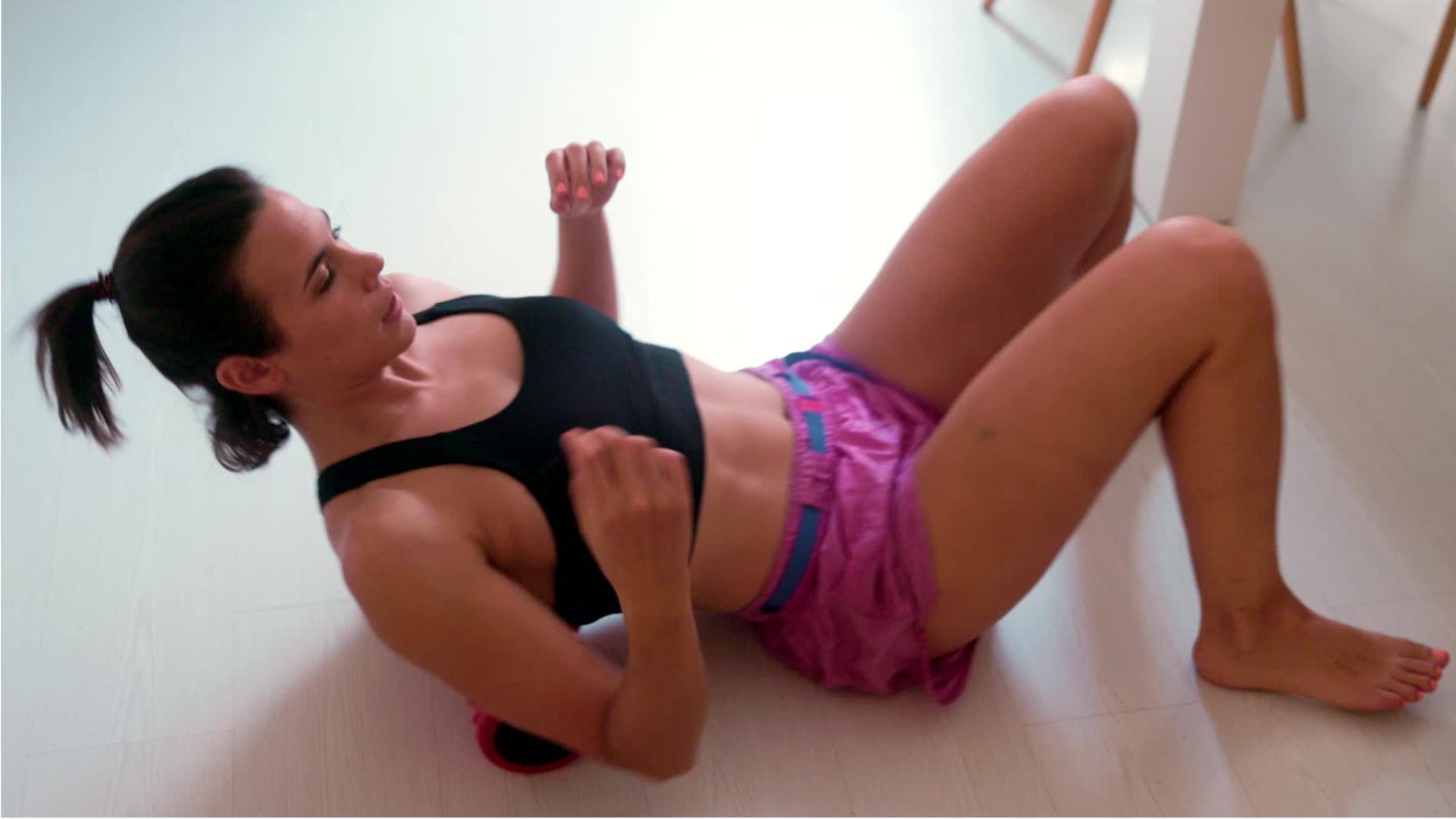

How to stretch and strengthen your pelvic floor
Statistics show that one-third of women and 16% of men will experience some type of pelvic floor disease in their lifetime.
Amanda McKinney has been a lifelong runner, including 5Ks, half marathons, and marathons.
She gave birth to her first child at age 30, and running remained an emotional release for her during the excitement and stress of motherhood. However, after giving birth to her second child, she began experiencing bladder leakage.
McKinney tried to get back into his exercise routine, but to no avail. She spent nearly all of her time caring for her two young children, and even one jumping jack could lead to urinary incontinence. Not only did her physical health suffer, but her mental health also began to suffer.
Although McKinney opened up to her sister, her sister was not as affected during her birth, and McKinney felt there was a lack of support from those around her.
“I didn’t know if it was just me. I didn’t know if I would ever get back on my feet,” she says. “I was so embarrassed that I couldn’t do jumping jacks without peeing.”
However, despite the culture of silence about urinary incontinence, it is common, especially among new mothers.
During and after pregnancy, as many as 4 out of 10 women experience urinary incontinence, or involuntary loss of urine. Some women experience bowel incontinence. Although women often find it difficult to access care due to a lack of dialogue about incontinence, a variety of treatments and devices can reduce postpartum urine leakage.
McKinney says she now plans to “talk to everyone about this.” Part of that is due to her success in using a vaginal pessary, a device that provides mechanical support to the area affected by pelvic organ prolapse.
How do vaginal pessaries work and who should use them?
Pessaries are usually made of medical-grade silicone. When inserted, it supports the pelvic organs and prevents bladder leakage, especially in women with stress urinary incontinence (SUI). SUI is urine leakage caused by sudden pressure on the bladder caused by activities such as coughing, sneezing, laughing, exercising, and lifting due to weakened pelvic floor muscles.
Dr. Scott Farrell, a Canadian urologist and inventor of Uresta, a reusable over-the-counter pessary, says less than 15% of women in the U.S. undergo surgery for incontinence, and the remaining 85% seek alternative treatments. Vaginal pessaries are recommended for women who want to avoid surgery or who are not suitable for surgical intervention.
McKinney uses the Uresta device, which can be purchased over the counter and does not require a doctor to fit it. According to the company’s data and several third-party studies, 97% of women report reduced leakage while using Uresta.
“Most pessaries cannot be managed by the patient themselves and must be seen by a doctor regularly,” Farrell explains. During these visits, your doctor will need to remove the pessary, perform an examination, and reinsert the device. “That has always been a barrier for pessaries, and that was one of the big reasons for the Uresta design,” he continues.
However, pessaries containing Uresta do not treat the underlying muscle dysfunction that causes stress urinary incontinence. Reduce symptoms during use.
“It’s non-surgical and reversible…(but) it only lasts as long as it’s in place and requires ongoing maintenance and follow-up,” says Kathy Cates, a nurse practitioner and pelvic floor expert. She says pelvic floor therapy is considered a first-line treatment in most guidelines.
“Pelvic floor therapy is a rehabilitation approach that strengthens and retrains the pelvic floor muscles that support evacuation,” she explains. “It takes more time and participation, but it addresses the root causes and can lead to more lasting improvements.”
Cates said many patients use a combination of treatments, including pessaries for short-term symptom relief and physical therapy for long-term effects. McKinney continues to do pelvic floor exercises and uses electrode therapy to prevent leakage from coughing and sneezing.
However, the visibility of these devices can help draw attention to this under-discussed health issue.
“I think the whole area of conservative management should be evaluated and has a lot to offer to this whole problem of urinary incontinence,” Farrell says.
“It greatly improves your mental health.”
Hiromi Okuyama had a planned birth at home in Canada and gave birth to her second child in her 40s. During the birth, the midwife noticed that she was leaking a lot of urine and recommended that she see a pelvic specialist. But as a new mom, she kept postponing her plans.
Gradually her incontinence worsened. Okuyama led an active lifestyle, teaching karate and running around with his hyperactive child on the autism spectrum. She bought every brand of “incontinence pad”. I wore diapers even at night.
Mr. Okuyama became embarrassed to appear in public. Even on nights out with friends, she felt uncomfortable dressing up wearing “bulky pads under nice dresses.”
“It’s very unstable, and it gets worse because you don’t know when it’s going to happen. Should I wear something heavier today? Should I wear something lighter today?” she says. “It’s really hard to live like that.”
Having given birth to a child at an older age, she didn’t think young mothers would be able to relate. So she suffered in silence. That was until a few years later when she discovered the Uresta online community, which maintains an active Facebook group.
The device helped relieve her symptoms immediately.
“I felt really free. Total freedom,” she says.
She was relieved to know she wasn’t alone. “The Facebook group was so nice,” she shares. “It’s really great to see so many women talking about this issue. It’s a very vulnerable subject, but I feel like we’re very supportive in this community and talking about it.”
McKinney returned to running half marathons. While wearing the device during the race, she passed by every porta potty. She never had to stop.
“I know it’s used for physical purposes,” she says. “But it greatly enhances your mental health.”


