The strength of the U.S. economy is increasingly dependent on the top 10% of earners.
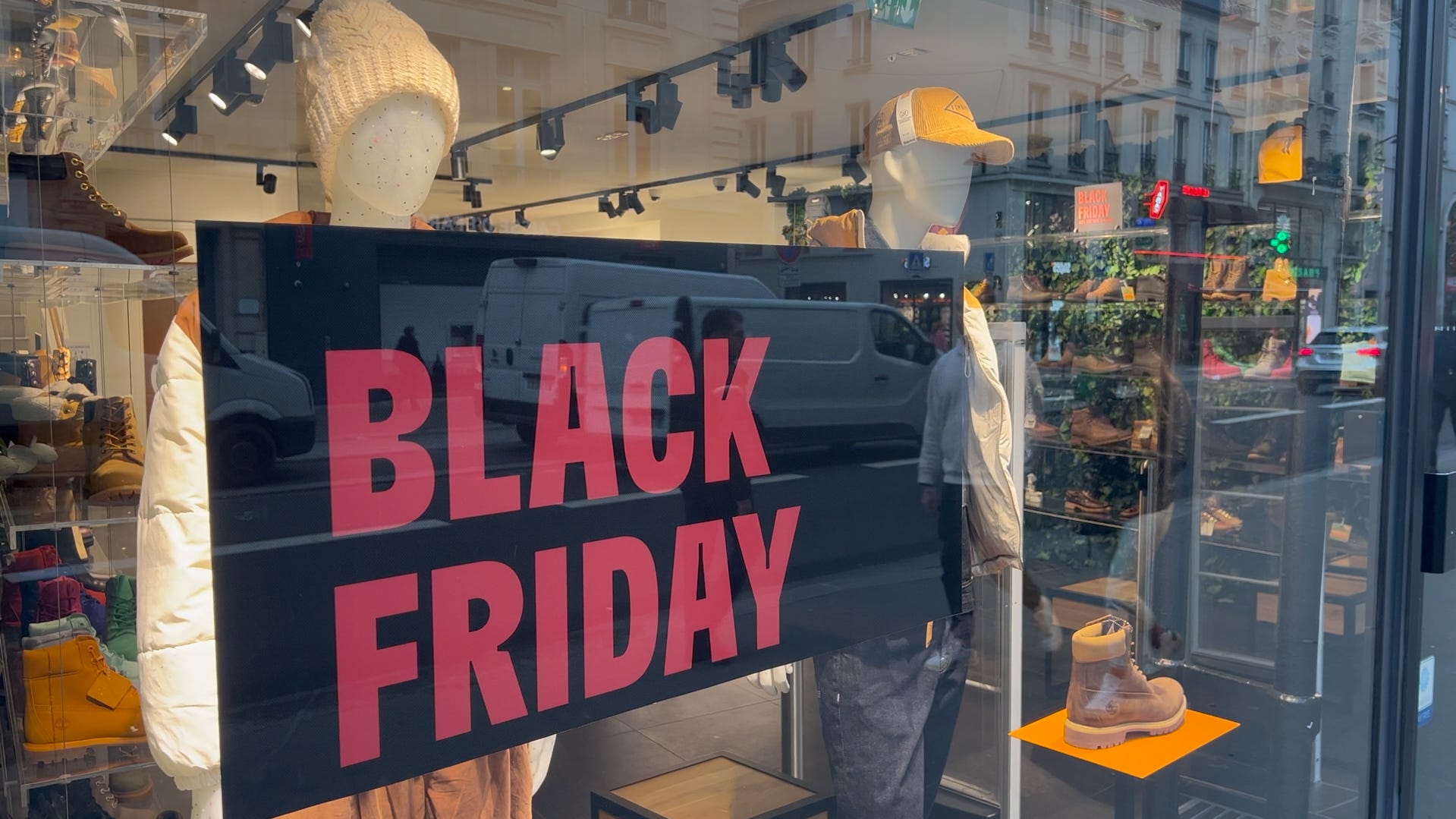

5 smart tips to save money on Black Friday and holiday shopping
Check out our 5 expert tips to stretch your budget and get the best deals this Black Friday and holiday season.
If the American economy has a successful holiday season, as the data suggests, the wealthy will be grateful.
According to a report by Moody’s Analytics, the top 10% of income earners currently account for about half of all consumer spending. This is a historic high.
America’s economic growth is increasingly dependent on highly paid people. They accounted for 49.2% of spending in Q2 2025. By comparison, it accounted for about 46% of spending for the same period in 2023 and about 43% of spending for top earners in 2020.
“They’re in the best financial position they’ve ever been in,” said Mark Zandi, chief economist at Moody’s.

Consumer spending among less affluent Americans has remained relatively flat. Middle income earners, people in their 40sth up to 60th By income percentile, approximately $2.1 trillion was spent in the second quarter of 2025, which is barely more than what was spent in each month of 2023 and 2024.
Consumer confidence is at its lowest drop since June 2022, at the peak of the COVID-19 inflation crisis, according to survey data from the University of Michigan.
The economic disparity that separates high-income Americans from everyone else has led to talk of a K-shaped economy, with one trend line pointing upwards and the other downwards.
Low- and moderate-income Americans face a cash crunch
Rising stock and home prices have allowed high-income earners to escape the cash crunch that afflicts less wealthy people.
Consumer prices have risen about 25% since 2020, according to federal data. Most wealthy Americans can easily cover that spread with stock income, high incomes, and relatively deep savings.
“Their wealth is increasing,” said Taylor Jo Eisenberg, executive director of the Economic Security Project, a nonprofit advocacy group for low-income families. “So they are spending while millions of Americans in very different situations are navigating an affordability crisis.”
Unsurprisingly, retailers and analysts are counting on high earners to drive sales during the upcoming holiday season.
“Upper-income shoppers account for a disproportionate share of the holiday shopping season and are likely to account for the majority of this year’s growth from the 2024 shopping season,” Jennifer Timmerman, senior investment strategy analyst at Wells Fargo Investment Institute, said in a Nov. 24 analysis of Black Friday.
Low- and moderate-income shoppers will seek discounts and rely on buy-now-pay-later financing to get through the holiday season, Timmerman said.
High income earners owe their wealth growth to stocks.
Economists point to stocks and housing as two key factors in the rise in wealth for high-income Americans.
“The AI boom has driven up the stock prices of AI companies, and these companies are owned by households in the top 10% of the income and wealth distribution,” Zandi said. According to the U.S. Census, the top 10% of households earned more than $251,000 in 2024.
The S&P 500 is up 261% over the past decade, according to an August report from The Motley Fool.
This rise primarily benefited the wealthy. The top 1% of Americans own half of all stocks, according to federal data.
“Their sense of the economic situation is based on the stock market,” said Ryan Sweet, chief U.S. economist at Oxford Economics. “And when people generally feel better, they’re more likely to spend a little more money.”
The typical shareholder in the top 10% of income earners held $1.1 million in stock in the third quarter of 2025, up from $624,000 at the end of 2022, according to research from the University of Michigan.
According to the survey, 63% of high-income stockholders expect the market to rise over the next year.
Rising house prices boosted high-income earners
Another major factor driving the prosperity of high-income groups is real estate. And the average home sale price rose 41% from the second quarter of 2020 to the same period in 2022, to $525,100, according to federal data.
According to the 2022 Federal Consumer Finance Survey, 90% of high-income Americans own a home, compared to an overall homeownership rate of about 66%.
Many high-income homeowners benefit from lower borrowing costs. Interest rates on 30-year mortgages hovered around 3% at the peak of the pandemic. Millions of homeowners refinanced at historically low interest rates.
“If they had a mortgage, they got it paid off when interest rates were low,” Zandi said. Currently, “they earn more income from their money market accounts than they pay in interest on their mortgages.”
What happens if high-income earners stop spending?
Thanks to skyrocketing stock prices and soaring home prices, high-income Americans drove consumer spending in the 2020s. Overall spending rose from $14.5 trillion in August 2020 to $21.1 trillion in August 2025, according to federal data.
But if wealthy Americans stop spending, the economy could suffer.
High earners must continue to be employed to maintain their positions. The U.S. unemployment rate was 4.4% in September, the highest since 2021.
“If the labor market starts to collapse, it will hurt confidence up and down the income distribution,” Sweet said.
Wealthy Americans are also particularly sensitive to stocks, which are notoriously volatile assets.
“If stock prices fall significantly and remain that way, that will weigh on spending,” Zandi said. “This group is moving the economic train with their spending. If they pull out, they will take the economy with them.”


