The Supreme Court is deciding whether absentee ballots, not just postmarks, must be received by Election Day.

USPS updates postmark guidelines: What you need to know
Learn how USPS postmark changes will impact the delivery of ballots, bills, and important documents, increasing the need for expedited mailing.
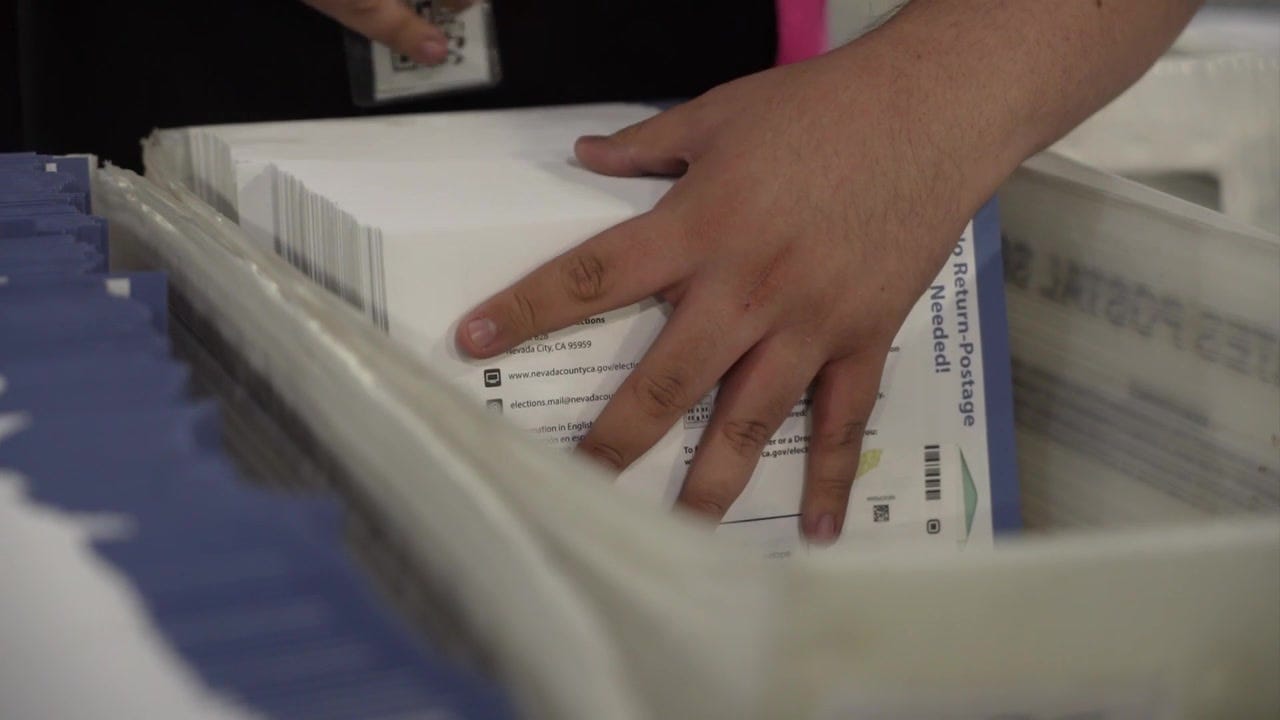
WASHINGTON – The Supreme Court could uphold a Republican effort to block states from counting late-arriving mail-in ballots, a decision that would be a victory for President Donald Trump and lead to stricter voting rules across the country.
During more than two hours of oral arguments on March 23, the court’s conservative majority expressed skepticism about a Mississippi law that allows ballots cast by Election Day to be counted if they are received within five days.
Justice Samuel Alito said the lack of a clear deadline raises a number of other questions, including how long the grace period should be and whether ballots must be postmarked.
“You have a lot of line-drawing issues,” he told the Mississippi attorney.
But Justice Ketanji Brown Jackson, one of the court’s three liberal justices, said it was up to Congress and the states, not the courts, to make such decisions. And the fact that Congress is considering a bill to eliminate the grace period indicates that lawmakers believe it is now allowed.
“I think there are some federal laws that suggest that Congress was aware of the post-Election Day voting deadlines that states had enacted,” she said.
Voting by mail is down compared to its peak during the coronavirus pandemic. However, nearly 30% of voters still voted that way in the 2024 election. And nearly 30 states are allowing at least some late-arriving ballots to be counted.
Democrats are more likely to vote by mail than Republicans.
Supporters of voting by mail say it makes it easier for people, including retirees, military personnel and rural residents, to vote. The grace period also prevents people from losing their votes due to postal service delays.
But Trump has long railed against mail-in voting, saying it is vulnerable to fraud and has made baseless claims that mail-in voting cost him the 2020 election.
President Trump has separately attempted to completely eliminate both grace periods and mail-in voting by executive order and by pressuring Congress to pass legislation.
The Justice Department supports Republican challenges to the Mississippi law.
Documented cases of fraud related to mail-in voting are rare, according to the Massachusetts Institute of Technology’s Election Data and Science Institute.
But critics argue that if votes counted after Election Day affect the outcome of a race, it could raise questions about the legitimacy of the election even if there was no fraud.
“The losers are not going to accept the outcome if it means turning on late-arriving ballots in such a way that the outcome that everyone expected on Election Day is the opposite one week later, 21 days later,” Republican lawyer Paul Clement told the Supreme Court. “And that’s bad for our system.”
The legal arguments being waged by the Republican National Committee and the Department of Justice focus on defining when an election took place, as federal law sets a specific date for U.S. elections.
Republicans and the Trump administration counter that ballots must be received by Election Day.
According to Mississippi, an “election” is when voters choose a candidate.
“Each state must make its final selections by Election Day,” Mississippi Attorney General Scott Stewart said. “That’s what the election really means.”
But some conservative justices questioned how voters’ mail-in ballots could be considered final when some states allow voters to recall absentee ballots.
Justice Brett Kavanaugh also emphasized that grace periods have only become common in recent years, suggesting that certain deadlines have more historical support.
He asked whether states with grace periods would have time to adjust before the midterm elections if the courts side with Republicans.
Clement said a court ruling by June would give him enough time.
Watson v. Republican National Committee is not the only case that could impact future elections.
The justices are also deciding whether to lift restrictions on coordinated spending between political parties and candidates and roll back protections against racial discrimination in voting.


