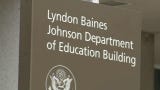

Student loan borrowers could face wage garnishment
Millions of Americans who are behind on their federal student loans could soon have their paychecks garnished as the U.S. Department of Education moves to resume aggressive collections.
Fox – 5 Atlanta
- The U.S. Department of Education announced that it is postponing the implementation of involuntary collection on federal student loans.
- The National Consumer Law Center said Friday’s announcement “threw a lifeline to working and middle-class families.”
For student loan borrowers who are in default, there is some good news when it comes to debt recovery.
The U.S. Department of Education announced Friday, January 16, that it is postponing the implementation of involuntary collections on federal student loans, including administrative wage garnishment and financial offset programs.
It is unclear how long the temporary delay will last, the Ministry of Education said. Details will be revealed in the future.
Although this is a temporary delay, it may help allay concerns that tax refunds will soon be lost to debt collectors as the 2026 tax season approaches.
This tax season is expected to provide large refunds to many people, which could boost consumer spending and sustain economic growth.
But millions of student loan defaulters were at risk of having their wages garnished and their tax refunds garnished as tax refunds and wage debt collection resumed after a long-term forbearance program started during the coronavirus pandemic was lifted.
The change comes after much political heat from advocacy groups, including an emergency letter sent to the Department of Education in January asking for a delay to avoid what the group calls an “unprecedented default crisis” down the road.
Aissa Canchola Báñez, policy director at Protect Borrowers, said in a statement Friday that the Trump administration’s previous plan was “economically reckless and risked pushing approximately 9 million defaulted borrowers further into debt.”
“After months of pressure from borrowers and countless horror stories, the Trump administration has announced that it is abandoning its plan to take working people’s hard-earned money directly from their paychecks and tax refunds simply for defaulting on their student loans,” said Canchola Báñez of the nonprofit advocacy group Protect Borrowers (formerly the Student Borrower Protection Center).
The National Consumer Law Center said Friday’s announcement “threw a lifeline to working and middle-class families.”
Abby Shafroth, managing director of advocacy at the National Consumer Law Center, said student loan borrowers are “bearing the weight of outdated student loan policies that do not reflect today’s high cost of living and affordability crisis.”
He said existing policies and protection systems were set decades ago and have not been updated to reflect how much money people need to live, given the significant rise in prices and the cost of living.
For example, Shafroth said the Department of Education only protects from garnishment the first $217.50 of wages, an amount established in 2009.
Similarly, the Department of Education protects only the first $750 per month, set in 1996, from garnishment of Social Security benefits, she said. This summer, the Education Department paused plans to resume garnishing Social Security benefits.
Without reform, she said, “working families and seniors who are behind on their student loans will be at risk of being pushed into poverty by the federal government if we resume collections that have been largely suspended since 2020.”
Shafroth said reforms should include increasing the amount of income protected for basic needs, which was established decades ago, to reflect today’s much higher cost of living.
The temporary postponement, announced Jan. 16, will give students time to implement major student loan repayment reforms under the Working Families Tax Relief Act passed last year, the Education Department said.
And for borrowers, it should give them more options to repay their loans to avoid debt collection.
The changes include simplifying repayment options and providing additional opportunities for borrowers to rehabilitate their federal student loans.
According to the Department of Education, the Working Families Act “reduces the number of federal student loan repayment plans, eliminates a confusing maze of options, and makes it easier for borrowers to choose a single standard or income-based repayment plan that best fits their needs.”
The new income-based repayment plan will forgive unpaid interest for borrowers whose on-time payments do not cover the full amount of interest owed, and will include small matching payments from the Department under certain circumstances to ensure the monthly outstanding principal is reduced, the Department of Education said.
The new plan will be available to borrowers starting July 1, 2026, according to the Department of Education.
“The recovery delay will give defaulted borrowers additional time to consider these new repayment options after consolidating their loans or completing repayment or rehabilitation agreements.”
Under the law, borrowers are given a second chance to rehabilitate their defaulted loans, allowing them to get their repayments back on track and eliminate the loan default.
Before the law was passed, the law allowed borrowers one-time restructuring.
“The recovery delay will give defaulted borrowers additional time to begin the restructuring process, including a second loan restructuring,” the Education Department said.
During the delay period, the Department is encouraging defaulted borrowers to consider options for resolving student loan defaults with a defaulted federal loan servicer.
According to the Department of Education, the department will continue to report student loan defaults to credit bureaus, which can negatively impact a borrower’s credit report.
Student loan expert and author Mark Kantrowitz pointed out that the last time federal income tax refunds on defaulted federal student loans were offset was in 2019, before the pandemic.
In doing so, approximately 1.4 million federal income tax refunds were offset, representing approximately 15.2% of the total number of defaulting debtors, he said.
The Coronavirus Aid, Relief, and Economic Security Act, passed by Congress on March 25, 2020, suspended mandatory collections during the payment moratorium. There was also a further extension of the payment suspension.
Kantrowitz estimates that about 11 million borrowers will be in default by the end of March 2026. He estimates that about 1.6 million borrowers will likely have their federal income tax refunds offset. “But it could be more than that,” he said.
“The federal government typically offsets the entire amount of your income tax refund,” Kantrowitz said.
“The only exception is if the amount needed to repay a federal student loan default is less than the full amount.”
Contact personal finance columnist Susan Tompol: stompor@freepress.com. follow himr X @tompor.


