Advocates argue that audio-only airline announcements can pose a safety risk for millions of deaf and hard of hearing travelers.
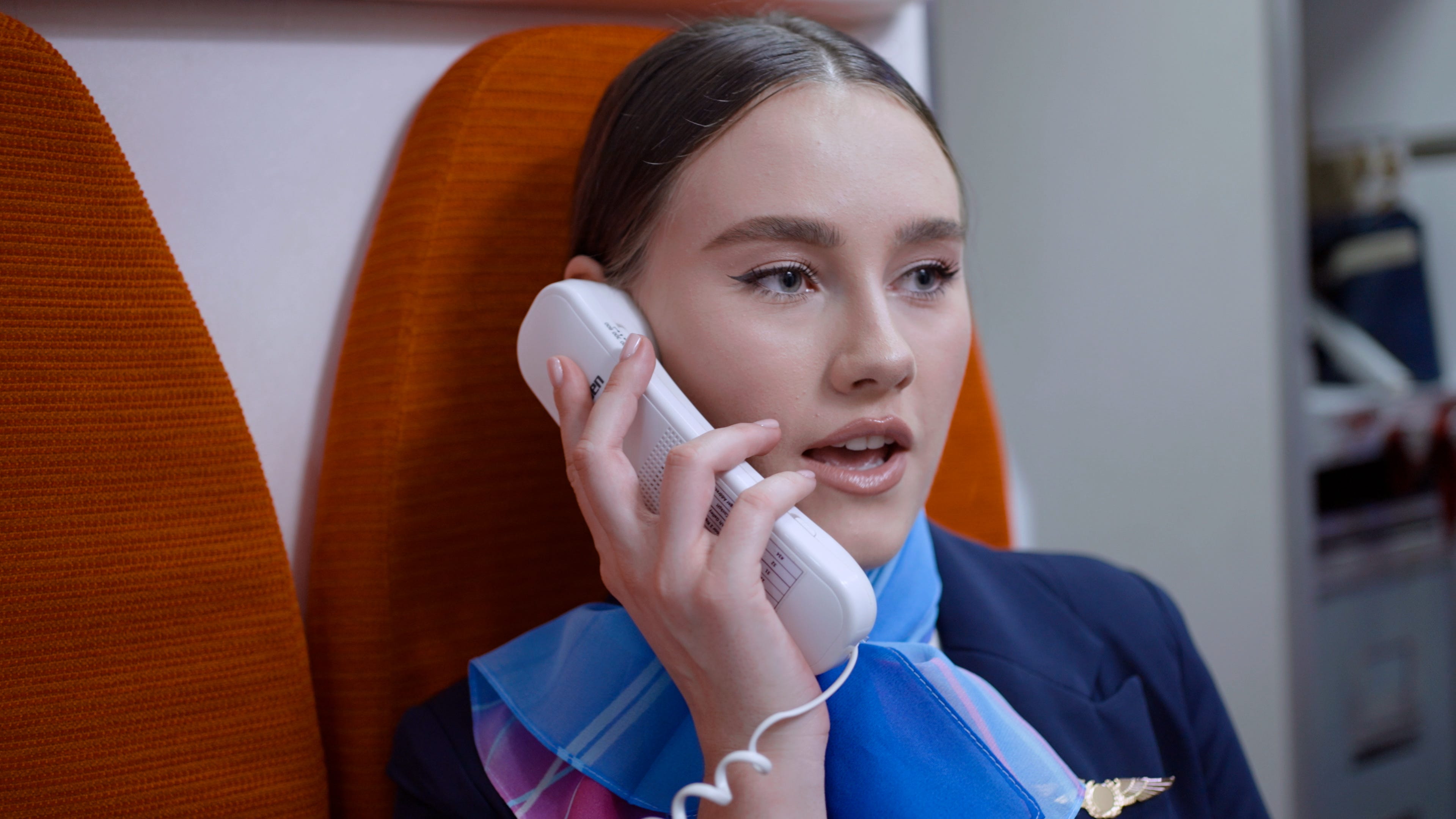

Gap in air travel accessibility puts hearing-impaired travelers at risk
Hearing-impaired travelers face safety risks as major airport and airline announcements are audio-only.
- Many hearing-impaired travelers miss important flight information because announcements are often only made verbally.
- Airlines may provide inappropriate equipment, such as wheelchairs, to deaf passengers due to flaws in their communication systems.
- Proponents argue that the lack of visual announcements and captioned content is not just an inconvenience, but a safety concern.
Cruising Altitude is a weekly column about air travel. Have you experienced accessibility issues while flying? Fill out the form or email us at the address at the bottom of this page.
Sitting at the airport, you can be overwhelmed by the amount of announcements. Boarding order on your flight to Orlando will not affect your travel to Denver. But imagine how dangerous it would be if there were no announcements.
For many deaf travelers, that’s the reality of flying. Important announcements at airports and onboard flights are often made only verbally or in other audio-based formats, and travelers with hearing loss may miss important information such as last-minute gate changes or important safety instructions in an emergency.
According to the National Institute on Deafness and Other Hearing Disorders, approximately 30 million Americans ages 12 and older have some degree of hearing loss in both ears, so this audio-based information broadcast at airports can impact millions of travelers each year.
One of them recently reached out to me to see if I was paying attention.
“When I book a flight, I always disclose that I am deaf. This is usually not communicated to actual airline employees, such as gate agents or flight attendants,” Corinna Butler DeMeo wrote to me. “When I ask if my name or seat is on the list, I’m always told there’s nothing on it. Usually, when I let someone know, they forget or ignore it, so I miss out on meals, snacks, important announcements, etc.”
Butler-DeMeo, 36, wrote that she often cannot access subtitles for in-flight entertainment, which the Boston native explained is particularly frustrating as she now travels frequently between the United States and Australia.
She also writes that she often receives accommodations she doesn’t need when she flies.
“You know what happens almost every time? When I get off the plane, a wheelchair is waiting for me. This has happened to almost every deaf person I know who has traveled by plane. It’s so disappointing to get off the plane and find accommodations you don’t need,” her email said. “When something like this happens, I feel like I’m wasting resources. It’s also a bit embarrassing having to explain that I don’t need a wheelchair because I’m deaf. It’s clear that my name is just on a list that goes to partners who provide wheelchair assistance services.”
Butler-DeMeo’s experience highlights how far the airline industry still has to go to ensure all travelers have equal access to flying.
Here’s how:
need better communication
“The biggest barrier is access to communications,” Bobby Beth Scoggins, interim CEO of the National Association of the Deaf, wrote me in an email. “If airlines are unable to provide accessible communications, it not only causes inconvenience, but also prevents millions of Americans from participating in air travel completely.”
She added that accessible announcements will help travelers in different regions.
“Accessibility benefits everyone,” Scoggins wrote. “Visual announcements, captions and clear communication improve the travel experience for all passengers, including non-native English speakers and those in noisy environments.”
For Butler-DeMeo, it started with the simple fact that her own accessibility needs were poorly communicated to everyone she interacted with while traveling.
“Normally, when you book your ticket, you can request ‘special assistance’ by checking a box. “There is typically no ‘free text’ field to describe your needs,” she wrote.
As a result, she is often unable to fully communicate with airline staff during her travels.
Butler-DeMeo wrote that her experience could have been smoother if the airline’s internal communication systems had been improved and training had been more extensive.
“Proper training for customer-facing employees is also important: a basic understanding of the experiences of deaf and hard-of-hearing people and how to communicate that generally works for us (i.e., getting attention with gestures and light taps, making sure you’re facing me, writing down important information),” she writes.
Many airlines provide updates on gate changes and other information in a visual format within their apps, but during large-scale disruptions such as inclement weather, the information is often broadcast verbally by gate agents well before the app is updated, so travelers who rely on visual updates may not have the most up-to-date information in real time.
Please be aware that this is a safety concern
Scoggins noted that while it may be frustrating not to be able to watch in-flight movies without subtitles, the bigger, more pressing concern for deaf travelers about the lack of accessibility during flights is safety.
“In an environment where timing and safety are critical, inaccessible communication is not only inconvenient, it can be dangerous,” she writes. “Key countermeasures such as pilot announcement captions and visual emergency updates are often unavailable or inconsistent.”
Tips for hearing-impaired travelers
For advocates like Scoggins, the ideal situation would be for airports to be built and airlines to be built with accessibility as the default, but she acknowledged that across-the-board improvements in this area are unlikely to happen overnight.
“Technology exists to provide real-time captions and visual alerts; the barrier is not feasibility, but prioritization,” she wrote.
In the meantime, deaf travelers can be proactive in ensuring their needs are met while traveling.
Scoggins recommends:
- Request accommodations in advance and confirm before traveling.
- Please arrive early to allow time for your communication needs.
- Use airline apps for visual updates when available.
- Please let the gate agent know directly that you would like visual notification of the announcement.
- Understand your rights under the federal Americans with Disabilities Act.
Still, even having to take these steps can be frustrating, she wrote. “The responsibility for ensuring access for themselves should not rest solely on deaf travelers. Equal access is a civil right, not a favor.”
Zach Wichter is a travel reporter and writes the Cruising Altitude column for USA TODAY. He is based in New York and can be reached at zwichter@usatoday.com.


