“They’re in a very tough spot,” said Tim Malloy, a Quinnipiac University polling analyst whose recent poll showed Trump’s approval rating at 37%.

SCOTUS rules against President Trump’s sweeping tariffs in 6-3 decision
The Supreme Court has ruled that President Donald Trump does not have the power to impose large tariffs at will.
President Donald Trump’s aggressive second-term policies were already coming to a standstill when the Supreme Court handed down the hammer.
The court’s 6-3 decision, announced on February 20, invalidated President Trump’s use of emergency powers to impose sweeping tariffs, shattering a pillar of his economic policy. It’s also the latest in a series of other setbacks, from the withdrawal of immigration officials in Minneapolis to the withdrawal in the occupation of Greenland.
The setback and defeat came amid declining poll numbers, large anti-Trump protests, strong Democratic performance in the elections, and other signs that the political mood was shifting sharply against the Republican president, in the run-up to a high-stakes State of the Union address on Feb. 24, the first of his second administration.
The prime-time speech at the U.S. Capitol in Washington, D.C., comes at a crucial time for President Trump, as he seeks to counter increasingly negative perceptions of his performance and deliver a message that reverses the dire outlook for the 2026 midterm elections for the Republicans who have historically driven him from power.
Presidential historian Douglas Brinkley said the speech, broadcast live on all television networks and cable news channels, was a dream opportunity for the president to “strengthen his strategy” and shore up support.
“You own the floor,” he said.
President Trump’s “rough patch”
Mr. Trump’s standing among the public is crumbling beneath his feet, with polls showing him at or near the lowest point in his second term amid concerns about the cost of living, intense opposition to immigration and skepticism about other administration policies.
After an astonishing first year of disruptive policy moves, the president is now on the defensive, as evidenced by recent defeats and reversals.
In addition to the Greenland and Minneapolis U-turns, Trump also deleted a video he posted depicting President Barack Obama and Michelle Obama as monkeys after receiving bipartisan condemnation, but he refused to apologize and blamed his aides. And he continues to fight the fallout from the Congress-mandated release of the Epstein files.
“They’re in a very tough spot,” said Tim Malloy, a polling analyst at Quinnipiac University, whose polls showed President Trump’s approval rating at just 37% as of early February. A year ago, a poll showed President Trump’s approval rating at 45%.
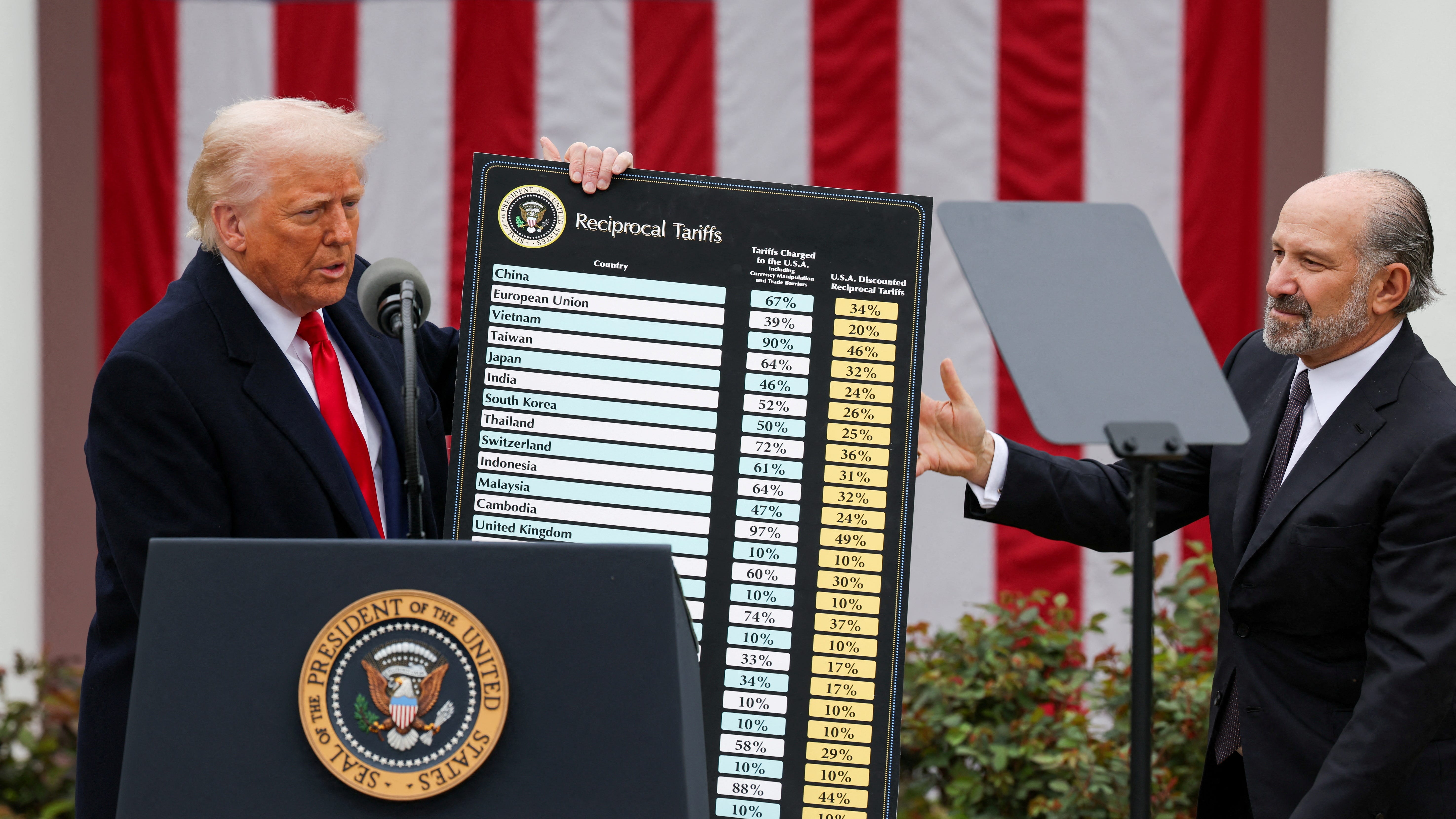
Loss in customs litigation is particularly significant. Although polls show tariffs are unpopular, they are a central part of President Trump’s economic policy and will face a referendum in the midterm elections.
“This is a huge setback,” said Matthew Bartlett, a Republican consultant who worked at the State Department during Trump’s first administration, noting that tariffs were the president’s “poster economic policy.”
Barrett added that the tariff ruling “will definitely raise the stakes” for the president’s State of the Union address, predicting “heightened drama” when Trump speaks before the Supreme Court justices, who gave him a surprising rebuke and predicted who the president would bash in his post-decision press conference. President Trump singled out Neil Gorsuch and Amy Coney Barrett, two judges he appointed in his first term who ruled against him on tariffs, calling them “a disgrace to the family.”
“This SOTU can vary from a circus environment to a coliseum atmosphere,” Bartlett said.
President Trump has factored tariffs into his economic pitch, highlighting positives such as a booming stock market, relatively low inflation and higher-than-expected job numbers. His defeat at the Supreme Court could further darken their view of his economic management, but allies believe he has a legitimate case.
“If his numbers are low and he doesn’t accomplish anything, people might be worried,” former Republican House Speaker Kevin McCarthy, a Trump ally who led House Republicans for part of the president’s first term, told USA TODAY before the Supreme Court’s tariff decision. “He has so many accomplishments. All he has to do is narrow it down and tell the American people what he’s done…and his numbers will explode.”
‘Air leak’ on economy and immigration
The White House has been keen to tout signs of economic recovery, issuing a sweeping press release earlier this month announcing that employers added 130,000 jobs in January, with the unemployment rate falling to 4.3% and beating expectations.
“This is the Trump economy,” the release declared.
The strength of the stock market has also been a major selling point for Mr. Trump, who is celebrating new records in major indexes. The president cited the recent peak in financial markets during a Feb. 20 press conference following the court’s tariff decision, and Attorney General Pam Bondi also noted that stock prices had soared during Congressional hearings in reaction to the department’s handling of the Epstein file. More importantly for many Americans, many of whom don’t own stocks, inflation fell to 2.4% in January, close to the Federal Reserve’s 2% target interest rate.
But the prices of many essential goods remain high, and polls show that a majority of Americans have serious concerns about the cost of living. The White House, in its recent executive order granting expanded tariff-free access to Argentine beef, cited ground beef prices at $6.69 per pound, the highest since record-keeping began in the 1980s.
A Quinnipiac poll released earlier this month found that only 39% of Americans approved of President Trump’s handling of the economy. The president also received poor reviews for his handling of immigration issues, with an approval rating of just 38%.
“Where he’s really leaking air is the economy and immigration. The numbers there are bad and they’re getting worse,” Malloy said.
A January poll by the Pew Research Center found that 60% of Americans disapprove of President Trump’s tariffs, which economists widely see as leading to higher consumer costs. The survey found that a majority of Americans are “very” concerned about health care, food, housing and electricity costs.
President Trump appeared in Georgia on February 19 while campaigning for a special congressional election to fill former Republican Rep. Marjorie Taylor Greene’s seat, telling supporters that affordability was no longer an issue: “We solved it, and we’ll go further down the line, but we solved it.”
President Trump sticks to tariffs
The dissonance between President Trump’s economic stimulus plan and widespread cost-of-living concerns among Americans poses a challenge as the president tries to sell his vision in the State of the Union. Some Republicans say he is so preoccupied overseas with Venezuela and Greenland that he struggles to stay focused and strike the right tone on economic issues.
Former Michigan Republican Rep. Fred Upton told USA TODAY that “President Trump doesn’t seem to feel the pain that many Americans are experiencing regarding the economy and the sanctity of work. He doesn’t seem to be aware of it.”
Bartlett said that in the “irrational euphoria” surrounding Trump’s return to power, the president and his allies “overlooked” the important issue of affordability.
He added: “The idea that the Republican Party and the president have done almost everything but the things that matter most to voters will continue to haunt voters.”
The State of the Union address could be an opportunity for President Trump to “reset” and rally support for bipartisan economic policy, but Bartlett said that is unlikely. He noted that there are concerns that tariffs would drive up prices, and said a tariff ruling could even be beneficial.
But President Trump vowed to continue pursuing the tariffs in other ways, saying at a news conference after the court’s ruling that the country is “better off because of tariffs” and “we’re going to continue to do what we were doing.” He even announced a new 10% tariff worldwide.
“The Supreme Court gave Trump’s economy a lifeline, but the president continues to demand an anchor,” Bartlett said.
The ongoing tariff debate could overshadow other moves President Trump has made on the economy. McCarthy pointed to President Trump’s efforts to lower prescription drug prices and lower taxes as tangible economic benefits to Americans. He said the president is doing a lot of things that “people don’t see” and the State of the Union is an opportunity to change that, calling the address Trump’s “report card” to the nation.
President Trump’s decline in approval ratings is also due to his poor ratings on immigration, with the president reeling from the uproar over his aggressive tactics in Minnesota, where two people were shot and killed by federal immigration agents. Democrats have warned that the administration is pursuing an authoritarian approach that violates constitutional rights, and polls show a majority disapprove of Immigration and Customs Enforcement.
Bartlett said it was “amazing” that immigration had gone from a political force to an “incredible political liability” for President Trump.
With this change, President Trump is trying to get back on track.
President Trump is withdrawing
In the wake of outrage over the deaths of Renee Good and Alex Preti in Minneapolis, President Trump, in a rare admission, acknowledged that his administration had gone too far and said a “softer response” was needed.
In response to the deaths, President Trump also withdrew immigration officials from the city and ended the operation. The dramatic course correction comes on the heels of other reversals and paints a picture of Mr. Trump’s retreat 13 months into his second term.
Trump’s first year in office was marked by massive disruption, including billionaire Elon Musk’s campaign to cut federal agencies and a massive deportation effort that included the deployment of the National Guard to major cities. The president bombed Iran and captured Venezuelan President Nicolas Maduro.
But after months of saying he wanted to occupy Greenland, President Trump withdrew in the face of overwhelming opposition from U.S. allies and Congressional Republicans. And the president had already adjusted his approach to tariffs before the Supreme Court struck them down, waiving or deferring taxes on goods ranging from coffee to beef to furniture in the face of price concerns.
“That’s the sign of a strong leader that he can adapt,” McCarthy added. “He’s always on the lookout for solutions to problems. If one path doesn’t work out, he adapts to it.”
It remains to be seen whether there will be any realignment when President Trump takes the floor on February 24th. Upton noted that the president often chooses a combative approach, even criticizing Democrats at this year’s bipartisan prayer breakfast.
The economy is expected to be the top concern for voters in the midterm elections. White House Deputy Chief of Staff James Blair watered down the administration’s message in a Feb. 17 interview with Fox Business, saying voters would have to “choose between going back to the economic pain that we’re feeling, or moving forward as things continue to improve.”
The White House tries to regularly communicate its economic message to the public, with press secretary Caroline Leavitt opening a Feb. 18 briefing with a list of “encouraging signs” about the economy and declaring that “the best is yet to come.” According to Politico, White House officials met with Trump administration ministers at a recent meeting in Washington to discuss the administration’s economic message heading into the midterm elections.
“We’re the hottest country in a year. We’re the hottest country anywhere in the world,” President Trump declared in Georgia.
But President Trump has struggled to maintain his message on the economy, veering into baseless claims about election fraud and other topics in a speech in Georgia.
Nebraska Republican Rep. Don Bacon, who opposed President Trump on tariffs and other issues and is not running for re-election, told USA TODAY that Democrats’ strong performance in last year’s elections was a “red flag” for Republicans heading into the midterm elections.
Bacon, who celebrated the Supreme Court’s decision on tariffs, said it was a chance for Trump to “reframe the agenda” in his speech and refocus affordability after getting “sidetracked” on other issues, adding that he hopes Trump’s “staff and lawyers will talk some sense into him” as the president vows to continue pursuing tariffs.
“If you’re driving and your light is flashing red, you need to have your engine checked or you need to pull over,” Bacon says.


