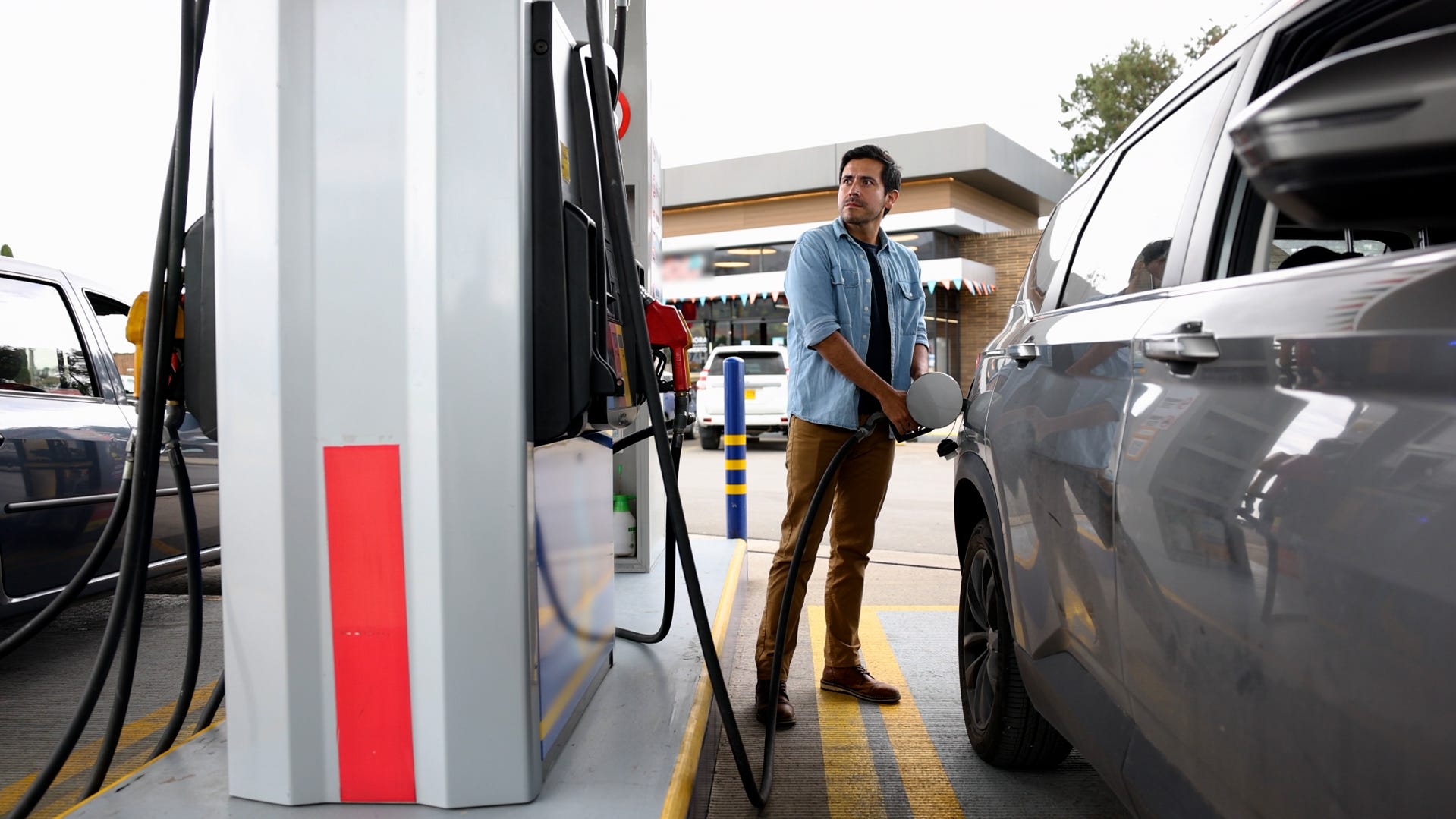

President Trump rescinds Biden-era fuel economy standards
President Donald Trump announced he was rescinding Biden-era fuel efficiency standards, saying the changes would save Americans money.
- The Trump administration is trying to eliminate credit for automakers with start-stop engine technology.
- Government officials called the feature “universally despised” and a “ridiculous requirement.”
- Start-stop systems, which temporarily stop the engine from idling, were first used in the 1970s and have become more common since 2012.
President Donald Trump said he is doing away with the start-stop button that has plagued drivers for years, a big boon for car buyers.
As part of a broader rollback of U.S. fuel economy regulations, the Trump administration announced it would eliminate credit for automakers that fail to comply with fuel efficiency regulations if they install start-stop buttons on their vehicles that shut off the engine when the vehicle is idling.
“You’re going to have better cars. You’re going to have cars that start easier, you’re going to have cars that work better for less money,” Trump said at a White House event announcing the changes.
EPA Administrator Lee Zeldin said in a statement that eliminating the start-stop system credit is an “added bonus” to President Trump’s broader rollback of emissions regulations, adding that “off-cycle credits for the almost universally despised vehicle start-stop feature have been removed.”
There’s nothing in the new rules that would force automakers to stop using start-stop features if they want to, but the Trump administration is trying to eliminate the fuel efficiency rating that has driven start-stop adoption for the past decade.
With this in mind, USA TODAY Cars looked at the tradition of start-stop and the fuel economy of some automakers that have popularized the feature in recent years.
What was the first car to use a start/stop system?
According to a Popular Science article published at the time, one of the first cars to use an automatic on/off switch was the 1974 Toyota Crown.
The technology was later adopted by automakers such as Fiat and Volkswagen in the 1980s. It was then used by companies such as BMW, Ford, Honda, Hyundai, and Kia in the 2010s after the EPA began granting automakers additional emissions credits for use under the Obama administration in 2012.
The Trump administration has hung on to the technology as a symbol of the previous administration’s environmental overreach, which introduced features that car buyers disliked.

Congress holds hearings on self-driving cars
The future of self-driving cars was a hot topic on February 4, as the Senate Commerce Committee held a hearing on the future of the technology and how to keep people safe on Capitol Hill.
Fox – 10 Phoenix
“As I traveled to all 50 states last year, I heard from countless Americans who not only dislike start-stop features, but also passionately advocate for making them a thing of the past,” Zeldin said in a Feb. 12 statement. “Many find start-stop systems to be a nuisance and only drain car batteries without providing any significant environmental benefits.”
“Car manufacturers should not be forced to adopt or be rewarded for technology that is simply a trophy for climate participation without measurable pollution reductions.”
In his own statement, Transport Secretary Sean Duffy added: “This administration is taking a whole-of-government approach to making cars affordable again.”
“Whether it’s resetting mileage standards or eliminating the ridiculous start-stop requirements that every driver hates, President Trump’s Automotive Dream Team is working overtime to lower costs and revitalize American manufacturing,” Duffy said.
How has the idling stop system been used to reduce emissions?
Here’s how some automakers that have popularized start-stop systems are tackling vehicle emissions in recent years, according to the latest data publicly available from the EPA.
toyota
- Average fuel consumption in 2023: 27.5mpg
- Rate of change from 2018:7.8%
- best selling car in usa: Toyota RAV4
honda
- Average fuel consumption in 2023: 30mpg
- Rate of change from 2018:1%
- best selling car in usa:Honda CR-V
BMW
- Average fuel consumption in 2023: 27.6mpg
- Rate of change from 2018:6%
- best selling car in usa:BMW X5
ford
- Average fuel consumption in 2023: 23.2mpg
- Rate of change from 2018:6%
- best selling car in usa:Ford F-150
hyundai
- Average fuel consumption in 2023: 29.8mpg
- Rate of change from 2018:4.1%
- best selling car:Hyundai Tucson
mercedes benz
- Average fuel consumption in 2023: 27.5mpg
- Rate of change from 2018:17%
- best selling car in usa: Mercedes-Benz GLC Class
general motors
- Average fuel consumption in 2023: 23mpg
- Rate of change from 2018:2.6%
- best selling car in usa: Charbolet Silverado
volkswagen
- Average fuel consumption in 2023: 27mpg
- Rate of change from 2018:9.7%
- best selling car in usa: Volkswagen Tiguan


