
US seizes six Venezuelan tankers in the Caribbean
The U.S. military has seized six Venezuelan tankers in the Caribbean “without incident.”
WASHINGTON, D.C. – In the weeks since the United States abducted Venezuelan President Nicolás Maduro, the Trump administration has made millions of dollars selling the country’s oil reserves, raising concerns about corruption among lawmakers and industry officials.
Those concerns are likely to surface on January 28, when Secretary of State Marco Rubio will testify before a Senate committee about the Trump administration’s continued involvement in Venezuela.
The Trump administration has accused Maduro of leading a vast drug-trafficking network as he zeroed in on Venezuela this fall with a massive deployment of military assets and deadly attacks on boats off the Venezuelan coast. Now that the South American leader and his wife are in jail awaiting federal trial in the United States on related charges, President Trump has said his administration will take control of Venezuela’s oil reserves, the world’s largest.
President Trump then announced a major $2 billion deal to sell oil from Venezuela’s oil reserves, which are controlled by state-owned companies and have long been off-limits to all U.S. companies except Chevron. Venezuela’s oil reserves were supported by the Trump administration’s blockade of oil tankers and years of U.S. sanctions.
President Trump aims to funnel Venezuelan oil to American companies, and says the United States will control the proceeds from the sale. President Trump said in an interview with the New York Post on January 24 that Venezuelan oil is already flowing into a refinery in Houston.
“Let’s put it this way: They don’t have the oil. We take the oil,” he said.
Sen. Chris Murphy, a Democrat from Connecticut, said President Trump wants to control oil for his “friends.”
“Hey, this is going to be a coup. The oil industry will have complete access to the world’s largest oil reserves,” he said in a Jan. 7 speech on the Senate floor.
Democrats are likely to grill Mr. Rubio on January 28 over his multibillion-dollar oil deal. Some lawmakers, including Mr. Murphy, who serves on the committee, have already criticized the deal as opaque and rife with corruption. The administration has sold $500 million worth of oil so far, depositing some of the proceeds in a Qatari bank account controlled at the Trump administration’s discretion, officials told USA TODAY.
Lawmakers are beginning to question how these funds will be handled. USA TODAY exclusively reported earlier this month that a group of Democratic senators sent a letter to more than a dozen executives at major banks asking whether the Trump administration had asked their banks to store Venezuelan oil proceeds. More than a dozen Democratic senators sent another letter on January 21 demanding that the Trump administration “disclose the financial interests of companies involved in the extraction, processing, and sale of Venezuelan crude oil.”
“Without President Trump’s bold actions and courageous leadership, Venezuela would still be ruled by the narco-terrorist Maduro, and Venezuela’s oil would still enrich our foreign adversaries,” White House Press Secretary Taylor Rogers said in a statement to USA TODAY.
“The historic U.S.-Venezuela energy agreement will protect U.S. economic and national security interests and restore prosperity and security to Venezuela.”
Two companies scrutinize bids for Venezuelan oil license
Experts say President Trump’s lack of oversight of Venezuelan oil sales could become a breeding ground for corruption.
On January 9, President Trump signed an executive order designating revenue from oil sales as “funds paid to or held by the Government of the United States on behalf of the Government of Venezuela.” According to Reuters, the first $300 million in proceeds went to four Venezuelan banks to sell dollars to Venezuelan companies in need of foreign currency.
“These are Venezuelan funds and they are outside the U.S. regulatory framework. It is not clear what legal framework, if any, they will be bound by,” said Francisco Rodríguez, a senior fellow at the Center for Economic Policy Research.
The Trump administration has granted two trading companies, Vitol and Trafigura, licenses to handle these initial sales, but other companies have yet to receive licenses despite widespread interest, according to three people familiar with the oil industry.
The Financial Times reported that John Addison, a senior trader at Vitol who helped secure the deal, donated $6 million to Trump’s re-election campaign.
In recent years, both trading companies have been implicated by the Justice Department in bribery scandals in Latin America. In 2020, Vitol Inc. agreed to pay $135 million in criminal penalties to resolve charges related to bribery schemes in Ecuador, Brazil and Mexico. A former Vitol trader pleaded guilty in 2024 to paying $600,000 in bribes to executives at Mexico’s national oil company, according to court documents.
That same year, Trafigura pled guilty to conspiracy to violate federal anti-corruption laws and paid more than $126 million to resolve a Justice Department investigation into allegations of bribery of Brazilian oil officials.
Vitol and Trafigura did not immediately respond to USA TODAY’s requests for comment.
“Who decided that it was Vitol and Trafigura who got the license to trade in oil?” Rodriguez said.
“Why those four banks?” he said of the four Venezuelan banks that received funding.
Administration officials said the White House selected two of the world’s largest commodity traders to help expedite the initial sale, and that future sales would be open to other traders and refiners.
Reuters reported on January 27 that the US intends to open the license to other traders.
At a White House meeting on January 9, President Trump tried to encourage oil company executives to invest in Venezuela’s rich reserves (more than 300 billion barrels).
After ExxonMobil CEO Darren Woods expressed reluctance to bring the company back to Venezuela because the company’s assets have been seized by the government in the past, President Trump said there was a “tendency” to shut ExxonMobil out because it was “doing too much cutesy stuff.”
The Trump administration has stalled on lifting sanctions against Venezuela, and has indicated it will continue to seize oil tankers in the Caribbean that are transporting Venezuelan oil to America’s adversaries such as Iran and China.
Venezuelan interim president promotes oil access
President Trump has praised Maduro’s second-in-command, Delcy Rodriguez, who took over after Maduro’s arrest, as he pushes for legal changes to give foreign companies greater access to Venezuela’s oil reserves.
“We have a great relationship with the new president. She’s been great,” Trump told the New York Post on January 24.
Mr. Rodriguez has taken an increasingly combative stance in recent days against U.S. interference in his country. “We’ve had enough of Washington’s orders to Venezuelan politicians,” she told a group of oil workers on January 25.
But behind the scenes, Mr. Rodriguez appears to be condoning Mr. Trump’s plans for Venezuelan oil.
In remarks prepared for the hearing, Rubio said Rodriguez had “committed to opening up Venezuela’s energy sector to American companies, giving them preferential access to production, and using the proceeds to buy American products.”
Earlier this month, Rodriguez introduced a major overhaul of the laws governing Venezuela’s oil reserves, allowing private companies to take charge of oil projects and eliminating government approval requirements for oil contracts.
“This is a huge concession by the government,” said Francisco Monaldi, director of the Latin American Energy Program at Rice University’s Baker Institute.
Monaldi said many of the included reforms have already been effectively implemented on a case-by-case basis, but codifying them into law has been on the private sector’s wish list for years.
“Everything they’ve wanted for the last 10 years, they got in one day,” he said.
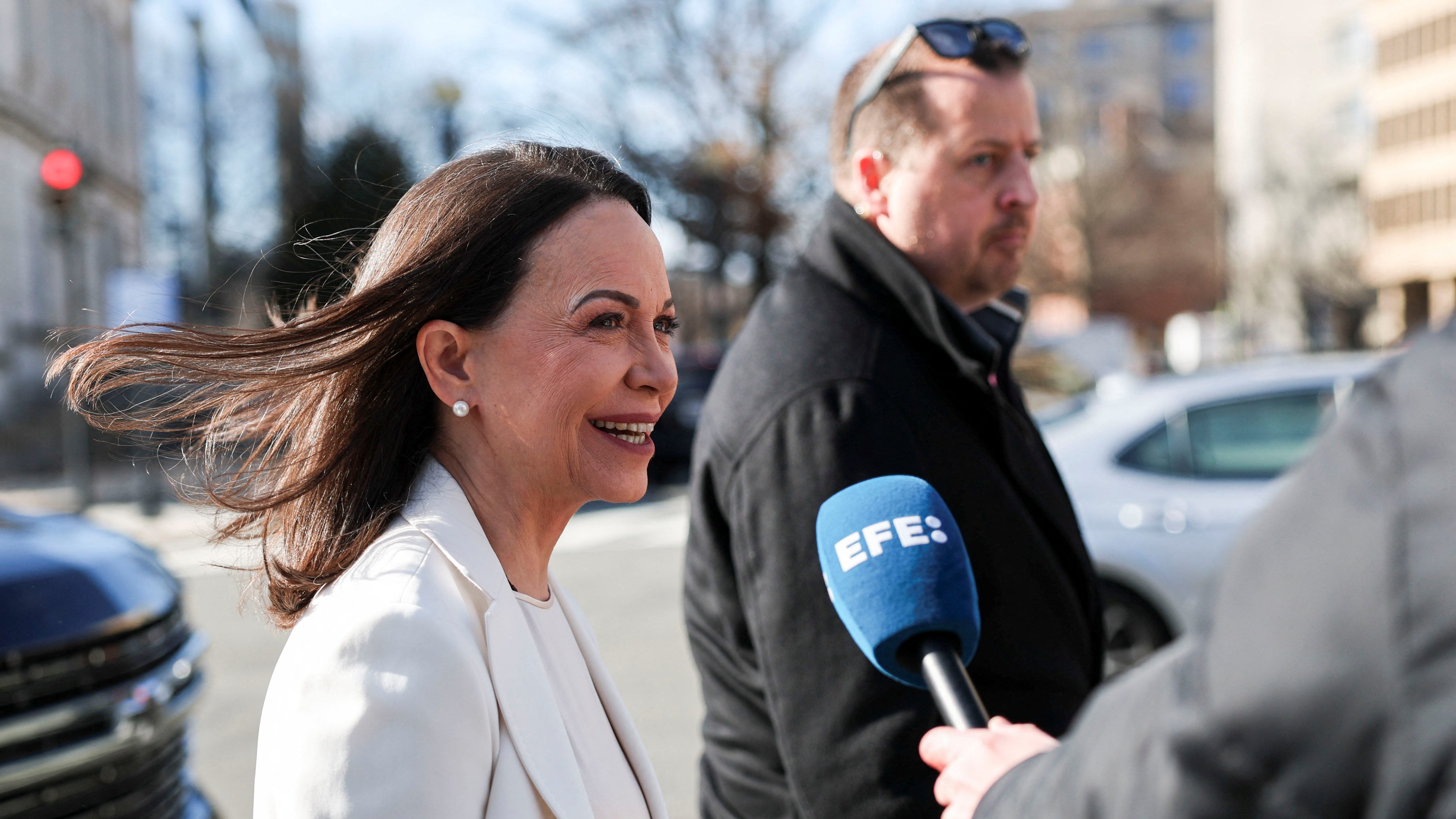
Amid oil sales, President Trump has rejected attempts by Venezuelan rebel leader Maria Colina Machado to take over the country with regime support. During a visit with President Trump earlier this month, Machado presented him with his Nobel Peace Prize.
Machado’s party claimed victory in the 2024 presidential election, which international election observers determined was a sure win. Maduro has refused to relinquish power. President Trump said elections would be held in Venezuela “at the appropriate time,” but did not elaborate on when.
So far, the Venezuelan government has complied with other demands from the Trump administration, including accepting more migrant deportation flights and releasing political prisoners. The New York Times reported last week that Venezuela had authorized an increase in migrant deportation flights at the request of the United States, and these flights continued under Maduro.
Venezuela has also released about 270 prisoners since January 8, according to opposition human rights groups, but hundreds remain behind bars.
For Rodriguez of the Center for Economic Policy Research, this all raises questions.
“Does the United States ultimately want Venezuela to transition to a democracy, or is it content with a dictatorship that can strike oil deals?” he asked.


