The American Farm Bureau Federation said in November that aid is “urgently needed” as farm bankruptcies increase.
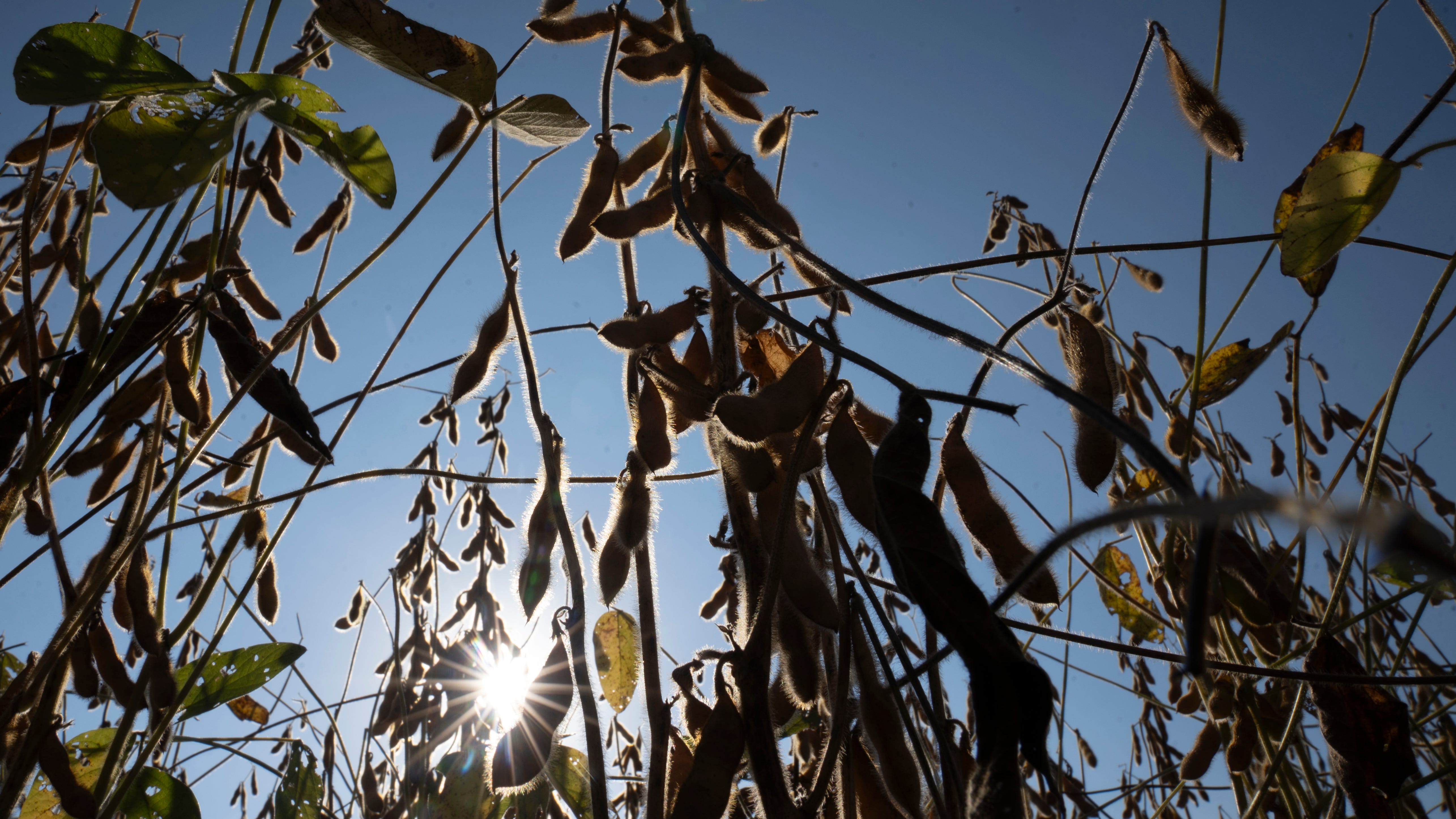

Soybean farmers struggling with the US-China trade war
Soybeans are one of Kansas’ most common crops, but farmers are struggling to sell their product after China refuses to buy U.S. soybeans.
WASHINGTON – President Donald Trump plans to announce a $12 billion aid package for farmers hurt by low crop prices and tariff policies on Dec. 8, according to a White House official familiar with the proposal.
Bloomberg News first reported the proposal on Dec. 7, citing White House officials. The Wall Street Journal also reported on the package.
Agriculture Secretary Brooke Rollins and Treasury Secretary Scott Bessent are scheduled to attend the announcement at 2 p.m. ET. Cattle, soybean, cotton and potato producers are expected to attend.
President Trump has vowed for months to provide aid to farmers because of trade tensions. He reached a trade deal in October with China, the largest customer for U.S. soybeans.
But on Dec. 8, Chicago soybean futures fell below $11 a bushel for the first time since October amid uncertainty about whether China will buy as much supply as the U.S. government hopes.
“Under the direction of the president, there will be a backstop for farmers even if we can’t actually move these goods,” Rollins told reporters on Oct. 16.
The American Farm Bureau Federation said on November 24 that aid is “urgently needed” as farm bankruptcies are on the rise as the cost of growing crops exceeds the income farmers receive.
After President Trump imposed tariffs on foreign imports, farmers lost billions of dollars in exports to their biggest overseas markets, including China.
Soybean farmers have been particularly hard hit this year as China retaliated against U.S. tariffs with its own tax hikes, leading to purchases from Brazil and Argentina instead. China historically purchased half of the U.S. soybeans.
At a Dec. 2 Trump Cabinet meeting, Rollins said one of the administration’s goals through tariffs is to negotiate trade deals that send more products overseas.
“I’m always talking to them, let’s sell more soybeans, let’s sell more corn, let’s get more products out there,” Rollins said. “But if you really think about how to resolve this idea, many of our farmers have been farming for government checks rather than moving their produce around the world.”
Contributed by: Reuters


