The high court ruled that while the president does not have tariff authority under emergency law, he can impose tariffs in other ways to combat unfair trade practices or deficits.

SCOTUS rules against President Trump’s sweeping tariffs in 6-3 decision
The Supreme Court has ruled that President Donald Trump does not have the power to impose large tariffs at will.
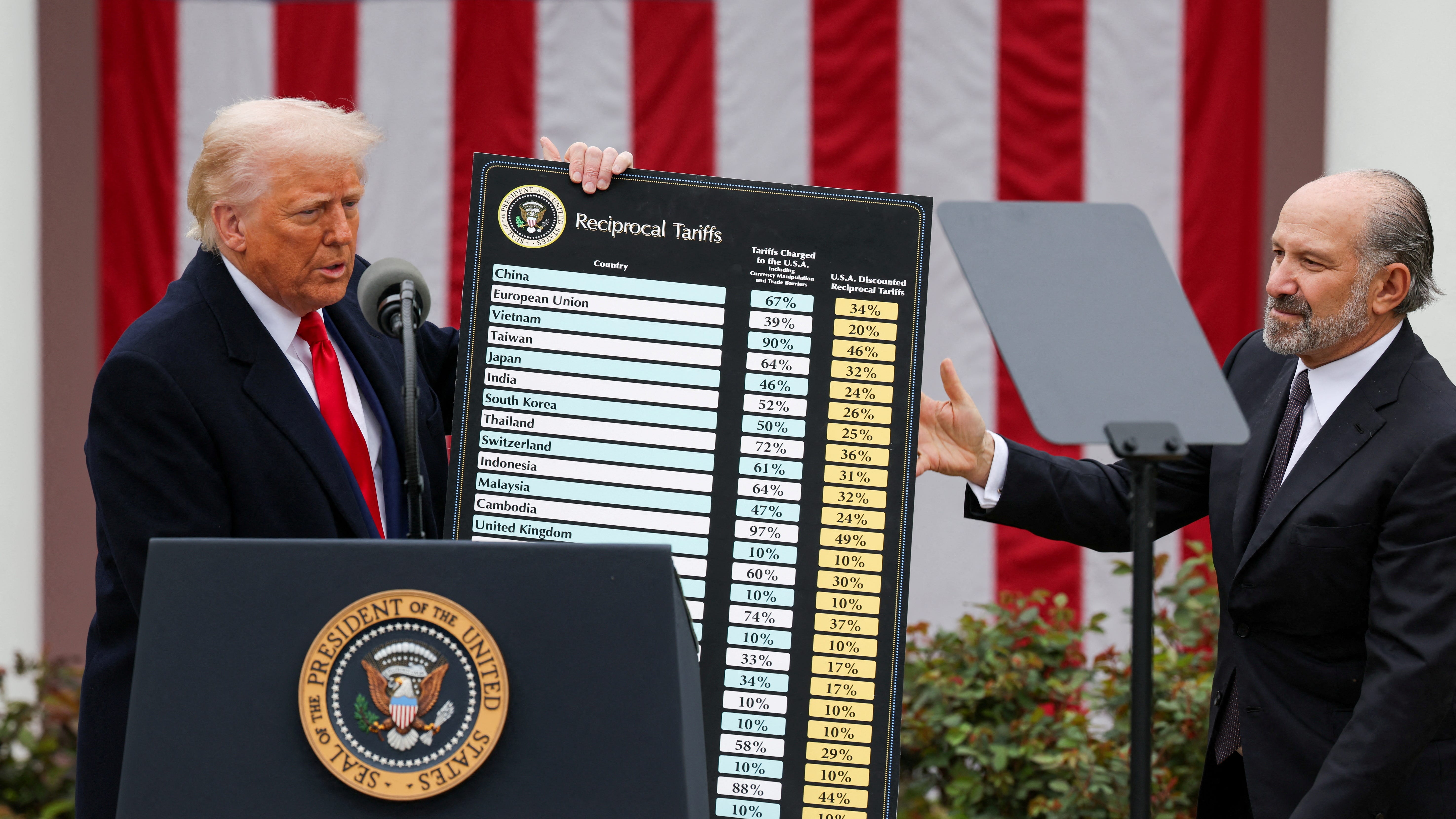
WASHINGTON – President Donald Trump announced he has signed a 10% interim tariff increase to replace the emergency tariffs that the Supreme Court overturned on February 20th. He said this was “very unfortunate.”
The White House announced that the new tariffs will go into effect on February 24th. President Trump’s proclamation exempts a vast list of items from the new tariffs, including beef, tomatoes, oranges, pharmaceuticals, passenger cars, and certain critical minerals. It also excludes products governed by trade agreements with Canada and Mexico.
President Trump vowed on February 20 to pursue enacting tariffs through other means after the high court ruled that the president lacked the authority of Congress to impose tariffs under the International Emergency Economic Powers Act of 1977. President Trump has maintained that he can impose tariffs at any time by law.
“The Supreme Court’s decision on tariffs is extremely disappointing,” President Trump told reporters at the White House. “I’m ashamed that some members of the court don’t have the courage to do what’s right for our country, it’s absolutely embarrassing.”
Two Trump-appointed justices, Neil Gorsuch and Amy Coney Barrett, joined the 6-3 majority that overturned the emergency tariffs. He said he was surprised by their decision, but declined to say whether he regretted nominating them.
“I think their decision was a terrible one,” Trump said. “If you want to know the truth, I think it’s a shame for their families.”
President Trump said the effect of the decision is to ensure that under the emergency law, trade can be cut off with other countries through permits and embargoes, but that imports will not be subject to tariffs.
“You can destroy trade. You can embargo. But you can’t charge a dollar,” Trump said. “That’s crazy.”
But Congress has delegated to the president the authority to impose tariffs in other ways. For example, his use of the Trade Expansion Act of 1962 to impose tariffs on steel and aluminum based on a Commerce Department investigation is not affected by court decisions. Another avenue for tariffs is the 1974 Trade Act against Unfair Trade Practices, which the Office of the U.S. Trade Representative investigates.
“What we’re doing is just going through a slightly more complicated process,” Trump said.
President Trump cited another provision of the 1974 Trade Act for the 10% tariff. The new tariffs will apply to countries that send more goods to the United States than they import. However, these tariffs only last for 150 days unless Congress passes an extension.
“We have tariffs, we just impose them in a different way,” Trump said.
U.S. Trade Representative Jamison Greer said an investigation into unfair trade practices could lead to further tariffs. President Trump’s statement directs Greer to “investigate certain unreasonable and discriminatory acts, policies, and practices that burden or restrict U.S. commerce.”
“There are a lot of tools out there,” Greer said. “Stay tuned to see all that unfold in the coming days and weeks.”
Contributor: Zach Anderson


