The executions of Missouri’s Lance Shockley and Florida’s Samuel Lee Smithers were among seven executed in October, making it the busiest single month since 2011.
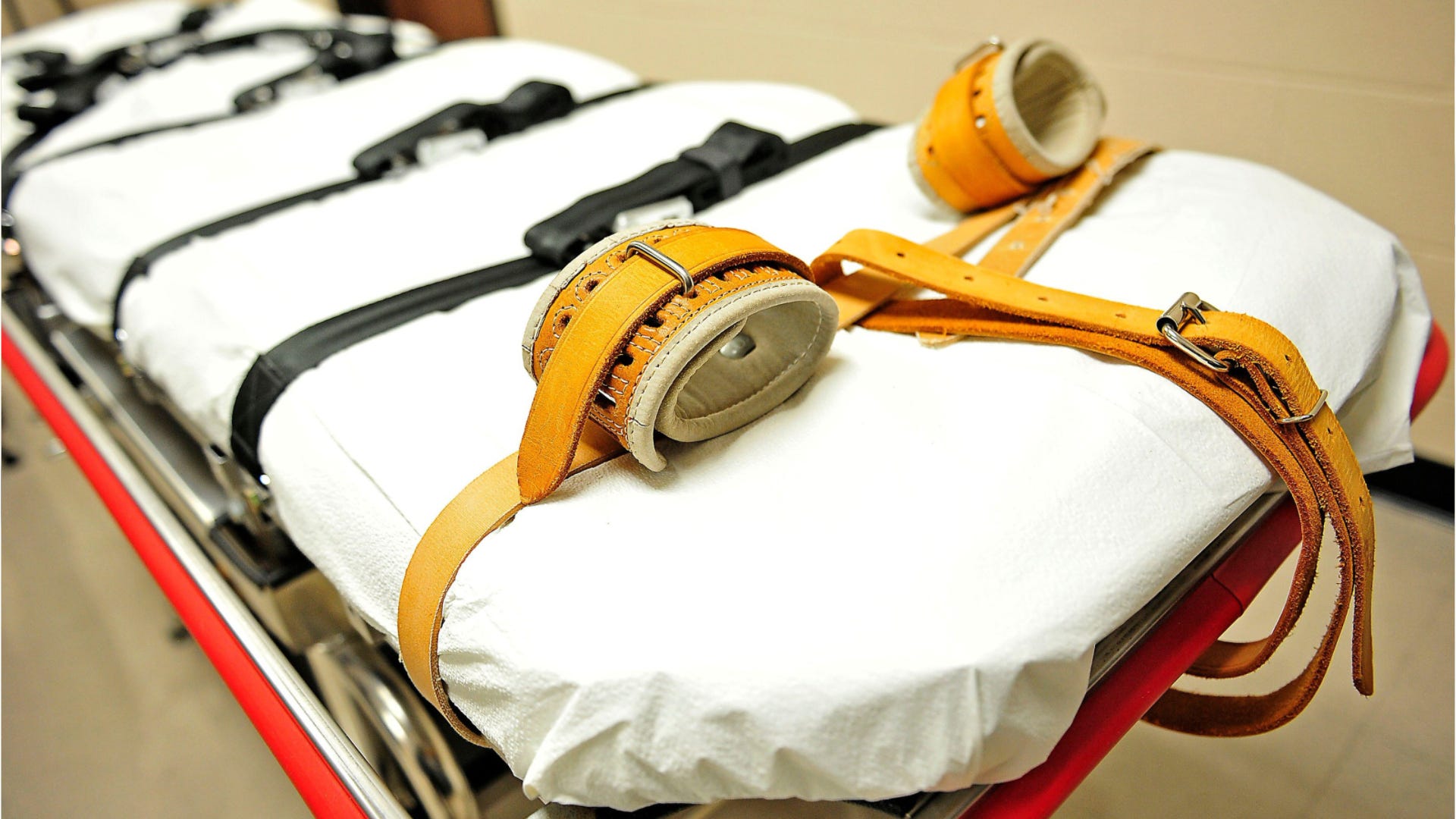

US expands death penalty methods
In modern history, most death row inmates faced one method of execution. There are now many other ways to die.
Two inmates were executed every hour in what is expected to be the busiest month for executions in the United States in nearly 15 years.
Florida executed Samuel Lee Smithers on Tuesday, Oct. 14, for the 1996 murders of two Tampa women. Smithers was pronounced dead at 6:15 p.m. ET, becoming the 14th inmate executed this year in the state.
About an hour later, Missouri executed Lance Shockley for the 2005 murder of a Missouri police officer. He was pronounced dead at 7:13 p.m. ET, the Associated Press reported.
Smithers and Shockley’s executions were among seven carried out this October, four of them this week alone. If all of this goes forward, it would be the busiest single month for executions in the United States since May 2011, according to a USA TODAY analysis of a database maintained by the Death Penalty Information Center.
The busy month of October comes as executions expand across the board in 2025, with experts blaming the political climate under President Donald Trump for the increase. So far this year, the state has executed 37 inmates, a number not seen since 2014.
Here’s what you need to know about Tuesday’s execution.
Missouri executes first inmate of the year
Missouri executed Lance Shockley, 48, by lethal injection in 2005 for the murder of 37-year-old Sgt. Carl “Dwayne” Graham Jr. of the Missouri State Highway Patrol. Graham, the father of a 4-year-old boy at the time, was ambushed and shot in the back with a high-powered rifle as he arrived at his home in the small rural town of Van Buren. He was then shot in the head.
Prosecutors argued that Shockley killed Graham because he was being investigated as the prime suspect in a case where he left the scene of a fatal accident.
Shockley has always maintained that he is innocent of murder. At trial, his attorney told jurors there was no ballistic or physical evidence linking Shockley to Graham’s murder, no witnesses to the crime, no DNA and no confession.
The Missouri Supreme Court ruled in 2013 that the circumstantial evidence in the case was “strong” and sufficient to uphold the death sentence.
Shockley’s current lawyers had recently been fighting for DNA testing of evidence in the case, which was not available in 2005. No court has accepted DNA tests on Shockley, and last month the Missouri Court of Appeals refused to consider multiple briefs from forensic DNA experts in the case.
Missouri Gov. Mike Kehoe said in a statement that Graham’s killing was an attack “on the very rule of law.”
“Violence against those who risk their lives every day to protect our communities will never be tolerated,” he said, adding that Shockley had “all the legal protections afforded to him under the Missouri Constitution and the United States Constitution.”
Mr. Kehoe added: “The execution of Lance Shockley’s sentence is a testament to our commitment to the pursuit of justice.”
Shockley’s execution was the state’s first in more than a year.
Florida executes 14th inmate, record number this year
Florida executed Samuel Lee Smithers, 72, for the 1996 murders of two Tampa women, Denise Roach, 24, and Christy Cowan, 31.
Smithers, a married deacon at a church in the Tampa suburb of Plant City, partially confessed to murdering two women who were sex workers and dumping them in a Plant City pond.
According to court records, Smithers told police that during an argument over money that Cowan had borrowed for sex, he hit her over the head with an ax, threw her into a pond and “finished her off” with a garden hoe.
Smithers told police he also got into an argument with Roach, punched her and threw her into a pond, but testified in court that he watched another man kill her. At trial, he blamed the man for Cowan’s murder and said Cowan had been blackmailing him.
Smithers’ current lawyers recently argued that executing the elderly violates constitutional protections against cruel and unusual punishment and no longer serves the original purpose of the death penalty.
Smithers is the 14th inmate executed in Florida this year, far surpassing Florida’s annual highs of eight executions set in 1984 and 2014.
When is the next execution?
Two more executions are scheduled this week. Mississippi is scheduled to execute Charles Ray Crawford on Wednesday for the 1993 rape and murder of 20-year-old college student Christy Ray. Two days later, Arizona is scheduled to execute Richard Jarf for the 1993 murders of a family of four in Phoenix.
Five more executions are scheduled for November and December, putting the United States on pace to carry at least 44 executions this year. That’s more than any single year since 2010, but it’s still far from the peak of capital punishment in the United States in 1999, when the state executed 98 inmates.
Amanda Lee Myers is a senior crime reporter who covers executions for USA TODAY. Follow her on X at @amandaleeusat.


